Rigidity for the P\'olya-Szeg\"o inequality under circular rearrangement
Pith reviewed 2026-05-09 17:55 UTC · model grok-4.3
The pith
A Pólya-Szegő inequality holds for circular rearrangements with rigidity under sufficient conditions.
A machine-rendered reading of the paper's core claim, the machinery that carries it, and where it could break.
Core claim
Under general assumptions the Pólya-Szegő inequality is shown to hold when the standard decreasing rearrangement is replaced by circular rearrangement. In addition, sufficient conditions are given under which every extremal of the inequality is symmetric.
What carries the argument
The circular rearrangement, a symmetrization operation that rearranges level sets into circles or annuli, together with the rigidity analysis that identifies when equality forces symmetry.
Load-bearing premise
The result relies on unspecified general assumptions about the functions and domains, without which the inequality and rigidity statements may fail to apply.
What would settle it
A concrete counterexample would be a function obeying the general assumptions for which the gradient integral strictly exceeds the integral for its circular rearrangement, or a non-symmetric function that attains equality under the stated sufficient conditions.
Figures


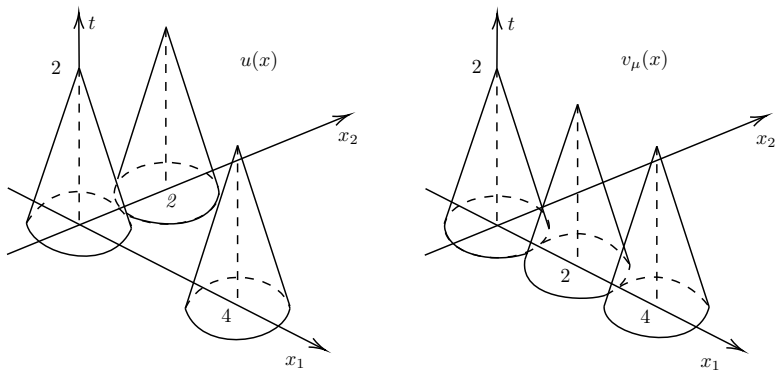
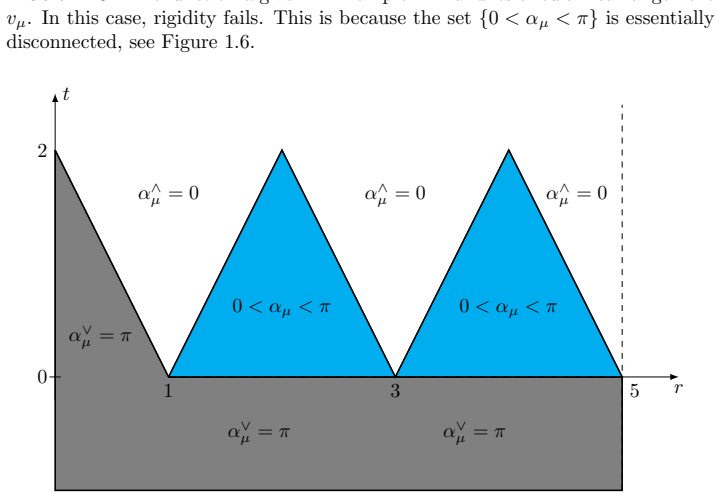

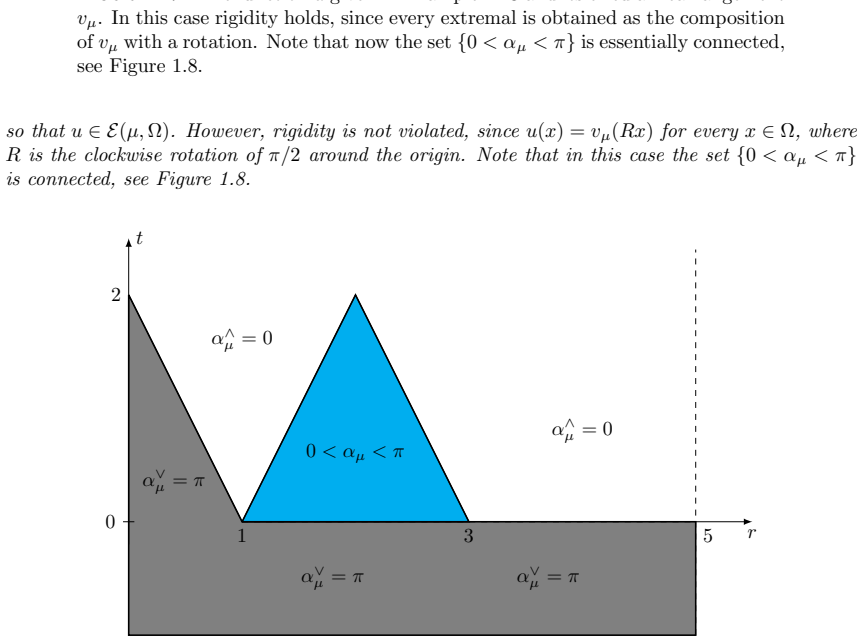

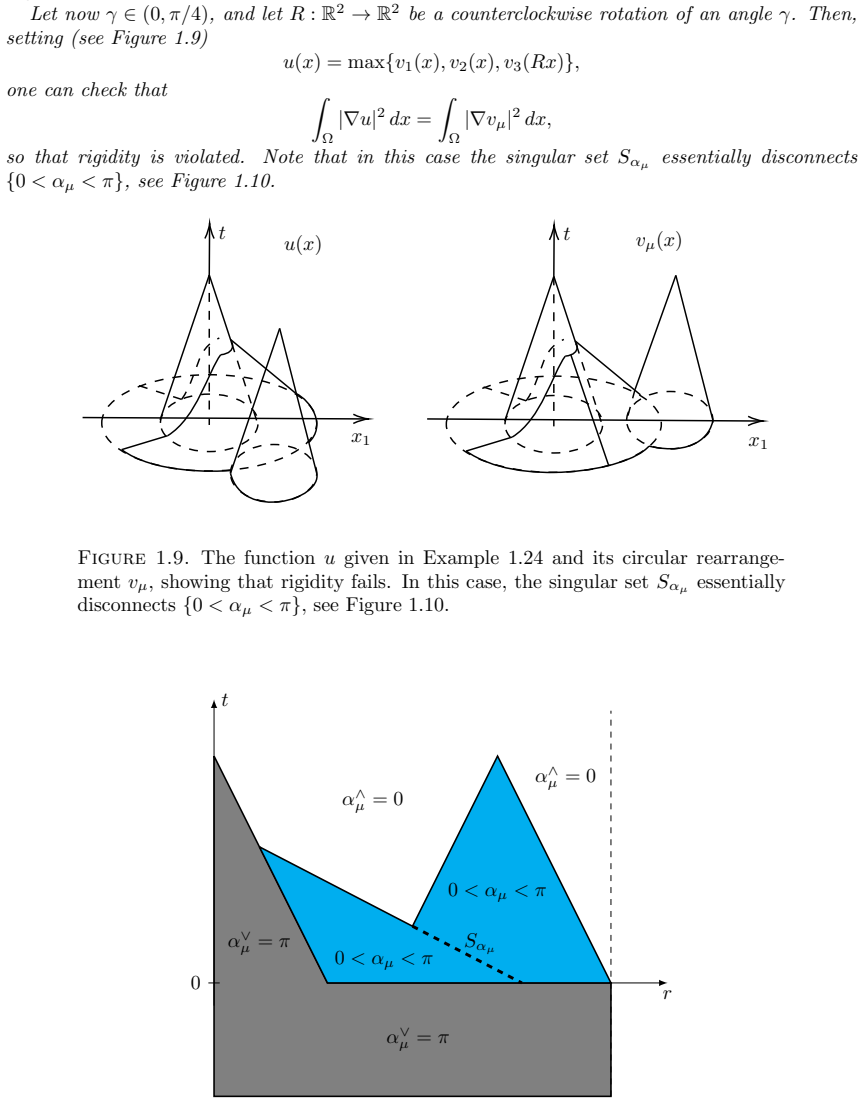
read the original abstract
A P\'olya-Szeg\"o inequality for the circular rearrangement is proven, under general assumptions. In addition, sufficient conditions are given, under which all the extremals of the inequality are symmetric.
Editorial analysis
A structured set of objections, weighed in public.
Referee Report
Summary. The manuscript proves a Pólya-Szegő inequality adapted to the circular rearrangement: for suitable functions u on an annular domain, ∫ |∇u|^p dx ≥ ∫ |∇u^#|^p dx holds, where u^# denotes the circular rearrangement. It additionally supplies sufficient conditions (involving strict monotonicity of the integrand and non-degeneracy of the domain) under which equality holds if and only if u is radially symmetric.
Significance. The result extends the classical Pólya-Szegő inequality to a rearrangement that preserves circular symmetry, which is relevant for variational problems on annuli or with rotational invariance. The rigidity statement is a useful addition for characterizing extremals. The derivation is direct and avoids self-referential definitions or fitted parameters.
minor comments (3)
- [§2] §2, Definition 2.3: the circular rearrangement is defined via level-set averaging over circles; an explicit formula or one-line example for a radial function would improve readability.
- [Theorem 1.2] Theorem 1.2: the sufficient conditions for rigidity are stated clearly but the necessity of the strict-convexity hypothesis on the integrand is not discussed; a brief remark on whether the result fails without it would be helpful.
- [Figure 1] Figure 1: the schematic of level sets before and after rearrangement is useful, but the caption should specify the radius interval and the value of p used in the illustration.
Simulated Author's Rebuttal
We thank the referee for the positive summary of our work on the Pólya-Szegő inequality under circular rearrangement and for recommending minor revision. No specific major comments or requests for changes were listed in the report.
Circularity Check
No significant circularity in derivation chain
full rationale
The paper presents a direct proof of a Pólya-Szegő inequality for circular rearrangement under stated general assumptions, followed by sufficient conditions for symmetric extremals. No self-definitional relations, fitted parameters renamed as predictions, or load-bearing self-citations appear in the abstract or described structure. The derivation relies on standard rearrangement techniques and rigidity analysis without reducing to its own inputs by construction. This is a self-contained mathematical proof paper with no evident circular steps.
Axiom & Free-Parameter Ledger
axioms (1)
- standard math Standard properties of rearrangements and function spaces (e.g., Sobolev norms) are assumed to hold as in classical analysis.
Reference graph
Works this paper leans on
-
[1]
F.J. Almgren & E.H. Lieb. Symmetric rearrangement is sometimes continuous. J. Amer. Math. Soc. 2, 683--773 (1989)
work page 1989
-
[2]
L. Ambrosio, N. Fusco, and D. Pallara , Functions of bounded variation and free discontinuity problems , Oxford Mathematical Monographs, The Clarendon Press, Oxford University Press, New York, 2000
work page 2000
-
[3]
M. Barchiesi, G.M. Capriani, N. Fusco, and G. Pisante , Stability of P\'olya-Szeg\"o inequality for log-concave functions , J. Funct. Anal., 267 (2014), pp. 2264--2297
work page 2014
- [4]
-
[5]
Baernstein , A unified approach to symmetrization ,
A. Baernstein , A unified approach to symmetrization ,
-
[6]
I , Birindelli, F Leoni, F Pacella ,
-
[7]
V. B\" o gelein, F. Duzaar, N. Fusco , A quantitative isoperimetric inequality on the sphere , Adv. Calc. Var. (3), 10 (2017), pp. 223--265
work page 2017
-
[8]
T. Bonnesen , Les probl\`emes des isop\'erim\`etres et des is\'epiphanes , Gauthier--Villars, Paris, 1929
work page 1929
-
[9]
J. E. Brothers and W. P. Ziemer , Minimal rearrangements of S obolev functions , J. Reine Angew. Math., 384 (1988), pp. 153--179
work page 1988
-
[10]
F. Cagnetti , Necessary and sufficient conditions for rigidity of P\'olya-Szeg\"o inequality under Schwarz symmetrisation , Nonlinear Differ. Equ. Appl. 32, 7 (2025)
work page 2025
-
[11]
F. Cagnetti, M. Colombo, G. De Philippis, and F. Maggi , Rigidity of equality cases in S teiner's perimeter inequality , Anal. PDE, 7 (2014), pp. 1535--1593
work page 2014
-
[12]
F. Cagnetti, M. Colombo, G. De Philippis, and F. Maggi , Essential connectedness and the rigidity problem for G aussian symmetrization , J. Eur. Math. Soc. (JEMS), 19 (2017), pp. 395--439
work page 2017
-
[13]
F. Cagnetti, Y. Domazakis, M. Perugini , P\'olya-Szeg\"o inequality for the spherical rearrangement (in preparation)
-
[14]
F. Cagnetti, M. Perugini, D. St\"oger Rigidity for perimeter inequality under spherical symmetrisation . Calc. Var. Partial Differential Equations 59 (2020), no. 4, Paper No 139, 53 pp
work page 2020
-
[15]
G. M. Capriani , The S teiner rearrangement in any codimension , Calc. Var. Partial Differential Equations, 49 (2014), pp. 517--548
work page 2014
-
[16]
M. Chleb \' k, A. Cianchi, and N. Fusco , The perimeter inequality under S teiner symmetrization: cases of equality , Ann. of Math. (2), 162 (2005), pp. 525--555
work page 2005
-
[17]
A. Cianchi and N. Fusco , Functions of bounded variation and rearrangements , Arch. Ration. Mech. Anal., 165 (2002), pp. 1--40
work page 2002
-
[18]
A. Cianchi and N. Fusco , Steiner symmetric extremals in P \' o lya- S zeg\" o type inequalities , Adv. Math., 203 (2006), pp. 673--728
work page 2006
-
[19]
A. Cianchi, N. Fusco, F. Maggi & A. Pratelli , The sharp Sobolev inequality in quantitative form , J. Eur. Math. Soc. (JEMS), 11 (2009), pp. 1105--1139
work page 2009
-
[20]
D. L. Cohn Measure Theory, Birkh\"auser, Boston, second edition (2013)
work page 2013
-
[21]
L. Damascelli and F. Pacella , Sectional symmetry of solutions of elliptic systems in cylindrical domains , Discrete Contin. Dyn. Syst., 40(6) (2020), pp. 3305--3325
work page 2020
-
[22]
L. C. Evans, R. F. Gariepy, Measure Theory and Fine Properties of Functions, CRC Press, revised edition, 2015
work page 2015
-
[23]
Gambicchia , The double spherical cap rearrangement of planar sets , Rend
C. Gambicchia , The double spherical cap rearrangement of planar sets , Rend. Sem. Mat. Univ. Padova (2026), 10.4171/RSMUP/196
-
[24]
M. Giaquinta, G. Modica, & J. Soucek , Cartesian currents in the C alculus of V ariations. I. Cartesian currents , vol. 37 of Ergebnisse der Mathematik und ihrer Grenzgebiete. 3. Folge. A Series of Modern Surveys in Mathematics, Springer-Verlag, Berlin, 1998
work page 1998
- [25]
-
[26]
Hynd, F Seuffert , Asymptotic flatness of Morrey extremals , Calc
R. Hynd, F Seuffert , Asymptotic flatness of Morrey extremals , Calc. Var. Partial Differential Equations 59(5) (2020), 159
work page 2020
-
[27]
Hynd, F Seuffert , On the symmetry and monotonicity of Morrey extremals , Commun
R. Hynd, F Seuffert , On the symmetry and monotonicity of Morrey extremals , Commun. Pure Appl. Anal., 19(11) (2020), pp. 5285--5303
work page 2020
-
[28]
Hynd, F Seuffert , Extremal Functions for Morrey's Inequality , Arch
R. Hynd, F Seuffert , Extremal Functions for Morrey's Inequality , Arch. Ration. Mech. Anal., 241 (2021), pp. 903--945
work page 2021
-
[29]
Kawohl , Rearrangements and convexity of level sets in PDE , vol
B. Kawohl , Rearrangements and convexity of level sets in PDE , vol. 1150 of Lecture Notes in Mathematics, Springer-Verlag, Berlin, 1985
work page 1985
-
[30]
Maggi , Sets of finite perimeter and geometric variational problems , vol
F. Maggi , Sets of finite perimeter and geometric variational problems , vol. 135 of Cambridge Studies in Advanced Mathematics, Cambridge University Press, Cambridge, 2012. An introduction to G eometric M easure T heory
work page 2012
- [31]
-
[32]
Perugini , Rigidity of Steiner's inequality for the anisotropic perimeter Ann
M. Perugini , Rigidity of Steiner's inequality for the anisotropic perimeter Ann. Sc. Norm. Super. Pisa Cl. Sci., (5) Vol. XXIII (2022), pp. 1921--2001
work page 2022
-
[33]
M. Perugini , Perimeter inequality under circular and Steiner symmetrisation: geometric characterization of extremals , Nonlinear Analysis, Volume 240, (2024)
work page 2024
-
[34]
P\'olya , Sur la sym\'etrisation circulaire
G. P\'olya , Sur la sym\'etrisation circulaire . (French) C. R. Acad. Sci. Paris 230, (1950), pp 25--27
work page 1950
-
[35]
G. P\'olya, G. Szeg\" o , Isoperimetric I nequalities in M athematical P hysics , Annals of Mathematics Studies, No. 27, Princeton University Press, Princeton, N. J., 1951
work page 1951
-
[36]
E Schmidt , Beweis der isoperimetrischen Eigenschaft der Kugel im hyperbolischen und sph\"arischen Raum jeder Dimensionszahl , Math. Z. 49 (1943/44), pp 1--109
work page 1943
-
[37]
Serrin , A symmetry property in potential theory , Arch
J. Serrin , A symmetry property in potential theory , Arch. Rational Mech. Anal., 43 (1971), pp 304--318
work page 1971
-
[38]
L. Simon , Lectures on geometric measure theory , Proceedings of the Centre for Mathematical Analysis, Australian National University, 3, Centre for Mathematical Analysis, Canberra, 1983
work page 1983
- [39]
-
[40]
Talenti , Best constant in Sobolev inequality , Ann
G. Talenti , Best constant in Sobolev inequality , Ann. Mat. Pura Appl., 110 (1976), 353--372
work page 1976
-
[41]
Van Schaftingen , Universal approximation of symmetrizations by polarizations , Proc
J. Van Schaftingen , Universal approximation of symmetrizations by polarizations , Proc. Amer. Math. Soc., 134(1) (2006), 177--186
work page 2006
-
[42]
A. I. Vol pert , Spaces BV and quasilinear equations , Mat. Sb. (N.S.), 73 (115) (1967), pp. 255--302
work page 1967
discussion (0)
Sign in with ORCID, Apple, or X to comment. Anyone can read and Pith papers without signing in.