REVIEW 1 major objections 4 minor 90 references
Time-dependent solutions of biadjoint scalar field theories
T0 review · 1 major / 4 minor · reviewed 2026-08-09 · deepseek-v4-flash
Pith's one-line read Biadjoint scalar field theory admits exact time-dependent plane-wave solutions, including bounded oscillatory and non-oscillatory profiles, obtained by reducing the field equations to a single ordinary differential equation.
desk verdict First time-dependent biadjoint solutions are real and checkable, but eq. (7) as printed has a quartic-index typo that must be fixed before the paper is usable. read the letter →
The pith
A machine-rendered reading of the paper's core claim, the machinery that carries it, and where it could break.
The reading
What carries the argument
The machinery is the colour-diagonal plane-wave ansatz \$Phi^{{aa'}}$(x)=\$delta^{{aa'}}$f(p\cdot x), with \xi=p\cdot x, identical Lie algebras in both sectors, and a constant diagonal current J\$delta^{{aa'}}$. It does two jobs: it creates cross-talk between the two colour sectors (a factorised ansatz \$Phi^{{aa'}}$=\chi^a\$eta^{{a'}}$ makes all non-linear terms vanish), and it converts the partial differential equation into an autonomous second-order ODE equivalent to energy conservation for a point particle moving in the one-dimensional potential V(f). The resulting energy integral is what makes the solutions analytically tractable.
What would settle it
Choose two Lie algebras whose structure constants are not proportional and substitute the diagonal plane-wave ansatz into the field equation: the cubic colour factor $f^{{abc}}$\tilde $f^{{a'bc}}$ is not proportional to \$delta^{{aa'}}$, so the equation does not reduce to the ordinary differential equation used in the paper and the listed profiles are not solutions. A reader could verify this by direct substitution into eq. (7).
Extended reading notes
Core claim
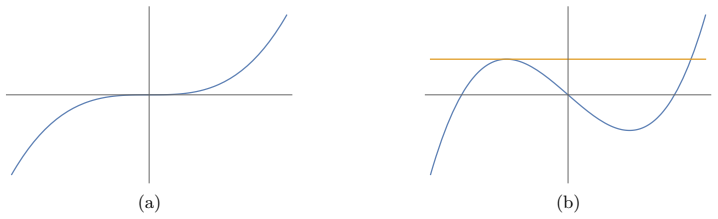
The central claim is that the generalised biadjoint scalar equation (\$partial^{2}$+$m^{2}$)\$Phi^{{aa'}}$+y $f^{{abc}}$\tilde $f^{{a'b'c'}}$\$Phi^{{bb'}}$\$Phi^{{cc'}}$+\$\lambda$ $f^{{ebc}}$\tilde $f^{{a'b'c'}}$$f^{{eda}}$\tilde $f^{{e'd'a'}}$\$Phi^{{bb'}}$\$Phi^{{cc'}}$\$Phi^{{dd'}}$=$J^{{aa'}}$ admits exact plane-wave solutions. Taking identical Lie algebras and substituting \$Phi^{{aa'}}$=\$delta^{{aa'}}$f(p\cdot x) with constant current $J^{{aa'}}$=J\$delta^{{aa'}}$ reduces the equation to $p^{2}$ f''+$m^{2}$ f+yT_A $f^{2}$+\$\lambda$ $T_A^{2}$ $f^{3}$=J, where T_A is the adjoint Casimir $f^{{abc}}$$f^{{a'bc}}$=T_A\$delta^{{aa'}}$. This autonomous ODE integrates once to \frac12 $p^{2}$ (f')^2+V(f)=\varepsilon, with V(f)=\frac{$m^{2}$$f^{2}$}{2}+\frac{$yT_Af^{3}$}{3}+\frac{\$\lambda$ $T_A^{2}$$f^{4}$}{4}-Jf. Depending on the couplings, the sign of $m^{2}$, and the integration constant \varepsilon, the profile f is a Weierstrass elliptic function, a Jacobi elliptic function, a kink-type hyperbolic profile, or the rational bounded form f(\xi)=-\frac{$12p^{2}$y}{9\$\lambda$ $p^{2}$T_A+$2T_Ay^{2}$(\xi-c)^2} arising when cubic and quartic terms coexist with m=J=\varepsilon=0. These are genuinely time-dependent, non-linear generalisations of plane waves, and some of them are bounded and non-oscillatory.
Load-bearing premise
The construction rests on the field being colour-diagonal, \$Phi^{{aa'}}$=\$delta^{{aa'}}$f(p\cdot x), with the same Lie algebra in both sectors and a constant diagonal current J\$delta^{{aa'}}$; if any of those fail, the nonlinear terms do not collapse into the single ordinary differential equation that produces all the solutions.
Editorial extensions
If this is right
- The catalogue of exact biadjoint solutions expands from static monopole-like objects, wires, and Euclidean instantons to genuinely time-dependent travelling waves.
- Bounded solutions now exist in biadjoint scalar theory: oscillatory waves generated by a constant current or negative mass-squared, and a non-oscillatory rational profile when cubic and quartic couplings coexist.
- Quartic biadjoint theory embeds well-known scalar solitons, including Jacobi elliptic functions and a kink-type profile, as special cases, so those known solutions become biadjoint solutions as well.
- Because biadjoint scalar theory is the zeroth copy of gauge theory, these exact non-linear waves provide test objects for whether classical solutions double-copy to gauge and gravity solutions beyond perturbation theory.
- The mapping between the field equation and a particle-potential problem supplies a simple organising principle for classifying future exact solutions by the shape of V(f) and the value of \varepsilon.
Reading between the lines
- Inference: The same reduction should work for any single-field potential V(f), so biadjoint scalar theory may inherit every exact travelling-wave solution of ordinary scalar field theory; the paper treats only cubic and quartic potentials.
- Inference: The bounded rational profile is a natural candidate for zeroth-copy matching to a gauge-theory or gravity lump; checking whether its double-copied counterpart is a known solution would test whether the classical double copy extends to wave-like non-perturbative objects.
- Inference: A stability analysis of the oscillatory waves against non-planar perturbations would show whether they are robust enough to describe collective excitations in condensed-matter analogues; the paper does not perform such an analysis.
- Inference: The presence of a constant current J is essential for some bounded oscillatory solutions, and relaxing it to a spacetime-dependent current may produce further integrable reductions with richer profile shapes.
Editorial analysis
A structured set of objections, weighed in public.
Referee Report
Summary. The paper considers a generalised biadjoint scalar field theory with mass, cubic and quartic interactions and a constant external current. It introduces a colour-diagonal plane-wave ansatz Phi^{aa'} = delta^{aa'} f(p dot x), which reduces the matrix-valued equation of motion to a single ODE for f. The authors derive exact solutions in various limits: a Weierstrass elliptic solution for the massless cubic theory, Jacobi elliptic and tanh solutions for the quartic theory with vanishing cubic coupling, and a rational non-oscillatory bounded solution when both cubic and quartic couplings are present. The solutions are interpreted via a classical particle analogy, and connections to the double copy are discussed.
Significance. If the central derivation is correct, the paper provides exact time-dependent solutions of biadjoint scalar field theory, including bounded solutions not previously known in this context. The presentation is mostly self-contained: the reduction to the ODE (12), the first integral (16), and the closed-form solutions are explicit and checkable by substitution, which is a notable strength. The results are relevant to the non-perturbative double-copy program and to the catalogue of exact solutions in scalar field theories. However, the printed equation of motion (7) contains an index typo that must be corrected before the claims can be accepted as stated.
major comments (1)
- [Eq. (7)] The quartic term in Eq. (7) has an inconsistent colour-index structure: as printed it reads f^{ebc} tilde f^{a'b'c'} f^{eda} tilde f^{e'd'a'} Phi^{bb'}Phi^{cc'}Phi^{dd'}, which leaves free indices a and e' (with a' summed twice) and therefore cannot be equated to J^{aa'}. Varying the quartic term of the Lagrangian (3) gives the correct contraction f^{ebc} tilde f^{e'b'c'} f^{eda} tilde f^{e'd'a'} Phi^{bb'}Phi^{cc'}Phi^{dd'}, and it is this corrected term that, together with the ansatz (9)-(10), yields Eq. (12) after using f^{abc} f^{a'bc} = T_A delta^{aa'}. Consequently, the displayed solutions (18)-(24) are solutions of the corrected field equation but not of Eq. (7) as written. The authors should correct the typo in Eq. (7) and re-verify the derivation; the central chain otherwise appears sound.
minor comments (4)
- [Figure 2 caption] The text states that Figure 2(c) corresponds to epsilon = 1 and J = 2.5, while the caption gives epsilon = -1 and J = 2.5; please reconcile this discrepancy.
- [Eq. (22)] The argument of the tanh in Eq. (22) is typeset as m(z-c)p/sqrt(2 p^2), which appears to contain a spurious 'p' and should read m(xi-c)/sqrt(2 p^2).
- [Conclusion] The statement that 'the addition of a quartic term in the Lagrangian makes the energy of the theory bounded from below' should be qualified: the quartic double-bracket term is positive semidefinite but vanishes for factorized configurations of the form (8), so the claim does not hold universally.
- [Throughout] There are several typographical errors, e.g., 'cospondence' in the Conclusion and the misuse of 'instigated' in Section 2; a careful proofread is recommended.
Circularity Check
No significant circularity: the solutions are obtained by direct substitution into the field equation and exact integration, with prior-work citations used only for context and not as load-bearing inputs.
full rationale
The paper's central derivation is self-contained: substituting the diagonal plane-wave ansatz of eqs. (9)-(11) into the biadjoint field equation gives the scalar ODE (12), whose first integral yields the energy-type equation (16). Every displayed solution then follows by explicit integration or algebraic solution of (16), with ε an integration constant rather than a fitted parameter. The comparison with the Weierstrass equation in eq. (17) uses an independent mathematical definition, and the bounded solution (24) is verified by substitution into (16). The citations to earlier work by the same group, e.g. refs. [27,64,65], provide the form of the ansatz and the context of known static solutions, but the validity of the ansatz is checked in the present paper, so the self-citations are not load-bearing. The only substantive concern is a correctness issue rather than circularity: the quartic term as printed in eq. (7) has inconsistent colour indices (the factor appears to carry free indices a and e′ with a′ summed, so it cannot be equated to J^{aa′}), meaning that as printed it does not reduce to eq. (12). The reduction works for the index structure derived from the Lagrangian in eq. (3), so this is a typographical/derivation-consistency defect, not a circular reuse of the claimed result. No fitted input is renamed as a prediction, and no central claim reduces to a self-citation chain. Hence the circularity score is minimal.
Assumptions & free parameters
free parameters (3)
- p^2 (wave-vector norm squared) =
arbitrary; sign chosen per branch, e.g. p^2 < 0 for the real kink in eq. (22)
- epsilon (first-integral constant) =
arbitrary; special value -m^4/(4 lambda T_A^2) chosen in eq. (20)
- Integration shifts c, c1, c2 =
arbitrary real constants
assumptions (5)
- standard math Existence of a common Lie algebra with adjoint normalization f^{abc} f^{a'bc} = T_A delta^{aa'}.
- domain assumption The travelling-wave and colour-diagonal ansatz Phi^{aa'} = delta^{aa'} f(p dot x) with J^{aa'} = J delta^{aa'} is a valid restriction of the field configuration space.
- standard math The first integral of the autonomous ODE is conserved, so epsilon is constant.
- standard math Known identities for Weierstrass and Jacobi elliptic functions are taken as given.
- domain assumption The quartic self-interaction is defined by the specific colour contractions in eqs. (1) and (3).
Cite this review
Pith. "Pith review of Time-dependent solutions of biadjoint scalar field theories." pith.science (2026). https://pith.science/paper/DULSIWSP
@misc{pith2026250201294,
  author       = {Pith},
  title        = {Pith review of: Time-dependent solutions of biadjoint scalar field theories},
  year         = {2026},
  howpublished = {\url{https://pith.science/paper/DULSIWSP}},
  note         = {Machine review of arXiv:2502.01294}
}
read the original abstract
Biadjoint scalar field theories appear in the study of scattering amplitudes and classical solutions in gauge, gravity and related theories. In this paper, we present new exact solutions of biadjoint scalar field theory, showing that time-dependent solutions are possible and analytically tractable. We generalise the theory to include mass and / or quartic terms, and also a coupling to a constant background field. This allows for more exact solutions, which make contact with previous soliton literature. We also find bounded solutions, in contrast to all known previous examples. Our results may be useful for the study of non-perturbative aspects of the double copy between gauge theories and gravity. We also speculate as to their possible practical applications.
Figures


Figures from the paper (2 more)


Reference graph
Works this paper leans on
-
[1]
A Relation Between Tree Amplitudes of Closed and Open Strings,
H. Kawai, D. Lewellen, and S. Tye, “A Relation Between Tree Amplitudes of Closed and Open Strings,” Nucl.Phys. B269 (1986) 1
1986
-
[2]
New Relations for Gauge-Theory Amplitudes,
Z. Bern, J. Carrasco, and H. Johansson, “New Relations for Gauge-Theory Amplitudes,” Phys.Rev. D78 (2008) 085011, 0805.3993
arXiv 2008
-
[3]
Perturbative Quantum Gravity as a Double Copy of Gauge Theory,
Z. Bern, J. J. M. Carrasco, and H. Johansson, “Perturbative Quantum Gravity as a Double Copy of Gauge Theory,” Phys.Rev.Lett. 105 (2010) 061602, 1004.0476
arXiv 2010
-
[4]
Gravity as the Square of Gauge Theory,
Z. Bern, T. Dennen, Y.-t. Huang, and M. Kiermaier, “Gravity as the Square of Gauge Theory,” Phys.Rev. D82 (2010) 065003, 1004.0693
arXiv 2010
-
[5]
Black holes and the double copy,
R. Monteiro, D. O’Connell, and C. D. White, “Black holes and the double copy,” JHEP 1412 (2014) 056, 1410.0239. 9
arXiv 2014
-
[6]
The classical double copy for Taub-NUT spacetime,
A. Luna, R. Monteiro, D. O’Connell, and C. D. White, “The classical double copy for Taub-NUT spacetime,” Phys. Lett. B750 (2015) 272–277, 1507.01869
arXiv 2015
-
[7]
Static Spherically Symmetric Kerr-Schild Metrics and Implications for the Classical Double Copy,
A. K. Ridgway and M. B. Wise, “Static Spherically Symmetric Kerr-Schild Metrics and Implications for the Classical Double Copy,” Phys. Rev. D94 (2016), no. 4, 044023, 1512.02243
arXiv 2016
-
[8]
The Kerr-Schild double copy in curved spacetime,
N. Bahjat-Abbas, A. Luna, and C. D. White, “The Kerr-Schild double copy in curved spacetime,” JHEP 12 (2017) 004, 1710.01953
arXiv 2017
Show all 90 references
-
[9]
The classical double copy in maximally symmetric spacetimes,
M. Carrillo-Gonz´ alez, R. Penco, and M. Trodden, “The classical double copy in maximally symmetric spacetimes,” JHEP 04 (2018) 028, 1711.01296
2018 arXiv
-
[10]
The classical double copy in three spacetime dimensions,
M. Carrillo Gonz´ alez, B. Melcher, K. Ratliff, S. Watson, and C. D. White, “The classical double copy in three spacetime dimensions,” JHEP 07 (2019) 167, 1904.11001
2019 arXiv
-
[11]
Kerr-Schild Double Copy and Complex Worldlines,
I. Bah, R. Dempsey, and P. Weck, “Kerr-Schild Double Copy and Complex Worldlines,” JHEP 02 (2020) 180, 1910.04197
2020 arXiv
-
[12]
Kerr-Schild double copy of the Coulomb solution in three dimensions,
G. Alkac, M. K. Gumus, and M. A. Olpak, “Kerr-Schild double copy of the Coulomb solution in three dimensions,” Phys. Rev. D 104 (2021), no. 4, 044034, 2105.11550
2021 arXiv
-
[13]
Generalized black holes in 3D Kerr-Schild double copy,
G. Alkac, M. K. Gumus, and M. A. Olpak, “Generalized black holes in 3D Kerr-Schild double copy,” Phys. Rev. D 106 (2022), no. 2, 026013, 2205.08503
2022 arXiv
-
[14]
Type D Spacetimes and the Weyl Double Copy,
A. Luna, R. Monteiro, I. Nicholson, and D. O’Connell, “Type D Spacetimes and the Weyl Double Copy,” Class. Quant. Grav. 36 (2019) 065003, 1810.08183
2019 arXiv
-
[15]
Anti-Self-Dual Spacetimes, Gravitational Instantons and Knotted Zeros of the Weyl Tensor,
S. Sabharwal and J. W. Dalhuisen, “Anti-Self-Dual Spacetimes, Gravitational Instantons and Knotted Zeros of the Weyl Tensor,” JHEP 07 (2019) 004, 1904.06030
2019 arXiv
-
[16]
Weyl doubling,
R. Alawadhi, D. S. Berman, and B. Spence, “Weyl doubling,” JHEP 09 (2020) 127, 2007.03264
2020 arXiv
-
[17]
Weyl Double Copy for Gravitational Waves,
H. Godazgar, M. Godazgar, R. Monteiro, D. Peinador Veiga, and C. N. Pope, “Weyl Double Copy for Gravitational Waves,” Phys. Rev. Lett. 126 (2021), no. 10, 101103, 2010.02925
2021
-
[18]
Twistorial Foundation for the Classical Double Copy,
C. D. White, “Twistorial Foundation for the Classical Double Copy,” Phys. Rev. Lett. 126 (2021), no. 6, 061602, 2012.02479
2021 arXiv
-
[19]
New heavenly double copies,
E. Chac´ on, H. Garc ´ ıa-Compe´ an, A. Luna, R. Monteiro, and C. D. White, “New heavenly double copies,” JHEP 03 (2021) 247, 2008.09603
2021 arXiv
-
[20]
The Weyl double copy from twistor space,
E. Chac´ on, S. Nagy, and C. D. White, “The Weyl double copy from twistor space,” JHEP 05 (2021) 2239, 2103.16441
2021 arXiv
-
[21]
Double copy of the multipole expansion,
E. Chac´ on, A. Luna, and C. D. White, “Double copy of the multipole expansion,” Phys. Rev. D 106 (2022), no. 8, 086020, 2108.07702
2022 arXiv
-
[22]
Alternative formulations of the twistor double copy,
E. Chac´ on, S. Nagy, and C. D. White, “Alternative formulations of the twistor double copy,” JHEP 03 (2022) 180, 2112.06764. 10
2022 arXiv
-
[23]
Compactifying the Kerr-Schild double copy,
R. Dempsey and P. Weck, “Compactifying the Kerr-Schild double copy,” JHEP 05 (2023) 198, 2211.14327
2023 arXiv
-
[24]
Einstein-Maxwell theory and the Weyl double copy,
D. A. Easson, T. Manton, and A. Svesko, “Einstein-Maxwell theory and the Weyl double copy,” Phys. Rev. D 107 (2023), no. 4, 044063, 2210.16339
2023 arXiv
-
[25]
Aligned fields double copy to Kerr-NUT-(A)dS,
S. Chawla and C. Keeler, “Aligned fields double copy to Kerr-NUT-(A)dS,” JHEP 04 (2023) 005, 2209.09275
2023 arXiv
-
[26]
The Weyl double copy in vacuum spacetimes with a cosmological constant,
S. Han, “The Weyl double copy in vacuum spacetimes with a cosmological constant,” JHEP 09 (2022) 238, 2205.08654
2022 arXiv
-
[27]
Non-perturbative aspects of the self-dual double copy,
K. Armstrong-Williams, C. D. White, and S. Wikeley, “Non-perturbative aspects of the self-dual double copy,” JHEP 08 (2022) 160, 2205.02136
2022 arXiv
-
[28]
Weyl double copy and massless free-fields in curved spacetimes,
S. Han, “Weyl double copy and massless free-fields in curved spacetimes,” Class. Quant. Grav. 39 (2022), no. 22, 225009, 2204.01907
2022 arXiv
-
[29]
The Newman-Penrose Map and the Classical Double Copy,
G. Elor, K. Farnsworth, M. L. Graesser, and G. Herczeg, “The Newman-Penrose Map and the Classical Double Copy,” JHEP 12 (2020) 121, 2006.08630
2020 arXiv
-
[30]
Twistor space origins of the Newman-Penrose map,
K. Farnsworth, M. L. Graesser, and G. Herczeg, “Twistor space origins of the Newman-Penrose map,” SciPost Phys. 13 (2022), no. 4, 099, 2104.09525
2022 arXiv
-
[31]
Yang-Mills origin of gravitational symmetries,
A. Anastasiou, L. Borsten, M. J. Duff, L. J. Hughes, and S. Nagy, “Yang-Mills origin of gravitational symmetries,” Phys. Rev. Lett. 113 (2014), no. 23, 231606, 1408.4434
2014 arXiv
-
[32]
Comments on the double copy construction for gravitational theories,
G. Lopes Cardoso, G. Inverso, S. Nagy, and S. Nampuri, “Comments on the double copy construction for gravitational theories,” in 17th Hellenic School and Workshops on Elementary Particle Physics and Gravity (CORFU2017) Corfu, Greece, September 2-28,
-
[33]
Gravity as Gauge Theory Squared: A Ghost Story,
A. Anastasiou, L. Borsten, M. J. Duff, S. Nagy, and M. Zoccali, “Gravity as Gauge Theory Squared: A Ghost Story,” Phys. Rev. Lett. 121 (2018), no. 21, 211601, 1807.02486
2018 arXiv
-
[34]
The convolutional double copy: a case study with a point,
A. Luna, S. Nagy, and C. White, “The convolutional double copy: a case study with a point,” JHEP 09 (2020) 062, 2004.11254
2020 arXiv
-
[35]
The pure BRST Einstein-Hilbert Lagrangian from the double-copy to cubic order,
L. Borsten and S. Nagy, “The pure BRST Einstein-Hilbert Lagrangian from the double-copy to cubic order,” JHEP 07 (2020) 093, 2004.14945
2020 arXiv
-
[36]
Becchi-Rouet-Stora-Tyutin-Lagrangian Double Copy of Yang-Mills Theory,
L. Borsten, B. Jurco, H. Kim, T. Macrelli, C. Saemann, and M. Wolf, “Becchi-Rouet-Stora-Tyutin-Lagrangian Double Copy of Yang-Mills Theory,” Phys. Rev. Lett. 126 (2021), no. 19, 191601, 2007.13803
2021 arXiv
-
[37]
Classical gluon and graviton radiation from the bi-adjoint scalar double copy,
W. D. Goldberger, S. G. Prabhu, and J. O. Thompson, “Classical gluon and graviton radiation from the bi-adjoint scalar double copy,” Phys. Rev. D96 (2017), no. 6, 065009, 1705.09263
2017 arXiv
-
[38]
Bound states and the classical double copy,
W. D. Goldberger and A. K. Ridgway, “Bound states and the classical double copy,” Phys. Rev. D97 (2018), no. 8, 085019, 1711.09493. 11
2018 arXiv
-
[39]
Spinning particles, axion radiation, and the classical double copy,
W. D. Goldberger, J. Li, and S. G. Prabhu, “Spinning particles, axion radiation, and the classical double copy,” Phys. Rev. D97 (2018), no. 10, 105018, 1712.09250
2018 arXiv
-
[40]
Strings, extended objects, and the classical double copy,
W. D. Goldberger and J. Li, “Strings, extended objects, and the classical double copy,” JHEP 02 (2020) 092, 1912.01650
2020 arXiv
-
[41]
Radiation and the classical double copy for color charges,
W. D. Goldberger and A. K. Ridgway, “Radiation and the classical double copy for color charges,” Phys. Rev. D95 (2017), no. 12, 125010, 1611.03493
2017 arXiv
-
[42]
The classical double copy in curved spacetimes: perturbative Yang-Mills from the bi-adjoint scalar,
S. G. Prabhu, “The classical double copy in curved spacetimes: perturbative Yang-Mills from the bi-adjoint scalar,” JHEP 05 (2024) 117, 2011.06588
2024 arXiv
-
[43]
Perturbative spacetimes from Yang-Mills theory,
A. Luna, R. Monteiro, I. Nicholson, A. Ochirov, D. O’Connell, N. Westerberg, and C. D. White, “Perturbative spacetimes from Yang-Mills theory,” JHEP 04 (2017) 069, 1611.07508
2017 arXiv
-
[44]
Inelastic Black Hole Scattering from Charged Scalar Amplitudes,
A. Luna, I. Nicholson, D. O’Connell, and C. D. White, “Inelastic Black Hole Scattering from Charged Scalar Amplitudes,” JHEP 03 (2018) 044, 1711.03901
2018 arXiv
-
[45]
Symmetry for Flavor-Kinematics Duality from an Action,
C. Cheung and C.-H. Shen, “Symmetry for Flavor-Kinematics Duality from an Action,” Phys. Rev. Lett. 118 (2017), no. 12, 121601, 1612.00868
2017 arXiv
-
[46]
Covariant color-kinematics duality,
C. Cheung and J. Mangan, “Covariant color-kinematics duality,” JHEP 11 (2021) 069, 2108.02276
2021 arXiv
-
[47]
Geometry-kinematics duality,
C. Cheung, A. Helset, and J. Parra-Martinez, “Geometry-kinematics duality,” Phys. Rev. D 106 (2022), no. 4, 045016, 2202.06972
2022 arXiv
-
[48]
Non-perturbative Double Copy in Flatland,
C. Cheung, J. Mangan, J. Parra-Martinez, and N. Shah, “Non-perturbative Double Copy in Flatland,” Phys. Rev. Lett. 129 (2022), no. 22, 221602, 2204.07130
2022 arXiv
-
[49]
The Penrose limit of the Weyl double copy,
S. Chawla, K. Fransen, and C. Keeler, “The Penrose limit of the Weyl double copy,” Class. Quant. Grav. 41 (2024), no. 24, 245015, 2406.14601
2024 arXiv
-
[50]
On type-II Spacetimes and the Double Copy for Fluids Metrics,
C. Keeler and N. Monga, “On type-II Spacetimes and the Double Copy for Fluids Metrics,” 2404.03195
-
[51]
Black hole horizons from the double copy,
S. Chawla and C. Keeler, “Black hole horizons from the double copy,” Class. Quant. Grav. 40 (2023), no. 22, 225004, 2306.02417
2023 arXiv
-
[52]
Classical double copy of nonsingular black holes,
D. A. Easson, C. Keeler, and T. Manton, “Classical double copy of nonsingular black holes,” Phys. Rev. D 102 (2020), no. 8, 086015, 2007.16186
2020 arXiv
-
[53]
Deriving Weyl double copies with sources,
K. Armstrong-Williams, N. Moynihan, and C. D. White, “Deriving Weyl double copies with sources,” 2407.18107
-
[54]
A spinorial double copy for N = 0 supergravity,
K. Armstrong-Williams and C. D. White, “A spinorial double copy for N = 0 supergravity,” JHEP 05 (2023) 047, 2303.04631
2023 arXiv
-
[55]
Double Kerr-Schild spacetimes and the Newman-Penrose map,
K. Farnsworth, M. L. Graesser, and G. Herczeg, “Double Kerr-Schild spacetimes and the Newman-Penrose map,” JHEP 10 (2023) 010, 2306.16445. 12
2023 arXiv
-
[56]
The Kinematic Algebra From the Self-Dual Sector,
R. Monteiro and D. O’Connell, “The Kinematic Algebra From the Self-Dual Sector,” JHEP 1107 (2011) 007, 1105.2565
2011 arXiv
-
[57]
Double Copy from Homotopy Algebras,
L. Borsten, H. Kim, B. Jurco, T. Macrelli, C. Saemann, and M. Wolf, “Double Copy from Homotopy Algebras,” Fortsch. Phys. 69 (2021), no. 8-9, 2100075, 2102.11390
2021 arXiv
-
[58]
S-duality and the double copy,
R. Alawadhi, D. S. Berman, B. Spence, and D. Peinador Veiga, “S-duality and the double copy,” JHEP 03 (2020) 059, 1911.06797
2020 arXiv
-
[59]
Ehlers as EM duality in the double copy,
A. Banerjee, E. O. Colg´ ain, J. A. Rosabal, and H. Yavartanoo, “Ehlers as EM duality in the double copy,” Phys. Rev. D 102 (2020) 126017, 1912.02597
2020 arXiv
-
[60]
Double copy of electric-magnetic duality,
Y.-T. Huang, U. Kol, and D. O’Connell, “Double copy of electric-magnetic duality,” Phys. Rev. D 102 (2020), no. 4, 046005, 1911.06318
2020 arXiv
-
[61]
The self-dual classical double copy, and the Eguchi-Hanson instanton,
D. S. Berman, E. Chac´ on, A. Luna, and C. D. White, “The self-dual classical double copy, and the Eguchi-Hanson instanton,” JHEP 01 (2019) 107, 1809.04063
2019 arXiv
-
[62]
Topology and Wilson lines: global aspects of the double copy,
L. Alfonsi, C. D. White, and S. Wikeley, “Topology and Wilson lines: global aspects of the double copy,” JHEP 07 (2020) 091, 2004.07181
2020 arXiv
-
[63]
The single copy of the gravitational holonomy,
R. Alawadhi, D. S. Berman, C. D. White, and S. Wikeley, “The single copy of the gravitational holonomy,” JHEP 10 (2021) 229, 2107.01114
2021 arXiv
-
[64]
Exact solutions for the biadjoint scalar field,
C. D. White, “Exact solutions for the biadjoint scalar field,” Phys. Lett. B763 (2016) 365–369, 1606.04724
2016 arXiv
-
[65]
Extended solutions for the biadjoint scalar field,
P.-J. De Smet and C. D. White, “Extended solutions for the biadjoint scalar field,” Phys. Lett. B775 (2017) 163–167, 1708.01103
2017 arXiv
-
[66]
Biadjoint wires,
N. Bahjat-Abbas, R. Stark-Much˜ ao, and C. D. White, “Biadjoint wires,” Phys. Lett. B788 (2019) 274–279, 1810.08118
2019 arXiv
-
[67]
Massive covariant colour-kinematics in 3D,
N. Moynihan, “Massive covariant colour-kinematics in 3D,” JHEP 05 (2024) 310, 2110.02209
2024 arXiv
-
[68]
Kinematic Lie Algebras from Twistor Spaces,
L. Borsten, B. Jurco, H. Kim, T. Macrelli, C. Saemann, and M. Wolf, “Kinematic Lie Algebras from Twistor Spaces,” Phys. Rev. Lett. 131 (2023), no. 4, 041603, 2211.13261
2023 arXiv
-
[69]
Gravity as the square of gauge theory: a review,
L. Borsten, “Gravity as the square of gauge theory: a review,” Riv. Nuovo Cim. 43 (2020), no. 3, 97–186
2020
-
[70]
The Duality Between Color and Kinematics and its Applications,
Z. Bern, J. J. Carrasco, M. Chiodaroli, H. Johansson, and R. Roiban, “The Duality Between Color and Kinematics and its Applications,” 1909.01358
1909 arXiv
-
[71]
Snowmass White Paper: the Double Copy and its Applications,
T. Adamo, J. J. M. Carrasco, M. Carrillo-Gonz´ alez, M. Chiodaroli, H. Elvang, H. Johansson, D. O’Connell, R. Roiban, and O. Schlotterer, “Snowmass White Paper: the Double Copy and its Applications,” in 2022 Snowmass Summer Study . 4, 2022. 2204.06547
2022 arXiv
-
[72]
Chapter 2: An invitation to color-kinematics duality and the double copy,
Z. Bern, J. J. Carrasco, M. Chiodaroli, H. Johansson, and R. Roiban, “Chapter 2: An invitation to color-kinematics duality and the double copy,” J. Phys. A 55 (2022), no. 44, 443003, 2203.13013. 13
2022 arXiv
-
[73]
Double copy—from optics to quantum gravity: tutorial,
C. D. White, “Double copy—from optics to quantum gravity: tutorial,” J. Opt. Soc. Am. B 38 (2021), no. 11, 3319–3330, 2105.06809
2021 arXiv
-
[74]
C. D. White, The Classical Double Copy . World Scientific, 5, 2024
2024
-
[75]
Positive Geometries and Canonical Forms,
N. Arkani-Hamed, Y. Bai, and T. Lam, “Positive Geometries and Canonical Forms,” JHEP 11 (2017) 039, 1703.04541
2017 arXiv
-
[76]
Unwinding the Amplituhedron in Binary,
N. Arkani-Hamed, H. Thomas, and J. Trnka, “Unwinding the Amplituhedron in Binary,” JHEP 01 (2018) 016, 1704.05069
2018 arXiv
-
[77]
Scattering Forms and the Positive Geometry of Kinematics, Color and the Worldsheet,
N. Arkani-Hamed, Y. Bai, S. He, and G. Yan, “Scattering Forms and the Positive Geometry of Kinematics, Color and the Worldsheet,” JHEP 05 (2018) 096, 1711.09102
2018 arXiv
-
[78]
Stokes polytopes: the positive geometry for ϕ4 interactions,
P. Banerjee, A. Laddha, and P. Raman, “Stokes polytopes: the positive geometry for ϕ4 interactions,” JHEP 08 (2019) 067, 1811.05904
2019 arXiv
-
[79]
Stokes Polytopes and Intersection Theory,
N. Kalyanapuram, “Stokes Polytopes and Intersection Theory,” Phys. Rev. D 101 (2020), no. 10, 105010, 1910.12195
2020 arXiv
-
[80]
On positive geometries of quartic interactions: Stokes polytopes, lower forms on associahedra and world-sheet forms,
P. B. Aneesh, P. Banerjee, M. Jagadale, R. Rajan, A. Laddha, and S. Mahato, “On positive geometries of quartic interactions: Stokes polytopes, lower forms on associahedra and world-sheet forms,” JHEP 04 (2020) 149, 1911.06008
2020 arXiv
-
[81]
Constraining the weights of Stokes polytopes using BCFW recursions for ϕ4,
I. Srivastava, “Constraining the weights of Stokes polytopes using BCFW recursions for ϕ4,” JHEP 04 (2021) 064, 2005.12886
2021 arXiv
-
[82]
Towards Positive Geometries of Massive Scalar field theories,
M. Jagadale and A. Laddha, “Towards Positive Geometries of Massive Scalar field theories,” 2206.07979
-
[83]
E. J. Weinberg, Classical solutions in quantum field theory . Cambridge Monographs on Mathematical Physics. Cambridge University Press, 2012
2012
-
[84]
N. S. Manton and P. Sutcliffe, Topological solitons. Cambridge Monographs on Mathematical Physics. Cambridge University Press, 2004
2004
-
[85]
Belinski and E
V. Belinski and E. Verdaguer, Gravitational solitons. Cambridge Monographs on Mathematical Physics. Cambridge University Press, 2005
2005
-
[86]
Monopoles, shockwaves and the classical double copy,
N. Bahjat-Abbas, R. Stark-Much˜ ao, and C. D. White, “Monopoles, shockwaves and the classical double copy,” JHEP 04 (2020) 102, 2001.09918
2020 arXiv
-
[87]
Exact solutions of classical scalar field equations,
M. Frasca, “Exact solutions of classical scalar field equations,” J. Nonlin. Math. Phys. 18 (2011), no. 2, 291–297, 0907.4053
2011 arXiv
-
[88]
Four Lectures on Weierstrass Elliptic Function and Applications in Classical and Quantum Mechanics,
G. Pastras, “Four Lectures on Weierstrass Elliptic Function and Applications in Classical and Quantum Mechanics,” 6, 2017. 1706.07371
2017 arXiv
-
[89]
New Classes of Solutions for Euclidean Scalar Field Theories,
C. M. Bender and S. Sarkar, “New Classes of Solutions for Euclidean Scalar Field Theories,” Universe 10 (2024), no. 2, 72, 2304.11629
2024 arXiv
-
[90]
Strong-Weak Bi-Adjoints, Gluon-W resonances, and new asymmetric LHC production processes,
L. M. Carpenter and K. Schwind, “Strong-Weak Bi-Adjoints, Gluon-W resonances, and new asymmetric LHC production processes,” 2412.19896. 14
Reviewed August 9, 2026 · model on record in the stance chip above.
Discussion (0). Continue with ORCID to comment.