pith. machine review for the scientific record. sign in

physics

Physics

0
physics.ins-det 2026-05-14 1 theorem

SiC PIN detector keeps 99 percent CCE after Ta ion exposure

Stable Charge Collection and Sub-45 ps Time Resolution in a 4H-SiC PIN Detector Irradiated With Low Fluence 16.5 MeV/u Ta Ions

Time resolution holds at 45 ps with leakage current and doping unchanged, supporting radiation-hard use in physics and space.

Figure from the paper full image
abstract click to expand
A silicon carbide PIN detector was fabricated and its radiation tolerance under Ta heavy ion irradiation of 2370 MeV was evaluated. Its electrical properties, charge collection performance and time resolution of $\beta$-particles ($^{90}$Sr) are reported. The leakage currents for unirradiated and irradiated 4H-SiC PIN detectors are $1.47 \times 10^{-10}$~A @ 300 V and 1.49~$\times$ 10$^{-10}$A@ 300 V. The effective doping concentrations for unirradiated and irradiated 4H-SiC PIN detectors are $6.23\times 10^{13}$~cm$^{-3}$ and $6.13\times 10^{13}$~cm$^{-3}$. The irradiated detector exhibits good electrical performance and stable device architecture. The 4H-SiC PIN detector exhibits a charge collection efficiency (CCE) of 99.24\% under Ta Heavy Ion Irradiation. The time resolutions of the detector before and after irradiation are 40 ps and 45 ps, respectively. Experimental results indicate that the CCE and time resolution performance exhibit good stability before and after irradiation. These results demonstrate stable performance under Ta heavy ion irradiation, highlighting the detectors potential for radiation-hard applications in high-energy physics, space missions, and nuclear reactor monitoring.
0
0
physics.ins-det 2026-05-14 2 theorems

Four-face SiPM readout hits 68 ps timing resolution

Development of a sub-100 ps Time-of-Flight detector with SiPM-readout scintillator for measurement of cosmic muon velocity

Series-connected modules on scintillator sides beat hybrid design for precise cosmic muon speed measurement

abstract click to expand
Accurate Time-of-Flight (TOF) measurement with sub-100 picosecond resolution is a critical requirement for particle identification in future high-energy physics experiments, such as the Belle II $K_{L}$ and Muon (KLM) detector upgrade. Achieving this precision with large-area Silicon Photomultipliers (SiPMs) is challenging due to the inherent junction capacitance, which degrades signal rise time. In this work, we developed and evaluated a high-time-resolution cosmic ray detector based on plastic scintillators and customized SiPM arrays. To optimize the readout for block-shaped scintillators, we systematically compared different sensor topologies. We demonstrate that a multi-face readout topology, utilizing low-capacitance 4-series (4S) SiPM modules coupled to four faces of the scintillator, achieves an excellent coincidence time resolution of approximately 68 ps, outperforming the $\sim$100 ps resolution of the concentrated 4-series 3-parallel (4S3P) hybrid topology. Furthermore, to validate the system's practical performance, we successfully measured well-known cosmic ray observables, specifically the relativistic muon velocity via TOF reconstruction. These results highlight the potential of the multi-face 4S configuration as a high-precision solution for future TOF detector upgrades.
0
0
physics.bio-ph 2026-05-14 Recognition

Onsager principle yields unified diffuse-domain models for interfaces

Onsager-variational formulation of diffuse-domain methods for computational modeling of microscale fluid-structure interactions

Sharp-surface energies are embedded via delta density to recover sharp limits and produce vesicle and active-shell models.

Figure from the paper full image
abstract click to expand
Direct numerical simulation of microscale fluid--structure interactions in multicomponent and multiphase flows requires methods that can represent moving boundaries together with fields constrained to evolving interfaces. Diffuse-domain methods (DDMs) address this geometric difficulty by replacing sharp surfaces with diffuse volumetric representations on regular computational domains. Here we formulate DDMs using Onsager's variational principle. Instead of extending sharp-interface equations and boundary conditions term by term, we embed sharp-surface free-energy and dissipation functionals into the bulk through a diffuse surface delta density and derive the governing equations from the Rayleighian. The framework distinguishes balance-law fields, internal nonconserved order parameters, and kinematic or constitutive rate variables. It also clarifies a key moving-surface distinction: conserved surface densities are transported by the full material surface velocity, whereas explicitly tangential vector and tensor internal variables require projected objective or co-rotational rates within their admissible tangential state spaces. For scalar transport on rigid and deformable interfaces, and for interfacial hydrodynamics near rigid walls, the formulation recovers established DDM models and their sharp-interface limits. The same variational construction yields coupled diffuse-domain models for multicomponent deformable vesicles with surface viscosity, tangential slip, and finite areal compressibility, and for active shells carrying chemical and tangential vector order. These results provide a unified route to thermodynamically consistent passive DDMs for interfacial and surface dynamics, while allowing active stresses through active work power. The framework is relevant to soft matter, microfluidic interfaces, biological membranes, and morphogenetic surface dynamics.
0
0
physics.flu-dyn 2026-05-14 2 theorems

Neglected terms grow important for heat transfer at low Prandtl numbers

Influence of Prandtl number on heat transfer over a permeable wall

Simulations at Pr down to 0.05 show these interface corrections become comparable to main transport terms, unlike at Pr=0.71.

Figure from the paper full image
abstract click to expand
The work considers a fully turbulent flow with heat transfer in a channel half-filled with an array of cubes based on the work of Breugem and Boersma (2005) and Chandesris et al. (2013), at $\mathrm{Re}_\mathrm{bulk} = 5485$ and three different Prandtl numbers, $\mathrm{Pr} = 0.71, 0.1, 0.05$. The temperature is modelled as a passive scalar and two different boundary condition configurations are simulated. The influence of the Prandtl number on the mean temperature, its variance and the terms of the temperature budget is highlighted, including the analysis of the distribution and relative importance of the turbulent heat transfer, molecular diffusion, tortuosity and Brinkman terms near the porous-fluid interface. The latter two has been found to be insignificant for the highest $\mathrm{Pr}$. A set of terms, typically neglected during the upscaling procedure (related to the Taylor expansion of the filtered variables), is analysed for the first time for the turbulent heat transfer at the porous-fluid interface, and are found to be significant at low $\mathrm{Pr}$. The upscaled fields are evaluated with three different kernels forming cellular average, linear (i.e., tent kernel), quadratic and cubic, and the influence of the chosen filter is additionally studied.
0
0
physics.ins-det 2026-05-14

The paper describes tests of a portable RPC telescope at the ELBA laser-plasma facility…

RPC Telescope Tests for Muon Detection at Laser-Plasma Accelerators

RPC detectors were tested at a laser-plasma accelerator and demonstrated reliable operation for potential muon detection despite limited…

abstract click to expand
We report on a feasibility study conducted at the ELBA facility at ELI Beamlines in 2025 to investigate the possible production of muons from high-energy electron beams generated by extended laser-plasma interactions in optically generated plasma waveguides. Our team operated a portable, autonomous, and compact telescope based on Resistive Plate Chamber (RPC) detectors, positioned to detect high-penetration charged particles originating from the beam dump. The campaign demonstrated that RPC detectors can operate reliably and safely in the ELBA environment, even under intense radiation and electromagnetic conditions. The collected datasets, though statistically limited and affected by lack of beam control, allow detailed characterization of the background and validated the detectors' stability and tracking performance. These results confirm the feasibility of the approach and provide the foundation for a dedicated future run under optimized beam conditions, where muon detection sensitivity will be substantially improved.
0
0
physics.acc-ph 2026-05-14 2 theorems

Localized kick extraction enables 3D proton FLASH scanning

Longitudinal Localized Kick Driven Fast Extraction Method and Rapid Cycling Synchrotron Design for 3D PBS Proton FLASH Delivery

RCS design with dynamic kicker meets dose accuracy and holds septum losses below 1 percent at 2×10^10 particles.

Figure from the paper full image
abstract click to expand
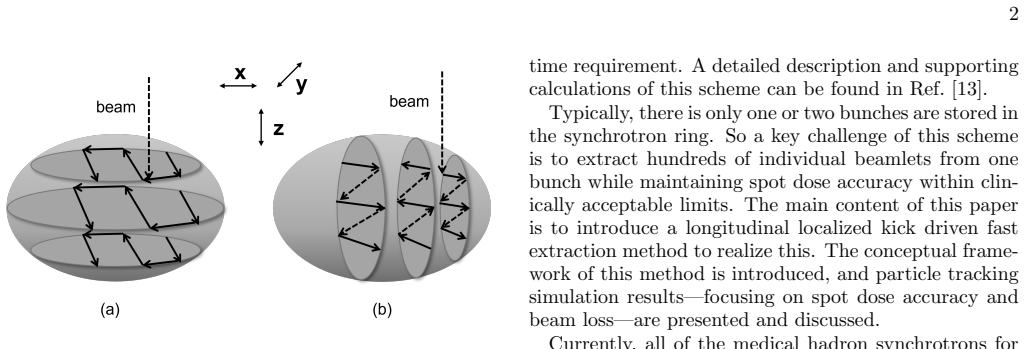
This paper presents the design of a rapid cycling synchrotron (RCS) featuring a longitudinal localized kick driven fast extraction system for three-dimensional (3D) pencil beam scanning (PBS) proton FLASH delivery. The extraction method is designed to accommodate a novel scanning scheme that addresses the stringent requirement for substantially shorter delivery time compared to current solutions, where the scanning layer is parallel to the proton beam direction. In this method, the kicker pulse waveform is applied selectively to specific longitudinal segments of the proton bunch. For each scanning spot, the functional region of the kicker along the longitudinal direction is dynamically adjusted based on real-time beam longitudinal line density measured by a beam current monitor. The corresponding region-determination algorithm is provided. We analyze the spot dose accuracy and the beam loss at the septum, indentifying increased particle longitudinal line density will reduce spot dose accuracy and increase beam loss. A total number of particles of $2\times10^{10}$ can satisfy the requirements of spot dose accuracy and the beam loss due to the septum is less than 1%. The extraction system comprises a stripline kicker, an electric septum (ESe), and a magnetic septum (MSe), imposing specific requirements on the RCS lattice design. The RCS is carefully designed to meet these constraints, and the parameters of the extraction elements are detailed. By integrating a novel scanning scheme with a specially designed RCS and fast extraction method, this work demonstrates the feasibility of achieving 3D PBS proton FLASH delivery.
0
0
physics.chem-ph 2026-05-14 Recognition

Methane ground-state energies measured to kHz precision up to J=12

Rotational energy levels in the ground vibrational state of methane with kHz-level accuracy from comb-referenced double-resonance and Lamb-dip spectroscopies

Comb-referenced double-resonance and Lamb-dip methods measure level differences fitted to absolute term values

abstract click to expand
Methane is a key spherical-top molecule, yet restrictive selection rules for one-photon transitions have prevented determination of its ground state (GS) energies with state-of-the-art kHz-level accuracy. We report the GS rotational energy level differences with kHz-level accuracy from two frequency-comb-referenced sub-Doppler methods: optical-optical double-resonance spectroscopy in the ${\Lambda}$-type configuration, and Lamb-dip spectroscopy of allowed and forbidden transitions. A Hamiltonian fit to the data yields GS term values with rotational numbers up to $\it{J}$ = 12 with kHz level accuracy.
0
0
physics.app-ph 2026-05-14 2 theorems

Ultrasound identifiability set by forward structure and variability

Identifiability Limits in Ultrasonic Microstructure Characterisation: A Canonical and Stochastic Framework

Forward-map geometry and variance-weighted analysis show combined observables help but intrinsic spread still limits recovery of correlation

Figure from the paper full image
abstract click to expand
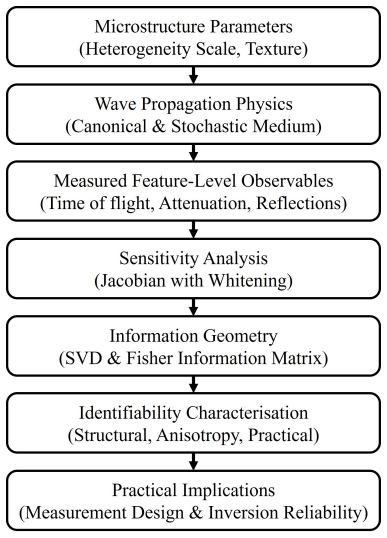
Ultrasound for microstructure characterisation is increasingly studied and is often assessed through inversion performance. However, the framework is fundamentally constrained by the information content available in the measured response. Hence, this work examines identifiability directly by analysing the geometry of the forward operator in both a canonical pulse-echo model and a stochastic surrogate microstructure. For the canonical model, a closed-form sensitivity analysis reveals information limits arising from parameter coupling, dimensional restriction, and interface-driven saturation. For the surrogate microstructures represented by Gaussian random fields, the forward map from correlation length $D$ and texture-coherence parameter $T$ to the attenuation and velocity observables remains structurally full rank. However, the sensitivity geometry is strongly anisotropic, with uneven parameter influence across the observable space. When intrinsic microstructural variability is incorporated, practical identifiability is further reduced. A variance-weighted Fisher framework shows that recoverability is governed by the balance between sensitivity magnitude and stochastic variability, rather than by structural rank alone. Inversion results confirm this behaviour: single observables produce elongated and weakly constrained objective landscapes, whereas combined observables improve conditioning through complementary sensitivities. These results show that, within the feature-level framework considered here, identifiability limits are governed primarily by forward-map structure and intrinsic variability, with direct implications for observable selection and measurement design.
0
0
physics.acc-ph 2026-05-14

This paper introduces a quasi-strong-strong beam-beam simulation method to model…

Quasi-Strong-Strong Beam-Beam Modeling of Bootstrapping Injection in FCC-ee

Quasi-strong-strong simulations identify stable bootstrapping injection up to nominal bunch population in W and H modes of FCC-ee but…

abstract click to expand
The FCC-ee is designed to operate with exceptionally strong beam--beam interactions, making continuous injection a critical and non-trivial aspect of its operation. During the injection process, an unavoidable charge imbalance between the two colliding beams leads to asymmetric beam--beam forces, potentially compromising transverse stability. In this paper, we introduce a quasi-strong-strong (QSS) beam--beam scheme, implemented in the SAD simulation framework. The method preserves a self-consistent beam--beam lens by coupling paired weak--strong simulations, while avoiding the computational cost of full strong--strong tracking. The injection process is modeled as a gradual increase of the stored bunch population, allowing the isolated study of beam--beam--driven optics deformation under charge imbalance. Using the QSS approach, we investigate the feasibility of bootstrapping injection in the Z, W, and H operating modes of FCC-ee. Stable injection paths up to the nominal bunch population are identified in the W and H modes. In contrast, in the explored parameter region, the Z mode exhibits saturation of the stored population below the nominal value.
0
0
physics.geo-ph 2026-05-13 2 theorems

Core-mantle bumps drive torques matching observed day-length wobbles

Effects of global core-mantle boundary topography on outer-core convection and topographic torques

Simulations find deformed flow contours boost convection and produce torques whose size, at Earth conditions, fits decadal rotation changes.

Figure from the paper full image
abstract click to expand
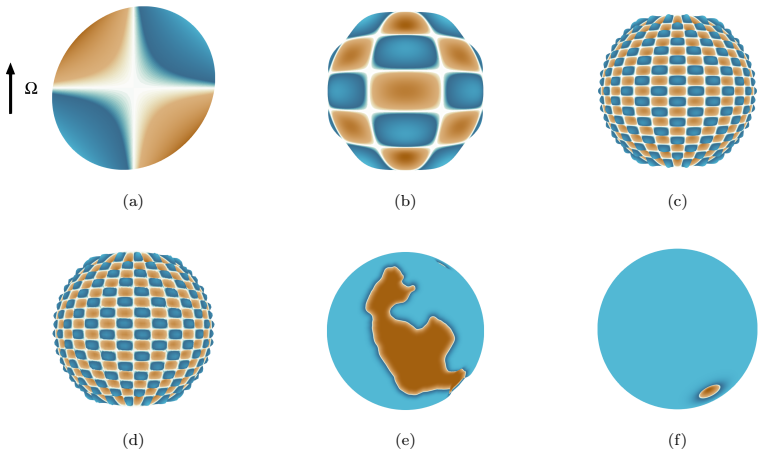
Topography at the core-mantle boundary (CMB) couples the outer core to the mantle and likely generates observable variations in the length of day ($\Delta$LOD) and the geomagnetic field, though these effects remain poorly understood. We use direct numerical simulations of rotating shell convection with finite-amplitude CMB topography to investigate dynamical effects on the outer core. A range of topographic shapes is used, including individual spherical harmonics and a model representing seismically inferred heterogeneities in the deep mantle. As predicted by prior linear theory in the rotating annulus model, a new instability arises for Rayleigh numbers below the onset of convection; we confirm its existence in a global geometry, though the predicted scalings are quantitatively modified. The shape of the geostrophic contours -- lines of constant axial height -- plays a central role: deformed contours allow buoyancy to do work on the time-averaged flow, driving increases in Reynolds and Nusselt numbers of up to $\sim$100\% relative to a spherical boundary. Previous work showed that topographic torques scale linearly with topographic amplitude and quadratically with flow speeds; we confirm this scaling and extend it with new theory that estimates the torques for global, spectrally broad topography. When extrapolated to core conditions, the predicted torques are consistent with the magnitude required to drive observed decadal and subdecadal $\Delta$LOD variations.
0
0
physics.atom-ph 2026-05-13 2 theorems

Axion exchange shifts lithium-like ion energies

Axion-Exchange Contribution to the Energy of Lithium-Like Ions

The effect strengthens with higher nuclear charge, yielding constraints on axion parameters from bismuth spectroscopy.

abstract click to expand
Axions and axion-like particles are among the most promising candidates for dark matter and for manifestations of new physics beyond the Standard Model. In the present work, the contribution of axion exchange to the energy of lithium-like ions is investigated within the framework of relativistic bound-state quantum electrodynamics. A formalism for the interelectronic interaction mediated by axion exchange is developed in the Furry picture with finite nuclear size taken into account. Energy shifts are calculated for a wide range of nuclear charge numbers \(Z\) and axion masses. The magnitude of the axion-induced contribution is shown to increase with increasing \(Z\) for all states considered. Based on the analysis of lithium-like bismuth, constraints on the axion-electron interaction parameters are obtained in the high-mass region. The results indicate that precision spectroscopy of highly charged ions is a promising tool for searches for new physics associated with the exchange of pseudoscalar bosons.
0
0
physics.bio-ph 2026-05-13 2 theorems

Beverage waste drives top mycoprotein growth rates

Kinetics of Mycoprotein Production from Alternative Carbon Substrates

Screening shows expired functional drink beats pure sugars in speed, biomass titre and reduced byproducts.

abstract click to expand
High throughput screening was used to study of the biokinetics of F. venenatum A3/5 cultivation on alternative carbon substrates, including monosaccharides, disaccharides and mixtures relevant to food & beverage, dairy and agricultural waste streams. Expired functional drink from the beverage sector was also assessed as the primary carbon source for mycoprotein production. Growth data was analysed using modified single and multiphase Gompertz models for comparison of maximum specific growth rate and progression milestones across diverse growth regimes. Time-series substrate and byproduct data was analysed using comparative metrics, providing an explanatory basis for the different growth phenotypes observed. Substrate type strongly influenced the apparent carbon allocation strategies, with rapidly consumed sugars such as glucose and sucrose supporting high growth rates, low biomass yield and a high degree of fermentative byproduct formation. Fructose and xylose cultivations led to slower overall growth but higher biomass yield and lower byproduct formation. Galactose and lactose showed distinct dynamics that suggested co-existence of transport and metabolic induction limitations. In all dual-substrate systems, sequential utilisation was observed. However, metabolic inheritance and environmental shift effects were highlighted as potential kinetic limitations. These conditions exhibited stunted diauxic growth and low yield from secondary sugars, with glucose-dominated primary growth significantly reshaping secondary substrate efficiencies relative to their study in silo. The expired functional drink supported highly rapid growth and achieved the highest maximum specific growth rate and biomass titre of all conditions examined, alongside reduced fermentative overflow and enhanced ethanol reassimilation relative to a compositionally matched synthetic control.
0
0
physics.comp-ph 2026-05-13 Recognition

Tangent-plane uncertainty outperforms random sampling for magnetic potentials

Tangent-Plane Evidential Uncertainty in Active Learning for Magnetic Interatomic Potentials

Projecting spin-force uncertainty into the plane orthogonal to local spins creates an indicator that tracks errors and selects informative训练

Figure from the paper full image
abstract click to expand
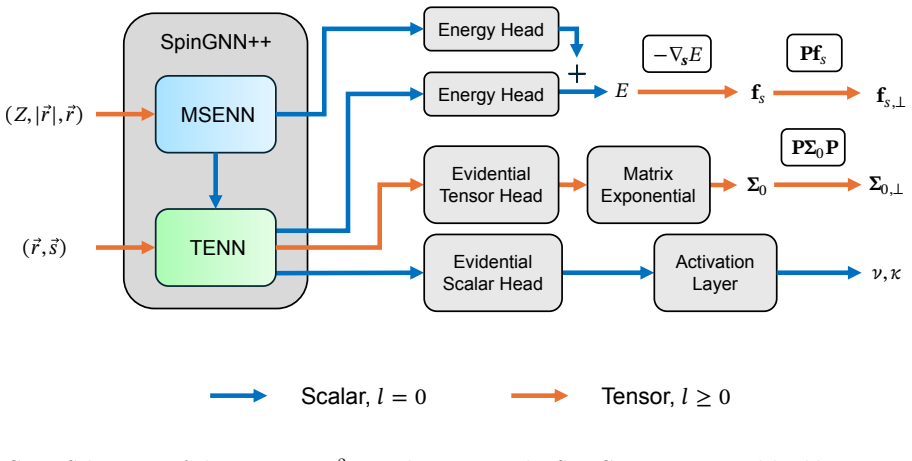
Magnetic interatomic potentials need to account for coupled lattice and spin degrees of freedom, yet constructing reliable training sets remains costly because noncollinear first-principles labels are expensive. Active learning can mitigate this cost, provided that the uncertainty estimate is physically meaningful for the magnetic-response targets that drive spin reorientation. Here we extend the $\mathrm{e}^2\mathrm{IP}$ evidential framework to magnetic machine-learning interatomic potentials by formulating the projected spin-force likelihood and the corresponding epistemic uncertainty in the tangent plane orthogonal to the local spin direction. This construction prevents the uncertainty model from allocating probability mass to a radial spin component that is absent from the constrained-moment supervision. Using bulk BiFeO$_3$ and monolayer CrTe$_2$ as benchmark systems, we show that the resulting tangent-plane epistemic uncertainty indicator $U_{\mathrm{epi}}^{\mathrm{sf}}$ correlates strongly with prediction error and selects more informative configurations than random sampling, simultaneously improving energy, force, and projected spin-force accuracy. These results demonstrate a physically interpretable and data-efficient route for constructing uncertainty-aware magnetic machine-learning interatomic potentials.
0
0
physics.optics 2026-05-13 2 theorems

Soliton comb sends error-free 10 Gbps at 300 GHz

Transmission of signals in the 300 GHz band with a bit-error rate below {10}⁻⁹ using a soliton comb

Simple direct-detection setup reaches bit-error rates below 10^{-9} in back-to-back test and projects viable free-space range of tens of met

Figure from the paper full image
abstract click to expand
To address the increasing demand for ultra-high-capacity wireless communication, terahertz (THz) frequencies near 300 GHz are attracting attention as a new spectral frontier. This work presents the first experimental demonstration of error-free (BER $< 1\times10^{-9}$) 10 Gbps transmission in the 300 GHz band using a soliton microcomb generated in an integrated silicon nitride (SiN) microring resonator. While many previous microcomb-based THz demonstrations have focused on coherent modulation formats and operation near the forward-error-correction (FEC) limit, this work investigates a simple intensity-modulation/direct-detection (IM-DD) on-off keying (OOK) architecture suitable for low-complexity THz links and fiber-wireless integrated systems. Although the experiment was conducted in a short back-to-back waveguide configuration, the generated THz wave enabled stable low-BER transmission without FEC or advanced offline signal processing. Analysis of the error-free threshold power indicates the feasibility of free-space transmission over several tens of meters with high-gain antennas and THz-band amplifiers. These results demonstrate the feasibility of robust low-complexity THz photonic links based on soliton microcombs for short-range fiber-wireless integrated systems.
0
0
physics.optics 2026-05-13 2 theorems

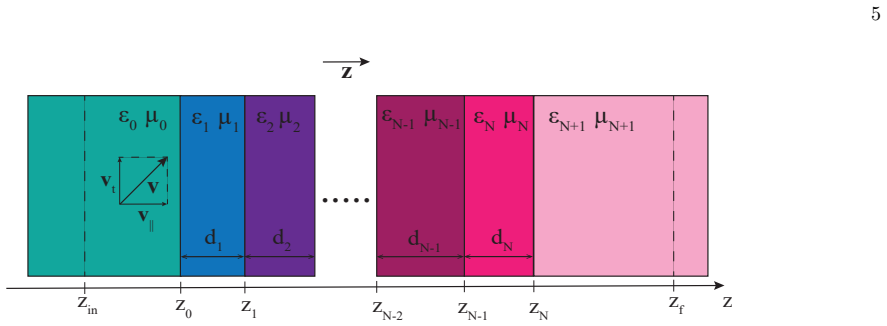
Operator method derives Green's function for layered media

General and concise operator approach to the dyadic Green's function of layered media

Evolution operators and impedance tensors express the function for anisotropic layers while separating the singular term.

Figure from the paper full image
abstract click to expand
Dyadic Green's function is an important tool of computational photonics, giving deeper insights into light-matter interaction. We present an operator approach to the derivation of the dyadic Green's function of a generic anisotropic planarly-layered medium for both electric and magnetic fields. The resulting Green's function is expressed through the evolution operators (a kind of transfer matrices) of the comprising layers and the surface impedance tensors, the singular term being naturally separated from other terms. The operator approach to the Green's function simplifies both the conceptual understanding of the problem and the subsequent practical applications, some of which are demonstrated here. The proposed approach can be easily generalized to the case of spherical and cylindrical layers. The obtained results can be applied in nanophotonics engineering problems.
0
0
physics.geo-ph 2026-05-13 2 theorems

Stress-jump conditions reduce to one-parameter calibration

Calibration of stress-jump conditions for arbitrary flow directions in fluid-porous systems

Structural properties of the porous medium allow the three-coefficient friction tensor to be replaced by a single value while preserving fit

abstract click to expand
A numerical validation of the stress-jump coupling conditions for Stokes-Darcy flow in two dimensions is presented, addressing a gap that has remained since their introduction by Angot et al.. These conditions, formulated for arbitrary flow directions at the interface between a porous medium and an adjacent free-flow region, involve a friction tensor whose coefficients are not known a priori. We calibrate these parameters for a range of porous-medium configurations and flow regimes by matching the macroscopic model to reference solutions derived from processed pore-scale simulations. Several optimization strategies are assessed for this calibration task. The results show that, although three parameters are formally required, exploiting structural properties of the porous medium enables an effective reduction to a one-dimensional calibration with negligible loss in accuracy. A regional sensitivity analysis further indicates that even coarse parameter estimates can yield a well-performing model, highlighting the robustness and practical applicability of the stress-jump formulation.
0
0
physics.atm-clus 2026-05-13 2 theorems

Natural orbitals outperform Dyson ones for helium drop density

Natural and Dyson orbitals in small helium drops

In clusters of 5-20 atoms both sets reconstruct the density, but natural orbitals from the density matrix do so more accurately, with thegap

abstract click to expand
The natural and Dyson orbitals are studied for small helium drops comprising 5 to 20 helium atoms interacting via a soft two-body gaussian potential. The wave functions of these drops have been obtained in the hyperspherical cluster model (HCM) which provides a correct description of the single-particle behaviour at large separations from the system. The natural orbitals are obtained from diagonalization of the nonlocal one-body density matrix, while Dyson orbitals are constructed by direct overlap of the wave functions of two drops differing by one boson. This overlap converges with increasing basis of the HCM. The shapes and occupancies of the natural orbitals as well as their link to Dyson overlaps and evolution with increasing number of atoms are discussed. Both natural and Dyson orbitals can be used to represent the density of the system. However, the natural orbitals representation is demonstrated to be superior. With increasing boson numbers the difference between Dyson and natural orbitals becomes less prominent and it is expected to disappear in infinitely large systems of identical bosons.
0
0
physics.ao-ph 2026-05-13 2 theorems

Doubling CO2 lowers seawater pH by only 0.25 units

Acidification of Water by CO2

Buffering from alkalinity keeps the shift comparable to daily biological cycles and smaller than existing ocean variations.

Figure from the paper full image
abstract click to expand
Fundamental inorganic chemistry shows that increasing concentrations of atmospheric CO2 will have no harmful effect on organisms that live in the natural waters of the Earths, and may well benefit them. Alkalinity and dissolved CO2 give high buffering capacity to most natural waters and minimize the change of pH from external influences. For example, doubling the atmospheric concentration of CO2 from 430 ppm to 860 ppm would reduce the pH of representative sea water at a temperature of 25 C from pH = 8.18 to pH = 7.93. This change is comparable to diurnal pH changes in biologically productive surface waters, due to photosynthetic fixation of dissolved inorganic carbon during the day and respiration at night. The change is also less than the variations of pH with latitude, longitude and depth in the oceans. This paper includes a quantitative review of the carbonate chemistry of seawater and freshwater, the buffering capacity, the Revelle factor, the transport of calcium carbonate in ground water, the formation of flowstone, and the classic use of limewater to detect gaseous CO2. The paper concludes with a brief review of those parts of chemical thermodynamics that are involved in ocean acidification.
0
0
physics.flu-dyn 2026-05-13 Recognition

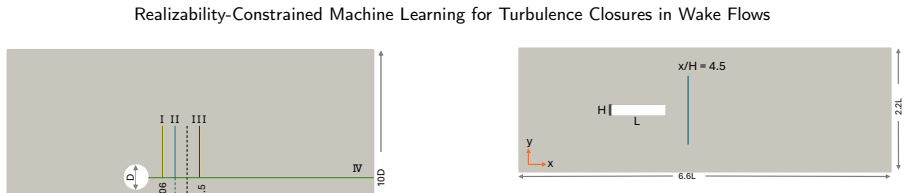
Realizability filters cut turbulence model costs by 42%

Realizability-Constrained Machine Learning for Turbulence Closures in Wake Flows

Barycentric-map constraints inside CFD-driven gene expression programming produce stable closures that generalize across wake geometries.

Figure from the paper full image
abstract click to expand
Computational fluid dynamics (CFD)-driven machine learning frameworks based on symbolic regression offer a promising pathway for turbulence model discovery, but are often hindered by numerical instability, residual stagnation, and non-physical model behavior during training. In particular, realizability, which is rarely enforced explicitly during model development, remains a critical yet overlooked requirement, especially for accurate wake prediction. In this work, a residual- and realizability-filtered CFD-driven framework is proposed to enhance both efficiency and robustness within a gene expression programming (GEP) paradigm. The method integrates two residual-based filtering criteria along with a barycentric-map-based realizability constraint directly into the CFD solution loop, enabling early identification and rejection of unstable and non-realizable candidate models. This reduces unnecessary computational effort while guiding the search toward physically admissible solutions. The proposed approach achieves a 42.3% reduction in computational cost relative to the baseline CFD-driven GEP framework and reduces non-realizable models at convergence from 58.4% to 1.7%. The framework is trained on a canonical cylinder wake. The resulting models enhance mean wake prediction and remain realizable across training and test cases, with robust generalization to diverse geometries and operating conditions, including a rectangular cylinder, an airfoil, and an axisymmetric body. The study further provides insights into realizable model statistics, coefficient trends, and conditions governing physically consistent wake behavior. These results demonstrate that incorporating realizability and stability constraints within CFD-driven learning enables efficient and physically consistent turbulence model discovery, offering a scalable pathway toward reliable data-driven closure development.
0
0
physics.acc-ph 2026-05-13 1 theorem

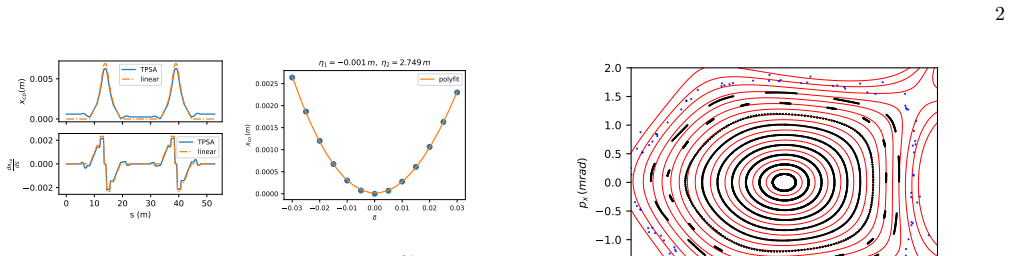
Approximate invariants extract betatron frequencies from nonlinear beams

Approximate Invariant Analysis: An Efficient Framework for Nonlinear Beam Dynamics, Part I: Geometric Approaches of the Poincar\'e Rotation Number

A framework pairs approximate invariants with Poincaré rotation numbers to analyze beam motion in rings like NSLS-II.

Figure from the paper full image
abstract click to expand
We present the first part of an efficient framework for nonlinear beam dynamics, termed Approximate Invariant Analysis (AIA). The framework is based on the construction of approximate invariants~[Y.~Li, D.~Xu, and Y.~Hao, Phys.\ Rev.\ Accel.\ Beams \textbf{28}, 074001 (2025)] and on the extraction of the betatron frequency with the geometric foundations of Poincar\'e rotation number~[S.~Nagaitsev and T.~Zolkin, Phys.\ Rev.\ Accel.\ Beams \textbf{23}, 054001 (2020)]. The method is demonstrated using the National Synchrotron Light Source~II (NSLS-II) storage ring as an illustrative example.
0
0
physics.flu-dyn 2026-05-13 Recognition

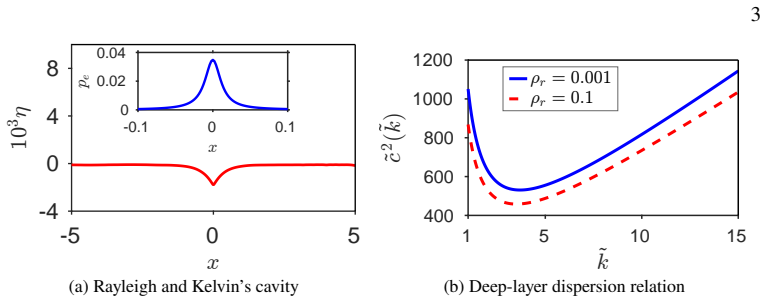
Time decay selects capillary waves ahead of pressure forcing

Interfacial waves from pressure forcing: revisiting classical theories from an IVP perspective

An initial-value problem shows algebraically decaying transients cause asymmetric Fourier cancellation, yielding short waves in front and

Figure from the paper full image
abstract click to expand
A localised overpressure translating at a uniform speed greater than a critical value acts at the interface between two deep fluid layers with different densities. We analyse the resulting wave patterns using an initial-value problem formulation within the linearised, inviscid, potential flow framework. The steady-state interface exhibits short capillary waves ahead of the forcing and long gravity waves behind it, arising from an asymmetric cancellation of Fourier components in the far field. The time-dependent part of the solution, decaying algebraically with time, plays a crucial role in this mechanism. This contrasts with classical steady approaches, which require additional conditions to select a unique solution. We extend this approach to a two-fluid interface and validate the predictions against nonlinear simulations.
0
0
physics.atom-ph 2026-05-13 2 theorems

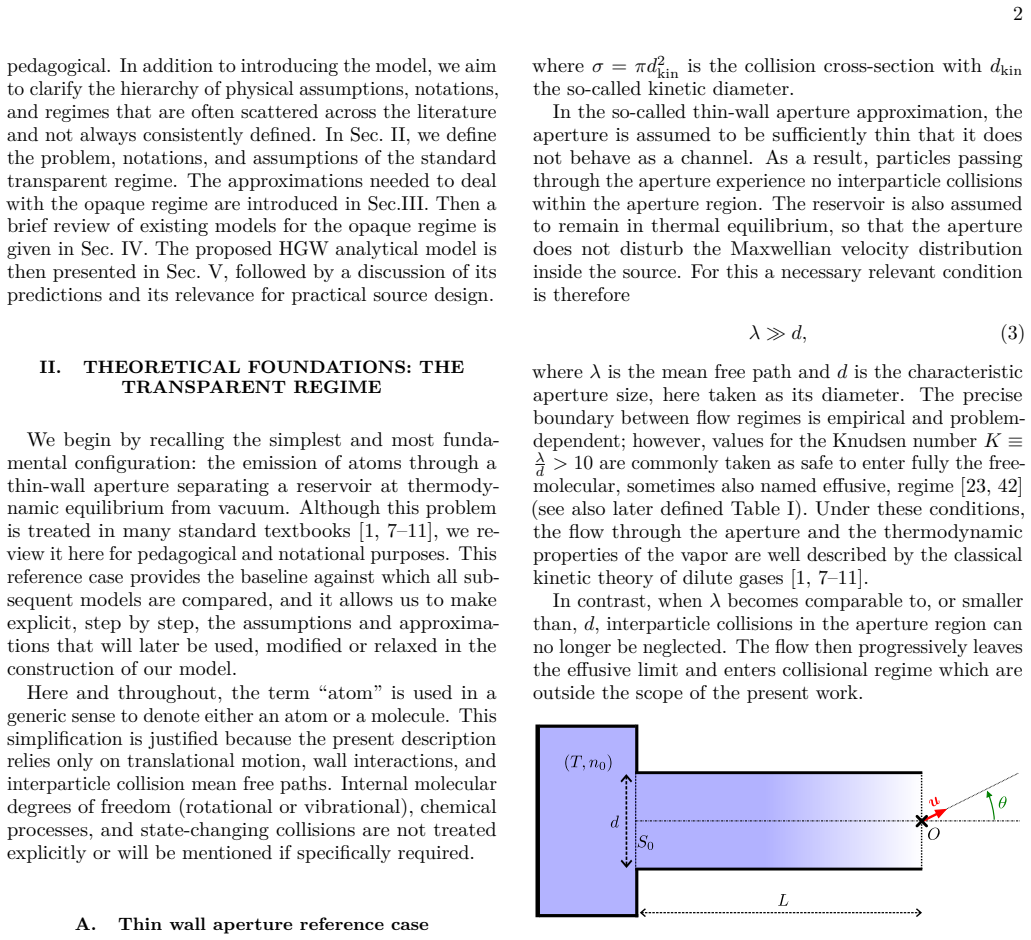
Analytical model gives effusive source intensity for any molecular flow

Analytical emission model for the design of primary effusive sources

Covers transparent to opaque regimes in long tubes and recovers standard axial flux for source design.

Figure from the paper full image
abstract click to expand
We present an analytical emission model that accurately predicts the properties of effusive sources formed by long collimation tubes. By construction, it captures the full range of molecular flow, from the transparent flux regime, which occurs in highly rarefied gases, to the opaque regime, which arises as the flux increases and interparticle collisions become non-negligible. The model is based on a previously developed secondary-emission-surface approach, improved here to overcome its internal limitations and recover the well-established axial flux intensity. It provides accurate analytical predictions of the angular intensity distribution in the molecular flow regime, offering valuable guidance for the design of efficient primary sources across a broad range of experiments in atomic and molecular physics
0
1
physics.chem-ph 2026-05-13 2 theorems

BN doping makes naphthalene Dewar isomerization asymmetric

Asymmetric Planar-to-Dewar Isomerisation in BN-Doped Naphthalene: Mechanistic Implications for Molecular Solar Thermal Storage

A transient boron-carbon contact stabilizes an intermediate and places the transition near a nonradiative funnel for solar energy storage.

abstract click to expand
The planar to Dewar valence isomerisation of 4a,8a-azaboranaphthalene (BN$_\text{Naph}$), a $\pi$ extended BN-doped analogue of azaborine, is investigated to evaluate how BN incorporation reshapes the minimum energy pathway on the ground state. This process is, for example, relevant in the context of molecular solar thermal (MOST) energy storage, where absorbed sunlight is converted into chemical energy through reversible photoisomerisation. Structures and vertical excitations were computed using DFT and TD-DFT, minimum energy pathways were mapped with nudged elastic band (NEB) calculations, and pathway energetics were refined with state averaged XMS-CASPT2. In addition, azaborine was examined as a comparison system, with particular emphasis on whether substituents at nitrogen and boron promote Dewar formation. The effect of BN doping on the system was analysed in detail. Compared with the carbon analogue, the conversion pathway becomes asymmetric with a metastable intermediate stabilized by a transient boron to carbon contact. The transition structure closely resembles an S$_0$/S$_1$ conical intersection, which is consistent with a vibrationally activated nonradiative funnel. For tuning MOST properties, screening of single substituents across the whole molecule reveals predominantly red shifted S$_1$ energies together with increased oscillator strengths and indicates that appropriate substitution can improve Dewar formation in azaborine derivatives.
0
0
physics.flu-dyn 2026-05-13 Recognition

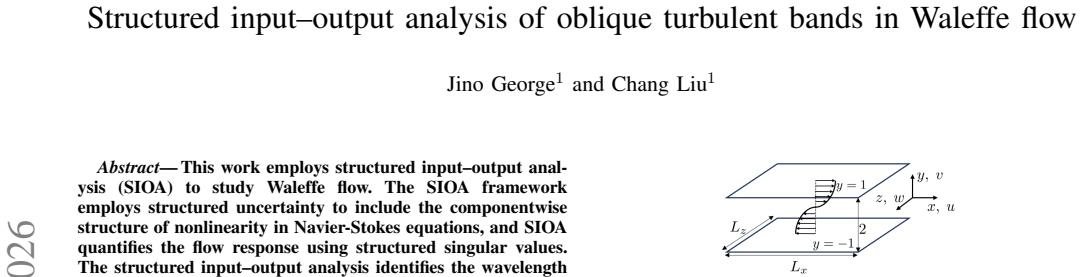
Structured analysis locates oblique turbulent band wavelength

Structured input-output analysis of oblique turbulent bands in Waleffe flow

The response strength grows as Reynolds number to the 1.7 power and matches large-domain simulation results.

Figure from the paper full image
abstract click to expand
This work employs structured input-output analysis (SIOA) to study Waleffe flow. The SIOA framework employs structured uncertainty to include the componentwise structure of nonlinearity in Navier-Stokes equations, and SIOA quantifies the flow response using structured singular values. The structured input-output analysis identifies the wavelength and inclination angle of oblique turbulent bands observed in large-domain direct numerical simulations. The structured input-output response scales over Reynolds number as $\sim Re^{1.7}$.
0
0
physics.ins-det 2026-05-13 2 theorems

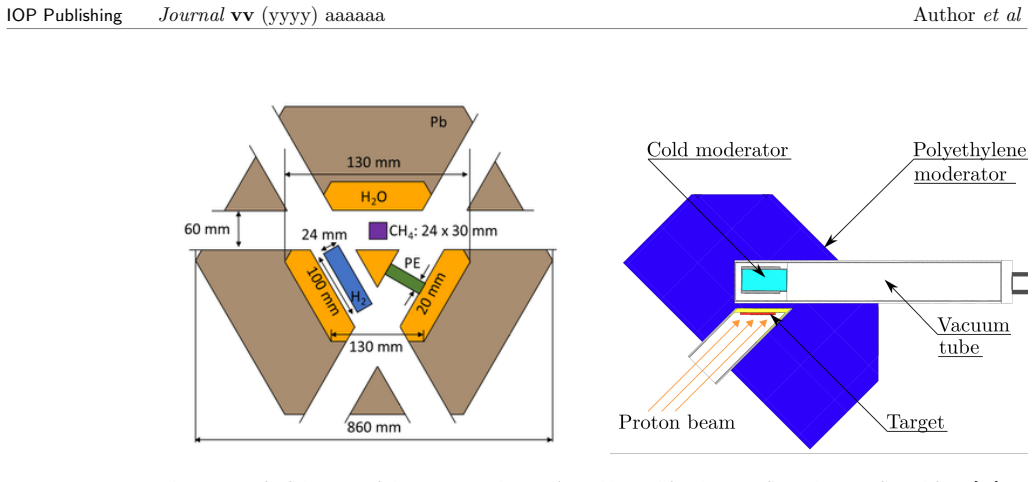
Generative models learn neutron sources from Monte Carlo lists

Machine Learning for neutron source distributions

After training, the models generate new particles rapidly and without storing the original data, offering a lighter alternative for neutron-

Figure from the paper full image
abstract click to expand
In light of the recent advancements in machine learning, we propose a novel approach to neutron source distribution estimation through the utilisation of probabilistic generative models. The estimation is based on a Monte Carlo particle list, which is only required during the training stage of the machine learning model. Once the source distribution has been learned, the model is independent of the original particle list, allowing for further sampling in an efficient, rapid, and memory-costless manner. The performance of various generative models is evaluated, including a variational autoencoder, a normalizing flow, a generative adversarial network, and a denoising diffusion model. These approaches are then compared to existing source distribution estimations, and the advantages and disadvantages of each approach are discussed. The results demonstrate that source distributions can be modeled through the use of probabilistic generative models, which paves the way for further advancements in this field.
0
0
physics.plasm-ph 2026-05-13 Recognition

Finite-difference exponential solver matches spectral accuracy in cylindrical PIC

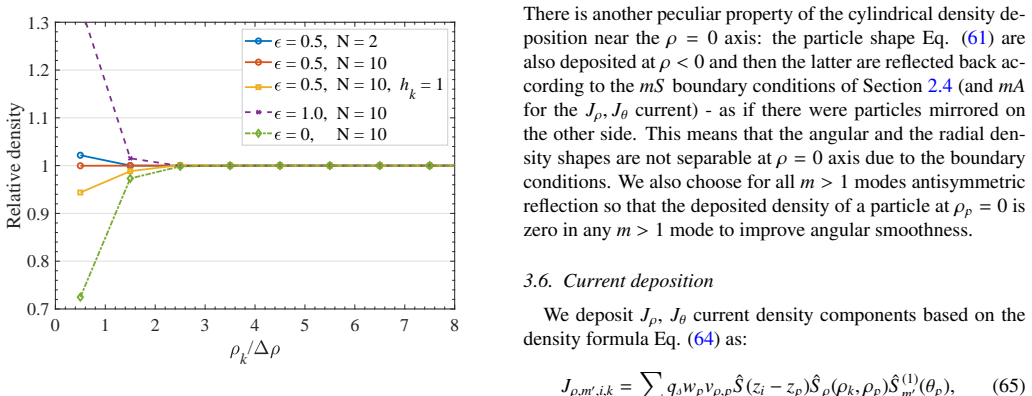
High-order exponential solver method for particle-in-cell simulations in cylindrical geometry

Real-space high-order method reproduces 3D and FBPIC wakefield results without basis transformations while keeping cylindrical cost savings.

Figure from the paper full image
abstract click to expand
Recent developments in high peak-power table-top laser systems reaching highly relativistic light intensities have led to significant advances in laser-driven particle acceleration schemes (mainly the laser wakefield acceleration, LWFA) that heavily rely on particle-in-cell (PIC) simulations for the microscopic understanding of the acceleration process. Efficient algorithms have been developed by taking advantage of the cylindrical geometry of the laser-plasma acceleration interaction, which reduces the computational and memory costs of these simulations, but with the trade-off of reduced accuracy compared to the 3D simulations. The most successful solution solves the Maxwell equations on a Fourier-Bessel spectral basis in this geometry, as used by the well-known FBPIC code. In this work, we present a solution that is a real-space equivalent of the latter using the finite difference exponential time-domain method. Spatially, we represent the derivatives with high-order staggered finite differences locally and address issues of the near-axis particle representation. Additionally, we also develop an exponential solution to propagate the laser envelope potential with high accuracy in the cylindrically symmetric PIC model. We show that this method provides a very high accuracy without relying on a transformation to special basis functions. We verified the accuracy and the convergence of these methods in various benchmarks involving laser propagation in vacuum and in underdense plasma. Electron injection in the non-linear laser wakefield regime has also been simulated and the results are compared with 3D simulations, and to the cylindrical spectral solution of FBPIC. We found good agreement between these methods; however, the spectral solution resulted in less energetic electrons and a smoother spatial distribution near the cylindrical axis.
0
0
physics.plasm-ph 2026-05-13 2 theorems

MPEX AI twins reach two phase I milestones on schedule

MPEX AI Digital Twins Milestone Report

Progress report confirms helicon hot-spot controller and beam damage prototype are ready for June demonstration with Galaxy automation in

Figure from the paper full image
abstract click to expand
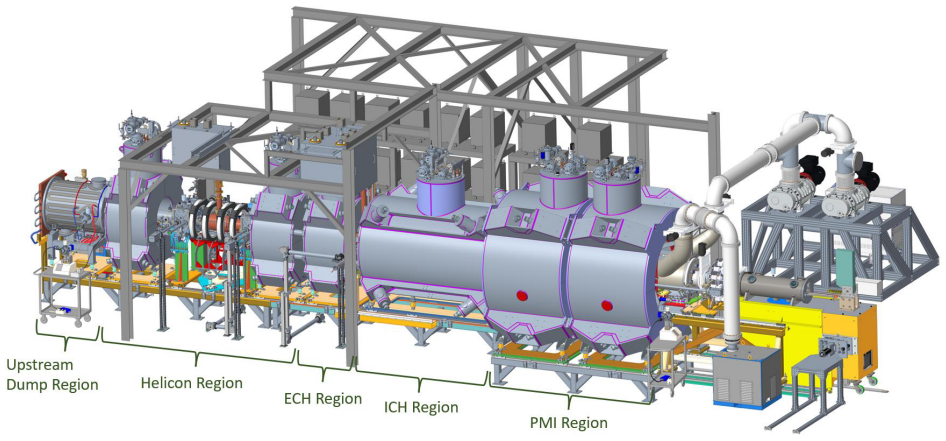
This is the six month progress report to Fusion Energy Science (FES) and the American Science Cloud (AmSC) on the MPEX AI Digtial Twins project that was started in October 2025. There are two milestones to demonstrate the Artificial Intelligence (AI) advantage for MPEX operations and scientific discovery, that will be completed by June 2026. The first is a Helicon AI Hot-Spot Controller (Sec. 3.1), which is the helicon heating component of the more comprehensive planned MPEX AI Hot Spot Digital Twin (Sec. 3). The second is an E-beam Damage Assessment Digital Twin (Sec. 4.1), which is a reduced electron beam damage modality prototype for the MPEX AI Damage Assessment Digital Twin (Sec. 4). These two phase I milestones are on track for the June demonstration. In addition to these two milestones, progress on configuring the Galaxy software interface for automation, validation and data analysis is reported (Sec. 5). This interface now connects a subset of the main physics simulation codes to DOE HPC resources and will connect to the MPEX data acquisition system so that analysis of data, validation and execution of simulations can be performed by the scientist or by AI-Agents. When AmSC is ready to accept connections and data, Galaxy will be the MPEX interface to AmSC
0
0
physics.atm-clus 2026-05-13 Recognition

Global fit improves OH+ spectroscopic constants

Hyperfine-Resolved Rovibrational and Rotational Spectroscopy of OH^+ (X ³Sigma^-)

New IR and THz measurements of hyperfine-resolved transitions in a cold ion trap tighten the ground-state parameters of the molecular ion.

Figure from the paper full image
abstract click to expand
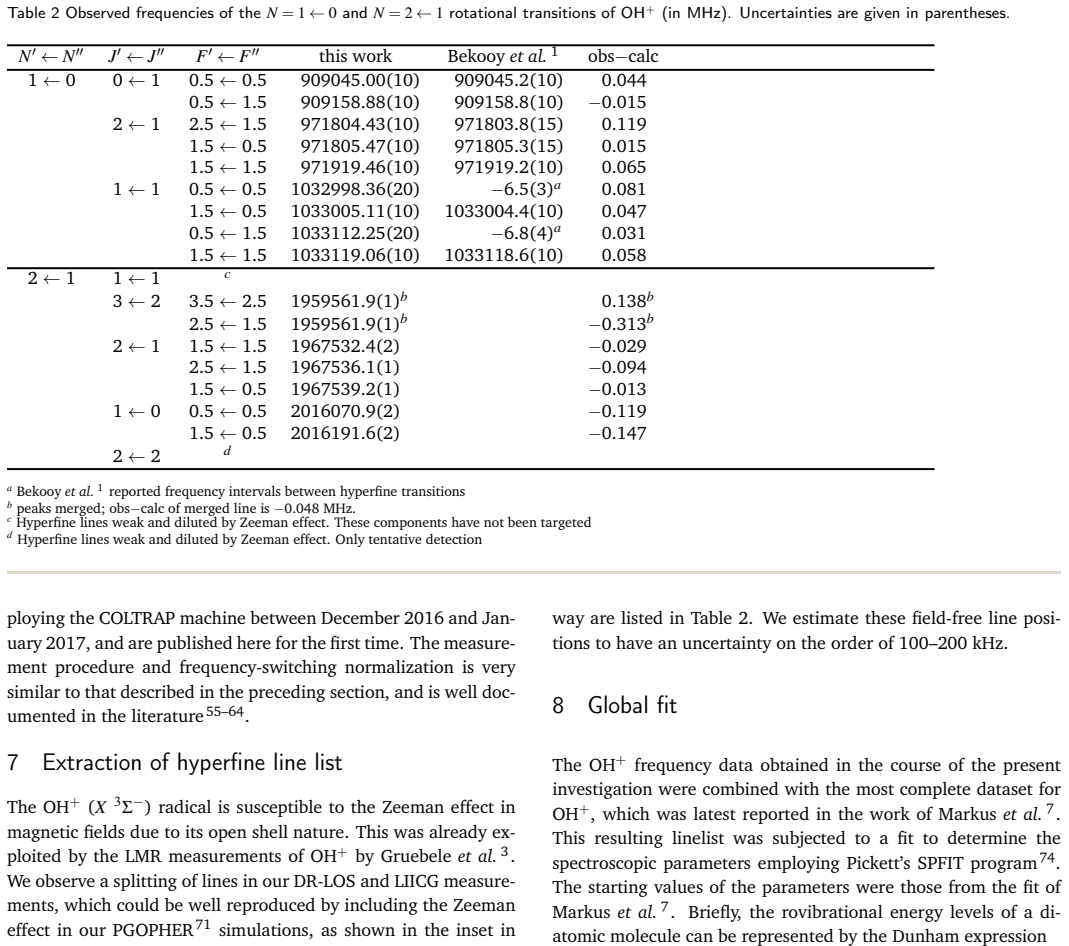
The OH$^+$ ($X ^3\Sigma^-$) radical cation has been investigated by combining a 4 K 22-pole ion trap apparatus with high-resolution IR and THz radiation sources. Applying different types of action spectroscopic methods, the fundamental vibrational band in the 3 $\mu$m range and the spin manifold of the $N=1 \leftarrow 0$ rotational transition around 1 THz have been extended and refined. Additionally, the spin manifold of the $N=2 \leftarrow 1$ rotational transition, scattered around 2 THz, has been measured for the first time with microwave accuracy. Although all hyperfine components of the pure rotational transitions are affected by considerable Zeeman splittings, a simulation of their contours allowed us to extract the field-free center frequencies with high accuracy. A global fit combining rovibrational and pure rotational transitions from the literature with those newly obtained in this work was performed, leading to improvements in the spectroscopic constants of OH$^+$, particularly those in the ground vibrational state.
1 0
0
physics.soc-ph 2026-05-13 Recognition

Environment drives 27-134 times more outcome variance than traits

Empirical Confirmation of the Environmental-Dominance Inequality A direct decomposition of Var(ln r{ho}eff ) across four levels of aggregation

Direct variance breakdown across countries and inside nations shows the environmental-dominance inequality holds at most scales but narrows,

Figure from the paper full image
abstract click to expand
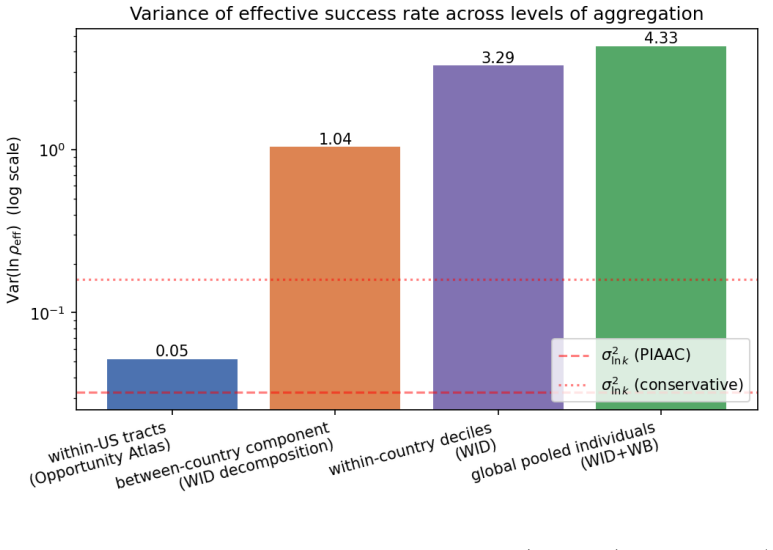
Empirical confirmation of the environmental-dominance inequality Var(ln rho_eff) >> Var(ln k) from arXiv:2605.02985, computed directly from three public datasets (Opportunity Atlas, World Bank GDP per capita PPP, World Inequality Database) at four levels of aggregation: U.S. census tracts, between countries, within-country deciles, and the global pooled-individual distribution. The headline global value Var(ln rho_eff) = 4.33 yields a dominance ratio R in [27, 134] across plausible sigma_ln k in [0.18, 0.40]. The inequality holds with one-to-two orders of magnitude margin at the global and within-country-decile levels, with a single-digit but still dominant margin between countries, and collapses to R in [0.33, 1.61] within already-homogenized U.S. census tracts for income. A 1990-2022 time series shows the global aggregate stable while composition shifts from between-country dispersion (-34%) to within-country dispersion (+26%), consistent with international convergence plus Piketty r > g. Multi-outcome validation shows the inequality is robust for income, infant mortality and incarceration but shrinks toward parity for outcomes targeted by sustained global convergence (life expectancy). Partial-identification and selection-bias bounds (Chetty-style 40-50% selection share) leave R in [14, 80]. All inputs and outputs are SHA-256 hashed in an append-only manifest and fully reproducible from the accompanying notebooks.
0
0
physics.atom-ph 2026-05-13 Recognition

Cesium 456 nm MI transitions exceed conventional intensity in kG fields

Observation of Magnetically-Induced atomic transitions of the Cs 6S_{1/2} rightarrow 7P_{3/2} line at 456 nm

Seven forbidden lines gain strength and shift by 17 GHz, suiting blue-light references and high-resolution magnetometry.

Figure from the paper full image
abstract click to expand
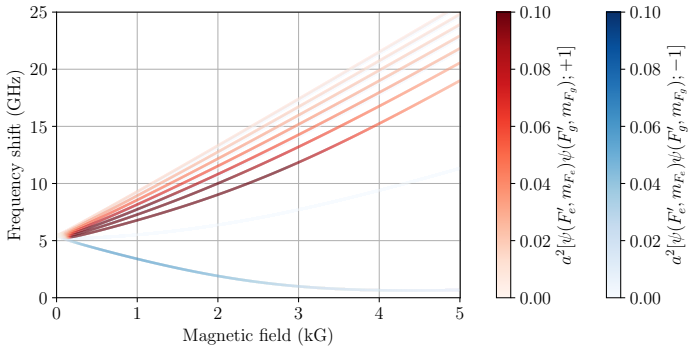
It has recently been demonstrated that magnetically induced (MI) transitions, a class of transitions forbidden at zero magnetic field, of the Cs 6$^2$S$_{1/2} \rightarrow 6^2$P$_{3/2}$ (D$_2$) line, exhibit promising features for high-resolution physics applications in the near-infrared range. In this work, we study a group of seven MI transitions ($F_g = 3 \rightarrow F_e = 5$) of the Cs $6^2$S$_{1/2} \rightarrow 7^2$P$_{3/2}$ line at $\lambda = 456$ nm. The experimental measurements are in very good agreement with theoretical predictions based on the diagonalization of the Zeeman Hamiltonian. In magnetic fields ranging from $0.2-3$ kG, these transitions reach a maximum intensity above that of conventional transitions. Another noteworthy property is their large frequency shift, reaching approximately $17~\mathrm{GHz}$ with respect to the unperturbed hyperfine transitions in magnetic fields of about $3~\mathrm{kG}$. These interesting properties may prove useful for the realization of optical frequency references or magnetometers with sub-micron spatial resolution in the blue region of the spectrum.
0
0
physics.flu-dyn 2026-05-13 2 theorems

Adaptive fluxes preserve scalar bounds in high-order flow simulations

Formulations for scalar boundedness in simulations of turbulent compressible multi-component flows using high-order finite-difference methods

New finite-difference formulations keep species mass fractions physical in under-resolved turbulent multi-component cases without preset min

Figure from the paper full image
abstract click to expand
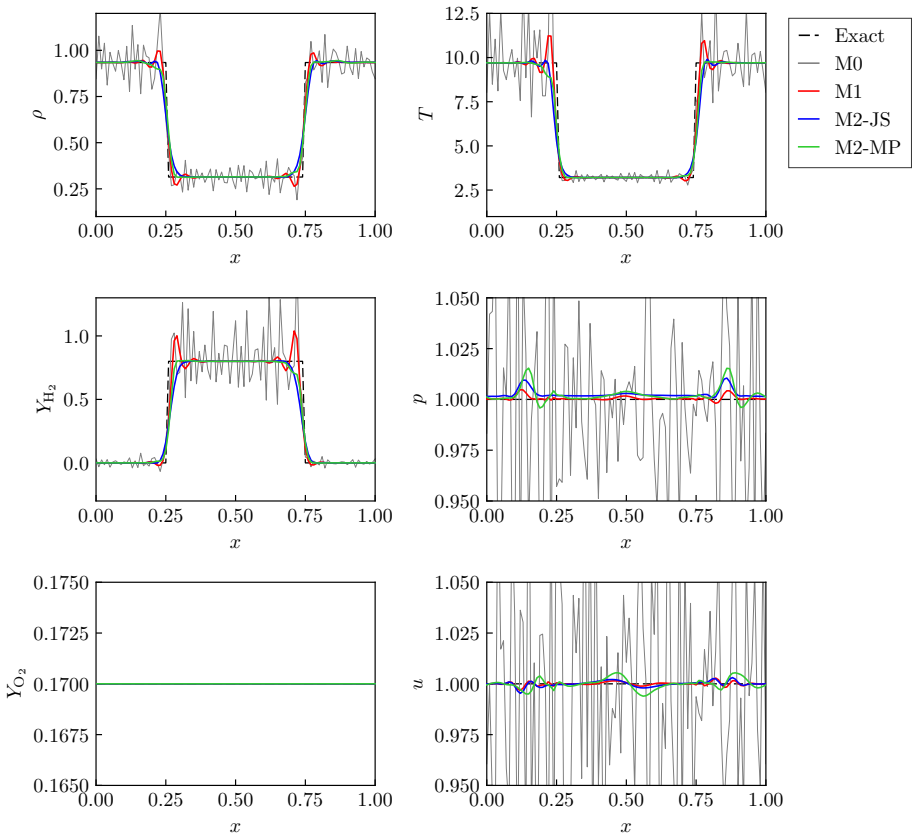
Preserving scalar boundedness is important for numerical schemes used in turbulent compressible multi-component flow simulations to prevent unphysical results and unstable simulations. However, ensuring scalar boundedness for high-order, low-dissipation numerical schemes poses challenges in highly under-resolved conditions due to inherent dispersion errors that generate spurious oscillations. Numerical dissipation is needed to mitigate these oscillations, but excessive dissipation negatively affects resolution. In this work, we propose formulations for high-order finite-difference schemes to preserve scalar boundedness without predefined bounds, while maintaining high accuracy and low numerical dissipation. The proposed formulations augment a non-dissipative numerical flux of a high-order central-difference scheme with an explicit dissipative numerical flux that adaptively switches between high-order and low-order formulations. Building on a deliberate choice of the non-dissipative flux, we construct two schemes using Jameson's artificial viscosity method and a monotonicity-preserving limiter as the dissipative flux. We examine the schemes in one-dimensional scalar advection problems and a three-dimensional temporal turbulent mixing-layer case involving sharp scalar gradients and under-resolved conditions, evaluating their accuracy, boundedness of species mass fractions, and numerical diffusivity. The scheme with the monotonicity-preserving limiter demonstrates superior performance.
0
0
physics.ins-det 2026-05-13 Recognition

Large patches and x-prediction cut calorimeter shower generation cost

CaloArt: Large-Patch x-Prediction Diffusion Transformers for High-Granularity Calorimeter Shower Generation

Voxel-space diffusion transformers match top fidelity scores on two challenge datasets while finishing each shower in about 10 ms on one GPU

abstract click to expand
High-granularity calorimeters make ML-based fast shower simulation a high-dimensional generative modeling problem, where voxel-space generators must balance physics fidelity with training and inference cost. This work studies large-patch tokenization with x-prediction, enabling efficient raw voxel generation. We propose CaloArt, a modernized DiT-style backbone with 3D positional encoding and architectural refinements, trained via conditional flow matching with decoupled prediction and loss spaces. On CaloChallenge Dataset 2, where small patch size remains affordable, v-prediction performs well, and CaloArt achieves the best FPD, strongest high-level metrics, and strongest ResNet classifier metrics. On CaloChallenge Dataset 3, the 40500-voxel grid makes large patches necessary; x-prediction improves all reported metrics over v-prediction and places CaloArt on the quality-generation-time Pareto frontier. The final CCD2 and CCD3 models both retain O(10) ms single-GPU generation time, with 9.71 and 11.14 ms per shower. These results support large-patch voxel-space diffusion transformers with x-prediction as a compute-efficient route to high-granularity calorimeter shower synthesis, reducing training and inference cost without a pretrained latent tokenizer.
0
0
physics.ins-det 2026-05-13 Recognition

0.7-4 MeV neutron source validated at CN Van de Graaff

Development and validation of a forward 0.7--4 MeV quasi-monoenergetic neutron capability at the CN Van de Graaff of LNL

Forward 7Li(p,n) neutrons achieve 9 percent fluence accuracy after ToF checks and consistent transport calculations.

abstract click to expand
The CN Van de Graaff accelerator of INFN--LNL provides forward-angle quasi-monoenergetic neutrons in the 0.7--4 MeV range via the 7Li(p,n)7Be reaction on thin metallic lithium targets. This work describes the development and experimental validation of this forward neutron capability, combining comparisons of commonly used transport tools with time-of-flight (ToF) measurements. Neutron yields calculated with EPEN, FLUKA, MCNPX, and PINO are compared over the CN energy range in order to assess model-dependent variations relevant for fluence estimates. For zero incident-energy spread, a mutually consistent set of transport calculations agrees within 5% and is used as a practical reference for normalisation. The effect of incident-energy convolution on the predicted yields is examined. Time-of-flight measurements performed using a sub-nanosecond secondary pulsing system verify the timing structure and forward-angle kinematics of the quasi-monoenergetic neutron component at the detector position, with neutron arrival times consistent with the expected forward kinematics within the experimental resolution. Using measured proton currents and transport calculations based on this reference set, forward neutron fluences at the device position are estimated with an overall uncertainty of approximately 9%, including contributions from current integration, target thickness, and geometry. A short device irradiation, carried out in parallel with the ToF campaign, demonstrates measurable response under CN beam conditions and confirms the practical usability of the beam for low-MeV neutron studies. Together, these results establish the current operational performance of the CN 0{\deg} forward quasi-monoenergetic neutron capability in the 0.7--4 MeV range and identify the steps required toward routine calibrated operation.
0
0
physics.flu-dyn 2026-05-13 2 theorems

Intermittency forms connected conduits boosting mobility in porous media

Intermittent two-phase flow in porous media: insights from pore-scale direct numerical simulation

Pore-scale DNS shows switching pathways couple across the network, shifting pressure scaling from linear to sub-linear and raising overall (

Figure from the paper full image
abstract click to expand
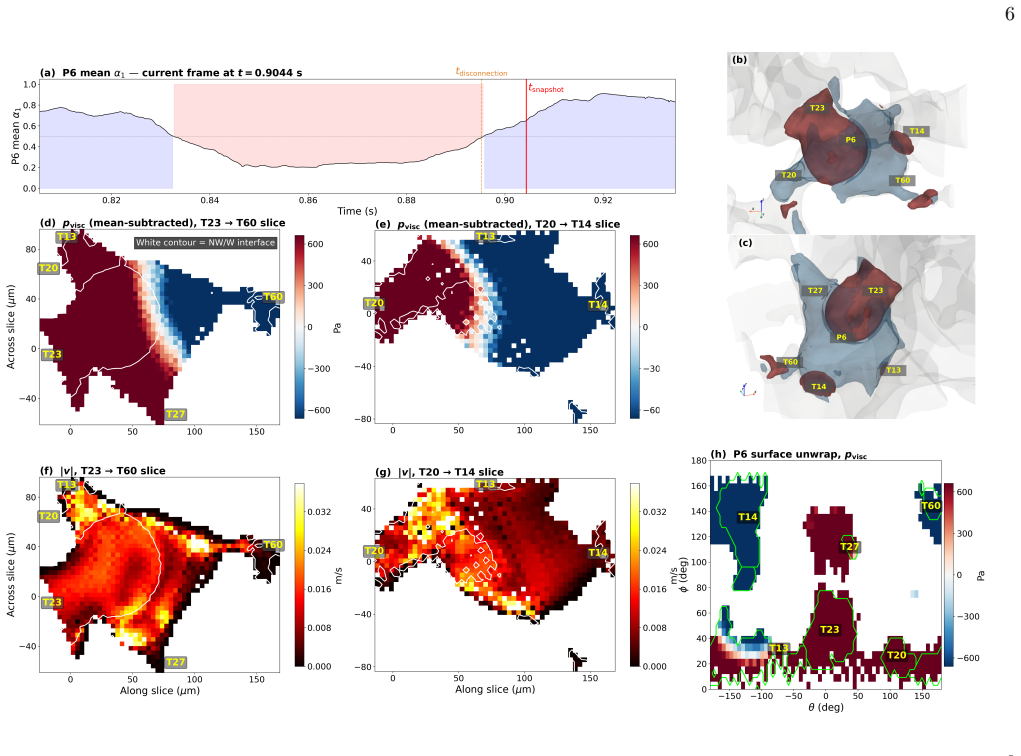
Recent X-ray imaging experiments have revealed that multiphase flow through porous media involves transient fluctuations in local occupancy, even under fixed macroscopic steady-state conditions where capillary forces dominate at the pore scale. To examine how intermittency manifests at the pore scale we perform direct numerical finite volume simulations (DNS) of immiscible two-phase flow through a micro-CT-derived Bentheimer sandstone geometry at capillary numbers in the Darcy and intermittent flow regimes. We show that intermittent disconnection and reconnection are accompanied by strongly coupled local pressure redistribution and non-wetting phase flow. This behaviour contrasts with the Darcy flow regime, in which the phases remain predominantly in fixed pathways. Macroscopically the computed pressure-gradient-capillary-number relationship ($\nabla P$-Ca) recovers both the linear Darcy and the sub-linear intermittent scaling regimes consistent with previous experimental measurements. We show how an increase in intermittency leads to the transition from the linear to the sub-linear regime. Using topology-aware snap-off detection, we show that the spatial extent of intermittency increases with capillary number. Spectral, local-geometry, and network-connectivity analyses provide further evidence that the intermittent elements organise into connected conduits embedded within a stable backbone of fixed flow pathways: intermittency is a network-coupled rather than purely local process. This work characterises the pore-scale manifestation of intermittency as a periodic sequence of drainage and imbibition displacements triggered by local pressure fluctuations whose macroscopic consequence is to improve the overall mobility of the fluid phases.
0
0
physics.chem-ph 2026-05-13 Recognition

Collinear phase-cycling isolates background-free two-quantum spectra

Background-free measurement of exciton-exciton annihilation by two-quantum fluorescence-detected pump-probe spectroscopy

Post-processing removes incoherent mixing to reveal exciton annihilation dynamics in squaraine systems.

Figure from the paper full image
abstract click to expand
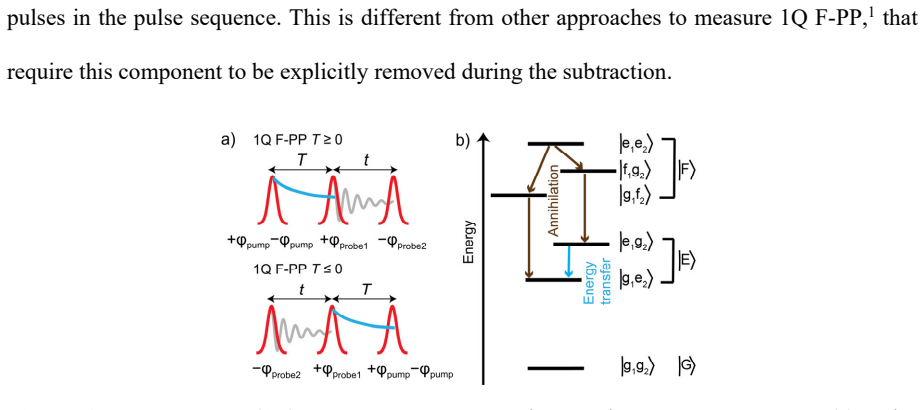
We introduce two-quantum (2Q) fluorescence-detected pump-probe (F-PP) spectroscopy as a tool to probe ultrafast multiparticle interactions in many-body systems. We describe a pulse-shaper-based fully collinear setup utilizing phase cycling to capture the 2Q F-PP signal simultaneously with the one-quantum (1Q) F-PP signal. Thus, we investigate the dynamics of energy transfer and diffusion-limited annihilation. We apply a data post-processing strategy to isolate excited-state dynamics from spurious background. The technique is applied to a squaraine heterodimer and a squaraine copolymer to demonstrate the removal of so-called incoherent mixing that generally plagues action-detected nonlinear spectroscopy on multichromophoric systems. Specifically, we show that this approach is not only applicable to 1Q but also to 2Q F-PP signals, eliminating incoherent mixing contributions as well as other "parasitic" signals that result from pulse-overlap ambiguities. As a result, we retrieve background-free spectral and dynamical information of doubly excited electronic states.
0
0
physics.flu-dyn 2026-05-13 Recognition

Bayesian optimization cuts drag on high-lift wing by 9.7 percent

High-lift Wing Separation Control via Bayesian Optimization and Deep Reinforcement Learning

Open-loop search over steady jets raises efficiency 10.9 percent at constant lift while reinforcement learning gains little at Re 450000.

Figure from the paper full image
abstract click to expand
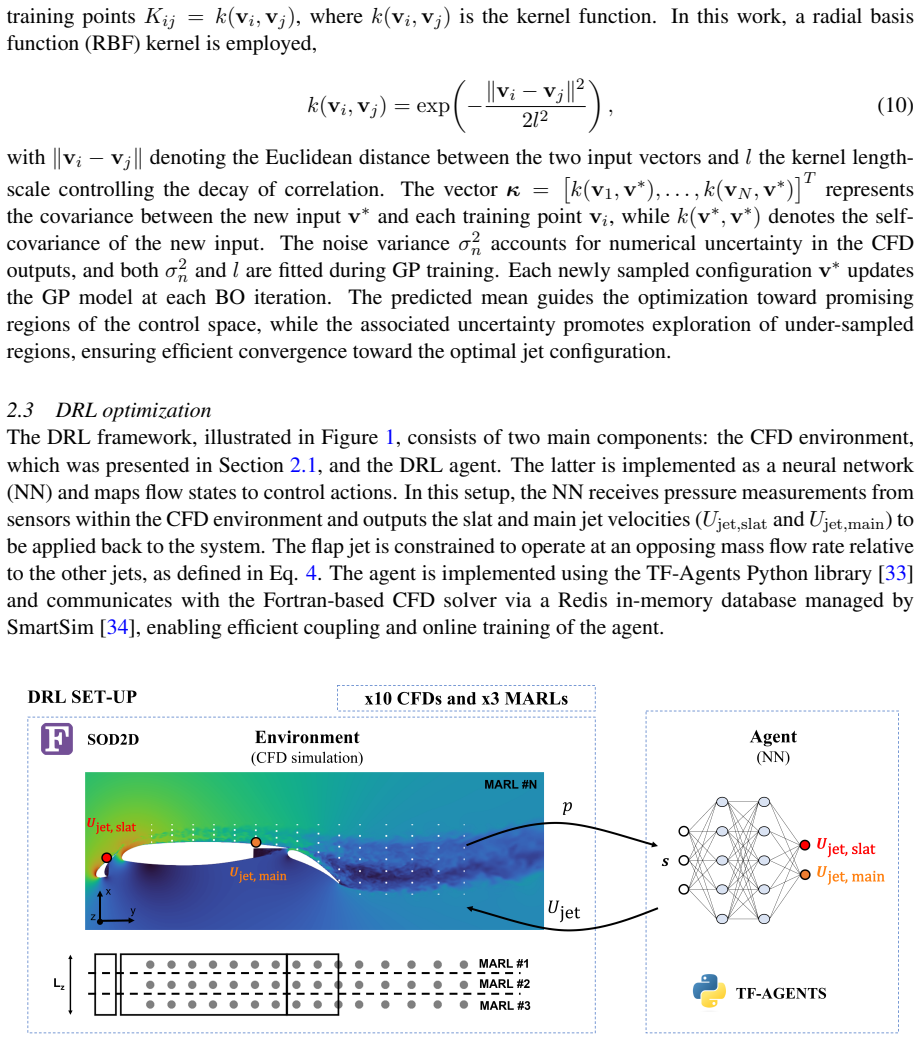
This study investigates active flow control (AFC) of a 30P30N high-lift wing at a Reynolds number Re$_c$ = 450,000 and angle of attack $\alpha$ = 23$^\circ$ using wallresolved large-eddy simulations (LES). Two optimization strategies are explored: open-loop Bayesian optimization (BO) and closed-loop deep reinforcement learning (DRL), both targeting the mitigation of stall and the improvement of aerodynamic efficiency via synthetic jets on the slat, main, and flap elements. The uncontrolled configuration was validated against literature data, confirming the reliability of the LES setup. The BO framework successfully identified steady jet velocities that increased efficiency by +10.9% through a -9.7% drag reduction while maintaining lift. In contrast, the DRL agent, despite leveraging instantaneous flow information from distributed sensors, achieved only minor improvements in lift and drag, with negligible efficiency gain. Training analysis indicated that the penalty-dominated reward constrained exploration. These results highlight the need for carefully designed rewards and computational acceleration strategies in DRL-based flow control at high Reynolds numbers.
0
0
physics.flu-dyn 2026-05-13 2 theorems

Nonlinear Schlieren maps steep liquid surfaces accurately

Nonlinear synthetic Schlieren methods for free-surface topography measurement using telecentric imaging

Telecentric optics and iterative solvers extend precise elevation measurements to high-slope and high-amplitude waves

abstract click to expand
Free-surface synthetic Schlieren (FS-SS) is a high-resolution, refraction-based optical technique for measuring the instantaneous elevation of a liquid interface. Under the assumptions of small amplitude, small slope, and small paraxial angle, the method yields a linear relationship between the gradient of the surface elevation and the apparent displacement field of a refracted pattern imaged through the surface. Here, we propose three new, nonlinear extensions of the FS-SS method that are specifically dedicated to telecentric imaging. Paraxial distortions are eliminated with a telecentric lens, thereby simplifying the optical model. This allows us to derive nonlinear surface reconstruction models that reach beyond the usual limits of small slope and small wave-magnitudes. We implement these nonlinear surface reconstruction algorithms and compare them to the original, linear reconstruction algorithm in three different experiments, using a solid glass lens, spreading oil drops and nonlinear Faraday waves. At the price of a few iterations, we can realise nonlinear surface reconstructions that are more precise, in particular when we reach high slopes or high amplitude regimes. We share a library that encodes these nonlinear surface reconstruction algorithms.
0
0
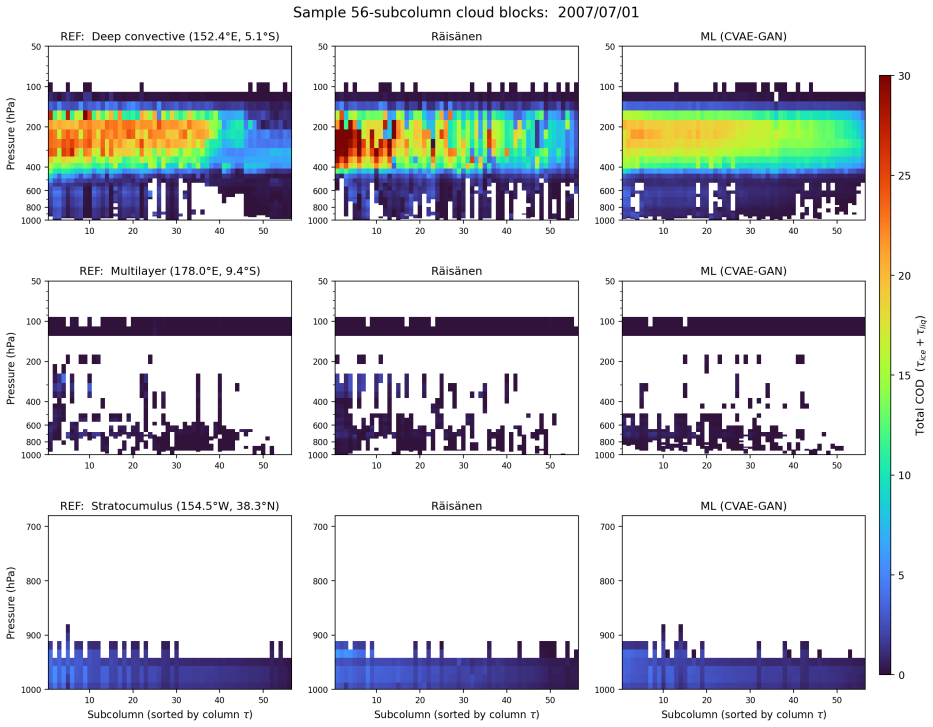
physics.ao-ph 2026-05-13 2 theorems

ML cloud subcolumn generator reduces radiation bias by factor of three

Assessment of cloud and associated radiation fields from a GAN stochastic cloud subcolumn generator

GAN approach better captures complex cloud layer interactions than analytical methods, improving accuracy of top-of-atmosphere radiation.

Figure from the paper full image
abstract click to expand
Modern Earth System Models (ESMs) operate on horizontal scales far larger than typical cloud features, requiring stochastic subcolumn generators to represent subgrid horizontal and vertical cloud variability. Traditional physically-based generators often rely on analytical cloud overlap paradigms, such as exponential-random decorrelation, which can struggle to capture the complex, anti-correlated behavior of non-contiguous cloud layers. In this study, we introduce a novel two-stage machine learning subcolumn generator for the GEOS atmospheric model, utilizing a Conditional Variational Autoencoder combined with a Generative Adversarial Network (CVAE-GAN) and a U-Net architecture. Trained on a merged CloudSat-CALIPSO height-resolved cloud optical depth dataset, the ML generator creates 56 stochastic subcolumns representing cloud occurrence and optical depth profiles. Evaluated against the established R\"{a}is\"{a}nen, the ML approach accurately reproduces bimodal cloud overlap distributions, significantly reduces biases in grid-mean statistics, and halves the root-mean-square error in ISCCP-style cloud-top pressure and optical thickness joint histograms. The improvements brought by our deep generative models translate into more accurate offline radiative transfer calculations, reducing the global-mean shortwave top-of-atmosphere cloud radiative effect bias by a factor of three. Provided that the generator can be accelerated on CPUs, this offers a practical pathway to reduce structural errors at the cloud-radiation interface.
0
0
physics.optics 2026-05-13 Recognition

Nano-engineered microsphere merges nanojet and plasmons for light boost

Strong light enhancement by combining the photonic nanojet and plasmons from the nano-engineered microsphere

Simulations optimize tip radius to maximize enhancement at low cost, supporting nanometer resolution in Raman and IR spectroscopy.

abstract click to expand
Today's cutting-edge optical spectroscopic exploratory tools, such as Raman or infrared spectroscopy, rely on methods of signal enhancement as a route for their development. These methods are indispensable for substance identification and characterization in almost any scientific, regulatory, or industrial laboratory, therefore new and better methods of enhancement are always sought after. In this paper, the design of a new optical device for enhancement is presented, called nano-engineered microsphere (NMS). This device innovatively combines plasmons, a present flagship enhancement method, with a photonic nanojet, a new and emerging enhancement tool, to provide unprecedented properties in terms of affordability, stability, and performance. By using numerical simulations, a detailed design of the device is presented, and the optimization of device parameters for the strongest enhancement is investigated. The simulations show different influences of the parameters on the enhancement, from low to critical. The most influential parameter was found to be the radius of the nanoelement tip, which, at low values, showed a tremendous increase in the enhancement. The optimized device shows exceptionally promising abilities regarding the enhancement, while the estimated cost of production and use is low. Such properties paired with low price and ease of usage could enable the NMS to become one of the leading methods of enhancement in Raman and infrared spectroscopy with the spatial resolution towards nanometers.
0
0
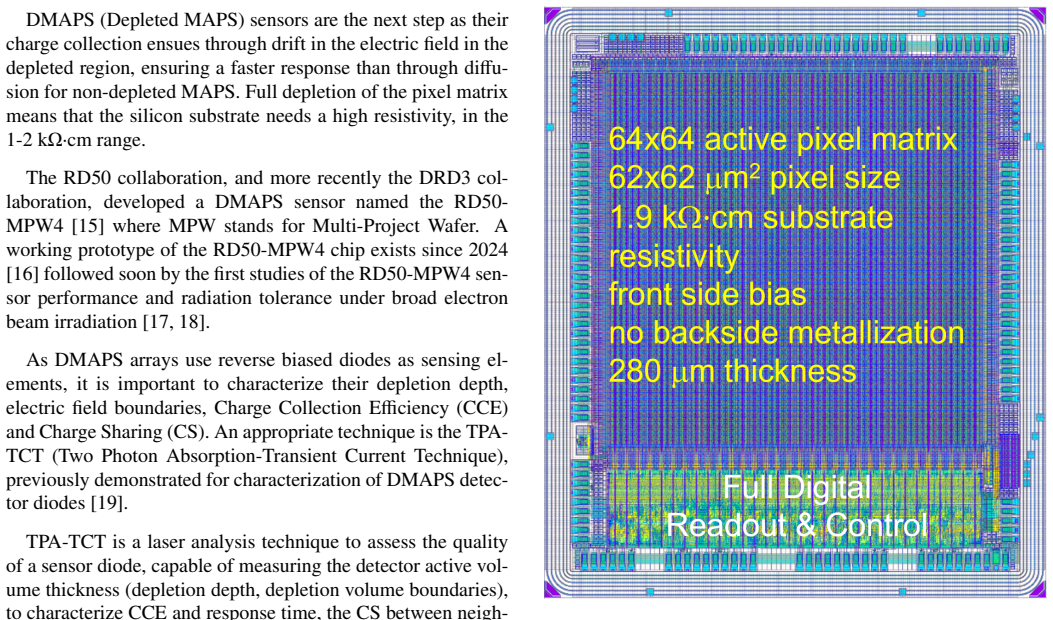
physics.ins-det 2026-05-13 Recognition

Pixel sensor reaches 100% efficiency over 226 micrometers

TPA-TCT Analysis of the RD50-MPW4 Monolithic Pixel Particle Detector

Backside laser mapping of the RD50-MPW4 shows full charge collection and edge sharing between neighboring pixels.

Figure from the paper full image
abstract click to expand
The RD50-MPW4, a Depleted Monolithic Active Pixel Sensor (DMAPS) was analyzed using a Two Photon Absortion Transient Current Technique (TPA-TCT). This technique provides sensitivity maps with micrometer-scale spatial resolution, enabling the resolution of the boundaries of the detector's sensitive volume, even for small-area pixels (62x62 squared micrometers in this study). With a full 3D resolution, the depletion depth, the boundaries of the detector electric field, the 3D hit detection efficiency and the charge sharing between neighboring pixels were measured. The RD50-MPW4, a multi-project wafer chip developed by the HV-CMOS working group within the CERN RD50 collaboration, features a 64x64 DMAPS pixel matrix. Illuminating the chip from the backside, the TPA-TCT technique can characterize any pixel element in the matrix because silicon is transparent for near infrared laser light (1550 nm). Electron-hole pairs are generated only around the light focal point, deep in the silicon, so that any charge collected is precisely only from the focal point. With the TPA-TCT technique, the RD50-MPW4 was found to be have a 100\% charge collection efficiency and a depletion depth of 226 $\upmu$m. It was also found that part of the charge in the periphery of the pixel was collected in the neighboring pixel. A 3D map of the sensor clearly shows the in-pixel electronics and the limits of the depletion region.
0
0
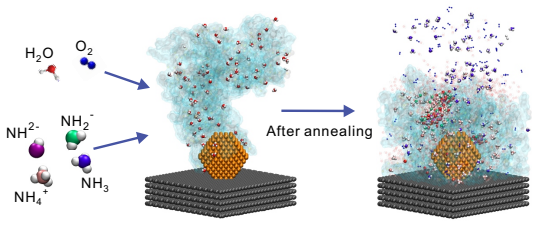
physics.chem-ph 2026-05-13 2 theorems

Ammonia traps protons in clusters within PEM fuel cell ionomers

Poisoning mechanism of ammonia on proton transport and ionomer structure in cathode catalyst layer of PEM fuel cells

Simulations show ammonium displaces hydronium at sulfonic sites while amino and imino ions form absorbing clusters, but rising temperature e

Figure from the paper full image
abstract click to expand
Ammonia has strong poisoning effects on cathode catalyst layers of proton exchange membrane (PEM) fuel cells, but the poisoning mechanism is still unclear. In this study, all-atom molecular dynamics simulations are employed to investigate the poisoning mechanisms of ammonia. The results show that ammonium can replace the hydronium ions at the charged sites of sulfonic acid group of the ionomer side chain, and the adsorption of ammonium to sulfonic acid group can be attributed to van der Waals force and electrostatic interaction. Furthermore, other ammonia derivatives, amino and imino ions, can capture hydronium ions to form ion clusters. These ion clusters have strong capability to absorb hydronium ions, and their structures change with ammonia content and temperature. The main mechanism of formation of these clusters is due to the formation of relatively stable hydrogen bonds between ions within the clusters. These mechanisms significantly reduce the efficiency of proton transport, thereby decreasing the catalyst layer's performance in electrochemical reactions. We also discover that the increase in temperature leads to the dissociation of large ion clusters, the blockage in the ionomer layer can be alleviated, and the proton transport efficiency can be restored. The understanding of the poisoning mechanisms obtained in this study is helpful for subsequent research aimed at resolving ammonia poisoning and enhancing the anti-poisoning performance of catalyst layers.
0
0
physics.optics 2026-05-13 Recognition

SLM phase masks emulate real scattering

Towards digital phantoms: emulating scattering with a spatial light modulator

Binary random masks tune distortion to match physical samples for controlled optics tests.

Figure from the paper full image
abstract click to expand
The distortion of light's degrees of freedom when passing through complex random media is of great interest across a diversity of fields, e.g., scattering in biological studies. Emulating such media in a controlled laboratory setting conventionally relies on real-world physical samples (e.g., white paint), inhomogeneous mixtures with embedded scatterers, or biological tissue-mimicking phantoms. Such methods, while effective in certain contexts, are not without complexity and limitations: the exact medium properties are challenging to control and often require laborious preparation, external characterisation techniques, are not easily reproducible between studies and cannot be matched precisely by numerical simulations. Here, we propose a simple all-digital implementation of random scattering which can be readily implemented on any setup capable of producing digital holograms. Our approach employs binary random phase masks encoded onto a spatial light modulator which perturbs the input beam's phase and amplitude. We highlight two methods to precisely tune distortion strengths which show excellent agreement between simulated and measured results. We demonstrate distortion strengths comparable to real-world scattering samples and illustrate two example applications to emulate scattering of scalar and vectorial structured light. Finally we showcase the versatility of this toolkit for emulating various amplitude and phase profiles and suggest several easy to implement alternative modalities accessible with this method. This digital phantom circumvents many of the practical challenges of physical samples, making it ideally suited for applications at the intersection of structured light, biological imaging and optical communications.
0
0
physics.flu-dyn 2026-05-13 1 theorem

Shear layer at cavity makes waves that break into bubbles

Air entrainment by an inclined smooth water jet

Inclined jets entrain air because uneven flow detachment along the impact cavity generates an unstable wavefield.

Figure from the paper full image
abstract click to expand
Air entrainment can occur when a water jet impacts a water/air interface, a process central in various real systems, ranging from dam spills to breaking waves. Despite its prevalence, a comprehensive description of the mechanism controlling bubble size distribution remains elusive. Here, we establish a link between the geometry and the dynamics of the cavity observed when an inclined impinging jet impacts a water interface and the resulting bubble cloud. We show that the bubbles result from the destabilization of the wavefield developing at the interface of the cavity. The origin of this wave field is the creation of a shear layer, due to the asymmetric detachment of the flow field from the interface.
0
0
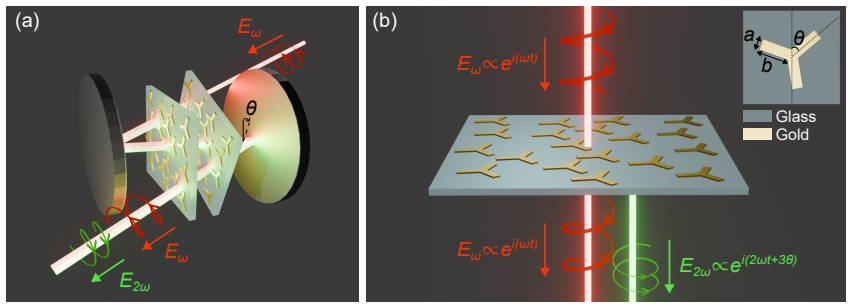
physics.optics 2026-05-13 1 theorem

Rotation between metasurfaces tunes SHG peaks over 70 nm

Active control of phase matching in nonlinear metasurfaces using Pancharatnam--Berry phase

Mechanical adjustment of two C3v structures inside a cell continuously shifts second-harmonic phase-matching via geometric phase.

Figure from the paper full image
abstract click to expand
Reconfiguring the spectral output of nonlinear metasurfaces after fabrication remains challenging. We address this by exploiting the nonlinear Pancharatnam--Berry phase of $C_{3v}$-symmetric plasmonic metasurfaces. By integrating two metasurfaces inside a multipass cell, we experimentally demonstrate continuous spectral tuning of second-harmonic generation (SHG) phase-matching peaks across a 900--970 nm pump range by rotating one metasurface relative to the other. The extracted geometric phase follows the $3\sigma\theta$ dependence, and a full $2\pi$ tuning cycle is completed with $120^{\circ}$ of physical rotation. This establishes geometric-phase metasurfaces as a reconfigurable nonlinear platform, where mechanical rotation enables post-fabrication and broadband tuning of nonlinear optical responses.
0
0
physics.flu-dyn 2026-05-13 Recognition

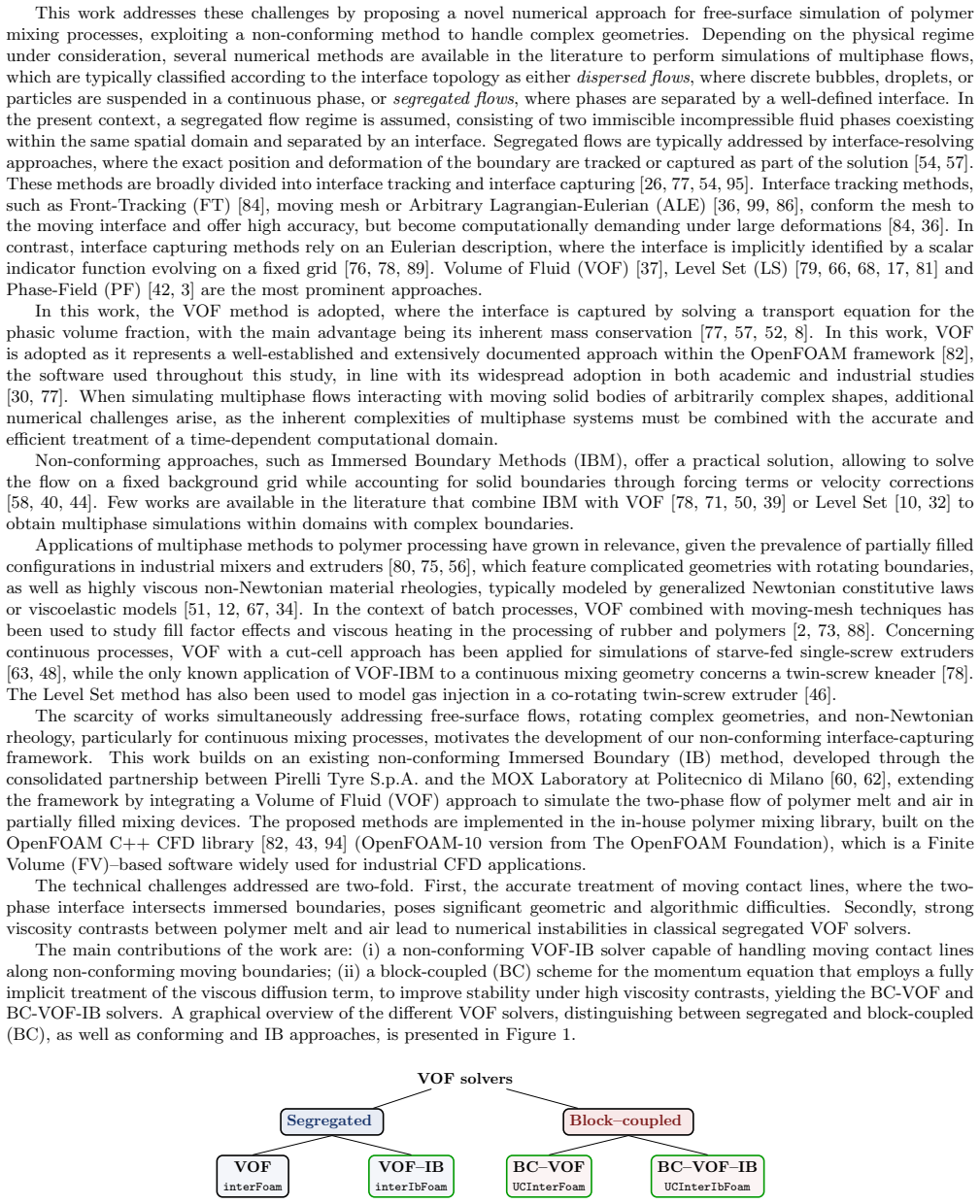
Block-coupled method stabilizes polymer mixing simulations in extruders

A Volume of Fluid Immersed Boundary Method for Industrial Polymer Mixing

Integrating VOF and immersed boundary with implicit viscous coupling yields consistent velocity and pressure fields in partially filled extr

Figure from the paper full image
abstract click to expand
This work develops advanced numerical methods for free-surface simulations of polymer mixing processes, integrating a Volume of Fluid (VOF) interface-capturing approach with a non-conforming Immersed Boundary (IB) method to model two-phase flows of highly viscous polymer melts and air within partially filled rotating mixing devices, implemented within the Finite Volume OpenFOAM library. To overcome severe numerical instabilities arising from the strong viscosity contrast between polymer melts and air, a block-coupled scheme providing fully implicit viscous diffusion treatment is integrated into the VOF-IB framework, relaxing time-step stability constraints and substantially reducing computational cost with respect to standard segregated solvers. The resulting BC-VOF-IB solver is applied to industrially relevant geometries of single- and twin-screw extruders, yielding physically consistent predictions of velocity and pressure fields under partial filling conditions. While further developments, most notably the inclusion of thermal effects, remain necessary, the proposed framework represents a meaningful step toward bridging academic CFD research and the practical demands of industrial polymer processing.
0
0
physics.plasm-ph 2026-05-13 1 theorem

Probabilistic metric isolates model error from fusion test uncertainties

Towards Virtual Qualification in Nuclear Fusion: Demonstrating Probabilistic Model Validation on a High Heat Flux Component

Novel implementation of the area validation metric on a high heat flux heat sink separates simulation discrepancies from experimental data.

Figure from the paper full image
abstract click to expand
Qualification of components operating in future fusion power plants will be heavily reliant on simulations of component behaviour. The lack of representative test environments for many aspects of the expected operating environment will necessitate full or partial virtual qualification of components. The cornerstone of virtual qualification is credible validation of the simulation models on which it relies. In this work, we present a probabilistic model validation framework that forms the basis for implementation of virtual qualification in fusion. We demonstrate our framework on a representative component; a high heat flux heat sink subject to a tightly coupled multi-physics loading. We perform data-rich, optimised experiments, in which we implement high fidelity diagnostics and rigorously quantify aleatoric and epistemic uncertainty on all measurements. Our simulation approach efficiently samples input uncertainty distributions to predict probability boxes describing component response, using a statistical surrogate to replicate behaviour of the finite element model we wish to validate. We then used a novel implementation of the modified area validation metric to quantify the model form error of the finite element model, isolating it from the aleatoric and epistemic experimental uncertainty. We discuss the contribution of our validation approach towards virtual qualification, and the benefits of the risk-based decision-making it facilitates. The experimental, simulation, and validation datasets are published as a benchmark of a probabilistic validation approach for fusion, and for use in development of new model validation methodologies.
0
0
physics.flu-dyn 2026-05-13 2 theorems

Mutual information yields parameter-free SGS models

Information-Preserving SGS model based on the local inter-scale equilibrium hypothesis

Maximizing information between turbulence scales sets parameters without empirical tuning and matches prior accuracy.

Figure from the paper full image
abstract click to expand
Large eddy simulation has been widely used to simulate turbulence at balanced computational cost and accuracy. Many Subgrid-Scale (SGS) models have been proposed over the years, where data-driven and machine learning-aided approaches set the recent trend. To address the problem of extrapolation in these models, we propose a new data-driven SGS model based on an information-theoretic picture of turbulence. To this end, we estimate the model parameters by maximizing mutual information, which correspond to the scale-by-scale local equilibrium hypothesis in developed turbulence or "information preservation." An a priori test confirmed that the estimated parameters are in good agreement with the previously reported empirical values. Furthermore, a posteriori tests on periodic box turbulence and channel turbulence exhibited accuracy comparable to the existing models. These results suggest the utility of the information-theoretic picture of turbulence for constructing more generic SGS models without the need for empirically prescribed model parameters, while enhancing physical interpretability beyond black-box approaches.
0
0
physics.chem-ph 2026-05-13 2 theorems

Rod imperfections degrade digital quadrupole resolution

Geometrical Imperfections in a Digital Quadrupole Mass Filter: A Comprehensive Simulation Study in the First Stability Zone

Simulations of radial asymmetries show reduced resolution and transmission that also depend on the starting state of the RF pulse.

Figure from the paper full image
abstract click to expand
Geometrical imperfections in quadrupole mass filters introduce higher-order field components that can significantly influence device performance, particularly under non-sinusoidal excitation. In this work, a comprehensive simulation study is carried out to investigate the effect of geometrical imperfections on the performance of a rectangular wave driven quadrupole mass filter operating in the first stability zone. Radial field distortions arising from controlled variations in rod geometry and position, including single rod radius variation, single rod displacement, diagonal rod radius variation, and diagonal rod displacement, are examined. These imperfections introduce octupole field components that distort the ideal quadrupolar field distribution. The influence of such distortions on key performance parameters, namely mass resolution and ion transmission efficiency, is systematically evaluated. The results show that the presence of radial asymmetry leads to a degradation of both resolution and transmission efficiency in all cases considered. Furthermore, the study reveals a strong dependence of mass filter performance on the initial state of the applied pulsed waveform, specifically whether the asymmetric rod pair is subjected to the high or low level of the RF pulse. These findings provide important insights into the tolerance limits of geometrical imperfections and their impact on the performance of pulsed wave driven quadrupole mass filters, which are relevant for the design and optimization of high-resolution digital mass filtering systems.
0
0
physics.optics 2026-05-13 2 theorems

Cross-attention autoencoder stays accurate under spectrometer shifts

Bin Latent Transformer (BiLT): A shift-invariant autoencoder for calibration-free spectral unmixing of turbid media

Learnable probes extract shift-invariant features for reliable recovery of optical properties in turbid samples.

Figure from the paper full image
abstract click to expand
The accurate recovery of constituent-level optical properties from integrating sphere measurements is a central analytical challenge in pharmaceutical analysis, food science, and biomedical diagnostics. Neural network autoencoders can extract spectrally resolved absorption and scattering coefficients for each constituent without prior knowledge, but their fully connected encoders bind learned features to absolute wavelength indices, causing accuracy loss under spectrometer calibration drift or hardware exchange. This work introduces the Bin Latent Transformer (BiLT)-Autoencoder, in which the dense encoder is replaced by a cross-attention scanner: 16 learnable probe vectors query a convolutional feature map, aggregating morphological spectral information independently of absolute wavelength position. A physics-constrained linear decoder with enforced absorption/scattering separation and a three-phase curriculum augmentation strategy complete the architecture. On a liquid phantom benchmark (intralipid and two ink absorbers; 496 samples), the model achieves $R^2 = 0.979$ and $0.975$ for $\mu_a(\lambda)$ and $\mu_s'(\lambda)$, respectively, on held-out test spectra, maintaining $R^2 > 0.90$ for $\mu_a$ and $R^2 \approx 0.99$ for $\mu_s'$ across the full tested shift range of $\pm 10$ spectral bands. The model generalises to a simulated spectrometer with a broader instrument line shape (${\approx}24$nm FWHM) without retraining, retaining $R^2 \approx 0.96$ and $0.974$ for the two channels. Attention map analysis reveals a physically interpretable two-component probe strategy: sparse anchor probes at absorption-edge wavelengths combined with a diffuse, SNR-driven ensemble at the high-transmittance long-wavelength region, which recruits additional probes dynamically under noise to provide implicit spectral averaging.
0
0
physics.optics 2026-05-13 2 theorems

Fluorescence removal enables ppm detection in Raman gas sensing

Systematic Investigation and Suppression of Fluorescence in High-Sensitivity Cavity-Enhanced Raman Gas Sensing

Step-by-step removal of fluorescent optics in a multi-pass cavity reveals weak Raman signals from ambient methane at 2 ppm and yields 3-11-5

Figure from the paper full image
abstract click to expand
Raman spectroscopy enables broadband, multi-species gas analysis by providing access to an entire vibrational spectrum in a single measurement. However, the sensitivity of gas-phase Raman sensing is often limited by weak signals and fluorescence background from various optical elements that constrain the achievable signal-to-noise ratio (SNR) through signal-dependent noise contributions (e.g. shot noise). Here, we present a cavity-enhanced Raman spectroscopy (CERS) gas sensor employing a 500 mW, 532 nm continuous wave (CW) laser and a simple, non-resonant two-mirror multi-pass cavity (MPC) operated at ambient pressure and near the concentric condition, providing up to 45 internal reflections. To quantitatively capture the impact of fluorescence on performance, a CCD-specific noise model was developed that links fluorescenceinduced baseline levels to measurement noise. Complementary optical simulations were employed to assess the signal collection efficiency in the MPC. Through a systematic analysis of fluorescence sources, the background was reduced substantially by step-wise elimination of fluorescent optics. The fluorescence-minimized setup resolves weak Raman signatures in ambient-air spectra, including CO2 peaks, O2 and N2 overtones, and ambient CH4 (2 ppm). Calibration measurements for O2 (diluted in N2), N2 (in O2) and H2 (in N2) demonstrate detection limits of 11 ppm, 5 ppm and 3 ppm, respectively, with a 180 s measurement time. The results highlight fluorescence mitigation as a key design lever for robust, field-oriented CERS instrumentation for trace gas sensing.
0
0
physics.flu-dyn 2026-05-13 2 theorems

Energy balance closes unified law for maximum drop spreading

Kinematic Closure of Drop Impact

Time and velocity taken directly from energy balance multiply to give maximum diameter that fits all data without regime switches.

Figure from the paper full image
abstract click to expand
Existing models for droplet impact prescribe the spreading contact time and effective spreading velocity from asymptotic arguments, which prevents a self-consistent prediction of the maximum spreading ratio across regimes. Here, the total spreading time and characteristic spreading velocity are derived directly from the energy balance, with explicit capillary and viscous contributions. Multiplying this time and velocity to obtain the maximum spreading diameter yields a closed, unified scaling law for the maximum spreading ratio of wetting drops across inertio-capillary and inertio-viscous regimes. The resulting expression quantitatively collapses the present measurements and literature data over wide ranges of Weber and Ohnesorge numbers, droplet sizes, and surface wettabilities without prefactors that need to be adjusted to a certain regime.
0
0
physics.optics 2026-05-13 Recognition

Leakage in quasi-BICs triggers supercritical coupling for diverging quality factor

Theory of Supercritical Coupling And Generalized Bound States in the Continuum

Bright-dark supermode model shows reactive coupling balances radiation and losses to create generalized bound states in open photonic slabs.

Figure from the paper full image
abstract click to expand
Bound states in the continuum (BICs) arise from destructive interference suppressing radiation despite spectral overlap with the continuum. Here we show that Friedrich--Wintgen interference naturally emerges from a bright--dark supermode decomposition of resonances coupled through a shared radiation channel. In this basis, any finite leakage of a quasi-BIC induces a causality-driven reactive coupling enabling non-Hermitian pumping of the dark sector. We derive the optimal condition for this process and show that it corresponds to the supercritical coupling regime previously identified in [Nature 626, 765 (2024)], while naturally recovering universal quasi-BIC asymmetry scaling. Extending the theory to Dirac-like dispersions in photonic crystal slabs, we identify an open-Dirac singularity where the Dirac gap matches the supercritical regime. A four-wave Hamiltonian quantitatively reproduces rigorous coupled-wave analysis, revealing the breakdown of conventional critical coupling. Near this regime, absorptive cross-coupling induces coherent absorption interference and enables suppression of effective dissipative losses beyond conventional material limits. These results motivate the concept of a generalized bound state in the continuum (gBIC) as a limiting non-Hermitian state where radiative and effective gain compensate, producing a true divergence of the total quality factor. Overall, this work establishes a unified framework connecting BIC interference, Dirac topology, and non-Hermitian physics for ultra-high-Q enhancement and loss engineering in open photonic systems.
0
0
physics.soc-ph 2026-05-13 2 theorems

Network topology shifts critical point in triplet opinion model

Topology-dependent criticality in triplet majority-rule dynamics with collective reversal

Clustering lowers the order-disorder transition threshold and alters effective exponents compared with random or scale-free networks.

Figure from the paper full image
abstract click to expand
We study a triplet majority-rule opinion-dynamics model with collective reversal on quenched networks. Interactions occur on local triplets composed of one agent and two of its neighbors, while collective reversal acts only on unanimous triplets. This rule separates local conformity from external perturbations that disrupt local agreement. We show that quenched network topology shifts the order--disorder critical point away from the well-mixed value. For Barab\'asi--Albert, Erd\H{o}s--R\'enyi, and random regular networks, the critical point is shifted while the critical exponents remain close to the mean-field values. By contrast, Watts--Strogatz networks exhibit a much lower critical point and stronger deviations in the effective critical exponents, highlighting the role of clustering and local correlations. A rewiring analysis of Watts--Strogatz networks further shows that the ordered phase becomes more stable as the network becomes more random. These results indicate that quenched topology not only sets the transition point, but also leads to topology-dependent effective critical behavior in networks with strong clustering and local correlations.
0
0
physics.optics 2026-05-13 1 theorem

Substrates alter visible Mie resonances in silicon nanospheres

Probe- and Substrate-Dependent Visibility of Mie Resonances in Silicon Nanospheres

Electric and magnetic modes can be suppressed or inverted depending on the supporting surface and how the particle is excited

abstract click to expand
Silicon nanospheres are high-quality optical resonators and promising building blocks for Mie-tronic devices. While the Mie resonances of an isolated sphere are well understood, practical implementations require substrates that inevitably modify the measured optical response. Here, we investigate how substrates alter the observable spectrum of individual nanospheres, focusing on three fundamentally different cases: a thin silicon nitride membrane, that emulates a free-standing particle, bulk silicon, which is common in experiments, and gold, where mirror charges lead to hybrid optical modes. Cathodoluminescence and dark-field spectroscopy, combined with electrodynamic simulations, show that the measured resonances are not intrinsic to the particle but depend strongly on the environment and the excitation mechanism. We find that substrate-induced effects and probe-specific selection rules can suppress, enhance, or even invert the spectral signatures of electric and magnetic modes. These results provide practical guidelines for interpreting and designing substrate-supported dielectric resonators for Mie-tronic applications.
0
0
physics.ao-ph 2026-05-13 Recognition

MLP scales small-ensemble covariances to cut EnKF error

Machine Learning-Based Covariance Correction for Ensemble Kalman Filter with Limited Ensemble Size

The network learns the gap to large-ensemble truth and applies an element-wise fix, raising accuracy at fixed cost.

Figure from the paper full image
abstract click to expand
Data assimilation (DA) integrates numerical model forecasts with observations to achieve the optimal state estimation. Ensemble-based methods, such as the ensemble Kalman filter (EnKF), are widely used for state estimation for high-dimensional and nonlinear dynamic systems. However, their performance strongly depends on the ensemble size, therefore causing a tradeoff problem between analysis accuracy and computational cost. To address this problem, this study presents a machine learning-based EnKF framework that maintains high accuracy with a relatively small ensemble size. Specifically, a multilayer perceptron (MLP) function is built to predict the difference between the forecast error covariances estimated from a limited ensemble and a sufficiently large ensemble, with the latter being assumed to be an accurate approximation of the underlying truth. This predicted covariance difference term is then incorporated into the EnKF algorithm via an element-wise scaling strategy, resulting in an amended forecast covariance matrix that better approximates the true uncertainty level and sequentially produces more accurate analysis results. To demonstrate the feasibility and robustness of the proposed algorithm, we perform a set of numerical experiments with the Lorenz-63 and Lorenz-96 systems under various configurations, and the results consistently indicate that the proposed algorithm can significantly outperform the standard EnKF with the same limited ensemble size, by achieving notably higher analysis accuracy while remaining computationally efficient. This approach provides a practical and feasible pathway to accurate and computationally efficient data assimilation for high-dimensional and nonlinear dynamic systems.
0
0
physics.med-ph 2026-05-13 Recognition

MRF Bayesian method beats FBP in low-dose and sparse CT

Computed Tomography Reconstruction Algorithm Using Markov Random Field Model

Simulations show superior image quality by adapting hyperparameters to match projection noise via free energy minimization.

Figure from the paper full image
abstract click to expand
X-ray computed tomography (CT) reveals the materials' internal structures non-destructively from a tilt series of projected images. Filtered back projection (FBP) is a widely-adopted reconstruction algorithm in CT owing to its small computational cost. Under low-dose or sparse-view conditions, however, FBP often amplifies noise, severely degrading the reconstructed images. In this study, we evaluated the performance of a Bayesian CT reconstruction algorithm based on the Markov random field model under such adverse conditions. Through simulations, we demonstrated that the proposed algorithm shows higher reconstruction performance than FBP under both low-dose and sparse-view conditions. The hyperparameters are estimated by minimizing the Bayesian free energy, enabling adaptive reconstruction that reflects the noise characteristics of the observed projection data. These results suggest that the proposed algorithm can broaden the applicability of CT to dose-sensitive applications and time-constrained measurements, where only limited observed projection data are available.
0
0
physics.chem-ph 2026-05-13 2 theorems

Binding descriptor tracks heavy-metal trapping in cement nanopores

Gel-Chemistry-Dependent Heavy-Metal Ion Transport and Immobilization in Cementitious Nanopores: A Molecular Dynamics Study

Simulations link aluminum-rich gel surfaces to stronger retention of Pb2+, Ba2+, and Cs+ via specific oxygen coordination.

abstract click to expand
Cementitious materials are widely used for hazardous-waste encapsulation, yet the molecular mechanisms governing heavy-metal ion retention across different gel chemistries remain insufficiently resolved. Here, classical molecular dynamics simulations were employed to investigate the adsorption-controlled mobility of representative heavy-metal ions (Pb2+, Ba2+, and Cs+) within nanopores of C-S-H, C-(N)-A-S-H, and N-A-S-H gels. By combining pore-averaged diffusivity, spatially resolved diffusivity and residence-time analysis, ion-density profiles, two-dimensional adsorption maps, radial distribution functions, coordination analysis, and interfacial binding-strength descriptors, this study establishes a comparative atomistic framework linking gel surface chemistry to ion mobility suppression under nanoconfinement. Ion mobility is substantially reduced in all gel nanopores relative to bulk solutions, but the extent and mechanism of suppression vary strongly with gel chemistry. C-(N)-A-S-H with higher Al/Si ratios exhibits the strongest retention, driven by ion accumulation around Al-linked oxygen species via an ion-exchange-like mechanism with charge-balancing Na+. C-S-H immobilizes ions primarily through surface hydroxyl oxygens and Ca-mediated linkages, whereas N-A-S-H exhibits more distributed binding environments. Pb2+ and Ba2+ exhibit broadly similar immobilization mechanisms, whereas Cs+ shows more distinct, gel-dependent interactions with silicate and aluminosilicate oxygen sites. A relative total binding strength (rTBS) descriptor is introduced, showing a strong positive correlation with the extent of ion immobilization across gel types, ion species, and pore sizes examined. These results clarify gel-specific and ion-specific mechanisms controlling heavy-metal retention in idealized cementitious nanopores.
0
0
physics.optics 2026-05-13

Criteria fully identify entanglement dimension in HD teleportation

General Criteria for Certifying Genuine High-Dimensional Quantum Teleportation

Fidelity and robustness measures work from input-output data alone under partial measurements, with the second requiring no local-operation

Figure from the paper full image
abstract click to expand
Developing reliable methods for certifying the dimension of a given quantum system or process is essential to ensure the validity of claimed realization of high-dimensional (HD) quantum advantages. The existing criteria for certifying genuine HD quantum teleportation (HDQT) mainly focus on demonstrating the successful transmission of genuine HD quantum states. However, a complete certification of HDQT must also identify the entanglement dimension of resource, which is critical for verifying whether the transmission capacity and noise resilience meet the necessary thresholds. Here we propose two universal criteria (based on fidelity and robustness, respectively) for certifying genuine HDQT behaviors that can close this gap by fully identifying the dimension of the entanglement. Both criteria require only the input and output teleportation data and remain feasible under partial Bell-state measurements. Furthermore, the robustness-based criterion has stronger noise resistance and it requires no prior assumptions about local operations, making it robust even in black-box scenario. Our results establish a universal and reliable theoretical framework for validating the core quantum advantage in HDQT, pivotal for ensuring the reliable links in HD quantum networks.
0
0
physics.ins-det 2026-05-13 2 theorems

Hyper-K outer detector cuts cosmic muons to one in a million

Outer Detector of Hyper-Kamiokande

OD-based cuts reach 10^{-6} inefficiency alone and 10^{-9} with fiducial cuts, making backgrounds negligible for rare-event searches.

abstract click to expand
Hyper-Kamiokande (HK) is the world's largest water Cherenkov ring-imaging detector, planning to start data taking in 2028. The Outer Detector (OD) surrounds the Inner Detector and plays a critical role in rejecting background events entering from outside, particularly cosmic-ray muons. We report on the selection of $8\,\mathrm{cm}$ diameter photomultiplier tubes (PMTs) for the OD, comparing Hamamatsu R14374 and NNVT N2031 candidates, and present the evaluation of cosmic-ray muon background reduction performance using a full detector simulation. Hamamatsu PMTs were adopted for their superior in-water detection efficiency in deep-UV and stability. The cosmic-ray muon reduction inefficiency reaches $O(10^{-6})$ with OD-based cuts alone, and $O(10^{-9})$ is expected when combined with fiducial volume cuts, which is sufficiently negligible for nucleon decay and atmospheric neutrino analyses.
0
0
physics.ed-ph 2026-05-13 2 theorems

Women lose more physics identity from B grades than men

The Gendered Cost of Lower Grades: Women's Physics Perceived Recognition and Identity Suffer Disproportionately If They Earn Less Than A Grade

Introductory physics students drop in identity when earning below an A, with women showing steeper declines through reduced perceived recogn

abstract click to expand
Perceptions of disciplinary recognition and identity can be shaped by various forms of feedback and experiences. Here we focus on the potential effects of course grades on the perceievd recognition and physics identity of students. We analyze patterns in changes in physics identity and perceived recognition from pre course to post course across three cohorts of university students enrolled in calculus-based Physics 1 (N=1,681). Students not receiving A grade, on average, showed declines in physics identity and perceived recognition. Even a B grade resulted in declines, and the declines were nonlinear across lower grades. Changes in perceived recognition fully mediated the changes in identity. Importantly, women showed significantly larger declines in identity and perceived recognition, compared to men, if they got less than A grade. The gender moderation was specifically localized to changes in perceived recognition, with no further gender effects on identity beyond the cascading effects on perceived recognition.
0
0
physics.acc-ph 2026-05-13 Recognition

Tapered undulator fixes chirp-induced slippage in LWFA FELs

Phase synchronization recovery in energy-compressed LWFA electron beams for free-electron lasers via undulator tapering

Optimized profile restores phase lock, raising saturation power and spectral quality over untapered case.

Figure from the paper full image
abstract click to expand
Laser wakefield accelerators (LWFAs) are attractive compact drivers for free-electron lasers (FELs) because they can generate femtosecond electron beams with high peak current over centimeter-scale acceleration distances. However, their relatively large energy spread remains a major obstacle to high-gain FEL operation. Although bunch energy compression can reduce the slice energy spread to a level suitable for FEL amplification, it also introduces a strong energy chirp. The energy chirp detunes the FEL resonance along the planar undulator, causing phase slippage between the electrons and the radiation field, reduced bunching efficiency, and degraded radiation power and spectral quality. Here we investigate a longitudinally tapered undulator for compensating the chirp-induced resonance mismatch in a self-amplified spontaneous-emission (SASE) FEL driven by an energy-compressed LWFA beam. Using three-dimensional unaveraged simulations, we show that an optimized taper profile restores electron-radiation phase synchronization and significantly improves both the saturation power and the spectral properties relative to the untapered case. We also assess the sensitivity of the scheme to shot-to-shot beam-energy fluctuations characteristic of LWFA operation. Our results show that undulator tapering is an effective method for mitigating chirp-induced performance degradation in compact plasma-based FELs.
0
0
physics.ao-ph 2026-05-13 Recognition

Generative model preserves climate variable links at 50x resolution

Generative climate downscaling enables high-resolution compound risk assessment by preserving multivariate dependencies

This restores joint dependencies needed to assess compound hazards like drought and heat stress from coarse global projections.

Figure from the paper full image
abstract click to expand
Physics-based climate projections using general circulation models are essential for assessing future risks, but their coarse resolution limits regional decision-making. Statistical downscaling can efficiently add detail, yet many methods treat variables independently, degrading inter-variable relationships that govern compound hazards such as heat stress, drought, and wildfire. Here we show that a diffusion-based multivariate generative framework, combined with bias correction, recovers degraded inter-variable correlations even under a 50$\times$ increase in linear resolution. When applied to five meteorological variables over Japan, the framework reduces inter-variable correlation errors by more than fourfold relative to existing baselines while improving both univariate and spatial accuracy, leading to more accurate detection of severe drought. These results demonstrate that multivariate generative downscaling improves the reliability of compound risk assessment under large resolution gaps.
0
0
physics.optics 2026-05-13 Recognition

Formula converts Ince-Gaussian modes across any ellipticity

Non-orthogonal Transformations of Structured Light Using Ellipticity-Dependent Ince-Gaussian Modes

The closed-form map lets experimenters switch directly between non-orthogonal structured-light bases with spatial light modulators.

Figure from the paper full image
abstract click to expand
The Ince-Gaussian modes form a complete set of solutions to the paraxial wave equation parametrized by an ellipticity parameter {\epsilon}, enabling a continuous transition between Laguerre-Gaussian and Hermite-Gaussian modes While each fixed {\epsilon} defines an orthogonal basis, modes associated with different ellipticities are not mutually orthogonal, and no explicit transformation between such bases has been reported. Here, we derive the first explicit finite analytical expression to transformation between Ince-Gaussian bases of arbitrary ellipticity, enabling direct and experimentally accessible mapping between non-orthogonal structured-light representations. We further demonstrate an experimental implementation using spatial light modulators to perform ellipticity-resolved modal decomposition. This framework introduces ellipticity as a controllable degree of freedom for structured light engineering, enabling new strategiesfor mode conversion, encoding, and high-dimensional optical information processing.
0
0
physics.chem-ph 2026-05-13 Recognition

Relativistic multireference theory gets spin-orbit splittings under 7% error

One-Step Relativistic Driven Similarity Renormalization Group Multireference Perturbation Theory

X2C-DSRG-MRPT2 handles strong correlation and heavy elements efficiently for routine use in molecular systems.

Figure from the paper full image
abstract click to expand
We present an efficient implementation of a one-step relativistic second-order multireference perturbation theory based on the multireference driven similarity renormalization group (MR-DSRG) using the exact two-component (X2C) Hamiltonian, which we denote X2C-DSRG-MRPT2. We show that the X2C-DSRG-MRPT2 method can accurately capture spin--orbit coupling (SOC) effects in the electronic structure of strongly correlated systems containing elements across the periodic table. We further demonstrate that the X2C-DSRG-MRPT2 method, through its variational treatment of SOC effects, can yield spin--orbit splittings with mean absolute percentage errors consistently below 7% with respect to experimental values for systems containing up to sixth row elements. With its modest computational scaling (fifth power in system size) and high accuracy, X2C-DSRG-MRPT2 provides a promising avenue for the routine treatment of relativistic effects in strongly correlated molecular systems.
0
0
physics.flu-dyn 2026-05-13 2 theorems

Neural primitive reconstructs continuous 3D flame fields

Neural Refractive Index Primitives for Flame Field Reconstruction Using Background-Oriented Schlieren

Hash-encoded multilayer perceptron with gradient losses recovers turbulence from schlieren data better than voxel or frequency methods.

Figure from the paper full image
abstract click to expand
An improved neural refractive-index-primitive method for background-oriented schlieren tomography is presented, enabling continuous three-dimensional reconstruction of refractive-index fields using a compact multilayer perceptron. The method adopts the refractive-index field as the sole neural primitive and integrates multiresolution hash encoding, automatic-discrete gradient losses, and a three-dimensional mask to enable fast convergence and high-resolution, spatially coherent reconstructions. Tests on numerical combustion phantoms and real flame data demonstrate accurate recovery of both large-scale structures and fine-scale turbulence, strong robustness to noise, and clear advantages over frequency-encoding-based and voxel-based reconstruction methods.
0
0
physics.app-ph 2026-05-13 1 theorem

AC Harman underestimates module efficiency by 30 percent

Quantitative comparison of heat flow, guarded-heater and AC Harman methods for thermoelectric module efficiency

Heat flow and guarded heater methods match closely while boundary effects and radiation reduce the effective temperature difference in theAC

Figure from the paper full image
abstract click to expand
The evaluation of thermoelectric conversion efficiency remains challenging owing to the lack of internationally standardized measurement protocols. Commonly used techniques -- including the heat flow, guarded heater, and AC Harman methods -- differ fundamentally in their operating principles and sensitivity to heat losses. In this study, we benchmark three module-level efficiency measurement techniques -- the heat-flow, guarded heater, and AC Harman methods -- using commercial Bi$_2$Te$_3$-based modules with different substrates materials. The conversion efficiencies obtained using the heat flow and guarded heater methods showed good agreement within experimental uncertainty for temperature differences up to 70 K. In contrast, the AC Harman method underestimated the conversion efficiency by approximately 30 %. Through systematic measurements on modules with different substrates and detailed finite element simulations, this underestimation was attributed to boundary-condition effects and radiative heat dissipation, which significantly reduce the effective temperature difference developed across the module in the Harman configuration. These results highlight the limitations of the AC Harman method for quantitative conversion-efficiency evaluation under non-ideal thermal environments and emphasize the necessity of accounting for radiative and substrate-related heat losses. Nevertheless, with appropriate modeling and correction, strategies, the AC Harman method remains a viable tool for rapid performance screening. Our results provide a quantitative benchmark of major measurement techniques and contribute to clarify best practices for module-level thermoelectric metrology and guide method selection, fully supporting future efforts toward methodological standardization.
0
0
physics.hist-ph 2026-05-13 2 theorems

Causality split sharpens choice of math and stats methods

Causality and Scientific Inquiry: Lessons from Space Physics and Medical Sciences

Space physics and medicine examples show why distinguishing mechanistic from difference-making views matters for reliable results.

abstract click to expand
Over the past two decades, the rapid surge in data-intensive computational techniques for statistical modeling may have had the effect of diminishing the use of applied mathematics in causal scientific inquiry. In this paper, co-authored by an astrophysicist, a mathematician, and philosophers, we assess the hazards of neglecting the branch of mathematics that constructs models to address causal questions in favor of statistical modeling alone. Causality is relevant in all branches of science and is often elucidated through applied mathematics. Here, we illuminate the idea with examples drawn from space physics and medical sciences. We examine causal questions to demonstrate how applied mathematical and statistical methods may differentiate between two fundamental facets of causality, i.e., mechanistic and difference-making. Understanding such foundational differences in causality may, in some cases, help explain discrepant or erroneous research results. Most importantly, understanding the relationship between causality and analytical approaches used in science has the potential to strengthen the rigor and reliability of scientific inquiry through optimal selection of mathematical and/or statistical methods.
0
0
physics.ins-det 2026-05-13 2 theorems

EMFC method now exceeds 1000 tesla for material studies

Bridging the Gap between Extreme Environments and Precision Measurements: Recent Progress in Megagauss Physics

Miniaturized cryostats enable precise quantum measurements under these extreme pulsed fields

Figure from the paper full image
abstract click to expand
Ultrastrong magnetic fields, ranging from 100~T to 1,000~T, are generated exclusively by destructive pulsed magnets. While various generation methods exist, this review focuses on the Single-Turn Coil (STC) and Electromagnetic Flux Compression (EMFC) techniques, which provide optimal environments for high-precision measurements in materials science. First, we present recent technological breakthroughs in the EMFC method that have successfully achieved fields exceeding 1,000~T. We then describe specialized measurement infrastructures for magneto-optics, magnetization, and magneto-transport, highlighting the development of miniaturized all-plastic cryostats and custom sample holders designed for the dual extremes of cryogenic temperatures and megagauss fields. Representative physical phenomena revealed through these techniques are discussed, including quantum phase transitions in frustrated magnets, Aharonov--Bohm effects in carbon nanotubes, and semiconductor-to-metal transitions in strongly correlated systems. Furthermore, we address emerging measurement platforms such as magnetostriction, specific heat, and ultrasound velocity. Throughout this review, we emphasize the instrumentation and experimental refinements that ensure reliable data acquisition in the ultrastrong pulsed field regime.
0
0
physics.optics 2026-05-13 Recognition

Symmetry break activates strong chirality in achiral metasurfaces

Intrinsic chirality of dielectric metasurfaces unlocked by resonant chiral modes

A thin polymer layer on a free-standing silicon membrane unlocks resonant chiral modes and produces enhanced circular dichroism in the near-

Figure from the paper full image
abstract click to expand
Controlling optical chirality at the subwavelength scales is essential for many applications of nanophotonic structures in polarization optics, sensing, and nonlinear photonics. Achieving a strong chiroptical response in planar dielectric metasurfaces without intrinsically chiral building blocks (or "meta-atoms") remains challenging. The recent theoretical study [ACS Photonics 12, 6717 (2025)] predicted that bilayer metasurfaces with rotated C$_4$-symmetric apertures can exhibit pronounced chiral response originating from resonant chiral photonic modes realizing maximum chirality under the mode strong coupling. That observation uncovers a novel mechanism of metasurface chirality. Here, we confirm experimentally this novel concept and demonstrate resonantly enhanced circular dichroism in the near-infrared frequency range. We fabricate a free-standing silicon membrane metasurface that is nominally achiral. When out-of-plane symmetry is broken by a thin PMMA layer, it unlocks and activates a strong chiral response. The observed circular dichroism is explained by the properties of chiral photonic modes, and it is governed by interlayer coupling and symmetry breaking, in agreement with theoretical predictions. These results establish bilayer metasurfaces as a simple and versatile platform for engineering strong mode-induced chirality in compact planar photonic metadevices.
0
0
physics.optics 2026-05-13 1 theorem

Metasurface q-BIC detects streptavidin binding at 18 nM in flow

Sensitive biodetection in flow using metasurface hosting quasi-bound state in the continuum resonances

Asymmetric nanoresonators confine a resonance in the air gap for real-time transmission readout at 315 nm per RIU sensitivity.

Figure from the paper full image
abstract click to expand
We have designed optical metasurfaces hosting high-quality factor quasi-bound state in the continuum (q-BIC) resonances for optical biosensing in flow. The unit cell of the metasurface contains two rectangular bars. An asymmetry factor is introduced by varying the gap width between the bars, to enable optical coupling to a q-BIC resonance confined to the air gap between neighboring nanoresonators. The location of the resonances makes them highly sensitive to changes in the local refractive index, leading to experimental bulk refractive index sensitivities exceeding 315 +/- 22 nm/RIU and a figure-of-merit of 66 +/- 5 RIU-1. Successful streptavidin-biotin binding was observed by measuring the metasurface transmission in real-time by exposing the metasurface to various concentrations of analytes via a commercial microfluidic flow cell apparatus. The experimental limit of detection, defined as 3{\sigma} above noise, was found to be 1.8x10⁻⁸ M. This platform represents a compact optical approach for point-of-care diagnostics with fast read-out.
0
0
physics.optics 2026-05-13 2 theorems

Topological states double in frequency while staying protected

Doubly topological harmonic generation

Nonlinear phase matching at one interface adds spin-momentum locking, opening doubly protected nonlinear devices for quantum tech.

Figure from the paper full image
abstract click to expand
The proposition that band geometry alone can protect optical states against disorder has proven not merely theoretically elegant but experimentally incontrovertible. A key attribute of photonic topological systems is their capacity to simultaneously possess high-intensity excitations at multiple distinct frequencies that are confined to the same topological interface. However, exploiting this freedom to protect the interaction between at least two topological states has remained an open experimental challenge. Here, we report an interaction between two topological states, with one being precisely frequency-doubled to the other, supported in a hybrid plasmonic and photonic topological insulator via nonlinear phase matching. We find that the phase matching inherits a unique spin-momentum locking unseen in conventional nonlinear systems. This ability to bring two topological states into phase-matched nonlinear interaction at a single interface sets the stage for a new class of doubly protected nonlinear photonic devices, potentially finding implications in generating entangled photon pairs with enhanced resilience and robustness for secure quantum information technology.
0
0
physics.plasm-ph 2026-05-12 2 theorems

GW method cuts DC conductivity in warm dense beryllium

Capturing many-body effects in electrical conductivity of warm dense matter

Improved transition energies lower low-T values while electron-electron scattering lowers high-T values, refining planetary and fusion model

Figure from the paper full image
abstract click to expand
Conductivity models for warm dense matter inform simulations of planetary structure and fusion experiments. State-of-the-art conductivity calculations based on density functional theory approximate many-body physics and neglect electron-electron scattering lifetimes. We introduce a many-body framework for electrical conductivity using the GW approximation of the electronic self-energy. For beryllium, improved transition energies yield a surprisingly large reduction in low-temperature DC conductivity, while electron-electron scattering primarily reduces high-temperature DC conductivity.
0
0
physics.plasm-ph 2026-05-12 2 theorems

MHD alignment reflects survival of intense small-angle events

Dynamic Alignment: A Fragile Survival Effect

Typical fluctuations lack strong alignment while intense ones last longer and bias the diagnostics

Figure from the paper full image
abstract click to expand
Dynamic alignment in magnetohydrodynamic (MHD) turbulence is usually interpreted as a cascade-wide tendency of Elsasser increments to become increasingly collinear at smaller scales. We argue instead that the standard measurements mainly detect a conditional survival effect of intense events. In high-resolution Johns Hopkins MHD simulations, the typical folded Elsasser-increment angle remains only modestly below the random-orientation baseline and shows no evidence for a rigid, monotone, volume-filling ordering of the cascade. Much smaller angles appear primarily in the strongest Elsasser-amplitude events, while conditioning on current density leaves the angle close to its unweighted behavior. Shuffled-null tests show that this reduction is caused by a genuine negative covariance between event amplitude and angular misalignment, not by weighting alone. Cross-scale angular correlations are measurable but decaying, indicating partial and non-rigid persistence of the local alignment field. A finite-time state-retention test directly supports the proposed mechanism: high-amplitude large-angle events leave their amplitude--angle sector faster than high-amplitude small-angle events, while incoming transitions continually replenish the large-angle sector. NASA Wind solar-wind observations show the same angle--amplitude hierarchy and negative covariance in Taylor-sampled Elsasser increments. These results indicate that dynamic alignment, as measured by conventional weighted diagnostics, is best understood as selective sampling of longer-lived intense small-angle events, not as a cascade-wide alignment of typical MHD fluctuations.
0
0
physics.soc-ph 2026-05-12 2 theorems

Caribbean synchrotron breaks even before retirement

Cities of Knowledge and Big Science in Developing Countries: Luxury or Investment? The GCLSI Case

The project needs only a marginal rise in regional science spending and would seed knowledge cities in multiple countries via smaller linked

abstract click to expand
This article analyzes the feasibility of having a second synchrotron in Latin America, to be located, in principle, in a city within the Greater Caribbean region but open to all the continent. It is shown that an initiative of this sort is compatible with the economies of the region and would require a marginal increase of the current regional investment in science, which is broadly below that of other regions of the world, with peaks of low financing precisely in the Greater Caribbean. The project is not only feasible, but, beyond its purely scientific interest. it would have an impact for the development of cities in the region. The article is mainly focused to analyze this impact from the social, economic, and political point of view. It is shown that the return of the investment would have its break-even point long before the end of the expected lifetime of the infrastructure, and that through a system of smaller accelerators, that would be part of the same project, the benefit would not concentrate on the country hosting the facility. These smaller facilities could contribute to the national development as possible nuclei of cities of knowledge, project which belongs to the priority of some countries/cities of the region.
0
0
physics.flu-dyn 2026-05-12 2 theorems

GPR generalizes Green's integration for noisy pressure data

Pressure reconstruction from error-embedded gradient measurements: a Gaussian-process generalization of Green's function integration

It eliminates boundary conditions, supplies uncertainty estimates, and matches or beats traditional accuracy on turbulence data.

Figure from the paper full image
abstract click to expand
Reconstructing scalar fields from error-embedded gradient measurements is a fundamental linear inverse problem with broad applications in computational physics. Conventional approaches, such as Poisson-based solvers and the Green's Function Integration (GFI) method, require explicit boundary conditions extracted from the same error-embedded observations. In this study we assess the accuracy of a Gaussian Process Regression (GPR) framework for reconstructing pressure fields in turbulent flows from error-embedded pressure-gradient data derived from kinematic measurements. The probabilistic nature of GPR inherently provides tunable denoising, eliminates the need for boundary conditions, and produces a pointwise posterior-variance error estimate. A central theoretical result of the present work is that GFI is the noiseless limit of GPR, which on the unbounded plane reduces to the well-known logarithmic kernel and in three dimensions to the inverse-distance kernel. The framework is validated on two-dimensional slices and three-dimensional subdomains of a forced homogeneous isotropic turbulence from the Johns Hopkins Turbulence Database. With an empirical mixture-of-Gaussians (MoG-$3$) kernel fitted directly to the pressure correlation function, GPR performs at least as well as GFI. In situations with under-resolved data or high noise, GPR outperforms GFI, while delivering a calibrated pointwise posterior uncertainty whose standardized residuals satisfy $|z|<2$ over $95\%$ of grid points. The framework extends to three dimensions through a tensor-product Kronecker solver coupled to conjugate gradients with close to $\mathcal{O}(N^3\log N)$ cost. A closed-form error lower bound on a periodic cube is derived for the GPR operator, with the residual gap attributable to boundary contamination on non-periodic finite domains.
0
0
physics.chem-ph 2026-05-12 3 theorems

Perturbative CCSD makes AFQMC size-extensive without infrared divergence

Size Extensive Auxiliary-Field Quantum Monte Carlo with Perturbative Coupled Cluster Trial Wavefunction

Tests on molecules and the uniform electron gas show additive energies and finite per-particle energies in the thermodynamic limit, unlikeCC

Figure from the paper full image
abstract click to expand
In this work, we develop a size extensive Auxiliary-Field Quantum Monte Carlo (AFQMC) approach that scales as $O(N^5)$ for local energy evaluation by treating the Coupled Cluster Singles and Doubles (CCSD) trial wavefunctions perturbatively. Comprehensive numerical examinations, spanning from main-group molecules to $3d$ transition metal complexes, demonstrate that this perturbative treatment introduces negligible bias. For small systems, our method achieves an accuracy and level of noise comparable to AFQMC with configuration interaction singles and doubles (CISD) trial wavefunctions while outperforming CCSD(T). This size extensivity offers a decisive advantage for large systems, as suggested by the ground state energies of non-interacting monomers and one-dimensional atomic chains. Finally, the numerical simulations of the uniform electron gas (UEG) provide evidence that, unlike the CCSD(T) method, our new approach does not suffer from infrared divergence in the thermodynamic limit (TDL).
0
0
physics.chem-ph 2026-05-12 Recognition

Low-rank 2RDM compression yields 99% size reduction for octane

Low-rank compression of two-electron reduced density matrices

Coupling Coulomb and exchange channels enables quadratic memory scaling for correlated states in eigenvector continuation workflows.

Figure from the paper full image
abstract click to expand
Two-body reduced density matrices (2RDMs) encode the essential two-electron physics of electronic states, but their quartic storage cost poses a major limitation in practical workflows. We investigate a simple protocol to compress both transition and non-transition 2RDMs into a lower-rank representation that preserves their wedge-product structure and physical symmetries under truncation. The resulting decomposition couples Coulomb and exchange channels through a common set of low-rank factors, yielding a more compact rank-sparse representation than single-channel factorizations. For correlated states, the effective rank scales linearly with system size, achieving a $\sim99$\% compression for the coupled-cluster 2RDM of octane while retaining chemical accuracy. We apply this to the recently introduced {\em ab initio} eigenvector continuation workflows, where many-body wave functions are interpolated across nuclear geometries with mean-field cost. Here, 2RDMs between training states act as projectors into a subspace but their memory scaling limits applications to larger systems. The compression scheme reduces the memory cost from quartic to quadratic for a fixed error per electron. Metrics to systematically control the decomposition are investigated, enabling statistically resolved structural, dynamical and spectroscopic observables from nonadiabatic molecular dynamics simulations of photoexcited H$_{28}$ chains, interpolating from compressed near-exact DMRG training data. This establishes these structure-preserving compressed intermediates for practical correlated electronic structure workflows.
0
0
physics.geo-ph 2026-05-12 2 theorems

Metal saturation dries deep mantle by reducing subducted hydrogen

Metal Saturation and the Redistribution of Hydrogen in Earth's Mantle

Redox reactions cut silicate water storage by 64-96 percent and may explain the viscosity contrast at the upper-lower mantle boundary.

Figure from the paper full image
abstract click to expand
Iron disproportionation reactions in mantle silicates can produce metallic iron that drives Earth's deep mantle toward metal saturation under reduced conditions. Subducting slabs transport hydrated silicates to these depths, where interactions with metallic iron can reduce structurally bound hydrogen in silicates to reduced hydrogen-bearing phases, such as molecular hydrogen or iron hydrides, leaving mantle rocks in effect dry. Using the thermodynamic code HeFESTo with its latest self-consistent treatment of iron-bearing mantle phases, we investigate the stability and distribution of metallic iron in Earth's pyrolitic mantle across a broad range of oxidation states, represented by whole-rock Fe3+/$\Sigma$Fe ratio from 1% to 10%. We find that metallic iron is present through much of the lower mantle across this range and, under very reduced compositions of whole-rock Fe3+/$\Sigma$Fe = 1-3%, extends into the upper mantle. Where subducted water meets metal-saturated regions, hydrous melts may form and migrate upward, rehydrating the overlying mantle or pooling near the transition zone. Metal saturation can thus redistribute hydrogen internally, creating a sharp contrast between a wet shallow mantle and a dry deep mantle. This redox-driven redistribution can decrease mantle silicate water storage capacity by 64-96% today, to only 0.1-0.8 modern ocean masses, and may explain the viscosity contrast near the upper-lower mantle boundary. Although quantitative estimates of metal abundance and distribution depend on thermodynamic assumptions and remain uncertain above 50 GPa, our results reveal the role of redox reactions between disproportionated iron and subducted water in governing the speciation and redistribution of hydrogen in Earth's mantle.
0
0
physics.optics 2026-05-12 2 theorems

Borophene-ZnO hybrids boost nonlinear response 100x

Plasmon exciton coupling enhances second order nonlinear response in borophene ZnO hybrid structures

Plasmon-exciton coupling produces resonant second-harmonic signals from near-infrared light in the hybrid structure.

abstract click to expand
Nonlinear optical processes in low dimensional materials are often weak or symmetry forbidden, limiting their use in nanoscale light sources and on chip frequency conversion. Here, we show that combining two weakly nonlinear systems, anisotropic borophene and excitonic zinc oxide, yields an enhanced and resonant nonlinear response. In borophene ZnO heterostructures, cathodoluminescence reveals a two orders of magnitude enhancement at 400 nm and 800 nm, due to an enhanced two photon absorption process. Under tunable near infrared excitation, a clear second harmonic signal emerges with quadratic power dependence and strong resonance near 800 nm. We attribute this to nonlinear plasmon exciton coupling, which reshapes the excitonic response and enables efficient hybrid pathways for frequency conversion. These results establish anisotropic plasmon exciton hybridization as a route to controlling nonlinear optical responses in low dimensional heterostructures.
0
0
physics.space-ph 2026-05-12 2 theorems

Electron-only reconnection emerges in solar wind turbulence simulations

Secondary Electron-Only Reconnection Driven by Large Scale Ion-Coupled Reconnection and Electron Kelvin-Helmholtz Instabilities in Hybrid Simulations of Solar Wind Turbulence

It arises from plasmoid interactions and electron instabilities, suggesting a role in kinetic-scale energy dissipation even in large systems

Figure from the paper full image
abstract click to expand
Electron-only reconnection (EREC) is a magnetic reconnection regime occurring within subion-scale current sheets (CSs), exhibiting only electron jets, without any ion outflows. EREC has been first observed in the Earth's magnetosheath, where its occurrence is linked to the small correlation length of magnetic fluctuations, limiting the growth of CSs to very large scales. On the other hand, the development of EREC in open systems with large magnetic correlation lengths, such as the solar wind (SW), remains an open question. To address this problem, we employ a large-scale 2D hybrid simulation with finite electron inertia, investigating the development of EREC driven by turbulence. By injecting energy at very large scales, we allow EREC to develop spontaneously due to the turbulent cascade, without any external small-scale forcing or imposed constraints on the turbulence correlation length. We find that EREC develops in our simulation via two distinct turbulence-driven mechanisms: (1) secondary EREC induced by the interaction of plasmoids in the outflows of large-scale ion-coupled reconnection; (2) EREC directly driven at subion scales by the electron Kelvin-Helmholtz instability in small-scale velocity shears. Furthermore, we perform a statistical analysis of CSs using the machine-learning clustering algorithm HDBSCAN, showing that subion-scale CSs capable of hosting EREC are dominant in our simulation. Our results suggest that EREC could occur even in large-scale space and astrophysical systems, like the SW, driven by secondary turbulent processes, potentially playing a key role in dissipating energy at kinetic scales.
0

browse all of physics → full archive · search · sub-categories