pith. machine review for the scientific record. sign in

eess

Electrical Engineering and Systems Science

0
eess.SY 2026-05-13 2 theorems

Turnpike property stabilizes receding horizon games without terminals

Towards Closed-loop Stability of Nonlinear Receding Horizon Games

Recursive feasibility and practical convergence to equilibrium follow from mild assumptions on dynamics and costs, with attraction regions,
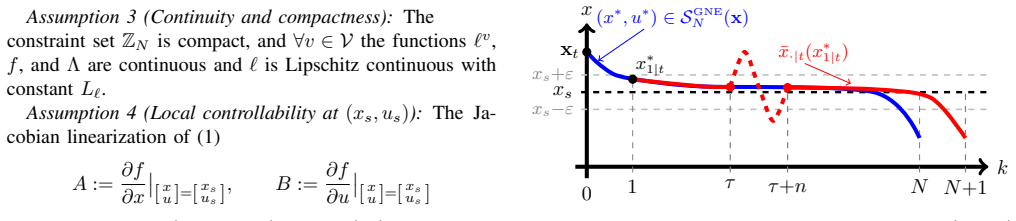
Figure from the paper full image
abstract click to expand
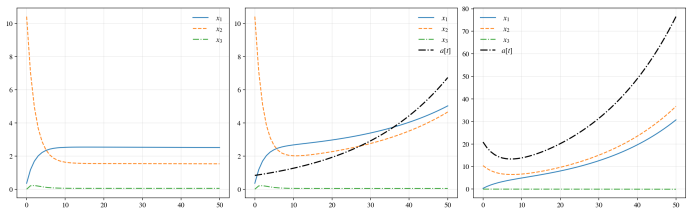
We analyze Receding Horizon Games without any MPC-like terminal ingredients. We show that recursive feasibility can be inferred from the turnpike phenomenon under mild assumptions. Moreover, we prove sufficient conditions for practical asymptotic convergence of the closed-loop trajectories, and we discuss how the gap towards practical asymptotic stability may be closed. We use numerical examples to show that the closed-loop region of attraction around the steady-state GNE shrinks exponentially with the horizon length, a behavior previously known only for model predictive control. Further, we apply a linear end penalty and demonstrate in numerical simulations that it suppresses the leaving arc and ensures asymptotic convergence to the steady-state GNE.
0
0
eess.SP 2026-05-13 Recognition

Commercial 5G dataset aids AI handover and beam management

Enabling AI-Native Mobility in 6G: A Real-World Dataset for Handover, Beam Management, and Timing Advance

It records timing advance at signaling events across pedestrian to train speeds to train models that cut interruption times.

Figure from the paper full image
abstract click to expand
To address the issues of high interruption time and measurement report overhead under user equipment (UE) mobility especially in high speed 5G use cases the use of AI/ML techniques (AI/ML beam management and mobility procedures) have been proposed. These techniques rely heavily on data that are most often simulated for various scenarios and do not accurately reflect real deployment behavior or user traffic patterns. Therefore, there is an utmost need for realistic datasets under various conditions. This work presents a dataset collected from a commercially deployed network across various modes of mobility (pedestrian, bike, car, bus, and train) and at multiple speeds to depict real time UE mobility. When collecting the dataset, we focused primarily on handover (HO) scenarios, with the aim of reducing the HO interruption time and maintaining continuous throughput during and immediately after HO execution. To support this research, the dataset includes timing advance (TA) measurements at various signaling events such as RACH trigger, MAC CE, and PDCCH grant which are typically missing in existing works. We cover a detailed description of the creation of the dataset; experimental setup, data acquisition, and extraction. We also cover an exploratory analysis of the data, with a primary focus on mobility, beam management, and TA. We discuss multiple use cases in which the proposed dataset can facilitate understanding of the inference of the AI/ML model. One such use case is to train and evaluate various AI/ML models for TA prediction.
0
0
eess.SY 2026-05-13 2 theorems

Docker container makes Basilisk GN&C simulations reproducible

Basilisk and Docker for Reproducible GN&C Simulation: A Workflow Reference

The workflow packages the full environment so identical spacecraft control tests run on any machine without dependency conflicts.

Figure from the paper full image
abstract click to expand
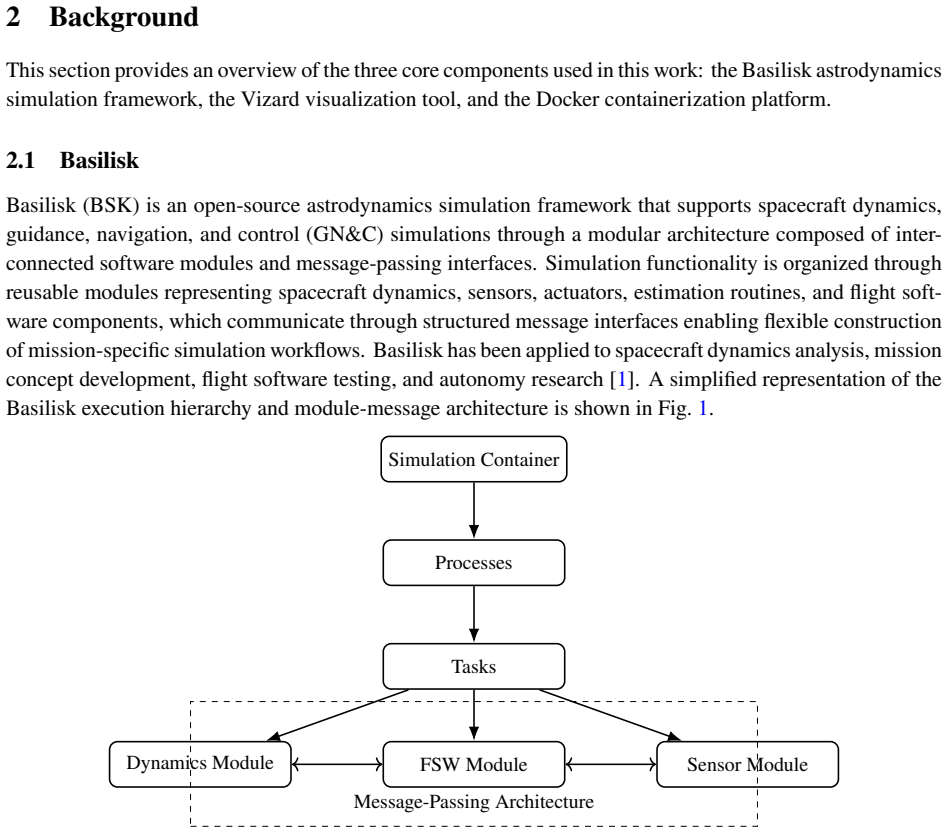
Basilisk is an open-source astrodynamics simulation framework widely used for spacecraft guidance, navigation, and control (GN&C) research and development. Despite its flexibility and computational capabilities, configuring Basilisk consistently across heterogeneous development environments presents practical challenges due to dependency management, operating system compatibility, and software configuration requirements. This paper presents a Docker-based containerization workflow for Basilisk that encapsulates the complete build environment, dependencies, and simulation infrastructure within a portable container image. The workflow is demonstrated through a progression of simulation scenarios of increasing complexity, from standalone orbital dynamics scripts to BSKSim-based attitude dynamics and control simulations with Monte Carlo analysis. The BSKSim class hierarchy, dynamics model architecture, flight software implementation, and scenario execution patterns are described in detail. The presented workflow provides a self-contained implementation reference for GN&C engineers and researchers seeking reproducible and portable Basilisk simulation environments. This work expands upon a workshop presentation delivered at the 46th Rocky Mountain AAS GN&C Conference, February 2024, available at https://doi.org/10.5281/zenodo.15008785.
0
0
eess.SP 2026-05-13 Recognition

Spiking nets cut massive MIMO CSI feedback energy by 93%

Massive MIMO CSI Feedback with Spiking Neural Networks

Bio-inspired spiking networks match transformer accuracy on channel reconstruction while using far less power

Figure from the paper full image
abstract click to expand
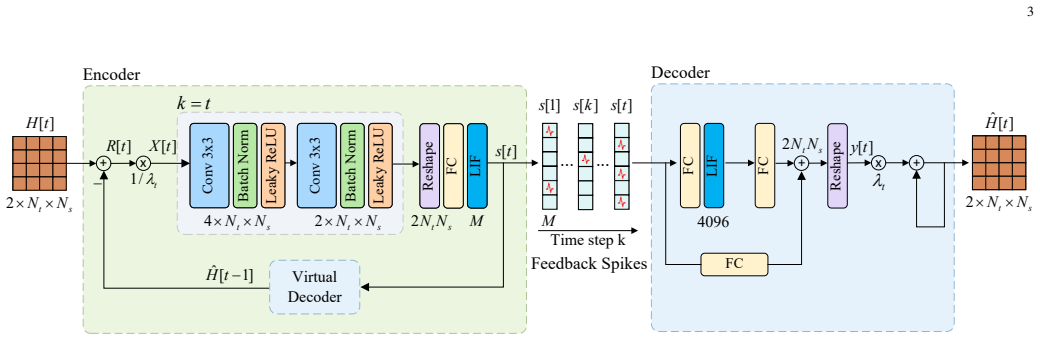
Deep learning-based channel state information (CSI) feedback has achieved empirical success in massive multiple-input multiple-output (MIMO) systems. However, existing approaches largely rely on dense artificial neural networks (ANNs), whose computational overhead limits their practical applications. In this article, we exploit bio-inspired spiking neural networks (SNNs) for massive MIMO CSI feedback, referred to as SpikingCSINet, where both the feedback and the main network computations are implemented through spikes. To overcome the information bottleneck of binary spikes in high-dimensional reconstruction, we develop a progressive residual (PR) architecture that exploits the natural temporal dimension of SNNs, encoding successive residuals across time steps to enhance information compactness. Experiments on the COST 2100 benchmark show that SpikingCSINet attains a more favorable performance-efficiency tradeoff than lightweight convolutional baselines. Moreover, it achieves performance competitive with Transformer-based feedback while reducing energy consumption by over $93\%$.
0
0
eess.SP 2026-05-13 2 theorems

Artifact rejection boosts low-SNR MI-BCI accuracy most

From EEG Cleaning to Decoding: The Role of Artifact Rejection in MI-based BCIs

FAAR reduces user-to-user performance gaps on 13 datasets by rejecting bad epochs adaptively with no manual tuning or heavy data loss.

Figure from the paper full image
abstract click to expand
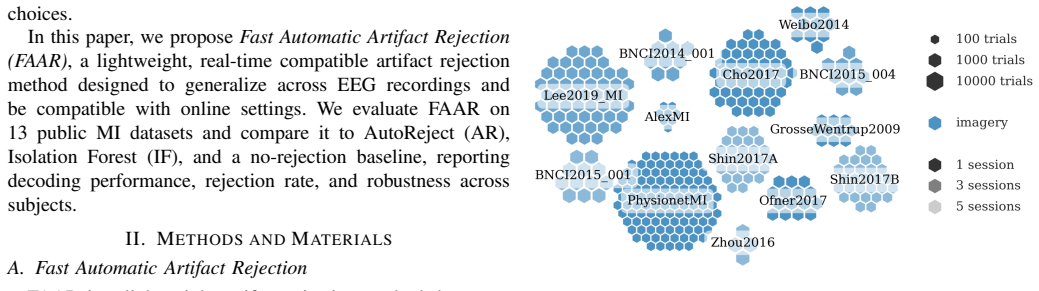
Motor imagery (MI) BCIs are sensitive to EEG artifacts, yet the practical impact of automated artifact rejection on downstream MI decoding performance remains unclear. While most work focuses on decoder design, the contribution of data curation, particularly automated rejection policies, has received comparatively less attention, despite its importance for robust ML pipelines. Here, we propose Fast Automatic Artifact Rejection (FAAR), a lightweight method that computes a compact set of artifact-sensitive features, derives an epoch-level Signal Quality Index, adaptively selects rejection thresholds, and automatically rejects contaminated epochs without requiring prior knowledge of artifact types or manual threshold tuning. We evaluate FAAR on 13 publicly available MI datasets and compare it to a no-rejection baseline, AutoReject, and Isolation Forest. We show rejection effects are strongly subject- and regime-dependent, with the largest gains in low-baseline/low-SNR conditions, so it should be used adaptively. FAAR reduces inter-subject performance variability, an important property for MI-BCI reliability and BCI-illiteracy, without aggressive data removal. Finally, FAAR's lightweight and fully automated thresholding yields consistent rejection behavior across offline curation, training, and online filtering, and supports real-time BCI constraints.
0
0
eess.AS 2026-05-13 2 theorems

SMC dataset exposes tempo bias in state-of-the-art beat tracking models

The SMC Blind Spot: A Failure Mode Analysis of State-of-the-Art Beat Tracking

Default 55 BPM floor forces double-tempo output on 21% of slow tracks, plus octave and continuity errors.

abstract click to expand
Over the past two decades, the task of musical beat tracking has transitioned from heuristic onset detection algorithms to highly capable deep neural networks (DNN). Although DNN-based beat tracking models achieve near-perfect performance on mainstream, percussive datasets, the SMC dataset has stubbornly yielded low F-measure scores. By testing how well state-of-the-art models detect beats on individual tracks in the SMC dataset, we identify three distinct failure modes: octave errors, continuity errors, and complete tracking failure where all metrics fall below 0.3. We reveal that state-of-the-art models tend to generate "confident-but-wrong" activations. Furthermore, we show that the standard DBN's default minimum tempo of 55 BPM prevents it from inferring the correct tempo for 21\% of SMC tracks, forcing double-tempo predictions on slow music. By exposing such fundamental oversights, we provide concrete directions for improving beat and downbeat detection, specifically emphasizing training data diversification and multi-hypothesis tempo estimation.
1 0
0
eess.SY 2026-05-13 2 theorems

Algebra of modulating functions yields orthonormal bases for estimation

Estimation Problems and the Modulating Function Method: The Algebra of Modulating Functions

Vector-space and algebra properties enable new families and let parameter estimation skip matrix inversion on boat roll dynamics.

Figure from the paper full image
abstract click to expand
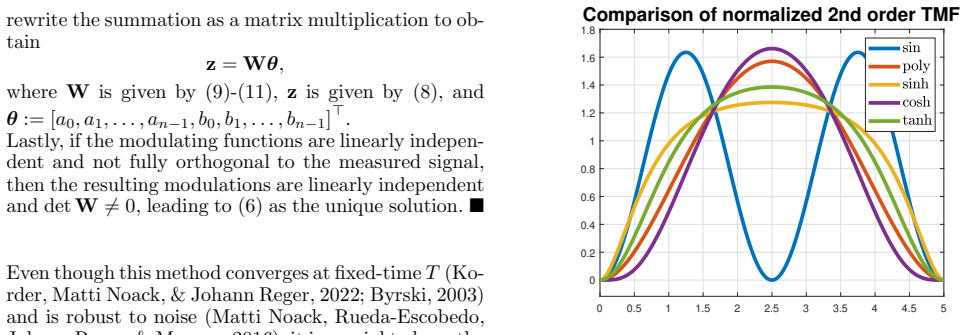
State and parameter estimation, along with fault detection, are three crucial estimation problems within the control systems community. Although different approaches have been proposed for each type of problem, the modulating function method proposes a more unified approach to all three problem classes, being used for state and parameter estimation of lumped systems, fault detection, and estimation of distributed and fractional systems. At the core of the method is the modulating function: a function that evaluates to 0 at the left or right boundaries up to a certain order of derivatives. By selecting the modulating functions, one directly determines the filter characteristics, and, for that reason, different function families have been proposed over the years. Nevertheless, many families of modulating functions are given in a rather similar mathematical structure. In light of these structures, this paper formally discusses the algebraic properties of modulating functions, and, after formalizing the closedness and group properties of modulating functions, a simple algorithm to construct new modulating functions is proposed, discussed, and illustrated with the construction of the newly introduced logarithmic modulating function families and 3 non-analytic modulating function families. Moreover, the fact that total modulating functions form a vector space and an algebra is exploited to construct orthonormal modulating functions, which are then used for the parameter estimation of a boat's roll dynamics, effectively avoiding matrix inversion issues.
0
0
eess.SP 2026-05-13 Recognition

State space models beat transformers for ECG foundation models

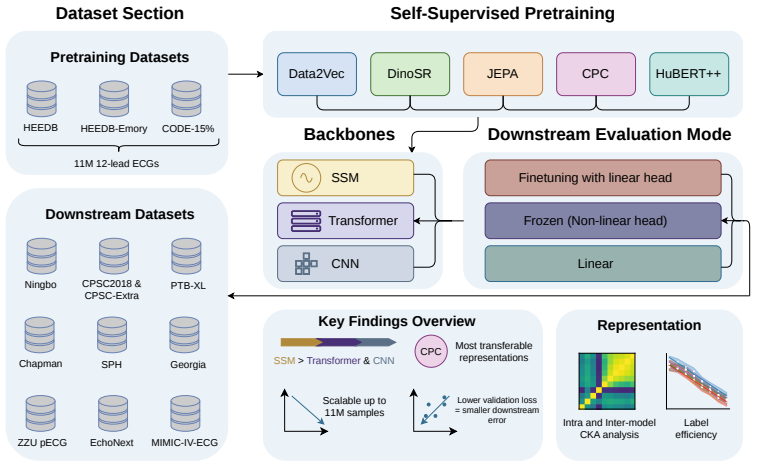
Pretraining Strategies and Scaling for ECG Foundation Models: A Systematic Study

Systematic comparison up to 11M samples shows inductive biases, not scale, drive better transferable representations.

Figure from the paper full image
abstract click to expand
Specialized foundation models are beginning to emerge in various medical subdomains, but pretraining methodologies and parametric scaling with the size of the pretraining dataset are rarely assessed systematically and in a like-for-like manner. This work focuses on foundation models for electrocardiography (ECG) data, one of the most widely captured physiological time series world-wide. We present a comprehensive assessment of pretraining methodologies, covering five different contrastive and non-contrastive self-supervised learning objectives for ECG foundation models, and investigate their scaling behavior with pretraining dataset sizes up to 11M input samples, exclusively from publicly available sources. Pretraining strategy has a meaningful and consistent impact on downstream performance, with contrastive predictive coding (slightly ahead of JEPA) yielding the most transferable representations across diverse clinical tasks. Scaling pretraining data continues to yield meaningful improvements up to 11M samples for most objectives. We also compare model architectures across all pretraining methodologies and find evidence for a clear superiority of structured state space models compared to transformers and CNN models. We hypothesize that the strong inductive biases of structured state space models, rather than pretraining scale alone, are the primary driver of effective ECG representation learning, with important implications for future foundation model development in this and potentially other physiological signal domains.
0
0
eess.SY 2026-05-13 Recognition

Neural fusion cuts wheel-speed errors by 85% at low speeds

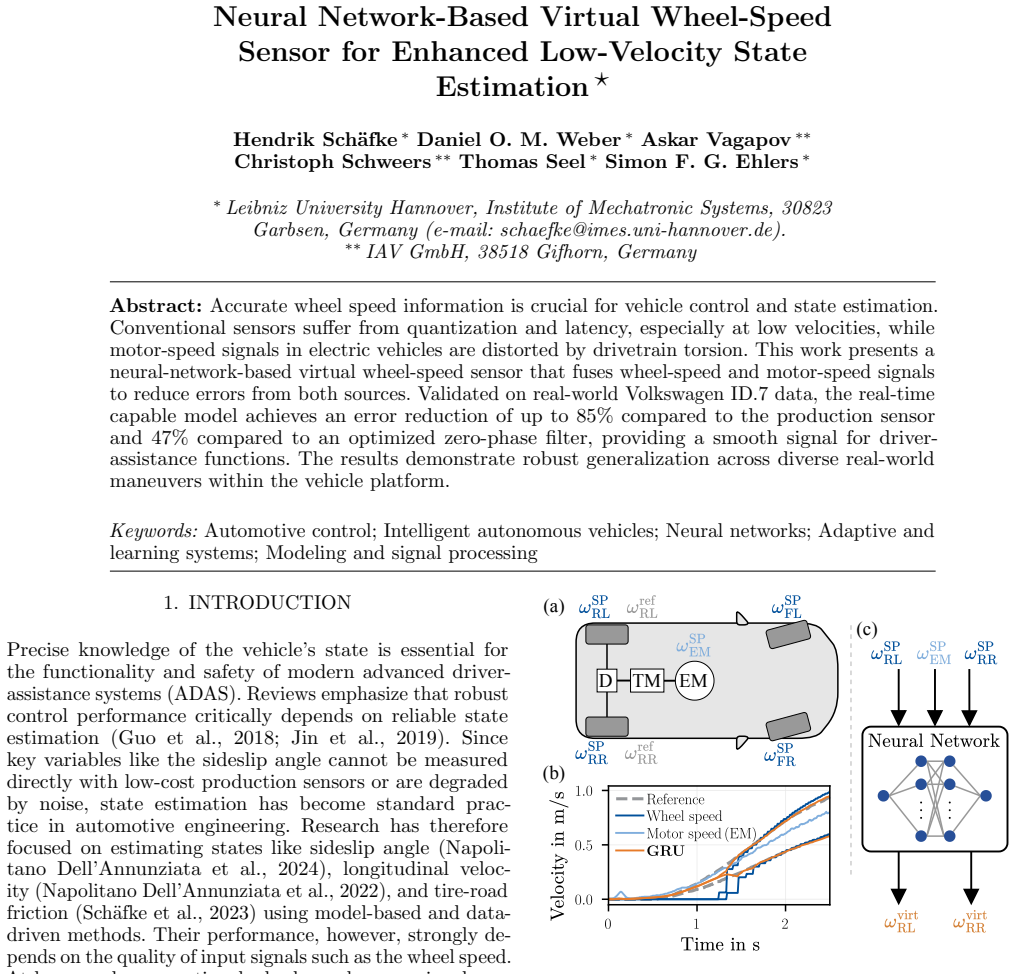
Neural Network-Based Virtual Wheel-Speed Sensor for Enhanced Low-Velocity State Estimation

Fusing wheel and motor signals in electric vehicles yields smoother data for driver-assistance systems.

Figure from the paper full image
abstract click to expand
Accurate wheel speed information is crucial for vehicle control and state estimation. Conventional sensors suffer from quantization and latency, especially at low velocities, while motor-speed signals in electric vehicles are distorted by drivetrain torsion. This work presents a neural-network-based virtual wheel-speed sensor that fuses wheel-speed and motor-speed signals to reduce errors from both sources. Validated on real-world Volkswagen ID.7 data, the real-time capable model achieves an error reduction of up to 85% compared to the production sensor and 47% compared to an optimized zero-phase filter, providing a smooth signal for driver-assistance functions. The results demonstrate robust generalization across diverse real-world maneuvers within the vehicle platform.
0
0
eess.SY 2026-05-13 2 theorems

Direct parameterization learns rational LPV-LFR models from data

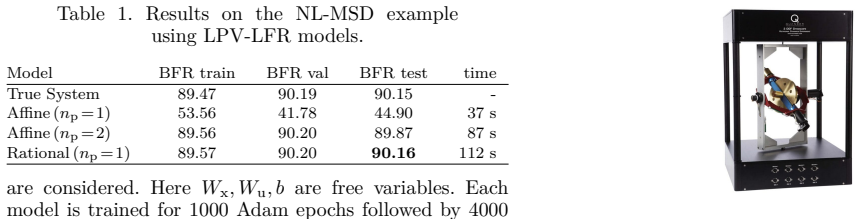
Efficient Learning of Affine and Rational Dependency LPV Models With Linear Fractional Representation

Joint estimation of plant and scheduling map captures complex nonlinear systems using fewer variables than affine models.

Figure from the paper full image
abstract click to expand
Identifying control-friendly models of nonlinear systems remains one of the major challenges at the intersection of system identification and control. The Linear Parameter-Varying (LPV) framework offers a promising solution, but existing identification methods often rely on model structures with affine scheduling dependency. Instead, this work proposes the use of LPV models with Linear Fractional Representation (LFR) admitting a rational scheduling-dependency, capable of modelling complex nonlinear systems with fewer scheduling variables compared to affine models. This work introduces a direct parameterization to ensure well-posedness of rational LPV-LFR models, which by joint-estimation of an LPV plant and scheduling map, using only input-output data, is capable of modelling complex nonlinear systems. Accuracy of the proposed approach is shown on two simulation examples.
0
0
eess.SP 2026-05-13 Recognition

Block filtering speeds long-context prefilling

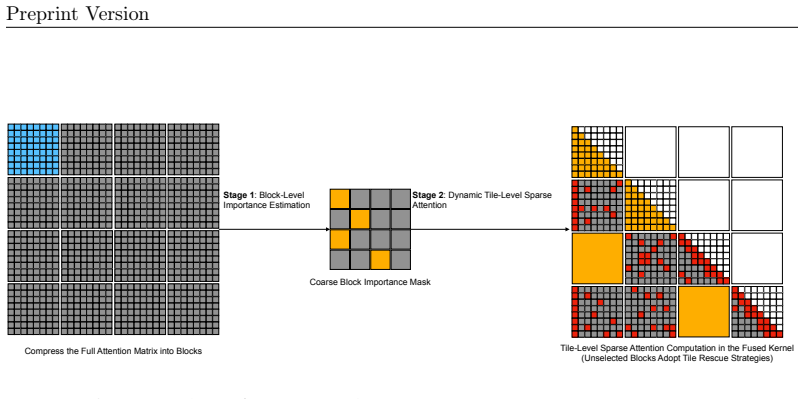
BFLA: Block-Filtered Long-Context Attention Mechanism

BFLA skips unimportant KV blocks with coarse masks and tile rescues while keeping accuracy close to full attention

Figure from the paper full image
abstract click to expand
This paper proposes Block-Filtered Long-Context Attention (BFLA), a training-free sparse prefill attention mechanism for long-context inference. BFLA adopts a two-stage design. In Stage 1, query and key sequences are compressed into coarse blocks, and lightweight block-level softmax mass estimation is performed to construct an input-dependent block importance mask. In Stage 2, the coarse mask is expanded to the Triton attention-tile grid. Several tile-level rescue strategies are applied to reduce information loss, where a fused sparse prefill kernel skips unimportant KV tiles while preserving exact token-level attention inside every retained tile. BFLA requires no retraining, calibration, preprocessing, or model modification and can be plugged into existing vLLM-style paged-attention workloads. Experiments on Gemma 4, Llama 3.1, Qwen 3.5, and Qwen 3.6 series models show that BFLA substantially accelerates long-context prefilling with minimal accuracy degradation compared to dense Triton FlashAttention. Project website: https://github.com/Alicewithrabbit/BFLA.
0
0
eess.SP 2026-05-13 2 theorems

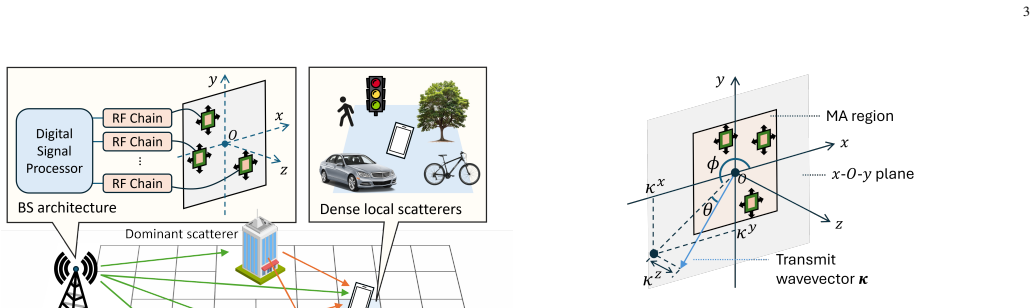
Cell statistics alone set movable-antenna positions

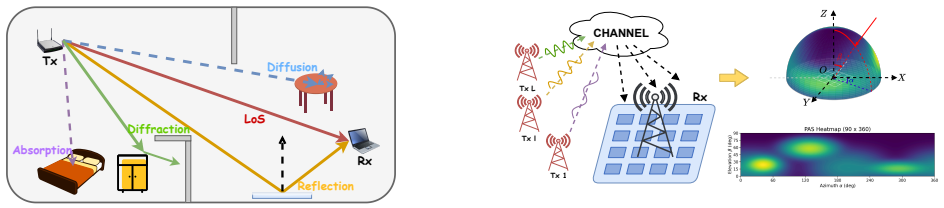
Slow Movable Antenna System Design Based on Cell-Specific Long-Term Angular Power Spectrum

CEBAP uses only long-term APS to cut overhead and raise long-term rates and SINR without short-term CSI.

Figure from the paper full image
abstract click to expand
Movable antenna (MA) has recently emerged as a promising paradigm for enhancing wireless communication performance by exploiting spatial degrees of freedom through flexible antenna repositioning. However, most existing designs rely on short-term user-specific instantaneous/statistical channel state information (CSI), which incurs excessive channel estimation overhead and complexity due to frequent antenna movement. To address this issue, this paper proposes a new design framework for antenna position optimization over a much longer timescale based on the cell-level statistical channel information acquired at the base station (BS). To this end, a cell-specific statistical channel model is developed for MA-aided multiuser communication systems, based on which the antenna position optimization framework for maximizing the ergodic system utility is formulated. Then, the covariance-eigenvalues-balancing antenna positions (CEBAP) design is derived to asymptotically approximate optimal solutions by statistically reducing users' channel correlation. Notably, the CEBAP solution solely depends on the BS-side angular power spectrum (APS) of wireless channels for mobile users across the cell, which significantly alleviates the overhead of channel acquisition and antenna movement, and yet remains effective for improving various system utilities over long timescales, such as weighted sum rate and minimum signal-to-interference-plus-noise ratio. Moreover, a low-complexity log-barrier penalized optimization (LOBPO) method is proposed to numerically solve the CEBAP. Simulation results based on realistic urban layouts and ray-tracing channels demonstrate consistent performance gains of the proposed CEBAP over fixed-position antenna systems across different utility functions, which closely approaches the upper bound achieved by instantaneous CSI-based MA optimization for moderately large antenna regions.
0
0
eess.IV 2026-05-13 Recognition

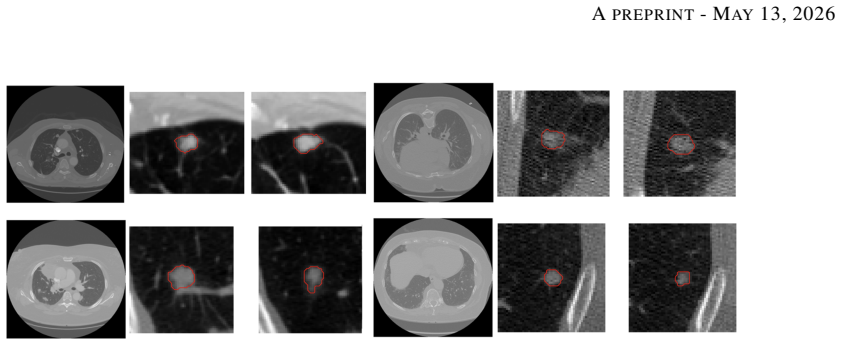
CycleGAN turns standard CT scans into usable low-dose training data

A Comparative Analysis of CT Degradation for LDCT Nodule Classification using Radiomics

Synthetic images raise nodule classifier AUC to 0.861 and sensitivity to 0.743 on real screening cases.

Figure from the paper full image
abstract click to expand
Low-dose computed tomography (LDCT) is the standard modality for lung cancer screening, known for its low radiation dose but high noise levels. While existing literature focuses on denoising LDCT images, comparative research on simulating LDCT characteristics to directly use these images for model development is lacking. This study shifts the focus from denoising images to degrading available standard-dose CT (SDCT) data, generating synthetic images for data augmentation to train classifiers for screening-detected nodules. We compare three degradation methods: (1) a sinogram domain statistical noise insertion; (2) replicate a validated physics-based simulation using Pix2Pix; and (3) unpaired CycleGAN. The generated images were utilized to simulate LDCT screening scenario replacing 695 SDCT cases from the LIDC-IDRI dataset, from which radiomic features were extracted to train machine learning models for lung nodule classification. Regarding image quality, CycleGAN achieved the best Fr\'echet inception distance (0.1734) and kernel inception distance (0.0813; 0.1002) scores, indicating distributional alignment with the target low-dose domain. In the nodule classification task, results confirmed the necessity of domain adaptation since a baseline model trained on non-degraded SDCT data failed to generalize to the real LDCT set (AUC 0.789) with a low sensitivity (0.571). Degraded images generated using CycleGAN approach led to the most balanced performance on the classification task using Adam Booster classifier, achieving an AUC of 0.861, sensitivity of 0.743 and specificity of 0.858 in the independent test. Our findings confirm that generating synthetic LDCT data from standard-dose scans is a viable strategy for training robust nodule classifiers for screening detected nodules.
0
0
eess.AS 2026-05-13 2 theorems

Modern ASR matches humans on enhanced speech but misleads on quality

Too Good to Be True: A Study on Modern Automatic Speech Recognition for the Evaluation of Speech Enhancement

Large-scale noisy training improves correlation with listener error rates, yet the same robustness hides acoustic gains from enhancement.

Figure from the paper full image
abstract click to expand
Speech enhancement (SE) systems are typically evaluated using a variety of instrumental metrics. The use of automatic speech recognition (ASR) systems to evaluate SE performance is common in literature, usually in terms of word error rate (WER). However, WER scores depend heavily on the choice of ASR system and text normalization pipeline. In this paper, we investigate how modern ASR models correlate with human recognition of enhanced speech. A listening experiment reveals that modern ASR models with large-scale noisy training and embedded language models correlate more with human WER than simpler ones, with a transducer model providing the most reliable transcriptions. Nevertheless, we also show that these models' robustness to noise and use of context can be uninformative to an acoustics-focused evaluation of enhancement performance.
1 0
0
eess.SP 2026-05-13 2 theorems

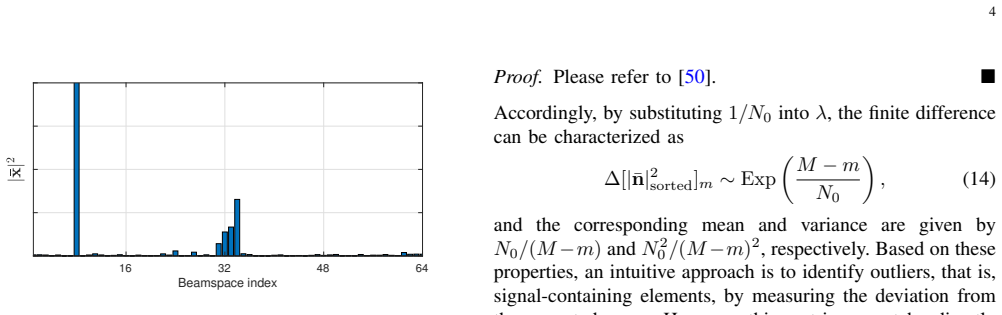
Beamspace sorting yields SNR from one mmWave sample

Low-Complexity Blind SNR Estimator for mmWave Multi-Antenna Communications

A sorting procedure isolates noise components via order statistics so that noise power, signal power, and SNR follow from arithmetic alone.

Figure from the paper full image
abstract click to expand
In this paper, we propose a low-complexity blind estimator for the average noise power, average signal power, and signal-to-noise ratio (SNR) in millimeter-wave (mmWave) massive multi-antenna uplink systems. In particular, the proposed method is designed to operate using only a single received signal sample, without relying on pilot signals, iterative optimization, or multiple observations, and without requiring prior knowledge of the transmitted signal. By exploiting the inherent sparsity of mmWave channels in the beamspace domain, the estimator identifies noise-dominant components through a sorting-based procedure combined with a finite-difference criterion. This separation is further supported by the order statistics of noise power under Gaussian assumptions, enabling statistically grounded discrimination between signal and noise elements. The average noise power is estimated from the identified noise-only components, and the signal power and SNR are subsequently obtained through simple arithmetic operations. The proposed algorithm achieves low computational complexity and is well-suited for real-time implementation. To demonstrate its practical feasibility, a hardware-efficient very large-scale integration (VLSI) architecture is developed and implemented on a AMD-Xilinx Kintex UltraScale+ KCU116 Evaluation Kit, with corresponding field-programmable gate array (FPGA) results provided. The implementation exhibits low latency and sublinear scaling of hardware resource utilization with respect to the number of antennas, and enables parameter estimation within a duration shorter than a single symbol of conventional wireless systems. Simulation results verify that the proposed estimator achieves high estimation accuracy compared to existing single-sample-based methods.
0
0
eess.AS 2026-05-13 Recognition

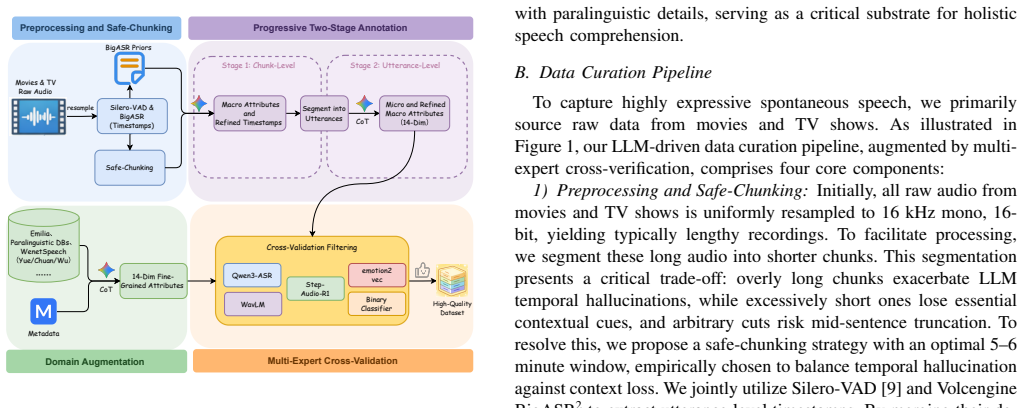
FM-Speech outperforms rivals on 14 fine-grained speech dimensions

Towards Fine-Grained Multi-Dimensional Speech Understanding: Data Pipeline, Benchmark, and Model

Decoupled training on curated spontaneous audio from videos closes the perception gap that limits current speech LLMs.

Figure from the paper full image
abstract click to expand
While speech Large Language Models (LLMs) excel at conventional tasks like basic speech recognition, they lack fine-grained, multi-dimensional perception. This deficiency is evident in their struggle to disentangle complex features like micro-acoustic cues, acoustic scenes, and paralinguistic signals. This resulting incomplete comprehension of real-world speech fundamentally bottlenecks the development of perceptive and empathetic next-generation speech systems. At its core, this persistent perceptual limitation primarily stems from three interacting factors: scarce high-quality expressive data, absent fine-grained modeling for multi-dimensional attributes, and reliance on restricted coverage, coarse-grained benchmarks. We address these challenges through three pillars: First, our robust data curation pipeline resolves complex acoustic environments and long-audio timestamp alignment challenges to extract a high-quality spontaneous speech corpus from audiovisual sources. Second, we construct FMSU-Bench, a pioneering benchmark covering 14 speech attribute dimensions to rigorously assess the fine-grained, multi-dimensional speech understanding capabilities of current models. Third, empowered by our curated corpus, we introduce FM-Speech. Driven by a decoupled attribute modeling and progressive curriculum fine-tuning framework, it substantially elevates fine-grained, multi-dimensional acoustic perception. Extensive evaluations on FMSU-Bench reveal that current speech LLMs still require significant improvement in multi-dimensional, fine-grained understanding. In contrast, FM-Speech substantially outperforms current open-source models, establishing a robust paradigm for real-world speech understanding.
0
0
eess.SY 2026-05-13 1 theorem

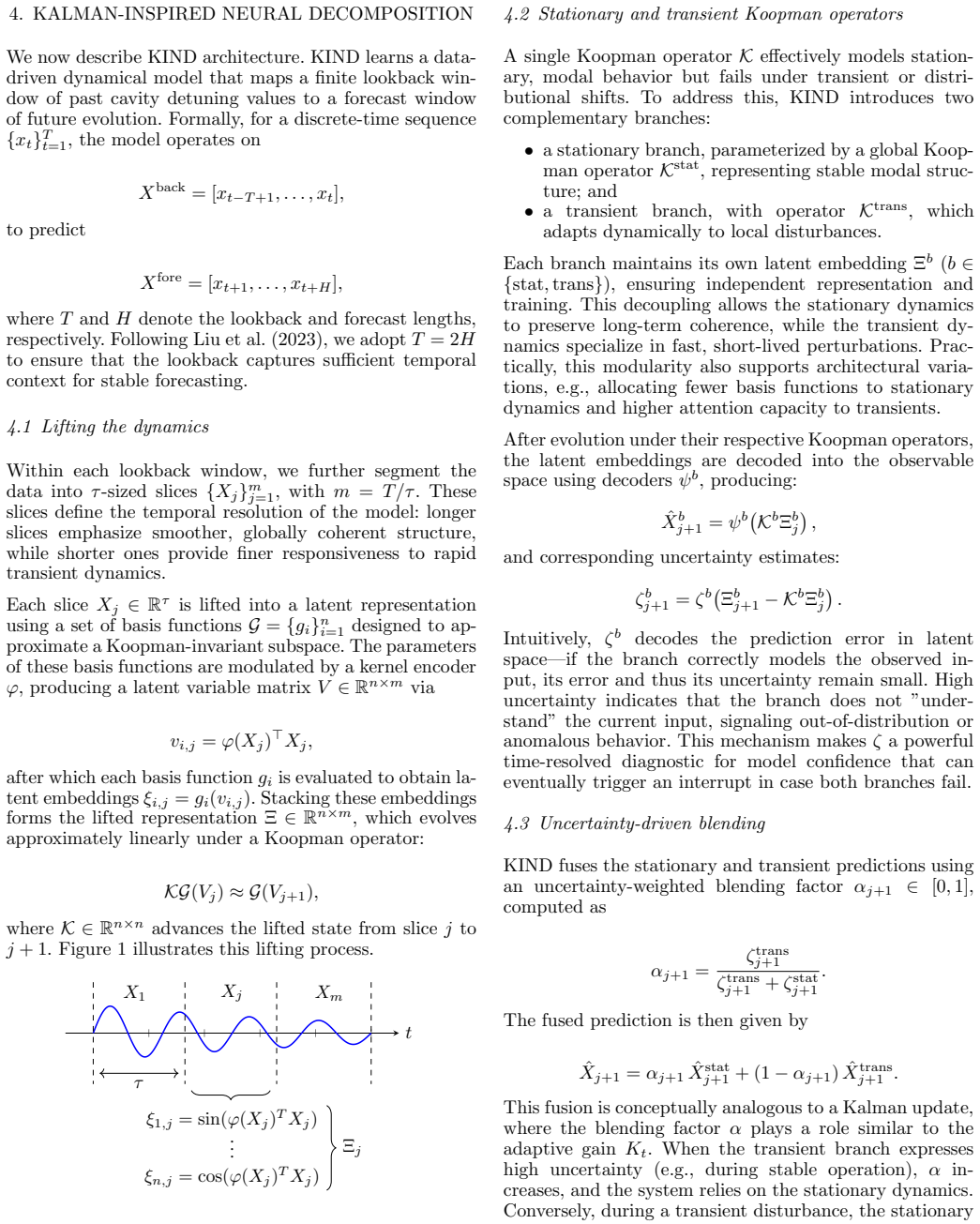
Hybrid estimator tracks SRF cavity detuning with uncertainty warnings

KIND: A Kalman-Inspired Adaptive Estimator for SRF Cavity Detuning

KIND blends modal decomposition and neural prediction to aid stable beam operation in accelerators by detecting disturbances early.

Figure from the paper full image
abstract click to expand
Superconducting radio frequency cavities with a high quality factor enable energy-efficient accelerator operation but are very sensitive to mechanical disturbances that detune their resonance. Accurate detuning estimation is therefore essential for efficient resonance control and stable beam conditions. This paper introduces Kalman-Inspired Neural Decomposition (KIND), a data-driven estimator that fuses a Dynamic Mode Decomposition model for stationary modal behavior with a Transformer-based predictor for transient dynamics. KIND further outputs learned uncertainty signals that indicate regime changes, enabling anomaly detection. Using operational cavity data, we compare KIND with a classical Kalman filtering baseline and discuss its potential as a foundation for future uncertainty-aware, forecast-based control.
0
0
eess.SY 2026-05-13

Lane bias in graph model cuts merge prediction error to 0.865 m at 1 s

Lane-Aware Graph Attention Network for Multi-Vehicle Trajectory Prediction in Expressway Merge Zones

Fine-tuned LA-GAT reaches 0.865 m ADE at 1 s and 2.518 m at 3 s on held-out drone data while lowering safety violations.

abstract click to expand
Accurate multi-vehicle trajectory prediction in expressway merge and diverge areas is fundamental to the decision-making frameworks of autonomous vehicle systems. However, the majority of existing graph-based prediction models are developed and validated on mainline freeway segments and do not address the geometrically distinct interaction structures that characterize merge zones. Furthermore, standard evaluation protocols rely exclusively on displacement error metrics, leaving the safety consequences of predicted trajectories unquantified. This paper proposes a Lane-Aware Graph Attention Network (LA-GAT) that encodes vehicle interaction within dynamic scene graphs, augmented with a trainable lane-relationship attention bias that prioritizes merge-conflict interactions from the outset of training. The model is pre-trained on the raw NGSIM US-101 and I-80 datasets and subsequently fine-tuned on UAV-captured UTE SQM-W-1 trajectory data from a Chinese expressway merge area, with final evaluation on the held-out SQM-W-2 dataset. Evaluation spans both displacement metrics (ADE, FDE at 1s, 3s, 5s horizons) and surrogate safety measures (TTC violation rate, DRAC exceedance rate, collision rate). Fine-tuned results on SQM-W-2 yield ADE of 0.865 m at 1s and 2.518 m at 3s, demonstrating that drone-informed fine-tuning substantially reduces the cross-dataset transfer gap. The deliberate use of unfiltered NGSIM data is shown to characterize raw-condition generalization limits, with the performance degradation attributed to the well-documented measurement errors in that dataset.
0
0
eess.SP 2026-05-13 2 theorems

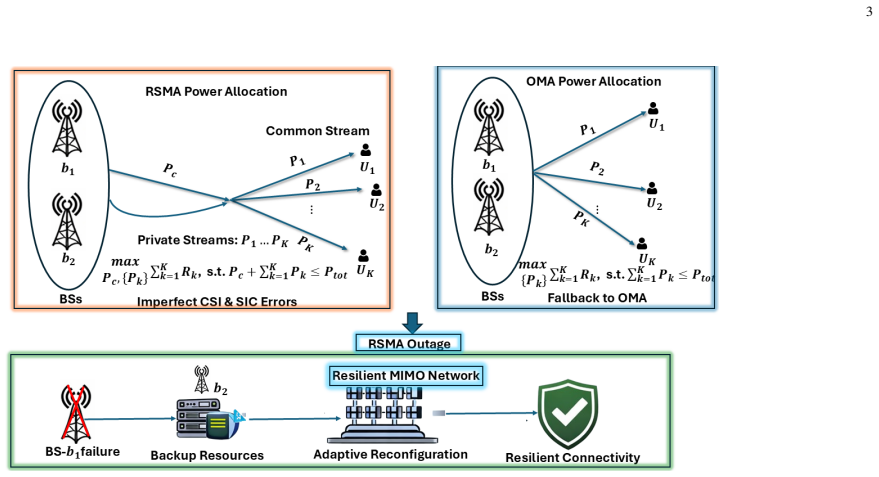
Adaptive power control keeps RSMA feasible in MIMO under imperfect CSI

Adaptive RSMA-OMA for Resilient MIMO Networks Under Imperfect CSI and SIC

By reallocating power and switching to OMA when needed, the method reduces outages and improves efficiency despite channel errors and cancel

Figure from the paper full image
abstract click to expand
This paper addresses the challenge of power control in Rate-Splitting Multiple Access (RSMA) systems for downlink Multi-Input Multi-Output (MIMO) networks under practical impairments such as spatial correlation, imperfect Channel State Information (CSI), and residual Successive Interference Cancellation (SIC) errors. We propose a novel degeneracyaware framework that adaptively adjusts the power allocation between the common and private streams, ensuring optimal performance despite CSI uncertainty and imperfect SIC. Our approach incorporates a dynamic switching mechanism between RSMA and Orthogonal Multiple Access (OMA) to maintain system feasibility and resilience in the face of these impairments. Extensive analytical and simulation results demonstrate that the proposed framework significantly enhances power efficiency, mitigates outage probability, and improves overall system robustness, making RSMA a viable and efficient solution for modern wireless networks with realistic CSI and SIC conditions.
0
0
eess.SP 2026-05-13 2 theorems

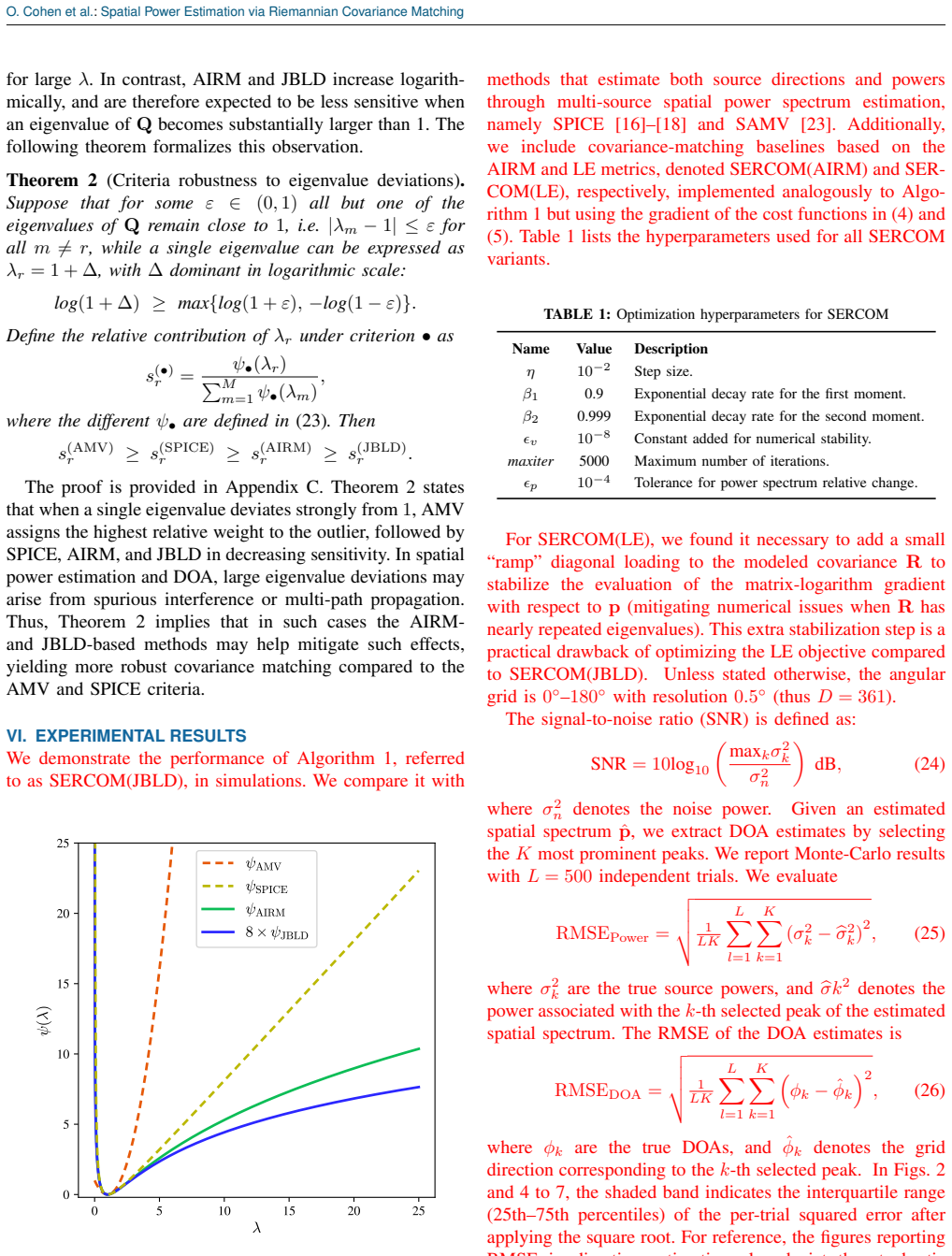
Riemannian covariance matching beats Euclidean methods

Spatial Power Estimation via Riemannian Covariance Matching

The Jensen-Bregman LogDet divergence on positive definite matrices gives more accurate DOA and power estimates especially with weak signals,

Figure from the paper full image
abstract click to expand
We propose a new method for spatial power spectrum estimation in array processing that leverages the Riemannian geometry of Hermitian positive definite (HPD) matrices. We show that conventional approaches minimize variants of the Euclidean distance between the sample covariance matrix and a model covariance matrix, without considering the fact that covariance matrices lie on the Riemannian manifold of HPD matrices. By exploiting this manifold, we present a Riemannian-aware covariance matching algorithm, termed SERCOM, using the Jensen-Bregman LogDet (JBLD) divergence, which, unlike other Riemannian distances, can be evaluated efficiently without eigen-decomposition. We theoretically compare the JBLD divergence to other Euclidean- and Riemannian-based distances, demonstrating robustness to spectral distortions. Experimental results demonstrate that SERCOM consistently outperforms existing methods in direction-of-arrival (DOA) and power estimation, particularly in challenging scenarios with low SNR, limited number of snapshots, and correlated sources.
0
0
eess.SP 2026-05-13 2 theorems

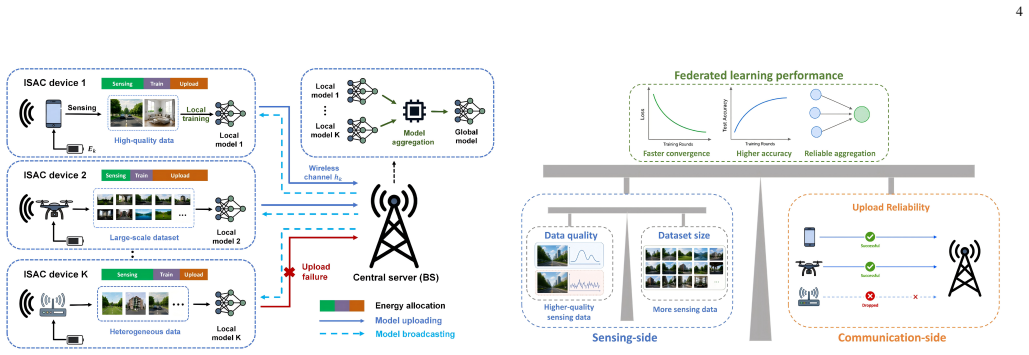
Energy split between sensing and uploads improves federated models

ISAC for AI: A Trade-off Framework Across Data Acquisition and Transfer in Federated Learning

A closed-form bound on the learning gap lets each device choose sensing snapshots and transmit powers under its own energy budget to shrink

Figure from the paper full image
abstract click to expand
In this paper, we propose a resource allocation framework for federated learning (FL) in integrated sensing and communication (ISAC) systems, where we consider not only the reliability of model transfer through communication, but also the quality of data acquisition through sensing in the first place. Unlike existing works that assume training data is pre-collected or only impose a fixed sensing signal-to-noise ratio (SNR) threshold to reflect data quality, we explicitly characterize the relationship between sensing data quality (measured by sensing SNR), dataset size, and the upload reliability in FL training, and exploit this relationship to allocate resources between sensing and communication under a shared energy budget. This is non-trivial due to the intricate coupling among sensing data quality, transmission reliability, and communication resource allocation; nevertheless, it enables a principled joint optimization framework that directly enhances learning performance. Specifically, we derive a closed-form convergence upper bound that quantifies the joint impact of these factors on the FL optimality gap. Utilizing this upper bound, the original intractable optimization problem can be reformulated into a tractable resource allocation problem that jointly optimizes the sensing transmit power, number of sensing snapshots, and communication transmit power at each device subject to individual energy budget constraints. To solve the reformulated problem, we propose a two-layer optimization algorithm with linear complexity, where the outer layer employs golden section search and the inner layer solves per-device subproblems with closed-form solutions.
0
0
eess.SP 2026-05-13

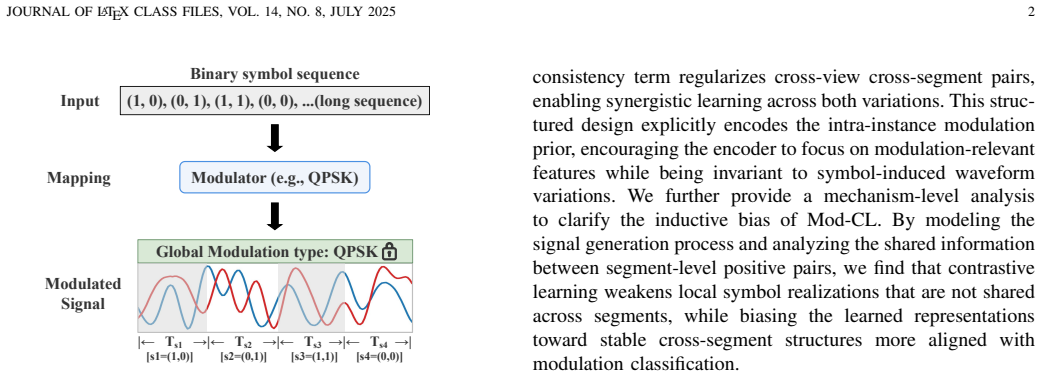
Signal segment consistency trains modulation classifiers with fewer labels

Modulation Consistency-based Contrastive Learning for Self-Supervised Automatic Modulation Classification

Mod-CL pulls together different parts of one transmission so the model focuses on what stays constant across noise and channel changes.

Figure from the paper full image
abstract click to expand
Deep learning-based AMC methods have achieved remarkable performance, but their practical deployment remains constrained by the high cost of labeled data. Although self-supervised learning (SSL) reduces the reliance on labels, existing SSL-based AMC methods often rely on task-agnostic pretext objectives misaligned with modulation classification, leading to representations entangled with nuisance factors such as symbol, channel, and noise. In this paper, we identify intra-instance modulation consistency as a task-aware structural prior, whereby different temporal segments of the same signal may differ in waveform while preserving the same modulation type, thus providing a principled cue for task-aligned self-supervision. Based on this prior, we propose Mod-CL, a Modulation consistency-based Contrastive Learning framework that constructs positive pairs from different temporal segments of the same signal instance, to encourage the model to learn shared modulation information while suppressing nuisance variations. We further develop a contrastive objective tailored to Mod-CL, which jointly exploits temporal segmentation and data augmentation to pull together views sharing the same modulation semantics while avoiding supervisory conflicts within each signal instance. Extensive experiments on RadioML datasets show that Mod-CL consistently outperforms strong baselines, especially in low-label regimes, achieving substantial improvements in linear probing accuracy.
0
0
eess.SP 2026-05-13 2 theorems

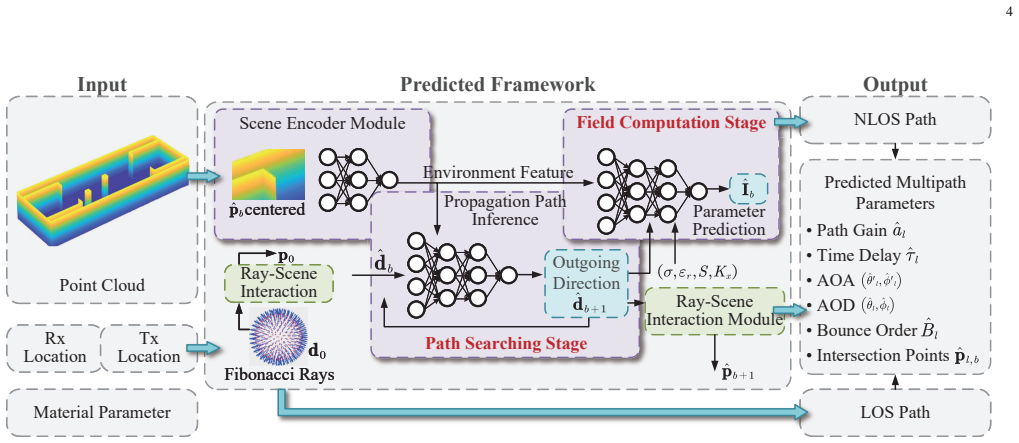
Neural model reconstructs radio paths from point clouds

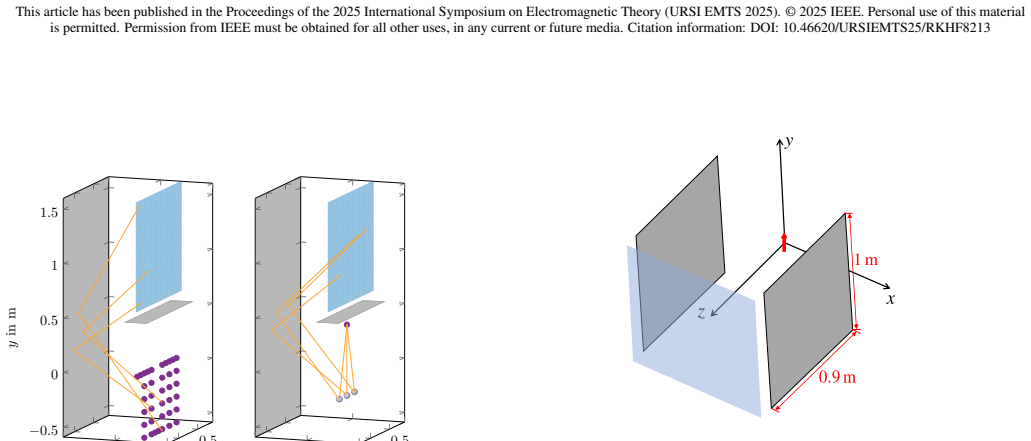
PointNeRT: A Physics Aware Neural Ray Tracing Surrogate for Propagation Channel Modeling

Hop-by-hop prediction with physical constraints replaces mesh building and material rules for channel modeling.

Figure from the paper full image
abstract click to expand
Ray tracing (RT) has emerged as a key tool for propagation channel modeling and network planning. Conventional RT is based on electromagnetic (EM) wave theory and its application relies on detailed mesh-based environment representations and material properties. In realistic environments, limited environmental geometry and material uncertainties hinder its scalability to complex scenarios. In this paper, we propose a novel physics aware neural RT surrogate named PointNeRT to address these limitations. The proposed model directly takes point clouds as environmental input, and efficiently reconstruct multipath without explicitly constructing mesh models or manually defining EM interaction rules. PointNeRT adopts a hop-by-hop modeling strategy guided by physical interaction constraints. It supports sequential prediction of multipath propagation and power attenuation. Numerical results and experiments demonstrate that the proposed method implicitly captures surface normal characteristics and EM material effects. It further achieves robust generalization in mobility scenarios and provides a physics-guided neural modeling of multipath propagation.
0
0
eess.SP 2026-05-13 Recognition

Backscatter cuts IoT radio power by up to 1000x

Long-Range Backscatter: A Bottom-Up Approach

Bottom-up review of topologies, CSS modulation, and MAC shows how to match low-power tags to harvested energy for perpetual operation.

Figure from the paper full image
abstract click to expand
Continued progress towards energy-neutral Internet of Things (IoT) nodes expose the wireless communication link as the dominant energy bottleneck. While low-power wide-area network (LPWAN) technologies achieve long-range communication with multiple years of battery life, their active radios hinder reaching full energy neutrality. Long-range backscatter communication emerged as a key enabler, reaching one to three order of magnitude lower power consumption. New advancements leverage concepts from active radio systems such as chirp spread spectrum (CSS) modulation and integrate them on a low-power backscatter tag. This paper presents a comprehensive survey of long-range backscatter communication, using a bottom-up analysis spanning system topologies, hardware architecture, modulation techniques and medium access. Backscatter communication requires different topologies compared to active radios to reach longer communication distances. Different hardware architectures support backscattering a modulated signal with differing complexity, power consumption and spectral efficiency. At the physical layer binary switch-based modulation are well known and provide an easy form of modulation while chirp spread spectrum (CSS)-based modulation gain traction due to their robustness. Medium Access Control (MAC) techniques are examined with a focus on synchronization, concurrency and lightweight feedback mechanisms requiring low-power, low-complexity hardware. Building on these established solutions the paper evaluates the feasibility of long-range backscatter communication in different energy-neutral Internet of Things (IoT) applications. Starting from the available energy budget, harvested through solar, radio frequency (RF) or capacitive harvesting, feasible hardware, modulation and Medium Access Control (MAC) solutions are explored.
0
0
eess.SY 2026-05-13 Recognition

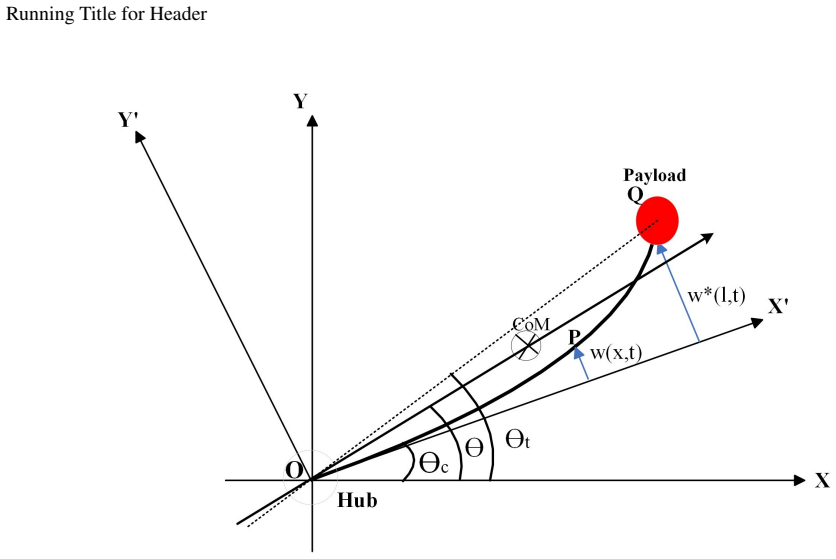
Fixed-time observer and nested controller regulate flexible arm tip

Observer-Based Fixed-Time Nested Sliding-Mode Control for Tip-Position Regulation of a Single-Link Flexible Manipulator

Scheme ensures convergence in bounded time with state estimates and robustness to disturbances

Figure from the paper full image
abstract click to expand
This paper presents a novel position control strategy for a single-link flexible manipulator, tailored for applications where precise position must be achieved within strict time constraints. To accomplish this objective, firstly, a nested non-singular terminal sliding mode controller is designed for the system, enabling precise and robust control. Furthermore, a fixed-time sliding mode observer is designed to estimate unmeasured system states accurately in a fixed time, thereby enabling closed-loop control implementation. A stability analysis is presented to guarantee the robustness and efficacy of the proposed composite control algorithm. The effectiveness of the proposed fixed-time controller is demonstrated through numerical simulation on accuracy, stability, and convergence speed. The proposed controller's performance is also compared with that of other state-of-the-art control schemes. The proposed controller is further validated through experiments conducted on a real hardware setup.
0
0
eess.SP 2026-05-13 2 theorems

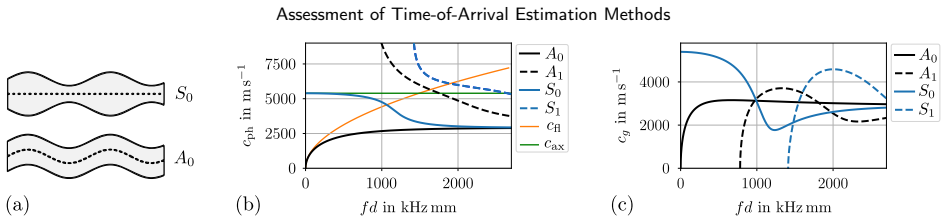
TOA methods detect both Lamb modes from plate impacts despite noise

Assessment of Time-of-Arrival Estimation Methods for Impact Detection in Isotropic Plates using Piezoceramic Sensors

Assessment on calibrated simulations shows noise mainly affects symmetric arrivals while anti-symmetric estimates stay usable with simple

Figure from the paper full image
abstract click to expand
This work describes and assesses different methods for estimating the time-of-arrival (TOA) of impact-induced waves in isotropic plate-like structures. The methods considered include threshold crossing (TC), continuous wavelet transform (CWT), short/long term average (SLA), modified energy ratio (MER), and the Akaike information criterion (AIC). Their advantages, limitations, and sensitivities to method-specific parameters are systematically investigated. The assessment is based on synthetic data from transient finite element simulations that are experimentally calibrated with respect to excitation and dispersion characteristics. Wave propagation is monitored using piezoceramic patch sensors bonded to the plate surface, and robustness is evaluated for impacts of varying positions and force profiles, including noise-contaminated sensor signals in order to account for practically relevant measurement conditions. The results show that the methods are capable of detecting the fundamental Lamb wave modes, with nearly all capturing both the symmetric and anti-symmetric mode arrivals under noise-free conditions. In particular, noise primarily impairs the detection of the earliest symmetric-mode arrivals, while meaningful anti-symmetric-mode TOA-estimates can still be obtained by suitable preprocessing or time-frequency analysis. Besides, new contributions to the assessed TOA-estimation methods include a frequency-domain threshold crossing within the CWT framework that improves both robustness and accuracy of TOA-estimation, and the consideration of local minima in the AIC that proves effective for detecting the TOA of the fundamental symmetric mode. Beyond these findings, the research provides practical guidelines and insights into the specific characteristics of each assessed method, supporting accurate and reliable TOA-estimation for applications such as impact localization.
0
0
eess.IV 2026-05-13 2 theorems

Radiomics guide diffusion model for label-free lung CT segmentation

DiffSegLung: Diffusion Radiomic Distillation for Unsupervised Lung Pathology Segmentation

Handcrafted tissue descriptors shape network features so clustering can label multiple pathologies on unlabeled scans.

Figure from the paper full image
abstract click to expand
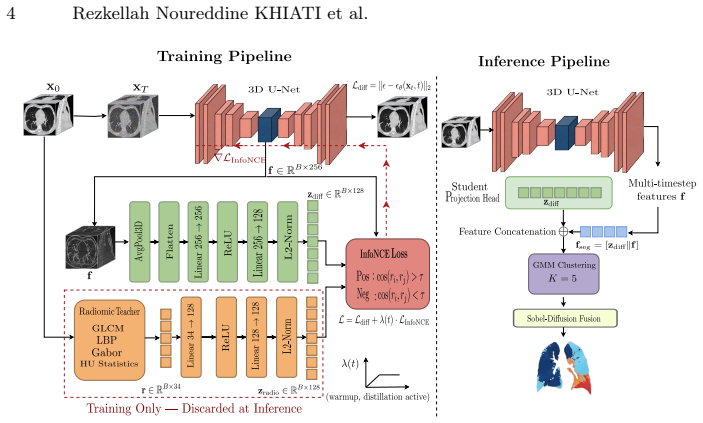
Unsupervised segmentation of pulmonary pathologies in CT remains an open challenge due to the absence of annotated multi pathology cohorts and the failure of existing diffusion-based methods to exploit the quantitative Hounsfield Unit (HU) signal that physically distinguishes tissue classes. To address this, we propose DiffSegLung,a framework that introduces Diffusion Radiomic Distillation, in which handcrafted radiomic descriptors serve as a physics grounded teacher to shape the bottleneck of a 3D diffusion U-Net via a contrastive objective, transferring pathology discriminative structure into the learned representation without any annotations. At inference, the teacher is discarded and multitimestep bottleneck features are clustered by a Gaussian Mixture Model with HU-guided label assignment, followed by Sobel Diffusion Fusion for boundary refinement. Evaluated on 190 expert annotated axial slices drawn from four heterogeneous CT cohorts, Diff-SegLung improves segmentation across all four pathology classes over unsupervised baselines and improves generation fidelity over prior CT diffusion models.
0
0
eess.SP 2026-05-13 2 theorems

Midpoint chirp choice makes AFDM waveforms continuous and lower in OOBE

Stepped Frequency Division Multiplexing: A Jump-Free Continuous-Time AFDM Waveform

Stepped frequency division multiplexing holds frequency at the wrapped chirp midpoint and accumulates phase continuously to eliminate jumps.

Figure from the paper full image
abstract click to expand
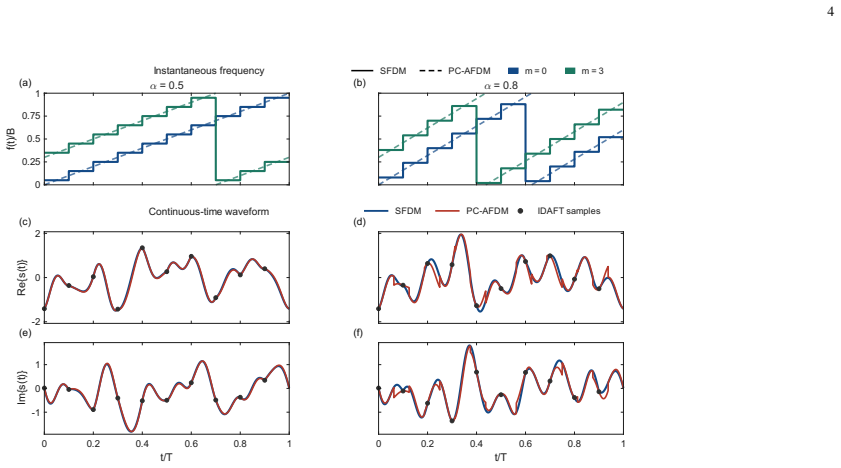
Affine frequency division multiplexing (AFDM) has emerged as a promising modulation scheme for doubly selective channels, but its canonical continuous-time realization, referred to herein as piecewise continuous AFDM (PC-AFDM), has been observed to exhibit high out-of-band emission (OOBE) whose mechanism has not been analytically characterized. This paper shows that the underlying cause is frequency wrapping, which introduces internal envelope jumps between AFDM sampling instants and generates a high-frequency spectral tail distinct from ordinary block truncation. To eliminate these discontinuities without altering the inverse discrete affine Fourier transform (IDAFT) output sequence, we propose stepped frequency division multiplexing (SFDM). In SFDM, the instantaneous frequency is kept constant at the midpoint of the wrapped chirp within each sampling interval, while the phase is continuously accumulated across interval boundaries. We prove that, under continuous phase accumulation and without additional phase correction, the midpoint choice is the unique sample-preserving choice for arbitrary chirp-rate parameter. The resulting waveform is continuous within each AFDM block, reduces OOBE, and preserves the standard AFDM modulation matrix, guard-interval structure, and receiver processing. Moreover, under fractional-delay propagation, SFDM mitigates the receiver sensitivity that arises when delayed sampling points fall near wrapping-induced discontinuities in PC-AFDM. Numerical results verify the theoretical tail coefficients, demonstrate OOBE reduction, and show improved receiver robustness in the high-percentile and worst-case regimes. These findings establish SFDM as a spectrally cleaner and more reliable physical layer for AFDM systems.
0
0
eess.SP 2026-05-13 1 theorem

Group symmetries unify all standard signal transforms

Unification of Signal Transform Theory

Each transform is the eigenbasis for covariances invariant under a specific group, allowing automatic discovery from observed data

abstract click to expand
We unify the discrete Fourier transform (DFT), discrete cosine transform (DCT), Walsh-Hadamard, Haar wavelet, Karhunen-Lo\`eve transform, and several others along with their continuous counterparts (Fourier transform, Fourier series, spherical harmonics, fractional Fourier transform) under one representation-theoretic principle: each is the eigenbasis of every covariance invariant under a specific finite or compact group, with columns constructed from the irreducible matrix elements of the group via the Peter-Weyl theorem. The unification rests on the Algebraic Diversity (AD) framework, which identifies the matched group of a covariance as the foundational object of second-order signal processing. The data-dependent KLT emerges as the trivial-matched-group limit; classical transforms emerge as the cyclic, dihedral, elementary abelian, iterated wreath, and hybrid wreath cases. Composition rules cover direct, wreath, and semidirect products. The Reed-Muller and arithmetic transforms appear as related change-of-basis transforms on the matched group of Walsh-Hadamard. A polynomial-time algorithm for matched-group discovery, the DAD-CAD relaxation cast as a generalized eigenvalue problem in double-commutator form, closes the operational loop: the matched group of any empirical covariance is discovered without expert judgment, with noise-aware variants via the commutativity residual $\delta$ and algebraic coloring index $\alpha$ for finite-SNR settings. The fractional Fourier transform is treated as the metaplectic $SO(2)$ case with Hermite-Gauss matched basis, and a structural principle relates matched group size inversely to transform resolution. Modern applications (massive-MIMO, graph neural networks, transformer attention, point cloud and 3D vision, brain connectivity, single-cell genomics, quantum informatics) are sketched with their matched groups.
0
0
eess.IV 2026-05-13 Recognition

Joint optimization raises low-field MRI quality without extra time

NexOP: Joint Optimization of NEX-Aware k-space Sampling and Image Reconstruction for Low-Field MRI

NexOP learns varying k-space patterns across repetitions to combine low-SNR scans into clearer images within a fixed budget.

Figure from the paper full image
abstract click to expand
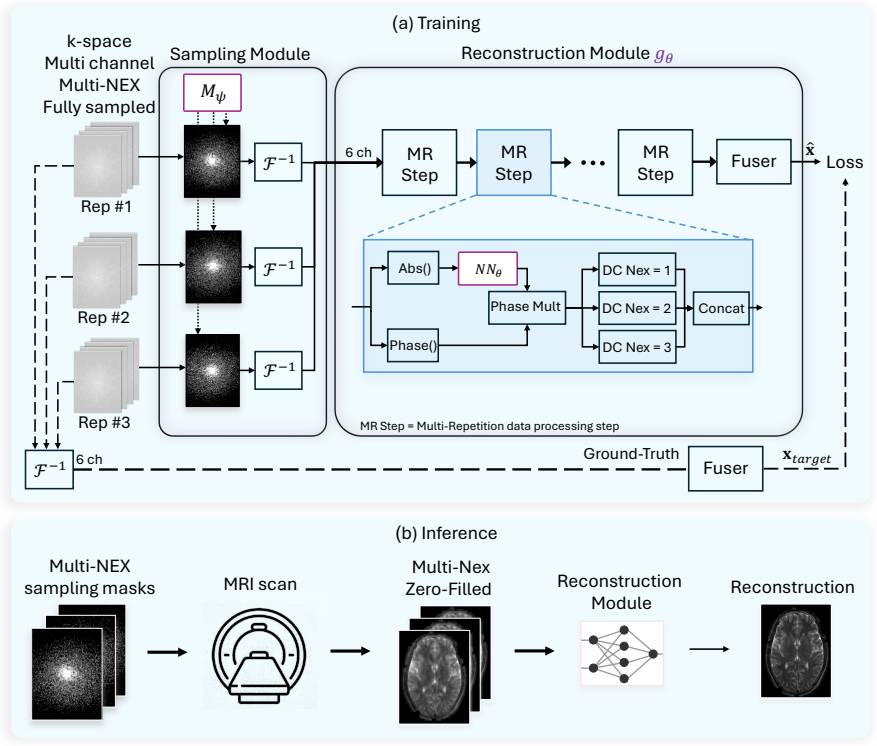
Modern low-field magnetic resonance imaging (MRI) technology offers a compelling alternative to standard high-field MRI, with portable, low-cost systems. However, its clinical utility is limited by a low Signal-to-Noise Ratio (SNR), which hampers diagnostic image quality. A common approach to increase SNR is through repetitive signal acquisitions, known as NEX, but this results in excessively long scan durations. Although recent work has introduced methods to accelerate MRI scans through k-space sampling optimization, the NEX dimension remains unexploited; typically, a single sampling mask is used across all repetitions. Here we introduce NexOP, a deep-learning framework for joint optimization of the sampling and reconstruction in multi-NEX acquisitions, tailored for low-SNR settings. NexOP enables optimizing the sampling density probabilities across the extended k-space-NEX domain, under a fixed sampling-budget constraint, and introduces a new deep-learning architecture for reconstructing a single high-SNR image from multiple low-SNR measurements. Experiments with raw low-field (0.3T) brain data demonstrate that NexOP consistently outperforms competing methods, both quantitatively and qualitatively, across diverse acceleration factors and tissue contrasts. The results also demonstrate that NexOP yields non-uniform sampling strategies, with progressively decreasing sampling across repetitions, hence exploiting the NEX dimension efficiently. Moreover, we present a theoretical analysis supporting these numerical observations. Overall, this work proposes a sampling-reconstruction optimization framework highly suitable for low-field MRI, which can enable faster, higher-quality imaging with low-cost systems and contribute to advancing affordable and accessible healthcare.
0
0
eess.SY 2026-05-13 Recognition

Secure two-party protocol stabilizes pendulum on cloud

Experimental Examination of Secure Two-Party Controller Computation

Experiments confirm real-time feasibility for inverted pendulum control despite communication overhead between parties.

Figure from the paper full image
abstract click to expand
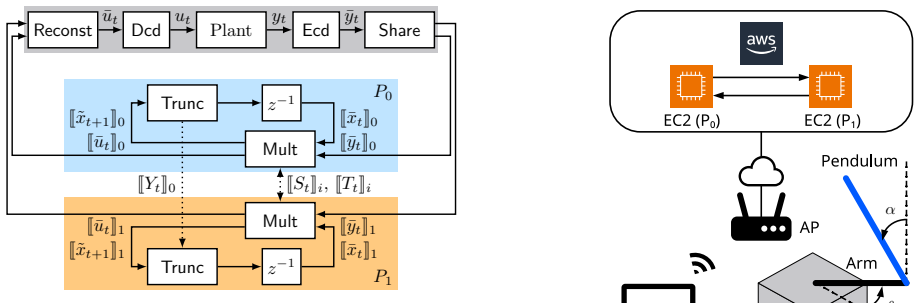
A secure two-party computation protocol for running dynamic controllers over secret sharing has recently been proposed. Unlike encrypted control schemes based on homomorphic encryption, this protocol enables operating dynamic controllers for an infinite time horizon without controller-state decryption, controller-state reset, or input re-encryption. However, the two-party setting introduces additional online communication between the computing parties, which may hinder real-time feasibility. In this study, we demonstrate the feasibility of the protocol through implementation on a commercial cloud platform with an inverted pendulum testbed. Experimental results show that the proposed protocol successfully stabilized the pendulum despite the online communication overhead.
0
0
eess.IV 2026-05-13 3 theorems

Frequency modules lift transformer accuracy on 3D medical scans

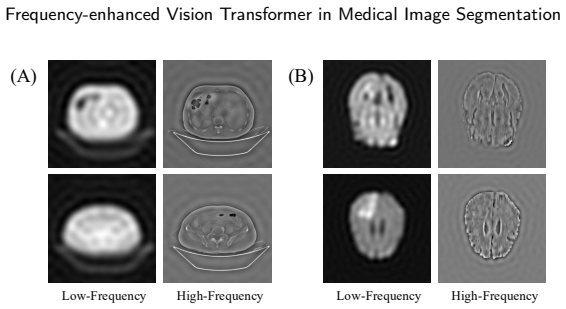
FEFormer: Frequency-enhanced Vision Transformer for Generic Knowledge Extraction and Adaptive Feature Fusion in Volumetric Medical Image Segmentation

FEFormer adds four frequency-aware components to capture local details and fuse features, outperforming prior methods on four segmentationไปปๅŠก

Figure from the paper full image
abstract click to expand
Accurate segmentation of organs and lesions in medical images is essential for clinical applications including diagnosis, prognosis, and treatment planning. While Vision Transformers (ViTs) have shown impressive segmentation performance, they face key challenges in module and architecture design. Specifically, self-attention struggles to capture fine-grained local features critical for understanding detailed anatomical structures, standard MLP modules lack explicit mechanisms to preserve spatial information, conventional encoder-decoder architectures rely on naive feature fusion strategies that cannot handle large semantic discrepancies, and existing designs lack explicit mechanisms to propagate low-level information from encoder to decoder. To address these limitations, we propose a Frequency-enhanced Vision Transformer (FEFormer) for robust and efficient volumetric medical image segmentation that explicitly models frequency information to jointly capture global context and fine structural details. FEFormer comprises four novel components: a Frequency-enhanced Dynamic Self-Attention (FDSA) module that jointly captures fine-grained local details and global long-range dependencies through locality-preserving convolution with frequency-domain attention; a Frequency-decomposed Gating MLP (FGMLP) that adaptively models low- and high-frequency components for enhanced semantic and structural representation; a Wavelet-guided Adaptive Feature Fusion (WAFF) module that enables semantically consistent encoder-decoder feature integration in the frequency domain; and a Frequency-enabled Cross-scale Stem Bridge (FCSB) that enhances low-level feature propagation across scales. Evaluated on four diverse volumetric medical image segmentation tasks, FEFormer achieved superior segmentation performance with high computational efficiency compared to state-of-the-art methods.
0
0
eess.SP 2026-05-13 2 theorems

3D Gaussians reconstruct wireless fields across frequencies

XFreq-GS: Cross-Frequency Wireless Radiation Field Reconstruction with 3D Gaussian Splatting

Shared geometry plus frequency-adaptive RF attributes yields accurate PAS maps without retraining per band.

Figure from the paper full image
abstract click to expand
Channel modeling is fundamental to the analysis, design, and optimization of wireless communication systems, which, however, accurate wireless channel modeling remains challenging, especially given the increasingly complex wireless environments. As an emerging paradigm, 3D Gaussian Splatting (3DGS)-based channel modeling methods achieve accurate wireless radiation field (WRF) reconstruction and high-fidelity spatial spectrum synthesis. However, existing works only consider a single carrier frequency and fail to adapt to wide-range cross-frequency channels. To address this challenge, we propose XFreq-GS, a cross-frequency Gaussian splatting framework for WRF reconstruction. It employs 3D Gaussian primitives with shared geometry and frequency-adaptive radio frequency (RF) attributes to reconstruct cross-frequency WRF, and synthesizes power angular spectrum (PAS) maps for wireless channel modeling. Experiments show that XFreq-GS outperforms state-of-the-art 3DGS-based methods in PAS synthesis and achieves superior cross-frequency generalization. Code is available at https://github.com/KINGAZ1019/XFreq-GS.
0
0
eess.AS 2026-05-13 Recognition

Chunkwise Aligner matches Transducer accuracy at lower cost

Chunkwise Aligners for Streaming Speech Recognition

Dividing audio into chunks and aligning labels to chunk starts reduces training and decoding time without sacrificing recognition quality.

abstract click to expand
We propose the Chunkwise Aligner, a novel architecture for streaming automatic speech recognition (ASR). While the Transducer is the standard model for streaming ASR, its training is costly due to the need to compute all possible audio-label alignments. The recently introduced Aligner reduces this cost by discarding explicit alignments, but this modification makes it unsuitable for streaming. Our approach overcomes this limitation by dividing the audio into chunks and aligning each label to the leftmost frames of its chunk, whereas transitions between chunks are managed by a learned end-of-chunk probability. Experiments show that the Chunkwise Aligner not only matches the Transducer's accuracy in both offline and streaming scenarios, but also offers superior training and decoding efficiencies.
1 0
0
eess.SP 2026-05-12 Recognition

Lanczos Krylov method matches exact EVD for adaptive diagonal loading

Adaptive Diagonal Loading using Krylov Subspaces for Robust Beamforming

Ritz values from small subspaces guarantee white noise gain bounds for large microphone arrays without O(M^3) cost.

abstract click to expand
Reliable adaptive beamforming is critical for large microphone arrays operating in highly dynamic acoustic environments. In scenarios characterized by fast-moving talkers and interferers, the available sample support for estimating the spatial correlation matrix is often snapshot-deficient. This deficiency degrades the White Noise Gain (WNG), leading to severe target signal cancellation. To ensure stable and robust beamforming, we previously proposed an adaptive diagonal loading method that leverages the Kantorovich inequality to guarantee the WNG remains strictly within specified bounds. However, accurately determining the smallest necessary loading level requires calculating the extreme eigenvalues of the spatial correlation matrix, a computationally expensive $\mathcal{O}(M^3)$ operation for large arrays. In this paper, we introduce a highly efficient $\mathcal{O}(kM^2)$ estimation technique using Lanczos iterations to build a small Krylov subspace. By projecting the correlation matrix onto a tridiagonal matrix of dimension $k \ll M$, we extract Ritz values that rapidly converge to the exact extreme eigenvalues. Our evaluations demonstrate that this Lanczos-accelerated approach achieves performance identical to exact Eigenvalue Decomposition (EVD), ensuring optimal interference suppression and strict WNG adherence at a fraction of the computational cost.
0
0
eess.SP 2026-05-12 Recognition

Fluid antennas raise hybrid NOMA-AirFL rates under imperfect CSI

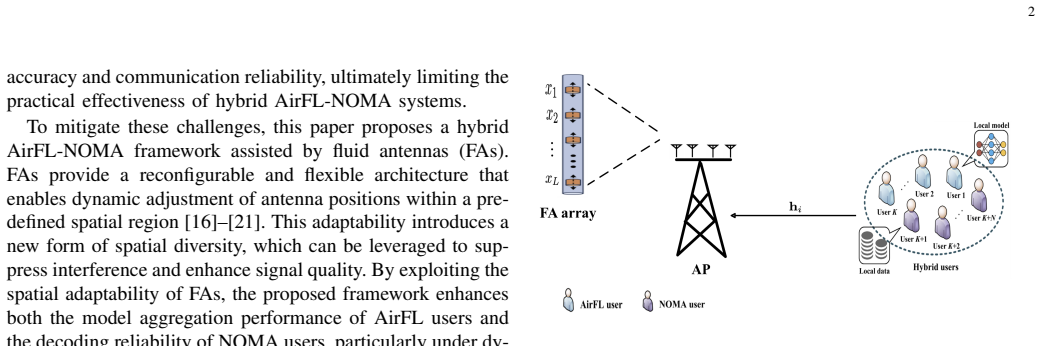
Fluid Antenna-Enabled Hybrid NOMA and AirFL Networks Under Imperfect CSI and SIC

Position adaptation reduces aggregation errors and residual interference when channel estimates and cancellation are imperfect.

Figure from the paper full image
abstract click to expand
The integration of communication and computation is essential for next-generation wireless systems, especially in scenarios demanding massive connectivity and ultra-low latency. Over-the-air federated learning (AirFL), leveraging the superposition nature of wireless channels, enables fast data aggregation, while non-orthogonal multiple access (NOMA) offers spectrum-efficient connectivity. This paper investigates a fluid antenna (FA)-aided hybrid network, supporting hybrid users comprising both AirFL and NOMA participants. The dynamic reconfigurability of FAs offers significant potential for mitigating interference and enhancing network performance by adapting antenna positions in response to changing channel conditions. We consider practical challenges arising from imperfect channel state information (CSI) and residual interference due to imperfect successive interference cancellation (SIC). To jointly evaluate the learning and communication performance, a hybrid rate metric is introduced. Subsequently, we formulate a robust optimization problem that jointly minimizes the aggregation error while ensuring reliable user communication under CSI and SIC uncertainties. This joint optimization is formulated as a non-convex problem, complicated by the intricate interactions between NOMA and AirFL users and the impact of imperfect CSI and SIC. To solve this problem effectively, we reformulate the optimization as a Markov decision process and solve it using a long short-term memory deep deterministic policy gradient (LSTM-DDPG) algorithm, a memory-based approach within the realm of deep reinforcement learning. Simulation results demonstrate the superiority of the proposed FA-assisted approach over fixed-antenna baselines, particularly under imperfect CSI and SIC conditions, in terms of hybrid rate performance.
0
0
eess.SY 2026-05-12 2 theorems

PLL-free multi-PSK TX uses ring oscillator phase synthesis at 236 ฮผW

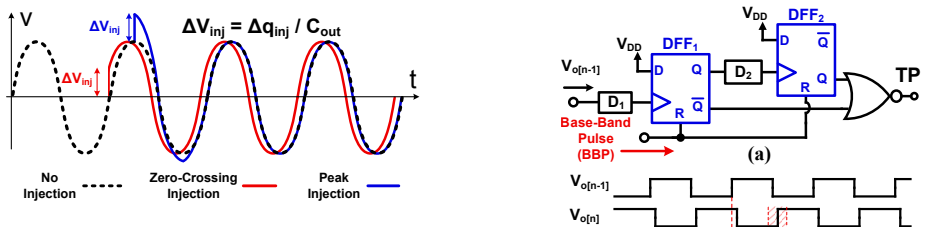
236 {ฮผ}W Direct-RF PLL-Free Multi-PSK Transmitter Using Oscillator-Based Phase Synthesis

Synchronized charge extraction in a ring oscillator supports reconfigurable PSK modes in a 23x17.6 ฮผm core for low-power wireless.

Figure from the paper full image
abstract click to expand
This paper presents a compact, low-power, direct RF multi-phase-shift keying (PSK) transmitter (TX) that eliminates the need for a phase-locked loop (PLL) by performing phase modulation directly within a ring oscillator. The proposed architecture exploits synchronized charge extraction at the oscillator's transition points to induce controlled phase shifts while maintaining constant amplitude and frequency. A time-domain multi-triggering technique is introduced to enable reconfigurable multi-mode modulation, supporting 16-PSK, 8-PSK, QPSK, and BPSK within a unified hardware structure. The TX circuit is fabricated in a 22-nm FD-SOI process and operates in the ISM band at 2.4 GHz. Measurement results indicate a symbol rate of 2 MSps with a maximum error vector magnitude (EVM) of 5.13% rms. The core TX occupies 23 {\times} 17.6 {\mu}m2 and consumes 236 {\mu}W, excluding the output driver, which delivers -10 dBm output power over a 60 MHz bandwidth. The proposed design achieves a favorable trade-off between power consumption, circuit complexity, and modulation flexibility, making it well-suited for low-power wireless applications.
0
0
eess.SY 2026-05-12 2 theorems

Topology sets when multi-agent laws can be recovered from trajectories

Multi-Agent System Identification with Nonlinear Sheaf Diffusion

Sheaf cohomology must vanish for unique recovery; otherwise positive-definiteness of a data matrix enables parameterized identification.

Figure from the paper full image
abstract click to expand
Local interaction laws governing multi-agent systems can be difficult to recover from trajectory data, even when the dynamics are observed faithfully. In systems governed by a nonlinear sheaf Laplacian -- a generalization of the graph Laplacian accommodating heterogeneous state spaces and asymmetric communication channels -- the coordination law is encoded by edge potential functions whose gradients produce the inter-agent forces. Because trajectory observations record node-state evolution, they expose only the aggregate effect of the edge forces at each node: distinct interaction laws that agree at the node level are indistinguishable from trajectory data alone. We show that the fundamental obstruction to recovery is topological, measured by sheaf cohomology, and that unique recovery from an unconstrained function class is possible if and only if this cohomology vanishes. When the obstruction is nontrivial, we show that recovery within a finite-dimensional parameterized class is possible precisely when a data-dependent information matrix is positive definite. Experiments validate the theory and illustrate that accurate trajectory reproduction need not certify recovery of the underlying interaction law.
0
0
eess.SY 2026-05-12 Recognition

Hybrid method speeds HVDC protection component design

Hybrid Analytical--EMT Method for HVDC Protection System Component-Level Design

Analytical starting solution plus EMT refinement handles interdependencies with less computation than full simulation

Figure from the paper full image
abstract click to expand
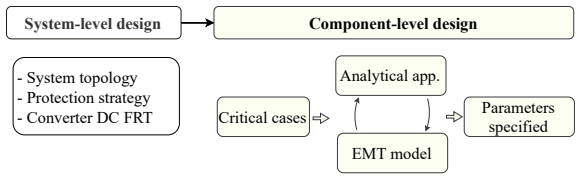
Protection system design for multi-terminal HVDC grids is challenging due to the complexity of the system and the often conflicting design requirements. Effective specification of protection component parameters (e.g., DC circuit breakers and series DC inductors) during component-level design is crucial due to interdependencies among components, the need for detailed modeling, and the complex interactions between the protection system and converter control systems. Both analytical and simulation-based approaches have been proposed as solutions for component-level design. However, analytical methods may not accurately represent system behavior given that approximation is necessary, and simulation-based approaches often require extensive computational effort and time. Therefore, this paper presents an efficient systematic design method, combining both approaches. First, a fundamental analytical solution is derived to consider the protection system requirements. Then, a hybrid analytical--EMT methodology is proposed to accelerate convergence toward the required design parameters, after which detailed models are applied to ensure accuracy in design and validation. The approach is applicable to component-level design for both fully and partially selective protection strategies in HVDC grids.
0
0
eess.SP 2026-05-12 Recognition

Low-cost sEMG wristband passes safety and signal tests

Design of a validation methodology for a prototype wristband for capturing muscle signals and upper limb movement

Protocol shows leakage currents under limits and correlations above 0.85 with commercial reference, opening access for research labs.

Figure from the paper full image
abstract click to expand
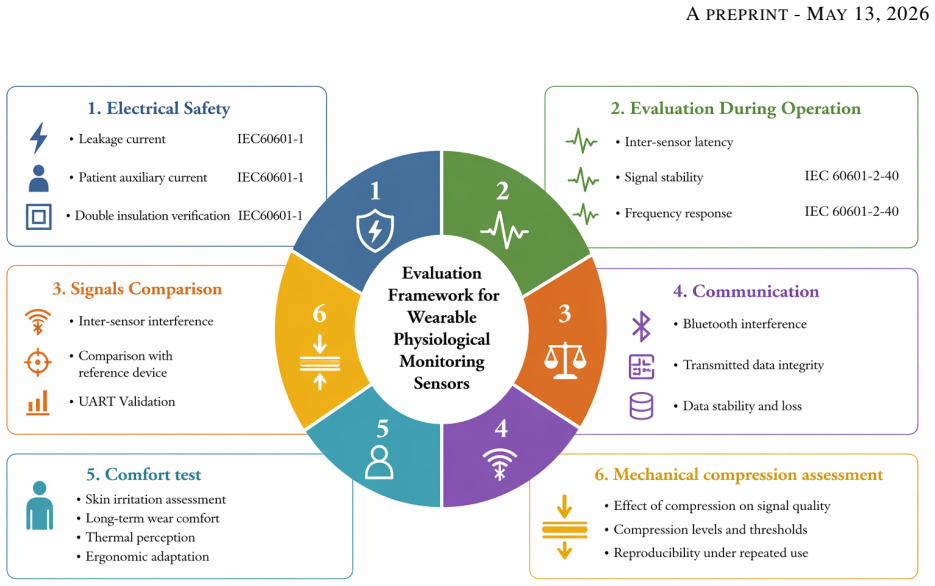
Surface electromyography (sEMG) is a noninvasive technique widely used to control myoelectric prostheses and other human-machine interfaces. However, the high cost of commercial systems limits accessibility in academic and research environments, especially in developing countries. This study presents a validation protocol for a low-cost eight-electrode sEMG wristband prototype based on IEC 60601 and ANSI/AAMI EC13 standards. The protocol includes electrical safety tests, such as leakage current measurement, insulation evaluation, and continuity verification between electrodes and circuits. Functional performance was evaluated by comparing signals acquired with the prototype against those obtained from a commercial reference device (PortiLab2) using Pearson correlation, Bland-Altman analysis, and mean squared error. Additional tests included signal stability during rest and contraction, UART and Bluetooth communication, frequency response, mechanical characterization of the casing, and user comfort assessment. Results showed leakage currents between 11.4 uA and 13.5 uA, adequate insulation, stable signal acquisition, and high correlation with the reference system (r > 0.85). Reliable wireless transmission without packet loss was also observed. Limitations included power supply constraints during wireless testing and discrepancies in the frequency response at high-gain stages compared with simulations. Mechanical tests showed elastic behavior of the casing under loads up to 98 N. The proposed protocol provides a practical and reproducible framework for the technical and functional validation of low-cost sEMG systems for research and educational applications.
0
0
eess.SY 2026-05-12 2 theorems

Fitted models enable stability analysis of black-box power converters

Enabling Small-Signal Stability Analysis of Black-Box Voltage Source Converters in Large-Scale Modern Power Systems

Frequency-domain fitting converts proprietary VSC dynamics into state-space models that support eigenvalue studies on large grids.

Figure from the paper full image
abstract click to expand
Modern power systems increasingly rely on power electronic converters, yet many of these devices are provided as black-box models, limiting the applicability of conventional small-signal analysis (SSA) tools. This work presents a unified multi-variable fitted state-space (SSA-FITSS) methodology that enables accurate small-signal modeling of black-box Voltage Source Converters (VSCs) using frequency-domain (FD) identification, adaptive pole-expansion, and reduced-order realization. The method includes an automated state-interpretation strategy that assigns fitted states to representative control-loop categories based on their dominant frequency ranges, providing an approximate but meaningful physical interpretation of the identified dynamics. This capability allows extensive modal analysis, including eigenvalue sensitivities and participation factors, in systems where internal converter details are unavailable. The methodology is validated on a grid-following (GFL) VSC and applied to the New England system, which contains multiple black-box converters operating in both GFL and grid-forming (GFM) modes. Results show that the SSA-FITSS models accurately reproduce converter and system dynamics, support full eigenvalue-based analysis, and reveal stability limits under varying synchronous generation and GFL penetration levels. The approach overcomes key limitations of existing identification-based techniques by enabling scalable, interpretable, and system-wide stability assessment.
0
0
eess.SY 2026-05-12 2 theorems

Nominal partitions add only 2.8% cost over centralized control

Sensitivity Analysis of Performance-Based Partitioning in District Heating Networks

Tests on temperature, season, and building changes find the nominal choice stays near-optimal in eleven of twelve cases and best in three.

Figure from the paper full image
abstract click to expand
The paper presents a sensitivity analysis of the factors affecting the optimal partitioning of a district heating network for distributed control. Leveraging a physics-based, distributed model predictive control framework and a performance-based partitioning method, this work studies the relationship between variations in system parameters and the resulting optimal partition, providing insight into the robustness of a nominally designed partition to perturbed operating conditions. The enabling methodology is a learning-enhanced branch and bound method that culls the search space, reducing the number of partitions evaluated for each case. The sensitivity of the nominally optimal partition is characterized across twelve parameter variations, including supply temperature, operating season, building flexibility, pipe characteristics, and building type. This simulation study shows that a well-designed nominal partition exhibits an average cost increase of only 2.8% relative to centralized control across eleven of the twelve cases, with three cases identifying the nominal partition as globally optimal under the perturbed conditions. The robustness study is followed by an analysis of the sensitivity of the optimality loss metric (OLM), revealing that, in five of twelve cases, the case-specific OLM-minimizing partitions underperform the nominally optimal one due to shifts in the relative magnitude of heat loss versus flexibility costs. This indicates that proper tuning of cost function weights and initial conditions for the performance optimization problem is essential for reliable partition selection, and that seasonal repartitioning is warranted when demand profiles deviate substantially from the nominal, as observed in the November operating case.
0
0
eess.SP 2026-05-12 Recognition

Reweighting improves D-optimal bearing sensor placement

Improving D-Optimal Sensor Placement for Bearing-Only Localization via Maximum-Entropy Reweighting

Two-layer method reduces average localization error, with larger gains at higher sensor-to-source ratios and lower noise.

Figure from the paper full image
abstract click to expand
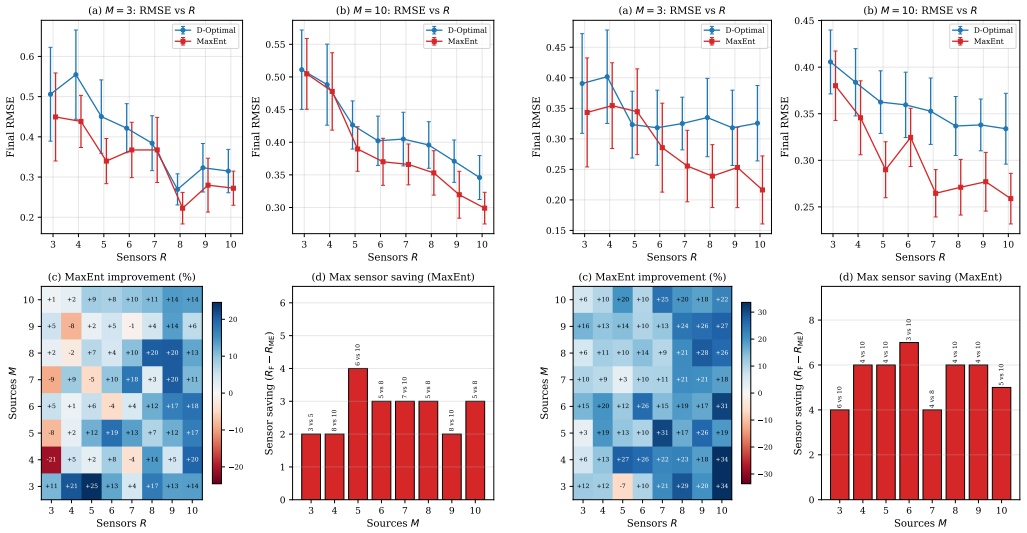
In this paper, we present a two-layer architecture for bearing-only sensor placement that improves upon classical D-optimal design. The first layer reweights particles by minimizing Kullback-Leibler divergence from the current distribution subject to a distributional accuracy bound, concentrating mass on regions where the posterior is likely to settle, without reference to the sensor model. The second layer performs D-optimal sensor placement with respect to the reweighted Fisher information matrix, steering sensors toward geometrically informative configurations. Because the two layers are structurally decoupled, the reweighting generalizes across sensing modalities while the placement remains specific to bearing geometry. Systematic experiments on multi-source localization at two noise levels show that this reweighting reduces localization error on average, with the benefit growing as the sensor-to-source ratio increases and as measurements become more informative. The improvement is established in the first few iterations of the sequential procedure and persists as the posterior concentrates.
0
0
eess.IV 2026-05-12 2 theorems

Co-learning refines noisy labels in split federated medical segmentation

SplitFed-CL: A Split Federated Co-Learning Framework for Medical Image Segmentation with Inaccurate Labels

Global teacher guides local students to correct unreliable annotations and raise segmentation accuracy without sharing raw data.

abstract click to expand
Split Federated Learning (SplitFed) combines federated and split learning to preserve privacy while reducing client-side computation. However, in medical image segmentation, heterogeneous label quality across clients can significantly degrade performance. We propose SplitFed-CL, a co-learning framework where a global teacher guides local students to detect and refine unreliable annotations. Reliable labels supervise training directly, while unreliable labels are corrected via weighted student--teacher refinement. SplitFed-CL further incorporates consistency regularization for robustness to input perturbations and a trainable weighting module to balance loss terms adaptively. We also introduce a novel difficulty guided strategy to simulate human like boundary centric annotation errors, where the degree of perturbation is governed by shape complexity and the associated annotation difficulty. Experiments on two multiclass segmentation datasets with controlled synthetic noise, together with a binary segmentation dataset containing real-world annotation errors, demonstrate that SplitFed-CL consistently outperforms seven state-of-the-art baselines, yielding improved segmentation quality and robustness.
1 0
0
eess.SP 2026-05-12 2 theorems

Nanosensor networks refresh in-body data every tens of seconds

How Time-Sensitive are IoBNT Networks? An Age of Information Perspective for In-Body Monitoring

The modeled delay suits tracking tissue-level changes such as infections but not faster cellular processes.

Figure from the paper full image
abstract click to expand
This thesis develops a theoretical framework to evaluate the monitoring capability of IoBNT networks. We consider a scenario in which nanosensors passively flow in the bloodstream and detect biomarkers associated with potential diseases, reporting their detections to external gateways on the skin that host a monitoring device. The nanosensors thus realize an artificial point-to-point communication channel between the disease region and the monitor: some packets reach the destination directly, while others are lost through vessel paths that bypass the gateway. We evaluate the network's monitoring capability over this artificial channel using the \ac{AoI} concept, which jointly integrates sample generation (at the disease region), carrying (nanosensor travel through vessels), and delivery (nanosensor-to-gateway) as random events. These are modeled through (i) a Markov model that follows cardiovascular physiology and (ii) channel models of reported nanocommunication technologies. We compute the Markov transition probabilities using a cardiovascular simulator built as a low-complexity electric circuit model of the human vessels. For the nanosensor-to-gateway link, we model two well-known schemes: ultrasonic and terahertz channels. Integrating these components within the \ac{AoI} framework, we report information freshness via the average \ac{PAoI} metric. Under realistic physiological and communication assumptions, fresh information appears on the monitor within tens of seconds. The network is therefore suitable for monitoring tissue-level processes such as bacterial infections, while more adequate architectures are needed to monitor cellular-scale processes, which occur on timescales below tens of seconds.
0
0
eess.IV 2026-05-12 Recognition

Dataset turns satellite construction images into 2.3 million VQA examples

Geospatial-Temporal Sensemaking of Remote Sensing Activity Detections with Multimodal Large Language Model

SMART-HC-VQA converts Sentinel-2 chips and activity annotations into temporal questions so multimodal models can track process progression,

abstract click to expand
We introduce SMART-HC-VQA, a Sentinel-2-based visual question answering dataset derived from the IARPA SMART Heavy Construction dataset, designed for spatiotemporal analysis of human activity. The dataset transforms construction-site annotations, construction-type labels, temporal-phase labels, geographic metadata, and observation relationships into natural language question-answer triplets. This approach redefines the existing dataset as a temporally extended automatic target recognition and visual question answering (VQA) challenge, considering a fixed geospatial site as a target whose attributes and activity states evolve across sparse satellite observations. Currently, SMART-HC-VQA comprises 21,837 accessible Sentinel-2 image chips, 65,511 single-image VQA examples, and approximately 2.3 million two-image temporal comparison examples generated via our novel Image-Pairwise Combinatorial Augmentation. We detail the workflow for retrieving and processing Sentinel-2 imagery, segmenting large satellite tiles into site-centered images, maintaining traceability to SMART-HC annotations, and analyzing the distributions of site size, observation count, temporal coverage, construction type, and phase labels. Additionally, we describe an implemented multi-image MLLM training framework based on LLaVA-NeXT Mistral-7B, adapted to accept multiple dated image inputs and train on metadata-derived VQA examples. This work offers a reproducible foundation for understanding language-guided remote sensing activities, aiming not only to detect change but also to reason about the ongoing processes, their progression, and potential future developments.
0
0
eess.SP 2026-05-12 2 theorems

RL xApp cuts UAV handovers by 54% in O-RAN

xApp Empowered Resource Management for Non-Terrestrial Users in 5G O-RAN Networks

Proactive DDQN controller with transfer learning anticipates conditions to balance reliability and switching frequency for aerial users.

Figure from the paper full image
abstract click to expand
This paper introduces a proactive Unmanned Aerial Vehicle (UAV) mobility management xApp for Open Radio Access Network (O-RAN) Near Real-Time Radio Intelligent Controller (Near-RT RIC) environments, employing Double Deep Q-Network (DDQN) reinforcement learning (RL) enhanced with transfer learning to optimise handover decisions for UAVs operating along predetermined flight trajectories. Unlike reactive approaches that respond to signal degradation, the proposed framework anticipates network conditions and minimises both outage probability and handover frequency through predictive optimisation. The system leverages centralised weight averaging to consolidate knowledge from multiple flight scenarios into a global model capable of generalising to previously unseen operational environments without extensive retraining. A comprehensive evaluation demonstrates that the proposed framework achieves a favourable trade-off between handover frequency and connectivity reliability, reducing handover events by up to 54.6% compared to greedy approaches while maintaining outage probability at practically negligible levels. The results validate the effectiveness of intelligent learning-based approaches for UAV mobility management in next-generation O-RAN architectures, thereby contributing to seamless integration of aerial user equipment into cellular networks.
0
0
eess.SP 2026-05-12 Recognition

RIS and ZF precoding fix rank deficiency in mmWave multiuser links

RIS-assisted Multiuser MISO Transmission and the Impact of Imperfect Channel Estimation

Joint design with equalized pilots keeps interference low despite channel estimation errors.

Figure from the paper full image
abstract click to expand
This paper proposes the joint design of reconfigurable intelligent surfaces (RIS) and zero-forcing (ZF) precoding for the downlink (DL) multiuser multiple-input single-output (MU-MISO) setup in millimeter-wave (mmWave) bands, where ZF is particularly attractive due to its ability to suppress inter-user interference by exploiting the large antenna arrays and sparse directional channels characteristic of mmWave systems. This ensures efficient spatial multiplexing with manageable complexity, making ZF a practical and in modern 5G/6G deployments. However, a careful design is necessary to overcome potential rank deficiency in the channel matrix. For the MU-MISO case, rank deficiency may arise if users exhibit significantly different channel gains or if, being in far-field, they are aligned with the position of the transmitter. On the other hand, the deployment of a RIS introduces artificial scattering which can shape the radio environment to address those situations. We explore the joint design under perfect channel knowledge, assess the impact of imperfect channel estimation on the bit error rate (BER) and propose a robust design of pilot transmissions that equalizes multiuser interference across users in the presence of channel errors in the precoder design. This evaluation shows the advantages of optimized RIS-aided ZF MU-MISO communication for the DL of wireless systems.
0
0
eess.SP 2026-05-12 2 theorems

RIS restores full rank for ZF in multiuser MISO downlink

RIS-assisted Multiuser MISO Transmission and the Impact of Imperfect Channel Estimation

Joint phase-shift and precoder design counters alignment-induced rank loss and keeps BER low under imperfect CSI.

Figure from the paper full image
abstract click to expand
This paper proposes the joint design of reconfigurable intelligent surfaces (RIS) and zero-forcing (ZF) precoding for the downlink (DL) multiuser multiple-input single-output (MU-MISO) setup in millimeter-wave (mmWave) bands, where ZF is particularly attractive due to its ability to suppress inter-user interference by exploiting the large antenna arrays and sparse directional channels characteristic of mmWave systems. This ensures efficient spatial multiplexing with manageable complexity, making ZF a practical and in modern 5G/6G deployments. However, a careful design is necessary to overcome potential rank deficiency in the channel matrix. For the MU-MISO case, rank deficiency may arise if users exhibit significantly different channel gains or if, being in far-field, they are aligned with the position of the transmitter. On the other hand, the deployment of a RIS introduces artificial scattering which can shape the radio environment to address those situations. We explore the joint design under perfect channel knowledge, assess the impact of imperfect channel estimation on the bit error rate (BER) and propose a robust design of pilot transmissions that equalizes multiuser interference across users in the presence of channel errors in the precoder design. This evaluation shows the advantages of optimized RIS-aided ZF MU-MISO communication for the DL of wireless systems.
0
0
eess.IV 2026-05-12 2 theorems

One network registers cardiac MRI of any length or contrast

Set-Based Groupwise Registration for Variable-Length, Variable-Contrast Cardiac MRI

Trained on a single T1 dataset, the set-based model generalizes to other protocols and improves tissue mapping quality

Figure from the paper full image
abstract click to expand
Quantitative cardiac magnetic resonance imaging (MRI) enables non-invasive myocardial tissue characterization but relies on robust motion correction within these variable-length, variable-contrast image sequences. Groupwise registration, which simultaneously aligns all images, has shown greater robustness than pairwise registration for motion correction. However, current deep-learning-based groupwise registration methods cannot generalize across MRI sequences: the architecture typically encodes input data as a fixed-length channel stack, which rigidly couples network design to protocol-specific sequence length, input ordering, and contrast dynamics. At inference time, any change in imaging protocols will render the network unusable. In this work, we introduce \emph{\AnyTwoReg}, a new set-based groupwise registration framework that takes a quantitative MRI sequence as an unordered set. This set formulation fundamentally decouples network design from sequence length and input ordering. By utilizing a shared encoder and correlation-guided feature aggregation, \emph{\AnyTwoReg} constructs a permutation-invariant canonical reference for registration, and learns a permutation-equivariant mapping from images to deformation fields. Additionally, we extract contrast-insensitive image features from an existing foundation model to handle extreme contrast variations. Trained exclusively on a single public $T_1$ mapping dataset (STONE, sequence length $L=11$), \AnyTwoReg generalizes to two unseen quantitative MRI datasets (MOLLI, ASL) with variable lengths ($L \in [11, 60]$) and different contrast dynamics. It achieves strong cross-protocol generalization in a zero-shot manner, and consistently improves downstream quantitative mapping quality. Notably, while designed for quantitative MRI sequences, our framework is directly applicable to Cine MRI sequences for inter-cardiac-phase registration.
0
0
eess.SP 2026-05-12 2 theorems

TBMA turns AirComp noise into exponential error decay

Exponential Noise Robustness of Type-Based Multiple Access for Over-the-Air Computation

Lattice projection on device-count points makes MSE fall exponentially with energy-to-noise ratio, unlike inverse scaling in standard Air

Figure from the paper full image
abstract click to expand
This paper studies the robustness of type-based multiple access (TBMA) in over-the-air computation (AirComp) under nonparametric estimation, where no prior knowledge of the data distribution is available. While conventional AirComp approaches rely on amplitude modulations and suffer from noise sensitivity, TBMA enables the use of more structured modulation formats that can be exploited for improved performance. We show that the superposition of transmitted signals in TBMA induces a discrete lattice structure in the received signal space, where each lattice point corresponds to the number of devices accessing a given channel resource. By exploiting this structure through nearest-lattice-point projection, noise effects can be substantially suppressed. The proposed technique achieves an exponential decay of the mean squared error (MSE) with respect to the energy-to-noise spectral density ratio, whereas in conventional techniques the MSE only scales inversely with this ratio. Simulation results validate the theoretical findings and demonstrate that TBMA provides a fundamental robustness advantage over traditional AirComp.
0
0
eess.SY 2026-05-12 3 theorems

SL(3) observer estimates homography from image intensities

Equivariant Observer Design on SL(3) for Image Intensity-Based Homography Estimation

Direct pixel intensity cost yields local exponential convergence with explicit non-degeneracy conditions derived.

Figure from the paper full image
abstract click to expand
This paper addresses the problem of homography estimation using a nonlinear observer designed on the Lie group $\mathbf{SL}(3)$ that exploits the full image information through direct image registration. Unlike traditional feature-based methods, which rely on extensive feature extraction and matching, the proposed approach formulates an observer that minimises a cost function defined directly in terms of image pixel intensities. Explicit conditions ensuring the non-degeneracy of the cost function are derived, and a comprehensive analysis is conducted to characterise and generate degenerate (unobservable) image configurations. Theoretical results demonstrate local exponential convergence of the observer. To improve local convergence properties, a second-order observer variant is introduced by incorporating the Hessian of the cost function into the correction term. Simulation results demonstrate the performance of the proposed solutions on real images.
0
0
eess.SY 2026-05-12 Recognition

Safety tube keeps glucose in safe range

Glycemic Safety Tube: A Provably Safe Control Framework for Artificial Pancreas Systems under Parametric Uncertainty

Model-free method for artificial pancreas systems works under meal disturbances and estimation errors

Figure from the paper full image
abstract click to expand
Type 1 diabetes eliminates the body's ability to produce insulin, making glucose regulation entirely dependent on external insulin delivery and the control algorithm. Existing closed-loop methods either rely on accurate patient-specific models or do not provide formal safety guarantees, and are often computationally demanding for wearable devices. This paper proposes Glycemic Safety Tube Control (GSTC), a model-free and computationally efficient control framework for automated insulin delivery. The method enforces clinically relevant safety bounds on glucose levels by design, ensuring that glucose remains within a prescribed safe range. We also derive feasibility conditions that guarantee safety and input constraint satisfaction under bounded meal disturbances and estimation errors. The performance of GSTC is evaluated against state-of-the-art methods, including linear and nonlinear model predictive control and sliding mode control. The results demonstrate that GSTC maintains safety under varying meal patterns and patient conditions, highlighting its robustness and computational efficiency. Overall, GSTC provides a safe, efficient, and patient-independent approach for next-generation artificial pancreas systems.
0
0
eess.SY 2026-05-12 2 theorems

Algorithm picks nodes and gains to reconstruct full network states

Observing the state of networks with directed higher-order interactions

For nonlinear systems with directed higher-order interactions, partial measurements suffice when the design satisfies proven convergence.

Figure from the paper full image
abstract click to expand
We consider the problem of reconstructing the state of a network of nonlinear dynamical systems in the presence of directed higher-order interactions. Grounded on analytical convergence results, we propose an algorithmic observer design procedure that simultaneously selects the nodes to be measured and the observer gains. We complement the theoretical analysis with an exhaustive numerical investigation campaign that showcases the performance and robustness of the designed observer. Finally, the algorithmic procedure is used to fully reconstruct the opinions of a group of agents.
0
0
eess.SY 2026-05-12 2 theorems

RL learns priorities to control communication in agent teams

Priority-Driven Control and Communication in Decentralized Multi-Agent Systems via Reinforcement Learning

Model-free method jointly trains when to send messages and what actions to take, outperforming baselines on benchmarks.

Figure from the paper full image
abstract click to expand
Event-triggered control provides a mechanism for avoiding excessive use of constrained communication bandwidth in networked multi-agent systems. However, most existing methods rely on accurate system models, which may be unavailable in practice. In this work, we propose a model-free, priority-driven reinforcement learning algorithm that learns communication priorities and control policies jointly from data in decentralized multi-agent systems. By learning communication priorities, we circumvent the hybrid action space typical in event-triggered control with binary communication decisions. We evaluate our algorithm on benchmark tasks and demonstrate that it outperforms the baseline method.
0
0
eess.SY 2026-05-12 Recognition

Model-free RL learns joint control and communication priorities

Priority-Driven Control and Communication in Decentralized Multi-Agent Systems via Reinforcement Learning

Decentralized agents optimize when to send messages and how to act using only data, without system models, and beat baselines on benchmarks.

Figure from the paper full image
abstract click to expand
Event-triggered control provides a mechanism for avoiding excessive use of constrained communication bandwidth in networked multi-agent systems. However, most existing methods rely on accurate system models, which may be unavailable in practice. In this work, we propose a model-free, priority-driven reinforcement learning algorithm that learns communication priorities and control policies jointly from data in decentralized multi-agent systems. By learning communication priorities, we circumvent the hybrid action space typical in event-triggered control with binary communication decisions. We evaluate our algorithm on benchmark tasks and demonstrate that it outperforms the baseline method.
0
0
eess.SY 2026-05-12 1 theorem

Youla-Kucera adds channels for cascaded MPC and offset-free control

Hierarchical 2-degree-of-freedom control combining Youla-Kucera parameterization and model predictive control

An auxiliary feedforward path enables optimization while the parameterization path uses H2 design to eliminate steady-state error.

Figure from the paper full image
abstract click to expand
A hierarchical 2DOF (2-degree-of-freedom) structure combining Youla-Kucera (YK) parameterization and model predictive control (MPC) is presented in this paper. The YK parameterization employs the coprime factorization of the nominal system and controller, thereby introducing an auxiliary feedforward channel dedicated to system optimization and a controller parameterization channel. The feedforward channel is utilized to implement cascaded MPC for system optimization. The controller parameterization channel is utilized to achieve offset-free MPC by designing an appropriate YK parameter through the H2 optimal controller design.
0
0
eess.AS 2026-05-12 2 theorems

Flow matching reconstructs sound fields from few microphones

SF-Flow: Sound field magnitude estimation via flow matching guided by sparse measurements

The method estimates 3D acoustic transfer function magnitudes accurately up to 1 kHz and trains faster than autoencoder baselines.

abstract click to expand
Reconstructing a 3D sound field from sparse microphone measurements is a fundamental yet ill-posed problem, which we address through Acoustic Transfer Function (ATF) magnitude estimation. ATF magnitude encapsulates key perceptual and acoustic properties of a physical space with applications in room characterization and correction. Although recent generative paradigms such as Flow Matching (FM) have achieved state-of-the-art performance in speech and music generation, their potential in spatial audio remains underexplored. We propose a novel framework for 3D ATF magnitude reconstruction as a guided generation task, with a 3D U-Net conditioned by a permutation-invariant set encoder. This architecture enables reconstruction from an arbitrary number of sparse inputs while leveraging the stable and efficient training properties of FM. Experimental results demonstrate that SF-Flow achieves accurate reconstruction up to \SI{1}{kHz}, trains substantially faster than the autoencoder baseline, and improves significantly with dataset size.
1 0
0
eess.SP 2026-05-12 Recognition

Near-field effects drive ray-tracing errors in 5G KPIs

Quantifying System Level KPI Deviations of Sionna RT: Material and Near-Field Error Analysis Using a 5G OAI Testbed

Indoor OAI testbed comparison with Sionna RT quantifies material and position-dependent deviations for digital twins

Figure from the paper full image
abstract click to expand
Ray tracing (RT) has recently gained renewed interest in wireless communications, driven by its integration into digital twin (DT) frameworks for site specific channel modeling. Several previous studies have validated RT at the channel level, yet how these errors propagate into real 5G system level key performance indicators (KPIs) on actual hardware remains unquantified. This paper addresses this gap by comparing Sionna RT simulated channels against vector network analyzer (VNA) measured channels using an OpenAirInterface (OAI) 5G NR testbed. Channel measurements are conducted at 20 receiver positions in an indoor laboratory, with both channel types injected into a hardware in the loop channel emulator interfacing an OAIBOX MAX base station and a Quectel UE. RSRP, PUCCH SNR, and SINR are evaluated under both conditions. The results identify antenna near-field transition effects as a critical position-dependent error source, alongside material property mismatch, providing a quantitative benchmark for digital twin-based 5G and beyond network planning.

0
0
eess.SP 2026-05-12 2 theorems

RAQ-MIMO beats RF-MIMO only when its noise floor is lower

Signal-Dependent Shot Noise Modeling of Rydberg Atomic Quantum Receivers: A Design Perspective

New model shows Rydberg receivers reach non-zero asymptotic rates superior to RF-MIMO when normalized noise is reduced.

Figure from the paper full image
abstract click to expand
In this paper, we develop a communication-oriented complex baseband equivalent model for superheterodyne Rydberg atomic quantum receivers (RAQRs). The model explicitly captures photodetection-induced signal-dependent shot noise and its coupling with the optical operating point. By leveraging an atomic superheterodyne architecture and a strong local oscillator, we construct a complex baseband representation for both the received signal and the signal-dependent shot noise under both direct incoherent optical detection and balanced coherent optical detection. The derived model reveals that the optical operating point jointly determines the normalized effective receive gain and the equivalent noise background, thereby establishing a traceable gain-noise tradeoff governed by system design. More importantly, the proposed model shows that neglecting signal-dependent shot noise may lead to inaccurate operating-point design. Finally, by extending to the multiple-input-multiple-output (MIMO) case, we derive a lower bound on the achievable rate while considering the signal-dependent shot noise. Our analysis \textcolor{black}{reveals} that the non-zero asymptotic rate of RAQ-MIMO and its superiority over conventional RF-MIMO hinge on the normalized noise floor of the RAQ receive chain falling below that of RF MIMO. Simulation results validate our analysis and yield practical, closed-form design guidelines for RAQR front ends, revealing parameter regimes in which RAQ-MIMO outperforms conventional MIMO systems.
0
0
eess.IV 2026-05-12 2 theorems

Online SAR processor focuses images line by line in 16 ms

Learning to Focus Synthetic Aperture Radar On-line with State-Space Models

State-space model trained by distillation delivers 70x lower latency and 130x lower memory than block methods while supporting detection and

Figure from the paper full image
abstract click to expand
Conventional focusing methods for Synthetic Aperture Radar (SAR) employ block processing efficiently but remain latency-heavy processes that prevent the realisation of a closed-loop cognitive SAR vision system. We present the first Online SAR Processor (OSP), an online image-formation framework that treats SAR sensing as a stream and produces focused SAR image output line by line during acquisition. OSP uses a tiny state-space surrogate model trained with teacher-student distillation and multi-stage losses. We evaluate the method on 300GB of SAR data from Maya4, a Sentinel-1-derived dataset containing raw, range-compressed, range-cell-migration-corrected, and azimuth-compressed products. Relative to a linewise digital-signal-processing baseline, OSP delivers approximately 70$\times$ lower latency and 130$\times$ lower memory use; on a single AMD CPU core it processes one row in 16 ms with a memory footprint of 6 MB whilst maintaining a focusing quality high enough to support downstream decisions, which we illustrate with vessel detection and flood-mapping tasks.
0
0
eess.SP 2026-05-12 2 theorems

Neural model estimates high-mobility channels without training data

Unsupervised Online Channel Estimation for High-Mobility OFDM via Implicit Neural Representation

Online fitting of a continuous time-frequency function yields near-optimal reliability in V2X simulations and resists environmental shifts.

Figure from the paper full image
abstract click to expand
Accurate channel estimation remains challenging in high-mobility wireless systems because Doppler shifts induce severe inter-carrier interference (ICI) in Orthogonal Frequency Division Multiplexing (OFDM). We propose an unsupervised online channel estimation framework based on Implicit Neural Representation (INR). Unlike discrete-grid estimators, the proposed method decouples channel representation from the OFDM sampling resolution by modeling the time-varying frequency-selective channel as a continuous function of time-frequency coordinates. A Sinusoidal Representation Network (SIREN) with Gaussian Fourier feature mapping captures fine-grained channel variations and high-frequency details without offline pre-training or labeled data. For each received slot, the network parameters are updated by per-slot online fitting that minimizes a physics-aware ICI loss, while a confidence-aware decision-directed loop balances reliable pilots and dynamically harvested pseudo-pilots. Simulations in realistic Vehicle-to-Everything (V2X) environments show that the proposed method achieves near-optimal link-level reliability, significantly outperforming Least Squares (LS) and robust Linear Minimum Mean Square Error (LMMSE) estimators. Compared with supervised deep learning baselines, it also exhibits strong out-of-distribution (OOD) robustness under environmental distribution shifts, establishing an adaptable data-efficient physical-layer paradigm.
0
0
eess.SP 2026-05-12 2 theorems

Phase differences carry both data and sensing at LO-free receivers

LO-Free Receiver: Next-Gen Low-Power Joint Communication and Sensing

SPMC recasts JCAS as inference over the unit-circle manifold using only antenna correlations, removing LO and estimation overhead.

Figure from the paper full image
abstract click to expand
This paper introduces and analyzes Spatial Phase Manifold Communications (SPMC), a paradigm that facilitates joint communication and sensing (JCAS) over Local Oscillator (LO) free receiver. Information is embedded in, and recovered from, the relative spatial phase between antennas. In contrast to conventional coherent receivers that rely on LOs and on channel estimation/equalization, SPMC exploits antenna-domain correlation to form a baseband observable that is a function of inter-antenna phase differences. Since these phase differences are fundamentally tied to Direction-of-Arrival (DoA) and vice-versa, the formulation recasts communication and sensing as inference over the unit-circle manifold and thus naturally supports JCAS decomposition, i.e., data and spatial sensing are encoded and recovered through DoA signatures. We develop a comprehensive framework comprising: (i) a manifold-domain signal model and corresponding phase-alphabet design; (ii) an LO-free quadrature spatial-correlator receiver architecture that resolves the phase-sign ambiguity without requiring an LO; and (iii) an analysis of error probability and sensing precision, including robustness to phase noise. The proposed paradigm is particularly suited to massive Internet-of-Things (IoT) deployments, for which hardware simplicity, LO distribution cost, power consumption, and seamless sensing integration are critical, especially at millimeter-wave and higher carrier frequencies.
0
0
eess.SY 2026-05-12 2 theorems

Online learning control guarantees output error bounds for nonlinear systems

Online Learning-Based Control with Guaranteed Error Bounds for a Class of Nonlinear Systems

LMI peak-to-peak gains limit the model prediction error to meet user-chosen accuracy levels.

Figure from the paper full image
abstract click to expand
In this paper, we present a learning-based control for a class of nonlinear systems that guarantees exponential stability as well as bounded output errors. The control is based on the Gaussian Process Submodel Online Learning (GPSOL) algorithm and the Disturbance Error Rate Limiting (DERL) algorithm, both of which were developed in previous work. The GPSOL algorithm provides a method to learn Gaussian Process (GP) models for subsystems online, whereas the DERL algorithm allows to limit the rate of the prediction error of these GP models. The focus of this paper is the utilization of the GP model within an adaptive controller and the derivation of corresponding stability conditions and system peak-to-peak gains by means of linear matrix inequalities (LMIs). These peak-to-peak gains are then used to prescribe a desired prediction error rate for the DERL algorithm to achieve user-defined output error bounds. The gains and the related bounds were successfully verified using a simulation model. Furthermore, results form a successful experimental validation of the bounds and the overall control structure on a pneumatic test rig are presented. While the control scheme and error bounds proposed in this paper are limited to first-order single-input-single-output systems, an extension to certain classes of higher-order and multiple-input-multiple-output systems is expected to be forthcoming.
0
0
eess.SP 2026-05-12 2 theorems

Digital twin with AI anticipates blockages to cut wireless interference

A Generative AI-Enhanced Digital Twin Framework for Proactive Interference Management in Hybrid Near/Far-Field Wireless Systems

Indoor simulations of hybrid near/far-field systems show higher SINR and fewer outages than reactive or deterministic methods.

Figure from the paper full image
abstract click to expand
The applications of Digital Twins (DT) and Generative AI (GenAI) have demonstrated their capabilities in modeling and learning-based wireless communications. However, their joint potential for proactive wireless system design remains largely underexplored, particularly in extremely large-scale multiple-input multiple-output (XL-MIMO) networks, characterized by hybrid near-field (NF) and far-field (FF) propagation regimes. In this work, we propose an integrated GenAI-enhanced DT framework for proactive interference management in dynamic indoor scenarios. The DT constructs a high-resolution, site-specific virtual replica of the deployment environment, understanding where and why blockage occurs within a realistic 3D representation of the indoor space. Integration of the GenAI module further assists the framework in anticipating and proactively suppressing blockage, rather than reacting after the disruption occurs. Extensive simulation results based on Sionna ray-tracing datasets demonstrate that the proposed framework achieves significant improvements in interference suppression, signal-to-interference-plus-noise ratio (SINR), and outage probability compared to conventional reactive schemes and purely deterministic DT-based approaches.
0
0
eess.SY 2026-05-12 2 theorems

GPU method finishes grid topology optimization in under 15 minutes

Transmission Topology Optimization using accelerated MapElites

Parallel mutations and native DC solver plus MapElites yield diverse switching plans for operational use

Figure from the paper full image
abstract click to expand
Transmission Topology Optimization has great potential to improve efficiency and flexibility of grid operations through non-costly switching actions, but previous approaches struggle with runtime performance and scalability. In this work, we present an optimization approach that leverages GPU acceleration to speed up computations. In a genetic algorithm setting, topologies are randomly mutated and evaluated in parallel for multiple optimization criteria. Combined with a fully GPU-native DC loadflow solver, there is no CPU-GPU data transfer required in the DC optimization loop. Using a variant of the illumination algorithm MapElites, we efficiently generate a set of diverse candidate solutions on the pareto front. Together with an importing and AC validation step, we present an end-to-end optimization solution that runs in under 15 minutes. The approach is currently under evaluation by operational planning operators in two European TSOs. We furthermore open-source our code at github.com/eliagroup/ToOp.
0
0
eess.SY 2026-05-12 2 theorems

Control-input shakes expose stealthy sensor attacks

Lure-and-Reveal: An Exposure Framework for Stealthy Deception Attack in Multi-sensor Uncertain Systems

Random exposure shakes force a mismatch between defender and attacker estimates, revealing deception without degrading performance.

Figure from the paper full image
abstract click to expand
Multi-sensor integration via error-state Kalman filter (KF) is widely employed for precise state estimation in cyber-physical systems (CPSs). However, this integration exposes the system to stealthy deception attacks that render conventional detection mechanisms ineffective. We propose an exposure framework to actively reveal such stealthy attacks without modifying sensor interfaces. The framework introduces a suspect mode in which the defender injects random exposure shakes into the nominal control inputs, thus creating a discrepancy between the defender's true state estimates and the attacker's manipulated state estimates, preventing the attack from remaining stealthy. We further derive an explicit exposure condition that characterizes the minimum shake magnitude to guarantee the finite-time exposure and a compensable condition that ensures the shakes do not degrade closed-loop performance. Simulation results based on a GNSS/INS-integrated UAV system verify the effectiveness of the proposed framework.
0
0
eess.AS 2026-05-12 2 theorems

Disentangling power doubles audio generation convergence speed

PoDAR: Power-Disentangled Audio Representation for Generative Modeling

PoDAR isolates signal power in dedicated channels, simplifying the latent space for faster training and stronger guidance.

Figure from the paper full image
abstract click to expand
The performance of audio latent diffusion models is primarily governed by generator expressivity and the modelability of the underlying latent space. While recent research has focused primarily on the former, as well as improving the reconstruction fidelity of audio codecs, we demonstrate that latent modelability can be significantly improved through explicit factor disentanglement. We present PoDAR (Power-Disentangled Audio Representation), a framework that utilizes a randomized power augmentation and latent consistency objective to decouple signal power from invariant semantic content. This factorization makes the latent space easier to model, which both accelerates the convergence of downstream generative models and improves final overall performance. When applied to a Stable Audio 1.0 VAE with an F5-TTS generator, PoDAR achieves about a $2\times$ acceleration in convergence to match baseline performance, while increasing final speaker similarity by 0.055 and UTMOS by 0.22 on the LibriSpeech-PC dataset. Furthermore, isolating power into dedicated channels enables the application of CFG exclusively to power-invariant content, effectively extending the stable guidance regime to higher scales.
0
0
eess.IV 2026-05-12 2 theorems

Ray tracing lets microwave imaging see hidden targets

Polarization-Aware Ray-Tracing Enhanced Back-Projection Algorithm for Microwave Imaging in Complex Multipath Environments

Reflected paths act as virtual aperture extensions to improve resolution and reveal obstructed objects.

Figure from the paper full image
abstract click to expand
A ray-tracing (RT) enhanced back-projection algorithm (RT-BPA) for microwave imaging in multipath environments is presented. By tightly incorporating the concept of ray-tracing into a generalized version of traditional BPA, this method ensures improved image quality by addressing two important issues. First, when the line-of-sight (LOS) path is obstructed, reflected paths, if available, enable imaging of hidden targets, which extends the applicability of the standard BPA beyond its normal use case. Second, the consideration of reflected ray-paths is equivalent to virtually increasing the aperture size, thus, improving image resolution without requiring new measurements. A key factor in achieving these advancements is the consideration of the vector nature of electromagnetic waves with polarization-dependent phase compensation, which is often ignored when employing a scalar-wave based formulation of the electromagnetic vector field. In addition, the presented method employs a shooting and bouncing rays (SBR) framework, offering better flexibility compared to manual path evaluation in existing RT-BPAs.
0
0
eess.SY 2026-05-12 2 theorems

Passive channels let delayed grids reach optimal dispatch

Delay-Robust Secondary Frequency Control via Passive Interconnection and Randomized Block Updates

Scattering-based modeling and randomized updates restore nominal frequency while solving the constrained economic dispatch problem.

Figure from the paper full image
abstract click to expand
This paper studies secondary frequency control in transmission networks subject to communication delays at the cyber-physical interface and limited per-update computation at the control center. The regulation objective is formulated as a constrained economic dispatch problem incorporating generation capacity constraints, nodal power balance, transmission-flow limits, and scheduled tie-line power exchanges. Based on this formulation, we develop a passivity-based control framework in which an augmented projected primal-dual controller restores nominal frequency and drives the closed-loop system to the solution set of the constrained economic dispatch problem. Two-way communication delays between the physical network and the control center are modeled as scattering-based passive channels for the measurement uplink and the control-command downlink. This construction preserves the target equilibrium and enables a delay-robust passivity analysis of the delayed closed loop. To reduce the computational burden at the control center, we develop a randomized block-coordinate implementation of the augmented projected primal-dual controller. The resulting sampled-data closed loop preserves the target solution set and achieves local mean-square geometric convergence under suitable step-size and regularity conditions. Finally, a multivariable wave-domain interface filter is introduced to inject additional dissipation and improve the damping of the delayed interface without altering the steady-state interconnection. Simulations on the IEEE 14-bus system indicate that the proposed digital implementation accurately reproduces the delayed closed-loop behavior while reducing the per-update computational cost.
0
0
eess.SY 2026-05-12 2 theorems

Linear attacks cause unbounded loss in positive systems

Scalable Design of Attack-Resilient Controllers for Positive Systems

Minimax analysis shows optimal actuator false-data policies are linear and degrade performance without bound when measured zeros are not the

Figure from the paper full image
abstract click to expand
This paper proposes a framework for secure and resilient controller design for positive systems against cyber-attacks. In particular, we consider a network-controlled system where an adversary injects false data into the actuator channels to increase the control cost (performance measure) while penalizing the attack effort and subject to state-dependent constraints. Using a minimax formulation, we analyze the worst-case performance loss caused by such adversaries, which is given by the solution of a difference equation, and an algebraic equation when the time horizon is infinite. We show that the optimal attack policy, among possible nonlinear policies, is linear. Despite the lack of explicit stealthiness constraints, we also show that when the measured output has an unstable zero which is not an unstable zero of the performance measure, the attacks can induce unbounded performance degradation. The proposed framework is also extended to systems with model uncertainty. Numerical examples illustrate the results and demonstrate how tools from positive systems and linear regulator theory can be used to mitigate cyber-attacks with low computational effort.
0
0
eess.IV 2026-05-12 Recognition

Generative priors stable only in select imaging inverse problems

A Stability Benchmark of Generative Regularizers for Inverse Problems

Numerical benchmarks against variational methods show limitations under out-of-distribution data and model errors in scientific imaging.

Figure from the paper full image
abstract click to expand
Generative (diffusion) priors demonstrate remarkable performance in addressing inverse problems in imaging. Yet, for scientific and medical imaging, it is crucial that reconstruction techniques remain stable and reliable under imperfect settings. Typical definitions of stability encompass the notion of ''convergent regularization'', robustness to out-of-distribution data, and to inaccuracies in the forward operator or noise model. We evaluate these properties numerically. Furthermore, we benchmark generative approaches against modern optimization-based methods inspired by the widely used variational techniques. Our results give insights for which settings and applications generative priors can deliver state-of-the-art reconstructions, and on those in which they fall short or may even be problematic.
0
0
eess.SP 2026-05-12 2 theorems

3D geometry conditions diffusion to cut WiFi localization error 20%

Environment-Conditioned Diffusion Meta-Learning for Data-Efficient WiFi Localization

EnvCoLoc supplies better model starting points for new spaces, reaching usable accuracy with only ten calibration samples in NLOS conditions

Figure from the paper full image
abstract click to expand
Fingerprinting-based localization often suffers from poor cross-environment generalization, especially when only a few labeled samples are available in the target environment. Existing methods mitigate distribution shifts through domain adaptation or improved signal representations, but they usually ignore environmental geometry or use it in a deterministic manner, limiting their ability to capture diverse multipath variations in complex propagation conditions. To address this issue, we propose EnvCoLoc, an environment-conditioned diffusion meta-learning framework for few-shot fingerprinting localization. EnvCoLoc extracts structured descriptors from 3D point clouds and uses them to condition a latent diffusion generator, which produces environment-specific parameter offsets to modulate a shared meta-learned initialization. This design injects geometry-aware priors into the adaptation process and provides more informative initializations for new environments. To learn the stochastic mapping from coarse environmental descriptors to high-dimensional parameter corrections under limited data, the diffusion generator and localization network are jointly optimized within a two-loop meta-learning framework. The generated offsets capture systematic environment-dependent variations, while gradient-based inner-loop adaptation further refines the model to reduce residual task-specific mismatch. We also provide an excess-loss analysis for finite-step adaptation, theoretically supporting the benefit of geometry-aware initialization. Real-world experiments show that EnvCoLoc consistently improves localization accuracy over baseline methods, achieving up to a 20.0% reduction in mean localization error in NLOS scenarios with only 10 support samples.
0
0
eess.SP 2026-05-12 1 theorem

Utility estimates let UDP packets stop early for hazard detection

Utility-Aware Progressive Inference over UDP Packet Blocks for Emergency Communications

Receiver accumulates decision value from partial blocks to cut packet budget 34% and delay over 1s at 91.5% accuracy.

Figure from the paper full image
abstract click to expand
Emergency communications increasingly rely on remote visual inference for timely hazard detection under stringent bandwidth and latency constraints. However, conventional UDP-based visual delivery typically performs inference only after the full payload has been received, even though partially received packet blocks may already contain sufficient task-relevant evidence for reliable decision making. This paper proposes a utility-aware progressive inference framework for emergency communications, which operates directly on UDP packet blocks and determines when sufficient task value has been accumulated for early hazard recognition. Specifically, the sender estimates packet-level decision utility as lightweight control metadata, while the receiver progressively updates partial observations, accumulates the utility of received packets, and triggers an early stop once the normalized utility exceeds a prescribed threshold. Experiments on a fire-scene detection dataset show that, at the main operating point, the proposed method reduces the average packet budget by 34.2% and the decision delay by 1209.17 ms while retaining 91.5% of the full-reception match rate. The method also maintains its advantage over the stability-based baseline under moderate packet loss and different packet-arrival orders. These results demonstrate that packet-level utility provides an effective basis for communication-efficient and delay-aware hazard recognition over UDP-based emergency links.
0
0
eess.SY 2026-05-12 2 theorems

Joint CVR and reconfiguration cuts distribution losses by 20.6%

Optimal Loss Reduction in Distribution Networks Using Conservation Voltage Reduction and Network Topology Reconfiguration

Coordinated optimization on IEEE test systems outperforms separate use of voltage reduction or switching.

Figure from the paper full image
abstract click to expand
Conservation voltage reduction (CVR) and network topology reconfiguration (NTR) are widely employed to improve distribution system performance; however, existing approaches largely treat them independently, overlooking their coupled impact on load demand, voltage profiles, and power flow distribution, thereby limiting their overall effectiveness. This paper proposes a coordinated optimization framework for day-ahead operational planning of distribution networks, integrating CVR and NTR to enhance overall network efficiency and reduce active power losses in radial distribution networks. The problem is formulated as a mixed-integer conic programming model incorporating AC power flow constraints, voltage-dependent load representation, and radiality constraints. CVR is implemented to achieve load reduction through coordinated voltage control, while NTR redistributes line loading via optimal switching of controllable branches. The proposed framework is validated on the IEEE 33 and 123-bus distribution systems under varying load conditions. Results demonstrate that the coordinated approach consistently outperforms independent strategies, achieving up to 20.6% reduction in active power losses while maintaining voltage compliance and improving branch loading uniformity. These findings confirm that coordinated optimization provides an effective and scalable solution for enhancing efficiency in modern distribution networks.
0
0
eess.IV 2026-05-12 Recognition

Tube packages stabilize video recovery faster in semantic HARQ

Tube-Structured Incremental Semantic HARQ for Generative Video Receivers

Package-native requests reduce time-weighted costs versus blocks in moderate channels by enabling earlier trajectory stabilization.

Figure from the paper full image
abstract click to expand
Generative semantic communication uses receiver-side generative priors to reconstruct visual content from compact semantics, making it attractive for bandwidth-limited multimedia delivery. For video, reliable recovery remains difficult because errors accumulate over time, useful evidence is temporally correlated, and the receiver must make decisions under limited interaction, retransmission, and reconstruction budgets. Existing generative semantic communication studies mainly emphasize representation, compression, or generative reconstruction, while recent error-resilient and semantic-HARQ methods still largely operate on encoder-defined or frame-block retransmission units. This paper studies receiver-driven semantic HARQ for generative video reconstruction under a budget-constrained AoIS-AUC objective and argues that the retransmission primitive is itself an important system design variable. We propose tube-structured package-native requests, in which temporally local packages are the channel-visible HARQ objects and are transmitted, dropped, received, and committed at package granularity. Under a controlled comparison protocol with matched backbone, budgets, and channel model, this primitive yields lower time-weighted recovery cost than competitive block-based baselines in practically relevant moderate-to-harsh regimes, while the gap naturally shrinks in near-clean channels. The gain mainly appears as earlier stabilization of the recovery trajectory, while final-quality endpoints remain broadly comparable, and it persists even against a tube-aware block-ranking baseline.
0
0
eess.SP 2026-05-12 2 theorems

Polar codebook halves Airy beam training overhead in THz

Efficient Airy Beam Training for Quasi-LoS Terahertz Near-Field Communications

It raises spectral efficiency by 13 bit/s/Hz versus prior methods in near-field obstructed links.

Figure from the paper full image
abstract click to expand
With the enlargement of antenna apertures in 6G Terahertz (THz) communications, the Rayleigh distance expands significantly, rendering near-field propagation a dominant scenario in THz links. Beyond conventional Line-of-Sight (LoS) and Non-Line-of-Sight (NLoS) conditions, quasi-LoS scenarios with partial obstructions have emerged as a critical challenge. Airy beams offer a promising solution to circumvent obstacles due to their unique curving trajectory. However, existing Airy beam training methods typically rely on parameter-based sampling or exhaustive search, leading to significant pilot overhead and low training efficiency. In this paper, an efficient Airy beam training framework is proposed to address this research gap. First, the theoretical bounds of Airy beam generation under finite apertures to prune physically invalid codewords are derived. Based on this, a two-stage Non-Uniform Polar Codebook (NUPC) design is presented, utilizing a probing mechanism to resolve the bending direction and a polar-domain spatial sampling strategy to generate Airy beams. To address ultra-low latency requirements, a Fast-Scanning 1D Codebook (FS1C) is further developed that sweeps the entire LoS region with minimal codewords. Simulation results demonstrate that NUPC achieves a higher average spectral efficiency (SE) by 13.4 bit/s/Hz while reducing training overhead by 54.2% compared to the state-of-the-art hierarchical focusing-Airy codebook (HFAC). Furthermore, FS1C reduces overhead by 92.9% with only a marginal 0.3 bit/s/Hz reduction compared with HFAC.
0
0
eess.SP 2026-05-12 Recognition

State-coupled model fixes outage bias in LEO optical link predictions

Revisiting the Independence Assumption in LEO Satellite-to-Ground Optical Links: A State-Coupled Joint Fading Model

Replacing unconditional independence with state-conditioned independence reveals elevation-dependent errors in standard models.

Figure from the paper full image
abstract click to expand
Performance analysis of low Earth orbit (LEO) satellite-to-ground optical links relies on composite fading models that typically evaluate scintillation and angular loss under the assumption of statistical independence. While ensuring analytical tractability, this assumption decouples fading mechanisms driven by the same atmospheric turbulence and fails to capture the distinct effects of free atmosphere (FA) and boundary layer (BL) perturbations. To model this coupling while preserving tractability, this paper develops a state-coupled joint fading model. In the proposed framework, aperture-averaged scintillation and effective angular loss are jointly characterized by a discrete slow atmospheric state, parameterized by separate FA and BL scaling factors. By replacing unconditional independence with state-conditioned independence, the model enables a closed-form derivation of the outage probability, preserving the computational simplicity of the independent baseline. Numerical results show that the independent baseline can misestimate outage under non-nominal layered turbulence states. This outage prediction bias varies with elevation because the relative roles of scintillation and angular loss change with the link geometry, resulting in different residual angular correction requirements for a given outage target.
0
0
eess.SY 2026-05-12 Recognition

Fusing trajectories and cameras improves city traffic volume estimates

Harnessing Floating Car Data, Traffic Camera Observations, and Network Flow Analysis for Traffic Volume Estimation

A hybrid model with physical flow rules and Kalman filtering extends sparse camera data across Manhattan roads for more accurate, consistent

Figure from the paper full image
abstract click to expand
Cities increasingly rely on vehicle trajectory data to monitor traffic conditions; however, such data offer only a partial and spatially heterogeneous view of network dynamics and exhibit systematic biases across corridors and time periods. In contrast, surveillance cameras can provide high-fidelity traffic information, but only at a limited set of locations, typically sparsely distributed across the road network. We present a hybrid modeling and calibration framework that fuses these complementary data sources to produce physically consistent, network-wide estimates and short-horizon forecasts of traffic volumes. The framework leverages kinematic features derived from the Cell Transmission Model (CTM) formulation within a graph neural network (GNN). By enforcing traffic-flow conservation, capacity limits, and spillback dynamics, the CTM provides a physically grounded representation of traffic flow, while the GNN learns the spatiotemporal evolution of traffic states over the entire road network. To calibrate the model predictions on traffic camera observations, we use a progressive data-assimilation scheme based on an Ensemble Square-Root Kalman filter (EnSRF). A topology-informed flow-weighted transition matrix is further employed to propagate camera-driven corrections to unobserved road segments, enabling real-time, network-wide traffic state and volume estimation. The approach is demonstrated using probe-vehicle trajectory data and municipal traffic cameras in Manhattan, New York City, where it achieves improved accuracy relative to trajectory-based estimates while maintaining physically plausible and network-consistent traffic flows. The proposed framework accommodates varying sensor availability and produces calibrated traffic volumes with uncertainty estimates, supporting operational monitoring and evaluation of transportation policies in data-constrained urban environments.
0
0
eess.SY 2026-05-12 Recognition

Lie group submanifold yields 100% feasible dispatch under uncertainty

Geometric Pareto Control: Riemannian Gradient Flow of Energy Function via Lie Group Homotopy

Riemannian flow navigates Pareto solutions in 12 ms while adapting to new parameters without retraining or projection.

Figure from the paper full image
abstract click to expand
We propose Geometric Pareto Control (GPC), a framework overcoming barriers of reinforcement learning in cyber-physical systems where governing physics is known. Reinforcement learning confronts barriers in safety-critical applications: sample complexity grows with action-space dimension, retraining is required when objectives or conditions shift, goals such as safety recovery and economic dispatch demand brittle switching logic, and unsafe exploration persists under constrained RL formulations. GPC resolves these barriers through a two-stage geometric approach. Offline, the supported family of Pareto-optimal solutions (i.e., solutions recoverable by weighted scalarization) is embedded as a submanifold within a Lie group. Exponential map closure preserves membership in the ambient Lie group; drift and reset assumptions keep online latent states within a bounded neighbourhood of the Pareto submanifold, and a training-time feasibility margin guarantees decoded actions remain feasible without post-hoc projection, constructing a "map" of the solution landscape. Online, a closed-form proximal navigator traverses this submanifold via a unified Riemannian gradient flow driven by a singular perturbation potential field, inducing dual-timescale dynamics that prioritize constraint restoration over performance optimization. The homeomorphic structure of the submanifold guarantees that varying system parameters and objective weights produce continuous control actions, enabling deployment under unseen conditions without retraining. Validated on a nonconvex control task and real-time multi-objective optimal power flow, GPC achieves 100% feasibility, 0.30% oracle suboptimality, and 12.3 ms decisions while shifting from constraint recovery to economic dispatch. Under branch-admittance uncertainty, it remains 100% feasible without retraining, whereas model-free baselines produce no feasible dispatches.
0

browse all of eess โ†’ full archive ยท search ยท sub-categories