REVIEW 3 major objections 2 minor 99 references
Strong gravitational lensing and Quasiperiodic oscillations as a probe for an electrically charged Lorentz symmetry-violating black hole
T0 review · 3 major / 2 minor · reviewed 2026-05-10 · grok-4.3
Pith's one-line read Electric charge and Lorentz symmetry violation can cancel in black hole lensing observables.
desk verdict The paper applies standard lensing and QPO formulas to a charged Lorentz-violating black hole, reports a cancellation effect, and gives bounds from M87*, Sgr A*, and microquasar data. read the letter →
The pith
A machine-rendered reading of the paper's core claim, the machinery that carries it, and where it could break.
The reading
What carries the argument
The spacetime metric of the electrically charged Lorentz symmetry-violating black hole, used to compute light deflection angles in strong lensing and orbital frequencies that determine quasiperiodic oscillation periods.
What would settle it
A measured shadow angular size for M87* or Sgr A* that falls outside the range allowed by the model's bounds on the Lorentz violation parameter for every possible charge value, or a set of quasiperiodic oscillation frequencies in GRO J1655-40 or XTE J1550-564 inconsistent with the same bounds, would falsify the model.
Extended reading notes
Core claim
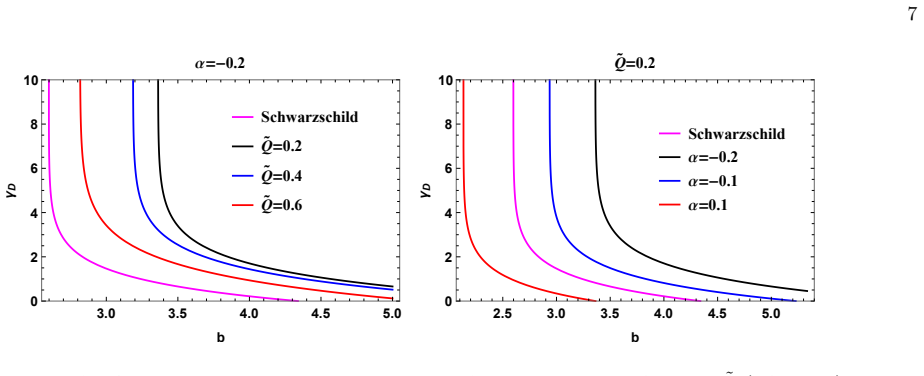
For the electrically charged Lorentz symmetry-violating black hole, the competing influences of electric charge and the Lorentz violation parameter cancel in selected strong-lensing quantities, reproducing the corresponding Schwarzschild values, while shadow angular sizes of M87* and Sgr A* constrain the violation parameter and quasiperiodic oscillation data from two microquasars constrain both parameters.
Load-bearing premise
The specific metric for the electrically charged Lorentz symmetry-violating black hole accurately describes the geometry, and the usual formulas for deflection angles and quasiperiodic oscillation frequencies remain valid when both charge and Lorentz symmetry breaking are present.
Editorial extensions
If this is right
- Certain combinations of charge and Lorentz violation parameter produce identical strong-lensing deflection angles and shadow sizes to a Schwarzschild black hole.
- The Lorentz violation parameter receives upper and lower bounds from the observed shadow angular sizes of M87* and Sgr A*.
- The electric charge parameter cannot be constrained using only those shadow observations.
- Quasiperiodic oscillation frequencies observed in GRO J1655-40 and XTE J1550-564 supply joint bounds on both the charge and the Lorentz violation parameters.
Reading between the lines
- The cancellation mechanism might appear in additional strong-gravity observables such as the ringdown spectrum of gravitational waves from mergers.
- Higher-resolution future shadow images could test whether the lensing and QPO constraints remain consistent with each other.
- The model could be compared with other modified black hole solutions to determine whether the exact cancellation is unique to the combination of charge and Lorentz violation.
Editorial analysis
A structured set of objections, weighed in public.
Referee Report
Summary. This paper examines the effects of electric charge combined with Lorentz symmetry breaking (LSB) on strong gravitational lensing and quasiperiodic oscillations (QPOs) for a black hole spacetime. It identifies regimes where the competing effects of charge and LSB cancel, resulting in observables identical to those of a Schwarzschild black hole. Bounds on the LSB parameter are obtained from the shadow angular sizes of M87* and Sgr A*, while no bounds on charge are found from these. QPO observations from the microquasars GRO J1655-40 and XTE J1550-564 are used to place bounds on both parameters.
Significance. The reported cancellation between charge and Lorentz violation parameters, leaving Schwarzschild-like strong lensing and shadow properties, is an interesting result that could have implications for testing modified gravity models. The use of both shadow observations and QPO data to constrain the model parameters is a positive aspect, providing multiple avenues for testing. If the underlying assumptions hold, this work contributes to the growing body of literature using astrophysical observations to probe deviations from general relativity in the strong-field regime.
major comments (3)
- [Section on strong gravitational lensing] The claim that charge and LV effects cancel to leave the deflection angle unchanged from Schwarzschild requires explicit demonstration in the relevant equations. The paper should show the condition on the parameters for which the integral for the deflection angle reduces exactly to the Schwarzschild case.
- [Shadow size analysis for M87* and Sgr A*] The bounds on the LV parameter are extracted by comparing the model's predicted shadow radius to the observed values. Since the charge parameter is not constrained by these observations, the analysis should address potential degeneracies between the two parameters and justify why the LV bound is reliable despite this.
- [QPO frequency calculations] The extraction of bounds from QPO data in GRO J1655-40 and XTE J1550-564 relies on the standard formulas for orbital and radial epicyclic frequencies. The manuscript should verify or justify that these formulas, derived in GR, remain unmodified when applied to the QKR metric, particularly if the Lorentz violation introduces a preferred frame that could affect the geodesic motion or effective potential.
minor comments (2)
- [Abstract] The abbreviation 'QKR BH' is introduced without expansion; it should be defined as 'electrically charged Lorentz symmetry-violating black hole' on first use.
- [Throughout] Ensure consistent use of notation for the Lorentz violation parameter and electric charge across equations and text.
Simulated Author's Rebuttal
We thank the referee for the constructive and insightful comments on our manuscript. We have carefully reviewed each major point and provide point-by-point responses below. We agree that several clarifications and additions will strengthen the paper and plan to incorporate them in the revised version.
read point-by-point responses
-
Referee: [Section on strong gravitational lensing] The claim that charge and LV effects cancel to leave the deflection angle unchanged from Schwarzschild requires explicit demonstration in the relevant equations. The paper should show the condition on the parameters for which the integral for the deflection angle reduces exactly to the Schwarzschild case.
Authors: We agree that an explicit demonstration is required for rigor. In the revised manuscript, we will add a dedicated subsection deriving the deflection angle integral for the QKR metric. We will explicitly show the condition relating the electric charge parameter q and the Lorentz violation parameter (denoted l in the paper) under which the integrand reduces identically to the Schwarzschild case, confirming the cancellation analytically. revision: yes
-
Referee: [Shadow size analysis for M87* and Sgr A*] The bounds on the LV parameter are extracted by comparing the model's predicted shadow radius to the observed values. Since the charge parameter is not constrained by these observations, the analysis should address potential degeneracies between the two parameters and justify why the LV bound is reliable despite this.
Authors: We acknowledge the degeneracy between charge and the LV parameter arising from the cancellation in the shadow radius. The observed shadow sizes of M87* and Sgr A* are consistent with the Schwarzschild value within uncertainties, which constrains the effective combination of q and l. We will revise the shadow analysis section to explicitly discuss this degeneracy, clarify that the reported bound on the LV parameter is obtained by marginalizing over possible charge values (or equivalently, by considering the maximum LV deviation still compatible with observations), and justify its reliability as a conservative upper limit on the LV parameter. revision: partial
-
Referee: [QPO frequency calculations] The extraction of bounds from QPO data in GRO J1655-40 and XTE J1550-564 relies on the standard formulas for orbital and radial epicyclic frequencies. The manuscript should verify or justify that these formulas, derived in GR, remain unmodified when applied to the QKR metric, particularly if the Lorentz violation introduces a preferred frame that could affect the geodesic motion or effective potential.
Authors: This is a valid concern given the Lorentz-violating nature of the theory. However, the QKR metric remains static and spherically symmetric, allowing the standard effective-potential method for equatorial timelike geodesics to be applied directly. The orbital frequency and radial epicyclic frequency are obtained from the second derivatives of the effective potential constructed from the metric components g_tt, g_rr, and g_phiphi. We will add an appendix deriving these frequencies explicitly from the QKR line element to demonstrate that the standard expressions hold without modification for this spacetime, while noting that the preferred frame does not alter the geodesic structure for these observables. revision: yes
Circularity Check
No significant circularity; derivations apply standard GR observables to given metric
full rationale
The paper presents a metric for the charged LV black hole, computes deflection angles and QPO frequencies via direct substitution into established GR integral and frequency formulas, identifies a numerical cancellation between charge and LV terms through explicit evaluation, and constrains parameters by comparing the resulting expressions to independent observational data on shadows and microquasar QPOs. None of these steps reduce by construction to the inputs; the cancellation is a calculational outcome, and the bounds are external empirical fits rather than self-referential predictions. No self-citations or ansatzes are invoked as load-bearing justifications in the provided chain.
Assumptions & free parameters
free parameters (2)
- Lorentz violation parameter
- electric charge
assumptions (2)
- domain assumption The spacetime geometry is described by a specific charged Lorentz-violating black-hole metric
- domain assumption Standard general-relativity expressions for light deflection and orbital frequencies continue to hold after the metric is modified
invented entities (1)
-
Electrically charged Lorentz symmetry-violating black hole (QKR BH)
Cite this review
Pith. "Pith review of Strong gravitational lensing and Quasiperiodic oscillations as a probe for an electrically charged Lorentz symmetry-violating black hole." pith.science (2026). https://pith.science/paper/2604.10572
@misc{pith2026260410572,
  author       = {Pith},
  title        = {Pith review of: Strong gravitational lensing and Quasiperiodic oscillations as a probe for an electrically charged Lorentz symmetry-violating black hole},
  year         = {2026},
  howpublished = {\url{https://pith.science/paper/2604.10572}},
  note         = {Machine review of arXiv:2604.10572}
}
abstract
This study examines the combined effect of electric charge and Lorentz symmetry breaking (LSB) on the observables of strong gravitational lensing (SGL) and the dynamics of quasiperiodic oscillations (QPOs) around an electrically charged, Lorentz symmetry-violating (LV) black hole (QKR BH). We first explore the SGL, which unravels an interesting effect that the two combined generate. We find cases where the competing effect of charge and LV cancels each other, leaving the underlying quantity unchanged from that of a \s BH. We find bounds on the LV parameter utilizing observations related to the shadow angular size of supermassive black holes (SMBHs) $M87^*$ and $SgrA^*$. No bound could be gleaned for the charge from these shadow observations. Observations of QPOs in microquasars provide an alternative method to probe our model and to extract bounds on its parameters. We use experimental data for the microquasars $GRO J1655-40$ and $XTE J1550-564$. Here we obtain bounds on both parameters. Our results provide deeper insights into the interplay between charge and LSB in the strong-gravity regime.
Figures


Figures from the paper (10 more)


Reference graph
Works this paper leans on
-
[1]
V.A. Kostelecky and S. Samuel, Spontaneous breaking of Lorentz symmetry in string theory, Phys. Rev. D 39 (1989) 683
work page 1989
-
[2]
Alfaro et al., Loop quantum gravity and light propagation, Phys
J. Alfaro et al., Loop quantum gravity and light propagation, Phys. Rev. D 65 (2002) 103509
work page 2002
-
[3]
Horava, Quantum Gravity at a Lifshitz Point, Phys
P. Horava, Quantum Gravity at a Lifshitz Point, Phys. Rev. D 79 (2009) 084008
work page 2009
-
[4]
Carroll et al., Noncommutative field theory and Lorentz violation, Phys
S.M. Carroll et al., Noncommutative field theory and Lorentz violation, Phys. Rev. Lett. 87 (2001) 141601
work page 2001
-
[5]
T. Jacobson and D. Mattingly, Gravity with a dynamical preferred frame, Phys. Rev. D 64 (2001) 024028
work page 2001
-
[6]
Dubovsky et al., Massive graviton as a testable cold dark matter candidate, Phys
S.L. Dubovsky et al., Massive graviton as a testable cold dark matter candidate, Phys. Rev. Lett. 94 (2005) 181102
work page 2005
-
[7]
G.R. Bengochea and R. Ferraro, Dark torsion as the cosmic speed-up, Phys. Rev. 79 (2009) 124019
work page 2009
-
[8]
A.G. Cohen and S.L. Glashow, Very special relativity, Phys. Rev. Lett. 97 (2006) 021601
work page 2006
Show all 99 references
-
[9]
Kostelecky, Gravity, Lorentz violation, and the standard model, Phys
V.A. Kostelecky, Gravity, Lorentz violation, and the standard model, Phys. Rev. D 69 (2004) 105009
2004
-
[10]
Kostelecky and S
V.A. Kostelecky and S. Samuel, Gravitational Phenomenology in Higher Dimensional Theories and Strings, Phys. Rev. D 40 (1989) 1886
1989
-
[11]
Kostelecky and S
V.A. Kostelecky and S. Samuel, Phenomenological gravitational constraints on strings and higher dimensional theories, Phys. Rev. Lett. 63 (1989) 224
1989
-
[12]
Bailey and V.A
Q.G. Bailey and V.A. Kostelecky, Signals for Lorentz violation in post-Newtonian gravity, Phys. Rev. D 74 (2006) 045001
2006
-
[13]
Bluhm et al., Constraints and stability in vector theories with spontaneous Lorentz violation, Phys
R. Bluhm et al., Constraints and stability in vector theories with spontaneous Lorentz violation, Phys. Rev. D 77 (2008) 125007
2008
-
[14]
Altschul et al., Lorentz violation with an antisymmetric tensor, Phys
B. Altschul et al., Lorentz violation with an antisymmetric tensor, Phys. Rev. D 81, 065028 (2010)
2010
-
[15]
Casana et al., An exact Schwarzschild-like solution in a bumblebee gravity model, Phys
R. Casana et al., An exact Schwarzschild-like solution in a bumblebee gravity model, Phys. Rev. D 97, 104001 (2018)
2018
-
[16]
Lessa et al., Modified black hole solution with a background Kalb-Ramond field, Eur
L.A. Lessa et al., Modified black hole solution with a background Kalb-Ramond field, Eur. Phys. J. C 80 (2020) 335
2020
-
[17]
Ke Yang et al., Static and spherically symmetric black holes in gravity with a background Kalb-Ramond field: Phys. Rev. D 108, 124004 (2023)
2023
-
[18]
Ovg¨ un et al., Gravitational lensing under the effect of Weyl and bumblebee gravities: Applications of Gauss-Bonnet theorem, Annals Phys
A. Ovg¨ un et al., Gravitational lensing under the effect of Weyl and bumblebee gravities: Applications of Gauss-Bonnet theorem, Annals Phys. 399 (2018) 193
2018
-
[19]
Kanzi and ˙I
S. Kanzi and ˙I. Sakallı, GUP modified hawking radiation in bumblebee gravity, Nucl. Phys. B 946 (2019) 114703
2019
-
[20]
Yang et al., Effects of Lorentz breaking on the accretion onto a Schwarzschild-like black hole, Commun
R.-J. Yang et al., Effects of Lorentz breaking on the accretion onto a Schwarzschild-like black hole, Commun. Theor. Phys. 71 (2019) 568
2019
-
[21]
Cai and R.-J
Z. Cai and R.-J. Yang, Accretion of the Vlasov gas onto a Schwarzschild-like black hole, Phys. Dark Univ. 42 (2023) 101292
2023
-
[22]
Oliveira et al., Quasinormal frequencies for a black hole in a bumblebee gravity, EPL 135 (2021) 10003
R. Oliveira et al., Quasinormal frequencies for a black hole in a bumblebee gravity, EPL 135 (2021) 10003
2021
-
[23]
Maluf and J.C.S
R.V. Maluf and J.C.S. Neves, Black holes with a cosmological constant in bumblebee gravity, Phys. Rev. D 103 (2021) 044002
2021
-
[24]
Xu et al., Static spherical vacuum solutions in the bumblebee gravity model, Phys
R. Xu et al., Static spherical vacuum solutions in the bumblebee gravity model, Phys. Rev. D 107 (2023) 024011
2023
-
[25]
Mai et al., Extended thermodynamics of the bumblebee black holes, Phys
Z.-F. Mai et al., Extended thermodynamics of the bumblebee black holes, Phys. Rev. D 108 (2023) 024004
2023
-
[26]
Xu et al., Bumblebee black holes in light of event horizon telescope observations, Astrophys
R. Xu et al., Bumblebee black holes in light of event horizon telescope observations, Astrophys. J. 945 (2023) 148
2023
-
[27]
Liang et al., Probing vector hair of black holes with extreme-mass-ratio inspirals, Phys
D. Liang et al., Probing vector hair of black holes with extreme-mass-ratio inspirals, Phys. Rev. D 107 (2023) 044053
2023
-
[28]
Ding et al., Exact Kerr-like solution and its shadow in a gravity model with spontaneous Lorentz symmetry breaking, Eur
C. Ding et al., Exact Kerr-like solution and its shadow in a gravity model with spontaneous Lorentz symmetry breaking, Eur. Phys. J. C 80 (2020) 178
2020
-
[29]
Ding and X
C. Ding and X. Chen, Slowly rotating Einstein-bumblebee black hole solution and its greybody factor in a Lorentz violation model, Chin. Phys. C 45 (2021) 025106
2021
-
[30]
Wang and S.-W
H.-M. Wang and S.-W. Wei, Shadow cast by Kerr-like black hole in the presence of plasma in Einstein-bumblebee gravity, Eur. Phys. J. Plus 137 (2022) 571
2022
-
[31]
Liu et al., Thin accretion disk around a rotating Kerr-like black hole in Einstein-bumblebee gravity model, [arXiv:1910.13259]
C. Liu et al., Thin accretion disk around a rotating Kerr-like black hole in Einstein-bumblebee gravity model, [arXiv:1910.13259]
1910
-
[32]
Liu et al., QNMs of slowly rotating Einstein-Bumblebee black hole, Eur
W. Liu et al., QNMs of slowly rotating Einstein-Bumblebee black hole, Eur. Phys. J. C 83 (2023) 83
2023
-
[33]
Wang et al., Constraint on parameters of a rotating black hole in Einstein-bumblebee theory by quasi-periodic oscilla- tions, Eur
Z. Wang et al., Constraint on parameters of a rotating black hole in Einstein-bumblebee theory by quasi-periodic oscilla- tions, Eur. Phys. J. C 82 (2022) 528
2022
-
[34]
Ding et al., Rotating BTZ-like black hole and central charges in Einstein-bumblebee gravity, Eur
C. Ding et al., Rotating BTZ-like black hole and central charges in Einstein-bumblebee gravity, Eur. Phys. J. C 83 (2023) 573
2023
-
[35]
Chen et al., Quasinormal modes of a scalar perturbation around a rotating BTZ-like black hole in Einstein-bumblebee gravity, Phys
C. Chen et al., Quasinormal modes of a scalar perturbation around a rotating BTZ-like black hole in Einstein-bumblebee gravity, Phys. Lett. B 846 (2023) 138186
2023
-
[36]
G¨ ull¨ u and A.¨Ovg¨ un, Schwarzschild-like black hole with a topological defect in bumblebee gravity, Annals Phys
˙I. G¨ ull¨ u and A.¨Ovg¨ un, Schwarzschild-like black hole with a topological defect in bumblebee gravity, Annals Phys. 436 (2022) 168721
2022
-
[37]
Zhang et al., Quasinormal modes and late time tails of perturbation fields on a Schwarzschild-like black hole with a global monopole in the Einstein-bumblebee theory, Sci
X. Zhang et al., Quasinormal modes and late time tails of perturbation fields on a Schwarzschild-like black hole with a global monopole in the Einstein-bumblebee theory, Sci. China Phys. Mech. Astron. 66 (2023) 100411
2023
-
[38]
Lin et al., Quasinormal modes of the spherical bumblebee black holes with a global monopole, Eur
R.-H. Lin et al., Quasinormal modes of the spherical bumblebee black holes with a global monopole, Eur. Phys. J. C 83 (2023) 720
2023
-
[39]
Ding et al., Einstein-Gauss-Bonnet gravity coupled to bumblebee field in four dimensional spacetime, Nucl
C. Ding et al., Einstein-Gauss-Bonnet gravity coupled to bumblebee field in four dimensional spacetime, Nucl. Phys. B 975 (2022) 115688. 16
2022
-
[40]
Jha and A
S.K. Jha and A. Rahaman, Bumblebee gravity with a Kerr-Sen-like solution and its Shadow, Eur. Phys. J. C 81 (2021) 345
2021
-
[41]
Ding et al., High dimensional AdS-like black hole and phase transition in Einstein-bumblebee gravity, Chin
C. Ding et al., High dimensional AdS-like black hole and phase transition in Einstein-bumblebee gravity, Chin. Phys. C 47 (2023) 045102
2023
-
[42]
¨Ovg¨ un et al., Exact traversable wormhole solution in bumblebee gravity, Phys
A. ¨Ovg¨ un et al., Exact traversable wormhole solution in bumblebee gravity, Phys. Rev. D 99 (2019) 024042
2019
-
[43]
Liang et al., Polarizations of Gravitational Waves in the Bumblebee Gravity Model, Phys
D. Liang et al., Polarizations of Gravitational Waves in the Bumblebee Gravity Model, Phys. Rev. D 106 (2022) 124019
2022
-
[44]
Amarilo et al., Gravitational waves effects in a Lorentz-violating scenario, [arXiv:2307.10937]
K.M. Amarilo et al., Gravitational waves effects in a Lorentz-violating scenario, [arXiv:2307.10937]
-
[45]
Kalb and P
M. Kalb and P. Ramond, Classical direct interstring action, Phys. Rev. D 9 (1974) 2273
1974
-
[46]
Kao et al., Induced Einstein-Kalb-Ramond theory and the black hole, Phys
W.F. Kao et al., Induced Einstein-Kalb-Ramond theory and the black hole, Phys. Rev. D 53 (1996) 2244
1996
-
[47]
Kar et al., Static spherisymmetric solutions, gravitational lensing and perihelion precession in Einstein-Kalb-Ramond theory, Phys
S. Kar et al., Static spherisymmetric solutions, gravitational lensing and perihelion precession in Einstein-Kalb-Ramond theory, Phys. Rev. D 67 (2003) 044005
2003
-
[48]
Chakraborty and S
S. Chakraborty and S. SenGupta, Strong gravitational lensing — a probe for extra dimensions and Kalb-Ramond field, JCAP 07 (2017) 045
2017
-
[49]
Nair and A.M
K.K. Nair and A.M. Thomas, Kalb-Ramond field-induced cosmological bounce in generalized teleparallel gravity, Phys. Rev. D 105 (2022) 103505
2022
-
[50]
Fu et al., Q-form fields on p-branes, JHEP 10 (2012) 060
C.-E. Fu et al., Q-form fields on p-branes, JHEP 10 (2012) 060
2012
-
[51]
Chakraborty and S
S. Chakraborty and S. SenGupta, Solutions on a brane in a bulk spacetime with Kalb-Ramond field, Annals Phys. 367 (2016) 258
2016
-
[52]
Atamurotov et al., Particle dynamics and gravitational weak lensing around black hole in the Kalb-Ramond gravity, Eur
F. Atamurotov et al., Particle dynamics and gravitational weak lensing around black hole in the Kalb-Ramond gravity, Eur. Phys. J. C 82 (2022) 659
2022
-
[53]
Kumar et al., Gravitational deflection of light and shadow cast by rotating Kalb-Ramond black holes, Phys
R. Kumar et al., Gravitational deflection of light and shadow cast by rotating Kalb-Ramond black holes, Phys. Rev. D 101 (2020) 104001
2020
-
[54]
Lessa et al., Traversable wormhole solution with a background Kalb-Ramond field, Annals Phys
L.A. Lessa et al., Traversable wormhole solution with a background Kalb-Ramond field, Annals Phys. 433 (2021) 168604
2021
-
[55]
Jha, Black hole surrounded by perfect fluid dark matter with a background Kalb-Ramond field, JCAP 09(2025)069
S.Kr. Jha, Black hole surrounded by perfect fluid dark matter with a background Kalb-Ramond field, JCAP 09(2025)069
2025
-
[56]
Maluf and C.R
R.V. Maluf and C.R. Muniz, Exact solution for a traversable wormhole in a curvature-coupled antisymmetric background field, Eur. Phys. J. C 82 (2022) 445
2022
-
[57]
Maluf and J.C.S
R.V. Maluf and J.C.S. Neves, Bianchi type I cosmology with a Kalb-Ramond background field, Eur. Phys. J. C 82 (2022) 135
2022
-
[58]
Z. Q. Duan et al., Electrically charged black holes in gravity with a background Kalb-Ramond field, Eur. Phys. J. C 84 (2024), 798
2024
-
[59]
Darwin, The gravity field of a particle, Proc
C. Darwin, The gravity field of a particle, Proc. R. Soc. A 249 (1959) 180
1959
-
[60]
K. S. Virbhadra and G. F. R. Ellis, Schwarzschild black hole lensing, Phys. Rev. D 62 (2000) 084003
2000
-
[61]
Bozza, S
V. Bozza, S. Capozziello, G. Iovane G. Scarpetta, Strong Field Limit of Black Hole Gravitational Lensing, Gen. Rel. Grav. 33 (2001) 1535
2001
-
[62]
Bozza, Gravitational lensing in the strong field limit, Phys
V. Bozza, Gravitational lensing in the strong field limit, Phys. Rev. D 66 (2002) 103001
2002
-
[63]
Bozza and L
V. Bozza and L. Mancini, Time Delay in Black Hole Gravitational Lensing as a Distance Estimator, Gen. Rel. Grav. 36 (2004) 435
2004
-
[64]
E. F. Eiroa and D. F. Torres, Strong field limit analysis of gravitational retro-lensing, Phys. Rev. D 69 (2004) 063004
2004
-
[65]
Whisker, Strong gravitational lensing by braneworld black holes, Phys
R. Whisker, Strong gravitational lensing by braneworld black holes, Phys. Rev. D 71 (2005) 064004
2005
-
[66]
E. F. Eiroa, Braneworld black hole gravitational lens: Strong field limit analysis, Phys. Rev. D 71 (2005) 083010
2005
-
[67]
Bhadra, Gravitational lensing by a charged black hole of string theory, Phys
A. Bhadra, Gravitational lensing by a charged black hole of string theory, Phys. Rev. D 67 (2003) 103009
2003
-
[68]
Shaikh et al., Analytical approach to strong gravitational lensing from ultracompact objects, Phys
R. Shaikh et al., Analytical approach to strong gravitational lensing from ultracompact objects, Phys. Rev. D 99 (2019) 104040
2019
-
[69]
E. F. Eiroa and C. M. Sendra, Gravitational lensing by a regular black hole, Class. Quant. Grav. 28 (2011) 085008
2011
-
[70]
Kumar et al., Testing Strong Gravitational Lensing Effects of Supermassive Compact Objects with Regular Spacetimes, Astrophys
J. Kumar et al., Testing Strong Gravitational Lensing Effects of Supermassive Compact Objects with Regular Spacetimes, Astrophys. J. 938 (2022) 104
2022
-
[71]
S. K. Jha and A. Rahaman, Strong gravitational lensing in hairy Schwarzschild background, Eur. Phys. J. Plus 138 (2023) 86
2023
-
[72]
Feleppa et al., Strong deflection limit analysis of black hole lensing in inhomogeneous plasma, Phys
F. Feleppa et al., Strong deflection limit analysis of black hole lensing in inhomogeneous plasma, Phys. Rev. D 110 (2024) 064031
2024
-
[73]
Vachher et al., Probing dark matter via strong gravitational lensing by black holes, Phys
A. Vachher et al., Probing dark matter via strong gravitational lensing by black holes, Phys. Dark Univ. 44 (2024) 101493
2024
-
[74]
U.Molla et al., Strong gravitational lensing bySgrA ∗ andM87 ∗ black holes embedded in dark matter halo exhibiting string cloud and quintessential field, Eur
N. U.Molla et al., Strong gravitational lensing bySgrA ∗ andM87 ∗ black holes embedded in dark matter halo exhibiting string cloud and quintessential field, Eur. Phys. J. C 84 (2024) 574
2024
-
[75]
Chen-Kai Qiao and Mi Zhou, Gravitational Lensing of Schwarzschild and Charged Black Holes Immersed in Perfect Fluid Dark Matter Halo, JCAP 12 (2023) 005
2023
-
[76]
E. L. B. Junior et al., Gravitational lensing of a Schwarzschild-like black hole in Kalb-Ramond gravity, Phys. Rev. D 110 (2024) 024077
2024
-
[77]
Akiyama et al., First M87 Event Horizon Telescope Results
K. Akiyama et al., First M87 Event Horizon Telescope Results. I. The Shadow of the Supermassive Black Hole, Astrophys. J. 875 (2019) L1
2019
-
[78]
First SagittariusA ∗ Event Horizon Telescope Results
Kazunori Akiyama et al. First SagittariusA ∗ Event Horizon Telescope Results. I. The Shadow of the Supermassive Black Hole in the Center of the Milky Way. Astrophys. J. Lett., 930(2):L12, 2022
2022
-
[79]
Gillessen et al., AN UPDATE ON MONITORING STELLAR ORBITS IN THE GALACTIC CENTER, Astrophys
S. Gillessen et al., AN UPDATE ON MONITORING STELLAR ORBITS IN THE GALACTIC CENTER, Astrophys. J. 837 (2017) 30. 17
2017
-
[80]
M. E. Beer and P. Podsiadlowski, The quiescent light curve and evolutionary state of gro J1655-40, Mon. Not. Roy. Astron. Soc. 331 (2002) 351
2002
-
[81]
S. E. Motta et al., Precise mass and spin measurements for a stellar-mass black hole through X-ray timing: the case of GRO J1655-40, Mon. Not. Roy. Astron. Soc. 437 no. 3, (2014) 2554-2565
2014
-
[82]
J. A. Orosz et al., An Improved Dynamical Model for the Microquasar XTE J1550-564, Astrophys. J. 730 (2011) 75
2011
-
[83]
Abramowicz et al., Non-linear resonance in nearly geodesic motion in low-mass X-ray binaries, Publ
M.A. Abramowicz et al., Non-linear resonance in nearly geodesic motion in low-mass X-ray binaries, Publ. Astron. Soc. Jpn. 55 (2023) 466
2023
-
[84]
Horak and V
J. Horak and V. Karas, Twin-peak quasiperiodic oscillations as an internal resonance, Astron. Astrophys. 451, 377 (2006)
2006
-
[85]
Banerjee,Testing black holes in non-linear electrodynamics from the observed quasi-periodic oscillations, JCAP 08 (2022) 034
I. Banerjee,Testing black holes in non-linear electrodynamics from the observed quasi-periodic oscillations, JCAP 08 (2022) 034
2022
-
[86]
Shaymatov et al., Charged particle and epicyclic motions around 4DEinstein-Gauss-Bonnet black hole immersed in an external magnetic field, Phys
S. Shaymatov et al., Charged particle and epicyclic motions around 4DEinstein-Gauss-Bonnet black hole immersed in an external magnetic field, Phys. Dark Universe 30 (2020) 100648
2020
-
[87]
Stuchl´ ık and J
Z. Stuchl´ ık and J. Vrba, Epicyclic orbits in the field of Einstein-Dirac-Maxwell traversable wormholes applied to the quasiperiodic oscillations observed in microquasars and active galactic nuclei, Eur. Phys. J. Plus 136 (2021) 1127
2021
-
[88]
Stella and M
L. Stella and M. Vietri, kHz Quasi Periodic Oscillations in Low Mass X-ray Binaries as Probes of General Relativity in the Strong Field Regime, Phys. Rev. Lett. 82 (1999) 17-20 (1999)
1999
-
[89]
Stella and M
L. Stella and M. Vietri, Lense-Thirring Precession and QPOs in Low Mass X-Ray Binaries, Astrophys. J. Lett. 492 (1998) L59
1998
-
[90]
Bambi et al., Testing the no-hair theorem with the continuum-fitting and the iron line methods: a short review, Class
C. Bambi et al., Testing the no-hair theorem with the continuum-fitting and the iron line methods: a short review, Class. Quant. Grav. 33 (2016) 064001
2016
-
[91]
Bambi, Testing the Kerr-nature of stellar-mass black hole candidates by combining the continuum-fitting method and the power estimate of transient ballistic jets, Phys
C. Bambi, Testing the Kerr-nature of stellar-mass black hole candidates by combining the continuum-fitting method and the power estimate of transient ballistic jets, Phys. Rev. D 85 (2012) 043002
2012
-
[92]
Tarnopolski and V
M. Tarnopolski and V. Marchenko, A Comprehensive Power Spectral Density Analysis of Astronomical Time Series. II. The Swift/BAT Long Gamma-Ray Bursts, Astrophys. J. 911, 20 (2021)
2021
-
[93]
Kolos et al., Quasi-harmonic oscillatory motion of charged particles around a Schwarzschild black hole immersed in an uniform magnetic field, Class
M. Kolos et al., Quasi-harmonic oscillatory motion of charged particles around a Schwarzschild black hole immersed in an uniform magnetic field, Class. Quantum Gravity 32 (2015) 165009
2015
-
[94]
Rayimbaev et al., Quasiperiodic Oscillations, Quasinormal Modes and Shadows of Bardeen-Kiselev Black Holes, Phys.Dark Universe 35, 100930 (2022)
J. Rayimbaev et al., Quasiperiodic Oscillations, Quasinormal Modes and Shadows of Bardeen-Kiselev Black Holes, Phys.Dark Universe 35, 100930 (2022)
2022
-
[95]
Jusufi et al., Equatorial and polar quasinormal modes and quasiperiodic oscillations of quantum deformed Kerr black hole, Universe 8(4) (2022) 210
K. Jusufi et al., Equatorial and polar quasinormal modes and quasiperiodic oscillations of quantum deformed Kerr black hole, Universe 8(4) (2022) 210
2022
-
[96]
Xamidov et al., Probing the Schwarzschild black hole immersed in a dark matter halo through astrophysical tests, Eur
T. Xamidov et al., Probing the Schwarzschild black hole immersed in a dark matter halo through astrophysical tests, Eur. Phys. J. C 85 (2025) 1193
2025
-
[97]
Alloqulov et al., Epicyclic oscillations and accretion disk around a special Buchdahl-inspired spacetime, JHEAP48 (2025) 100424
M. Alloqulov et al., Epicyclic oscillations and accretion disk around a special Buchdahl-inspired spacetime, JHEAP48 (2025) 100424
2025
-
[98]
Guo et al., Parameter constraints on a black hole with Minkowski core through quasiperiodic oscillations, Eur
M. Guo et al., Parameter constraints on a black hole with Minkowski core through quasiperiodic oscillations, Eur. Phy. J. C 85 (2025) 95
2025
-
[99]
Weinberg, Gravitation, and Cosmology: Principles and Applications of the General Theory of Relativity (New York:Wiley, 1972)
S. Weinberg, Gravitation, and Cosmology: Principles and Applications of the General Theory of Relativity (New York:Wiley, 1972)
1972
Reviewed May 10, 2026 · model on record in the stance chip above.
Discussion (0). Continue with ORCID to comment.