REVIEW 3 major objections 4 minor 61 references
A portal-matter model built around an E6-like gauge structure can generate Dirac neutrino masses of order 0.05 eV at one loop, while the tree-level mass matrix leaves the neutrino massless.
Reviewed by Pith at T0; open to challenge. T0 means a machine referee read the full paper against a public rubric. the ladder, T0–T4 →
T0 review · deepseek-v4-flash
2026-08-01 21:48 UTC pith:XO3PF5HN
load-bearing objection Plausible toy-model demonstration of radiatively generated Dirac neutrino mass in a portal-matter setup, but the key loop formula is asserted and the dark-sector completion is left open. the 3 major comments →
Portal Matter and Scotogenic-like Dirac Neutrino Masses
The pith
A machine-rendered reading of the paper's core claim, the machinery that carries it, and where it could break.
Core claim
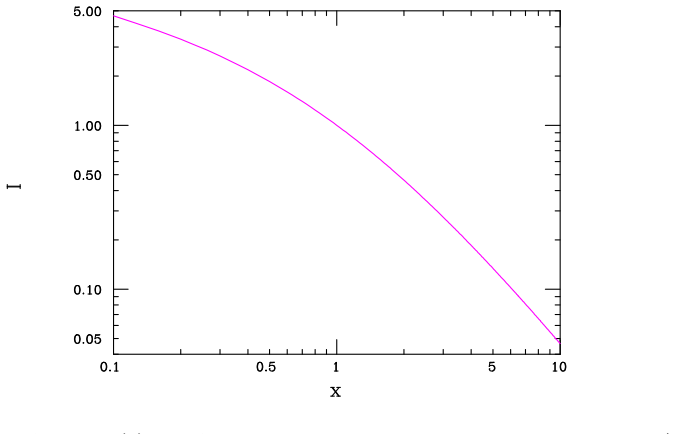
The central claim is that the color-singlet portal-matter fields—particles carrying both SM and dark quantum numbers—and dark scalars assemble a one-loop diagram (Fig. 1) whose amplitude is m_ν = λ_m y_R y_E y_S v' v1 v2 / (16√2 π²) J, with J ≈ I(m_S/m_N)/m_N² when the dark scalars are light. Numerically this gives m_ν ≃ 0.056 eV for λ_m = 0.5, y_R y_E y_S = 0.1, v' = v1 = v2 = 1 GeV, and m_N = 2 TeV, with I(x) an order-one loop function. Because the tree-level mass matrix satisfies det(M M†) = 0, the SM neutrino is massless before the loop; the loop is the sole source of the Dirac mass. The paper is explicit that this is a semi-realistic toy example rather than a complete UV model, and that
What carries the argument
The key machinery is the one-loop Dirac mass diagram of Fig. 1, built from the Yukawa couplings y_E (N_R–ν_L–φ1b), y_S (N_R–S_L–H'), and y_R (ν_R–S_L–φ2a), together with the quartic coupling λ_m that mixes the two dark scalars φ1b and φ2a. The three small U(1)_D-breaking vevs (v', v1, v2) multiply into a ~1 GeV³ suppression, while the heavy N and S masses supply a ~TeV⁻² suppression, and the loop factor 1/16π² brings the result down to the observed neutrino scale. The supporting identity is det(M M†)=0 for the tree-level neutral-fermion matrix, which enforces a massless neutrino before radiative corrections, and the loop function I(x)=2 log x/(x²−1) governs the dependence on the S-to-N mass
Load-bearing premise
The result rests on the assumption that the additional SM-singlet fermions required to cancel the U(1)_YI anomaly and supply dark matter do not couple to ν_R, S_L, or the dark Higgs fields in a way that produces tree-level neutrino masses or substantially changes the one-loop amplitude.
What would settle it
A confirmed observation of neutrinoless double beta decay would falsify the Dirac-neutrino premise. Alternatively, once the Z_I is discovered, measuring the ratio of its invisible to dilepton decay widths to be 2—the q=0/Majorana expectation—rather than the q-dependent value of Eq. (18) would rule out the dark-charged ν_R that this mechanism requires.
If this is right
- Neutrinos are Dirac particles in this setup, so neutrinoless double beta decay is predicted to be absent; a confirmed 0νββ signal would rule out the scenario.
- The one-loop result is robust across a correlated parameter range: with O(1) Yukawa and quartic couplings and ~1 GeV dark vevs, Eq. (17) produces masses near 0.05 eV for TeV-scale portal fermions.
- The particles running in the loop are mostly SM singlets with no direct SM couplings, so direct production of the neutrino-mass sector at colliders is very difficult; the practical signatures are the charged PM lepton E and its associated production with N, decaying to leptons plus missing energy.
- If the heavy Z_I boson is discovered at a future machine, the ratio Γ(Z_I→ν̄ν)/Γ(Z_I→ℓ⁺ℓ⁻) is predicted to deviate from 2 in a way controlled by the dark charge q of ν_R, offering a discriminating test of this subclass versus standard Dirac/Majorana seesaw expectations.
- The HL-LHC is unlikely to uniquely test this subclass; FCC-hh or a multi-TeV lepton collider would be needed for direct tests, and astrophysical/cosmological probes may provide the strongest constraints.
Where Pith is reading between the lines
- The paper leaves dark matter unspecified, but if the same dark sector hosts both the neutrino-mass loop and the DM candidate, then neutrino mass, kinetic mixing, and relic density would all stem from one portal sector; that unification is a natural next step beyond the present work.
- The single-generation formula suggests a concrete three-generation generalization: neutrino mass splittings could be generated by hierarchies among the products y_R y_E y_S or among the heavy masses m_N, m_S, turning the loop into a potential origin of neutrino flavor structure.
- Because ν_R carries a non-zero dark charge q, astrophysical and cosmological constraints—such as BBN/CMB bounds on additional relativistic degrees of freedom or star-cooling limits—may already exclude much of the parameter space the collider analysis cannot reach; the paper flags this as future work, so a dedicated study is a testable extension.
- The same λ_m mixing and small vevs that produce the neutrino mass also mix the dark scalar sector with the SM Higgs at loop level, so precision measurements of the 125 GeV Higgs invisible width and electroweak observables could indirectly expose this mechanism even if the loop particles are never produced directly.
Editorial analysis
A structured set of objections, weighed in public.
Referee Report
Summary. The paper proposes a one-loop Dirac neutrino mass mechanism in an E6-like portal-matter model with gauge group GSM × SU(2)_I × U(1)_YI. The previous model is extended by the chiral singlet S_L, a dark-charged Higgs doublet H', a Z2-odd Higgs doublet Φ2, and a Z2 under which (ν_R, S_R) are odd. The tree-level neutral-fermion mass matrix (Eq. (12)) has det(M M†)=0, so the SM neutrino is massless at tree level. A one-loop diagram involving y_E, y_S, y_R, the scalar quartic λ_m, and three ~GeV U(1)_D-breaking vevs is claimed to produce mν ≃ 0.056 eV for benchmark parameters (Eq. (17)). The paper also discusses collider probes, especially the ratio Rνl = Γ(Z_I→νν)/Γ(Z_I→ℓℓ) and the production of the vector-like PM fields N, E. The model is explicitly a toy model; the U(1)_YI anomaly and DM are left to unspecified additional dark-sector fermions.
Significance. If the calculation is correct, the paper would demonstrate a novel scotogenic-like Dirac neutrino mass in a portal-matter framework, using only O(1) couplings and ~GeV dark-Higgs vevs, and it usefully identifies why the specific neutrino-mass sector is difficult to probe at colliders. The explicit determinant-zero tree-level check is a strength, and the benchmark expression (17) is dimensionally consistent and falsifiable in the sense that the loop parameters and masses are tied to the Lagrangian. The collider ratio Rνl is a concrete observable that could distinguish q≠0 dark-charged ν_R from conventional seesaw/dirac cases if Z_I is produced. However, the central one-loop formula is asserted rather than derived, the scalar-mixing term used to realize it appears to give the wrong vev suppression, and the uncompleted anomaly/DM sector can in principle spoil the tree-level masslessness. These are load-bearing gaps that prevent acceptance in the present form.
major comments (3)
- [§2.3, Eq. (10), Table 2] The scalar mixing needed for Fig. 1 is not generated as claimed. With the vev assignments of Table 2 (Φ1=(V1,v1)/√2, Φ2=(v2,V2)/√2), expanding λ_m(Φ1†Φ2)(Φ2†Φ1) yields a φ1b–φ2a bilinear proportional to V1V2 (the two ~10 TeV vevs), not λ_m v1v2. The invariant contraction is φ1b φ2a (Q_D=+1−1=0); the text's φ†_{2a}φ1b is not U(1)_D invariant for Q_D(φ2a)=+1 and Q_D(φ1b)=−1. Since Eq. (14) and the benchmark value Eq. (17) rely on the smallness of this mixing, the advertised suppression by v1v2 is not realized by the stated Lagrangian. This is a load-bearing issue: either a different scalar operator must be introduced, or the expansion and the resulting mass formula must be corrected and the phenomenology re-evaluated.
- [§3, Eq. (14)] The central one-loop formula is asserted without derivation: the loop function J is not defined, and the limiting form I(x) is given without an integral or Feynman-parameter calculation. The sign, the 16√2π^2 prefactor, and the dependence on m_{1,2}^2 therefore cannot be checked. Because the entire neutrino-mass claim rests on this formula, the paper should provide the derivation, or at least the full expression for J, and show that it corresponds to Fig. 1 with the specified couplings and scalar mixing.
- [§2.1 and §5] The text states that with the minimal content I_YI remains anomalous and that additional singlet fermions 'can (and must!) easily be included', while the paper 'can remain completely agnostic' about them. This is not a harmless omission: those fields are part of the theory needed for consistency and, depending on their Z2 parities and U(1)_D charges, they can form renormalizable Yukawa couplings with ν_R, S_L, N_R, or H′/Φ2. A single allowed term such as y(ν_R χ)Φ2 would add an entry to Eq. (12), generically lifting det(M M†)=0 and producing a tree-level Dirac mass. The tree-level masslessness and the 0.05 eV result are therefore conditional on a completion that is not exhibited. Please provide an explicit charge/parity assignment that forbids such couplings, or state the limitation prominently as a formal condition on the model.
minor comments (4)
- [Fig. 1] The caption and drawing are hard to decode. Give a standard momentum-routed diagram and identify each vertex and mass insertion so the reader can map Eq. (14) to the diagram.
- [Text] Typos and notation: 'discreet' should be 'discrete' (end of §2.1); 'the fessential problem' in §4; 'amS'/'cmS' in Eq. (13) should be 'a m_S'/'c m_S'.
- [Eq. (17)] The phrase 'interesting range' and the choice of benchmark parameters should be framed explicitly as a demonstration that O(1) parameters can reach 0.05 eV, not as a prediction; otherwise the target mass is partly an input.
- [§4, Eq. (18)] The ratio Rνl is given for a single generation. If the three generations are not universal, the numerical comparison with q=0 expectations should be stated; if they are universal, say so.
Circularity Check
No significant circularity: the one-loop neutrino mass is computed directly from the defined Lagrangian, with the 0.05 eV figure presented as an illustrative benchmark rather than a fitted prediction.
full rationale
The derivation chain is self-contained. The neutral-fermion mass matrix M in Eq. (12), the tree-level determinant condition det(M M†)=0 in Eq. (13), and the one-loop formula Eq. (14) are all assembled from the Yukawa couplings, vevs, and scalar mixing term introduced in Eqs. (2)-(8), Table 2, and Eq. (10), with the loop integral J stated as the result of parametric integration. The numerical value in Eq. (17) is not obtained by fitting any measured neutrino mass or by extracting parameters from data; it follows an explicitly illustrative benchmark ('To get some numerical feel for this result, we will assume for purposes of demonstration the following set of suggestive values...'). Thus the ~0.05 eV figure is an output of a parameter scan, not a fitted input renamed as a prediction. The many self-citations (e.g., [13], [18]) supply the earlier E6-like PM framework and collider constraints, but the neutrino-mass mechanism and its one-loop amplitude are derived in the present paper and do not reduce to those citations. The paper itself flags the main caveat: with the minimal content 'I_YI remains anomalous', additional fermions 'can (and must!) easily be included', and the paper 'can remain completely agnostic' about them (§2.1). That is a genuine UV-completeness limitation—unwanted couplings of such fields to ν_R, S_L, or the dark Higgses could spoil det(MM†)=0 or add new loop contributions—but it is an incompleteness/robustness concern, not the construction-level identification of the claimed result with its inputs. No circular step satisfying the quoted-reduction standard is exhibited.
Axiom & Free-Parameter Ledger
free parameters (6)
- λm (quartic scalar mixing) =
0.5 (benchmark)
- yR yE yS (product of Yukawa couplings) =
0.1 (benchmark)
- v', v1, v2 (U(1)_D-breaking vevs) =
1 GeV each (benchmark)
- m_N (heavy neutral portal fermion mass) =
2 TeV (benchmark)
- x = m_S/m_N =
"not too far from unity"
- q (dark charge of ν_R) =
unspecified nonzero; examples q=-3,...,3
axioms (4)
- ad hoc to paper The new Z2 symmetry is exact at the Lagrangian level and forbids every direct ν_L-ν_R Yukawa coupling while allowing the listed Yukawa terms.
- ad hoc to paper Unspecified SM-singlet dark fermions can cancel the U(1)_YI anomaly and provide DM without coupling to ν_R, S_L, or the dark Higgs in a way that affects neutrino mass.
- domain assumption The full G_SM × G_D structure is a toy; it does not embed into E6, and the 10 TeV / 1 GeV vev hierarchy is achieved with fine-tuning.
- standard math Standard perturbative QFT loop integrals and the Dirac neutrino assumption (no Majorana mass for ν_R) are used.
invented entities (3)
-
S_L
no independent evidence
-
H' (dark-charged Higgs doublet)
no independent evidence
-
Φ2 (Z2-odd Higgs doublet)
no independent evidence
read the original abstract
Loops of portal matter (PM) fields, carrying both Standard Model (SM) and dark charges, can generate the necessary kinetic mixing (KM) between the ordinary and dark photons (DP) in vector portal scenarios thus allowing for interactions between visible and dark sector fields. Here we show that the field content of a previously considered model based on a partial $E_6$-like UV-completion of such setups can generate light Dirac neutrino masses in the interesting range, $\sim 0.05$ eV, at the one-loop level similar to what happens in scotogenic dark matter (DM) scenarios. While general $E_6-$like PM scenarios have been shown to be easily probed at colliders, such as the HL-LHC, uniquely testing this specific subclass of these setups in a direct fashion is found to be somewhat more challenging.
Figures



Reference graph
Works this paper leans on
-
[1]
N. Aghanimet al.[Planck], Astron. Astrophys.641, A6 (2020) [erratum: Astron. Astrophys.652, C4 (2021)] [arXiv:1807.06209 [astro-ph.CO]]
Pith/arXiv arXiv 2020
-
[2]
B. Holdom, Phys. Lett.166B, 196 (1986) and Phys. Lett. B178, 65 (1986); K. R. Dienes, C. F. Kolda and J. March-Russell, Nucl. Phys. B492, 104 (1997) [hep-ph/9610479]; F. Del Aguila, Acta Phys. Polon. B25, 1317 (1994) [hep-ph/9404323]; K. S. Babu, C. F. Kolda and J. March-Russell, Phys. Rev. D54, 4635 (1996) [hep-ph/9603212]; T. G. Rizzo, Phys. Rev. D59, 0...
Pith/arXiv arXiv 1986
-
[3]
There has been a huge amount of historical work on this subject; see, for example, D. Feldman, B. Kors and P. Nath, Phys. Rev. D75, 023503 (2007) [hep-ph/0610133]; D. Feldman, Z. Liu and P. Nath, Phys. Rev. D75, 115001 (2007) [hep-ph/0702123 [HEP-PH]].; M. Pospelov, A. Ritz and M. B. Voloshin, Phys. Lett. B662, 53 (2008) [arXiv:0711.4866 [hep-ph]]; M. Pos...
Pith/arXiv arXiv 2007
-
[4]
T. Gherghetta, J. Kersten, K. Olive and M. Pospelov, Phys. Rev. D100, no.9, 095001 (2019) [arXiv:1909.00696 [hep-ph]]
Pith/arXiv arXiv 2019
-
[5]
M. Fabbrichesi, E. Gabrielli and G. Lanfranchi, [arXiv:2005.01515 [hep-ph]]
Pith/arXiv arXiv 2005
- [6]
-
[7]
D. Barducci, E. Bertuzzo, G. Grilli di Cortona and G. M. Salla, JHEP12, 081 (2021) [arXiv:2109.04852 [hep-ph]]
Pith/arXiv arXiv 2021
-
[8]
D. Alonso-Gonz´ alez, D. Cerde˜ no, P. Foldenauer and J. M. No, [arXiv:2507.11376 [hep-ph]]
-
[9]
A. W. R. Jorge, L. Sagunski, G. W. Yuan, T. Song and E. Bratkovskaya, [arXiv:2601.15066 [hep-ph]]
- [10]
-
[11]
S. Li, J. M. Yang, M. Zhang and R. Zhu, [arXiv:2405.18226 [hep-ph]]
-
[12]
T. G. Rizzo, Phys. Rev. D99, no.11, 115024 (2019) [arXiv:1810.07531 [hep-ph]]
Pith/arXiv arXiv 2019
-
[13]
T. D. Rueter and T. G. Rizzo, Phys. Rev. D101, no.1, 015014 (2020) [arXiv:1909.09160 [hep-ph]]
Pith/arXiv arXiv 2020
-
[14]
J. H. Kim, S. D. Lane, H. S. Lee, I. M. Lewis and M. Sullivan, Phys. Rev. D101, no.3, 035041 (2020) [arXiv:1904.05893 [hep-ph]]
Pith/arXiv arXiv 2020
-
[15]
T. D. Rueter and T. G. Rizzo, [arXiv:2011.03529 [hep-ph]]
Pith/arXiv arXiv 2011
-
[16]
G. N. Wojcik and T. G. Rizzo, Phys. Rev. D105, no.1, 015032 (2022) [arXiv:2012.05406 [hep-ph]]
Pith/arXiv arXiv 2022
-
[17]
T. G. Rizzo, JHEP11, 035 (2021) [arXiv:2106.11150 [hep-ph]]
Pith/arXiv arXiv 2021
-
[18]
T. G. Rizzo, [arXiv:2202.02222 [hep-ph]]
-
[19]
G. N. Wojcik, [arXiv:2205.11545 [hep-ph]]
-
[20]
T. G. Rizzo, Phys. Rev. D106, no.3, 035024 (2022) [arXiv:2206.09814 [hep-ph]]
Pith/arXiv arXiv 2022
-
[21]
T. G. Rizzo, Phys. Rev. D106, no.9, 095024 (2022) [arXiv:2209.00688 [hep-ph]]
Pith/arXiv arXiv 2022
-
[22]
A. Carvunis, N. McGinnis and D. E. Morrissey, [arXiv:2209.14305 [hep-ph]]
-
[23]
S. Verma, S. Biswas, A. Chatterjee and J. Ganguly, [arXiv:2209.13888 [hep-ph]]
-
[24]
T. G. Rizzo, Phys. Rev. D107, no.9, 095014 (2023) [arXiv:2302.12698 [hep-ph]]
Pith/arXiv arXiv 2023
-
[25]
M. Bauer and P. Foldenauer, Phys. Rev. Lett.129, no.17, 171801 (2022) [arXiv:2207.00023 [hep-ph]]
Pith/arXiv arXiv 2022
-
[26]
G. N. Wojcik, L. L. Everett, S. T. Eu and R. Ximenes, Phys. Lett. B841, 137931 (2023) [arXiv:2211.09918 [hep-ph]]
Pith/arXiv arXiv 2023
-
[27]
G. N. Wojcik, L. L. Everett, S. T. Eu and R. Ximenes, Phys. Rev. D108, no.5, 055033 (2023) [arXiv:2303.12983 [hep-ph]]
Pith/arXiv arXiv 2023
-
[28]
T. G. Rizzo, Phys. Rev. D108, no.5, 055021 (2023) [arXiv:2307.08508 [hep-ph]]
Pith/arXiv arXiv 2023
-
[29]
T. G. Rizzo, Phys. Rev. D109, no.5, 055039 (2024) [arXiv:2312.00226 [hep-ph]]
Pith/arXiv arXiv 2024
-
[30]
T. G. Rizzo, Phys. Rev. D110, no.7, 075037 (2024) [arXiv:2408.01296 [hep-ph]]
Pith/arXiv arXiv 2024
-
[31]
M. Ardu, M. H. Rahat, N. Valori and O. Vives, [arXiv:2407.21100 [hep-ph]]
-
[32]
T. G. Rizzo, Phys. Rev. D111, no.7, 075018 (2025) [arXiv:2412.17174 [hep-ph]]. 16
Pith/arXiv arXiv 2025
-
[33]
T. G. Rizzo, Phys. Rev. D112, no.1, 015029 (2025) doi:10.1103/h81b-ydmw [arXiv:2505.04474 [hep-ph]]
Pith/arXiv arXiv 2025
- [34]
-
[35]
T. G. Rizzo, [arXiv:2511.13632 [hep-ph]]
-
[36]
T. G. Rizzo, [arXiv:2602.24122 [hep-ph]]
-
[37]
For a recent review of vector-like fermions, see A. E. C´ arcamo Hern´ andez, K. Kowalska, H. Lee and D. Rizzo, [arXiv:2309.13968 [hep-ph]]
-
[38]
Hayrapetyanet al.[CMS], [arXiv:2405.17605 [hep-ex]]
A. Hayrapetyanet al.[CMS], [arXiv:2405.17605 [hep-ex]]
-
[39]
J. M. Alves, G. C. Branco, A. L. Cherchiglia, C. C. Nishi, J. T. Penedo, P. M. F. Pereira, M. N. Rebelo and J. I. Silva-Marcos, Phys. Rept.1057, 1-69 (2024) [arXiv:2304.10561 [hep-ph]]
Pith/arXiv arXiv 2024
-
[40]
A. Banerjee, E. Bergeaas Kuutmann, V. Ellajosyula, R. Enberg, G. Ferretti and L. Panizzi, [arXiv:2406.09193 [hep-ph]]
-
[41]
G. Guedes and J. Santiago, JHEP01, 111 (2022) [arXiv:2107.03429 [hep-ph]]
Pith/arXiv arXiv 2022
-
[42]
A. Adhikary, M. Olechowski, J. Rosiek and M. Ryczkowski, [arXiv:2406.16050 [hep-ph]]
-
[43]
R. Benbrik, M. Boukidi, M. Ech-chaouy, S. Moretti, K. Salime and Q. S. Yan, [arXiv:2412.01761 [hep-ph]]
-
[44]
F. Albergaria, J. F. Bastos, B. Belfatto, G. C. Branco, J. T. Penedo, A. Rodr ´ ıguez-S´ anchez and J. I. Silva-Marcos, [arXiv:2412.21201 [hep-ph]]
-
[45]
C. Y. Chen, S. Dawson and E. Furlan, Phys. Rev. D96, no.1, 015006 (2017) [arXiv:1703.06134 [hep-ph]]
Pith/arXiv arXiv 2017
-
[46]
A. Biek¨ otter, J. L. Hewett, J. S. Kim, M. Kr¨ amer, T. G. Rizzo, K. Rolbiecki, J. Tattersall and T. Weber, Int. J. Mod. Phys. A32, no.05, 1750032 (2017) [arXiv:1608.01312 [hep-ph]]
Pith/arXiv arXiv 2017
-
[47]
G. Arcadi, M. Dutra, P. Ghosh, M. Lindner, Y. Mambrini, M. Pierre, S. Profumo and F. S. Queiroz, Eur. Phys. J. C78, no.3, 203 (2018) [arXiv:1703.07364 [hep-ph]]
Pith/arXiv arXiv 2018
-
[48]
L. Roszkowski, E. M. Sessolo and S. Trojanowski, Rept. Prog. Phys.81, no.6, 066201 (2018) [arXiv:1707.06277 [hep-ph]]
Pith/arXiv arXiv 2018
-
[49]
G. Arcadi, D. Cabo-Almeida, M. Dutra, P. Ghosh, M. Lindner, Y. Mambrini, J. P. Neto, M. Pierre, S. Profumo and F. S. Queiroz, [arXiv:2403.15860 [hep-ph]]
-
[50]
J. L. Hewett and T. G. Rizzo, Phys. Rept.183, 193 (1989)
1989
-
[51]
For a recent overview, see T. Shickele, L. Jokiniemi, A. Belley and J. D. Holt, [arXiv:2606.09288 [nucl-th]]
-
[52]
The possibility that right-handed neutrinos carry a non-zero dark charge has been considered previ- ously in the literature, usually in the context of the Majorana neutrino mass see-saw mechanism. See, for example: P. Van Dong and D. Van Loi, Phys. Rev. D110, no.11, 115022 (2024) [arXiv:2311.09795 [hep-ph]]; P. Van Dong, D. Van Loi, D. T. Huong, N. T. Duy...
Pith/arXiv arXiv 2024
-
[53]
E. Ma, Phys. Rev. D73, 077301 (2006) [arXiv:hep-ph/0601225 [hep-ph]]; C. Boehm, Y. Farzan, T. Hambye, S. Palomares-Ruiz and S. Pascoli, Phys. Rev. D77, 043516 (2008) [arXiv:hep- ph/0612228 [hep-ph]]. 17
Pith/arXiv arXiv 2006
-
[54]
Y. Farzan and E. Ma, Phys. Rev. D86, 033007 (2012) [arXiv:1204.4890 [hep-ph]]. For a recent overview of Dirac neutrino mass generation in scotogenic models and original references, see S. Cen- telles Chuli´ a, R. Srivastava and S. Yadav, JHEP04, 038 (2025) [arXiv:2409.18513 [hep-ph]]; see also D. Bose, R. Pramanick and T. S. Ray, Phys. Rev. D113, no.5, 5 ...
Pith/arXiv arXiv 2012
-
[55]
The possibility that the right-handed neutrino coupling to new BSM forces may be subject to strong astrophysical and cosmological constraints have been discussed in a number of earlier analyses. See, e.g., J. Heeck, Phys. Lett. B739, 256-262 (2014) [arXiv:1408.6845 [hep-ph]]; K. N. Abazajian and J. Heeck, Phys. Rev. D100, 075027 (2019) [arXiv:1908.03286 [...
Pith/arXiv arXiv 2014
-
[56]
T. G. Rizzo, work in progress
-
[57]
Combination of searches for invisible Higgs boson decays with the ATLAS experiment,
ATLAS Collaboration, “Combination of searches for invisible Higgs boson decays with the ATLAS experiment,” ATLAS-CONF-2020-052; G. Aadet al.[ATLAS], Phys. Lett. B842, 137963 (2023) [arXiv:2301.10731 [hep-ex]]; V. Milosevic [CMS], PoSEPS-HEP2021, 602 (2022)
Pith/arXiv arXiv 2020
-
[58]
G. Aadet al.[ATLAS], Phys. Lett. B854, 138705 (2024) [arXiv:2312.02789 [hep-ex]]
Pith/arXiv arXiv 2024
-
[59]
A. Tumasyanet al.[CMS], Phys. Lett. B842, 137563 (2023) [arXiv:2206.07110 [hep-ex]]
Pith/arXiv arXiv 2023
-
[60]
M. S. Chanowitz and M. K. Gaillard, Nucl. Phys. B261, 379 (1985); B. W. Lee, C. Quigg and H. B. Thacker, Phys. Rev. D16, 1519 (1977); J. M. Cornwall, D. N. Levin and G. Tiktopoulos, Phys. Rev. D10, 1145 (1974) Erratum: [Phys. Rev. D11, 972 (1975)]; G. J. Gounaris, R. Kogerler and H. Neufeld, Phys. Rev. D34, 3257 (1986)
1985
-
[61]
Common ATLAS, CMS and LHCb summary plots for Heavy Neutral Leptons (Fall 2025),
For a recent summary of the heavy neutral lepton searches at the LHC and original references, see [ATLAS], “Common ATLAS, CMS and LHCb summary plots for Heavy Neutral Leptons (Fall 2025),” ATL-PHYS-PUB-2025-048. 18
2025
discussion (0)
Sign in with ORCID, Apple, or X to comment. Anyone can read and Pith papers without signing in.