REVIEW 4 major objections 5 minor 57 references
Inherently Interpretable and Uncertainty-Aware Models for Online Learning in Cyber-Security Problems
T0 review · 4 major / 5 minor · reviewed 2026-08-12 · deepseek-v4-flash
Pith's one-line read This paper argues that Additive Gaussian Processes, retrained on a rolling buffer of recent and randomly drawn historical data, can scale to online cyber-security classification while keeping interpretability and uncertainty…
desk verdict A competent application of AGPs to online phishing classification whose feasibility claim survives but whose advertised scalability fix is never actually measured. read the letter →
The pith
A machine-rendered reading of the paper's core claim, the machinery that carries it, and where it could break.
The reading
What carries the argument
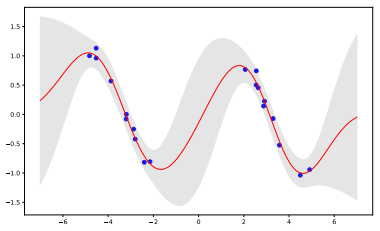
The load-bearing object is the additive kernel $k(x,x') = k_0 + \sum_{j=1}^p k_j(x_j,x_j')$, which makes a Gaussian Process take the generalized additive form $g(E[Y]) = \beta_0 + \sum_{j=1}^p f_j(x_j)$. Because each feature has its own independent kernel, the per-feature function $f_j(x_j)$ can be recovered and interpreted as a Shapley value, and it carries its own posterior variance, giving both interpretability and uncertainty quantification. The scalability mechanism is the rolling buffer: retraining on the most recent data plus randomly drawn historical data, with the recent-to-historical ratio a tunable hyperparameter, instead of retraining on the full dataset or learning sparse inducing points at every step.
What would settle it
Run the same pipeline on a timestamped stream of real URLs or network connections in chronological order, compare its F1 and AUC against an offline model retrained on all data, and measure the autocorrelation of labels and features. A material drop in performance, or a buffer that cannot track drift, would refute the claim.
Extended reading notes
Core claim
The central claim is that the rolling-buffer pipeline eases the scaling issue of AGPs "without incurring a significant loss in terms of model performance," in the paper's words. The demonstration is an online URL phishing classification problem: models are warmed up on an initial window, then updated with random batches of 50–100 new URLs, and optionally with uncertainty-based active learning that labels only the most uncertain samples. Across window proportions from roughly 10% to 100%, the AGP's F1 score stays close to those of a full GP, a Neural Additive Model, and a neural network, and at the reported 20% window its AUC is 0.952 versus 0.978 for the neural network. The AGP also concentrates its posterior variance on a small set of meaningful features—absence of HTTPS and absence of an anchor URL—while the neural additive model disperses its variance across many features, which the paper reads as evidence that NAM suffers from the over-confidence typical of deep networks. The paper positions AGP as the first inherently interpretable and uncertainty-aware model class applied to cyber-security online learning.
Load-bearing premise
Everything rests on the assumption that consecutive samples in the online stream are independent; real security traffic arrives in correlated bursts, so the reported numbers may not survive a chronological deployment.
Editorial extensions
If this is right
- At a window proportion of 20–30%, models keep most of their full-data F1, so the buffer defines a practical operating point for online retraining where the computational saving is large and the accuracy cost is small.
- AGP outputs can be read as per-feature Shapley contributions, so an analyst can see directly that missing HTTPS and missing anchor URLs drive phishing decisions, without running a post-hoc explainer.
- The posterior variance gives a principled acquisition function for active learning: labelling only 10–20% of each new batch maintains performance, lowering labelling cost.
- Because the GP posterior separates epistemic from aleatoric uncertainty, the model can flag out-of-sample inputs, something the neural baselines cannot do reliably.
- The additive-kernel construction extends naturally to regression and to pairwise interaction terms, so the pipeline is not limited to binary phishing detection.
Reading between the lines
- The rolling-buffer recipe is model-agnostic: any GP variant whose bottleneck is the $O(n^3)$ covariance inversion could be dropped into the same online loop, so the paper's scalability fix may carry over to sparse, deep, or multi-output GPs without new theory.
- The independence assumption is likely the first thing to break in deployment: real security event streams are autocorrelated, and the reported metrics come from randomly drawn batches, so a chronological re-run on real traffic is the natural stress test.
- The feature-specific variance signal suggests a cheap novelty detector: flag samples whose highest-variance feature shifts away from the features the model relies on, and route those to human analysts; this is a direct, testable use of the AGP output that the paper does not implement.
- If the result transfers, the main practical competitor is not the neural network but the Neural Additive Model, since NAM matches the interpretability at lower computational cost; the decisive advantage claimed for AGP is exactly the uncertainty quantification that NAM lacks, so deployment decisions hinge on how much that uncertainty is worth in practice.
Editorial analysis
A structured set of objections, weighed in public.
Referee Report
Summary. The paper proposes using Additive Gaussian Processes (AGPs) and Neural Additive Models (NAMs) for online supervised learning in cybersecurity, specifically phishing URL classification. The central claim is that a rolling buffer of recent plus randomly drawn historical data eases AGPs' cubic scaling without incurring significant performance loss (Abstract, §3.3), while retaining inherent interpretability and uncertainty quantification. The authors compare AGP, GP, NAM, and NN on a Kaggle phishing dataset (11,000+ URLs, 30 features) using ROC/AUC and F1 curves across varying window proportions and active-learning label budgets (§4). They also show feature-level contribution and variance plots (§4.4) to illustrate interpretability and uncertainty awareness.
Significance. If the central claim were fully supported, the paper would be a useful practical contribution: it would show that an inherently interpretable, uncertainty-aware model can be applied online to a cybersecurity task at competitive accuracy with a concrete mechanism (rolling buffer) to mitigate the main known drawback of full GPs. The paper explicitly provides code (Abstract), and the model family (AGPs) is standard and correctly cited to external work, so the methodological core is sound. However, the significance is currently limited by the evidence provided: the scalability claim is asserted without timing or complexity measurements, the performance claims lack error bars and statistical tests, and the active-learning experiment lacks a random baseline. The interpretability and uncertainty visualizations are interesting but qualitative. The paper contributes a plausible pipeline, yet the advertised advantages over standard GPs and over non-additive baselines are not rigorously demonstrated.
major comments (4)
- [§3.3, §4.3] The central scalability claim that the rolling buffer 'eases the scaling issue' of AGPs is never directly tested. The paper reports F1 versus window proportion (Fig. 6) and versus labelled batch proportion (Fig. 7), but no runtime, memory, or FLOPs measurements are presented, and there is no comparison against retraining on the full dataset. Since §2.1 states the O(n^3) cost of GPs, the reader cannot assess whether a 20% window (about 2,200 points) is actually manageable for online cyber-security workloads. This is a load-bearing omission: the abstract and conclusion both rest on the claimed computational improvement.
- [§4.2, Fig. 5] The statement that 'no largely statistically significant difference' exists between the models is unsupported: the AUC values (NN 0.978, GP 0.955, NAM 0.969, AGP 0.952) are single-run numbers with no error bars, confidence intervals, or statistical tests. The same issue affects Figs. 6 and 7, where F1 curves are shown without repeated seeds or variance estimates, so the claim of 'no significant losses' at small window proportions is not quantified.
- [§4.3, Fig. 7] The active-learning experiment does not include a random-labelling baseline. Without comparing uncertainty-sampling to randomly selecting labels from the new batch, the conclusion that 'uncertainty-based active sampling is able to select highly representative samples' is not established. The observed upward trend in F1 as the labelled proportion increases could equally occur with random selection.
- [§2, §4.1] The online-learning setup assumes consecutive samples are independent: '(xt, yt) is independent of (xt+1, yt+1)' (§2). However, the experiments explicitly draw 'a random batch of new URLs' (§4.1), which removes any temporal ordering present in the original dataset. Real security event streams are temporally correlated (e.g., campaign-style phishing attacks), so the reported F1/AUC and the rolling-buffer design may not transfer to actual online deployment. The manuscript provides no experiment with temporally ordered data, which weakens the claim of applicability to 'the dynamic learning environment' of cyber-security.
minor comments (5)
- [Eq. (1)] Equation (1) contains a typographical error: 'g(E[Y ]) = β0 + Pp j=1 fj(xj) = (1) = β0 + f1(x1) + ...' has a duplicated equals sign and an unnecessary '(1)=' fragment that should be removed.
- [§3] The statement that the input-specific functions fj(xj) can be interpreted 'as Shapley values' is imprecise. GAM components are additive feature contributions, but they are not the Shapley values of the underlying game in general; the connection requires additional assumptions. Either clarify the sense in which this holds or cite a source that establishes it.
- [§4.1] The experimental setup does not state how many runs are averaged for the F1 and AUC results, nor whether the same train/test splits are used across models. Reporting the number of independent repetitions and the variance of the metrics would substantially improve the paper.
- [Abstract] The abstract says 'The source code is available here' but the full text only says 'available here' without a visible URL. Please include an explicit link or repository identifier.
- [Fig. 5] The ROC curves in Fig. 5 are not labelled in the legend in a way that allows the reader to match each curve to the AUC values listed in the text; consider adding the AUC values directly to the legend.
Circularity Check
No significant circularity: the AGP formulation, GAM decomposition, and rolling-buffer experiments are not derived from the paper's own conclusions.
full rationale
The paper's central claims are (i) AGPs are inherently interpretable and uncertainty-aware, and (ii) a rolling buffer of recent plus randomly drawn historical data eases AGP scalability without significant performance loss. Neither claim is established by defining a quantity in terms of the target result. The AGP posterior and additive-kernel GAM decomposition in Sections 2.1 and 3.2 are standard results cited to external work (Duvenaud et al. 2011; Rasmussen & Williams 2006; Hastie 2017), and the per-feature contributions are model outputs interpreted as Shapley values, not fitted to the paper's conclusions. The rolling-buffer design in Section 3.3 is an empirical pipeline choice, not a parameter fitted to the F1 results, so Figures 6 and 7 compare independent model behaviours rather than restating an input. The author self-citations in Sections 1 and 5 are contextual and related-work references, and they do not carry the load of the scalability or performance arguments. The manuscript does contain evidential gaps: Section 4.2 states "no largely statistically significant difference" without reporting error bars or statistical tests, and Section 3.3 claims "computational feasibility" while no runtime or memory experiment is reported; Section 6 itself concedes that AGP computational complexity "remains a significant challenge". These are correctness and evidence concerns, not circular reductions, because no equation or fitted value is equivalent by construction to a reported prediction.
Assumptions & free parameters
free parameters (4)
- Window Proportion =
0.2 (default), varied in Figure 6
- Rolling buffer composition ratio =
not reported
- GP kernel hyperparameters =
not reported
- Network architectures and training hyperparameters for NN and NAM =
not reported
assumptions (5)
- domain assumption Consecutive samples in the online setting are independent
- standard math The additive kernel decomposition yields independent 1-D GP classifiers equivalent to the GAM form
- ad hoc to paper Rolling buffer with recent plus randomly drawn historical batches preserves global patterns
- standard math Sigmoid squashing of the GP latent function gives a valid probabilistic classification
- domain assumption The Kaggle URL dataset labels and 30 features are reliable proxies for real phishing data
Cite this review
Pith. "Pith review of Inherently Interpretable and Uncertainty-Aware Models for Online Learning in Cyber-Security Problems." pith.science (2026). https://pith.science/paper/6KOHJK7L
@misc{pith2026241109393,
  author       = {Pith},
  title        = {Pith review of: Inherently Interpretable and Uncertainty-Aware Models for Online Learning in Cyber-Security Problems},
  year         = {2026},
  howpublished = {\url{https://pith.science/paper/6KOHJK7L}},
  note         = {Machine review of arXiv:2411.09393}
}
read the original abstract
In this paper, we address the critical need for interpretable and uncertainty-aware machine learning models in the context of online learning for high-risk industries, particularly cyber-security. While deep learning and other complex models have demonstrated impressive predictive capabilities, their opacity and lack of uncertainty quantification present significant questions about their trustworthiness. We propose a novel pipeline for online supervised learning problems in cyber-security, that harnesses the inherent interpretability and uncertainty awareness of Additive Gaussian Processes (AGPs) models. Our approach aims to balance predictive performance with transparency while improving the scalability of AGPs, which represents their main drawback, potentially enabling security analysts to better validate threat detection, troubleshoot and reduce false positives, and generally make trustworthy, informed decisions. This work contributes to the growing field of interpretable AI by proposing a class of models that can be significantly beneficial for high-stake decision problems such as the ones typical of the cyber-security domain. The source code is available.
Figures


Figures from the paper (6 more)


Reference graph
Works this paper leans on
-
[1]
A review of uncertainty quantification in deep learning: Techniques, applications and challenges
Moloud Abdar, Farhad Pourpanah, Sadiq Hussain, Dana Rezazadegan, Li Liu, Mohammad Ghavamzadeh, Paul Fieguth, Xiaochun Cao, Abbas Khosravi, U Rajendra Acharya, et al. A review of uncertainty quantification in deep learning: Techniques, applications and challenges. Information fusion, 76:243–297, 2021
2021
-
[2]
Zakaria Abou El Houda, Bouziane Brik, and Lyes Khoukhi. “why should i trust your ids?”: An explainable deep learning framework for intrusion detection systems in internet of things networks. IEEE Open Journal of the Communications Society, 3:1164–1176, 2022. 11
work page 2022
-
[3]
Neural additive models: Interpretable machine learning with neural nets
Rishabh Agarwal, Levi Melnick, Nicholas Frosst, Xuezhou Zhang, Ben Lengerich, Rich Caruana, and Geoffrey E Hinton. Neural additive models: Interpretable machine learning with neural nets. Advances in neural information processing systems, 34:4699–4711, 2021
2021
-
[4]
On the effective- ness of machine and deep learning for cyber security
Giovanni Apruzzese, Michele Colajanni, Luca Ferretti, Alessandro Guido, and Mirco Marchetti. On the effective- ness of machine and deep learning for cyber security. In 2018 10th international conference on cyber Conflict (CyCon), pages 371–390. IEEE, 2018
work page 2018
-
[5]
Alejandro Barredo Arrieta, Natalia Díaz-Rodríguez, Javier Del Ser, Adrien Bennetot, Siham Tabik, Alberto Barbado, Salvador García, Sergio Gil-López, Daniel Molina, Richard Benjamins, et al. Explainable artificial intelligence (xai): Concepts, taxonomies, opportunities and challenges toward responsible ai. Information fusion, 58:82–115, 2020
work page 2020
-
[6]
Reward shaping for happier autonomous cyber security agents
Elizabeth Bates, Vasilios Mavroudis, and Chris Hicks. Reward shaping for happier autonomous cyber security agents. In Proceedings of the 16th ACM Workshop on Artificial Intelligence and Security, pages 221–232, 2023
work page 2023
-
[7]
A survey of deep learning methods for cyber security
Daniel S Berman, Anna L Buczak, Jeffrey S Chavis, and Cherita L Corbett. A survey of deep learning methods for cyber security. Information, 10(4):122, 2019
work page 2019
-
[8]
Machine learning explainability in finance: an application to default risk analysis
Philippe Bracke, Anupam Datta, Carsten Jung, and Shayak Sen. Machine learning explainability in finance: an application to default risk analysis. Bank of England Working Paper, 2019
work page 2019
Show all 57 references
-
[9]
The malicious use of artificial intelligence: Forecasting, prevention, and mitigation
Miles Brundage, Shahar Avin, Jack Clark, Helen Toner, Peter Eckersley, Ben Garfinkel, Allan Dafoe, Paul Scharre, Thomas Zeitzoff, Bobby Filar, et al. The malicious use of artificial intelligence: Forecasting, prevention, and mitigation. arXiv preprint arXiv:1802.07228, 2018
2018 arXiv
-
[10]
A survey of data mining and machine learning methods for cyber security intrusion detection
Anna L Buczak and Erhan Guven. A survey of data mining and machine learning methods for cyber security intrusion detection. IEEE Communications surveys & tutorials, 18(2):1153–1176, 2015
2015
-
[11]
A view on out-of-distribution identification from a statistical testing theory perspective
Alberto Caron, Chris Hicks, and Vasilios Mavroudis. A view on out-of-distribution identification from a statistical testing theory perspective. arXiv preprint arXiv:2405.03052, 2024
2024 arXiv
-
[12]
NODE-GAM: Neural generalized additive model for interpretable deep learning
Chun-Hao Chang, Rich Caruana, and Anna Goldenberg. NODE-GAM: Neural generalized additive model for interpretable deep learning. In International Conference on Learning Representations, 2022
2022
-
[13]
Explainable artificial intelligence for cybersecurity: a literature survey
Fabien Charmet, Harry Chandra Tanuwidjaja, Solayman Ayoubi, Pierre-François Gimenez, Yufei Han, Houda Jmila, Gregory Blanc, Takeshi Takahashi, and Zonghua Zhang. Explainable artificial intelligence for cybersecurity: a literature survey. Annals of Telecommunications, 77(11):78...
2022
-
[14]
The potential for artificial intelligence in healthcare
Thomas Davenport and Ravi Kalakota. The potential for artificial intelligence in healthcare. Future healthcare journal, 6(2):94–98, 2019
2019
-
[15]
Aleatory or epistemic? does it matter?Structural safety, 31(2):105–112, 2009
Armen Der Kiureghian and Ove Ditlevsen. Aleatory or epistemic? does it matter?Structural safety, 31(2):105–112, 2009
2009
-
[16]
Additive gaussian processes
David K Duvenaud, Hannes Nickisch, and Carl Rasmussen. Additive gaussian processes. Advances in neural information processing systems, 24, 2011
2011
-
[17]
Cyborg++: An enhanced gym for the development of autonomous cyber agents
Harry Emerson, Liz Bates, Chris Hicks, and Vasilios Mavroudis. Cyborg++: An enhanced gym for the development of autonomous cyber agents. arXiv preprint arXiv:2410.16324, 2024
2024 arXiv
-
[18]
Autonomous network defence using reinforce- ment learning
Myles Foley, Chris Hicks, Kate Highnam, and Vasilios Mavroudis. Autonomous network defence using reinforce- ment learning. In Proceedings of the 2022 ACM on Asia Conference on Computer and Communications Security, pages 1252–1254, 2022
2022
-
[19]
Inroads into autonomous network defence using explained reinforcement learning
Myles Foley, Mia Wang, Chris Hicks, Vasilios Mavroudis, et al. Inroads into autonomous network defence using explained reinforcement learning. arXiv preprint arXiv:2306.09318, 2023
2023 arXiv
-
[20]
Measuring network security using dynamic bayesian network
Marcel Frigault, Lingyu Wang, Anoop Singhal, and Sushil Jajodia. Measuring network security using dynamic bayesian network. In Proceedings of the 4th ACM workshop on Quality of protection, pages 23–30, 2008
2008
-
[21]
right to explanation
Bryce Goodman and Seth Flaxman. European union regulations on algorithmic decision-making and a “right to explanation”. AI magazine, 38(3):50–57, 2017
2017
-
[22]
On calibration of modern neural networks
Chuan Guo, Geoff Pleiss, Yu Sun, and Kilian Q Weinberger. On calibration of modern neural networks. In International conference on machine learning, pages 1321–1330. PMLR, 2017
2017
-
[23]
Theory of disagreement-based active learning
Steve Hanneke et al. Theory of disagreement-based active learning. Foundations and Trends® in Machine Learning, 7(2-3):131–309, 2014
2014
-
[24]
Generalized additive models
Trevor J Hastie. Generalized additive models. In Statistical models in S, pages 249–307. Routledge, 2017
2017
-
[25]
Autonomous cyber defence: Beyond games? Turing Technical Report, 2024
Chris Hicks and Vasilios Mavroudis. Autonomous cyber defence: Beyond games? Turing Technical Report, 2024. 12
2024
-
[26]
Canaries and whistles: Resilient drone communication networks with (or without) deep reinforcement learning
Chris Hicks, Vasilios Mavroudis, Myles Foley, Thomas Davies, Kate Highnam, and Tim Watson. Canaries and whistles: Resilient drone communication networks with (or without) deep reinforcement learning. In Proceedings of the 16th ACM Workshop on Artificial Intelligence and Securi...
2023
-
[27]
What uncertainties do we need in bayesian deep learning for computer vision? Advances in neural information processing systems, 30, 2017
Alex Kendall and Yarin Gal. What uncertainties do we need in bayesian deep learning for computer vision? Advances in neural information processing systems, 30, 2017
2017
-
[28]
Simple and scalable predictive uncertainty estimation using deep ensembles
Balaji Lakshminarayanan, Alexander Pritzel, and Charles Blundell. Simple and scalable predictive uncertainty estimation using deep ensembles. Advances in neural information processing systems, 30, 2017
2017
-
[29]
Deep neural networks as gaussian processes
Jaehoon Lee, Yasaman Bahri, Roman Novak, Samuel S Schoenholz, Jeffrey Pennington, and Jascha Sohl-Dickstein. Deep neural networks as gaussian processes. arXiv preprint arXiv:1711.00165, 2017
2017 arXiv
-
[30]
The mythos of model interpretability: In machine learning, the concept of interpretability is both important and slippery
Zachary C Lipton. The mythos of model interpretability: In machine learning, the concept of interpretability is both important and slippery. Queue, 16(3):31–57, 2018
2018
-
[31]
A unified approach to interpreting model predictions
Scott M Lundberg and Su-In Lee. A unified approach to interpreting model predictions. Advances in neural information processing systems, 30, 2017
2017
-
[32]
Explaining network intrusion detection system using explainable ai framework
Shraddha Mane and Dattaraj Rao. Explaining network intrusion detection system using explainable ai framework. arXiv preprint arXiv:2103.07110, 2021
2021 arXiv
-
[33]
An adversarial approach for explainable ai in intrusion detection systems
Daniel L Marino, Chathurika S Wickramasinghe, and Milos Manic. An adversarial approach for explainable ai in intrusion detection systems. In IECON 2018-44th Annual Conference of the IEEE Industrial Electronics Society, pages 3237–3243. IEEE, 2018
2018
-
[34]
Adaptive webpage fingerprinting from tls traces
Vasilios Mavroudis and Jamie Hayes. Adaptive webpage fingerprinting from tls traces. In 2023 53rd Annual IEEE/IFIP International Conference on Dependable Systems and Networks (DSN), pages 445–458. IEEE, 2023
2023
-
[35]
Interpretable machine learning
Christoph Molnar. Interpretable machine learning. Lulu. com, 2020
2020
-
[36]
Priors for infinite networks
Radford M Neal and Radford M Neal. Priors for infinite networks. Bayesian learning for neural networks, pages 29–53, 1996
1996
-
[37]
Dynamic security risk management using bayesian attack graphs
Nayot Poolsappasit, Rinku Dewri, and Indrajit Ray. Dynamic security risk management using bayesian attack graphs. IEEE Transactions on Dependable and Secure Computing, 9(1):61–74, 2011
2011
-
[38]
A unifying view of sparse approximate gaussian process regression
Joaquin Quinonero-Candela and Carl Edward Rasmussen. A unifying view of sparse approximate gaussian process regression. The Journal of Machine Learning Research, 6:1939–1959, 2005
1939
-
[39]
Neural basis models for interpretability
Filip Radenovic, Abhimanyu Dubey, and Dhruv Mahajan. Neural basis models for interpretability. Advances in Neural Information Processing Systems, 35:8414–8426, 2022
2022
-
[40]
Uncertainty quantification and deep ensembles
Rahul Rahaman et al. Uncertainty quantification and deep ensembles. Advances in Neural Information Processing Systems, 34:20063–20075, 2021
2021
-
[41]
A survey of deep active learning
Pengzhen Ren, Yun Xiao, Xiaojun Chang, Po-Yao Huang, Zhihui Li, Brij B Gupta, Xiaojiang Chen, and Xin Wang. A survey of deep active learning. ACM computing surveys (CSUR), 54(9):1–40, 2021
2021
-
[42]
why should i trust you?
Marco Tulio Ribeiro, Sameer Singh, and Carlos Guestrin. " why should i trust you?" explaining the predictions of any classifier. In Proceedings of the 22nd ACM SIGKDD international conference on knowledge discovery and data mining, pages 1135–1144, 2016
2016
-
[43]
Toward optimal active learning through monte carlo estimation of error reduction
Nicholas Roy and Andrew McCallum. Toward optimal active learning through monte carlo estimation of error reduction. Icml, williamstown, 2(441-448):4, 2001
2001
-
[44]
Stop explaining black box machine learning models for high stakes decisions and use interpretable models instead
Cynthia Rudin. Stop explaining black box machine learning models for high stakes decisions and use interpretable models instead. Nature machine intelligence, 1(5):206–215, 2019
2019
-
[45]
Interpretable machine learning: Fundamental principles and 10 grand challenges
Cynthia Rudin, Chaofan Chen, Zhi Chen, Haiyang Huang, Lesia Semenova, and Chudi Zhong. Interpretable machine learning: Fundamental principles and 10 grand challenges. Statistic Surveys, 16:1–85, 2022
2022
-
[46]
Active learning literature survey.University of Wisconsin-Madison Department of Computer Sciences, 2009
Burr Settles. Active learning literature survey.University of Wisconsin-Madison Department of Computer Sciences, 2009
2009
-
[47]
Query by committee
H Sebastian Seung, Manfred Opper, and Haim Sompolinsky. Query by committee. In Proceedings of the fifth annual workshop on Computational learning theory, pages 287–294, 1992
1992
-
[48]
A value for n-person games
Lloyd S Shapley. A value for n-person games. In Harold W. Kuhn and Albert W. Tucker, editors,Contributions to the Theory of Games II, pages 307–317. Princeton University Press, Princeton, 1953
1953
-
[49]
Outside the closed world: On using machine learning for network intrusion detection
Robin Sommer and Vern Paxson. Outside the closed world: On using machine learning for network intrusion detection. In 2010 IEEE symposium on security and privacy, pages 305–316. IEEE, 2010. 13
2010
-
[50]
Entity-based reinforcement learning for autonomous cyber defence
Isaac Symes Thompson, Alberto Caron, Chris Hicks, and Vasilios Mavroudis. Entity-based reinforcement learning for autonomous cyber defence. arXiv preprint arXiv:2410.17647, 2024
2024 arXiv
-
[51]
An explainable machine learning framework for intrusion detection systems
Maonan Wang, Kangfeng Zheng, Yanqing Yang, and Xiujuan Wang. An explainable machine learning framework for intrusion detection systems. IEEE Access, 8:73127–73141, 2020
2020
-
[52]
Gaussian processes for machine learning, volume 2
Christopher KI Williams and Carl Edward Rasmussen. Gaussian processes for machine learning, volume 2. MIT press Cambridge, MA, 2006
2006
-
[53]
Using bayesian networks for cyber security analysis
Peng Xie, Jason H Li, Xinming Ou, Peng Liu, and Renato Levy. Using bayesian networks for cyber security analysis. In 2010 IEEE/IFIP International Conference on Dependable Systems & Networks (DSN), pages 211–220. IEEE, 2010
2010
-
[54]
Generalized out-of-distribution detection: A survey
Jingkang Yang, Kaiyang Zhou, Yixuan Li, and Ziwei Liu. Generalized out-of-distribution detection: A survey. International Journal of Computer Vision, pages 1–28, 2024
2024
-
[55]
Interpretable probabilistic bayesian neural networks for cybersecu- rity intrusion detection
Tengfei Yang, Yuansong Qiao, and Brian Lee. Interpretable probabilistic bayesian neural networks for cybersecu- rity intrusion detection. IEEE Access, 2024
2024
-
[56]
Towards trustworthy cybersecurity operations using bayesian deep learning to improve uncertainty quantification of anomaly detection
Tengfei Yang, Yuansong Qiao, and Brian Lee. Towards trustworthy cybersecurity operations using bayesian deep learning to improve uncertainty quantification of anomaly detection. Computers & Security, page 103909, 2024
2024
-
[57]
Gaussian process neural additive models
Wei Zhang, Brian Barr, and John Paisley. Gaussian process neural additive models. In Proceedings of the AAAI Conference on Artificial Intelligence, volume 38, pages 16865–16872, 2024. 14
2024
Reviewed August 12, 2026 · model on record in the stance chip above.
Discussion (0). Continue with ORCID to comment.