REVIEW 2 major objections 6 minor 49 references
Magnetising de Sitter and Anti-de Sitter spacetimes
T0 review · 2 major / 6 minor · reviewed 2026-07-14 · grok-4.5
Pith's one-line read A Harrison-style map turns spherical (A)dS into a Melvin-type magnetic universe once a pure cosmological constant is replaced by an anisotropic fluid.
desk verdict Clean spherical Melvin-(A)dS solution via a known Harrison map on an anisotropic fluid; fills a real technical gap, exotic-matter price for dS is stated openly. read the letter →
The pith
A machine-rendered reading of the paper's core claim, the machinery that carries it, and where it could break.
The reading
What carries the argument
The Harrison-like transformation (3.15) that acts on the seed data (U, ρ, p, p_σ) of an anisotropic fluid with equation of state ρ = −p = −p_σ = Λ/8π, producing new functions (U′, χ′, ρ′, p′, p_σ′, J′) that continue to satisfy the Einstein–Maxwell–fluid equations.
What would settle it
Direct substitution of the metric, Maxwell field and fluid (3.19) into the Einstein–Maxwell–fluid equations (3.2) either confirms they hold identically or produces a non-vanishing residual, immediately falsifying the central claim.
Extended reading notes
Core claim
The metric, gauge potential and anisotropic fluid written in equations (3.19a–d) solve the Einstein–Maxwell–fluid system, reduce exactly to spherical (A)dS when the magnetic parameter B is set to zero, and reduce to the Melvin universe when the fluid parameter Λ is set to zero. The same functions are obtained from an ordinary (A)dS seed by a Harrison-type map that simultaneously rescales the fluid density and pressures.
Load-bearing premise
A pure cosmological constant can be replaced by an anisotropic fluid with the dark-energy equation of state without changing what the seed spacetime physically means; the pure-Λ term alone breaks the Harrison symmetry.
Editorial extensions
If this is right
- Spherical black holes can be immersed in the same magnetised (A)dS background simply by adding a mass term to the metric function f.
- Equatorial null and time-like geodesics admit outer-most stable circular orbits whose locations are fixed by the competition between magnetic well and cosmological repulsion.
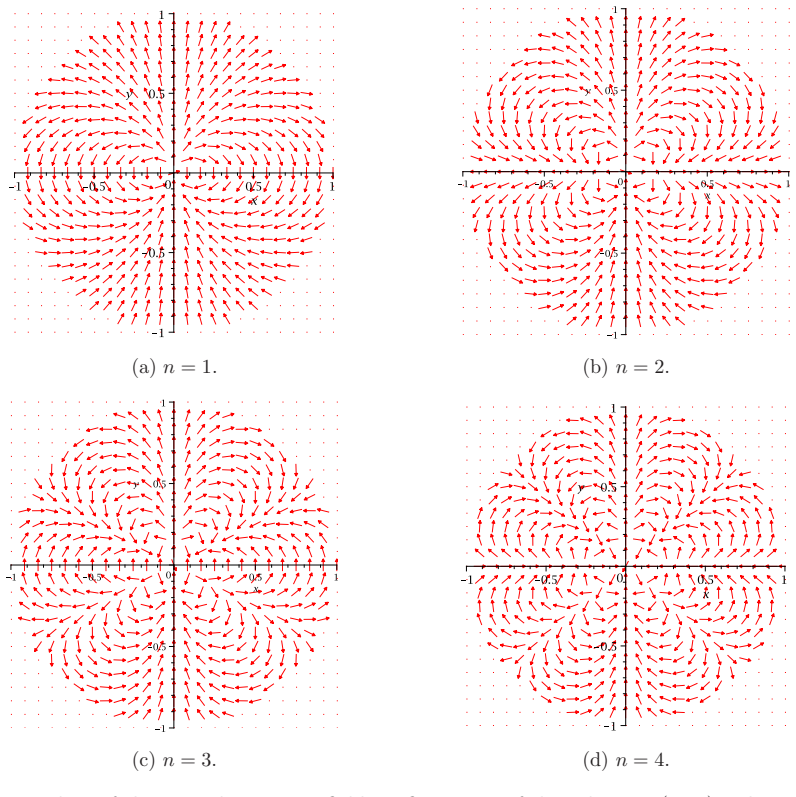
- Total magnetic flux through the static patch of de Sitter is finite and equals πBℓ^{2}/(1+¼B^{2}ℓ^{2}); the AdS total flux is 4π/B.
- The magnetised de-Sitter solution requires exotic matter that violates the null energy condition, while the AdS counterpart does not.
Reading between the lines
- The same fluid-supported Harrison map should magnetise any static spherical solution whose stress-energy is of anisotropic-fluid form, including polytropic stars and multi-polytropic black holes already studied in the literature.
- Because the construction works in spherical slicing, it opens a route to magnetised Schwarzschild–de Sitter and Kerr–de Sitter geometries that planar Melvin-AdS solutions cannot accommodate.
- The analytic form of the effective potential for equatorial geodesics suggests that closed-form solutions of the geodesic equations may be obtainable by standard elliptic-function methods.
Editorial analysis
A structured set of objections, weighed in public.
Referee Report
Summary. The paper constructs spherical-symmetry magnetised analogues of de Sitter and Anti-de Sitter by two routes. First it solves the source-free Maxwell equation on fixed (A)dS backgrounds, obtaining magnetic multipoles and a Killing-vector solution that requires a current proportional to Λ. Second, for strong fields, it works in Einstein–Maxwell–fluid gravity: an anisotropic fluid with equation of state that reduces to an effective cosmological constant is subjected to a Harrison-type map (3.15), producing the explicit metric, gauge potential and fluid variables (3.19a–d). The solution recovers ordinary spherical (A)dS when B = 0 and the Melvin universe when Λ = 0. Horizon area and surface gravity, curvature invariants, flux, energy densities and equatorial null/time-like geodesics are analysed; a Schwarzschild-type generalisation is noted.
Significance. The work closes a genuine gap: existing Λ-Melvin solutions are either planar (AdS) or lack a cosmological horizon and a smooth zero-field limit (dS). The spherical construction is obtained by a clean, algebraic solution-generating procedure whose seed and transformed quantities satisfy the reduced Einstein–Maxwell–fluid equations by direct substitution. Limits, flux formulae and geodesic effective potentials are computed explicitly and reduce correctly to known Melvin and (A)dS results. The modelling price—an anisotropic fluid rather than a pure cosmological-constant term—is stated openly, including the NEC violation for Λ > 0. Within Einstein–Maxwell–fluid gravity the result is a useful, controllable family of magnetised (A)dS-type spacetimes that can host spherical black holes.
major comments (2)
- Abstract and §1 frame the result as magnetising dS/AdS, yet the pure cosmological-constant term breaks the Harrison symmetry (Eqs. 3.13). The actual theory is Einstein–Maxwell–fluid with ρ = −p = −p_σ = Λ/8π (and the subsequent rescalings (3.15)). This modelling choice is explained in §3.1 and the NEC violation for Λ > 0 is recorded in (4.7), but the abstract and introduction should state the fluid replacement more prominently so that the claim is not read as a pure Einstein–Maxwell–Λ solution.
- §3.1–3.2: The transformation rules (3.15) are asserted to map solutions of (3.14) into solutions of (3.7) by direct verification, but no intermediate identities or appendix check is supplied. Because the central claim rests on this map, a short verification sketch (or an explicit statement that the algebra has been machine-checked) would strengthen reproducibility.
minor comments (6)
- Abstract and opening sentence of §6: “Some of its physical and geometrical properties of the solution are studied” is ungrammatical; rephrase.
- §3.1, paragraph after (3.10): “vaccum solution” → “vacuum solution”.
- §1 and references: “quitessential matter” → “quintessential matter”.
- Figures 1–4: axes are labelled in units of ℓ or L, but the colour/arrow scale for |B| is not given; a brief caption note would help.
- Eq. (3.20) and surrounding text: the conversion between geometric B and laboratory b is useful; a one-line remark on the units of the flux formulae (4.9)–(4.11) would make the comparison with Kastor–Traschen clearer.
- §5: only equatorial geodesics are treated. A short remark that off-equatorial motion is left for future work (or a citation to methods that could handle it) would set expectations.
Circularity Check
No significant circularity: constructive Harrison-type generating map applied to an explicitly chosen fluid seed that preserves the symmetry.
full rationale
The central claim is that the metric, gauge field and fluid of Eqs. (3.19a–d) solve the Einstein–Maxwell–fluid system (3.2) and recover spherical (A)dS for B=0 and Melvin for Λ=0. This follows by direct algebraic application of the map (3.15) to any seed satisfying (3.14); the (A)dS seed is simply the special case with constant ρ=−p=−pσ=Λ/8π. The pure-Λ term is deliberately replaced by the fluid precisely because it would break the Harrison symmetry (explicitly shown in (3.13)), and the resulting NEC violation for Λ>0 is stated openly in (4.7). No parameters are fitted to data, no uniqueness theorem is imported from the authors’ prior work, and no quantity is redefined as a prediction of itself. Weak-field multipoles and Killing-vector solutions in Sec. 2 are independent of the strong-field construction. The derivation is therefore self-contained and non-circular.
Assumptions & free parameters
free parameters (2)
- B (magnetic field strength)
- Λ (fluid / cosmological parameter)
assumptions (3)
- domain assumption Einstein–Maxwell equations coupled to an anisotropic fluid with energy-momentum tensor (3.4).
- ad hoc to paper A pure cosmological-constant term may be replaced by a fluid with ρ = −p = −p_σ = Λ/8π without altering the geometric interpretation of the seed.
- standard math The Harrison transformation (3.9) together with the fluid rescalings (3.15) maps solutions of the reduced equations (3.14) to solutions of (3.7).
invented entities (1)
-
Anisotropic fluid with equation of state that reduces to an effective cosmological constant
Cite this review
Pith. "Pith review of Magnetising de Sitter and Anti-de Sitter spacetimes." pith.science (2026). https://pith.science/paper/7EAZL2GJ
@misc{pith2026260710213,
  author       = {Pith},
  title        = {Pith review of: Magnetising de Sitter and Anti-de Sitter spacetimes},
  year         = {2026},
  howpublished = {\url{https://pith.science/paper/7EAZL2GJ}},
  note         = {Machine review of arXiv:2607.10213}
}
read the original abstract
We attempt to magnetise the de Sitter (dS) and Anti-de Sitter (AdS) spacetimes in spherical symmetry. First, the weak field case is considered where Maxwell's equation is solved to find magnetic fields in fixed dS/AdS backgrounds. For strong magnetic fields we consider Einstein-Maxwell gravity with a gravitating fluid source. With gravitational backreaction of the magnetic field taken into account, the strong fields deform the dS/AdS spacetime, resulting in a dS/AdS-type analogue of the Melvin magnetic universe. This solution is obtained via a Harrison-like transformation, along with appropriate transformations of the fluid energy and pressures. Some of its physical and geometrical properties of the solution are studied.
Figures


Figures from the paper (6 more)


Reference graph
Works this paper leans on
-
[1]
M. A. Melvin, Pure magnetic and electric geons , Phys. Lett. 8 (1964) 65–70
1964
-
[2]
W. B. Bonnor, Static Magnetic Fields in General Relativity , Proc. Phys. Soc. A 67 (1954) 225–232
1954
-
[3]
Misra and L
M. Misra and L. Radhakrishna, Some electromagnetic fields of cylindrical symmetry , in Proc. Natl. Inst. Sci. India, Pt. A , vol. 28, Banaras Hindu Univ., India, 1962
1962
-
[4]
B. K. Harrison, New Solutions of the Einstein-Maxwell Equations from Old , J. Math. Phys. 9 (1968), no. 11 1744
1968
-
[5]
F. J. Ernst, Black holes in a magnetic universe , J. Math. Phys. 17 (1976), no. 1 54–56
1976
- [6]
-
[7]
E. Radu and R. J. Slagter, Melvin solution with a dilaton potential , Class. Quant. Grav. 21 (2004) 2379–2391, [ gr-qc/0311075]
arXiv 2004
-
[8]
M. Agop, E. Radu, and R. Slagter, On Ernst black holes with a dilaton potential , Mod. Phys. Lett. A 20 (2005) 1077–1085
2005
Show all 49 references
-
[9]
Lim, Weyl-type solutions with multipolar scalar fields , Eur
Y.-K. Lim, Weyl-type solutions with multipolar scalar fields , Eur. Phys. J. C 86 (2026), no. 4 366, [ arXiv:2604.08951]
2026 arXiv
-
[10]
Ortaggio, Higher dimensional black holes in external magnetic fields , JHEP 05 (2005) 048, [ gr-qc/0410048]
M. Ortaggio, Higher dimensional black holes in external magnetic fields , JHEP 05 (2005) 048, [ gr-qc/0410048]
2005 arXiv
-
[11]
S. S. Yazadjiev, Magnetized black holes and black rings in the higher dimensi onal dilaton gravity, Phys. Rev. D 73 (2006) 064008, [ gr-qc/0511114]
2006 arXiv
-
[12]
Ben Achour, A
J. Ben Achour, A. Cisterna, A. D ´ ıaz, and K. M¨ uller,Magnetized dynamical black holes , arXiv:2601.08628
-
[13]
A. A. Golubtsova and V. D. Ivashchuk, On multidimensional analogs of Melvin ’s solution for classical series of Lie algebras , Grav. Cosmol. 15 (2009) 144–147, [ arXiv:1009.3667]
2009 arXiv
-
[14]
S. V. Bolokhov and V. D. Ivashchuk, On generalized Melvin solutions for Lie algebras of rank 3 , J. Phys. Conf. Ser. 1390 (2019), no. 1 012093
2019
-
[15]
S. V. Bolokhov and V. D. Ivashchuk, On generalized Melvin solutions for Lie algebras of rank 4 , Eur. Phys. J. Plus 136 (2021), no. 2 225, [ arXiv:1912.08083]
2021 arXiv
-
[16]
Bini and B
D. Bini and B. Mashhoon, Static and dynamic Melvin universes , Phys. Rev. D 105 (2022), no. 12 124012, [ arXiv:2202.02033]
2022 arXiv
-
[17]
Bouzenada, A
A. Bouzenada, A. Boumali, and F. Ahmed, Dynamics of spin-0 (particles-antiparticles) in Bonnor-Melvin cosmological space-time using the Generali zed Feshbach-Villars transformation, Nucl. Phys. B 1007 (2024) 116682, [ arXiv:2404.10791]. 29
2024 arXiv
-
[18]
L. B. Castro, A. E. Obispo, and A. G. Jir´ on, Charged scalar bosons in a Bonnor–Melvin- Λ universe at conical approximation , Eur. Phys. J. C 84 (2024), no. 5 536, [arXiv:2405.09471]
2024 arXiv
-
[19]
C. G. Tsagas and P. Mavrogiannis, Melvin’s ‘magnetic universe’, the role of the magnetic tension and the implications for gravitational collapse , Class. Quant. Grav. 38 (2021), no. 19 195020, [ arXiv:2011.08245]
2021 arXiv
-
[20]
Cardoso and J
V. Cardoso and J. Nat´ ario, An exact solution describing a scalar counterpart to the Schwarzschild-Melvin Universe , arXiv:2410.02851
-
[21]
C. A. R. Herdeiro, Black holes in scalar multipolar universes , Phys. Lett. B 860 (2025) 139160, [ arXiv:2410.12950]
2025 arXiv
-
[22]
ˇZofka, Bonnor-Melvin universe with a cosmological constant , Phys
M. ˇZofka, Bonnor-Melvin universe with a cosmological constant , Phys. Rev. D 99 (2019), no. 4 044058, [ arXiv:1903.08563]
2019 arXiv
-
[23]
Vesel´ y and M
J. Vesel´ y and M. ˇZofka, Cosmological magnetic field: The boost-symmetric case , Phys. Rev. D 100 (2019), no. 4 044059, [ arXiv:2104.02123]
2019 arXiv
-
[24]
Vesel´ y and M
J. Vesel´ y and M. ˇZofka, Cylindrical spacetimes due to radial magnetic fields , Phys. Rev. D 103 (2021), no. 2 024048, [ arXiv:2104.01557]
2021 arXiv
-
[25]
Vesel´ y,Exact spacetimes and their physical properties
J. Vesel´ y,Exact spacetimes and their physical properties . PhD thesis, Charles U., Prague (main), 2022
2022
-
[26]
Ahmed, N
F. Ahmed, N. Candemir, and A. Bouzenada, Fermionic fields in a four-dimensional Λ Bonnor–Melvin space–time, Theor. Math. Phys. 222 (2025), no. 1 170–182, [arXiv:2503.06675]
2025 arXiv
-
[27]
Astorino, Charging axisymmetric space-times with cosmological const ant, JHEP 06 (2012) 086, [ arXiv:1205.6998]
M. Astorino, Charging axisymmetric space-times with cosmological const ant, JHEP 06 (2012) 086, [ arXiv:1205.6998]
2012 arXiv
-
[28]
Havrdov´ a and P
L. Havrdov´ a and P. Krtouˇ s,Melvin universe as a limit of the C-metric , Gen. Rel. Grav. 39 (2007) 291–296, [ gr-qc/0611092]
2007 arXiv
-
[29]
Lim, Electric or magnetic universe with a cosmological constant , Phys
Y.-K. Lim, Electric or magnetic universe with a cosmological constant , Phys. Rev. D 98 (2018), no. 8 084022, [ arXiv:1807.07199]
2018 arXiv
-
[30]
Kastor and J
D. Kastor and J. Traschen, Geometry of AdS-Melvin Spacetimes , Class. Quant. Grav. 38 (2021), no. 4 045016, [ arXiv:2009.14771]
2021 arXiv
-
[31]
Toh, Y.-T
Y.-X. Toh, Y.-T. Chin, E. Q. Wu, and Y.-K. Lim, Properties of the magnetic Universe with positive cosmological constant , Class. Quant. Grav. 42 (2025), no. 17 177001, [arXiv:2509.01374]
2025 arXiv
-
[32]
Herdeiro and E
C. Herdeiro and E. Radu, Anti-de-Sitter regular electric multipoles: Towards Einstein–Maxwell-AdS solitons , Phys. Lett. B 749 (2015) 393–398, [ arXiv:1507.04370]
2015 arXiv
-
[33]
R. M. Wald, Black hole in a uniform magnetic field , Phys. Rev. D 10 (1974) 1680–1685. 30
1974
-
[34]
S. S. Yazadjiev, Charged perfect fluid configurations with a dilaton field , Mod. Phys. Lett. A 20 (2005) 821–831, [ gr-qc/0411132]
2005 arXiv
-
[35]
S. S. Yazadjiev, Exact dark energy star solutions , Phys. Rev. D 83 (2011) 127501, [arXiv:1104.1865]
2011 arXiv
-
[36]
Stelea, M.-A
C. Stelea, M.-A. Dariescu, and C. Dariescu, Magnetized anisotropic stars , Phys. Rev. D 97 (2018), no. 10 104059, [ arXiv:1804.08075]
2018 arXiv
-
[37]
Lungu, M.-A
V. Lungu, M.-A. Dariescu, and C. Stelea, Charged particles orbiting a magnetized black hole immersed in quintessential matter , Phys. Rev. D 111 (2025), no. 6 064014, [arXiv:2405.14420]
2025 arXiv
-
[38]
Lungu, M.-A
V. Lungu, M.-A. Dariescu, and C. Stelea, Particle dynamics around an electrically charged Kiselev black hole embedded in quintessence , Nucl. Phys. B 1025 (2026) 117415, [arXiv:2508.04577]
2026 arXiv
-
[39]
Al-Badawi, F
A. Al-Badawi, F. Ahmed, ˙I. Sakallı, and S. Shaymatov, Magnetized Letelier black hole in AdS spacetime, arXiv:2505.09156
-
[40]
M. S. Costa, L. Greenspan, M. Oliveira, J. Penedones, an d J. E. Santos, Polarised Black Holes in AdS , Class. Quant. Grav. 33 (2016), no. 11 115011, [ arXiv:1511.08505]
2016 arXiv
-
[41]
Geroch, A Method for Generating Solutions of Einstein ’s Equations , J
R. Geroch, A Method for Generating Solutions of Einstein ’s Equations , J. Math. Phys. 12 (1971), no. 6 918–924
1971
-
[42]
Lim and M
Y.-K. Lim and M. Nisse, Light-ring pairs from A-discriminantal varieties , Phys. Rev. D 104 (2021), no. 10 104012, [ arXiv:2107.07652]
2021 arXiv
-
[43]
K. S. Thorne, Absolute Stability of Melvin ’s Magnetic Universe , Phys. Rev. 139 (1965) B244
1965
-
[44]
Karas and D
V. Karas and D. Vokrouhlicky, Test particle motion around a magnetised Schwarzschild black hole , Class. Quant. Grav. 7 (1990), no. 3 391
1990
-
[45]
Lim, Motion of charged particles around a magnetized/electrifie d black hole , Phys
Y.-K. Lim, Motion of charged particles around a magnetized/electrifie d black hole , Phys. Rev. D 91 (2015), no. 2 024048, [ arXiv:1502.00722]
2015 arXiv
-
[46]
Hackmann, V
E. Hackmann, V. Kagramanova, J. Kunz, and C. Lammerzahl , Analytic solutions of the geodesic equation in higher dimensional static sphericall y symmetric space-times , Phys. Rev. D 78 (2008) 124018, [ arXiv:0812.2428]. [Addendum: Phys.Rev.D 79, 029901 (2009)]
2008 arXiv
-
[47]
Hackmann and C
E. Hackmann and C. Lammerzahl, Geodesic equation in Schwarzschild- (anti-) de Sitter space-times: Analytical solutions and applications , Phys. Rev. D 78 (2008) 024035, [arXiv:1505.07973]
2008 arXiv
-
[48]
Kottler, ¨Uber die physikalischen Grundlagen der Einsteinschen Grav itationstheorie, Annalen Phys
F. Kottler, ¨Uber die physikalischen Grundlagen der Einsteinschen Grav itationstheorie, Annalen Phys. 361 (1918), no. 14 401–462. 31
1918
-
[49]
S. N. Sajadi, S. Ponglertsakul, and O. Luongo, Constructing black holes from multi-polytropic equations of state , Phys. Dark Univ. 48 (2025) 101938, [arXiv:2502.02098]. 32
2025 arXiv
Reviewed July 14, 2026 · model on record in the stance chip above.
Discussion (0). Continue with ORCID to comment.