Thermal and Optical Signatures of Einstein-Dyonic ModMax Black Holes with GUP and Plasma Modifications
Pith reviewed 2026-05-18 23:28 UTC · model grok-4.3
The pith
GUP corrections to Einstein-Dyonic-ModMax black holes may produce stable remnants after Hawking evaporation
A machine-rendered reading of the paper's core claim, the machinery that carries it, and where it could break.
Core claim
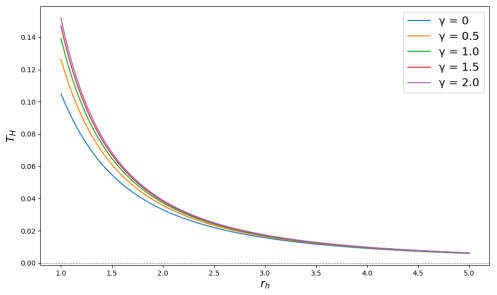
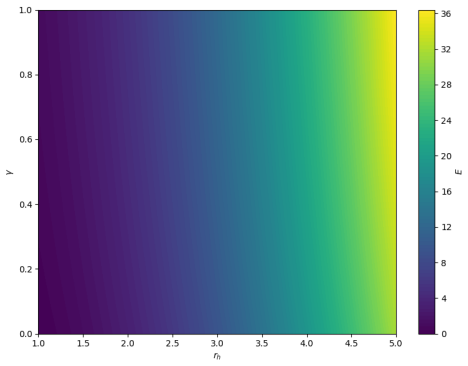
Applying the Hamilton-Jacobi tunneling formalism to the GUP-modified geometry of Einstein-Dyonic-ModMax black holes produces a Hawking radiation spectrum whose modifications by the Generalized Uncertainty Principle can halt evaporation at a stable remnant mass; simultaneously, the Gauss-Bonnet theorem applied to light rays in plasma yields deflection angles that depend sensitively on the ModMax parameter γ and plasma frequency, while quantum-corrected entropy leads to thermodynamic quantities including heat capacity that undergo second-order phase transitions at γ-dependent critical points.
What carries the argument
The Hamilton-Jacobi tunneling formalism, which computes the modified tunneling probability and Hawking temperature in the presence of GUP corrections to the EDM black hole metric.
If this is right
- GUP-modified tunneling probabilities lead to a corrected Hawking temperature that permits stable black hole remnants.
- Light deflection angles computed in vacuum and plasma media depend on the ModMax nonlinearity parameter γ and plasma density.
- Frequency-dependent lensing modifications in axion-plasmon environments may provide observable signatures of dark matter.
- Quantum-corrected heat capacity exhibits second-order phase transitions whose critical points vary with the value of γ.
- Classical ModMax electrodynamics satisfies null and weak energy conditions, but near-horizon violations emerge after quantum entropy corrections.
Where Pith is reading between the lines
- The existence of stable remnants could preserve quantum information that would otherwise be lost during complete evaporation.
- The plasma-dependent lensing predictions might be probed through radio observations of black hole shadows or strong lensing events.
- The shifting critical points in thermodynamic phase transitions indicate that quantum corrections can induce critical behavior similar to that seen in condensed matter systems.
- Incorporating these modifications into models of astrophysical black holes could lead to revised predictions for their accretion disk emissions and stability.
Load-bearing premise
The Hamilton-Jacobi tunneling formalism remains valid when applied to the spacetime of Einstein-Dyonic-ModMax black holes after GUP corrections and plasma effects are included.
What would settle it
A direct observation of a black hole remnant whose mass is bounded below by the Planck scale set by the GUP parameter, or precise measurements of light deflection angles around a supermassive black hole that exhibit the predicted dependence on a nonlinearity parameter.
Figures





read the original abstract
We explore the thermodynamic and optical properties of Einstein-Dyonic-ModMax (EDM) black holes (BHs), incorporating quantum gravity corrections and plasma effects. The ModMax theory promotes the classical Maxwell theory to a non-linear electrodynamics with a larger symmetry structure (electromagnetic duality plus conformal invariance), and provides dyonic BH solutions characterized by both electric and magnetic charges modulated by the nonlinearity parameter $\gamma$. Using the Hamilton-Jacobi tunneling formalism, we derive the Hawking radiation spectrum and demonstrate how the Generalized Uncertainty Principle (GUP) modifies the thermal emission, potentially leading to stable remnants. Our analysis of gravitational lensing employs the Gauss-Bonnet theorem to compute light deflection angles in both vacuum and plasma environments, revealing strong dependencies on the ModMax parameter and plasma density. We extend this to axion-plasmon environments, uncovering frequency-dependent modifications that could serve as dark matter signatures. The photon motion analysis in plasma media shows how the exponential damping term $e^{-\gamma}$ affects electromagnetic backreaction on spacetime geometry. We compute quantum-corrected thermodynamic quantities, including internal energy, Helmholtz free energy, pressure, and heat capacity, using exponentially modified entropy models. The heat capacity exhibits second-order phase transitions with critical points shifting as functions of $\gamma$, indicating rich thermodynamic phase structures. The energy condition analysis shows that classical ModMax electrodynamics satisfies the null and weak energy conditions, while the observed near-horizon violations arise only after incorporating quantum-corrected entropy effects.
Editorial analysis
A structured set of objections, weighed in public.
Referee Report
Summary. The paper explores thermodynamic and optical properties of Einstein-Dyonic-ModMax black holes incorporating GUP quantum corrections and plasma effects. It uses the Hamilton-Jacobi tunneling formalism to derive a GUP-modified Hawking radiation spectrum claimed to produce stable remnants, applies the Gauss-Bonnet theorem to compute light deflection angles in vacuum and plasma (including axion-plasmon media), computes quantum-corrected thermodynamic quantities (internal energy, free energy, pressure, heat capacity) via exponentially modified entropy models, identifies second-order phase transitions whose critical points depend on the ModMax parameter γ, and analyzes energy conditions with near-horizon violations attributed to quantum entropy corrections.
Significance. If the core derivations hold, the results would offer a concrete parameter space (γ, GUP deformation, plasma density) for studying how nonlinear electrodynamics and quantum gravity corrections jointly affect black-hole remnants, phase structure, and lensing observables, potentially linking to dark-matter signatures via frequency-dependent axion-plasmon effects. The explicit inclusion of both electric and magnetic charges modulated by ModMax nonlinearity is a strength relative to purely electric cases.
major comments (2)
- [Hawking radiation / tunneling section] The Hamilton-Jacobi tunneling calculation applies the standard eikonal equation directly to the classical EDM metric; no re-derivation of the WKB ansatz or dispersion relation under the GUP-deformed algebra [x,p]=iħ(1+βp²) is shown. Consequently the claimed modification to the Hawking spectrum and the existence of stable remnants rest on an unverified hybrid construction rather than a consistent semi-classical derivation.
- [Thermodynamic quantities and heat capacity] Exponentially modified entropy models are introduced by hand to encode GUP effects; the resulting heat-capacity critical points and second-order phase-transition locations therefore shift parametrically with the GUP deformation parameter rather than emerging from a first-principles modification of the action or metric. This renders the thermodynamic phase-structure claims dependent on the ad-hoc functional form chosen for the entropy correction.
minor comments (2)
- [Energy conditions] The abstract and energy-condition discussion state that near-horizon violations appear only after quantum-corrected entropy is included, yet no explicit limiting-case check (e.g., γ→0 or β→0) is referenced to confirm recovery of the standard ModMax or Reissner-Nordström results.
- [Optical properties / lensing] Notation for the plasma frequency and axion-plasmon coupling is introduced without a dedicated table or equation reference; readers must infer the precise functional dependence of the deflection angle on these quantities from the surrounding text.
Simulated Author's Rebuttal
We thank the referee for their careful reading of the manuscript and for the constructive major comments. We address each point below with clarifications on our methodology and indicate the revisions that will be incorporated.
read point-by-point responses
-
Referee: [Hawking radiation / tunneling section] The Hamilton-Jacobi tunneling calculation applies the standard eikonal equation directly to the classical EDM metric; no re-derivation of the WKB ansatz or dispersion relation under the GUP-deformed algebra [x,p]=iħ(1+βp²) is shown. Consequently the claimed modification to the Hawking spectrum and the existence of stable remnants rest on an unverified hybrid construction rather than a consistent semi-classical derivation.
Authors: We appreciate the referee highlighting this aspect of the presentation. The GUP correction is incorporated via the standard modified dispersion relation arising from the deformed commutator, which is substituted into the Hamilton-Jacobi equation before applying the eikonal approximation to the EDM metric; this follows the procedure used in numerous prior works on GUP-corrected tunneling. While the manuscript emphasizes the resulting spectrum for the specific black-hole solution, we agree that an explicit intermediate derivation of the WKB ansatz from the GUP algebra would remove any ambiguity. We will add this derivation, together with the explicit form of the modified dispersion, to the tunneling section in the revised manuscript. revision: yes
-
Referee: [Thermodynamic quantities and heat capacity] Exponentially modified entropy models are introduced by hand to encode GUP effects; the resulting heat-capacity critical points and second-order phase-transition locations therefore shift parametrically with the GUP deformation parameter rather than emerging from a first-principles modification of the action or metric. This renders the thermodynamic phase-structure claims dependent on the ad-hoc functional form chosen for the entropy correction.
Authors: The referee correctly identifies that the exponential entropy correction is a phenomenological ansatz chosen to encode GUP effects while preserving thermodynamic stability and the existence of remnants. Such forms appear in the effective quantum-gravity literature as alternatives to purely logarithmic corrections. We acknowledge that the model is not obtained by varying a modified action. In the revision we will expand the motivation for this specific functional choice by citing the relevant GUP entropy derivations, explicitly state its effective character, and discuss how the parametric shifts in the critical points are a direct consequence of the chosen correction rather than a universal feature. revision: partial
Circularity Check
GUP corrections enter via chosen exponentially modified entropy ansatz; thermodynamic critical points follow by construction
specific steps
-
self definitional
[Quantum-corrected thermodynamics (abstract and implied thermodynamics section)]
"We compute quantum-corrected thermodynamic quantities, including internal energy, Helmholtz free energy, pressure, and heat capacity, using exponentially modified entropy models. The heat capacity exhibits second-order phase transitions with critical points shifting as functions of γ"
The functional form of the entropy is chosen to incorporate GUP; the resulting heat-capacity critical points and phase structure are therefore fixed by the parameters introduced to encode the quantum correction, rather than being derived from the spacetime geometry or a re-computed tunneling probability independent of that choice.
full rationale
The paper states it derives Hawking spectrum via standard Hamilton-Jacobi tunneling then demonstrates GUP modifications, but provides no re-derivation of the WKB step under the deformed [x,p] algebra. Separately, thermodynamic quantities are obtained from an exponentially modified entropy whose functional form is selected to encode GUP; heat-capacity critical points and phase-transition locations are therefore controlled by the parameters of that chosen form. This matches the self-definitional pattern: the 'quantum-corrected' outputs are fixed once the input modification ansatz is written down. No equations are shown reducing the final expressions to the unmodified case, and no external benchmark or independent derivation is invoked. The central claim of stable remnants therefore rests on the modeling choice rather than an independent first-principles step. Score remains moderate because the spacetime metric itself is derived classically and the optical/lensing sections appear independent of the entropy ansatz.
Axiom & Free-Parameter Ledger
free parameters (2)
- ModMax nonlinearity parameter gamma
- GUP deformation parameter
axioms (1)
- domain assumption Validity of the Hamilton-Jacobi tunneling method for the modified metric
Lean theorems connected to this paper
-
IndisputableMonolith/Cost/FunctionalEquation.leanwashburn_uniqueness_aczel unclear?
unclearRelation between the paper passage and the cited Recognition theorem.
Using the Hamilton-Jacobi tunneling formalism, we derive the Hawking radiation spectrum and demonstrate how the Generalized Uncertainty Principle (GUP) modifies the thermal emission
-
IndisputableMonolith/Foundation/AlphaCoordinateFixation.leanJ_uniquely_calibrated_via_higher_derivative unclear?
unclearRelation between the paper passage and the cited Recognition theorem.
We compute quantum-corrected thermodynamic quantities... using exponentially modified entropy models
What do these tags mean?
- matches
- The paper's claim is directly supported by a theorem in the formal canon.
- supports
- The theorem supports part of the paper's argument, but the paper may add assumptions or extra steps.
- extends
- The paper goes beyond the formal theorem; the theorem is a base layer rather than the whole result.
- uses
- The paper appears to rely on the theorem as machinery.
- contradicts
- The paper's claim conflicts with a theorem or certificate in the canon.
- unclear
- Pith found a possible connection, but the passage is too broad, indirect, or ambiguous to say the theorem truly supports the claim.
Forward citations
Cited by 1 Pith paper
-
On gravitating dyonic configurations in nonlinear electrodynamics
For dyonic nonlinear electrodynamics with equal charges, the electromagnetic invariant f vanishes identically, enabling simple gravitating solutions in GR and extended gravity theories.
Reference graph
Works this paper leans on
- [1]
-
[2]
doi: 10.1098/rsta.2019.0029
-
[3]
Walter D. Goldberger and Ira Z. Rothstein. An Effective Field Theory of Quantum Mechanical Black Hole Horizons. JHEP, 04:056, 2020. doi: 10.1007/JHEP04(2020)056
-
[4]
Foundations of the new field theory ,
M. Born and L. Infeld. Foundations of the new field theory.Proc. Roy. Soc. Lond. A , 144(852):425–451, 1934. doi: 10.1098/rspa.1934.0059
-
[5]
W. Heisenberg and H. Euler. Consequences of Dirac’s theory of positrons.Z. Phys., 98(11-12):714–732, 1936. doi: 10.1007/BF01343663
-
[6]
Suat Dengiz and Bayram Tekin. Higgs Mechanism for New Massive Gravity and Weyl Invariant Extensions of Higher Derivative Theories.Phys. Rev. D , 84:024033, 2011. doi: 10.1103/PhysRevD.84.024033
-
[7]
Igor Bandos, Kurt Lechner, Dmitri Sorokin, and Paul K. Townsend. A non-linear duality-invariant conformal extension of Maxwell’s equations.Phys. Rev. D , 102:121703, 2020. doi: 10.1103/PhysRevD.102.121703. 21
-
[8]
B. P. Kosyakov. Nonlinear electrodynamics with the maximum allowable symmetries.Phys. Lett. B , 810: 135840, 2020. doi: 10.1016/j.physletb.2020.135840
-
[9]
Ana Bokulić and Carlos A. R. Herdeiro. Exact multiblack hole spacetimes in Einstein-ModMax theory.Phys. Rev. D, 111(6):064046, 2025. doi: 10.1103/PhysRevD.111.064046
-
[10]
Nusret Sahan, Erdem Sucu, and Yusuf Sucu. Quantum phase transitions of Dirac particles in a magnetized rotating curved background: Interplay of geometry, magnetization, and thermodynamics.Phys. Dark Univ. , 49:102005, 2025. doi: 10.1016/j.dark.2025.102005
-
[11]
S. I. Kruglov. Magnetic black holes with generalized ModMax model of nonlinear electrodynamics.Int. J. Mod. Phys. D , 31(04):2250025, 2022. doi: 10.1142/S0218271822500250
-
[12]
Faizuddin Ahmed, Ahmad Al-Badawi, and İzzet Sakallı. Particle Dynamics and Thermal Properties in Kalb-Ramond ModMax Black Holes: Theoretical Predictions for Observational Tests of Exotic Physics.arXiv preprint arXiv:2508.03226, 2025
-
[13]
Pantig, Leonardo Mastrototaro, Gaetano Lambiase, and Ali Övgün
Reggie C. Pantig, Leonardo Mastrototaro, Gaetano Lambiase, and Ali Övgün. Shadow, lensing, quasinormal modes, greybody bounds and neutrino propagation by dyonic ModMax black holes.Eur. Phys. J. C , 82(12): 1155, 2022. doi: 10.1140/epjc/s10052-022-11125-y
-
[14]
Faizuddin Ahmed, Ahmad Al-Badawi, İzzet Sakallı, and Sanjar Shaymatov. Dynamics of test particles and scalar perturbation around an Ayón–Beato–García black hole coupled with a cloud of strings.Chin. J. Phys. , 96:770–791, 2025. doi: 10.1016/j.cjph.2025.05.035
-
[15]
Eloy Ayón-Beato, Daniel Flores-Alfonso, and Mokhtar Hassaine. Nonlinearly charging the conformally dressed black holes preserving duality and conformal invariance.Phys. Rev. D , 110(6):064027, 2024. doi: 10.1103/PhysRevD.110.064027
-
[16]
José Barrientos, Adolfo Cisterna, Mokhtar Hassaine, and Konstantinos Pallikaris. Electromagnetized black holes and swirling backgrounds in nonlinear electrodynamics: The ModMax case.Phys. Lett. B , 860:139214,
-
[17]
doi: 10.1016/j.physletb.2024.139214
-
[18]
Quantum tunneling and quasinormal modes in the spacetime of the Alcubierre warp drive.Gen
Kimet Jusufi, Izzet Sakallı, and Alï Ovgün. Quantum tunneling and quasinormal modes in the spacetime of the Alcubierre warp drive.Gen. Rel. Grav., 50(1):10, 2018. doi: 10.1007/s10714-017-2330-8
-
[19]
Massive vector bosons tunnelled from the (2+1)-dimensional black holes.Eur
Ganim Gecim and Yusuf Sucu. Massive vector bosons tunnelled from the (2+1)-dimensional black holes.Eur. Phys. J. Plus , 132(3):105, 2017. doi: 10.1140/epjp/i2017-11391-2
-
[20]
Erdem Sucu and İzzet SAKALLI. Quantum tunneling and aschenbach effect in nonlinear einstein-power-yang- mills ads black holes.Chinese Physics C , 2025
work page 2025
-
[21]
Tunnelling of relativistic particles from new type black hole in new massive gravity
Ganim Gecim and Yusuf Sucu. Tunnelling of relativistic particles from new type black hole in new massive gravity. JCAP, 02:023, 2013. doi: 10.1088/1475-7516/2013/02/023
-
[22]
The GUP effect on Hawking radiation of the 2 + 1 dimensional black hole
Ganim Gecim and Yusuf Sucu. The GUP effect on Hawking radiation of the 2 + 1 dimensional black hole. Phys. Lett. B , 773:391–394, 2017. doi: 10.1016/j.physletb.2017.08.053
-
[23]
Pouria Pedram, Kourosh Nozari, and S. H. Taheri. The effects of minimal length and maximal momentum on the transition rate of ultra cold neutrons in gravitational field.JHEP, 03:093, 2011. doi: 10.1007/JHEP03(2011)093
-
[24]
Quantum Gravity Effect on the Tunneling Particles from 2 + 1-Dimensional New-Type Black Hole.Adv
Ganim Gecim and Yusuf Sucu. Quantum Gravity Effect on the Tunneling Particles from 2 + 1-Dimensional New-Type Black Hole.Adv. High Energy Phys. , 2018:8728564, 2018. doi: 10.1155/2018/8728564
-
[25]
Quantum gravity effect on the tunneling particles from Warped-AdS3 black hole
Ganim Gecim and Yusuf Sucu. Quantum gravity effect on the tunneling particles from Warped-AdS3 black hole. Mod. Phys. Lett. A , 33(28):1850164, 2018. doi: 10.1142/S021773231850164X
-
[26]
H. Ramezani and K. Nozari. Linear–quadratic GUP and thermodynamic dimensional reduction.Annals Phys., 469:169752, 2024. doi: 10.1016/j.aop.2024.169752
-
[27]
Quantum gravity effect on the Hawking radiation of spinning dilaton black hole
Ganim Gecim and Yusuf Sucu. Quantum gravity effect on the Hawking radiation of spinning dilaton black hole. Eur. Phys. J. C , 79(10):882, 2019. doi: 10.1140/epjc/s10052-019-7400-5. 22
-
[28]
Mohammed Muzakkir Rizwan, Zinnat Hassan, and P. K. Sahoo. GUP corrected Casimir wormholes with electric charge in f(R,Lm) gravity.Phys. Lett. B , 860:139152, 2025. doi: 10.1016/j.physletb.2024.139152
-
[29]
Gaurav Bhandari, S. D. Pathak, and Manabendra Sharma. Generalized uncertainty principle and the Zeeman effect: Relativistic corrections unveiled.Nucl. Phys. B , 1012:116817, 2025. doi: 10.1016/j.nuclphysb.2025. 116817
-
[30]
Quantum Gravity Correction to Hawking Radiation of the2 + 1-Dimensional Wormhole
Ganim Gecim and Yusuf Sucu. Quantum Gravity Correction to Hawking Radiation of the2 + 1-Dimensional Wormhole. Adv. High Energy Phys. , 2020:7516789, 2020. doi: 10.1155/2020/7516789
-
[31]
Faizuddin Ahmed, Ahmad Al-Badawi, İzzet Sakallı, and Abdelmalek Bouzenadad. Quasinormal modes and GUP-corrected Hawking radiation of BTZ black holes within modified gravity frameworks.Nucl. Phys. B , 1011:116806, 2025. doi: 10.1016/j.nuclphysb.2025.116806
-
[32]
Quantum gravity effect on the Hawking radiation of charged rotating BTZ black hole
Ganim Gecim and Yusuf Sucu. Quantum gravity effect on the Hawking radiation of charged rotating BTZ black hole. Gen. Rel. Grav., 50(12):152. doi: 10.1007/s10714-018-2478-x
-
[33]
The gup effect on tunneling of massive vector bosons from the 2+ 1 dimensional black hole
Ganim Gecim and Yusuf Sucu. The gup effect on tunneling of massive vector bosons from the 2+ 1 dimensional black hole. Advances in High Energy Physics , 2018(1):7031767, 2018
work page 2018
-
[34]
Riasat Ali, Xia Tiecheng, and Rimsha Babar. First-order gup corrections of black hole thermodynamics in the framework of f (r) f(r) gravity.Fortschritte der Physik, page e70017, 2025
work page 2025
-
[35]
Hawking radiation of Euler–Heisenberg-adS black hole under the GUP effect.Eur
Mustafa Dernek, Cavit Tekincay, Ganim Gecim, Yusuf Kucukakca, and Yusuf Sucu. Hawking radiation of Euler–Heisenberg-adS black hole under the GUP effect.Eur. Phys. J. Plus , 138(4):369, 2023. doi: 10.1140/epjp/s13360-023-03983-6
-
[36]
Mohsen Khodadi, Kourosh Nozari, Habib Abedi, and Salvatore Capozziello. Planck scale effects on the stochastic gravitational wave background generated from cosmological hadronization transition: A qualitative study. Phys. Lett. B , 783:326–333. doi: 10.1016/j.physletb.2018.07.010
-
[37]
Thermodynamic topology and photon spheres of dirty black holes within non-extensive entropy.Phys
Saeed Noori Gashti, Behnam Pourhassan, İzzet Sakallı, and Aram Bahroz Brzo. Thermodynamic topology and photon spheres of dirty black holes within non-extensive entropy.Phys. Dark Univ. , 47:101833, 2025. doi: 10.1016/j.dark.2025.101833
-
[38]
Saeed Noori Gashti, Behnam Pourhassan, and Izzet Sakalli. Thermodynamic topology and phase space analysis of AdS black holes through non-extensive entropy perspectives.Eur. Phys. J. C , 85(3):305, 2025. doi: 10.1140/epjc/s10052-025-14035-x
-
[39]
Faizuddin Ahmed, Ahmad Al-Badawi, Abdelmalek Bouzenada, Erdem Sucu, and İzzet Sakallı. Geodesics, Scalar Fields, and GUP-Corrected Thermodynamics of Charged BTZ-like Black Holes in Bopp-Podolsky Electrodynamics. 7 2025
work page 2025
-
[40]
Holographic Thermodynamics of an Enhanced Charged AdS Black Hole in String Theory¯ a€™ s Playground
Behnam Pourhassan, Sareh Eslamzadeh, Izzet Sakallı, and Sudhaker Upadhyay. Holographic Thermodynamics of an Enhanced Charged AdS Black Hole in String Theory¯ a€™ s Playground. JHAP, 4(2):15–26, 2024. doi: 10.22128/jhap.2024.793.1070
-
[41]
Non-perturbative correction on the black hole geometry.Phys
Behnam Pourhassan, Hoda Farahani, Farideh Kazemian, İzzet Sakallı, Sudhaker Upadhyay, and Dharm Veer Singh. Non-perturbative correction on the black hole geometry.Phys. Dark Univ. , 44:101444, 2024. doi: 10.1016/j.dark.2024.101444
-
[42]
Faizuddin Ahmed, Ahmad Al-Badawi, İzzet Sakallı, and Sara Kanzi. Motions of test particles in gravitational field, perturbations and greybody factor of Bardeen-like AdS black hole with phantom global monopoles.Phys. Dark Univ., 48:101907, 2025. doi: 10.1016/j.dark.2025.101907
-
[43]
Ali Övgün. Weak gravitational lensing in Ricci-coupled Kalb–Ramond bumblebee gravity: Global monopole and axion-plasmon medium effects.Phys. Dark Univ. , 48:101905, 2025. doi: 10.1016/j.dark.2025.101905
-
[44]
Ali Övgün. Deflection angle of photons through dark matter by black holes and wormholes using gauss–bonnet theorem. Universe, 5(5):115, 2019
work page 2019
-
[45]
Erdem Sucu and İzzet Sakallı. Dynamics of particles surrounding a stationary, spherically-symmetric black hole with Nonlinear Electrodynamics.Phys. Dark Univ. , 47:101771, 2025. doi: 10.1016/j.dark.2024.101771. 23
-
[46]
Ahmad Al-Badawi, Faizuddin Ahmed, and İzzet Sakallı. Dunkl black hole with phantom global monopoles: geodesic analysis, thermodynamics and shadow. Eur. Phys. J. C , 85(6):660, 2025. doi: 10.1140/epjc/ s10052-025-14402-8
-
[47]
Faizuddin Ahmed, İzzet Sakallı, and Ahmad Al-Badawi. Gravitational lensing phenomena of Ellis-Bronnikov- Morris-Thorne wormhole with global monopole and cosmic string.Phys. Lett. B , 864:139448, 2025. doi: 10.1016/j.physletb.2025.139448
-
[48]
Gennady S. Bisnovatyi-Kogan and Oleg Yu. Tsupko. Gravitational Lensing in Presence of Plasma: Strong Lens Systems, Black Hole Lensing and Shadow.Universe, 3(3):57, 2017. doi: 10.3390/universe3030057
-
[49]
Tolibjon Ibrokhimov, Ziyodulla Turakhonov, Farruh Atamurotov, Ahmadjon Abdujabbarov, Koblandy Yerzhanov, Gulnur Bauyrzhan, and Alisher Abduvokhidov. Testing regular scale-dependent black hole space time using particle dynamics: Shadow and gravitational weak lensing.Phys. Dark Univ. , 47:101778,
-
[50]
doi: 10.1016/j.dark.2024.101778
-
[51]
Saurabh Kumar, Akhil Uniyal, and Sayan Chakrabarti. Shadow and weak gravitational lensing of rotating traversable wormhole in nonhomogeneous plasma spacetime. Phys. Rev. D , 109(10):104012, 2024. doi: 10.1103/PhysRevD.109.104012
-
[52]
The effect of quark–antiquark confinement on the deflection angle by the NED black hole
Erdem Sucu and Ali Övgün. The effect of quark–antiquark confinement on the deflection angle by the NED black hole. Phys. Dark Univ. , 44:101446, 2024. doi: 10.1016/j.dark.2024.101446
-
[53]
Exponential Corrections to Black Hole Entropy.Phys
Ayan Chatterjee and Amit Ghosh. Exponential Corrections to Black Hole Entropy.Phys. Rev. Lett., 125(4): 041302, 2020. doi: 10.1103/PhysRevLett.125.041302
-
[54]
Huriye Gürsel, Mert Mangut, and Erdem Sucu. Thermodynamics of Einstein-Euler-Heisenberg Black Holes with Thermal Fluctuations and Nonlinear Electromagnetic Fields.Class. Quant. Grav. , 42:135015, 2025. doi: 10.1088/1361-6382/ade7ea
-
[55]
Erdem Sucu, Izzet Sakalli, and Behnam Pourhassan. Quantum corrections in thermodynamics of black holes modified by nonlinear electrodynamics and their observational signatures.International Journal of Geometric Methods in Modern Physics , 2025
work page 2025
-
[56]
Non-perturbative correction to thermodynamics of conformally dressed 3D black hole.Phys
Saheb Soroushfar, Hoda Farahani, and Sudhaker Upadhyay. Non-perturbative correction to thermodynamics of conformally dressed 3D black hole.Phys. Dark Univ. , 42:101272, 2023. doi: 10.1016/j.dark.2023.101272
-
[57]
Erdem Sucu and İzzet Sakallı. Nonlinear electrodynamics effects on the geometry, thermodynamics, and quantum dynamics of (2+1)-dimensional black holes.Nucl. Phys. B , 1015:116894, 2025. doi: 10.1016/j. nuclphysb.2025.116894
work page doi:10.1016/j 2025
-
[58]
Erdem Sucu, İzzet Sakallı, and Suat Dengiz. Quantum-Corrected Thermodynamics of Conformal Weyl Gravity Black Holes: GUP Effects and Phase Transitions. 7 2025
work page 2025
-
[59]
Quantum gravitational corrections to the entropy of a Reissner–Nordström black hole
Ruben Campos Delgado. Quantum gravitational corrections to the entropy of a Reissner–Nordström black hole. Eur. Phys. J. C , 82(3):272, 2022. doi: 10.1140/epjc/s10052-022-10232-0. [Erratum: Eur.Phys.J.C 83, 468 (2023)]
-
[60]
Y. Sekhmani, S. K. Maurya, M. K. Jasim, İ. Sakallı, J. Rayimbaev, and I. Ibragimov. Thermodynamics and phase transition of anti de Sitter black holes with ModMax nonlinear electrodynamics and perfect fluid dark matter. Eur. Phys. J. C , 85(3):229, 2025. doi: 10.1140/epjc/s10052-025-13932-5
-
[61]
Matt Visser. Lorentzian wormholes. from einstein to hawking.Woodbury, 1995
work page 1995
-
[62]
V. A. De Lorenci, R. Klippert, M. Novello, and J. M. Salim. Light propagation in nonlinear electrodynamics. Phys. Lett. B , 482(1-3):134–140, 2000. doi: 10.1016/S0370-2693(00)00522-0
-
[63]
Accelerated black holes beyond Maxwell’s electrodynamics
Jose Barrientos, Adolfo Cisterna, David Kubiznak, and Julio Oliva. Accelerated black holes beyond Maxwell’s electrodynamics. Phys. Lett. B , 834:137447, 2022. doi: 10.1016/j.physletb.2022.137447
-
[64]
Black hole thermodynamics in the presence of nonlinear electromagnetic fields
Ana Bokulić, Tajron Jurić, and Ivica Smolić. Black hole thermodynamics in the presence of nonlinear electromagnetic fields. Phys. Rev. D , 103(12):124059, 2021. doi: 10.1103/PhysRevD.103.124059. 24
-
[65]
Daniel Flores-Alfonso, Blanca Angélica González-Morales, Román Linares, and Marco Maceda. Black holes and gravitational waves sourced by non-linear duality rotation-invariant conformal electromagnetic matter. Phys. Lett. B , 812:136011, 2021. doi: 10.1016/j.physletb.2020.136011
-
[66]
Dmitri P. Sorokin. Introductory Notes on Non-linear Electrodynamics and its Applications.Fortsch. Phys., 70(7-8):2200092, 2022. doi: 10.1002/prop.202200092
-
[67]
Constraints on singularity resolution by nonlinear electrodynamics
Ana Bokulić, Ivica Smolić, and Tajron Jurić. Constraints on singularity resolution by nonlinear electrodynamics. Phys. Rev. D , 106(6):064020, 2022. doi: 10.1103/PhysRevD.106.064020
-
[68]
Horatiu Nastase. Coupling the precursor of the most general theory of electromagnetism invariant under duality and conformal invariance with scalars, and BIon-type solutions.Phys. Rev. D , 105(10):105024, 2022. doi: 10.1103/PhysRevD.105.105024
-
[69]
Muhammad Yasir, Farzan Mushtaq, Faisal Javed, Moataz Alosaimi, and Rana Muhammad Zulqarnain. Particle dynamics and weak gravitational lensing in the presence of plasma around black hole in Einstein-ModMax theory. Phys. Dark Univ. , 48:101929, 2025. doi: 10.1016/j.dark.2025.101929
-
[70]
Einstein–Maxwell fields as solutions of higher-order theories.Eur
Marcello Ortaggio. Einstein–Maxwell fields as solutions of higher-order theories.Eur. Phys. J. C , 82(11):1056,
-
[71]
doi: 10.1140/epjc/s10052-022-10966-x
-
[72]
Babaei-Aghbolagh, Komeil Babaei Velni, Davood Mahdavian Yekta, and H
H. Babaei-Aghbolagh, Komeil Babaei Velni, Davood Mahdavian Yekta, and H. Mohammadzadeh. Emergence of non-linear electrodynamic theories from TT¯-like deformations. Phys. Lett. B , 829:137079, 2022. doi: 10.1016/j.physletb.2022.137079
-
[73]
C. A. Escobar, Román Linares, and B. Tlatelpa-Mascote. Hamiltonian analysis of ModMax nonlinear electrodynamics in the first-order formalism. Int. J. Mod. Phys. A , 37(03):2250011, 2022. doi: 10.1142/ S0217751X22500117
work page 2022
-
[74]
M. R. Shahzad, G. Abbas, H. Rehman, and Wen-Xiu Ma. Analysis of Dyonic ModMax black hole through accretion disk. Eur. Phys. J. C , 84(5):461, 2024. doi: 10.1140/epjc/s10052-024-12812-8
-
[75]
Springer Science & Business Media, 2012
Valeri Frolov and Igor Novikov.Black hole physics: Basic concepts and new developments , volume 96. Springer Science & Business Media, 2012
work page 2012
-
[76]
I. Sakalli and A. Övgün. Quantum Tunneling of Massive Spin-1 Particles From Non-stationary Metrics.Gen. Rel. Grav., 48(1):1, 2016. doi: 10.1007/s10714-015-1997-y
-
[77]
I. Sakalli and S. F. Mirekhtiary. Effect of the Refractive Index on the Hawking Temperature: An Application of the Hamilton-Jacobi Method.J. Exp. Theor. Phys. , 117:656–663, 2013. doi: 10.1134/S1063776113120066
-
[78]
H. Gursel and I. Sakalli. Hawking Radiation of Massive Vector Particles From Warped AdS3 Black Hole. Can. J. Phys., 94(2):147–149, 2016. doi: 10.1139/cjp-2015-0495
-
[79]
E. Sucu and İ Sakallı. GUP-reinforced Hawking radiation in rotating linear dilaton black hole spacetime. Phys. Scripta, 98(10):105201, 2023. doi: 10.1088/1402-4896/acf2cf
-
[80]
İzzet Sakalli and Sara Kanzi. Topical Review: greybody factors and quasinormal modes for black holes in various theories - fingerprints of invisibles.Turk. J. Phys., 46(2):51–103, 2022. doi: 10.55730/1300-0101.269
discussion (0)
Sign in with ORCID, Apple, or X to comment. Anyone can read and Pith papers without signing in.