Neural and Tensor Networks in the Study of Quantum Annealing Processors
Pith reviewed 2026-05-07 13:18 UTC · model grok-4.3
The pith
Reliable quantum annealing benchmarks must jointly measure solution quality and thermodynamic costs.
A machine-rendered reading of the paper's core claim, the machinery that carries it, and where it could break.
Core claim
The central claim is that quantum annealing processors should be benchmarked as effective thermal machines whose success probability and solution quality are tied to measurable dissipation, entropy production, and effective temperature, with the SpinGlassPEPS.jl tensor-network solver supplying topology-aware classical references that make these thermodynamic relations testable.
What carries the argument
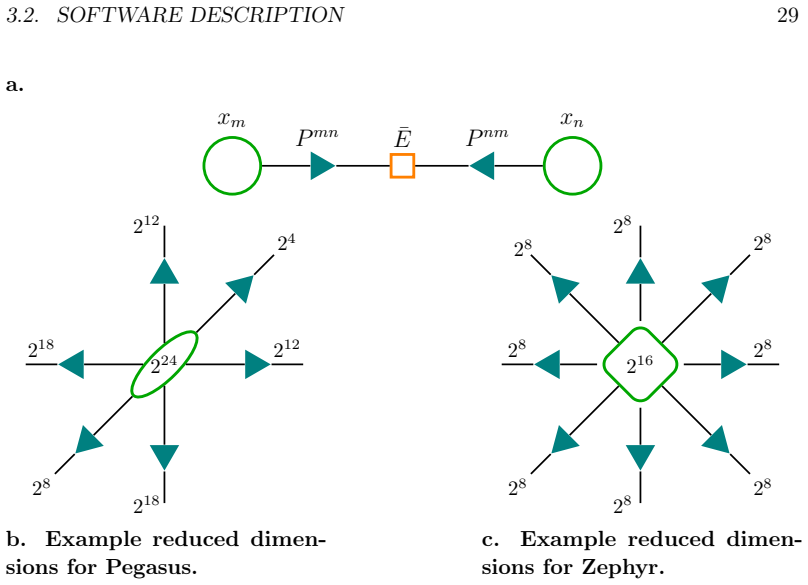
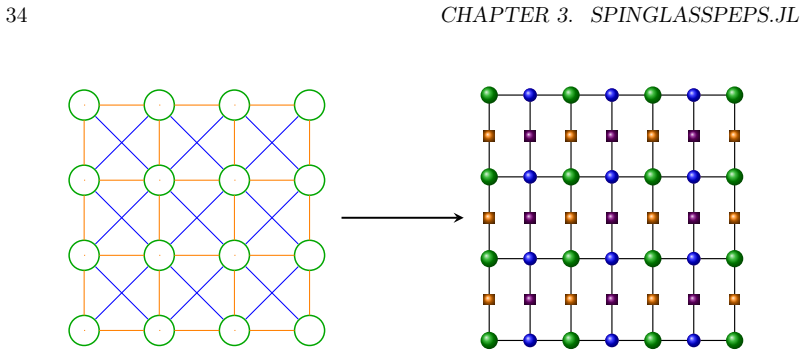
SpinGlassPEPS.jl, a topology-aware PEPS tensor-network solver that converts Ising instances to local Potts clusters, approximates the partition function, and performs branch-and-bound search in probability space, together with thermodynamic relations linking pauses, longitudinal fields, and entropy production to annealing performance.
If this is right
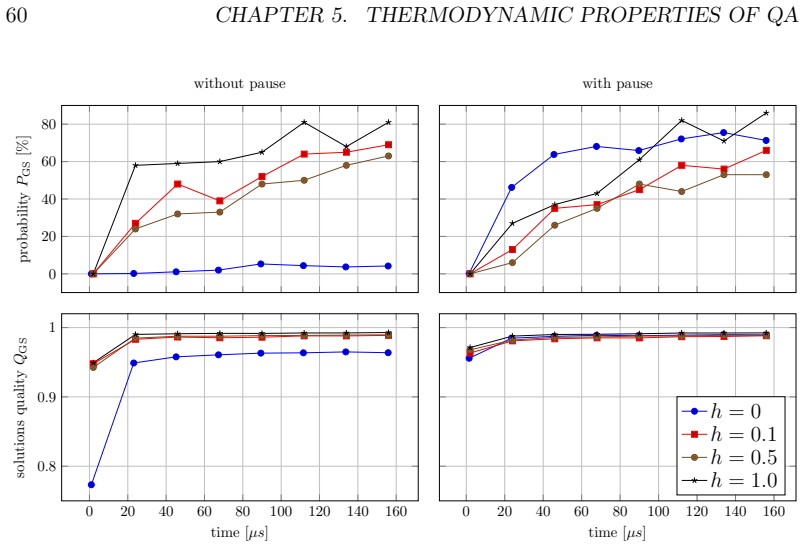
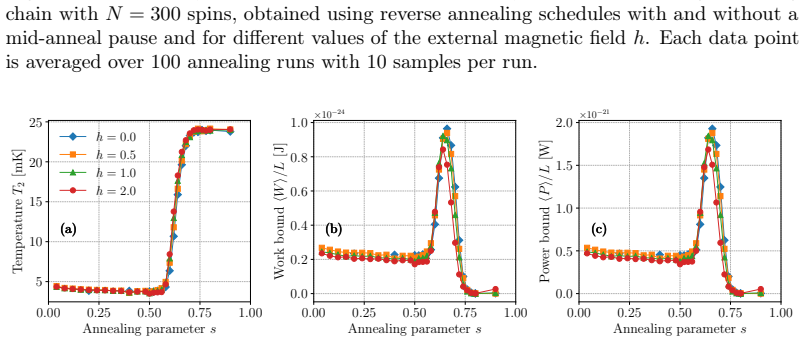
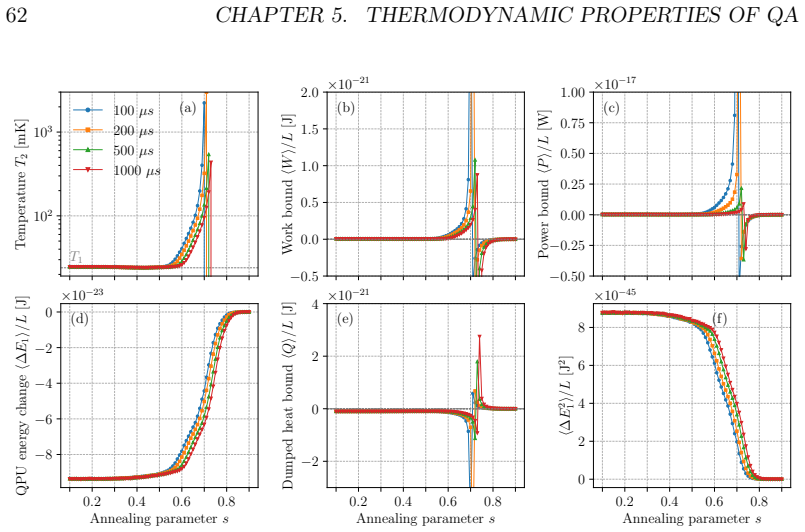
- Strategic pauses in annealing schedules can simultaneously raise success probability and reduce dissipation and entropy production.
- Longitudinal fields can become harmful when combined with paused schedules.
- Reinforcement-learning post-processing can further improve the diversity and quality of samples returned by the annealer.
- Exact small-system simulations can expose details of the underlying annealing dynamics that are otherwise hidden.
Where Pith is reading between the lines
- Energy-only comparisons may systematically overstate quantum-annealing advantage by omitting hidden physical costs.
- The same joint performance-cost lens could be applied to other quantum optimization platforms beyond D-Wave.
- Tensor-network heuristics of this type offer physically interpretable reference points that help diagnose when quantum devices are operating outside their modeled regime.
Load-bearing premise
The approximate PEPS contractions and thermodynamic relations derived from pauses and fields accurately capture the behavior of real D-Wave processors without significant unaccounted errors on large instances.
What would settle it
Direct experimental comparison on large instances showing that predicted thermodynamic costs or success probabilities from the PEPS model and pause analysis deviate substantially from measured values on actual D-Wave hardware.
Figures













read the original abstract
Quantum annealing targets low-energy solutions of Ising/QUBO problems, but reliable assessment requires more than best-energy comparisons. This dissertation develops a benchmarking framework for D-Wave quantum annealers that combines strong classical baselines, sampling and diversity metrics, and thermodynamic cost. Its first contribution, SpinGlassPEPS$.$jl, is a topology-aware tensor-network heuristic for optimization and sampling on Pegasus/Zephyr-like graphs. It maps Ising instances to local Potts clusters, represents the partition function with PEPS, and performs branch-and-bound search in probability space. Benchmarks show that it is a physically interpretable reference solver, though approximate contractions limit its competitiveness on the largest instances. The second contribution treats quantum annealers as effective thermal machines, relating success probability and solution quality to dissipation, entropy production, and effective temperature. Carefully placed pauses can improve performance while reducing thermodynamic cost, although longitudinal fields may become harmful in paused schedules. The thesis also introduces reinforcement-learning post-processing to improve returned samples and exact small-system simulations to probe annealing dynamics. Overall, it argues for quantum-annealing benchmarks that jointly measure algorithmic performance and physical expenditure.
Editorial analysis
A structured set of objections, weighed in public.
Referee Report
Summary. The dissertation develops a benchmarking framework for D-Wave quantum annealers that integrates a topology-aware tensor-network solver (SpinGlassPEPS.jl) for optimization and sampling on Pegasus/Zephyr graphs, treats the annealer as an effective thermal machine to relate success probability and solution quality to dissipation/entropy production/effective temperature, applies reinforcement-learning post-processing to samples, and uses exact small-system simulations. It argues that reliable assessment requires joint measurement of algorithmic performance and physical expenditure, with results indicating that carefully placed pauses can improve performance while lowering thermodynamic cost (though longitudinal fields may become harmful in paused schedules).
Significance. If the PEPS approximations and thermodynamic mappings are shown to be sufficiently accurate, the framework would provide a physically grounded way to compare annealing schedules on both success metrics and energy costs, potentially guiding more efficient processor operation. The SpinGlassPEPS.jl contribution supplies a new classical reference tool for these graphs, and the overall emphasis on joint performance-cost benchmarks addresses a gap in current QA evaluation practices.
major comments (3)
- [thermodynamic analysis of pauses and fields] Thermodynamic cost analysis: the relations linking success probability to dissipation and entropy production via pauses and fields depend on effective-temperature derivations; the manuscript does not state or demonstrate that these temperatures are derived independently of the success-probability data used to validate the joint benchmark, which is load-bearing for the central claim that physical expenditure can be meaningfully compared to algorithmic metrics.
- [SpinGlassPEPS.jl tensor-network heuristic] SpinGlassPEPS.jl contribution: approximate PEPS contractions are noted to limit competitiveness on the largest instances, yet no quantitative error bounds, truncation-error estimates, or validation against exact partition functions are supplied for Pegasus/Zephyr graphs at D-Wave scales; without these, the solver cannot serve as a trustworthy classical reference for the proposed joint benchmarks.
- [pause and field schedule experiments] Experimental claims on pauses and longitudinal fields: the statements that pauses improve performance while reducing thermodynamic cost and that fields become harmful rest on unspecified experiments; details on instance selection, error bars, and comparison baselines are absent, preventing assessment of whether the observed effects support the broader benchmarking recommendation.
minor comments (2)
- [abstract and introduction] The abstract and introduction could more explicitly separate the contributions (tensor-network solver, thermal-machine model, RL post-processing) and state the precise scope of the D-Wave instances studied.
- [thermodynamic sections] Notation for effective temperature and entropy production should be defined once and used consistently across the thermodynamic sections to avoid ambiguity when comparing schedules.
Simulated Author's Rebuttal
We thank the referee for their careful reading and constructive comments, which have helped us identify areas where the manuscript can be clarified and strengthened. We address each major comment below and indicate the revisions we will make.
read point-by-point responses
-
Referee: [thermodynamic analysis of pauses and fields] Thermodynamic cost analysis: the relations linking success probability to dissipation and entropy production via pauses and fields depend on effective-temperature derivations; the manuscript does not state or demonstrate that these temperatures are derived independently of the success-probability data used to validate the joint benchmark, which is load-bearing for the central claim that physical expenditure can be meaningfully compared to algorithmic metrics.
Authors: The referee is correct that the manuscript does not explicitly demonstrate the independence of the effective-temperature derivation from the success-probability data. The effective temperatures are computed from the annealing schedule parameters and device calibration data using the standard effective thermal model, prior to and separately from the benchmark validation. To address this, we will add a new subsection in the thermodynamic analysis chapter that details the derivation procedure, references the calibration experiments, and shows that the temperature values are fixed before evaluating success probabilities. This will make the separation explicit and support the joint benchmark claim. revision: yes
-
Referee: [SpinGlassPEPS.jl tensor-network heuristic] SpinGlassPEPS.jl contribution: approximate PEPS contractions are noted to limit competitiveness on the largest instances, yet no quantitative error bounds, truncation-error estimates, or validation against exact partition functions are supplied for Pegasus/Zephyr graphs at D-Wave scales; without these, the solver cannot serve as a trustworthy classical reference for the proposed joint benchmarks.
Authors: We agree that the current manuscript lacks quantitative error analysis for the PEPS approximations on Pegasus and Zephyr graphs. Although the text notes the limitations of approximate contractions, it does not supply truncation-error estimates or direct validations against exact partition functions. In the revised version we will include bond-dimension scaling studies, error bounds derived from truncation thresholds, and comparisons to exact results on small instances of these graphs. For larger scales we will add a discussion of error propagation. These additions will better qualify SpinGlassPEPS.jl as a reference solver. revision: yes
-
Referee: [pause and field schedule experiments] Experimental claims on pauses and longitudinal fields: the statements that pauses improve performance while reducing thermodynamic cost and that fields become harmful rest on unspecified experiments; details on instance selection, error bars, and comparison baselines are absent, preventing assessment of whether the observed effects support the broader benchmarking recommendation.
Authors: The referee correctly notes that experimental details are insufficiently specified. The reported effects are based on experiments using randomly generated Ising instances with Pegasus topology, executed with multiple independent runs on the D-Wave device to obtain statistical error bars, and compared against standard forward-annealing baselines without pauses. We will expand the experimental section to include the precise instance-generation protocol, the number of instances and repetitions, the statistical methods for error bars, and direct side-by-side comparisons to non-paused schedules. This will allow readers to evaluate the support for the claims. revision: yes
Circularity Check
No significant circularity in the derivation chain
full rationale
The paper outlines three main independent contributions: the SpinGlassPEPS.jl tensor-network solver as a classical reference for Pegasus/Zephyr graphs, a thermodynamic mapping of quantum annealers to effective thermal machines that relates success probability and solution quality to dissipation and entropy production via pauses and fields, and auxiliary RL post-processing plus exact small-system simulations. No load-bearing steps reduce by construction to fitted inputs or self-citations; the thermodynamic relations are presented as derived from observable pauses and fields rather than tautological redefinitions of success probability, and the PEPS contractions serve as an external heuristic benchmark without the paper claiming they are forced by the target D-Wave data. The framework therefore remains self-contained against external benchmarks.
Axiom & Free-Parameter Ledger
Reference graph
Works this paper leans on
-
[1]
T. Śmierzchalski, A. M. Dziubyna, K. Jałowiecki, Z. Mzaouali, Ł. Pawela, B. Gardas, and M. M. Rams, “SpinGlassPEPS.jl: Tensor-network package for Ising-like optimization on quasi-two-dimensional graphs,” SoftwareX31, 102257 (2025)
work page 2025
-
[2]
A. M. Dziubyna, T. Śmierzchalski, B. Gardas, M. M. Rams, and M. Mohseni, “Limitations of tensor-network approaches for optimization and sampling: A comparison to quantum and classical Ising machines,” Phys. Rev. Appl.23, 054049 (2025)
work page 2025
-
[3]
T. Śmierzchalski, Z. Mzaouali, S. Deffner, and B. Gardas, “Efficiency optimiza- tion in quantum computing: balancing thermodynamics and computational performance,” Sci. Rep.14, 4555 (2024)
work page 2024
-
[4]
Post- error Correction for Quantum Annealing Processor Using Reinforcement Learn- ing,
T. Śmierzchalski, Ł. Pawela, Z. Puchała, T. Trzciński, and B. Gardas, “Post- error Correction for Quantum Annealing Processor Using Reinforcement Learn- ing,” in Computational Science – ICCS 2022, edited by D. Groen, C. de Mu- latier, M. Paszynski, V. V. Krzhizhanovskaya, J. J. Dongarra, and P. M. A. Sloot (2022), pp. 261–268
work page 2022
-
[5]
Hybrid quantum-classical computation for automatic guided vehicles scheduling,
T. Śmierzchalski, J. Pawłowski, A. Przybysz, Ł. Pawela, Z. Puchała, M. Ko- niorczyk, B. Gardas, S. Deffner, and K. Domino, “Hybrid quantum-classical computation for automatic guided vehicles scheduling,” Sci. Rep.14, 21809 (2024)
work page 2024
-
[6]
Simulating physics with computers,
R. P. Feynman, “Simulating physics with computers,” Int. J. Theor. Phys.21, 467 (1982)
work page 1982
-
[7]
Quantum theory, the Church–Turing principle and the universal quantum computer,
D. Deutsch, “Quantum theory, the Church–Turing principle and the universal quantum computer,” Proc. R. Soc. Lond. A400, 97 (1985)
work page 1985
-
[8]
M. A. Nielsen and I. L. Chuang,Quantum Computation and Quantum Infor- mation: 10th Anniversary Edition(Cambridge University Press, 2011)
work page 2011
-
[9]
Polynomial-time algorithms for prime factorization and discrete logarithms on a quantum computer,
P. W. Shor, “Polynomial-time algorithms for prime factorization and discrete logarithms on a quantum computer,” SIAM J. Comput26, 1484 (1997)
work page 1997
-
[10]
Breaking Symmetric Cryptosystems Using Quantum Period Finding,
M. Kaplan, G. Leurent, A. Leverrier, and M. Naya-Plasencia, “Breaking Symmetric Cryptosystems Using Quantum Period Finding,” in Advances in Cryptology – CRYPTO 2016, edited by M. Robshaw and J. Katz (2016), pp. 207–237
work page 2016
-
[11]
Prime factorization using quantum annealing and computational algebraic geometry,
R. Dridi and H. Alghassi, “Prime factorization using quantum annealing and computational algebraic geometry,” Sci. Rep.7, 43048 (2017)
work page 2017
-
[12]
On the adiabatic theorem of quantum mechanics,
T. Kato, “On the adiabatic theorem of quantum mechanics,” J. Phys. Soc. Jpn.5, 435 (1950). 85 86BIBLIOGRAPHY
work page 1950
-
[13]
Quantum annealing in the transverse Ising model,
T. Kadowaki and H. Nishimori, “Quantum annealing in the transverse Ising model,” Phys. Rev. E58, 5355 (1998)
work page 1998
- [14]
-
[15]
Adiabatic quantum computation,
T. Albash and D. A. Lidar, “Adiabatic quantum computation,” Rev. Mod. Phys.90, 015002 (2018)
work page 2018
- [16]
-
[17]
Combinatorial optimization by simulating adiabatic bifurcations in nonlinear hamiltonian systems,
H. Goto, K. Tatsumura, and A. R. Dixon, “Combinatorial optimization by simulating adiabatic bifurcations in nonlinear hamiltonian systems,” Sci. Adv. 5, eaav2372 (2019)
work page 2019
-
[18]
High-performance combinatorial optimization based on classical mechanics,
H. Goto, K. Endo, M. Suzuki, Y. Sakai, T. Kanao, Y. Hamakawa, R. Hidaka, M. Yamasaki, and K. Tatsumura, “High-performance combinatorial optimization based on classical mechanics,” Sci. Adv.7, eabe7953 (2021)
work page 2021
-
[19]
M. Jiang, K. Shan, C. He, and C. Li, “Efficient combinatorial optimization by quantum-inspired parallel annealing in analogue memristor crossbar,” Nat. Commun.14, 5927 (2023)
work page 2023
-
[20]
Scaling advantage in approximate optimization with quantum annealing,
H. Munoz-Bauza and D. Lidar, “Scaling advantage in approximate optimization with quantum annealing,” Phys. Rev. Lett.134, 160601 (2025)
work page 2025
-
[21]
Recent quantum runtime (dis)advantages
J. Tuziemski, J. Pawłowski, P. Tarasiuk, Ł. Pawela, and B. Gardas,Recent quantum runtime (dis)advantages, 2025, arXiv:2510.06337
work page internal anchor Pith review Pith/arXiv arXiv 2025
-
[22]
J. Pawlowski, P. Tarasiuk, J. Tuziemski, L. Pawela, and B. Gardas,Closing the quantum-classical scaling gap in approximate optimization, 2025, arXiv:2505. 22514
work page 2025
-
[23]
Beitrag zur theorie des ferromagnetismus,
E. Ising, “Beitrag zur theorie des ferromagnetismus,” Z. Phys.31, 253 (1925)
work page 1925
-
[24]
History of the Lenz–Ising model 1920–1950: from ferromagnetic to cooperative phenomena,
M. Niss, “History of the Lenz–Ising model 1920–1950: from ferromagnetic to cooperative phenomena,” Arch. Hist. Exact Sci.59, 267 (2005)
work page 1920
-
[25]
S. D. Drell, M. Weinstein, and S. Yankielowicz, “Quantum field theories on a lattice: variational methods for arbitrary coupling strengths and the Ising model in a transverse magnetic field,” Phys. Rev. D16, 1769 (1977)
work page 1977
-
[26]
O. G. Mouritsen,Computer studies of phase transitions and critical phenomena (Springer Berlin, Heidelberg, 1984)
work page 1984
-
[27]
An introduction to the Ising model,
B. A. Cipra, “An introduction to the Ising model,” Am. Math. Mon.94, 937 (1987)
work page 1987
-
[28]
Excitation spectrum at the Yang–Lee edge singularity of the 2d ising model,
J. F. McCabe and T. Wydro, “Excitation spectrum at the Yang–Lee edge singularity of the 2d ising model,” Int. J. Mod. Phys. B20, 495 (2006)
work page 2006
-
[29]
Bound states in two-dimensional spin systems near the Ising limit: a quantum finite-lattice study,
S. Dusuel, M. Kamfor, K. P. Schmidt, R. Thomale, R. Thomale, R. Thomale, and J. Vidal, “Bound states in two-dimensional spin systems near the Ising limit: a quantum finite-lattice study,” Phys. Rev. B81, 064412 (2009)
work page 2009
-
[30]
History of the Lenz–Ising model 1950–1965: from irrelevance to relevance,
M. Niss, “History of the Lenz–Ising model 1950–1965: from irrelevance to relevance,” Arch. Hist. Exact Sci.63, 243 (2009)
work page 1950
-
[31]
M. Niss, “History of the Lenz–Ising model 1965–1971: the role of a simple model in understanding critical phenomena,” Arch. Hist. Exact Sci.65, 625 (2011). BIBLIOGRAPHY87
work page 1965
-
[32]
The importance of the Ising model,
B. M. McCoy and J.-M. Maillard, “The importance of the Ising model,” Prog. Theor. Phys.127, 791 (2012)
work page 2012
-
[33]
Sociophysics: a review of Galam models,
S. Galam, “Sociophysics: a review of Galam models,” Int. J. Mod. Phys. C19, 409 (2008)
work page 2008
-
[34]
Finding low-energy conformations of lattice protein models by quantum annealing,
A. Perdomo-Ortiz, N. Dickson, M. Drew-Brook, G. Rose, and A. Aspuru-Guzik, “Finding low-energy conformations of lattice protein models by quantum annealing,” Sci. Rep.2, 571 (2012)
work page 2012
-
[35]
Ising formulations of many NP problems
A. Lucas, “Ising formulations of many NP problems,” Front. Phys.2,10.3389/ fphy.2014.00005(2014)
-
[36]
The unconstrained binary quadratic programming problem: a survey,
G. Kochenberger, J.-K. Hao, F. Glover, M. Lewis, Z. Lü, H. Wang, and Y. Wang, “The unconstrained binary quadratic programming problem: a survey,” J. Comb. Optim.28, 58 (2014)
work page 2014
-
[37]
Modeling of the financial market using the two-dimensional anisotropic Ising model,
L. Lima, “Modeling of the financial market using the two-dimensional anisotropic Ising model,” Physica A482, 544 (2017)
work page 2017
-
[38]
A. P. Punnen,The quadratic unconstrained binary optimization problem: theory, algorithms, and applications(Springer, Cham, 2022)
work page 2022
-
[39]
Unconstrained binary models of the travelling salesman problem variants for quantum optimization,
Ö. Salehi, A. Glos, and J. A. Miszczak, “Unconstrained binary models of the travelling salesman problem variants for quantum optimization,” Quantum Inf. Process.21, 67 (2022)
work page 2022
-
[40]
On the computational complexity of Ising spin glass models,
F. Barahona, “On the computational complexity of Ising spin glass models,” J. Phys. A: Math. Gen.15, 3241 (1982)
work page 1982
-
[41]
Approx- imate optimization, sampling, and spin-glass droplet discovery with tensor networks,
M. M. Rams, M. Mohseni, D. Eppens, K. Jałowiecki, and B. Gardas, “Approx- imate optimization, sampling, and spin-glass droplet discovery with tensor networks,” Phys. Rev. E104, 025308 (2021)
work page 2021
-
[42]
Chandler,Introduction to modern statistical mechanics(Oxford University Press, 1987)
D. Chandler,Introduction to modern statistical mechanics(Oxford University Press, 1987)
work page 1987
-
[43]
Quantum bridge analytics i: a tutorial on formulating and using qubo models,
F. Glover, G. Kochenberger, R. Hennig, and Y. Du, “Quantum bridge analytics i: a tutorial on formulating and using qubo models,” Ann. Oper. Res.314, 141 (2022)
work page 2022
-
[44]
Crystal statistics. i. a two-dimensional model with an order- disorder transition,
L. Onsager, “Crystal statistics. i. a two-dimensional model with an order- disorder transition,” Phys. Rev.65, 117 (1944)
work page 1944
-
[45]
Reducibility among Combinatorial Problems,
R. M. Karp, “Reducibility among Combinatorial Problems,” inComplexity of computer computations: proceedings of a symposium on the complexity of computer computations, edited by R. E. Miller, J. W. Thatcher, and J. D. Bohlinger (Springer US, Boston, MA, 1972), pp. 85–103
work page 1972
-
[46]
Brute-forcing spin-glass problems with cuda,
K. Jałowiecki, M. M. Rams, and B. Gardas, “Brute-forcing spin-glass problems with cuda,” Comput. Phys. Commun.260, 107728 (2021)
work page 2021
-
[47]
Mücke,Faster qubo brute-force solving using gray code, 2023, arXiv:2310
S. Mücke,Faster qubo brute-force solving using gray code, 2023, arXiv:2310. 19373
work page 2023
-
[48]
A recursive branch-and-bound algorithm for the exact ground state of Ising spin-glass models,
A. Hartwig, F. Daske, and S. Kobe, “A recursive branch-and-bound algorithm for the exact ground state of Ising spin-glass models,” Comput. Phys. Commun. 32, 133 (1984)
work page 1984
-
[49]
Exact ground states of Ising spin glasses: New experimental results with a branch-and-cut algorithm,
C. De Simone, M. Diehl, M. Jünger, P. Mutzel, G. Reinelt, and G. Rinaldi, “Exact ground states of Ising spin glasses: New experimental results with a branch-and-cut algorithm,” J. Stat. Phys.80, 487 (1995). 88BIBLIOGRAPHY
work page 1995
-
[50]
Tropical tensor network for ground states of spin glasses,
J.-G. Liu, L. Wang, and P. Zhang, “Tropical tensor network for ground states of spin glasses,” Phys. Rev. Lett.126, 090506 (2021)
work page 2021
-
[51]
Branch-and-bound methods: a survey,
E. L. Lawler and D. E. Wood, “Branch-and-bound methods: a survey,” Oper. Res.14, 699 (1966)
work page 1966
-
[52]
Branch-and- bound algorithms: a survey of recent advances in searching, branching, and pruning,
D. R. Morrison, S. H. Jacobson, J. J. Sauppe, and E. C. Sewell, “Branch-and- bound algorithms: a survey of recent advances in searching, branching, and pruning,” Discrete Optim.19, 79 (2016)
work page 2016
-
[53]
A projection technique for partitioning the nodes of a graph,
F. Rendl and H. Wolkowicz, “A projection technique for partitioning the nodes of a graph,” Ann. Oper. Res58, 155 (1995)
work page 1995
-
[54]
A new global algorithm for max-cut problem with chordal sparsity,
C. Lu, Z. Deng, S.-C. Fang, and W. Xing, “A new global algorithm for max-cut problem with chordal sparsity,” J. Optim. Theory Appl.197, 608 (2023)
work page 2023
-
[55]
V. Chvátal, “Hard knapsack problems,” Oper. Res.28, 1402 (1980)
work page 1980
-
[56]
Filtered beam search in scheduling,
P. S. Ow and T. E. Morton, “Filtered beam search in scheduling,” Int. J. Prod. Res.26, 35 (1988)
work page 1988
-
[57]
Optimization by simulated annealing,
S. Kirkpatrick, C. D. Gelatt, and M. P. Vecchi, “Optimization by simulated annealing,” Science220, 671 (1983)
work page 1983
-
[58]
Thermodynamical approach to the traveling salesman problem: an efficient simulation algorithm,
V. Černý, “Thermodynamical approach to the traveling salesman problem: an efficient simulation algorithm,” J. Optim. Theory Appl.45, 41 (1985)
work page 1985
-
[59]
A new simulated annealing algorithm,
X. Yao, “A new simulated annealing algorithm,” Int. J. Comput. Math.56, 161 (1995)
work page 1995
-
[60]
Hardware implementation of neuromorphic computing using large-scale memristor crossbar arrays,
Y. Li and K.-W. Ang, “Hardware implementation of neuromorphic computing using large-scale memristor crossbar arrays,” Adv. Intell. Syst.3, 2000137 (2021)
work page 2021
-
[61]
S. Boyd and L. Vandenberghe,Convex optimization(Cambridge university press, 2004)
work page 2004
-
[62]
Estimating or Propagating Gradients Through Stochastic Neurons for Conditional Computation
Y. Bengio, N. Léonard, and A. Courville,Estimating or propagating gradients through stochastic neurons for conditional computation, 2013, arXiv:1308.3432
work page internal anchor Pith review arXiv 2013
-
[63]
I. Hubara, M. Courbariaux, D. Soudry, R. El-Yaniv, and Y. Bengio, “Binarized neural networks,” in Advances in neural information processing systems, Vol. 29, edited by D. Lee, M. Sugiyama, U. Luxburg, I. Guyon, and R. Garnett (2016)
work page 2016
-
[64]
K. B. Petersen and M. S. Pedersen,The matrix cookbook, Version 20121115, 2012
work page 2012
-
[65]
On the momentum term in gradient descent learning algorithms,
N. Qian, “On the momentum term in gradient descent learning algorithms,” Neural Networks12, 145 (1999)
work page 1999
-
[66]
On the difficulty of training recurrent neural networks,
R. Pascanu, T. Mikolov, and Y. Bengio, “On the difficulty of training recurrent neural networks,” in Proceedings of the 30th international conference on ma- chine learning, Vol. 28, edited by S. Dasgupta and D. McAllester, Proceedings of Machine Learning Research 3 (2013), pp. 1310–1318
work page 2013
-
[67]
B. Leimkuhler and S. Reich,Simulating hamiltonian dynamics, Cambridge Monographs on Applied and Computational Mathematics (Cambridge Univer- sity Press, 2005)
work page 2005
-
[68]
Simulated bifurcation assisted by thermal fluctuation,
T. Kanao and H. Goto, “Simulated bifurcation assisted by thermal fluctuation,” Commun. Phys.5, 153 (2022). BIBLIOGRAPHY89
work page 2022
-
[69]
Colloquium: quantum annealing and analog quantum computation,
A. Das and B. K. Chakrabarti, “Colloquium: quantum annealing and analog quantum computation,” Rev. Mod. Phys.80, 1061 (2008)
work page 2008
-
[70]
A quantum adiabatic evolution algorithm applied to random instances of an NP-Complete problem,
E. Farhi, J. Goldstone, S. Gutmann, J. Lapan, A. Lundgren, and D. Preda, “A quantum adiabatic evolution algorithm applied to random instances of an NP-Complete problem,” Science292, 472 (2001)
work page 2001
-
[71]
Messiah,Quantum mechanics(Courier Corporation, 2014)
A. Messiah,Quantum mechanics(Courier Corporation, 2014)
work page 2014
-
[72]
How powerful is adiabatic quan- tum computation?
W. van Dam, M. Mosca, and U. Vazirani, “How powerful is adiabatic quan- tum computation?” In Proceedings 42nd IEEE symposium on foundations of computer science (2001), pp. 279–287
work page 2001
-
[73]
Adi- abatic quantum computation is equivalent to standard quantum computation,
D. Aharonov, W. van Dam, J. Kempe, Z. Landau, S. Lloyd, and O. Regev, “Adi- abatic quantum computation is equivalent to standard quantum computation,” SIAM J. Comput.37, 166 (2007)
work page 2007
-
[74]
Boundsfortheadiabaticapproximation with applications to quantum computation,
S.Jansen,M. -B.Ruskai,andR.Seiler,“Boundsfortheadiabaticapproximation with applications to quantum computation,” J. Math. Phys.48, 102111 (2007)
work page 2007
-
[75]
Experimental demonstration of a robust and scalable flux qubit,
R. Harris et al., “Experimental demonstration of a robust and scalable flux qubit,” Phys. Rev. B81, 134510 (2010)
work page 2010
-
[76]
Experimental investigation of an eight-qubit unit cell in a superconducting optimization processor,
R. Harris et al., “Experimental investigation of an eight-qubit unit cell in a superconducting optimization processor,” Phys. Rev. B82, 024511 (2010)
work page 2010
-
[77]
A scalable control system for a superconducting adiabatic quantum optimization processor,
M. W. Johnson et al., “A scalable control system for a superconducting adiabatic quantum optimization processor,” Supercond. Sci. Technol.23, 065004 (2010)
work page 2010
-
[78]
Architectural Considerations in the Design of a Supercon- ducting Quantum Annealing Processor,
P. I. Bunyk et al., “Architectural Considerations in the Design of a Supercon- ducting Quantum Annealing Processor,” IEEE Trans. Appl. Supercond.24, 1 (2014)
work page 2014
-
[79]
K. Boothby, A. D. King, and A. Roy,Fast clique minor generation in chimera qubit connectivity graphs, 2020, arXiv:1507.04774
-
[80]
Entanglement in a quantum annealing processor,
T. Lanting et al., “Entanglement in a quantum annealing processor,” Phys. Rev. X4, 021041 (2014)
work page 2014
discussion (0)
Sign in with ORCID, Apple, or X to comment. Anyone can read and Pith papers without signing in.