Seed-Robust PINN Determination of s-Wave Bound States and Jost-Function-Based vertex constants in _(Λ)²⁰⁸Pb
Pith reviewed 2026-06-27 23:27 UTC · model grok-4.3
The pith
A normalized residual loss in PINNs produces seed-independent bound-state energies and radii for the Lambda hyperon in lead-208 that match theoretical values.
A machine-rendered reading of the paper's core claim, the machinery that carries it, and where it could break.
Core claim
The Rayleigh-Ritz formulation combined with a seed-robust normalized residual loss provides a stable PINN framework for bound-state and Jost-function-based calculations in hypernuclear two-body systems.
What carries the argument
Normalized residual loss applied to the Rayleigh-Ritz variational quotient on a neural-network representation of the radial bound-state wave function.
If this is right
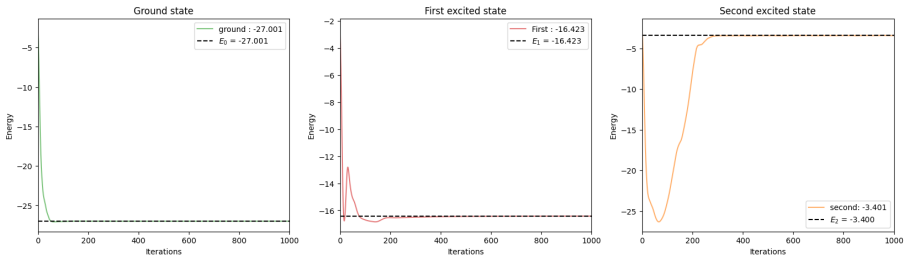
- Bound-state energies and root-mean-square radii obtained with the normalized loss agree closely with theoretical reference values.
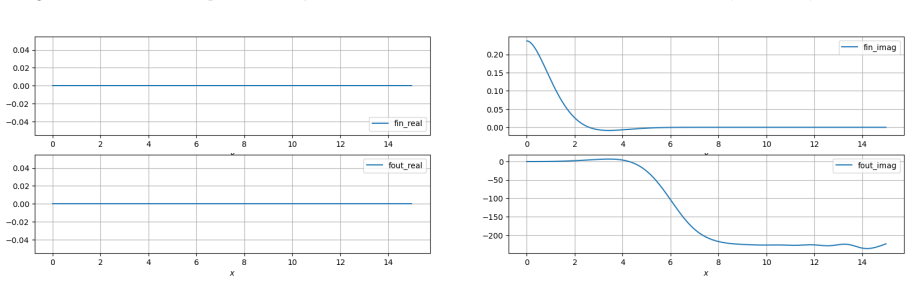
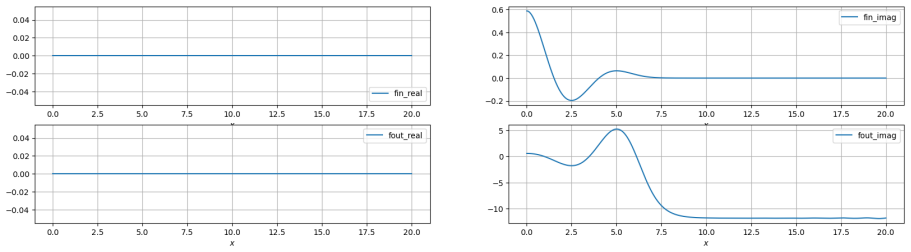
- Jost functions are constructed from the network wave functions via the Wronskian with incoming and outgoing Riccati-Hankel functions.
- The residue of the partial-wave S-matrix at the bound-state pole, the asymptotic normalization constant, and the nuclear vertex constant are extracted from those Jost functions.
- These extracted quantities agree with theoretical values at a level comparable to the eigenenergies, albeit with larger standard deviations across seeds.
Where Pith is reading between the lines
- The same normalized-loss strategy could be tested on potentials that include spin-orbit terms or on three-body hypernuclear systems to check whether seed robustness persists.
- Because the method supplies both the wave function and the Jost function in a single forward pass, it may reduce the computational overhead of separately solving the Schrödinger equation and then performing analytic continuation.
- If the larger scatter in vertex constants proves systematic, it would indicate that the network representation is less faithful at large radii where the asymptotic normalization is determined.
Load-bearing premise
The radial bound-state wave function can be represented by an artificial neural network such that the Rayleigh-Ritz variational quotient applied to the network output yields accurate eigenenergies for the chosen Woods-Saxon potential, independent of random-seed initialization.
What would settle it
Re-running the identical network architecture and normalized loss on the same Woods-Saxon potential but with a fifth independent seed that produces eigenenergies differing by more than the reported coefficient of variation would falsify the seed-robustness claim.
Figures
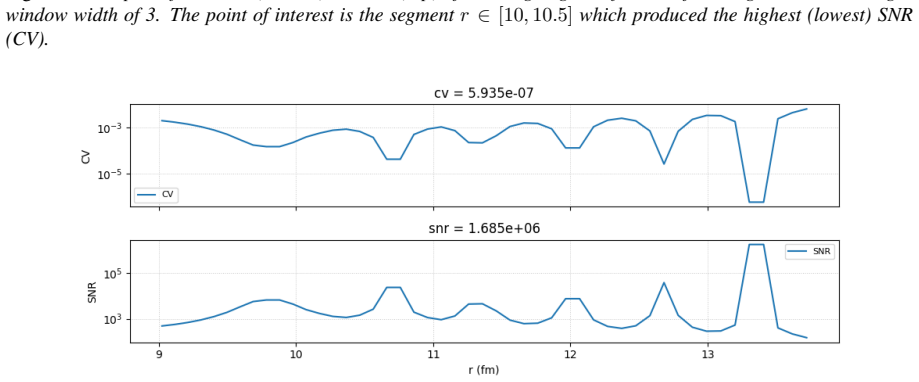
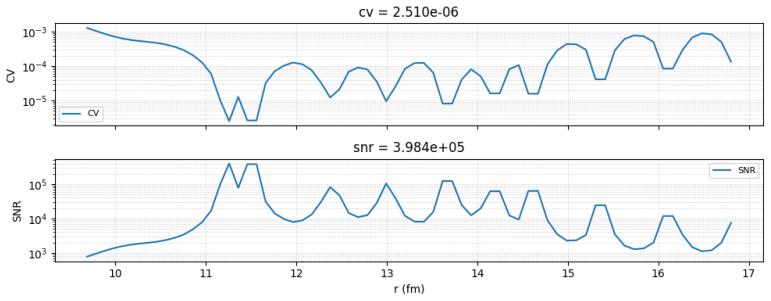
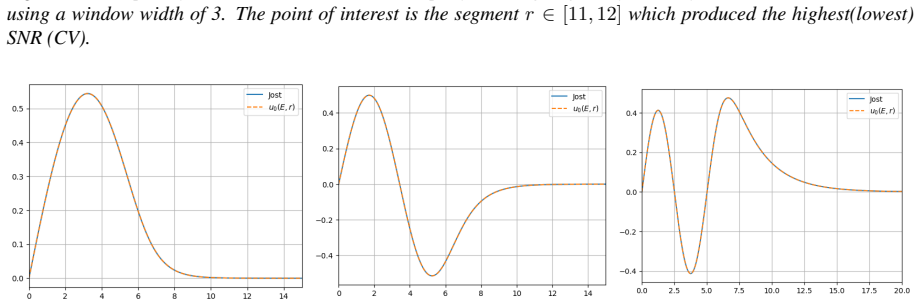
read the original abstract
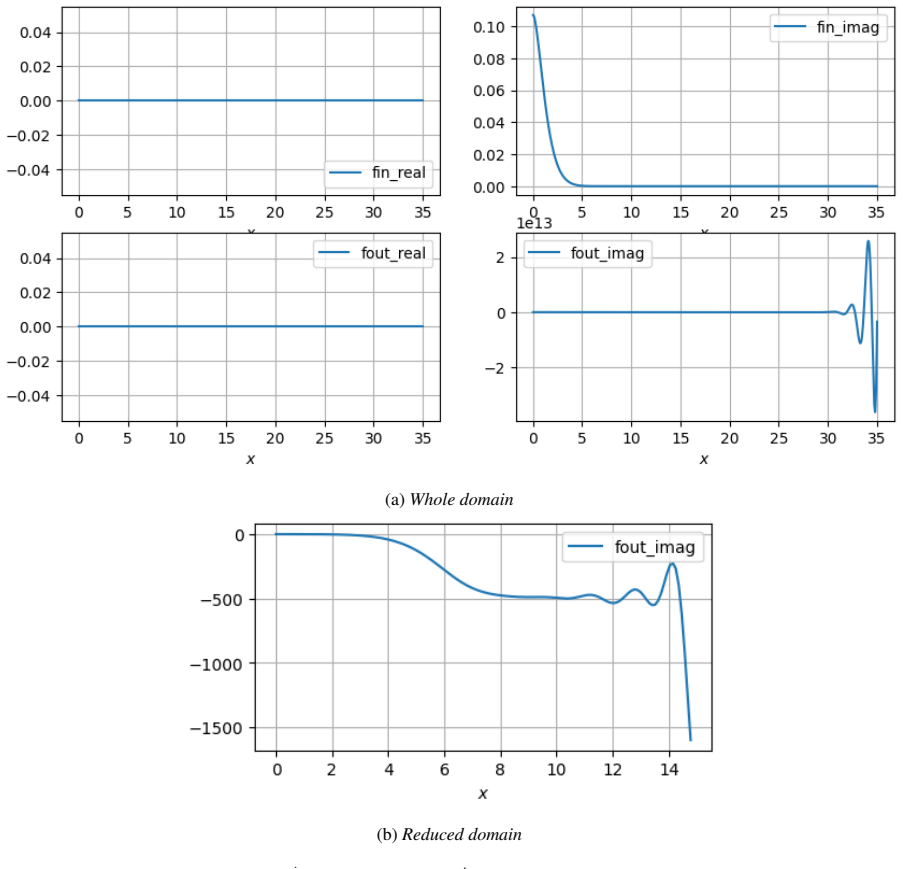
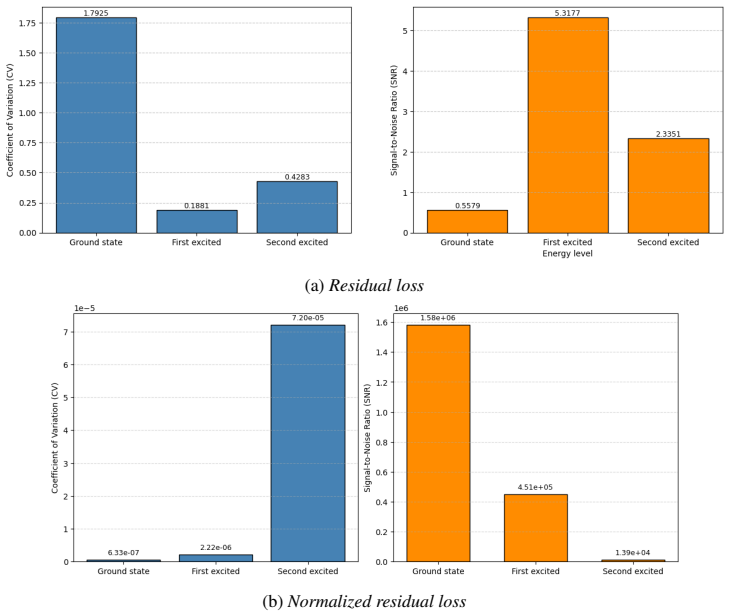
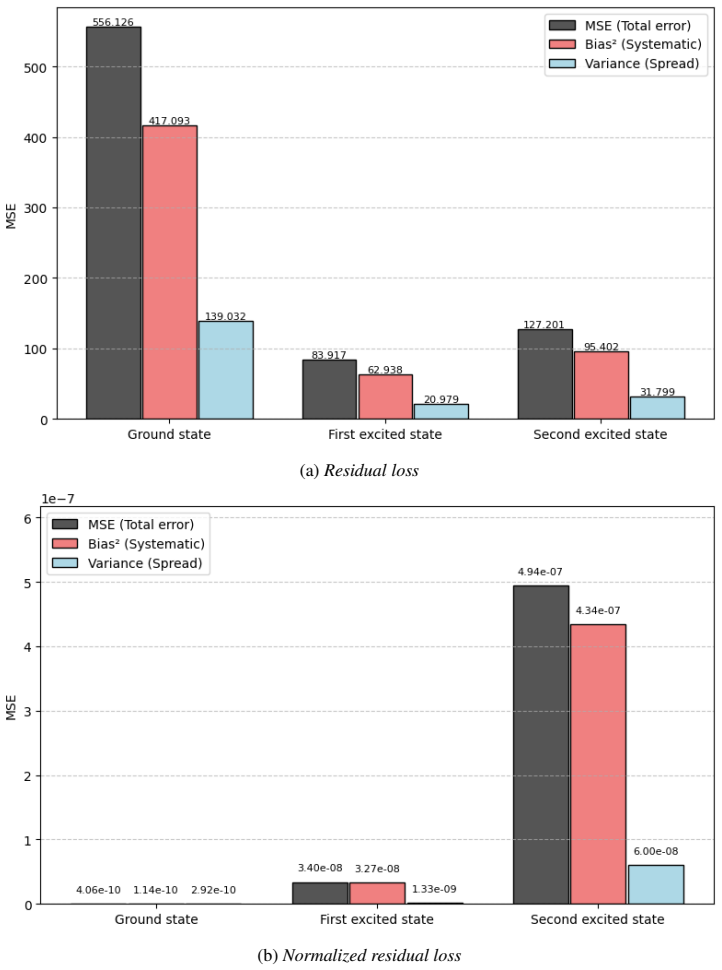
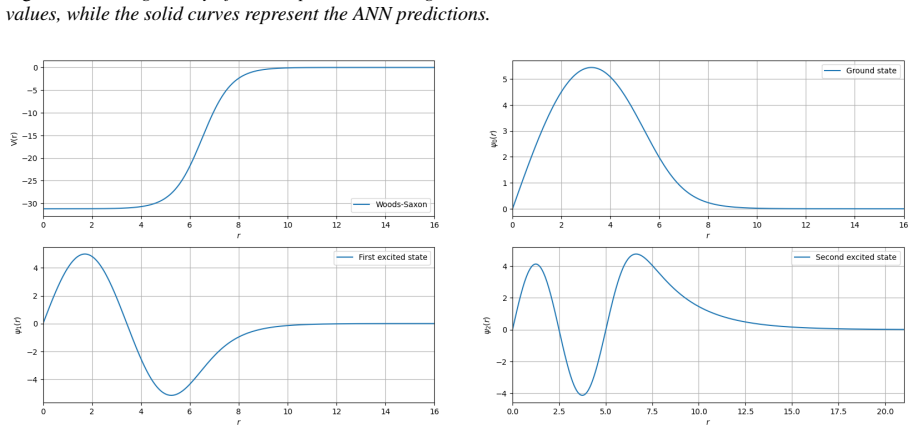
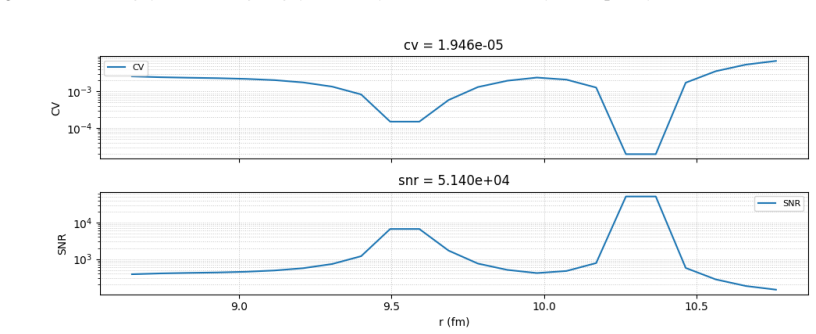
We investigate physics-informed neural networks (PINNs) for computing the $s$-wave bound states of the hypernucleus $_{\Lambda}^{208}$Pb, modeled as a two-body system composed of a $\Lambda$ hyperon and a $^{207}$Pb core. The interaction is described by a Woods--Saxon potential without spin--orbit coupling. In the PINN formulation, the radial bound-state wave function is represented by an artificial neural network, and the eigenenergies are obtained from the Rayleigh--Ritz variational quotient. Because PINN eigenvalue calculations can depend on the residual-loss formulation and random-seed initialization, two residual losses are compared across four independent random seeds. Their performance is assessed using eigenvalue accuracy, coefficient of variation, signal-to-noise ratio, bias--variance decomposition, and Hermitian spectral-ordering consistency. The normalized residual loss gives the most stable and physically consistent bound-state spectrum for the four seeds considered. With this loss, the computed bound-state energies and root-mean-square radii are in very good agreement with the corresponding theoretical values. The resulting wave functions are used to construct the Jost functions through the Wronskian with incoming and outgoing Riccati--Hankel functions. From these Jost functions, the residue of the partial-wave $S$-matrix at the bound-state pole, the Asymptotic Normalization and the Nuclear Vertex Constants are extracted. These quantities show reasonable agreement with theoretical values, although with larger standard deviations than those obtained for the eigenenergies and radii. The results indicate that the Rayleigh--Ritz formulation combined with a seed-robust normalized residual loss provides a stable PINN framework for bound-state and Jost-function-based calculations in hypernuclear two-body systems.
Editorial analysis
A structured set of objections, weighed in public.
Referee Report
Summary. The manuscript investigates physics-informed neural networks (PINNs) to compute s-wave bound states of the hypernucleus 208ΛPb modeled as a Λ hyperon plus 207Pb core with a Woods-Saxon potential (no spin-orbit term). The radial wave function is represented by a neural network, eigenenergies are obtained via the Rayleigh-Ritz variational quotient, and two residual-loss formulations are compared across four random seeds using accuracy, coefficient of variation, SNR, bias-variance, and spectral-ordering metrics. The normalized residual loss is identified as most stable; resulting energies and rms radii agree well with theory. Wave functions are then used to build Jost functions via Wronskians with Riccati-Hankel functions, from which the S-matrix residue, ANC, and nuclear vertex constants are extracted and compared to theoretical values.
Significance. If the seed-robustness claim can be substantiated, the work supplies a concrete demonstration that a standard variational PINN formulation, paired with a normalized residual loss, can deliver stable bound-state solutions and downstream asymptotic quantities (Jost functions, ANC, vertex constants) for a realistic hypernuclear two-body problem. This is a modest but useful addition to the growing literature on PINNs in nuclear physics, as it directly connects the network output to established quantities (Wronskian Jost function, residue at bound-state pole) without introducing circular definitions. The explicit comparison of loss formulations and the use of multiple stability diagnostics are positive features.
major comments (1)
- [Abstract and stability-analysis paragraph] Abstract and stability-analysis paragraph: the central claim that the normalized residual loss yields a 'seed-robust' spectrum (and therefore reliable Jost-function/vertex-constant extractions) rests on results from exactly four random seeds. Neural-network optimization landscapes for eigenvalue problems are known to contain narrow basins that produce large errors for some initializations; four samples provide no statistics on failure rates or coefficient-of-variation behavior under a larger ensemble (e.g., 20–50 seeds). This sample size is insufficient to support the 'seed-robust' qualifier in the title and the subsequent use of the wave functions for asymptotic quantities.
minor comments (2)
- [Method section] The manuscript does not supply the explicit numerical values of the Woods-Saxon parameters or the precise training-set construction details; these omissions hinder independent reproduction even though the method itself is standard.
- [Results section] Quantitative error bars or confidence intervals on the extracted ANC and vertex constants are not reported, only standard deviations across the four seeds; adding these would strengthen the comparison with theory.
Simulated Author's Rebuttal
We thank the referee for the constructive assessment and for highlighting both the strengths and the limitations of our stability analysis. We respond to the single major comment below.
read point-by-point responses
-
Referee: [Abstract and stability-analysis paragraph] Abstract and stability-analysis paragraph: the central claim that the normalized residual loss yields a 'seed-robust' spectrum (and therefore reliable Jost-function/vertex-constant extractions) rests on results from exactly four random seeds. Neural-network optimization landscapes for eigenvalue problems are known to contain narrow basins that produce large errors for some initializations; four samples provide no statistics on failure rates or coefficient-of-variation behavior under a larger ensemble (e.g., 20–50 seeds). This sample size is insufficient to support the 'seed-robust' qualifier in the title and the subsequent use of the wave functions for asymptotic quantities.
Authors: We agree that four independent seeds provide only a limited statistical basis and cannot rule out the existence of narrow failure basins that might appear in a larger ensemble. The four seeds were selected to demonstrate practical reproducibility under standard random initializations, and the normalized residual loss produced low coefficients of variation together with consistent spectral ordering in every case. Nevertheless, the referee’s point is valid: the qualifier “seed-robust” in the title and the downstream use of the wave functions for Jost-function quantities are not fully substantiated by the present sample size. We will therefore revise the title, abstract, and stability-analysis section to replace “seed-robust” with the more precise phrasing “stable across the four seeds examined,” add an explicit statement on the sample-size limitation, and include a brief discussion of the need for larger ensembles in future work. The numerical results themselves remain unchanged. revision: partial
Circularity Check
No significant circularity detected
full rationale
The derivation applies the standard Rayleigh-Ritz variational quotient to obtain eigenenergies from a neural-network representation of the radial wave function, then extracts Jost functions via the Wronskian definition with Riccati-Hankel functions and computes residues/ANC/NVC from those Jost functions. None of these steps reduces by construction to a fitted parameter being re-derived as a prediction, nor relies on a self-citation chain or imported uniqueness theorem. The seed comparison is an empirical stability check using four initializations and standard metrics; it does not create a definitional loop. The paper is self-contained against external benchmarks (theoretical Woods-Saxon values) with no load-bearing self-referential elements.
Axiom & Free-Parameter Ledger
free parameters (1)
- Woods-Saxon potential parameters
axioms (1)
- domain assumption The hypernucleus can be modeled as a two-body system with a local Woods-Saxon potential and no spin-orbit coupling.
Reference graph
Works this paper leans on
-
[1]
The Degenerate Superdense Gas of Elementary Particles,
V . A. Ambartsumyan and G. S. Saakyan, “The Degenerate Superdense Gas of Elementary Particles,”So- viet Ast., vol. 4, p. 187, Oct. 1960
1960
-
[2]
Spectroscopy of Lambda hypernuclei,
O. Hashimoto and H. Tamura, “Spectroscopy of Lambda hypernuclei,”Prog. Part. Nucl. Phys., vol. 57, pp. 564–653, 2006
2006
-
[3]
The physics of hypernuclei,
A. Zenoni and P. Gianotti, “The physics of hypernuclei,”Europhysics News, vol. 33, no. 5, pp. 157–161, 2002
2002
-
[4]
Neutron stars and the hyperon puzzle
Garibaldi, Franco, Benhar, Omar, Bydzovsky, Petr, Gogami, Toshiyuki, Covrig, Silviu, Markowitz, Pete E.C., Millener, John, Motoba, Toshio, Nagao, Sho, Nakamura, Satoshi N., Reinhold, Joerg, Tang, Liguang, Urciuoli, Guido Maria, and Vidana, Isaac, “Studying teractions through the 208pb(e,e´k+)208eaction,”EPJ Web Conf., vol. 271, p. 01007, 2022. [Online]. A...
-
[5]
Hyperons: the strange ingredients of the nuclear equation of state,
I. Vidaña, “Hyperons: the strange ingredients of the nuclear equation of state,”Proceedings of the Royal Society A, vol. 474, no. 2217, p. 20180145, 2018
2018
-
[6]
Hyperon puzzle: Hints from quantum monte carlo calculations,
D. Lonardoni, A. Lovato, S. Gandolfi, and F. Pederiva, “Hyperon puzzle: Hints from quantum monte carlo calculations,”Physical Review Letters, vol. 114, p. 092301, 2015
2015
-
[7]
Hyperons in neutron stars: studies of hyperon spec- troscopy and the hyperon–nucleon interaction with the k-long facility,
N. Zachariou, S. Fegan, D. Watts, and M. Bashkanov, “Hyperons in neutron stars: studies of hyperon spec- troscopy and the hyperon–nucleon interaction with the k-long facility,”Philosophical Transactions of the Royal Society A, vol. 382, no. 2275, p. 20230124, 2024
2024
-
[8]
Eigenvalue determination for a toy and woods-saxon potentials using an unsuper- vised pinn,
J. Tshipi and A. Cornell, “Eigenvalue determination for a toy and woods-saxon potentials using an unsuper- vised pinn,” inProceedings of the 69th Annual Conference of the South African Institute of Physics (SAIP 2025). Pretoria, South Africa: South African Institute of Physics, 2025, pp. 968–973
2025
-
[9]
Unsupervised neural networks for quantum eigenvalue problems,
H. Jin, M. Mattheakis, and P. Protopapas, “Unsupervised neural networks for quantum eigenvalue problems,” ArXiv, vol. abs/2010.05075, 2020
arXiv 2010
-
[10]
Physics-informed neural networks for quantum eigenvalue prob- lems,
H. Jin, M. Mattheakis, and Protopapas, “Physics-informed neural networks for quantum eigenvalue prob- lems,” in2022 International Joint Conference on Neural Networks (IJCNN), 2022, pp. 1–8
2022
-
[11]
Z. Bai, J. Demmel, J. Dongarra, A. Ruhe, and H. van der V orst,Templates for the Solution of Algebraic Eigenvalue Problems, Z. Bai, J. Demmel, J. Dongarra, A. Ruhe, and H. van der V orst, Eds. Society for Industrial and Applied Mathematics, 2000. [Online]. Available: https: //epubs.siam.org/doi/abs/10.1137/1.9780898719581
-
[12]
Artificial neural network methods in quantum mechanics,
I. Lagaris, A. Likas, and D. Fotiadis, “Artificial neural network methods in quantum mechanics,” Computer Physics Communications, vol. 104, no. 1, pp. 1–14, 1997. [Online]. Available: https: //www.sciencedirect.com/science/article/pii/S0010465597000544
1997
-
[13]
Li,Rayleigh Quotient Based Optimization Methods for Eigenvalue Problems, pp
R.-C. Li,Rayleigh Quotient Based Optimization Methods for Eigenvalue Problems, pp. 76–108. [Online]. Available: https://www.worldscientific.com/doi/abs/10.1142/9789814675772_0004
-
[14]
S. A. Rakityansky,Jost functions in quantum mechanics. Springer, 2022, no. PUBDB-2023-02231
2022
-
[15]
Effective-range parameters and vertex constants forλ-nuclear systems,
S. Rakityansky and I. Gopane, “Effective-range parameters and vertex constants forλ-nuclear systems,” International Journal of Modern Physics E, vol. 26, no. 04, p. 1750014, 2017
2017
-
[16]
Double-Λhypernuclei within a Skyrme-Hartree-Fock approach,
N. Guleria, S. K. Dhiman, and R. Shyam, “Double-Λhypernuclei within a Skyrme-Hartree-Fock approach,” DAE Symp. Nucl. Phys., vol. 56, pp. 310–311, 2011
2011
-
[17]
Vertex constants (asymptotic normalization coefficients) and mean-square radii of hypernuclei in the potential model,
L. Blokhintsev, V . Eremenko, B. Irgaziev, and Y . V . Orlov, “Vertex constants (asymptotic normalization coefficients) and mean-square radii of hypernuclei in the potential model,”Bulletin of the Russian Academy of Sciences, Physics, vol. 71, no. 3, pp. 408–414, 2007
2007
-
[18]
The physics of hypernuclei,
A. Zenoni and P. Gianotti, “The physics of hypernuclei,”europhysics news, vol. 33, no. 5, pp. 157–161, 2002
2002
-
[19]
Diffuse surface optical model for nucleon-nuclei scattering,
R. D. Woods and D. S. Saxon, “Diffuse surface optical model for nucleon-nuclei scattering,”Physical Review, vol. 95, no. 2, p. 577, 1954
1954
-
[20]
Jost functions for the harmonic oscillator,
V . A. Alessandrini and J. Gimbiagi, “Jost functions for the harmonic oscillator,”Il Nuovo Cimento (1955- 1965), vol. 29, no. 6, pp. 1353–1366, 1963
1955
-
[21]
W. E. Boyce and R. C. DiPrima,Elementary Differential Equations and Boundary Value Problems, 10th ed. Hoboken, NJ: Wiley, 2017
2017
-
[22]
Landau, M
R. Landau, M. Paez, and C. Bordeianu,Computational Physics. Problem Solving with Computers, 2nd, 1 2007
2007
-
[23]
Alternatives to the median absolute deviation,
P. J. Rousseeuw and C. Croux, “Alternatives to the median absolute deviation,”Journal of the American Statistical Association, vol. 88, no. 424, pp. 1273–1283, 1993
1993
-
[24]
Physics-informed neural networks: A deep learning frame- work for solving forward and inverse problems involving nonlinear partial differential equations,
M. Raissi, P. Perdikaris, and G. E. Karniadakis, “Physics-informed neural networks: A deep learning frame- work for solving forward and inverse problems involving nonlinear partial differential equations,”Journal of Computational physics, vol. 378, pp. 686–707, 2019
2019
-
[25]
Artificial neural network methods in few-body systems,
G. J. Rampho, “Artificial neural network methods in few-body systems,” MSc Dissertation, University of South Africa, Pretoria, 2009. [Online]. Available: http://hdl.handle.net/10500/886
2009
-
[26]
Optimizing the optimizer for physics-informed neural networks and kolmogorov-arnold networks,
E. Kiyani, K. Shukla, J. F. Urbán, J. Darbon, and G. E. Karniadakis, “Optimizing the optimizer for physics-informed neural networks and kolmogorov-arnold networks,”Computer Methods in Applied Mechanics and Engineering, vol. 446, p. 118308, 2025. [Online]. Available: https: //www.sciencedirect.com/science/article/pii/S0045782525005808
2025
-
[27]
Challenges in training pinns: A loss landscape perspective,
P. Rathore, W. Lei, Z. Frangella, L. Lu, and M. Udell, “Challenges in training pinns: A loss landscape perspective,” 2024. [Online]. Available: https://arxiv.org/abs/2402.01868
arXiv 2024
-
[28]
A tutorial on the use of physics-informed neural networks to compute the spectrum of quantum systems,
L. Brevi, A. Mandarino, and E. Prati, “A tutorial on the use of physics-informed neural networks to compute the spectrum of quantum systems,”Technologies, vol. 12, no. 10, 2024. [Online]. Available: https://www.mdpi.com/2227-7080/12/10/174
2024
-
[29]
We need to talk about random seeds,
S. Bethard, “We need to talk about random seeds,” 2022
2022
-
[30]
A modern take on the bias-variance tradeoff in neural networks,
B. Neal, S. Mittal, A. Baratin, V . Tantia, M. Scicluna, S. Lacoste-Julien, and I. Mitliagkas, “A modern take on the bias-variance tradeoff in neural networks,” 2018
2018
-
[31]
Understanding double descent requires a fine-grained bias-variance decompo- sition,
B. Adlam and J. Pennington, “Understanding double descent requires a fine-grained bias-variance decompo- sition,” inAdvances in Neural Information Processing Systems, vol. 33, 2020, pp. 11 022–11 032
2020
discussion (0)
Sign in with ORCID, Apple, or X to comment. Anyone can read and Pith papers without signing in.