Induced Resource Theories and Harvesting via Quantum Probes
Pith reviewed 2026-06-27 02:58 UTC · model grok-4.3
The pith
A quantum probe with a known resource theory can indicate resources in an unknown environment under defined interaction conditions.
A machine-rendered reading of the paper's core claim, the machinery that carries it, and where it could break.
Core claim
The paper establishes that resource generation on the probe can be read as evidence of resources in the environment when the probe-environment interaction satisfies conditions that permit a well-defined notion of harvesting. This induces an effective resource theory on the environment and clarifies the sense in which resources are harvested from it.
What carries the argument
Induced resource theories, which define effective resources for the environment through the outcomes of resource harvesting by the probe.
If this is right
- Resources can be said to be harvested from the environment in a controlled sense.
- Processes involving probes and unstructured environments become analysable without requiring a complete resource theory for the environment.
- The interplay between different quantum resources can be studied systematically in partially controlled settings.
Where Pith is reading between the lines
- The same harvesting logic might apply when the environment is another quantum system rather than a field.
- Experimental tests could use standard quantum-optical probes to check the conditions on simple field states.
- The framework may generalise to other resource theories such as coherence or asymmetry once the interaction conditions are verified.
Load-bearing premise
The interaction between probe and environment makes the probe's state change a reliable indicator of environmental resources even when that interaction is not free in the probe's own resource theory.
What would settle it
An explicit example in which the probe acquires a resource while the environment demonstrably lacks the corresponding resource, or fails to acquire it while the environment possesses it, under the stated conditions.
Figures

read the original abstract
We consider scenarios in which a quantum system with a well-defined resource theory is used as a probe to interact with an environment, such as a quantum field, for which a resource-theoretic description is absent or incomplete. We clarify if and how the harvesting of a resource in the probe can tell us about the state of the environment. This is particularly ambiguous when the probe-environment interaction is not a free operation, or the concept of such free operations cannot be defined altogether. We propose a framework and precise conditions under which it becomes possible to interpret resource generation on the probe as evidence of resources in the environment, thereby introducing an effective notion of resources for the latter. Our results clarify in which sense resources can be said to be harvested from the environment and provide a systematic way to analyse such processes beyond fully controlled resource-theoretic settings. More generally, this work may provide a step towards a more general understanding of the interplay of different quantum resources.
Editorial analysis
A structured set of objections, weighed in public.
Referee Report
Summary. The paper considers scenarios where a quantum probe with a defined resource theory interacts with an environment (such as a quantum field) lacking a resource-theoretic description. It proposes an 'induced resource theory' framework together with precise conditions under which resource generation on the probe can be interpreted as evidence for resources in the environment, even when the interaction is not free in the probe's resource theory, thereby defining an effective notion of resources for the environment and clarifying resource harvesting.
Significance. If the central claims hold, the work provides a systematic method to analyze resource-like properties and harvesting in uncontrolled or incompletely specified environments, extending resource theories beyond standard quantum information settings. The introduction of induced resource theories as a new conceptual tool, with conditions that directly address the ambiguity of non-free interactions, is a potential strength for bridging resource theories with quantum field theory contexts.
Simulated Author's Rebuttal
We thank the referee for their careful summary of the manuscript and for highlighting the potential significance of induced resource theories for analyzing resource harvesting in incompletely specified environments. The recommendation is listed as 'uncertain,' yet the report contains no specific major comments or points of concern. We therefore have no individual comments to address point by point. Should the referee wish to elaborate on any aspects where the central claims require further support, we remain available to provide clarifications or revisions.
Circularity Check
New framework proposal with no load-bearing circular steps
full rationale
The paper proposes a new conceptual framework defining conditions for interpreting probe resource generation as evidence of environmental resources, even when interactions are not free operations. The abstract and structure indicate a direct definitional contribution targeting the noted ambiguity, without any reduction of claims to fitted parameters, self-definitional loops, or load-bearing self-citations. No equations or derivations are shown that equate outputs to inputs by construction. This is a standard non-circular outcome for a framework-introducing work.
Axiom & Free-Parameter Ledger
axioms (1)
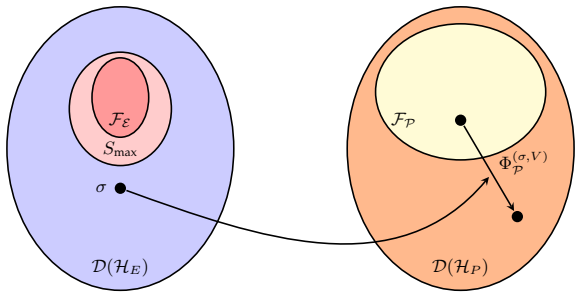
- domain assumption A quantum system can have a well-defined resource theory when free operations are identifiable.
invented entities (1)
-
Induced resource theory
no independent evidence
Reference graph
Works this paper leans on
-
[1]
Chitambar and G
E. Chitambar and G. Gour, Quantum resource the- ories, Rev. Mod. Phys.91, 025001 (2019)
2019
-
[2]
Horodecki, P
R. Horodecki, P . Horodecki, M. Horodecki, and K. Horodecki, Quantum entanglement, Rev. Mod. Phys.81, 865 (2009)
2009
-
[3]
Winter and D
A. Winter and D. Yang, Operational resource theory of coherence, Phys. Rev. Lett.116, 120404 (2016)
2016
-
[4]
Streltsov, G
A. Streltsov, G. Adesso, and M. B. Plenio, Collo- quium: Quantum coherence as a resource, Rev. Mod. Phys.89, 041003 (2017)
2017
-
[5]
J. I. de Vicente, On nonlocality as a resource theory and nonlocality measures, J. Phys. A: Math. Theor. 47, 424017 (2014)
2014
-
[6]
Bravyi and A
S. Bravyi and A. Kitaev, Universal quantum com- putation with ideal clifford gates and noisy ancillas, Phys. Rev. A71, 022316 (2005)
2005
-
[7]
Veitch, S
V . Veitch, S. A. Hamed Mousavian, D. Gottesman, and J. Emerson, The resource theory of stabilizer quantum computation, New J. Phys.16, 013009 (2014), publisher: IOP Publishing
2014
-
[8]
Leone, S
L. Leone, S. F. E. Oliviero, and A. Hamma, Stabilizer rényi entropy, Phys. Rev. Lett.128, 050402 (2022)
2022
-
[9]
Tirrito, P
E. Tirrito, P . S. Tarabunga, G. Lami, T. Chanda, L. Leone, S. F. Oliviero, M. Dalmonte, M. Col- lura, and A. Hamma, Quantifying nonstabilizer- ness through entanglement spectrum flatness, Phys. Rev. A109, L040401 (2024)
2024
-
[10]
B. Jasser, D. Iannotti, and A. Hamma, A journey through flatland: What does the antiflatness of a spectrum teach us?, arXiv:2605.21664 (2026)
Pith/arXiv arXiv 2026
-
[11]
Marvian, Coherence distillation machines are im- possible in quantum thermodynamics, Nat
I. Marvian, Coherence distillation machines are im- possible in quantum thermodynamics, Nat. Com- mun.11, 25 (2020)
2020
-
[12]
Marvian, Operational interpretation of quantum fisher information in quantum thermodynamics, Phys
I. Marvian, Operational interpretation of quantum fisher information in quantum thermodynamics, Phys. Rev. Lett.129, 190502 (2022)
2022
-
[13]
Zhou, Z.-W
S. Zhou, Z.-W. Liu, and L. Jiang, New perspectives on covariant quantum error correction, Quantum 5, 521 (2021)
2021
-
[14]
Lostaglio, An introductory review of the re- source theory approach to thermodynamics, Rep
M. Lostaglio, An introductory review of the re- source theory approach to thermodynamics, Rep. Prog. Phys.82, 114001 (2019)
2019
-
[15]
Valentini, Non-local correlations in quantum electrodynamics, Phys
A. Valentini, Non-local correlations in quantum electrodynamics, Phys. Rev. Lett. A153, 321 (1991)
1991
-
[16]
Reznik, Entanglement from the vacuum, Found
B. Reznik, Entanglement from the vacuum, Found. Phys.33, 167 (2003)
2003
-
[17]
Stritzelberger, L
N. Stritzelberger, L. J. Henderson, V . Baccetti, N. C. Menicucci, and A. Kempf, Entanglement harvest- ing with coherently delocalized matter, Phys. Rev. D103, 016007 (2021)
2021
-
[18]
Martín-Martínez and N
E. Martín-Martínez and N. C. Menicucci, Entangle- ment in curved spacetimes and cosmology, Class. Quantum Grav.31, 214001 (2014)
2014
-
[19]
L. J. Henderson and N. C. Menicucci, Bandlimited entanglement harvesting, Phys. Rev. D102, 125026 (2020)
2020
-
[20]
Suryaatmadja, R
C. Suryaatmadja, R. B. Mann, and W. Cong, En- tanglement harvesting of inertially moving unruh- dewitt detectors in minkowski spacetime, Phys. Rev. D106, 076002 (2022)
2022
-
[21]
Pozas-Kerstjens and E
A. Pozas-Kerstjens and E. Martín-Martínez, Har- vesting correlations from the quantum vacuum, Phys. Rev. D92, 064042 (2015)
2015
-
[22]
T. R. Perche, J. Polo-Gómez, B. d. S. L. Torres, and E. Martín-Martínez, Fully relativistic entanglement harvesting, Phys. Rev. D109, 045018 (2024)
2024
-
[23]
Nyström, N
R. Nyström, N. Pranzini, and E. Keski-Vakkuri, Harvesting magic from the vacuum, Phys. Rev. Res. 7, 033085 (2025)
2025
-
[24]
Cepollaro, S
S. Cepollaro, S. Cusumano, A. Hamma, G. Lo Giu- dice, and J. Odavi´ c, Harvesting stabilizer entropy and nonlocality from a quantum field, Phys. Rev. D112, 105012 (2025)
2025
-
[25]
J. Yang, D. Bhattacharya, M. Zhang, and R. B. Mann, Analytic tools for harvesting magic resource in curved spacetime, arXiv:2508.16466 (2025)
arXiv 2025
- [26]
-
[27]
P . A. LeMaitre, Harvesting contextuality from the vacuum, Phys. Rev. D113, 045001 (2026)
2026
-
[28]
C. Lima, M. R. Preciado-Rivas, and S. Srivastava, Contextuality from the vacuum, arXiv:2508.15001 (2025)
arXiv 2025
-
[29]
S. J. Summers and R. Werner, The vacuum violates bell’s inequalities, Phys. Lett. A.110, 257 (1985)
1985
-
[30]
S. J. Summers and R. Werner, Maximal violation of Bell’s inequalities is generic in quantum field theory, Commun. Math. Phys.110, 247 (1987)
1987
-
[31]
Tjoa and E
E. Tjoa and E. Martín-Martínez, When entangle- ment harvesting is not really harvesting, Phys. Rev. D104, 125005 (2021)
2021
-
[32]
A. E. Deneris, P . Braccia, P . Bermejo, N. Diaz, A. A. Mele, and M. Cerezo, Analyzing the free states of one quantum resource theory as resource states of another, Adv. Quantum Technol.9, e00702 (2026)
2026
-
[33]
Among all possible such operations, one usually selects only a subset, either due to physical con- straints [1] or mathematical ones [47]
-
[34]
Ciccarello, S
F. Ciccarello, S. Lorenzo, V . Giovannetti, and G. M. Palma, Quantum collision models: Open system dynamics from repeated interactions, Phys. Rep. 954, 1–70 (2022)
2022
-
[35]
Cusumano, Quantum collision models: A begin- ner guide, Entropy24, 10.3390/e24091258 (2022)
S. Cusumano, Quantum collision models: A begin- ner guide, Entropy24, 10.3390/e24091258 (2022)
-
[36]
Cattaneo, G
M. Cattaneo, G. L. Giorgi, R. Zambrini, and S. Man- iscalco, A brief journey through collision models for multipartite open quantum dynamics, Open Syst. Inf. Dyn.29, 2250015 (2022)
2022
-
[37]
One has for ρ∈ F P that Φ(ξ,V) P (ρ) =pΦ (σ,V) P (ρ) + (1−p)Φ (σ′,V) P (ρ)
The proof consists of considering two states σ, σ′ ∈ Smax and a generic linear combination ξ:=pσ+ (1−p)σ ′ with p∈[0,1] . One has for ρ∈ F P that Φ(ξ,V) P (ρ) =pΦ (σ,V) P (ρ) + (1−p)Φ (σ′,V) P (ρ). Since σ, σ′ ∈S max, it follows that Φ(σ,V) P (ρ),Φ (σ′,V) P (ρ)∈ FP. If FP is convex, then Φ(ξ,V) P (ρ)∈ F P. Thus, ξ∈S max and the entire set must be convex. ...
-
[38]
Regula, Convex geometry of quantum resource quantification, J
B. Regula, Convex geometry of quantum resource quantification, J. Phys. A: Math. Theor.51, 045303 (2018)
2018
-
[39]
F. G. Brandao and G. Gour, Reversible framework for quantum resource theories, Phys. Rev. Lett.115, 070503 (2015)
2015
-
[40]
M. Naseri, C. Srivastava, C. Datta, J. H. Selby, and S. Sarkar, Polytopic quantum resource theories: Geometry and structures (2026), arXiv:2606.00429 [quant-ph]
Pith/arXiv arXiv 2026
-
[41]
Leone, S
L. Leone, S. F. Oliviero, and A. Hamma, Stabilizer rényi entropy, Phys. Rev. Lett.128, 050402 (2022)
2022
-
[42]
de Boer, J
J. de Boer, J. Järvelä, and E. Keski-Vakkuri, As- pects of capacity of entanglement, Phys. Rev. D 99, 066012 (2019)
2019
-
[43]
Weinberg,The quantum theory of fields, Vol
S. Weinberg,The quantum theory of fields, Vol. 2 (Cambridge university press, 1995)
1995
-
[44]
M. E. Peskin,An introduction to quantum field theory (CRC press, 2018)
2018
-
[45]
Sachdev, Quantum phase transitions, Physics world12, 33 (1999)
S. Sachdev, Quantum phase transitions, Physics world12, 33 (1999)
1999
-
[46]
A. Junior, R. A. Macedo, J. Czartowski, J. B. Brask, and R. Chaves, Trading athermality for nonstabilis- erness, arXiv:2511.13839 (2025)
Pith/arXiv arXiv 2025
-
[47]
N. Diaz, A. A. Mele, P . Bermejo, P . Braccia, A. E. Deneris, M. Larocca, and M. Cerezo, A unified ap- proach to quantum resource theories and a new class of free operations, arXiv:2507.10851 (2025)
arXiv 2025
-
[48]
L. Leone, S. F. Oliviero, and A. Hamma, Stabilizer rényi entropy, Phys. Rev. Lett.128, 10.1103/phys- revlett.128.050402 (2022)
-
[49]
Leone and L
L. Leone and L. Bittel, Stabilizer entropies are monotones for magic-state resource theory, Phys. Rev. A110, L040403 (2024)
2024
-
[50]
C. Cao, G. Cheng, A. Hamma, L. Leone, W. Mu- nizzi, and S. F. E. Oliviero, Gravitational back- reaction is magical (2024), arXiv:2403.07056 [hep- th]
arXiv 2024
-
[51]
D. Gross, Hudson’s theorem for finite- dimensional quantum systems, J. Math. Phys.47, 10.1063/1.2393152 (2006)
-
[52]
Wang and Y
Y. Wang and Y. Li, Stabilizer Rényi entropy on qu- dits, Quantum Inf. Process.22, 444 (2023). Appendix A: The Stabilizer Rényi Entropy Stabilizer Rényi Entropy [ 48] is a measure of how much the state of a quantum system is “spread” over the Pauli basis. For pure states, it is theuniquecomputable monotone [ 49] for non-Clifford resources. Consider the pro...
2023
-
[53]
Specifically, we show it corresponds to a classical field configuration of a Gaussian packet moving in both directions with mean momentumk 0
The expression for α is motivated below. Specifically, we show it corresponds to a classical field configuration of a Gaussian packet moving in both directions with mean momentumk 0. The desired configuration of a (real) massless classical field has the following initial conditions (t= 0 ): φcl(x) = 1√ 2πσ2 e−(x−x0)2/2σ2 0 cos(k0x)(B8) πcl(x) = 0.(B9) We ...
discussion (0)
Sign in with ORCID, Apple, or X to comment. Anyone can read and Pith papers without signing in.