Sustainable photocatalytic CO2 conversion using microalgae as a carbon-negative scavenger
Pith reviewed 2026-06-25 20:41 UTC · model grok-4.3
The pith
Microalgae boost photocatalytic CO2-to-CO and CH4 production by 10- and 4-fold over high-entropy oxide alone.
A machine-rendered reading of the paper's core claim, the machinery that carries it, and where it could break.
Core claim
The central discovery is that the utilization of microalgae during photocatalytic reactions leads to a remarkable enhancement in CO2 conversion compared to catalysis with or without using microplastics, with CO and CH4 production increasing by 10- and 4-fold, respectively, compared to the system using only the high-entropy oxide.
What carries the argument
Microalgae serving as a sustainable sacrificial agent in photocatalytic CO2 reduction using a bi-polymorphic AB2O6-type high-entropy oxide.
If this is right
- The microalgae system achieves higher CO2 conversion than microplastics or catalyst alone.
- The HEO incorporates specific metals to improve surface basicity, polarization, and charge transport for better performance.
- This offers a carbon-negative approach by combining microalgae photosynthesis with photocatalysis.
- The polymorphic structure of the HEO enables new applications in photocatalysis.
Where Pith is reading between the lines
- The approach might be extended to other photosynthetic organisms or mixed cultures for optimized performance.
- Industrial implementation could involve coupling with existing microalgae farms to simultaneously treat CO2 emissions and produce fuels.
- The enhancement may depend on the specific interaction between microalgae byproducts and the catalyst surface, suggesting targeted experiments on metabolite effects.
Load-bearing premise
The measured increases in CO and CH4 production are due to the microalgae acting as an effective sacrificial agent without introducing artifacts or side reactions.
What would settle it
A control experiment showing identical product yields when microalgae are omitted or replaced with an inert substance would indicate that the enhancement is not caused by the microalgae.
Figures



read the original abstract
Photocatalytic CO2 conversion driven by solar energy is a highly promising approach in addressing rising atmospheric CO2 levels; however, its practical application remains limited by low conversion efficiency. In this study, a new strategy to enhance CO2 reduction toward CO and CH4 is proposed through the employment of microalgae as a sacrificial agent, and the efficiency is compared with conventional CO2 conversion without and with the use of microplastics as sacrificial agents. To realize this strategy, an AB2O6-type high-entropy oxide (HEO), (Cs1/7Ba4/7Bi2/7)(Nb1/2Ta1/2)2O6, with bi-polymorphy of layered perovskite and pyrochlore, is rationally designed. The HEO incorporates alkali metal cesium and alkaline earth metal barium to increase surface basicity for CO2 chemisorption, bismuth with its stereochemically active lone pairs for localized polarization and charge separation, and tantalum and niobium to form octahedral crystalline frameworks for charge transport. The utilization of microalgae during photocatalytic reactions leads to a remarkable enhancement in CO2 conversion compared to catalysis with or without using microplastics, with CO and CH4 production increasing by 10- and 4-fold, respectively, compared to the system using only HEO. These findings not only demonstrate a new family of polymorphic AB2-type HEOs for photocatalysis but also show the potential of microalgae as a sustainable sacrificial agent, offering an environmentally friendly pathway for efficient CO2 capture (through photosynthesis by microalgae) and CO2 conversion (through photocatalysis by HEOs).
Editorial analysis
A structured set of objections, weighed in public.
Referee Report
Summary. The manuscript proposes a strategy for photocatalytic CO2 reduction using a rationally designed bi-polymorphic AB2O6-type high-entropy oxide (HEO), (Cs1/7Ba4/7Bi2/7)(Nb1/2Ta1/2)2O6, in combination with microalgae as a sacrificial agent. It claims that this yields 10-fold and 4-fold increases in CO and CH4 production, respectively, relative to the HEO catalyst alone, while also comparing performance against systems using microplastics; the work positions microalgae as a sustainable, carbon-negative scavenger via combined photosynthesis and photocatalysis.
Significance. If the reported yield enhancements are substantiated, the approach could advance integrated biological-photocatalytic systems for CO2 conversion and introduce a new family of polymorphic HEO materials with tailored basicity, polarization, and charge transport properties. The component selection rationale (Cs/Ba for basicity, Bi for lone-pair effects, Nb/Ta for octahedral frameworks) aligns with established design principles in oxide photocatalysis.
major comments (1)
- [Abstract] Abstract: The central claim of 10-fold and 4-fold enhancements in CO and CH4 production is stated quantitatively but without any reference to raw data, error bars, replicate counts, or explicit controls for confounding variables (e.g., catalyst stability, side reactions, or measurement artifacts from the microalgae addition). This absence prevents verification that the observed increases arise specifically from microalgae functioning as an effective sacrificial agent.
Simulated Author's Rebuttal
We thank the referee for the detailed review and constructive feedback on our manuscript. We address the major comment point-by-point below.
read point-by-point responses
-
Referee: [Abstract] Abstract: The central claim of 10-fold and 4-fold enhancements in CO and CH4 production is stated quantitatively but without any reference to raw data, error bars, replicate counts, or explicit controls for confounding variables (e.g., catalyst stability, side reactions, or measurement artifacts from the microalgae addition). This absence prevents verification that the observed increases arise specifically from microalgae functioning as an effective sacrificial agent.
Authors: We acknowledge that the abstract presents the enhancement factors without accompanying statistical details. This is standard for abstracts due to length constraints, but the full manuscript reports the underlying data: production rates with error bars from triplicate experiments, replicate counts, and controls for catalyst stability and side reactions (including blank tests without microalgae and with microplastics) are provided in the Results section, Figure 3, and the Supplementary Information. To address the concern directly, we will revise the abstract to include a short clause noting that the reported enhancements are based on triplicate measurements with statistical analysis detailed in the main text. revision: partial
Circularity Check
No circularity; purely experimental comparisons with no derivations or self-referential steps
full rationale
The paper reports direct experimental yield measurements (10-fold CO, 4-fold CH4 increase with microalgae vs. HEO alone) under controlled conditions with/without microplastics. No equations, models, fitted parameters, predictions, or self-citations appear in the abstract or described content. The central claim rests on observable product ratios from independent runs, satisfying the default expectation of no circularity.
Axiom & Free-Parameter Ledger
axioms (1)
- domain assumption Sacrificial agents improve photocatalytic CO2 reduction efficiency by supplying electrons or suppressing charge recombination
invented entities (1)
-
Bi-polymorphic AB2O6-type high-entropy oxide (Cs1/7Ba4/7Bi2/7)(Nb1/2Ta1/2)2O6
no independent evidence
Reference graph
Works this paper leans on
-
[1]
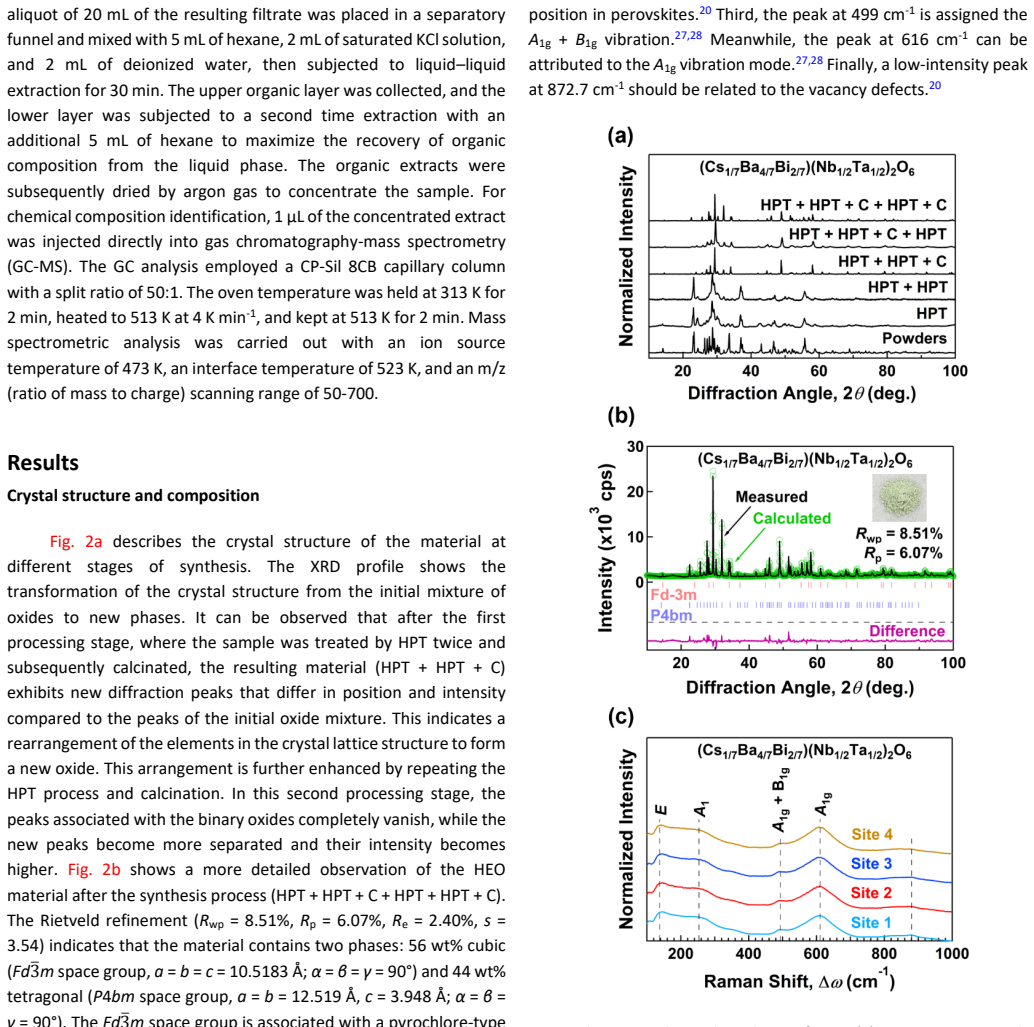
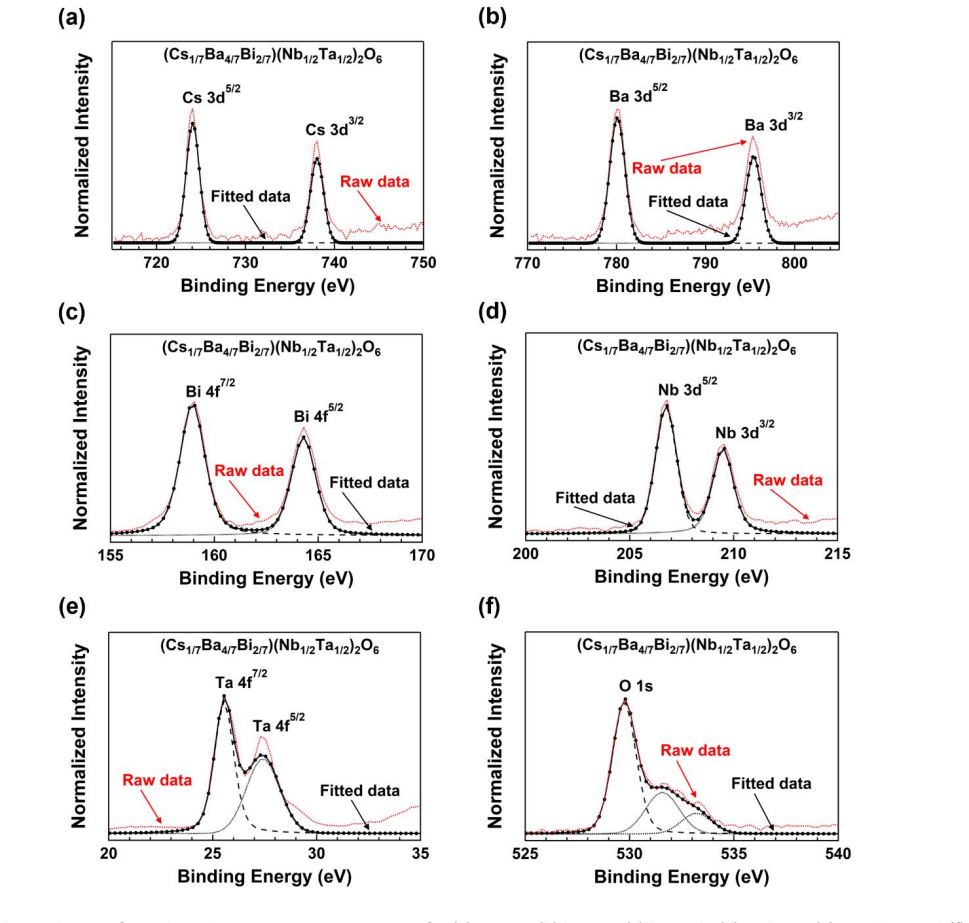
Peak deconvolution of XPS spectra confirms the fully oxidized states of the cations in the HEO (Cs1+, Ba 2+, Bi 3+, Nb 5+, and Ta 5+)
The observed peaks for Cs 3d5/2, Ba 3d5/2, Bi 4f7/2, Nb 3d5/2, and Ta 4f7/2 appear at 724.1, 780.1, 159.1, 206.8, and 25.5 eV, respectively. Peak deconvolution of XPS spectra confirms the fully oxidized states of the cations in the HEO (Cs1+, Ba 2+, Bi 3+, Nb 5+, and Ta 5+). The XPS spectrum and peak deconvolution of oxygen in the HEO reveal the presence ...
2024
-
[2]
Schimel, B
D. Schimel, B. B. Stephens and J. B. Fisher, Effect of increasing CO2 on the terrestrial carbon cycle, Proc. Natl. Acad. Sci. U. S. A. , 2015, 112, 436–441
2015
-
[3]
Rothenberg, A realistic look at CO 2 emissions, climate change and the role of sustainable chemistry, Sustain
G. Rothenberg, A realistic look at CO 2 emissions, climate change and the role of sustainable chemistry, Sustain. Chem. Clim. Action, 2023, 2, 100012
2023
-
[4]
H. T. N. Hai, J. Hidalgo-Jiménez and K. Edalati, Boosting hydrogen and methane formation on a high -entropy photocatalyst by integrating atomic d 0/d10 electronic junctions and microscopic P/N heterojunctions, Int. J. Hydrogen Energy, 2025, 162, 150762
2025
-
[5]
Hidalgo -Jiménez, T
J. Hidalgo -Jiménez, T. Akbay, X. Sauvage, T. Ishihara and K. Edalati, Photocatalytic carbon dioxide methanation by high - entropy oxides: Significance of work function, Appl. Catal. B: Environ. Energy, 2025, 371, 125259
2025
-
[6]
S. Fang, M. Rahaman, J. Bharti, E. Reisner, M. Robert, G. A. Ozin and Y. H. Hu, Photocatalytic CO 2 reduction, Nat. Rev. Methods Primers, 2023, 3, 61
2023
-
[7]
P. M. Bacirhonde, D. Shrestha, K. Kang, E. M. Hia, N. Komalla, N. Y. Dzade, M. Buldu‐Akturk, M. P. Browne, M. B. Poudel, D. J. Yoo, E. Jeong, A. Y. Mohamed, B. G. Han, D. Cho, M. T. Curnan, G. H. Gu, J. W. Han and C. H. Park, Understanding the metal -center mediated adsorption and redox mechanisms in a FeMn(NbTa)2O6 columbite material for anion exchange m...
2025
-
[8]
S. A. Da Silva and S. M. Zanetti, Processing of Bi 1.5ZnNb1.5O7 ceramics for LTCC applications: Comparison of synthesis and sintering methods, Ceram. Int., 2009, 35, 2755–2759
2009
-
[9]
W. Luo, S. Wang, S. Zheng, J. Li, M. Wang, Y. Wen, L. Li and J. Zhou, Dielectric response of ANb 2O6 (A = Zn, Co, Mn, Ni) columbite niobates: From microwave to terahertz, J. Adv. Ceram., 2024, 13, 1189–1197
2024
-
[10]
Alageshwaramoorthy, P
K. Alageshwaramoorthy, P. Mannu, S. Mahalingam, T. T. T. Nga, H.-W. Chang, Y. Masuda and C. -L. Dong, Synthesis and characterization of visible -light-driven novel CuTa 2O6 as a promising practical photocatalyst, Front. Chem. , 2023, 11, 1197961
2023
-
[11]
E. E. Nikishina, E. N. Lebedeva, D. V. Drobot, Niobium- and tantalum-containing oxide materials: Synthesis, properties, and application, Inorg. Mater., 2012, 48, 1243-1260
2012
-
[12]
Hidalgo -Jiménez, T
J. Hidalgo -Jiménez, T. Akbay, T. Ishihara and K. Edalati, Active high-entropy photocatalyst designed by incorporating alkali metals to achieve d 0+d10+s0 cationic configurations and wide electronegativity mismatch, Acta Mater., 2026, 302, 121632
2026
-
[13]
Ding, Y.-P
Q.-P. Ding, Y.-P. Yuan, X. Xiong, R.-P. Li, H.-B. Huang, Z.-S. Li, T. Yu, Z.-G. Zou and S.-G. Yang, Enhanced photocatalytic water splitting properties of KNbO 3 nanowires synthesized through hydrothermal method, J. Phys. Chem. C , 2008, 112, 18846 – 18848
2008
-
[14]
Y. Huan, H. Shen, Y. Zhu, M. Li, H. Li, Z. Wang, Y. Hao and T. Wei, Enhanced ferro-photocatalytic performance for ANbO3 (A= Na, K) nanoparticles, Math. Biosci. Eng., 2019, 16, 4122–4134
2019
-
[15]
J. F. D. L. Nascimento, Y. Leyet Ruiz, O. Da Cunha Mendes, F. M. C. Batista, A. Cabot, J. M. E. D. Matos, R. D. Ferreira, M. V. Botelho Do Nascimento, L. B. Saraiva, J. N. N. Quaresma and F. X. Nobre, BaNb2O6 at room temperature by ball milling method: Structural, optical, morphology, and electrochemistry properties, Ind. Eng. Chem. Res., 2024, 63, 20020–20033
2024
-
[16]
Ye, A novel series of water splitting photocatalysts NiM2O6 (M= Nb, Ta) active under visible light, Int
J. Ye, A novel series of water splitting photocatalysts NiM2O6 (M= Nb, Ta) active under visible light, Int. J. Hydrogen Energy , 2003, 28, 651–655
2003
-
[17]
Iguchi, K
S. Iguchi, K. Teramura, S. Hosokawa and T. Tanaka, A ZnTa 2O6 photocatalyst synthesized via solid state reaction for conversion of CO2 into CO in water, Catal. Sci. Technol., 2016, 6, 4978–4985
2016
-
[18]
S. Xie, Y. Wang, Q. Zhang, W. Deng and Y. Wang, SrNb2O6 nanoplates as efficient photocatalysts for the preferential reduction of CO2 in the presence of H2O, Chem. Commun., 2015, 51, 3430–3433
2015
-
[19]
Akrami, P
S. Akrami, P. Edalati, M. Fuji and K. Edalati, High-entropy ceramics: Review of principles, production and applications, Mater. Sci. Eng., R, 2021, 146, 100644
2021
-
[20]
X. Wang, X. Chen, S. Zou, Z. Jia, B. Li, H. Wang and D. Xu, Geochronology, geochemistry, and mineral chemistry of the Lingshan-Huangshan complex, South China: Insights into Nb and Ta enrichment, Ore Geol. Rev., 2023, 157, 105433
2023
-
[21]
H. T. N. Hai, M. Arita and K. Edalati, High-entropy perovskites as new photocatalysts for cocatalyst -free water splitting, Appl. Catal. B: Environ. Energy, 2026, 383, 126081
2026
-
[22]
T. T. Nguyen and K. Edalati, High-entropy oxide with tailored heterogeneous electronic structure as a low-bandgap catalyst for antibiotic photodegradation under visible light, Appl. Catal. B: Environ. Energy, 2026, 382, 126011
2026
-
[23]
Randhir, D
A. Randhir, D. W. Laird, G. Maker, R. Trengove and N. R. Moheimani, Microalgae: A potential sustainable commercial source of sterols, Algal Res., 2020, 46, 101772
2020
-
[24]
Zuccaro, A
G. Zuccaro, A. Yousuf, A. Pollio and J. -P. Steyer, Microalgae cultivation systems, in A. Yousuf (ed.), Microalgae Cultivation for Biofuels Production, Elsevier, 2020, pp. 11–29
2020
-
[25]
Edalati and Z
K. Edalati and Z. Horita, A review on high-pressure torsion (HPT) from 1935 to 1988, Mater. Sci. Eng., A, 2016, 652, 325–352
1935
-
[26]
Khanmiri, R
M.H. Khanmiri, R. Bogdanov, E. Puchkova, A. Titov, A. Yadollahi , On the issue of comparing the immobilization characteristics of matrix materials based on Nb –Ta–Ti-oxides of the types AB 2O6 and A2B2O7, Sci. Rep., 2024, 14, 17992
2024
-
[27]
Galasso, G
F. Galasso, G. Layden and G. Ganung, ANb2O6 and ATa2O6 phases, Mater. Res. Bull., 1968, 3, 397–407
1968
-
[28]
Davidson (ed.), Spectroscopic Properties of Inorganic and Organometallic Compounds, RCS, Cambridge, 2005, volume 37
G. Davidson (ed.), Spectroscopic Properties of Inorganic and Organometallic Compounds, RCS, Cambridge, 2005, volume 37
2005
-
[29]
Palliyaguru, U
L. Palliyaguru, U. S. Kulathunga, L. I. Jayarathna, C. D. Jayaweera and P. M. Jayaweera, A simple and novel synthetic route to prepare anatase TiO2 nanopowders from natural ilmenite via the H3PO4/NH3 process, Int. J. Miner. Metall. Mater. , 2020, 27, 846– 855
2020
-
[30]
W. M. Haynes and D. R. Lide, eds., CRC Handbook of Chemistry and Physics: A Ready -Reference Book of Chemical and Physical Data, CRC Press, Boca Raton, Fla., 92nd edn, 2011
2011
-
[31]
Nakagawa, I
S. Nakagawa, I. Fujii, H. Nam, S. Ueno and S. Wada, Fabrication of BaTiO3–Bi(Mg0.5Ti0.5)O3–BiFeO3 ceramics at lower temperature by using citrate method, J. Ceram. Soc. Jpn., 2024, 132, 358–363
2024
-
[32]
J. V. Rojas, M. Toro -González, M. C. Molina -Higgins and C. E. Castano, Facile radiolytic synthesis of ruthenium nanoparticles on graphene oxide and carbon nanotubes, Mater. Sci. Eng., B , 2016, 205, 28–35
2016
-
[33]
H. T. N. Hai, T. T. Nguyen, M. Nishibori, T. Ishihara and K. Edalati, Photoreforming of plastic waste into valuable products and hydrogen using a high-entropy oxynitride with distorted atomic- scale structure, Appl. Catal. B: Environ. Energy , 2025, 365, 124968
2025
-
[34]
T. T. Nguyen, J. Hidalgo-Jiménez, X. Sauvage, K. Saito, Q. Guo and K. Edalati, Phase and sulfur vacancy engineering in cadmium sulfide for boosting hydrogen production from catalytic plastic waste photoconversion, Chem. Eng. J., 2025, 504, 158730
2025
-
[35]
Bianconi, Surface X -ray absorption spectroscopy: Surface EXAFS and surface XANES, Appl
A. Bianconi, Surface X -ray absorption spectroscopy: Surface EXAFS and surface XANES, Appl. Surf. Sci., 1980, 6, 392–418
1980
-
[36]
Zhang, S
W. Zhang, S. Zhan, J. Xiao, T. Petit, C. Schlesiger, M. Mellin, J. P. Hofmann, T. Heil, R. Müller, K. Leopold and M. Oschatz, Coordinative stabilization of single bismuth sites in a carbon – nitrogen matrix to generate atom -efficient catalysts for electrochemical nitrate reduction to ammonia, Adv. Sci. , 2023, 10, 2302623
2023
-
[37]
Ribeiro, G
J. Ribeiro, G. Tremiliosi -Filho, P. Olivi and A. R. de Andrade, XAS characterization of the RuO 2–Ta2O5 system local (crystal) structure, Mater. Chem. Phys., 2011, 125, 449–460
2011
-
[38]
F. He, Y. Liu, X. Yang, Y. Chen, C. -C. Yang, C. -L. Dong, Q. He, B. Yang, Z. Li, Y. Kuang, L. Lei, L. Dai and Y. Hou, Accelerating oxygen electrocatalysis kinetics on metal –organic frameworks via bond length optimization, Nano-Micro Lett., 2024, 16, 175
2024
-
[39]
K. Mori, N. Hashimoto, N. Kamiuchi, H. Yoshida, H. Kobayashi and H. Yamashita, Hydrogen spillover -driven synthesis of high - entropy alloy nanoparticles as a robust catalyst for CO 2 hydrogenation, Nat. Commun., 2021, 12, 3884
2021
-
[40]
A. G. S. Prado, L. B. Bolzon, C. P. Pedroso, A. O. Moura and L. L. Costa, Nb2O5 as efficient and recyclable photocatalyst for indigo carmine degradation, Appl. Catal. B: Environ. Energy, 2008, 82, 219–224
2008
-
[41]
X. Yang, A. Roy, M. Alhabradi, M. Alruwaili, H. Chang and A. A. Tahir, Fabrication and Characterization of Tantalum –Iron Composites for Photocatalytic Hydrogen Evolution , Nanomater., 2023, 13, 2464
2023
-
[42]
H. Qin, X. Chen, J. Zhang, Y. Song, L. Zhang, Q. Liu, F. Wang, D. Wang, Y. Sang and H. Liu, Electronic paramagnetic resonance analysis of point defects in lithium niobate: progress and prospects, Mater. Adv., 2025, 6, 6648–6663
2025
-
[43]
X. Zhu, J. Yang, X. Zhu, J. Yuan, M. Zhou, X. She, Q. Yu, Y. Song, Y. She, Y. Hua, H. Li and H. Xu, Exploring deep effects of atomic vacancies on activating CO 2 photoreduction via rationally designing indium oxide photocatalysts, Chem. Eng. J., 2021, 422, 129888
2021
-
[44]
M. Ni, L. Wang, Y. Chai, B. Wang, D. Li, J. Shen, Z. Zhang and X. Wang, Multimetal tantalate CsBi 2Ta5O16 for photocatalytic conversion of CO2 with H2O into CH4 and O2, Appl. Surf. Sci., 2022, 588, 152933
2022
-
[45]
Fresno, S
F. Fresno, S. Galdón, M. Barawi, E. Alfonso-González, C. Escudero, V. Pérez -Dieste, C. Huck -Iriart and V. A. De La Peña O’Shea, Selectivity in UV photocatalytic CO 2 conversion over bare and silver-decorated niobium -tantalum perovskites, Catal. Today , 2021, 361, 85–93
2021
-
[46]
D.-E. Lee, D. Jin Kim, V. Devthade, W. -K. Jo and S. Tonda, Size- dependent selectivity and activity of highly dispersed sub - nanometer Pt clusters integrated with P25 for CO 2 photoreduction into methane fuel, Appl. Surf. Sci. , 2022, 584, 152532
2022
-
[47]
S. Wei, Q. Heng, Y. Wu, W. Chen, X. Li and W. Shangguan, Improved photocatalytic CO2 conversion efficiency on Ag loaded porous Ta2O5, Appl. Surf. Sci., 2021, 563, 150273
2021
-
[48]
J. Zhao, Z. Xiong, J. Wang, Y. Qiu, P. Liu, Y. Zhao and J. Zhang, SnTa2O6: A novel CO 2 reduction photocatalyst with nearly 100% CO selectivity, Chem. Eng. J., 2022, 446, 137242
2022
-
[49]
Y. Bai, P. Yang, L. Wang, B. Yang, H. Xie, Y. Zhou and L. Ye, Ultrathin Bi 4O5Br2 nanosheets for selective photocatalytic CO 2 conversion into CO, Chem. Eng. J., 2019, 360, 473–482
2019
-
[50]
F. Zhou, Y. Zhang, J. Wu, W. Yang, X. Fang, T. Jia, Y. Ling, P. He, Q. Liu and J. Lin, Utilizing Er -doped ZnIn 2S4 for efficient photocatalytic CO 2 conversion, Appl. Catal. B: Environ. , 2024, 341, 123347
2024
-
[51]
El Haimouti, D
A. El Haimouti, D. Zambon, M. El -Ghozzi, D. Avignant, F. Leroux, M. El Aatmani and M. Daoud, Synthesis and structural characterization of new defect pyrochlore type A xLnySb2O6+z antimoniates (0<x, y, z<1; A = Rb, Cs, Tl; Ln = Eu, Gd, and Y) prepared by coprecipitation, Mater. Res. Bull. , 2003, 38, 1423– 1436
2003
-
[52]
T. T. Nguyen and K. Edalati, Synergistic interface and oxygen/nitrogen vacancy engineering in g-C3N4/Cu2O under high pressure for efficient CO2 photoreduction, J. Colloid Interface Sci., 2026, 702, 138951
2026
-
[53]
W. Ji, J. Hou, Y. Miao and C. Ma, Phase stability and thermal properties of dual-phase high-entropy fluorite-pyrochlore oxides, Ceram. Int., 2025, 51, 12951–12962
2025
-
[54]
A. J. Wright, Q. Wang, C. Hu, Y. T. Yeh, R. Chen and J. Lou, Single- phase duodenary high -entropy fluorite/pyrochlore oxides with an order-disorder transition, Acta Mater., 2021, 211, 116858
2021
-
[55]
Zhang, S
J. Zhang, S. Liu, Z. Tian, Y. Zhang and Z. Shi, The Formation and Phase Stability of A-Site High-Entropy Perovskite Oxides, Mater., 2023, 16, 2214
2023
-
[56]
Lone Pairs
R. Seshadri and N. A. Hill, Visualizing the Role of Bi 6s “Lone Pairs” in the Off -Center Distortion in Ferromagnetic BiMnO 3, Chem. Mater., 2002, 13, 2892-2899
2002
-
[57]
H. T. N. Hai, A. D. Luchessi and K. Edalati, A sustainable photocatalytic pathway for concurrent hydrogen and value - added chemical production utilizing microalgae as bio-scavenger in water, Int. J. Hydrogen Energy, 2026, 228, 154704
2026
discussion (0)
Sign in with ORCID, Apple, or X to comment. Anyone can read and Pith papers without signing in.