Spinterface-like mechanism of the chirality-induced spin selectivity in donor chiral-bridge acceptor complexes
Pith reviewed 2026-07-02 07:21 UTC · model grok-4.3
The pith
A current-induced solenoidal field from charge transfer through a chiral bridge, interacting with the residual donor electron, produces the observed spin selectivity in isolated molecular complexes.
A machine-rendered reading of the paper's core claim, the machinery that carries it, and where it could break.
Core claim
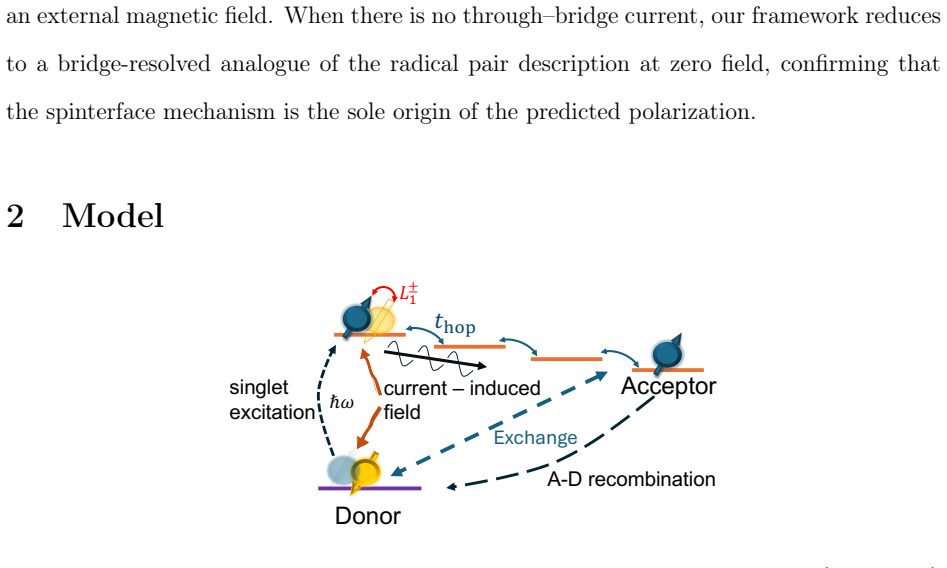
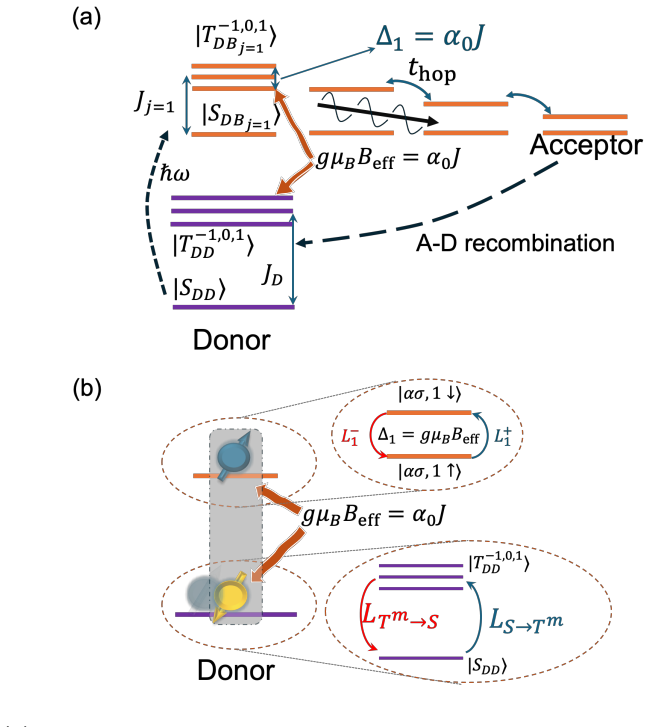
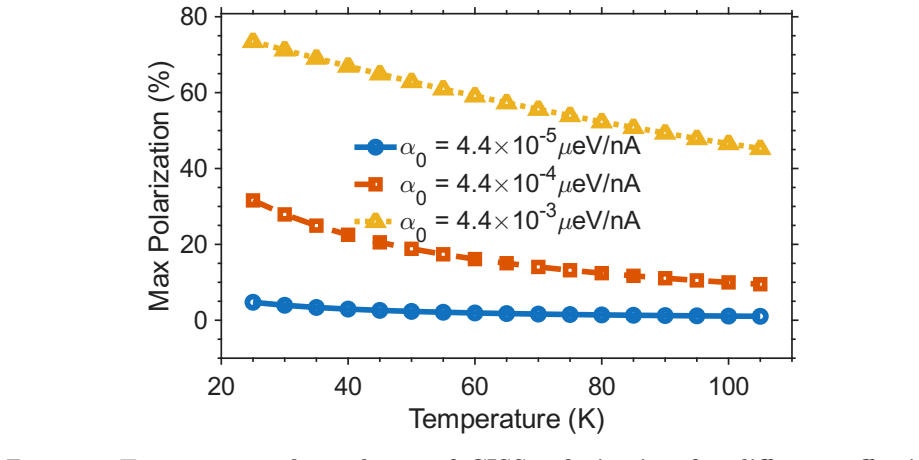
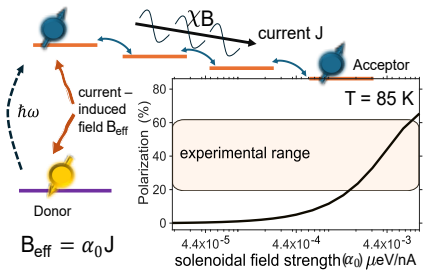
In the two-electron Lindblad model, the charge-transfer electron exchanges with the residual donor electron acting as a localized magnetic moment; the resulting through-bridge current produces an effective solenoidal field at the donor-bridge interface that breaks spin degeneracy and directional symmetry, enabling spin-selective transport without intrinsic spin-orbit coupling on the bridge. The interplay of this field, donor thermalization breaking time-reversal symmetry, and bridge spin mixing produces tens-of-percent polarization matching reported signatures in triads and DNA hairpins.
What carries the argument
Two-electron Lindblad model with current-induced solenoidal field generated by exchange between the charge-transfer electron and the residual donor electron treated as a localized magnetic moment.
If this is right
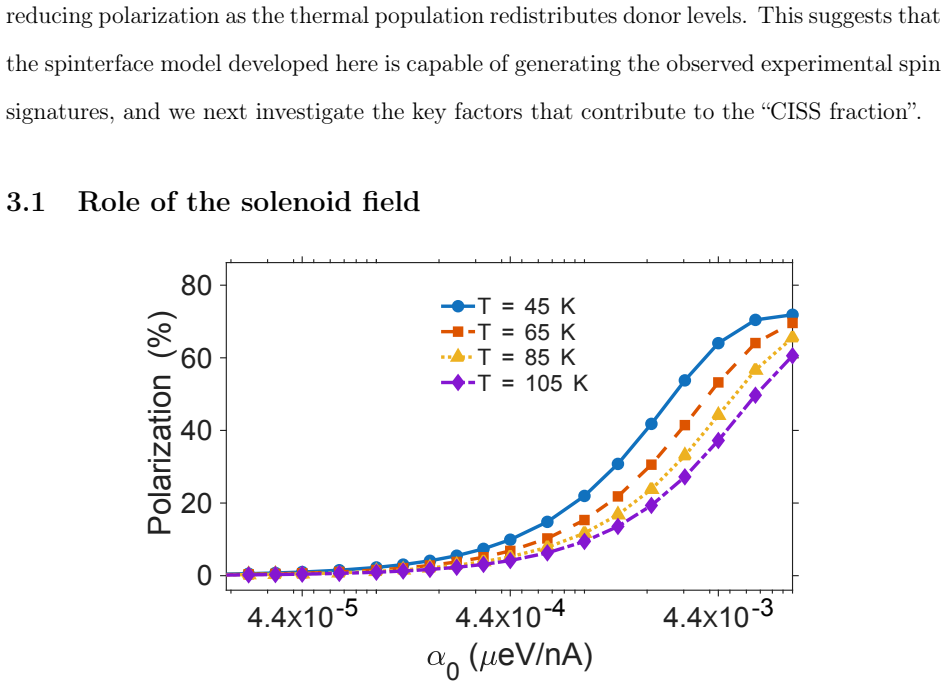
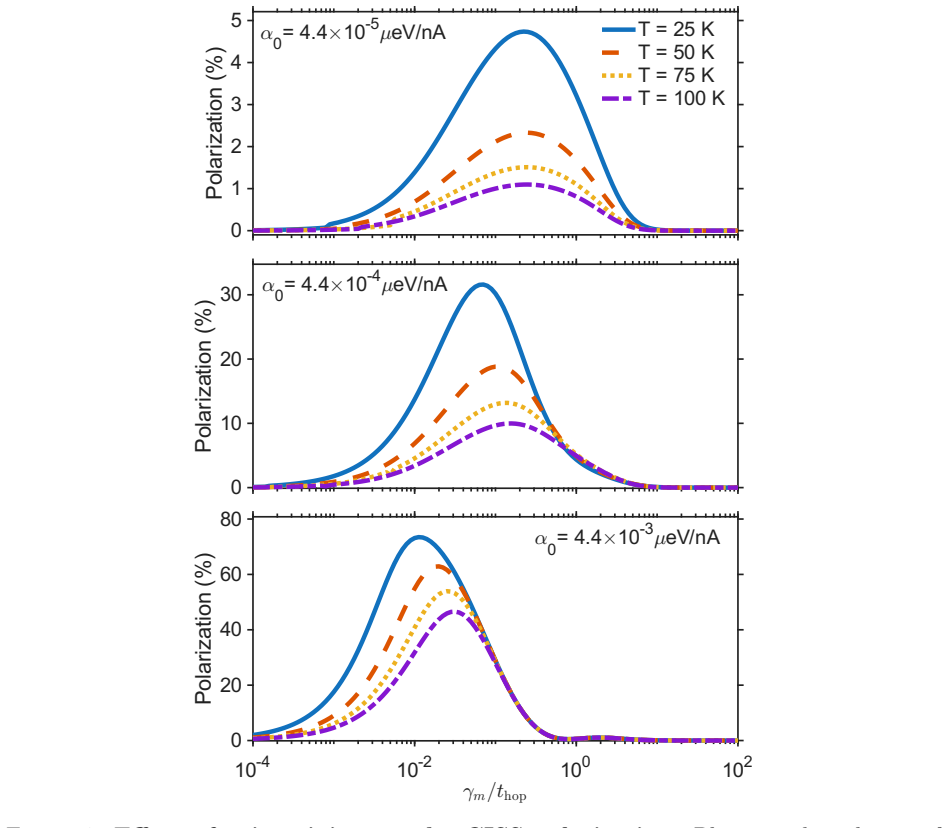
- Spin polarization reaches tens of percent under realistic temperatures and charge-transfer times.
- Polarization strength varies explicitly with solenoidal coupling, temperature, and spin-mixing rates.
- The same internal mechanism reproduces CISS signatures seen in both molecular triads and DNA hairpins.
- Spin selectivity occurs without requiring strong intrinsic spin-orbit coupling on the chiral bridge.
Where Pith is reading between the lines
- Varying donor-bridge distance or temperature in time-resolved EPR could map the predicted dependence on field strength and thermalization.
- The account suggests that CISS-like filtering may appear in other photoexcited chiral systems that support an internal localized moment.
- If the mechanism holds, removing the donor electron should eliminate the polarization while leaving bridge chirality unchanged.
Load-bearing premise
The residual donor electron functions as a localized magnetic moment that couples to the through-bridge current to create an effective solenoidal field at the interface.
What would settle it
Absence of spin polarization when the donor electron is removed or when charge transfer is blocked while keeping the chiral bridge intact.
Figures
read the original abstract
The chirality-induced spin selectivity (CISS) effect has been invoked to explain recent reports of differences in the time-resolved EPR signals between chiral and achiral molecules. However, the microscopic origin of these differences and their connection to CISS remains contested, particularly since these systems lack a metal interface. Here we introduce an intramolecular spinterface-like mechanism that naturally arises within donor-chiral bridge-acceptor (D--$\chi$B--A) complexes and quantitatively reproduces experimentally reported observed spin polarization in time-resolved EPR studies. In our two-electron Lindblad model, the photoexcited charge-transfer electron traversing the chiral bridge exchanges with the residual donor electron, which acts as a localized magnetic moment analogous to an induced magnetic moment on an electrode surface. The resulting through-bridge charge current produces an effective solenoidal field at the donor--bridge interface, breaking spin degeneracy and directional symmetry, thus enabling spin-selective transport without invoking intrinsic spin-orbit coupling on the bridge. We show that the interplay between this current-induced field, donor thermalization (which breaks time-reversal symmetry), and bridge spin mixing yields tens-of-percent polarization over realistic experimental conditions and charge-transfer time scales, matching reported CISS signatures in triads and DNA hairpins. By explicitly resolving the dependence on solenoidal coupling strength, temperature, and spin-mixing rates, the model identifies the regime in which internal spinterfaces can generate robust CISS-like spin filtering. These findings demonstrate that CISS-like signals in isolated D--$\chi$B--A complexes are fully compatible with a spinterface mechanism, providing a unified conceptual framework for interpreting both device-based and molecule-internal CISS platforms.
Editorial analysis
A structured set of objections, weighed in public.
Referee Report
Summary. The manuscript proposes an intramolecular spinterface-like mechanism for chirality-induced spin selectivity (CISS) in donor-chiral bridge-acceptor (D-χB-A) complexes. A two-electron Lindblad master equation models exchange between the photoexcited charge-transfer electron and the residual donor electron (treated as a localized magnetic moment), generating an effective solenoidal field at the donor-bridge interface. Combined with donor thermalization (breaking time-reversal symmetry) and bridge spin mixing, this produces tens-of-percent spin polarization over realistic charge-transfer timescales, matching reported EPR signatures in triads and DNA hairpins. The model explicitly tracks dependence on solenoidal coupling strength, temperature, and spin-mixing rates.
Significance. If the central mechanism holds with independently fixed parameters, the work would supply a unified conceptual framework for CISS-like signals in isolated molecular systems lacking metal interfaces, bridging device-based and molecule-internal observations. The explicit resolution of parameter dependence is a strength, allowing identification of relevant regimes without invoking strong intrinsic spin-orbit coupling.
major comments (3)
- [Abstract (model description)] The effective solenoidal field at the donor-bridge interface is introduced phenomenologically in the two-electron Lindblad model without derivation from the underlying Coulomb or current-density operators in the D-χB-A Hamiltonian. This is load-bearing for the central claim, as the reported polarization levels depend directly on the (unspecified) coupling strength; if this strength is not fixed by molecular parameters, the match to experimental CISS signatures reduces to a fit rather than a prediction.
- [Abstract (two-electron Lindblad model)] The residual donor electron is posited to act as a localized magnetic moment analogous to an induced moment on an electrode surface, enabling the spinterface-like mechanism. This axiom is introduced without microscopic justification from the isolated D-χB-A Hamiltonian and is load-bearing for the analogy; its validity determines whether the current-induced field can arise internally.
- [Abstract (parameter dependence)] Donor thermalization and bridge spin-mixing rates are listed among the free parameters whose interplay yields the polarization. While the model resolves their dependence, the absence of independent constraints on these rates (from molecular structure or separate experiments) means the tens-of-percent polarization is not yet shown to be robustly predicted rather than tuned.
minor comments (1)
- [Abstract] The abstract refers to 'time-resolved EPR studies' and 'reported CISS signatures' but does not cite specific experimental papers or datasets against which the Lindblad results are compared; adding these references would strengthen the quantitative matching claim.
Simulated Author's Rebuttal
We thank the referee for the careful reading and constructive comments. We address each major comment below with clarifications and planned revisions where appropriate.
read point-by-point responses
-
Referee: [Abstract (model description)] The effective solenoidal field at the donor-bridge interface is introduced phenomenologically in the two-electron Lindblad model without derivation from the underlying Coulomb or current-density operators in the D-χB-A Hamiltonian. This is load-bearing for the central claim, as the reported polarization levels depend directly on the (unspecified) coupling strength; if this strength is not fixed by molecular parameters, the match to experimental CISS signatures reduces to a fit rather than a prediction.
Authors: We acknowledge that the solenoidal field enters the model as an effective coupling. This is motivated by the expectation that through-bridge charge current generates a local magnetic field at the donor interface, consistent with the Biot-Savart relation applied to molecular length scales. In the revised manuscript we will add an appendix estimating the coupling magnitude from representative molecular current densities, bridge geometry, and charge velocities, showing that the values used lie within the physically plausible range. This will clarify that the reported polarization levels are achievable for realistic parameters rather than arbitrary fits. revision: partial
-
Referee: [Abstract (two-electron Lindblad model)] The residual donor electron is posited to act as a localized magnetic moment analogous to an induced moment on an electrode surface, enabling the spinterface-like mechanism. This axiom is introduced without microscopic justification from the isolated D-χB-A Hamiltonian and is load-bearing for the analogy; its validity determines whether the current-induced field can arise internally.
Authors: The residual donor electron is modeled as a localized spin-1/2 because, following photoinduced charge transfer in D-χB-A complexes, the donor moiety carries an unpaired electron whose spin degree of freedom is spatially localized on the donor. This description is standard for charge-transfer states. In the revision we will insert a short derivation showing how the effective exchange interaction between the transferred electron and the donor spin emerges from the two-electron Hamiltonian of the isolated D-χB-A system, thereby grounding the analogy more firmly. revision: yes
-
Referee: [Abstract (parameter dependence)] Donor thermalization and bridge spin-mixing rates are listed among the free parameters whose interplay yields the polarization. While the model resolves their dependence, the absence of independent constraints on these rates (from molecular structure or separate experiments) means the tens-of-percent polarization is not yet shown to be robustly predicted rather than tuned.
Authors: The rates were chosen to lie within ranges reported in the experimental literature on molecular triads and DNA hairpins (thermalization from EPR relaxation data; spin mixing from hyperfine and residual spin-orbit effects). The revised manuscript will cite these independent experimental constraints explicitly and will demonstrate that the polarization remains in the tens-of-percent range across the experimentally reported intervals, thereby showing robustness rather than fine tuning. revision: partial
Circularity Check
No significant circularity; model parameters are explicit and result is not reduced to input by construction
full rationale
The abstract and description present a two-electron Lindblad model that introduces an effective solenoidal field phenomenologically at the donor-bridge interface. The central result is that polarization of tens of percent arises from the interplay of this field, donor thermalization, and bridge spin mixing for realistic values of the (explicitly resolved) coupling strength, temperature, and mixing rates. No self-citations, self-definitional steps, or equations are quoted that would make the polarization output equivalent to a fitted input or prior author result by construction. The model identifies regimes of parameter space rather than claiming a parameter-free first-principles derivation, satisfying the criteria for a self-contained (non-circular) analysis.
Axiom & Free-Parameter Ledger
free parameters (3)
- solenoidal coupling strength
- bridge spin-mixing rates
- donor thermalization rate
axioms (2)
- domain assumption Two-electron Lindblad master equation accurately captures the open-system dynamics of the photoexcited D-χB-A complex
- ad hoc to paper The residual donor electron behaves as a localized magnetic moment analogous to an electrode surface
invented entities (2)
-
effective solenoidal field at the donor-bridge interface
no independent evidence
-
intramolecular spinterface-like mechanism
no independent evidence
Reference graph
Works this paper leans on
-
[1]
Nature nanotechnology , volume=
DNA spintronics sees the light , author=. Nature nanotechnology , volume=. 2011 , publisher=
2011
-
[2]
Journal of the American Chemical Society , year=
Chirality-Induced Spin Selectivity in an Achiral Electron Donor--Acceptor Molecule Doped into a Cholesteric Liquid Crystal , author=. Journal of the American Chemical Society , year=
-
[3]
The Journal of Chemical Physics , volume=
Ballistic transport and quantum unfurling in molecular junctions via minimal representations of quantum master equations , author=. The Journal of Chemical Physics , volume=. 2020 , publisher=
2020
-
[4]
The Journal of Physical Chemistry C , volume=
Environment-assisted and environment-hampered efficiency at maximum power in a molecular photocell , author=. The Journal of Physical Chemistry C , volume=. 2020 , publisher=
2020
-
[5]
Journal of the American Chemical Society , volume=
Dipole-Induced Inversion of Spin-Dependent Charge Transport through -Helical Peptide-Based Single-Molecule Junctions , author=. Journal of the American Chemical Society , volume=. 2025 , publisher=
2025
-
[6]
Chemical Science , volume=
The mechanism of the molecular CISS effect in chiral nano-junctions , author=. Chemical Science , volume=. 2024 , publisher=
2024
-
[7]
Nature Chemistry , volume=
Real-time monitoring of reaction stereochemistry through single-molecule observations of chirality-induced spin selectivity , author=. Nature Chemistry , volume=. 2023 , publisher=
2023
-
[8]
Israel Journal of Chemistry , pages=
Benchmarking Chiral Induced Spin Selectivity Measurements-Towards Meaningful Comparisons of Chiral Biomolecule Spin Polarizations , author=. Israel Journal of Chemistry , pages=. 2022 , publisher=
2022
-
[9]
Journal of magnetism and magnetic materials , volume=
Giant magnetic tunneling effect in Fe/Al2O3/Fe junction , author=. Journal of magnetism and magnetic materials , volume=. 1995 , publisher=
1995
-
[10]
Journal of Physics: Condensed Matter , volume=
Spin-dependent tunnelling in magnetic tunnel junctions , author=. Journal of Physics: Condensed Matter , volume=. 2003 , publisher=
2003
-
[11]
Israel Journal of Chemistry , pages=
Chirality Induced Spin Selectivity--the Photoelectron View , author=. Israel Journal of Chemistry , pages=. 2022 , publisher=
2022
-
[12]
Kulkarni, Chidambar and Mondal, Amit Kumar and Das, Tapan Kumar and Grinbom, Gal and Tassinari, Francesco and Mabesoone, Mathijs F. J. and Meijer, E. W. and Naaman, Ron , title =. Advanced Materials , volume =. doi:https://doi.org/10.1002/adma.201904965 , url =. https://onlinelibrary.wiley.com/doi/pdf/10.1002/adma.201904965 , year =
-
[13]
Physical Review B , volume=
Spin polarization through a molecular junction based on nuclear Berry curvature effects , author=. Physical Review B , volume=. 2022 , publisher=
2022
-
[14]
Journal of the American Chemical Society , volume=
Chirality-induced magnetoresistance due to thermally driven spin polarization , author=. Journal of the American Chemical Society , volume=. 2022 , publisher=
2022
-
[15]
Physical Chemistry Chemical Physics , volume=
A device for measuring spin selectivity in electron transfer , author=. Physical Chemistry Chemical Physics , volume=. 2013 , publisher=
2013
-
[16]
Kevin and Lim, James and Huelga, Susana F
Vittmann, Clemens and Kessing, R. Kevin and Lim, James and Huelga, Susana F. and Plenio, Martin B. , Title =. JOURNAL OF PHYSICAL CHEMISTRY LETTERS , Year =. doi:10.1021/acs.jpclett.1c03975 , ISSN =
-
[17]
Journal of Chemical Theory and Computation , volume=
Insight into the origin of chiral-induced spin selectivity from a symmetry analysis of electronic transmission , author=. Journal of Chemical Theory and Computation , volume=. 2020 , publisher=
2020
-
[18]
ChemPhotoChem , volume=
Chirality Induced Spin Selectivity of Photoexcited Electrons in Carbon-Sulfur [n] Helicenes , author=. ChemPhotoChem , volume=. 2019 , publisher=
2019
-
[19]
Journal of Chemical Theory and Computation , volume=
Influence of electronic structure modeling and junction structure on first-principles chiral induced spin selectivity , author=. Journal of Chemical Theory and Computation , volume=. 2020 , publisher=
2020
-
[20]
Advanced Materials , volume=
Helicenes—A new class of organic spin filter , author=. Advanced Materials , volume=. 2016 , publisher=
2016
-
[21]
The journal of physical chemistry letters , volume=
Enhanced magnetoresistance in chiral molecular junctions , author=. The journal of physical chemistry letters , volume=. 2018 , publisher=
2018
-
[22]
Communications Materials , volume=
Ab initio parametrization of a generalized Hubbard model in a molecule displaying chirality-induced spin selectivity , author=. Communications Materials , volume=. 2025 , publisher=
2025
-
[23]
Chemical Society Reviews , volume=
The electron's spin and molecular chirality--how are they related and how do they affect life processes? , author=. Chemical Society Reviews , volume=. 2016 , publisher=
2016
-
[24]
Proceedings of the National Academy of Sciences , volume=
Spin-dependent electron transmission through bacteriorhodopsin embedded in purple membrane , author=. Proceedings of the National Academy of Sciences , volume=. 2013 , publisher=
2013
-
[25]
The journal of physical chemistry letters , volume=
Chirality-dependent electron spin filtering by molecular monolayers of helicenes , author=. The journal of physical chemistry letters , volume=. 2018 , publisher=
2018
-
[26]
The Journal of Physical Chemistry Letters , volume=
Formulation of long-range transport rates through molecular bridges: from unfurling to hopping , author=. The Journal of Physical Chemistry Letters , volume=. 2018 , publisher=
2018
-
[27]
Journal of functional biomaterials , volume=
DNA-based single-molecule electronics: from concept to function , author=. Journal of functional biomaterials , volume=. 2018 , publisher=
2018
-
[28]
The Journal of Physical Chemistry C , volume=
Length-dependent electron spin polarization in oligopeptides and DNA , author=. The Journal of Physical Chemistry C , volume=. 2020 , publisher=
2020
-
[29]
Proceedings of the National Academy of Sciences , volume=
Twisted molecular wires polarize spin currents at room temperature , author=. Proceedings of the National Academy of Sciences , volume=. 2022 , publisher=
2022
-
[30]
Nonmonotonic thermoelectric currents and energy harvesting in interacting double quantum dots , author =. Phys. Rev. B , volume =. 2019 , month =. doi:10.1103/PhysRevB.99.075433 , url =
-
[31]
Nature chemistry , volume=
Intermediate tunnelling--hopping regime in DNA charge transport , author=. Nature chemistry , volume=. 2015 , publisher=
2015
-
[32]
Journal of the American Chemical Society , volume=
Transition from tunneling to hopping transport in long, conjugated oligo-imine wires connected to metals , author=. Journal of the American Chemical Society , volume=. 2010 , publisher=
2010
-
[33]
Proceedings of the National Academy of Sciences , volume=
Chirality-induced spin polarization places symmetry constraints on biomolecular interactions , author=. Proceedings of the National Academy of Sciences , volume=. 2017 , publisher=
2017
-
[34]
Proceedings of the National Academy of Sciences , volume=
Spin-dependent electron transport in protein-like single-helical molecules , author=. Proceedings of the National Academy of Sciences , volume=. 2014 , publisher=
2014
-
[35]
The Journal of Physical Chemistry C , volume=
Intermediate coherent--incoherent charge transport: DNA as a case study , author=. The Journal of Physical Chemistry C , volume=. 2016 , publisher=
2016
-
[36]
The journal of physical chemistry letters , volume=
Universal origin for environment-assisted quantum transport in exciton transfer networks , author=. The journal of physical chemistry letters , volume=. 2018 , publisher=
2018
-
[37]
The Journal of Physical Chemistry C , volume=
A self energy model of dephasing in molecular junctions , author=. The Journal of Physical Chemistry C , volume=. 2016 , publisher=
2016
-
[38]
The Journal of Physical Chemistry C , volume=
Transport through self-assembled monolayer molecular junctions: role of in-plane dephasing , author=. The Journal of Physical Chemistry C , volume=. 2014 , publisher=
2014
-
[39]
Fransson, J. , title =. Israel Journal of Chemistry , volume =. doi:https://doi.org/10.1002/ijch.202200046 , url =. https://onlinelibrary.wiley.com/doi/pdf/10.1002/ijch.202200046 , year =
-
[40]
Physical Review B , volume=
Theory of spin torque due to spin-orbit coupling , author=. Physical Review B , volume=. 2009 , publisher=
2009
-
[41]
Nano letters , volume=
Orbital Edelstein effect as a condensed-matter analog of solenoids , author=. Nano letters , volume=. 2018 , publisher=
2018
-
[42]
Chiral-induced spin selectivity: A polaron transport model , author =. Phys. Rev. B , volume =. 2020 , month =. doi:10.1103/PhysRevB.102.214303 , url =
-
[43]
Vibration-enhanced spin-selective transport of electrons in the DNA double helix , author =. Phys. Rev. B , volume =. 2020 , month =. doi:10.1103/PhysRevB.102.035431 , url =
-
[44]
Chiral Induced Spin Selectivity as a Spontaneous Intertwined Order , author =. Phys. Rev. Lett. , volume =. 2020 , month =. doi:10.1103/PhysRevLett.125.263002 , url =
-
[45]
Journal of the American Chemical Society , volume=
Spin-dependent electron transport through bacterial cell surface multiheme electron conduits , author=. Journal of the American Chemical Society , volume=. 2019 , publisher=
2019
-
[46]
Journal of the American Chemical Society , volume=
Helix-dependent spin filtering through the DNA duplex , author=. Journal of the American Chemical Society , volume=. 2016 , publisher=
2016
-
[47]
Journal of the American Chemical Society , volume=
Low-resistance molecular wires propagate spin-polarized currents , author=. Journal of the American Chemical Society , volume=. 2019 , publisher=
2019
-
[48]
Journal of the American Chemical Society , volume=
Reinforced Room-Temperature Spin Filtering in Chiral Paramagnetic Metallopeptides , author=. Journal of the American Chemical Society , volume=. 2020 , publisher=
2020
-
[49]
Journal of the American Chemical Society , publisher=
Spin Filtering in Supramolecular Polymers Assembled from Achiral Monomers Mediated by Chiral Solvents , author=. Journal of the American Chemical Society , publisher=
-
[50]
Journal of the American Chemical Society , volume=
Spin-dependent ionization of chiral molecular films , author=. Journal of the American Chemical Society , volume=. 2019 , publisher=
2019
-
[51]
The journal of physical chemistry letters , volume=
Effect of chiral molecules on the electron’s spin wavefunction at interfaces , author=. The journal of physical chemistry letters , volume=. 2020 , publisher=
2020
-
[52]
Nature Physics , volume=
Unidirectional spin Hall magnetoresistance in ferromagnet/normal metal bilayers , author=. Nature Physics , volume=. 2015 , publisher=
2015
-
[53]
Nature communications , volume=
Nonmagnetic single-molecule spin-filter based on quantum interference , author=. Nature communications , volume=. 2019 , publisher=
2019
-
[54]
The Journal of chemical physics , volume=
Thermopower of molecular junctions: Tunneling to hopping crossover in DNA , author=. The Journal of chemical physics , volume=. 2016 , publisher=
2016
-
[55]
Nature communications , volume=
Thermoelectric effect and its dependence on molecular length and sequence in single DNA molecules , author=. Nature communications , volume=. 2016 , publisher=
2016
-
[56]
The journal of physical chemistry letters , volume=
Electric Field-Controlled Magnetization in GaAs/AlGaAs Heterostructures--Chiral Organic Molecules Hybrids , author=. The journal of physical chemistry letters , volume=. 2019 , publisher=
2019
-
[57]
Nano letters , volume=
Theory of chiral induced spin selectivity , author=. Nano letters , volume=. 2019 , publisher=
2019
-
[58]
Small , volume=
Single nanoparticle magnetic spin memristor , author=. Small , volume=. 2018 , publisher=
2018
-
[59]
Nature communications , volume=
Magnetization switching in ferromagnets by adsorbed chiral molecules without current or external magnetic field , author=. Nature communications , volume=. 2017 , publisher=
2017
-
[60]
Angewandte Chemie International Edition , volume=
Magnetless Device for Conducting Three-Dimensional Spin-Specific Electrochemistry , author=. Angewandte Chemie International Edition , volume=. 2017 , publisher=
2017
-
[61]
Ghosh, K. B. and Zhang, Wenyan and Tassinari, F. and Mastai, Y. and Lidor-Shalev, O. and Naaman, R. and M. Controlling Chemical Selectivity in Electrocatalysis with Chiral CuO-Coated Electrodes , journal =. 2019 , doi =
2019
-
[62]
The Journal of chemical physics , volume=
Communication: Master equations for electron transport: The limits of the Markovian limit , author=. The Journal of chemical physics , volume=. 2017 , publisher=
2017
-
[63]
Physical Review B , volume=
Quantum master equation for electron transport through quantum dots and single molecules , author=. Physical Review B , volume=. 2006 , publisher=
2006
-
[64]
Physical Review B , volume=
Role of quantum coherence in series resistors , author=. Physical Review B , volume=. 1986 , publisher=
1986
-
[65]
The Journal of chemical physics , volume=
Charge transport in molecular junctions: From tunneling to hopping with the probe technique , author=. The Journal of chemical physics , volume=. 2015 , publisher=
2015
-
[66]
The journal of physical chemistry letters , volume=
Thermal decoherence and disorder effects on chiral-induced spin selectivity , author=. The journal of physical chemistry letters , volume=. 2018 , publisher=
2018
-
[67]
Physical Review B , volume=
Solving rate equations for electron tunneling via discrete quantum states , author=. Physical Review B , volume=. 2002 , publisher=
2002
-
[68]
Journal of Physics: Condensed Matter , volume=
Negative differential conductance in molecular junctions: an overview of experiment and theory , author=. Journal of Physics: Condensed Matter , volume=. 2015 , publisher=
2015
-
[69]
Nature chemistry , volume=
Molecular rectifier composed of DNA with high rectification ratio enabled by intercalation , author=. Nature chemistry , volume=. 2016 , publisher=
2016
-
[70]
The Journal of Chemical Physics , volume=
Electronic coupling between Watson--Crick pairs for hole transfer and transport in desoxyribonucleic acid , author=. The Journal of Chemical Physics , volume=. 2001 , publisher=
2001
-
[71]
The Journal of Physical Chemistry B , volume=
Electronic coupling for charge transfer and transport in DNA , author=. The Journal of Physical Chemistry B , volume=. 2000 , publisher=
2000
-
[72]
The Journal of Physical Chemistry B , volume=
Estimate of the reorganization energy for charge transfer in DNA , author=. The Journal of Physical Chemistry B , volume=. 2003 , publisher=
2003
-
[73]
The Journal of Physical Chemistry C , volume=
Coherent elastic transport contribution to currents through ordered DNA molecular junctions , author=. The Journal of Physical Chemistry C , volume=. 2010 , publisher=
2010
-
[74]
Journal of Magnetism and Magnetic Materials , volume=
Spin transfer torques , author=. Journal of Magnetism and Magnetic Materials , volume=. 2008 , publisher=
2008
-
[75]
Spin dynamics in confined magnetic structures III , pages=
Spin-transfer torque and dynamics , author=. Spin dynamics in confined magnetic structures III , pages=. 2006 , publisher=
2006
-
[76]
2013 IEEE International Conference of Electron Devices and Solid-state Circuits , pages=
Spin transfer torque in magnetic nanostructures , author=. 2013 IEEE International Conference of Electron Devices and Solid-state Circuits , pages=. 2013 , organization=
2013
-
[77]
Physical review letters , volume=
Landauer formula for the current through an interacting electron region , author=. Physical review letters , volume=. 1992 , publisher=
1992
-
[78]
Angewandte Chemie International Edition , volume=
The Electron Spin as a Chiral Reagent , author=. Angewandte Chemie International Edition , volume=. 2020 , publisher=
2020
-
[79]
The journal of physical chemistry letters , volume=
Chiral molecules and the spin selectivity effect , author=. The journal of physical chemistry letters , volume=. 2020 , publisher=
2020
-
[80]
Nano Letters , volume=
Role of exchange interactions in the magnetic response and intermolecular recognition of chiral molecules , author=. Nano Letters , volume=. 2020 , publisher=
2020
discussion (0)
Sign in with ORCID, Apple, or X to comment. Anyone can read and Pith papers without signing in.