Can Primordial Black Holes Be Seeds for Early Galaxies in Models Satisfying the Covariant Entropy Bound?
Pith reviewed 2026-07-03 20:28 UTC · model grok-4.3
The pith
Models obeying the covariant entropy bound require early tiny black holes decaying to radiation plus larger ones to explain dark matter and JWST galaxies.
A machine-rendered reading of the paper's core claim, the machinery that carries it, and where it could break.
Core claim
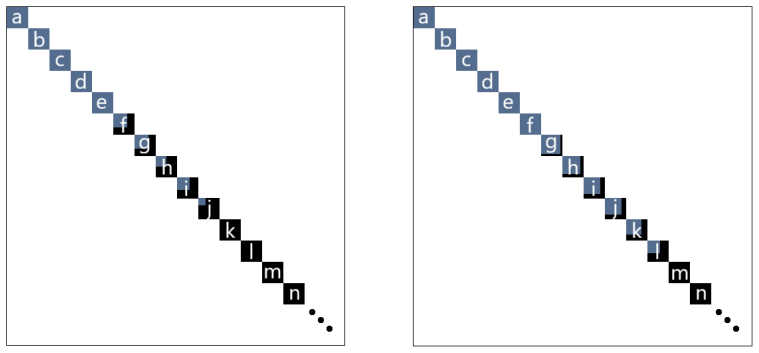
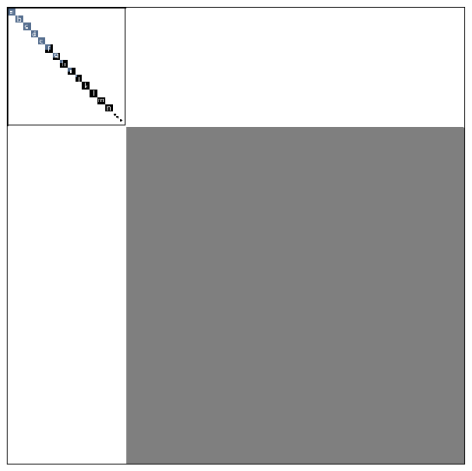
In models obeying the Covariant Entropy Bound, the favored initial states are those without localized excitations or consisting of one large black hole. To obtain a long radiation-dominated era, most horizon volumes must contain tiny black holes that decay into radiation, while a random population of horizon-sized black holes supplies dark matter. A suitable distribution of these primordial black holes accounts for all dark matter and seeds the early galaxies seen by the James Webb Space Telescope, with possible additional dark matter in Planck-scale remnants. The construction uses both approximate solutions to general relativity and a speculative quantum-gravity model whose hydrodynamics re
What carries the argument
The postulate that most early horizon volumes contain tiny black holes decaying into radiation, supplemented by random horizon-sized black holes, to satisfy the Covariant Entropy Bound while permitting radiation domination and seeding galaxies.
If this is right
- A reasonable distribution of the postulated primordial black holes supplies all dark matter.
- The same distribution seeds the early galaxies detected at high redshift by the James Webb Space Telescope.
- Planck-scale remnants of the decaying black holes may constitute part of the dark matter.
- The scenario reproduces the observed cosmic microwave background when combined with the authors' prior work.
- The construction is realized both in approximate general-relativity solutions and in a quantum-gravity hydrodynamics matching the entropy-saturating FRW model.
Where Pith is reading between the lines
- The required black-hole population implies a specific mass distribution that could be tested by future gravitational-wave or microlensing surveys.
- If correct, the model removes the need for additional mechanisms to explain the early appearance of galaxies without altering standard late-time cosmology.
- The quantum-gravity hydrodynamics component may produce distinctive signatures in the very early universe that differ from conventional inflationary predictions.
Load-bearing premise
To obtain a long radiation-dominated era one must assume that at a very early time most horizon volumes contained tiny black holes that decayed into radiation.
What would settle it
A measurement showing that the abundance or mass spectrum of primordial black holes in the relevant range cannot simultaneously match both the dark-matter density and the number of high-redshift galaxies observed by JWST would falsify the central claim.
Figures



read the original abstract
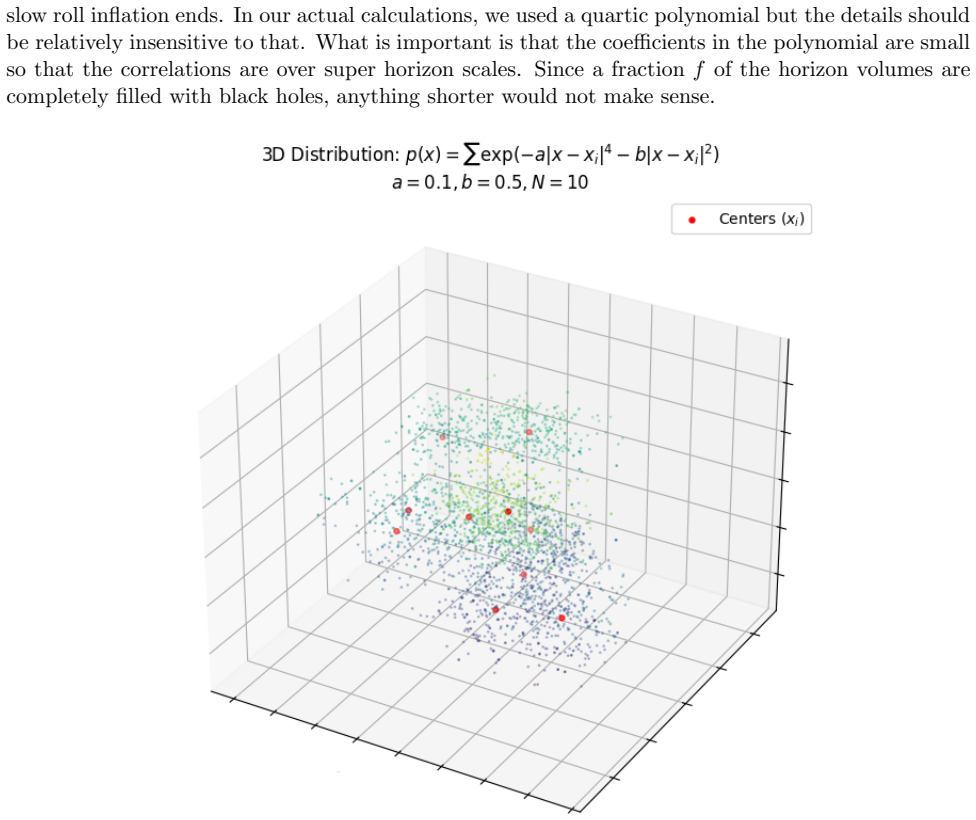
We argue that cosmological models obeying the Covariant Entropy Bound (CEB) mathematically favor states with no localized excitations or one large black hole containing all the energy in a constrained initial state. In order to get a long radiation-dominated era, one must postulate that at a very early time, most horizon volumes of the universe contained tiny black holes that decayed into radiation. A previous work by two of the authors showed that such a scenario could fit the data on the Cosmic Microwave Background (CMB). In order to account for dark matter, we also postulate some random black holes of at least horizon size at that time. A reasonable distribution of such primordial black holes can account for all of dark matter as well as the early galaxies seen by the James Webb Space Telescope. Some of the dark matter may also be in Planck-scale remnants of the decaying black holes. We describe our model both in terms of approximate solutions to General Relativity and a speculative quantum gravity model whose hydrodynamics matches the flat $p = \pm \rho$ FRW model that saturates the CEB.
Editorial analysis
A structured set of objections, weighed in public.
Referee Report
Summary. The manuscript argues that cosmological models obeying the Covariant Entropy Bound (CEB) mathematically favor states with no localized excitations or one large black hole containing all energy. To obtain a long radiation-dominated era consistent with CMB data, it postulates that most early horizon volumes contained tiny black holes decaying into radiation, plus some random horizon-sized black holes; a reasonable distribution of the latter is claimed to account for all dark matter and JWST early galaxies, with possible Planck-scale remnants contributing to DM. The setup is described via approximate GR solutions and a speculative quantum gravity hydrodynamics matching flat p=±ρ FRW models saturating the CEB.
Significance. If the initial multi-black-hole configuration could be shown to follow from the CEB or the approximate solutions without external postulates, the work would link quantum-gravity bounds to early structure formation and DM in a novel way, potentially explaining JWST observations via PBHs alone. No machine-checked proofs or parameter-free derivations are present.
major comments (2)
- [Abstract (paragraph beginning 'In order to get a long radiation-dominated era')] The postulate that most horizon volumes at a very early time contained tiny decaying black holes (to enable the radiation era while obeying CEB) is introduced by hand rather than derived from the CEB preference for no-excitation or single-BH states, the approximate GR solutions, or the quantum gravity hydrodynamics; this assumption is load-bearing for all subsequent claims about DM and galaxies.
- [Discussion of dark matter and galaxy seeding (following the CMB-fit reference)] The claim that 'a reasonable distribution' of the postulated horizon-sized PBHs accounts for all dark matter and JWST galaxies provides no explicit calculations, mass functions, error bars, or CEB-derived constraints; the distributions are chosen to match observations rather than emerging from the model equations.
minor comments (2)
- The speculative quantum gravity hydrodynamics is invoked without supporting derivation steps showing how it reproduces the flat p=±ρ FRW solutions.
- Clarify whether the 'reasonable distribution' parameters overlap with those in the cited prior CMB-fit work by two of the authors.
Simulated Author's Rebuttal
We thank the referee for the careful reading and constructive comments. We respond point-by-point to the major comments below.
read point-by-point responses
-
Referee: [Abstract (paragraph beginning 'In order to get a long radiation-dominated era')] The postulate that most horizon volumes at a very early time contained tiny decaying black holes (to enable the radiation era while obeying CEB) is introduced by hand rather than derived from the CEB preference for no-excitation or single-BH states, the approximate GR solutions, or the quantum gravity hydrodynamics; this assumption is load-bearing for all subsequent claims about DM and galaxies.
Authors: We agree that the assumption of tiny decaying black holes in most early horizon volumes is introduced as a postulate, as stated in the manuscript ('one must postulate'). The CEB is argued to favor no-excitation or single large BH states, but these do not produce a long radiation era without this additional assumption. The postulate is motivated by the need to match CMB data (as shown in our prior work) while remaining within CEB-obeying models; it is not derived from the approximate GR solutions or quantum gravity hydrodynamics alone. We will revise the manuscript to add explicit discussion of this postulational character and its observational motivations. revision: partial
-
Referee: [Discussion of dark matter and galaxy seeding (following the CMB-fit reference)] The claim that 'a reasonable distribution' of the postulated horizon-sized PBHs accounts for all dark matter and JWST galaxies provides no explicit calculations, mass functions, error bars, or CEB-derived constraints; the distributions are chosen to match observations rather than emerging from the model equations.
Authors: The manuscript states that a reasonable distribution of the additional horizon-sized PBHs can account for all DM and seed JWST galaxies, without providing new explicit mass functions or error bars in this work. This is because the paper's focus is the conceptual framework connecting CEB saturation to such PBH scenarios rather than detailed phenomenology. The distributions are selected to be consistent with observations, as is common in the PBH literature. We will revise to include citations to specific PBH mass functions from the literature that fit the requirements and to clarify that no additional CEB-derived constraints on the distribution (beyond the overall setup) are derived here. revision: partial
- Derivation of the initial multi-black-hole configuration directly from the CEB, approximate GR solutions, or quantum gravity hydrodynamics without external postulates.
Circularity Check
CEB setup requires hand-postulated multi-tiny-BH radiation era justified by self-cited prior CMB fit; DM/galaxy claims rest on chosen 'reasonable' distributions to match observations
specific steps
-
self citation load bearing
[Abstract]
"In order to get a long radiation-dominated era, one must postulate that at a very early time, most horizon volumes of the universe contained tiny black holes that decayed into radiation. A previous work by two of the authors showed that such a scenario could fit the data on the Cosmic Microwave Background (CMB)."
The multi-tiny-BH configuration needed for radiation domination (contrary to the paper's CEB claim favoring no localized excitations or one large BH) is not derived from CEB or the quantum gravity hydrodynamics; its justification reduces to self-citation of prior overlapping-author work that fitted CMB data.
-
fitted input called prediction
[Abstract]
"In order to account for dark matter, we also postulate some random black holes of at least horizon size at that time. A reasonable distribution of such primordial black holes can account for all of dark matter as well as the early galaxies seen by the James Webb Space Telescope."
The distribution is explicitly postulated and labeled 'reasonable' in order to account for DM and JWST galaxies, so the accounting is achieved by construction via choice of inputs fitted to observations rather than an independent derivation from the CEB or model.
full rationale
The paper states that CEB mathematically favors no localized excitations or one large BH, yet introduces by postulate a configuration of many tiny decaying BHs in most horizon volumes to enable a long radiation era. This postulate's viability is supported solely by self-citation to prior work by two of the present authors that fits CMB data. Additional random horizon-sized BHs are postulated for DM, with a 'reasonable distribution' then asserted to account for all DM and JWST galaxies. These steps reduce the central claims to inputs chosen or self-cited to match observations rather than derived from the CEB equations or GR solutions in the present work.
Axiom & Free-Parameter Ledger
free parameters (1)
- distribution and sizes of primordial black holes
axioms (2)
- domain assumption Cosmological models obeying the Covariant Entropy Bound mathematically favor states with no localized excitations or one large black hole containing all the energy.
- domain assumption A previous work by two of the authors showed that tiny black holes decaying into radiation can fit CMB data.
invented entities (2)
-
Planck-scale remnants of decaying black holes
no independent evidence
-
Tiny primordial black holes in most early horizon volumes
no independent evidence
Reference graph
Works this paper leans on
-
[1]
The Holographic Approach to Cosmology
T. Banks and W. Fischler,“The holographic approach to cosmology,” [arXiv:hep-th/0412097 [hep- th]]
work page internal anchor Pith review Pith/arXiv arXiv
-
[2]
T. Banks and W. Fischler, “Holographic cosmology 3.0,” Phys. Scripta T117, 56-63 (2005) doi:10.1238/Physica.Topical.117a00056 [arXiv:hep-th/0310288 [hep-th]]
work page internal anchor Pith review Pith/arXiv arXiv doi:10.1238/physica.topical.117a00056 2005
-
[3]
Discretely Charged Dark Matter in Inflation Models Based on Holographic Space-Time,
T. Banks and W. Fischler, “Discretely Charged Dark Matter in Inflation Models Based on Holographic Space-Time,” Universe8, no.11, 600 (2022) doi:10.3390/universe8110600 [arXiv:2209.08361 [hep-th]]
-
[4]
The Holographic Space-Time Model of Cosmology
T. Banks and W. Fischler, “The holographic spacetime model of cosmology,” Int. J. Mod. Phys. D27, no.14, 1846005 (2018) doi:10.1142/S0218271818460057 [arXiv:1806.01749 [hep-th]]
work page internal anchor Pith review Pith/arXiv arXiv doi:10.1142/s0218271818460057 2018
-
[6]
T. Banks and W. Fischler, “Holographic Inflation Revised,” doi:10.1017/9781316535783.013 [arXiv:1501.01686 [hep-th]]
work page internal anchor Pith review Pith/arXiv arXiv doi:10.1017/9781316535783.013
-
[7]
Holographic spacetime model of inflation and its predictions for the CMB primordial spectra,
S. A and T. Banks, “Holographic spacetime model of inflation and its predictions for the CMB primordial spectra,” Phys. Rev. D112, no.2, 023516 (2025) doi:10.1103/xts8-ggmg [arXiv:2502.15108 [hep-th]]
-
[10]
Singular hypersurfaces and thin shells in general relativity,
W. Israel, “Singular hypersurfaces and thin shells in general relativity,” Nuovo Cim. B44S10 (1966), 1 [erratum: Nuovo Cim. B48(1967), 463] doi:10.1007/BF02710419
-
[11]
W. Fischler and L. Susskind, “Holography and cosmology,” [arXiv:hep-th/9806039 [hep-th]]; 19
work page internal anchor Pith review Pith/arXiv arXiv
-
[13]
Holography in General Space-times
R. Bousso, “Holography in general space-times,” JHEP06, 028 (1999) doi:10.1088/1126- 6708/1999/06/028 [arXiv:hep-th/9906022 [hep-th]]
work page internal anchor Pith review Pith/arXiv arXiv doi:10.1088/1126- 1999
-
[14]
The Holographic Principle for General Backgrounds
R. Bousso, “The Holographic principle for general backgrounds,” Class. Quant. Grav.17, 997- 1005 (2000) doi:10.1088/0264-9381/17/5/309 [arXiv:hep-th/9911002 [hep-th]]
work page internal anchor Pith review Pith/arXiv arXiv doi:10.1088/0264-9381/17/5/309 2000
-
[15]
THROUGH A BLACK HOLE INTO A NEW UNIVERSE?,
V. P. Frolov, M. A. Markov and V. F. Mukhanov, “THROUGH A BLACK HOLE INTO A NEW UNIVERSE?,” Phys. Lett. B216, 272-276 (1989) doi:10.1016/0370-2693(89)91114-3
-
[16]
Black Holes as Possible Sources of Closed and Semiclosed Worlds,
V. P. Frolov, M. A. Markov and V. F. Mukhanov, “Black Holes as Possible Sources of Closed and Semiclosed Worlds,” Phys. Rev. D41, 383 (1990) doi:10.1103/PhysRevD.41.383
-
[17]
Cool horizons for entangled black holes
J. Maldacena and L. Susskind, “Cool horizons for entangled black holes,” Fortsch. Phys.61, 781-811 (2013) doi:10.1002/prop.201300020 [arXiv:1306.0533 [hep-th]]
work page internal anchor Pith review Pith/arXiv arXiv doi:10.1002/prop.201300020 2013
-
[18]
Microscopic Quantum Mechanics of the p=\rho Universe
T. Banks, W. Fischler and L. Mannelli, “Microscopic quantum mechanics of the p = rho universe,” Phys. Rev. D71(2005), 123514 doi:10.1103/PhysRevD.71.123514 [arXiv:hep-th/0408076 [hep- th]]
work page internal anchor Pith review Pith/arXiv arXiv doi:10.1103/physrevd.71.123514 2005
-
[19]
Hilbert Bundles and Holographic Space-time Models,
T. Banks, “Hilbert Bundles and Holographic Space-time Models,” [arXiv:2306.07038 [hep-th]]
-
[20]
Hilbert Bundles and Holographic Space-time: the Hydrodynamic Approach to Grav- ity,
T. Banks, “Hilbert Bundles and Holographic Space-time: the Hydrodynamic Approach to Grav- ity,” [arXiv:2502.04924 [hep-th]]
-
[21]
Thermodynamics of Spacetime: The Einstein Equation of State
T. Jacobson, “Thermodynamics of space-time: The Einstein equation of state,” Phys. Rev. Lett. 75(1995), 1260-1263 doi:10.1103/PhysRevLett.75.1260 [arXiv:gr-qc/9504004 [gr-qc]]
work page internal anchor Pith review Pith/arXiv arXiv doi:10.1103/physrevlett.75.1260 1995
-
[22]
Black Hole Entropy from Conformal Field Theory in Any Dimension
S. Carlip, “Black hole entropy from conformal field theory in any dimension,” Phys. Rev. Lett. 82, 2828-2831 (1999) doi:10.1103/PhysRevLett.82.2828 [arXiv:hep-th/9812013 [hep-th]]
work page internal anchor Pith review Pith/arXiv arXiv doi:10.1103/physrevlett.82.2828 1999
-
[23]
Conformal description of horizon's states
S. N. Solodukhin, “Conformal description of horizon’s states,” Phys. Lett. B454, 213-222 (1999) doi:10.1016/S0370-2693(99)00398-6 [arXiv:hep-th/9812056 [hep-th]]
work page internal anchor Pith review Pith/arXiv arXiv doi:10.1016/s0370-2693(99)00398-6 1999
-
[24]
Conformal description of near-horizon vacuum states,
T. Banks and K. M. Zurek, “Conformal description of near-horizon vacuum states,” Phys. Rev. D104, no.12, 126026 (2021) doi:10.1103/PhysRevD.104.126026 [arXiv:2108.04806 [hep-th]]
-
[25]
Noncommutative geometry,
A. Connes, “Noncommutative geometry,” Academic Press (1994), ISBN: 9780121858605
1994
-
[26]
Fuzzy Geometry via the Spinor Bundle, with Applications to Holographic Space-time and Matrix Theory
T. Banks and J. Kehayias, “Fuzzy Geometry via the Spinor Bundle, with Applica- tions to Holographic Space-time and Matrix Theory,” Phys. Rev. D84, 086008 (2011) doi:10.1103/PhysRevD.84.086008 [arXiv:1106.1179 [hep-th]]
work page internal anchor Pith review Pith/arXiv arXiv doi:10.1103/physrevd.84.086008 2011
-
[27]
QuantuMechanics and CosMology,
T. Banks, “QuantuMechanics and CosMology,” Talk given at the festschrift for Susskind, L. Stanford University, May 2000
2000
-
[28]
Cosmological Breaking of Supersymmetry?
T. Banks, “Cosmological breaking of supersymmetry?,” Int. J. Mod. Phys. A16, 910-921 (2001) doi:10.1142/S0217751X01003998 [arXiv:hep-th/0007146 [hep-th]]
work page internal anchor Pith review Pith/arXiv arXiv doi:10.1142/s0217751x01003998 2001
-
[29]
Taking de sitter seriously,
W. Fischler, “Taking de sitter seriously,” Talk given at role of scaling laws in physics and biology (Celebrating the 60th birthday of Geoffrey West), Santa Fe, 19, 2000. 20
2000
-
[30]
Generalized entanglement capacity of de Sitter space,
T. Banks, P. Draper, T. Banks and P. Draper, “Generalized entanglement capacity of de Sitter space,” Phys. Rev. D110, no.4, 045025 (2024) doi:10.1103/PhysRevD.110.045025 [arXiv:2404.13684 [hep-th]]
-
[31]
T. Banks, “What is a Gravitational Path Integral?\it or Gravitational Path Integrals as Fluc- tuating Gravito-Hydrodynamics,” [arXiv:2601.10834 [hep-th]]
-
[32]
Egan, C. A., and Lineweaver, C. H. (2010). A LARGER ESTIMATE OF THE ENTROPY OF THE UNIVERSE. The Astrophysical Journal, 710(2), 1825-1834. https://doi.org/10.1088/0004- 637x/710/2/1825
-
[33]
Holographic inflation, primordial black holes and early structure formation,
T. Banks and W. Fischler, “Holographic inflation, primordial black holes and early structure formation,” Int. J. Mod. Phys. D33, no.15, 2440001 (2024) doi:10.1142/S0218271824400017 [arXiv:2402.11527 [hep-th]]
-
[34]
Black hole mergers in holographic space time models of cosmology,
T. Banks and A. Suresh, “Black hole mergers in holographic space time models of cosmology,” SciPost Phys. Core7(2024), 057 doi:10.21468/SciPostPhysCore.7.3.057 [arXiv:2306.08428 [hep- th]]
-
[35]
Holographic Theories of Inflation and Fluctuations
T. Banks and W. Fischler, “Holographic Theories of Inflation and Fluctuations,” [arXiv:1111.4948 [hep-th]]
work page internal anchor Pith review Pith/arXiv arXiv
-
[36]
P. Dayal, R. Maiolino, The properties of primordially-seeded black holes and their hosts in the first billion years: implications for JWST, Astronomy & Astrophysics, Volume 706, id.A72, 13 pp., February 2026, DOI: 10.1051/0004-6361/202555959; 10.48550/arXiv.2506.08116
-
[37]
Primordial black hole constraints for extended mass functions
B. Carr, M. Raidal, T. Tenkanen, V. Vaskonen and H. Veerm¨ ae, “Primordial black hole constraints for extended mass functions,” Phys. Rev. D96, no.2, 023514 (2017) doi:10.1103/PhysRevD.96.023514 [arXiv:1705.05567 [astro-ph.CO]]
work page internal anchor Pith review Pith/arXiv arXiv doi:10.1103/physrevd.96.023514 2017
-
[38]
Constraints on the Primordial Black Hole Abundance using Pulsar Parameter Drifts
Y. C. Bi, Y. M. Wu and Q. G. Huang, “Constraints on the Primordial Black Hole Abundance using Pulsar Parameter Drifts,” [arXiv:2604.22634 [astro-ph.CO]]
work page internal anchor Pith review Pith/arXiv arXiv
-
[39]
S. Sugiyama, M. Takada, N. Yasuda and N. Tominaga, “Microlensing constraints on Primor- dial Black Hole abundance with Subaru Hyper Suprime-Cam observations of Andromeda,” [arXiv:2602.05840 [astro-ph.CO]]
-
[40]
Constraints on Primordial Black Hole Dark Matter from the Stochastic Gravitational- Wave Background,
Baydar, “Constraints on Primordial Black Hole Dark Matter from the Stochastic Gravitational- Wave Background,”
-
[41]
Observational Constraints on Primordial Black Hole Dark Matter,
M. Gorton, “Observational Constraints on Primordial Black Hole Dark Matter,”
-
[42]
Refining Galactic primordial black hole evapo- ration constraints,
P. De la Torre Luque, J. Koechler and S. Balaji, “Refining Galactic primordial black hole evapo- ration constraints,” Phys. Rev. D110, no.12, 123022 (2024) [erratum: Phys. Rev. D112, no.10, 109904 (2025)] doi:10.1103/PhysRevD.110.123022 [arXiv:2406.11949 [astro-ph.HE]]
-
[43]
Updated constraints on primordial black hole evaporation,
M. Korwar and S. Profumo, “Updated constraints on primordial black hole evaporation,” JCAP 05, 054 (2023) doi:10.1088/1475-7516/2023/05/054 [arXiv:2302.04408 [hep-ph]]
-
[44]
Primordial black hole constraints with Hawking radiation—A review,
J. Auffinger, “Primordial black hole constraints with Hawking radiation—A review,” Prog. Part. Nucl. Phys.131, 104040 (2023) doi:10.1016/j.ppnp.2023.104040 [arXiv:2206.02672 [astro-ph.CO]]
-
[45]
Strong constraints on primordial black hole dark matter from 16 years of INTEGRAL/SPI observations,
J. Berteaud, F. Calore, J. Iguaz, P. D. Serpico and T. Siegert, “Strong constraints on primordial black hole dark matter from 16 years of INTEGRAL/SPI observations,” Phys. Rev. D106, no.2, 023030 (2022) doi:10.1103/PhysRevD.106.023030 [arXiv:2202.07483 [astro-ph.HE]]. 21
-
[46]
Gravitational wave constraints on the primordial black hole dominated early universe,
G. Dom` enech, C. Lin and M. Sasaki, “Gravitational wave constraints on the primordial black hole dominated early universe,” JCAP04, 062 (2021) [erratum: JCAP11, E01 (2021)] doi:10.1088/1475-7516/2021/11/E01 [arXiv:2012.08151 [gr-qc]]
-
[47]
CP Violation and Baryogenesis in the Presence of Black Holes
T. Banks and W. Fischler, “CP Violation and Baryogenesis in the Presence of Black Holes,” [arXiv:1505.00472 [hep-th]]
work page internal anchor Pith review Pith/arXiv arXiv
-
[48]
Extremal Kerr black hole dark matter from Hawking evaporation,
Q. Taylor, G. D. Starkman, M. Hinczewski, D. P. Mihaylov, J. Silk and J. de Freitas Pacheco, “Extremal Kerr black hole dark matter from Hawking evaporation,” Phys. Rev. D109, no.10, 104066 (2024) doi:10.1103/PhysRevD.109.104066 [arXiv:2403.04054 [gr-qc]]
-
[49]
Couplings and Scales in Strongly Coupled Heterotic String Theory
T. Banks and M. Dine, “Couplings and scales in strongly coupled heterotic string theory,” Nucl. Phys. B479, 173-196 (1996) doi:10.1016/0550-3213(96)00457-9 [arXiv:hep-th/9605136 [hep-th]]
work page internal anchor Pith review Pith/arXiv arXiv doi:10.1016/0550-3213(96)00457-9 1996
-
[50]
Holographic space-time, Newton’s law, and the dynamics of horizons,
T. Banks and W. Fischler, “Holographic space-time, Newton’s law, and the dynamics of horizons,” Adv. Theor. Math. Phys.27, no.1, 65-86 (2023) doi:10.4310/ATMP.2023.v27.n1.a3 [arXiv:2003.03637 [hep-th]]
-
[51]
Matrix Multiverses Meet Multiple Mythologies
S. A, T. Banks, W. Fischler, “Matrix Multiverses Meet Multiple Mythologies” [to appear]
-
[52]
Black Hole Time Scales: Thermalization, Infall and Complexity
T. Banks, “Black Hole Time Scales: Thermalization, Infall and Complexity,” [arXiv:1904.02591 [hep-th]]. 22
work page internal anchor Pith review Pith/arXiv arXiv 1904
discussion (0)
Sign in with ORCID, Apple, or X to comment. Anyone can read and Pith papers without signing in.