REVIEW 2 major objections 5 minor 47 references
Laser pulse waveform control of Dirac fermions in graphene
T0 review · 2 major / 5 minor · reviewed 2026-08-14 · deepseek-v4-flash
Pith's one-line read The paper shows that a few-femtosecond laser pulse can control the direction and size of an electric current in graphene by tuning the pulse's carrier-envelope phase.
desk verdict A plausible extension of the authors' established Houston-function framework to new pulse shapes, but the transferred charge observable in Fig. 8 is not well-defined in the coherent model as written. read the letter →
The pith
A machine-rendered reading of the paper's core claim, the machinery that carries it, and where it could break.
The reading
What carries the argument
The calculation expands the time-dependent wave function in Houston functions, instantaneous Bloch states that follow the field-driven crystal momentum through the Brillouin zone. Their expansion coefficients satisfy a two-level Schrödinger equation whose interband coupling is the non-Abelian Berry connection Acv modulated by the dynamic phase; the intraband motion is fixed by the Bloch acceleration theorem. The current is split into an intraband part weighted by band populations and an interband part proportional to the Berry connection. The pulse is constructed with zero vector-potential area, so the final crystal momentum returns to its initial value, and the residual effects come purely from the interband transitions and the Berry-phase structure encountered along the round trip.
What would settle it
Measure the terahertz emission or current from a graphene sheet after a phase-stable few-femtosecond pulse while sweeping the carrier-envelope phase and field amplitude between 0.1 and 0.5 V/Å. The claim fails if the residual current does not reverse sign when the phase is shifted by π, if the amplitude does not grow with field strength, or if no transferred charge accumulates at phase 0; time-resolved ARPES could independently check the predicted asymmetric conduction-band population at phase π/2.
Extended reading notes
Core claim
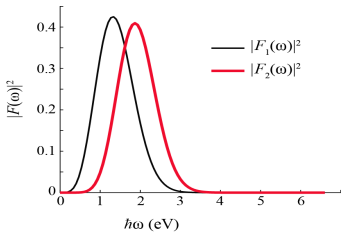
The central claim is that the ultrafast coherent dynamics of Dirac fermions in graphene is strongly waveform-dependent, with the carrier-envelope phase acting as the control parameter. For the two Hermite-Gaussian pulses studied, F1 and F2, the residual current density after the pulse is approximately sinusoidal in the phase, being zero for phase 0 and π and largest near π/2 and 3π/2; its amplitude rises with field amplitude and is smaller for F2, which has more oscillations. The transferred charge density is nonzero even when the residual current vanishes, because the transient current profile has a nonzero integral; this charge sets the final electric polarization of the graphene. The asymmetry introduced by phase π/2 also makes the residual conduction-band population asymmetric between the K and K′ valleys, yielding a valley polarization that the paper notes but does not analyze further.
Load-bearing premise
The calculation assumes perfectly coherent electron motion: scattering and dephasing are neglected because the electron scattering time, cited as longer than 10 fs, is much longer than the few-femtosecond pulse, and the residual current and transferred charge are read out before relaxation acts.
Editorial extensions
If this is right
- Carrier-envelope phase becomes a control knob: changing it shifts the direction and magnitude of the residual current without altering the pulse spectrum.
- Pulses with fewer oscillations produce larger residual currents and transferred charges, so few-cycle or single-cycle fields are the preferred regime for current injection.
- A measurable transferred charge remains even at phase 0 where the residual current is zero, giving an experimental signature of nonlinear interband dynamics.
- At phase π/2 the residual conduction-band population is asymmetric between valleys, implying a pulse can induce valley polarization in graphene.
- Shifting the carrier-envelope phase by π reverses the direction of the current, which is a minimal binary encoding scheme for optical control.
Reading between the lines
- If the sinusoidal phase dependence survives relaxation, a sequence of carrier-envelope-phase-tuned pulses could write a current pattern into a graphene sample, suggesting a terahertz-rate memory or logic element; the paper itself stops at single-pulse control.
- The valley asymmetry seen at phase π/2 could be developed into a valleytronic switch, although the paper defers valley-polarization analysis to elsewhere.
- Including phonon or impurity scattering on the ~10 fs scale would damp the predicted residual currents; the qualitative phase dependence might persist, but the peak amplitudes in the figures would likely decrease.
- Because the mechanism depends only on gapless Dirac bands and Berry connections, the same waveform control should transfer to other Dirac or Weyl materials, a testable extension.
Editorial analysis
A structured set of objections, weighed in public.
Referee Report
Summary. The paper reports a numerical study of coherent Dirac-fermion dynamics in a graphene monolayer driven by few-femtosecond, linearly polarized laser pulses whose waveform is controlled by carrier-envelope phase (CEP) and by two Hermite-Gaussian envelope shapes. The authors solve the time-dependent Schrödinger equation in a Houston-function basis, evaluate residual conduction-band populations, and compute the time-dependent current as the sum of intraband and interband contributions. Their central claims are that the residual current and the transferred charge density vary approximately sinusoidally with CEP, that the amplitudes grow with field strength and shrink when the pulse contains more oscillations, and that nonzero CEP leads to asymmetric population distributions and to current flow after the pulse ends.
Significance. If the results are made well-defined and reproducible, the paper would provide a useful theoretical benchmark for lightwave-driven current control in graphene and connect to existing experimental work on CEP-controlled currents. The underlying formalism is standard and appears internally consistent: the Houston basis, the two-band tight-binding Hamiltonian, and the non-Abelian Berry connection are used appropriately, and the construction of zero-area pulses is cleanly presented. The residual-population maps in Figs. 4 and 5 are informative. However, as written, the central observable, the transferred charge density, is not well defined in the coherent model, and the numerical procedure is not documented to the level needed to reproduce the quantitative claims.
major comments (2)
- [Sec. 3, Eqs. (25) and (28), Fig. 8] The transferred charge density Q_x is not a well-defined observable of the model for CEP values with nonzero residual current. After the pulse ends, F(t)=0, so k(q,t)=q and the expansion coefficients beta are time-independent; consequently J_intra(t) from Eq. (25) is a nonzero constant while J_inter(t) from Eq. (28) oscillates at the band-energy difference. Therefore the integral of J_x from the end of the pulse to a time T contains a term J_res (T - T_pulse) plus bounded oscillations, and if T is sent to infinity the integral diverges linearly. The text states that for CEP = pi/6 and pi/2 'some electric charge transfers ... after the end of the pulse', but it never specifies an integration window or a dephasing mechanism; the Sec. 2 coherent approximation with scattering time longer than 10 fs does not supply one. Thus the finite values plotted in Fig. 8 depend on an arbitrary cutoff. The authors should define Q_x as an integral over a specified time window, or include a phenomenological relaxation time and state its value, or integrate only over the pulse duration and revise the wording accordingly.
- [Sec. 2, numerical solution and Figs. 7-8] The manuscript does not report any numerical parameters for the TDSE solution: the number of k-points used for the Brillouin-zone sums in Eqs. (25) and (28), the time step, the total propagation time, or any convergence checks. This is load-bearing because the central quantitative results, namely the CEP-dependent residual-current amplitudes and transferred-charge densities in Figs. 7 and 8, are obtained from truncated BZ summations and time propagation. Please provide these numerical details and demonstrate convergence of the reported values with respect to both k-grid density and time step.
minor comments (5)
- [Eq. (33)] The Hermite polynomial H(2)(u) is written as -2u^2 + 1, which does not match the standard physicist's convention H_2(u) = 4u^2 - 2 (or the probabilist's H_2(u) = u^2 - 1 up to scale); please define the normalization of the Hermite polynomials used in Eqs. (33) and (34).
- [Reference 45] Reference 45, a sewing-machine handbook from 1886, is not a suitable source for Hermite polynomials; please replace it with a standard mathematical reference such as Abramowitz and Stegun or a similar text.
- [Abstract and text] The phrase 'Hermit Gaussian' should read 'Hermite-Gaussian', and there are occasional typos such as 'scatering' in Sec. 2 and 'Figure. 8' in Sec. 3.
- [Figs. 7-8 captions] The units of the current density and transferred charge density are not stated; please specify units such as A/m and C/m (or e per unit length) so the vertical axes are unambiguous.
- [Eq. (21)] The statement that the geometric-phase difference phi_B_cv is zero is used without explanation; a brief justification from A_cc = A_vv would make the derivation self-contained.
Circularity Check
No significant circularity: the CEP-dependent current and transferred charge are computed from an externally specified tight-binding model and pulse waveforms, not imposed as inputs.
full rationale
The paper's central claim is that the ultrafast current and transferred charge in graphene depend on the carrier-envelope phase and pulse shape. The derivation is self-contained: Eqs. (1)-(28) define a time-dependent Schroedinger equation with a standard tight-binding Hamiltonian (gamma = -3.03 eV, lattice constant a = 2.46 Angstrom) and a Houston-function expansion; the pulse waveforms F1 and F2 are explicit Hermite-Gaussian functions (Eqs. (33)-(34)). The residual CB population, current densities, and transferred charges in Figs. 4-8 are outputs of the numerical TDSE solution. No target quantity is used as input, and no fitted parameter is renamed as a prediction. Self-citations to the authors' earlier work appear only as background or as examples of the same Houston-function method, while the load-bearing ingredients (Berry connection formulas, Bloch acceleration theorem, Houston functions, tight-binding Hamiltonian) are cited to independent external literature (Refs. 33, 40, 41, 42). There is no uniqueness theorem or ansatz imported through self-citation. The explicit coherent no-scattering assumption in Sec. 2 ('the electron scattering time is longer than 10 fs ... much longer than the duration of the pulse') is a physical approximation, not an input-equivalent constraint. The transferred-charge integral in Sec. 3 is discussed without an explicit integration cutoff, which may be a well-posedness or correctness concern, but it is not circular: the plotted quantity is not equivalent by construction to any fit or to the pulse input. Therefore the circularity score is 0.
Assumptions & free parameters
assumptions (6)
- domain assumption Tight-binding Hamiltonian with nearest-neighbor hopping gamma = -3.03 eV and lattice constant a = 2.46 Å describes graphene electrons (Eqs. 3-5).
- domain assumption Electron dynamics are coherent, with scattering time longer than 10 fs, so no relaxation or dephasing is included (Sec. 2, first paragraph).
- standard math The applied field is spatially uniform in the length gauge, with Bloch acceleration k(t) = q + (e/hbar) integral F dt' (Eqs. 6-7).
- standard math Houston functions and non-Abelian Berry connection formulas from refs. [33,43,44] give an exact two-band representation of the TDSE (Eqs. 8-24).
- domain assumption Initial state has a filled valence band and empty conduction band at zero temperature.
- domain assumption The applied pulses F1 and F2 have zero area (zero vector potential integral) for all carrier-envelope phases (Sec. 3, Figs. 1 and 2).
Cite this review
Pith. "Pith review of Laser pulse waveform control of Dirac fermions in graphene." pith.science (2026). https://pith.science/paper/Z4VYHPXB
@misc{pith2026190809024,
  author       = {Pith},
  title        = {Pith review of: Laser pulse waveform control of Dirac fermions in graphene},
  year         = {2026},
  howpublished = {\url{https://pith.science/paper/Z4VYHPXB}},
  note         = {Machine review of arXiv:1908.09024}
}
abstract
We theoretically study the Dirac fermion dynamics in a graphene monolayer in the presence of an applied ultrafast laser pulse. The pulse has the duration of a few femtoseconds and the amplitude of ~ 0.1 - 0.5 $\mathrm{V/\AA}$. The waveform of the pulse is described by Hermit Gaussian polynomials with varying carrier-envelope phase. We show that the ultrafast dynamics of Dirac fermions strongly depends on the carrier-envelope phase and the frequency of the applied pulse. The ultrafast pulse generates an electric current which results in a finite transferred charge. The ultrafast field-driven current and the corresponding net transferred charge depend on the waveform of the applied pulse. Our results pave the way for the development of ultrafast information processing in the terahertz domain.
Figures


Figures from the paper (5 more)


Reference graph
Works this paper leans on
-
[1]
J. Gudde and U. Hofer, “Femtosecond time-resolved studies of image-potential states at surfaces and inter- faces of rare-gas adlayers,” Progress in Surface Science 80(3), pp. 49–91, 2005
work page 2005
-
[2]
Optical-field-induced current in dielectrics,
A. Schiffrin, T. Paasch-Colberg, N. Karpowicz, V. Apalkov, D. Gerster, S. Muhlbrandt, M. Korbman, J. Reichert, M. Schultze, S. Holzner, J. V. Barth, R. Kienberger, R. Ernstorfer, V. S. Yakovlev, M. I. Stockman, and F. Krausz, “Optical-field-induced current in dielectrics,” Nature 493, pp. 70–74, 2012
work page 2012
-
[3]
Theory of dielectric nanofilms in strong ultrafast optical fields,
V. Apalkov and M. I. Stockman, “Theory of dielectric nanofilms in strong ultrafast optical fields,” Phys. Rev. B 86, pp. 165118–1–13, 2012
work page 2012
-
[4]
Interaction of crystalline topological insulator with an ultrashort laser pulse,
S. A. O. Motlagh, V. Apalkov, and M. I. Stockman, “Interaction of crystalline topological insulator with an ultrashort laser pulse,” Phys. Rev. B 95, pp. 085438–1–8, 2017
work page 2017
-
[5]
Fundamentally fastest optical processes at the surface of a topological insulator,
S. A. O. Motlagh, J. S. Wu, V. Apalkov, and M. I. Stockman, “Fundamentally fastest optical processes at the surface of a topological insulator,” Physical Review B 98(12), pp. 125410–1–11, 2018
work page 2018
-
[6]
Weyl semimetals in ultrafast laser fields,
F. Nematollahi, S. A. O. Motlagh, V. Apalkov, and M. I. Stockman, “Weyl semimetals in ultrafast laser fields,” Physical Review B 99(24), pp. 245409–1–9, 2019
work page 2019
-
[7]
High-harmonic generation in amorphous solids,
Y. S. You, Y. Yin, Y. Wu, A. Chew, X. Ren, F. Zhuang, S. Gholam-Mirzaei, M. Chini, Z. Chang, and S. Ghimire, “High-harmonic generation in amorphous solids,” Nature Communications 8(1), p. 724, 2017
work page 2017
-
[8]
High-harmonic generation from an atomically thin semiconductor,
H. Z. Liu, Y. L. Li, Y. S. You, S. Ghimire, T. F. Heinz, and D. A. Reis, “High-harmonic generation from an atomically thin semiconductor,” Nat. Phys. 13, pp. 262–266, 2017
work page 2017
Show all 47 references
-
[9]
Microscopic processes in dielectrics under irradiation by subpicosecond laser pulses,
A. Kaiser, B. Rethfeld, M. Vicanek, and G. Simon, “Microscopic processes in dielectrics under irradiation by subpicosecond laser pulses,” Phys. Rev. B 61, pp. 11437–11450, 2000
2000
-
[10]
Multi-petahertz electron interference in cr:al2o3 solid-state material,
H. Mashiko, Y. Chisuga, I. Katayama, K. Oguri, H. Masuda, J. Takeda, and H. Gotoh, “Multi-petahertz electron interference in cr:al2o3 solid-state material,” Nature Communications 9(1), p. 1468, 2018
2018
-
[11]
Ultrafast nonlinear travel of hot carriers driven by high-field terahertz pulse,
H. J. Shin, V. L. Nguyen, S. C. Lim, and J.-H. Son, “Ultrafast nonlinear travel of hot carriers driven by high-field terahertz pulse,” Journal of Physics B: Atomic, Molecular and Optical Physics 51, p. 144003, jun 2018
2018
-
[12]
Review of ultrafast spectroscopy studies of valley carrier dynamics in two-dimensional semiconducting transition metal dichalcogenides,
D. Sun, J. W. Lai, J. C. Ma, Q. S. Wang, and J. Liu, “Review of ultrafast spectroscopy studies of valley carrier dynamics in two-dimensional semiconducting transition metal dichalcogenides,” Chinese Physics B 26(3), 2017
2017
-
[13]
Ultrafast saturable absorption of mos2 nanosheets under different pulse-width excitation conditions,
J. Zhang, H. Ouyang, X. Zheng, J. You, R. Chen, T. Zhou, Y. Sui, Y. Liu, X. Cheng, and T. Jiang, “Ultrafast saturable absorption of mos2 nanosheets under different pulse-width excitation conditions,” Opt. Lett. 43, pp. 243–246, Jan 2018
2018
-
[14]
Weyl semimetals in circularly-polarized ultrafast laser field,
F. Nematollahi, V. Apalkov, and M. I. Stockman, “Weyl semimetals in circularly-polarized ultrafast laser field,” in Proc. SPIE 10908, Frontiers in Ultrafast Optics: Biomedical, Scientific, and Industrial Applications XIX, 10908, p. 1090803, SPIE, 2019
2019
-
[15]
Ultrafast control of electron dynamics in 3D topological insulator,
S. A. O. Motlagh, J.-S. Wu, V. Apalkov, and M. I. Stockman, “Ultrafast control of electron dynamics in 3D topological insulator,” Journal of Physics: Conference Series 906(1), p. 012012, 2017
2017
-
[16]
Subcycle observation of lightwave-driven dirac currents in a topological surface band,
J. Reimann, S. Schlauderer, C. P. Schmid, F. Langer, S. Baierl, K. A. Kokh, O. E. Tereshchenko, A. Kimura, C. Lange, J. Gudde, U. Hofer, and R. Huber, “Subcycle observation of lightwave-driven dirac currents in a topological surface band,” Nature 562(7727), pp. 396–400, 2018
2018
-
[17]
Femtosecond valley polarization and topo- logical resonances in transition metal dichalcogenides,
S. A. O. Motlagh, J.-S. Wu, V. Apalkov, and M. I. Stockman, “Femtosecond valley polarization and topo- logical resonances in transition metal dichalcogenides,” Phys. Rev. B 98, pp. 081406(R)–1–6, 2018
2018
-
[18]
Ultrafast field control of symmetry, reciprocity, and reversibility in buckled graphene-like materials,
H. K. Kelardeh, V. Apalkov, and M. I. Stockman, “Ultrafast field control of symmetry, reciprocity, and reversibility in buckled graphene-like materials,” Phys. Rev. B 92, pp. 045413–1–9, 2015
2015
-
[19]
Light-field-driven currents in graphene,
T. Higuchi, C. Heide, K. Ullmann, H. B. Weber, and P. Hommelhoff, “Light-field-driven currents in graphene,” Nature 550(7675), pp. 224–228, 2017
2017
-
[20]
Phosphorene in ultrafast laser field,
F. Nematollahi, V. Apalkov, and M. I. Stockman, “Phosphorene in ultrafast laser field,” Phys. Rev. B 97, pp. 035407–1–6, 2018
2018
-
[21]
Ultrafast laser pulse induced topolog- ical resonance in MoS 2 monolayer,
S. A. Oliaei Motlagh, J. S. Wu, V. Apalkov, and M. Stockman, “Ultrafast laser pulse induced topolog- ical resonance in MoS 2 monolayer,” in Conference on Lasers and Electro-Optics , OSA Technical Digest , p. JTu4M.3, Optical Society of America
-
[22]
Carrier-envelope phase effects in graphene,
C. Lefebvre, D. Gagnon, F. Fillion-Gourdeau, and S. MacLean, “Carrier-envelope phase effects in graphene,” Journal of the Optical Society of America B 35(4), pp. 958–966, 2018
2018
-
[23]
Light-field-driven currents in graphene,
T. Higuchi, C. Heide, K. Ullmann, H. B. Weber, and P. Hommelhoff, “Light-field-driven currents in graphene,” Nature 550, pp. 224–228, 2017
2017
-
[24]
Coherent electron trajectory control in graphene,
C. Heide, T. Higuchi, H. B. Weber, and P. Hommelhoff, “Coherent electron trajectory control in graphene,” Phys. Rev. Lett. 121, pp. 207401–1–5, 2018
2018
-
[25]
Graphene superlattices in strong circularly polarized fields: Chirality, Berry phase, and attosecond dynamics,
H. K. Kelardeh, V. Apalkov, and M. I. Stockman, “Graphene superlattices in strong circularly polarized fields: Chirality, Berry phase, and attosecond dynamics,” Phys. Rev. B 96, pp. 075409–1–8, 2017
2017
-
[26]
Ultrafast pseudospin dynamics in graphene,
M. Trushin, A. Grupp, G. Soavi, A. Budweg, D. D. Fazio, U. Sassi, A. Lombardo, A. C. Ferrari, W. Belzig, A. Leitenstorfer, and D. Brida, “Ultrafast pseudospin dynamics in graphene,” Phys. Rev. B 92, p. 165429, 2015
2015
-
[27]
Interaction of carrier envelope phase- stable laser pulses with graphene: the transition from the weak-field to the strong-field regime,
C. Heide, T. Boolakee, T. Higuchi, H. B. Weber, and P. Hommelhoff, “Interaction of carrier envelope phase- stable laser pulses with graphene: the transition from the weak-field to the strong-field regime,” arXiv e-prints , p. arXiv:1903.07558, Mar 2019
1903 arXiv
-
[28]
Ultrafast hot-carrier- dominated photocurrent in graphene,
D. Sun, G. Aivazian, A. M. Jones, J. S. Ross, W. Yao, D. Cobden, and X. Xu, “Ultrafast hot-carrier- dominated photocurrent in graphene,” Nature Nanotechnology 7, p. 114, 2012
2012
-
[29]
Ultrafast electronic response of graphene to a strong and localized electric field,
E. Gruber, R. A. Wilhelm, R. Ptuya, V. Smejkal, R. Kozubek, A. Hierzenberger, B. C. Bayer, I. Aldazabal, A. K. Kazansky, F. Libisch, A. V. Krasheninnikov, M. Schleberger, S. Facsko, A. G. Borisov, A. Arnau, and F. Aumayr, “Ultrafast electronic response of graphene to a strong ...
2016
-
[30]
Conduction band population in graphene in ultrashort strong laser field: Case of massive Dirac particles,
Z. Ahmadi, H. Goudarzi, and A. Jafari, “Conduction band population in graphene in ultrashort strong laser field: Case of massive Dirac particles,” International Journal of Modern Physics B 30, p. 1650122, May 2016
2016
-
[31]
The rise of graphene,
A. K. Geim and K. S. Novoselov, “The rise of graphene,” Nat. Mater. 6, pp. 183–191, 2007
2007
-
[32]
Two-dimensional gas of massless Dirac fermions in graphene,
K. S. Novoselov, A. K. Geim, S. V. Morozov, D. Jiang, M. I. Katsnelson, I. V. Grigorieva, S. V. Dubonos, and A. A. Firsov, “Two-dimensional gas of massless Dirac fermions in graphene,” Nature 438, pp. 197–200, 2005
2005
-
[33]
Berry phase effects on electronic properties,
D. Xiao, M.-C. Chang, and Q. Niu, “Berry phase effects on electronic properties,” Reviews of Modern Physics 82, pp. 1959–2007, 2010
1959
-
[34]
Single-particle relaxation time versus transport scattering time in a two- dimensional graphene layer,
E. H. Hwang and S. D. Sarma, “Single-particle relaxation time versus transport scattering time in a two- dimensional graphene layer,” Phys. Rev. B 77, pp. 195412–1–6, 2008
2008
-
[35]
Ultrafast nonequilibrium carrier dynamics in a single graphene layer,
M. Breusing, S. Kuehn, T. Winzer, E. Malic, F. Milde, N. Severin, J. P. Rabe, C. Ropers, A. Knorr, and T. Elsaesser, “Ultrafast nonequilibrium carrier dynamics in a single graphene layer,” Physical Review B 83(15), p. 153410, 2011
2011
-
[36]
Microscopic theory of absorption and ultrafast many-particle kinetics in graphene,
E. Malic, T. Winzer, E. Bobkin, and A. Knorr, “Microscopic theory of absorption and ultrafast many-particle kinetics in graphene,” Phys. Rev. B 84(20), p. 205406, 2011
2011
-
[37]
Ultrafast collinear scattering and carrier multiplication in graphene,
D. Brida, A. Tomadin, C. Manzoni, Y. J. Kim, A. Lombardo, S. Milana, R. R. Nair, K. S. Novoselov, A. C. Ferrari, G. Cerullo, and M. Polini, “Ultrafast collinear scattering and carrier multiplication in graphene,” Nat Commun 4, pp. 1987–1–9, 2013
1987
-
[38]
Snapshots of non-equilibrium Dirac carrier distributions in graphene,
I. Gierz, J. C. Petersen, M. Mitrano, C. Cacho, I. C. Turcu, E. Springate, A. Stohr, A. Kohler, U. Starke, and A. Cavalleri, “Snapshots of non-equilibrium Dirac carrier distributions in graphene,” Nat. Mater. 12(12), pp. 1119–24, 2013
2013
-
[39]
Nonequilibrium dynamics of photoexcited electrons in graphene: Collinear scattering, Auger processes, and the impact of screening,
A. Tomadin, D. Brida, G. Cerullo, A. C. Ferrari, and M. Polini, “Nonequilibrium dynamics of photoexcited electrons in graphene: Collinear scattering, Auger processes, and the impact of screening,” Phys. Rev. B 88(3), p. 035430, 2013
2013
-
[40]
The electronic properties of graphene,
A. H. C. Neto, F. Guinea, N. M. R. Peres, K. S. Novoselov, and A. K. Geim, “The electronic properties of graphene,” Rev. Mod. Phys. 81, pp. 109–162, 2009
2009
-
[41]
¨Uber die Quantenmechanik der Elektronen in Kristallgittern,
F. Bloch, “ ¨Uber die Quantenmechanik der Elektronen in Kristallgittern,” Z. Phys. A 52, pp. 555–600, 1929
1929
-
[42]
Acceleration of electrons in a crystal lattice,
W. V. Houston, “Acceleration of electrons in a crystal lattice,” Phys. Rev. 57, pp. 184–186, 1940
1940
-
[43]
Appearance of gauge structure in simple dynamical systems,
F. Wilczek and A. Zee, “Appearance of gauge structure in simple dynamical systems,” Phys. Rev. Lett. 52, pp. 2111–2114, 1984
1984
-
[44]
Nonlinear optical response induced by non-Abelian Berry curvature in time-reversal- invariant insulators,
F. Yang and R. B. Liu, “Nonlinear optical response induced by non-Abelian Berry curvature in time-reversal- invariant insulators,” Phys. Rev. B 90, p. 245205, 2014
2014
-
[45]
J. W. Thompson, Hand-book, ” Domestic” sewing machine Company, 1886
-
[46]
Review of the theoret- ical description of time-resolved angle-resolved photoemission spectroscopy in electron-phonon mediated superconductors,
A. F. Kemper, M. A. Sentef, B. Moritz, T. P. Devereaux, and J. K. Freericks, “Review of the theoret- ical description of time-resolved angle-resolved photoemission spectroscopy in electron-phonon mediated superconductors,” Ann. Phys.-Berlin 529, pp. 1600235–1–11, 2017
2017
-
[47]
Visualizing electronic chirality and Berry phases in graphene systems using photoemission with circularly polarized light,
Y. Liu, G. Bian, T. Miller, and T. C. Chiang, “Visualizing electronic chirality and Berry phases in graphene systems using photoemission with circularly polarized light,” Phys. Rev. Lett. 107, pp. 166803–1–5, 2011
2011
Reviewed August 14, 2026 · model on record in the stance chip above.
Discussion (0). Continue with ORCID to comment.