REVIEW 4 major objections 6 minor 12 references
Convolution based hybrid image processing technique for microscopic images of etch-pits in Nuclear Track Detectors
T0 review · 4 major / 6 minor · reviewed 2026-08-14 · deepseek-v4-flash
Pith's one-line read The paper claims that a two-step convolution recipe can identify and count etch-pit openings on nuclear track detectors with errors as low as 0.33%.
desk verdict Plausible matched-filtering extension for NTD etch-pit counting, but the headline error rates rest on thin, unreleased validation. read the letter →
The pith
A machine-rendered reading of the paper's core claim, the machinery that carries it, and where it could break.
The reading
What carries the argument
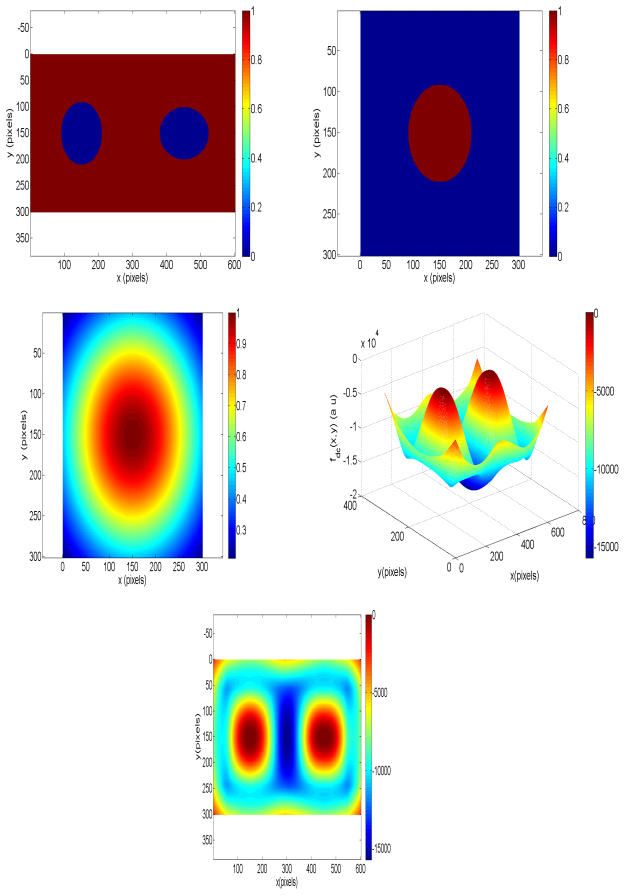
The central object is the circular convolution mask, sized from the largest etch-pit opening in a given image, combined with a Gaussian deconvolution performed in the Fourier domain before the convolution. Writing the pit opening as $N(x,y)$ and the mask as $M(x,y)$, the convolution $f_c(x,y)=N(x,y)\ast M(x,y)$ gives a peak at the pit centre when the two shapes match, and the earlier Gaussian deconvolution, $\mathcal{F}^{-1}\{\hat{N}(k_x)/\hat{G}(k_x)\}$ followed by convolution with $M$, sharpens that peak relative to plain convolution. This peak both identifies a pit and supplies its coordinates; the method's practicality rests on choosing one mask size per image and on the claim that real pit openings are close enough to that size.
What would settle it
Run the published algorithm on NTD images deliberately scratched or containing many circular defects whose size matches the chosen mask, then compare automated identifications pixel-by-pixel with independent manual counts made by at least two trained observers; the claim would be falsified if the false-positive rate from defects approaches the true pit count, or if the manual ground truth itself is not reproducible.
Extended reading notes
Core claim
The paper's central claim is that the hybrid of Gaussian deconvolution and circular-mask convolution produces a sharp peak at the centre of each etch-pit opening whose shape and size are close to the mask, while suppressing scratches and structural defects. Simulations in the paper show that deconvolution followed by convolution gives higher peaks than plain convolution. On real microscope images, the reported automated counts are 302 against a manual count of 301 for accelerator-exposed PET (0.33% error) and 147 against 152 for open-air-exposed CR-39 (3.3% error). The same algorithm was applied to elliptical openings from oblique ion incidence and to high-density $^{252}$Cf-exposed CR-39 with overlapping pits. The paper's stated caveat is that defects mimicking real etch-pit openings in size and shape can still be wrongly counted, and one such misjudgment is shown in its Fig. 8.
Load-bearing premise
The load-bearing premise is that one convolution mask diameter, chosen from the largest etch-pit opening in each image, is representative of every pit in that image and that scratches and defects will not produce matching convolution peaks; the paper's own Fig. 8 shows a same-sized circular defect being wrongly counted, so this premise is not always satisfied.
Editorial extensions
If this is right
- Automated counting from microscope images becomes a one-parameter operation: choose the mask diameter from the largest visible opening, then threshold the convolution peaks.
- Peak-based identification supplies both count and position in one pass, so the output can feed directly into track-density or angular-distribution analysis.
- Because overlapping pits and edge-of-frame pits still produce usable peaks, the method avoids the pre-segmentation that classical shape detectors require.
- On the two tested datasets, errors of 0.33% and 3.3% suggest the technique is accurate enough for routine track scanning, with lower accuracy on degraded open-air surfaces.
- The algorithm works on both circular and elliptical openings with the same circular mask, since the elliptical case still yields a centre peak.
Reading between the lines
- A natural extension, not explored in the paper, is to replace the single global mask with a small set of masks at multiple scales, which could reduce the false-positive case shown in Fig. 8 where a defect matches the chosen size.
- The paper does not report how the peak-detection threshold is set; a testable extension would measure how the 0.33% and 3.3% errors change as that threshold varies, yielding a sensitivity curve rather than a single operating point.
- If the method generalizes to other detector materials, the required mask size could be derived from the bulk etch rate and etching time instead of the largest opening in each frame, making the procedure fully predictive.
- Because the open-air CR-39 error is ten times the accelerator PET error, a reasonable conjecture is that surface quality, not pit shape, is the main error driver; this could be tested by degrading PET surfaces and rerunning the same algorithm.
Editorial analysis
A structured set of objections, weighed in public.
Referee Report
Summary. The paper proposes a hybrid image-processing method for identifying and counting etch-pit openings in nuclear track detector (NTD) images. The method selects the largest etch-pit opening in an image, constructs a circular mask of that size, and applies Gaussian deconvolution followed by convolution with the mask; the resulting peak at each pit center is used for counting. The authors report results on accelerator-exposed PET and open-air-exposed CR-39, with error percentages of 0.33% and 3.3%, respectively, relative to manual counts (Table 1). They claim the approach outperforms classical methods such as Hough transforms, morphological operations, and watershed segmentation, and they discuss application to large-area NTD arrays for rare-event searches.
Significance. If the reported accuracy is reproducible, the technique could meaningfully reduce the manual labor in NTD scanning for rare-event searches and similar applications. The paper's strengths include testing on multiple detector types (PET, CR-39) and several exposure conditions (accelerator, open-air, Cf-252), visual demonstration on overlapping pits and image edges, and a clear algorithmic description that is conceptually simple. However, the central quantitative claim rests on a single aggregate table without protocol details, and the geometric behavior of the convolution for size-mismatched pits raises a correctness risk that is not addressed by the reported validation. The paper also explicitly acknowledges a misclassification case (Fig. 8) without quantifying its frequency. Therefore the significance is conditional on additional validation.
major comments (4)
- [Section 3, Table 1] The central accuracy claim (0.33% and 3.3% error) is based on manual counts used as ground truth, but the paper does not describe the counting protocol: who performed the manual counts, under what magnification, with what software, how ambiguities (e.g., pits at edges, overlapping pits, defects) were resolved, or whether counts were repeated by multiple observers to assess variability. Without this information, the reader cannot judge whether the reported error is meaningful or whether the manual reference itself carries large uncertainty. Please define the error metric explicitly and provide per-image statistics (e.g., distribution of counts, confidence intervals) for the 58 and 53 images, rather than only aggregate percentages.
- [Section 2, paragraph after Eq. (1)] The algorithm uses a single global mask diameter equal to the largest etch-pit opening in each image. For a disk-shaped pit of radius r smaller than the mask radius R, the convolution of the binary disk with the circular mask at displacement d is constant (π r²) for d ≤ R−r, producing a flat plateau rather than a sharp central peak. Thus peak detection is ill-defined for smaller pits unless the mask closely matches each pit size. The paper's assertion that 'in general, this is true for NTD surfaces' is not supported quantitatively, and Fig. 6 explicitly shows openings of different sizes and shapes in CR-39. The authors should either demonstrate that peak detection remains reliable for the observed size distribution or adopt an adaptive/multi-scale mask scheme; a per-size breakdown of counting accuracy is needed.
- [Section 3, Fig. 8 and surrounding text] The paper states that a defect of the same size and shape as an etch-pit can be wrongly counted (Fig. 8), which is an acknowledged counterexample to the claim that the method separates pits from defects. Since the reported error rates aggregate over many images, it is important to quantify how often such misclassifications occur, whether they are more frequent for certain exposure conditions (e.g., open-air CR-39), and whether any post-processing criterion (e.g., peak height threshold, shape verification) could reject them. Without this, the reader cannot assess the robustness of the method beyond the two aggregate numbers in Table 1.
- [Sections 2–3, algorithm implementation details] The description of the implementation is incomplete: the Gaussian deconvolution is presented in Fourier domain (Eqs. 3–5), but no regularization is mentioned (direct division by G(k) can amplify noise), and the peak-detection threshold or any criteria for 'judicially counting' are not specified. The mask size is given as 'nearly 120 pixels' for one example, but no algorithm is given for how the largest pit is identified automatically or whether manual intervention is required. For a methods paper, these details are necessary for reproducibility, especially since no code or test images are provided.
minor comments (6)
- [Section 2, duplicated paragraph] The paragraph starting 'The advantage of using convolution...' through '...this is true for NTD surfaces, including the explanation of the convolution peak, appears verbatim twice in Section 2 (around Eqs. (1) and (2)). Please remove the duplicate.
- [References section] The heading 'References' appears twice before the reference list (page 10). Please remove the duplicated heading.
- [Eq. (2)] Equation (2) is identical to Eq. (1) and appears to be a redundant repetition; if the authors intend to emphasize the two-dimensional case, please state this explicitly rather than repeating the equation.
- [Section 3, figure citations] The figures are cited out of order: Fig. 6 and Fig. 7 are discussed before Fig. 8 in the text, and Fig. 5 is referenced in the introduction of Section 2 but appears later. Please reorder or renumber so that citations are sequential.
- [General, figure quality] The figure captions give frame sizes (e.g., 97 µm × 97 µm), but many figures appear to lack scale bars; adding scale bars directly in the images would improve clarity. Also, the contrast in Fig. 4 and Fig. 6 makes the pits difficult to distinguish from defects in the printed version; consider arrows or labeling in the figure itself.
- [Section 4, comparison claims] The comparison with Hough transform, morphological operations, and watershed is qualitative ('didn't yield any good results', 'simpler yet more robust'), with no quantitative comparison on the same images. If the authors wish to claim superiority, they should provide a side-by-side evaluation on the test set, including runtime and accuracy.
Circularity Check
No significant circularity: the convolution/deconvolution pipeline is independently evaluated against manual counts; the mask-size choice is a heuristic from the image, not fitted to the reported counts.
full rationale
The paper develops an image-processing pipeline (Gaussian deconvolution followed by circular-mask convolution) and tests it on microscopic images of etch-pits in CR-39 and PET. The central accuracy claim is an agreement between automated counts and manual counts in Table 1. The manual counts are an external, albeit subjective, reference; they are not an input to the algorithm. The mask diameter is selected from the largest etch-pit opening in each image, which is a heuristic choice from the image content, not a parameter fitted to reproduce the manual counts. The Gaussian deconvolution formalism in Eqs. (3)-(6) is standard Fourier-domain processing with a cited external reference [8], and the convolution equation (1) is the standard definition. No uniqueness theorem, fitted prediction, or definitional identity is invoked to force the reported results. There are self-citations (Cell Counter software [9] and prior exposure papers [5, 6]), but these are ancillary tools and sample provenance, not load-bearing derivational premises. The acknowledged failure in Fig. 8, where a same-sized circular defect is wrongly counted, and the lack of per-size breakdown are correctness and validation concerns, not circularity. The derivation chain is therefore self-contained with respect to the claimed method; no circular step can be exhibited from the paper's own equations.
Assumptions & free parameters
free parameters (2)
- Convolution mask diameter =
chosen per image; ~120 pixels in the example
- Gaussian mask half-width =
~120 pixels in the example
assumptions (4)
- standard math Convolution of a mask with an object of matching shape and size produces a peak at the object's center.
- domain assumption Etch-pit openings are approximately circular or elliptical and of similar size within an image; scratches and defects have different shapes or sizes.
- ad hoc to paper The largest etch-pit opening in an image is representative of the typical pit size.
- domain assumption The background is whitish and etch-pit openings are dark, providing high signal-to-noise.
Cite this review
Pith. "Pith review of Convolution based hybrid image processing technique for microscopic images of etch-pits in Nuclear Track Detectors." pith.science (2026). https://pith.science/paper/IULKNT7U
@misc{pith2026190809779,
  author       = {Pith},
  title        = {Pith review of: Convolution based hybrid image processing technique for microscopic images of etch-pits in Nuclear Track Detectors},
  year         = {2026},
  howpublished = {\url{https://pith.science/paper/IULKNT7U}},
  note         = {Machine review of arXiv:1908.09779}
}
read the original abstract
A novel image processing technique based on convolution is developed for analyzing the etch-pit images in Nuclear Track Detectors (NTDs). The outcomes of the application of the proposed method on the different types of NTDs (e.g., CR-39, PET) containing etch-pit openings of different sizes and shapes (circular and elliptical) is presented. Promising results have been obtained for both identifying and counting the etch-pits in NTDs.
Figures


Figures from the paper (5 more)


Reference graph
Works this paper leans on
-
[1]
R. L. Fleischer, P. B. Price, R. M. Walker, Nuclear Tracks in Solids. Prin- ciples and Applications, University of California Press, Berkeley, 1975
work page 1975
-
[2]
S. Cecchini, L. Patrizii, Nuclear track detectors in astroparticle and nuclear physics, Radiation Measurements 43 (2008) S144 – S150. doi:https:// doi.org/10.1016/j.radmeas.2008.04.061
-
[3]
Acharya, J. Alexandre, K. Bendtz, P. Benes, J. Bernab´ eu, M. Campbell, S. Cecchini, J. Chwastowski, A. Chatterjee, M. de Montigny, D. Deren- darz, A. De Roeck, J. R. Ellis, M. Fairbairn, D. Felea, M. Frank, D. Frek- ers, C. Garcia, G. Giacomelli, D. Hasegan, M. Kalliokoski, A. Katre, D.-W. Kim, M. G. L. King, K. Kinoshita, D. Lacarr` ere, S. C. Lee, C. L...
work page 2016
-
[4]
S. Balestra, S. Cecchini, M. Cozzi, M. Errico, F. Fabbri, G. Giacomelli, R. Giacomelli, M. Giorgini, A. Kumar, S. Manzoor, J. McDonald, G. Man- drioli, S. Marcellini, A. Margiotta, E. Medinaceli, L. Patrizii, J. Pinfold, V. Popa, I. E. Qureshi, O. Saavedra, Z. Sahnoun, G. Sirri, M. Spu- rio, V. Togo, A. Velarde, A. Zanini, Magnetic Monopole search at high...
arXiv 2008
-
[5]
R. Bhattacharyya, S. Dey, S. K. Ghosh, A. Maulik, S. Raha, D. Syam, Study of radiation background at various high altitude locations in prepa- ration for rare event search in cosmic rays, Journal of Cosmology and As- troparticle Physics (04) (2017) 035. doi:10.1088/1475-7516/2017/04/ 035
-
[6]
D. Bhowmik, S. Dey, A. Maulik, S. Raha, S. Saha, S. K. Saha, D. Syam, Characterization and calibration of a ssntd for heavy-ion detection and strangelet search in cosmic rays, Nuclear Instruments and Methods in Physics Research Section B: Beam Interactions with Materials and Atoms 269 (2) (2011) 197 – 201. doi:https://doi.org/10.1016/j.nimb.2010. 10.028
-
[7]
J. D. Gaskill, Linear Systems, Fourier Transforms, and Optics, Wiley- Interscience, 1978
work page 1978
-
[8]
W. Ulmer, Convolution/deconvolution of generalized gaussian kernels with applications to proton/photon physics and electron capture of charged par- 10 ticles, Journal of Physics: Conference Series 410 (2013) 012122. doi: 10.1088/1742-6596/410/1/012122
Show all 12 references
-
[9]
Chatterjee, S
J. Chatterjee, S. Chakraborty, K. Palodhi, Cell counter [computer software] (SW-12248/2019)
2019
-
[10]
Piuri, F
V. Piuri, F. Scotti, Morphological classification of blood leucocytes by microscope images, in: 2004 IEEE International Conference on Compu- tational Intelligence for Measurement Systems and Applications, 2004. CIMSA., 2004, pp. 103–108. doi:10.1109/CIMSA.2004.1397242
2004 arXiv
-
[11]
J. M. Sharif, M. F. Miswan, M. A. Ngadi, M. S. H. Salam, M. M. bin Abdul Jamil, Red Blood Cell Segmentation Using Masking and Watershed Algorithm: A Preliminary Study, International Conference on Biomedical Engineering (ICoBE)
-
[12]
F. Zana, J. C. Klein, A multimodal registration algorithm of eye fundus images using vessels detection and hough transform, IEEE Transactions on Medical Imaging 18 (5) (1999) 419–428. doi:10.1109/42.774169. 11 Figure 1: Microscopic surface images at 50x objective magnification ...
1999 doi
Reviewed August 14, 2026 · model on record in the stance chip above.
Discussion (0). Continue with ORCID to comment.