REVIEW 4 major objections 4 minor 43 references
An Efficient Framework for Enhancing Discriminative Models via Diffusion Techniques
T0 review · 4 major / 4 minor · reviewed 2026-08-11 · deepseek-v4-flash
Pith's one-line read The paper claims that a confidence-gated diffusion model can re-rank a discriminative classifier's top-k predictions to improve accuracy without retraining.
desk verdict Useful plug-and-play re-ranking idea with broad empirical coverage, but the paper never reports the top-k recall that bounds all of its gains, and the negative-text equation doesn't match the pseudocode. read the letter →
The pith
A machine-rendered reading of the paper's core claim, the machinery that carries it, and where it could break.
The reading
What carries the argument
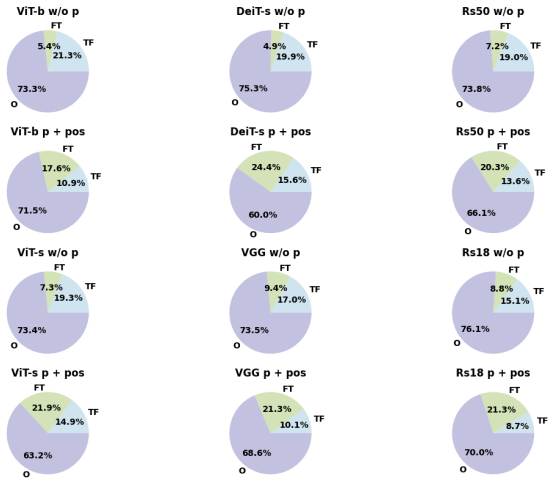
The central mechanism is the confidence protector paired with the diffusion classifier. The protector sets a protection threshold $P_{rot}=1-\alpha$ at the lower $\alpha$ percentile of the max-softmax scores observed on correctly classified training images, so only uncertain inputs are re-examined; this is what stops the generative re-ranker from overturning easy correct predictions. The diffusion classifier scores each top-$k$ candidate by the reparameterized ELBO, i.e., by the expected denoising error $\mathbb{E}\|\varepsilon_t - \varepsilon_\theta(x_t, t, C_i)\|^2$, and improves the score by merging positive and negative text conditions through a negative control factor $\lambda$ and repeating with five voting heads. The threshold test, the denoising-error score, the $\lambda$ combination, and the voting are the four components whose contributions the paper ablates.
What would settle it
Measure the top-$k$ recall of each base model on the shifted benchmarks and check whether DBMEF's corrected images all have their true label inside the shortlist; if ResNet-50's ImageNet-A gains come mostly from images whose true label is already in the top-5, the framework is bounded by that shortlist. A direct control experiment would remove the true label from the candidate set and show that the framework then cannot output it, and would compare accuracy on the subset of images whose true label is absent from top-$k$ between the base model and DBMEF.
Extended reading notes
Core claim
On the paper's own terms, the discovery is that a confidence gate lets a generative model fix a meaningful share of a discriminative model's errors instead of degrading its correct answers. The discriminative model first proposes the top-$k$ labels; if the maximum softmax probability falls below a threshold derived from its own correctly classified training images, a diffusion model scores each candidate label $C_i$ by the expected squared error between the noise added to the image and the noise predicted under text condition $C_i$. The candidate with the lowest denoising error becomes the final label. The paper reports consistent gains across CNN- and Transformer-based architectures, supervised, self-supervised, and contrastive training, and distribution-shifted benchmarks, including ImageNet-A where ResNet-50's accuracy moves from 0.0% to 3.02%.
Load-bearing premise
Everything rests on the base classifier being able to put the correct label somewhere in its top-$k$ shortlist, because the diffusion stage only re-ranks those candidates and can never recover a label that is absent.
Editorial extensions
If this is right
- Any discriminative classifier can be wrapped in DBMEF without retraining, so the reported 0.19%–3.27% gains apply to weak and strong models alike, including ViT-huge CLIP.
- The framework raises accuracy on distribution-shifted sets (ImageNet-S, ImageNet-A, ImageNet-V2, ImageNet-E), offering a training-free robustness patch when new data is unavailable.
- Because the diffusion stage only runs on a protected subset, inference stays close to the base model's cost, roughly 1% of a full diffusion-classifier run at 30 timesteps.
- Using stronger diffusion models inside the same framework yields larger gains (SD2-1 and DiT beat SD1-4/1-5), suggesting the enhancement grows as generative models improve.
Reading between the lines
- A likely ceiling on every reported gain is the base model's top-$k$ recall, which the paper never measures; on harder benchmarks the recovered images may be exactly those where the true class is already near the top.
- The same confidence-gated, denoising-error re-ranking could transfer to other generative scorers (masked image models, autoregressive visual generators) and to tasks that need an uncertainty signal, such as open-set detection or selective classification.
- Because the protection threshold is calibrated on the training set, its behavior under severe distribution shift may vary; the reported shift experiments cover a few benchmarks but not the full space of corruptions.
Editorial analysis
A structured set of objections, weighed in public.
Referee Report
Summary. The paper proposes DBMEF, a training-free wrapper that combines a discriminative classifier with Stable Diffusion. The discriminative model first produces top-k labels; a confidence protector (based on a softmax threshold derived from correctly classified training samples) decides whether the image needs re-evaluation. For low-confidence images, the diffusion model denoises the image under positive and negative text prompts derived from the top-k labels, merges the noise predictions with a negative control factor lambda, and uses a five-member voting ensemble to pick the final label. The authors report accuracy gains on ImageNet (e.g., +1.51% for ResNet-50), on distribution-shift benchmarks (e.g., ImageNet-A ResNet-50 from 0.00% to 3.02%), and on CIFAR-10/100, across 17 model architectures.
Significance. If the gains are real and robust, the framework is practically attractive: it turns an off-the-shelf diffusion model into a post-hoc verifier that improves discriminative accuracy without retraining, and it is far cheaper than diffusion-only classification (about 1% of the inference time). The paper provides a broad model zoo (CNN, ViT, self-supervised, CLIP), a component-wise ablation, an analysis of the confidence protector, and open-source code. The empirical claim, however, depends on two issues that the manuscript does not currently resolve: (i) the algorithm can only re-rank the base model's top-k labels, so every reported gain is bounded by the base model's top-k recall, which is never measured; and (ii) hyperparameters are selected on the same ImageNet validation set used for the headline results, with no variance or significance reporting. These are load-bearing for the central claim of 'stable improvements' across models and shifts, and they require additional experiments rather than mere rewriting.
major comments (4)
- [Sec. 3.2 / Algorithm 1, Table 2] The framework only re-ranks the top-5 labels produced by the base model (Algorithm 1, line 4: Kclass = topk(f(x))), so the final accuracy is bounded above by the base model's top-5 recall on each test set. The paper never reports top-5 recall for any base model on any dataset. This is load-bearing for the headline ImageNet-A result: ResNet-50 goes from 0.00% to 3.02%, which is possible only if the true label appears in ResNet-50's top-5 on at least 3.02% of ImageNet-A. Please report top-k recall for every base model on every evaluation set (ImageNet, ImageNet-A, ImageNet-V2, ImageNet-S, ImageNet-E, CIFAR), compare it with the post-DBMEF accuracy, and also report an oracle re-ranker that selects the true label whenever it is in the top-k. This quantifies the maximum possible gain from re-ranking and is necessary to validate the mechanism described in the paper.
- [Table 9 / Sec. C.2] Table 9 is used to conclude that diffusion models play a 'pivotal role' because replacing SD with stronger classifiers (e.g., ViTb-CLIP, 85.21% top-1) yields a lower final accuracy (77.04%) than the diffusion-based configuration (77.40%). This comparison is confounded by the top-k bottleneck: every second-stage model is restricted to the first-stage ResNet-50's top-5 candidates, so the second-stage standalone accuracy (TOP1-2) is not a fair reference. The observed pattern is exactly what one expects when a strong second stage is forced to operate on a weak candidate set. Please re-run the comparison with the same candidate restriction for both diffusion and discriminative second stages, and report the top-k recall for each second-stage model; alternatively, rephrase the claim so that it does not overstate the diffusion model's unique contribution.
- [Sec. 4.1 / Appendix B] Hyperparameters P_rot, T, and lambda are selected by inspecting accuracy on the ImageNet validation set (Tables 4-6 in Appendix B), and the final results in Tables 1-2 are reported on the same validation set. This in-sample selection inflates the measured improvements. The statement in Sec. 4.1 that the results are obtained 'without additional hyperparameter tuning' is also inaccurate: P_rot is set to 0.99 for some models and 0.95 for others based on the Appendix B experiments, and lambda=1.1 is explicitly selected from Table 6. Please use a separate validation split or cross-validation for hyperparameter selection, or additionally report results for a fixed default configuration on a held-out test set.
- [Sec. 4.1 / Tables 1-2] The paper states that results are averaged over five runs with a fixed seed, but no variance, confidence intervals, or significance tests are reported. Several improvements are small (e.g., ViTh-CLIP +0.19%, ViTb-CLIP +0.25%) and may be within run-to-run noise. Please report standard deviations or paired bootstrap confidence intervals for the main accuracy tables, and ideally paired per-image significance tests (e.g., McNemar's test) to support the claim of 'stable improvements' across the 17 models.
minor comments (4)
- [Sec. 4.1] The text says the improvements range from 0.19% to 3.01%, but Table 1 lists a maximum improvement of 3.27% for TinyNet; please correct the inconsistency.
- [Eq. (9)] The Bayes formula in Eq. (9) is garbled: the denominator contains P(y=Cj) twice and the summation is not written correctly. Please rewrite it as P(y=Ci|x) = P(x|y=Ci)P(y=Ci) / sum_j P(x|y=Cj)P(y=Cj).
- [Eq. (4)] The symbol '⇐ ⇒' after the expectation is nonstandard and should be replaced with '⇔' or a proper equivalence relation.
- [Table 7] The caption of Table 7 mentions a 'Times' column, but the reproduced table has no such column; please include the timing data or remove the reference.
Circularity Check
No by-construction circularity; the residual score reflects a minor non-load-bearing self-citation and in-sample hyperparameter selection, not a derivation that reduces to its inputs.
full rationale
The paper's central claim is empirical: DBMEF re-ranks the base model's top-k predictions with a diffusion classifier, and the reported gains are measurements rather than derivations. The classifier equations (9)-(14) are a standard ELBO-to-denoising-loss reparameterization, and no fitted parameter is renamed as a prediction. Algorithm 1 does restrict the final output to Kclass = topk(f(x)) with K=5, so every reported improvement is upper-bounded by the base model's unmeasured top-5 recall; this is a significant unverified necessary condition, especially for the ImageNet-A result (ResNet-50 0.00% to 3.02%), but it is a missing control rather than a by-construction equivalence. The confidence protector is the only self-cited element (Zhu et al. 2022, with overlapping authorship), and the paper fully specifies the percentile statistic in Eqs. (6)-(8), so the citation is not load-bearing. Hyperparameters P_rot, lambda=1.1, timesteps=30, and voting size are tuned on the same ImageNet validation set used for the headline table, which is an in-sample evaluation issue rather than a fitted parameter renamed as a prediction. No equation in the paper reduces to its own input, and no uniqueness theorem is imported from the authors' prior work; the framework is tested against external datasets and compared with multiple baselines. The score of 2 reflects the minor self-citation and in-sample selection, not a circular derivation.
Assumptions & free parameters
free parameters (5)
- Protection threshold P_rot =
0.95 or 0.99 depending on model
- Negative control factor lambda =
1.1
- Diffusion timesteps T =
30
- Voting ensemble size =
5
- Top-k candidate count =
5
assumptions (4)
- domain assumption log P(x|y) can be approximated by the negative denoising loss L_simple (Eq. 13)
- domain assumption Maximum softmax confidence on correctly classified training images is transferable to test images as a reliability score
- domain assumption The true label is contained in the top-k predictions for every image selected for reclassification
- ad hoc to paper Blending positive and negative text-condition noise predictions with lambda > 1 improves class discrimination
Cite this review
Pith. "Pith review of An Efficient Framework for Enhancing Discriminative Models via Diffusion Techniques." pith.science (2026). https://pith.science/paper/P5UYS37S
@misc{pith2026241209063,
  author       = {Pith},
  title        = {Pith review of: An Efficient Framework for Enhancing Discriminative Models via Diffusion Techniques},
  year         = {2026},
  howpublished = {\url{https://pith.science/paper/P5UYS37S}},
  note         = {Machine review of arXiv:2412.09063}
}
read the original abstract
Image classification serves as the cornerstone of computer vision, traditionally achieved through discriminative models based on deep neural networks. Recent advancements have introduced classification methods derived from generative models, which offer the advantage of zero-shot classification. However, these methods suffer from two main drawbacks: high computational overhead and inferior performance compared to discriminative models. Inspired by the coordinated cognitive processes of rapid-slow pathway interactions in the human brain during visual signal recognition, we propose the Diffusion-Based Discriminative Model Enhancement Framework (DBMEF). This framework seamlessly integrates discriminative and generative models in a training-free manner, leveraging discriminative models for initial predictions and endowing deep neural networks with rethinking capabilities via diffusion models. Consequently, DBMEF can effectively enhance the classification accuracy and generalization capability of discriminative models in a plug-and-play manner. We have conducted extensive experiments across 17 prevalent deep model architectures with different training methods, including both CNN-based models such as ResNet and Transformer-based models like ViT, to demonstrate the effectiveness of the proposed DBMEF. Specifically, the framework yields a 1.51\% performance improvement for ResNet-50 on the ImageNet dataset and 3.02\% on the ImageNet-A dataset. In conclusion, our research introduces a novel paradigm for image classification, demonstrating stable improvements across different datasets and neural networks. The code is available at https://github.com/ChunXiaostudy/DBMEF.
Figures


Figures from the paper (3 more)


Reference graph
Works this paper leans on
-
[1]
, " * write output.state after.block = add.period write newline
ENTRY address archivePrefix author booktitle chapter edition editor eid eprint howpublished institution isbn journal key month note number organization pages publisher school series title type volume year label extra.label sort.label short.list INTEGERS output.state before.all mid.sentence after.sentence after.block FUNCTION init.state.consts #0 'before.a...
-
[2]
write newline
" write newline "" before.all 'output.state := FUNCTION n.dashify 't := "" t empty not t #1 #1 substring "-" = t #1 #2 substring "--" = not "--" * t #2 global.max substring 't := t #1 #1 substring "-" = "-" * t #2 global.max substring 't := while if t #1 #1 substring * t #2 global.max substring 't := if while FUNCTION word.in bbl.in capitalize " " * FUNCT...
-
[3]
Chen, H.; Dong, Y.; Wang, Z.; Yang, X.; Duan, C.; Su, H.; and Zhu, J. 2023. Robust Classification via a Single Diffusion Model. arXiv preprint arXiv:2305.15241
arXiv 2023
-
[4]
Chen, T.; Kornblith, S.; Norouzi, M.; and Hinton, G. 2020. A simple framework for contrastive learning of visual representations. In International conference on machine learning, 1597--1607. PMLR
2020
-
[5]
Chen, Y.; Akin, O.; Nern, A.; Tsui, C. K.; Pecot, M. Y.; and Zipursky, S. L. 2014. Cell-type-specific labeling of synapses in vivo through synaptic tagging with recombination. Neuron, 81(2): 280--293
work page 2014
-
[6]
Cheng, J.; and Greiner, R. 2013. Comparing Bayesian network classifiers. arXiv preprint arXiv:1301.6684
work page Pith review arXiv 2013
-
[7]
Clark, K.; and Jaini, P. 2024. Text-to-Image Diffusion Models are Zero Shot Classifiers. Advances in Neural Information Processing Systems, 36
work page 2024
-
[8]
Dhariwal, P.; and Nichol, A. 2021. Diffusion models beat gans on image synthesis. Advances in neural information processing systems, 34: 8780--8794
2021
Show all 43 references
-
[9]
Dietterich, T. G. 2000. Ensemble methods in machine learning. In International workshop on multiple classifier systems, 1--15. Springer
2000
-
[10]
Dosovitskiy, A.; Beyer, L.; Kolesnikov, A.; Weissenborn, D.; Zhai, X.; Unterthiner, T.; Dehghani, M.; Minderer, M.; Heigold, G.; Gelly, S.; et al. 2020. An image is worth 16x16 words: Transformers for image recognition at scale. arXiv preprint arXiv:2010.11929
2020 arXiv
-
[11]
Gao, S.; Li, Z.-Y.; Yang, M.-H.; Cheng, M.-M.; Han, J.; and Torr, P. 2022. Large-scale unsupervised semantic segmentation. IEEE transactions on pattern analysis and machine intelligence
2022
-
[12]
Goodfellow, I.; Pouget-Abadie, J.; Mirza, M.; Xu, B.; Warde-Farley, D.; Ozair, S.; Courville, A.; and Bengio, Y. 2020. Generative adversarial networks. Communications of the ACM, 63(11): 139--144
2020
-
[13]
Han, K.; Wang, Y.; Zhang, Q.; Zhang, W.; Xu, C.; and Zhang, T. 2020. Model rubik’s cube: Twisting resolution, depth and width for tinynets. Advances in Neural Information Processing Systems, 33: 19353--19364
2020
-
[14]
Han, X.; Zheng, H.; and Zhou, M. 2022. Card: Classification and regression diffusion models. Advances in Neural Information Processing Systems, 35: 18100--18115
2022
-
[15]
He, K.; Chen, X.; Xie, S.; Li, Y.; Doll \'a r, P.; and Girshick, R. 2022. Masked autoencoders are scalable vision learners. In Proceedings of the IEEE/CVF conference on computer vision and pattern recognition, 16000--16009
2022
-
[16]
He, K.; Zhang, X.; Ren, S.; and Sun, J. 2016. Deep residual learning for image recognition. In Proceedings of the IEEE conference on computer vision and pattern recognition, 770--778
2016
-
[17]
Hendrycks, D.; Zhao, K.; Basart, S.; Steinhardt, J.; and Song, D. 2021. Natural adversarial examples. In Proceedings of the IEEE/CVF Conference on Computer Vision and Pattern Recognition, 15262--15271
2021
-
[18]
Ho, J.; Jain, A.; and Abbeel, P. 2020. Denoising diffusion probabilistic models. Advances in neural information processing systems, 33: 6840--6851
2020
-
[19]
Ho, J.; and Salimans, T. 2022. Classifier-free diffusion guidance. arXiv preprint arXiv:2207.12598
2022 arXiv
-
[20]
Howard, A.; Sandler, M.; Chu, G.; Chen, L.-C.; Chen, B.; Tan, M.; Wang, W.; Zhu, Y.; Pang, R.; Vasudevan, V.; et al. 2019. Searching for mobilenetv3. In Proceedings of the IEEE/CVF international conference on computer vision, 1314--1324
2019
-
[21]
Karras, T.; Aittala, M.; Aila, T.; and Laine, S. 2022. Elucidating the design space of diffusion-based generative models. Advances in Neural Information Processing Systems, 35: 26565--26577
2022
-
[22]
Krizhevsky, A.; Hinton, G.; et al. 2009. Learning multiple layers of features from tiny images. Master's thesis, University of Tront
2009
-
[23]
LeCun, Y.; Bottou, L.; Bengio, Y.; and Haffner, P. 1998. Gradient-based learning applied to document recognition. Proceedings of the IEEE, 86(11): 2278--2324
1998
-
[24]
C.; Prabhudesai, M.; Duggal, S.; Brown, E
Li, A. C.; Prabhudesai, M.; Duggal, S.; Brown, E. L.; and Pathak, D. 2023 a . Your Diffusion Model is Secretly a Zero-Shot Classifier. In ICML 2023 Workshop on Structured Probabilistic Inference & Generative Modeling
2023
-
[25]
Li, X.; Chen, Y.; Zhu, Y.; Wang, S.; Zhang, R.; and Xue, H. 2023 b . ImageNet-E: Benchmarking Neural Network Robustness via Attribute Editing. In Proceedings of the IEEE/CVF Conference on Computer Vision and Pattern Recognition, 20371--20381
2023
-
[26]
Oquab, M.; Darcet, T.; Moutakanni, T.; Vo, H.; Szafraniec, M.; Khalidov, V.; Fernandez, P.; Haziza, D.; Massa, F.; El-Nouby, A.; et al. 2023. Dinov2: Learning robust visual features without supervision. arXiv preprint arXiv:2304.07193
2023 arXiv
-
[27]
Peebles, W.; and Xie, S. 2023. Scalable diffusion models with transformers. In Proceedings of the IEEE/CVF International Conference on Computer Vision, 4195--4205
2023
-
[28]
W.; Hallacy, C.; Ramesh, A.; Goh, G.; Agarwal, S.; Sastry, G.; Askell, A.; Mishkin, P.; Clark, J.; et al
Radford, A.; Kim, J. W.; Hallacy, C.; Ramesh, A.; Goh, G.; Agarwal, S.; Sastry, G.; Askell, A.; Mishkin, P.; Clark, J.; et al. 2021. Learning transferable visual models from natural language supervision. In International conference on machine learning, 8748--8763. PMLR
2021
-
[29]
Recht, B.; Roelofs, R.; Schmidt, L.; and Shankar, V. 2019. Do imagenet classifiers generalize to imagenet? In International conference on machine learning, 5389--5400. PMLR
2019
-
[30]
Rish, I.; et al. 2001. An empirical study of the naive Bayes classifier. In IJCAI 2001 workshop on empirical methods in artificial intelligence, volume 3, 41--46
2001
-
[31]
Rombach, R.; Blattmann, A.; Lorenz, D.; Esser, P.; and Ommer, B. 2022. High-resolution image synthesis with latent diffusion models. In Proceedings of the IEEE/CVF conference on computer vision and pattern recognition, 10684--10695
2022
-
[32]
M.; Cudeiro, J.; and Jones, H
Sillito, A. M.; Cudeiro, J.; and Jones, H. E. 2006. Always returning: feedback and sensory processing in visual cortex and thalamus. Trends in neurosciences, 29(6): 307--316
2006
-
[33]
Simonyan, K.; and Zisserman, A. 2014. Very deep convolutional networks for large-scale image recognition. arXiv preprint arXiv:1409.1556
2014 arXiv
-
[34]
Song, J.; Meng, C.; and Ermon, S. 2020. Denoising diffusion implicit models. arXiv preprint arXiv:2010.02502
2020 arXiv
-
[35]
P.; Kumar, A.; Ermon, S.; and Poole, B
Song, Y.; Sohl-Dickstein, J.; Kingma, D. P.; Kumar, A.; Ermon, S.; and Poole, B. 2020. Score-based generative modeling through stochastic differential equations. arXiv preprint arXiv:2011.13456
2020 arXiv
-
[36]
P.; and Hariharan, B
Tang, L.; Jia, M.; Wang, Q.; Phoo, C. P.; and Hariharan, B. 2024. Emergent correspondence from image diffusion. Advances in Neural Information Processing Systems, 36
2024
-
[37]
Touvron, H.; Cord, M.; Douze, M.; Massa, F.; Sablayrolles, A.; and J \'e gou, H. 2021. Training data-efficient image transformers & distillation through attention. In International conference on machine learning, 10347--10357. PMLR
2021
-
[38]
Xu, J.; Liu, S.; Vahdat, A.; Byeon, W.; Wang, X.; and De Mello, S. 2023. Open-vocabulary panoptic segmentation with text-to-image diffusion models. In Proceedings of the IEEE/CVF Conference on Computer Vision and Pattern Recognition, 2955--2966
2023
-
[39]
J.; and Lee, J
Yoon, J.; Hwang, S. J.; and Lee, J. 2021. Adversarial purification with score-based generative models. In International Conference on Machine Learning, 12062--12072. PMLR
2021
-
[40]
Zhao, S.; Jacobsen, J.-H.; and Grathwohl, W. 2020. Joint energy-based models for semi-supervised classification. In ICML 2020 Workshop on Uncertainty and Robustness in Deep Learning, volume 1
2020
-
[41]
Zhao, W.; Rao, Y.; Liu, Z.; Liu, B.; Zhou, J.; and Lu, J. 2023. Unleashing text-to-image diffusion models for visual perception. arXiv preprint arXiv:2303.02153
2023 arXiv
-
[42]
Zhu, Y.; Chen, Y.; Li, X.; Zhang, R.; Xue, H.; Tian, X.; Jiang, R.; Zheng, B.; and Chen, Y. 2022. Rethinking Out-of-Distribution Detection From a Human-Centric Perspective. arXiv preprint arXiv:2211.16778
2022 arXiv
-
[43]
S.; Schott, L.; Song, Y.; Dunn, B
Zimmermann, R. S.; Schott, L.; Song, Y.; Dunn, B. A.; and Klindt, D. A. 2021. Score-Based Generative Classifiers. In NeurIPS 2021 Workshop on Deep Generative Models and Downstream Applications
2021
Reviewed August 11, 2026 · model on record in the stance chip above.
Discussion (0). Continue with ORCID to comment.