Recognition: 2 theorem links
· Lean TheoremQCD-driven dark matter: AQNs formation and observational tests
Pith reviewed 2026-05-15 09:58 UTC · model grok-4.3
The pith
Dense quark-antiquark aggregates stabilized by axion domain walls explain both dark matter and the matter-antimatter asymmetry.
A machine-rendered reading of the paper's core claim, the machinery that carries it, and where it could break.
Core claim
Dark matter consists of dense aggregates of quark and antiquark matter stabilised by axion domain walls; the framework supplies a single early-Universe mechanism that simultaneously accounts for the observed dark-matter density and the cosmic matter-antimatter asymmetry.
What carries the argument
The QCD-AQN framework, in which axion domain walls stabilize dense quark-antiquark nuggets formed in the early Universe.
Load-bearing premise
Dense aggregates of quark and antiquark matter form in the early Universe and are stabilized by axion domain walls.
What would settle it
Absence of the predicted AQN-induced events in cosmic-ray detectors, neutron-star cooling rates, or microwave-background spectral distortions at the levels required by the model would rule it out.
Figures


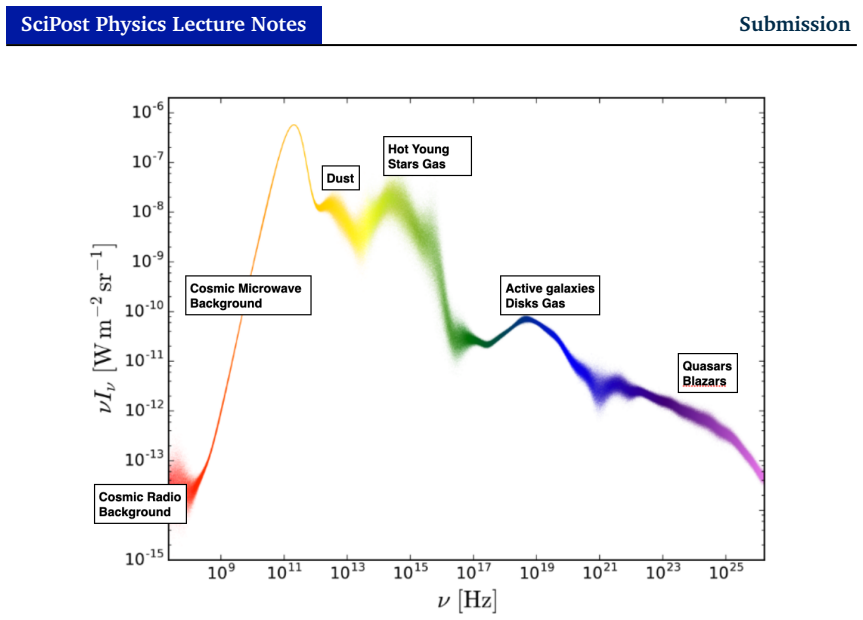


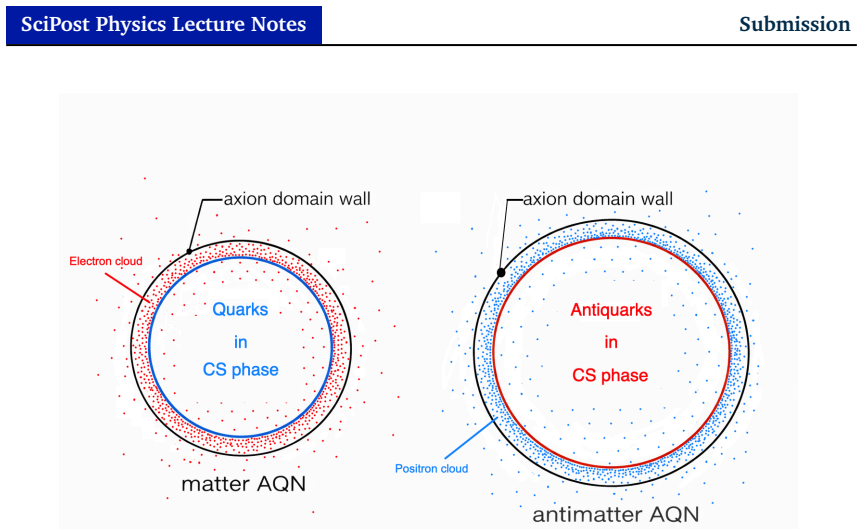


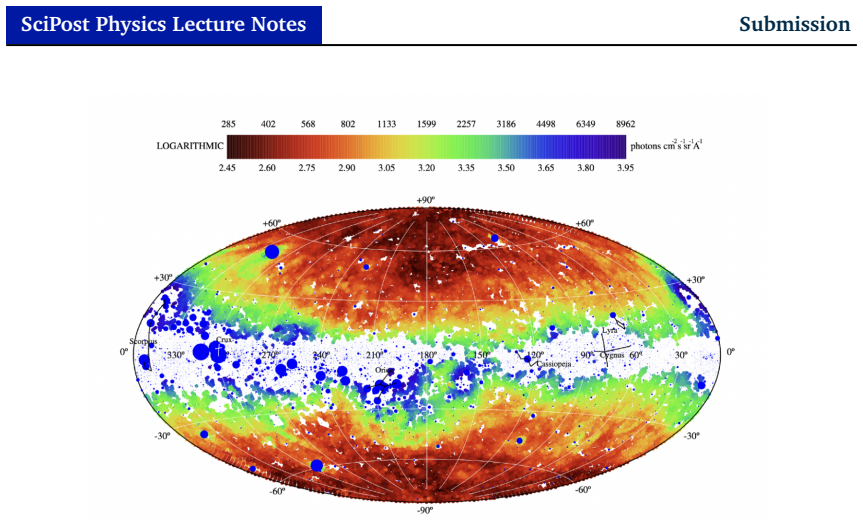


read the original abstract
The nature of dark matter remains a central problem in cosmology. A compelling possibility is that dark matter is macroscopic, consisting of composite objects formed in the early Universe. We introduce the QCD-AQN framework, a well-motivated scenario in which dark matter is composed of dense aggregates of quark and antiquark matter stabilised by axion domain walls. The framework proposes a unified explanation for both dark matter and the observed matter-antimatter asymmetry. Particular emphasis is placed on existing observational constraints and on observational tests. Finally, we explore a possible QCD-based scenario for dark energy.
Editorial analysis
A structured set of objections, weighed in public.
Referee Report
Summary. The manuscript introduces the QCD-AQN framework, proposing that dark matter consists of macroscopic Axion Quark Nuggets formed as dense aggregates of quark and antiquark matter stabilized by axion domain walls during the QCD phase transition. It claims this provides a unified explanation for the dark matter density and the observed baryon asymmetry, while reviewing observational constraints, proposing tests, and sketching a possible QCD-based dark energy scenario.
Significance. If the formation and stability claims were quantitatively established, the framework would offer a single QCD-based mechanism addressing two longstanding cosmological problems and generating distinctive observational signatures. The current presentation, however, leaves the unification dependent on unproven existence statements rather than derived results.
major comments (2)
- [Sections on AQN formation and stability (near the QCD phase transition discussion)] The formation mechanism and stability of AQNs are asserted without quantitative support. No derivation of the formation rate, binding energy, or dynamical stability against collapse/evaporation appears in the sections describing AQN production during the QCD transition; this assumption is load-bearing for the claim that AQNs simultaneously account for the DM density and baryon asymmetry.
- [Unification claim and parameter counting (early sections after abstract)] The unification of DM and baryon asymmetry relies on the existence of stabilized quark-antiquark aggregates, yet no explicit calculation linking the AQN number density or charge asymmetry to the observed Ω_DM and η_B is provided. Without such a relation, the framework reduces to a consistency statement rather than a predictive derivation.
minor comments (2)
- [Notation and definitions] Notation for the axion domain wall tension and the AQN surface tension is introduced without a clear reference to prior literature or an explicit definition of the matching conditions at the wall-nugget interface.
- [Observational tests section] The discussion of observational tests would benefit from a dedicated table summarizing predicted signatures versus current limits (e.g., cosmic-ray fluxes, gravitational-wave backgrounds).
Simulated Author's Rebuttal
We thank the referee for the careful reading and constructive comments on our manuscript. We address each major point below and indicate where revisions will be made to improve clarity while preserving the scope of the present work as an overview of the QCD-AQN framework.
read point-by-point responses
-
Referee: The formation mechanism and stability of AQNs are asserted without quantitative support. No derivation of the formation rate, binding energy, or dynamical stability against collapse/evaporation appears in the sections describing AQN production during the QCD transition; this assumption is load-bearing for the claim that AQNs simultaneously account for the DM density and baryon asymmetry.
Authors: The quantitative derivations of AQN formation rates, binding energies, and stability against collapse or evaporation during the QCD phase transition are contained in our earlier dedicated papers on the topic. The current manuscript is structured as a review of the overall framework, its unification aspects, and observational tests rather than a re-derivation of those foundational results. To address the concern, we will insert a concise summary paragraph in the revised version outlining the key stability arguments and formation estimates, with explicit citations to the prior derivations. revision: partial
-
Referee: The unification of DM and baryon asymmetry relies on the existence of stabilized quark-antiquark aggregates, yet no explicit calculation linking the AQN number density or charge asymmetry to the observed Ω_DM and η_B is provided. Without such a relation, the framework reduces to a consistency statement rather than a predictive derivation.
Authors: The unification follows from the topological charge separation induced by the axion domain walls at the QCD transition, which naturally produces a net baryon excess in one population of nuggets while the total energy density accounts for dark matter. This relation is implicit in the framework's dynamics but not written out as a single equation in the present text. We will add an explicit paragraph in the revised manuscript deriving the approximate link between AQN parameters, number density, and the observed values of Ω_DM and η_B to make the predictive content clearer. revision: yes
Circularity Check
No significant circularity detected; framework introduced as scenario with observational focus
full rationale
The provided abstract and summary introduce the QCD-AQN framework as a well-motivated scenario in which dark matter consists of dense quark-antiquark aggregates stabilized by axion domain walls, offering a unified account of dark matter and baryon asymmetry. Emphasis is placed on existing constraints and observational tests rather than a closed derivation chain. No equations, fitted parameters renamed as predictions, or self-citation load-bearing steps are identifiable in the given text that would reduce claims to inputs by construction. The formation and stability statements function as definitional elements of the proposed scenario, not as outputs derived from prior fitted quantities within the paper itself. This is the common honest finding for framework-introduction papers that defer quantitative details to future work or external benchmarks.
Axiom & Free-Parameter Ledger
axioms (1)
- domain assumption Axion domain walls can stabilize dense quark-antiquark aggregates against collapse or decay
invented entities (1)
-
Axion Quark Nuggets (AQNs)
no independent evidence
Lean theorems connected to this paper
-
IndisputableMonolith/Foundation/RealityFromDistinction.leanreality_from_one_distinction unclear?
unclearRelation between the paper passage and the cited Recognition theorem.
dense aggregates of quark and antiquark matter stabilised by axion domain walls... unified explanation for both dark matter and the observed matter-antimatter asymmetry
-
IndisputableMonolith/Cost/FunctionalEquation.leanwashburn_uniqueness_aczel unclear?
unclearRelation between the paper passage and the cited Recognition theorem.
mean AQN mass <m_AQN> ... restricted to a relatively narrow window by independent observational and theoretical considerations
What do these tags mean?
- matches
- The paper's claim is directly supported by a theorem in the formal canon.
- supports
- The theorem supports part of the paper's argument, but the paper may add assumptions or extra steps.
- extends
- The paper goes beyond the formal theorem; the theorem is a base layer rather than the whole result.
- uses
- The paper appears to rely on the theorem as machinery.
- contradicts
- The paper's claim conflicts with a theorem or certificate in the canon.
- unclear
- Pith found a possible connection, but the passage is too broad, indirect, or ambiguous to say the theorem truly supports the claim.
Reference graph
Works this paper leans on
- [1]
- [2]
-
[3]
Zwicky,Die Rotverschiebung von extragalaktischen Nebeln, Helvetica Physica Acta 6, 110 (1933)
F . Zwicky,Die Rotverschiebung von extragalaktischen Nebeln, Helvetica Physica Acta 6, 110 (1933)
work page 1933
-
[4]
V . C. Rubin and W . K. Ford, Jr.,Rotation of the Andromeda Nebula from a Spectroscopic Survey of Emission Regions, ApJ 159, 379 (1970), doi:10.1086 /150317
work page 1970
-
[5]
V . C. Rubin, W . K. Ford, Jr. and N. Thonnard, Rotational properties of 21 SC galaxies with a large range of luminosities and radii, from NGC 4605 (R =4kpc) to UGC 2885 (R=122kpc)., ApJ 238, 471 (1980), doi:10.1086 /158003
work page 1980
-
[6]
M. Cirelli, A. Strumia and J. Zupan, Dark Matter, arXiv e-prints arXiv:2406.01705 (2024), doi:10.48550 /arXiv.2406.01705, 2406.01705
work page internal anchor Pith review Pith/arXiv arXiv 2024
-
[7]
E. Di Valentino, J. L. Said, A. Riess, A. Pollo, V . Poulin, A. Gómez-Valent, A. Welt- man, A. Palmese, C. D. Huang, C. van de Bruck, C. S. Saraf, C.-Y. Kuo et al. , The 62 SciPost Physics Lecture Notes Submission CosmoVerse White Paper: Addressing observational tensions in cosmology with system- atics and fundamental physics , Physics of the Dark Univers...
-
[8]
A. R. Zhitnitsky , ‘Nonbaryonic’ dark matter as baryonic colour superconductor , JCAP2003(10), 010 (2003), doi:10.1088 /1475-7516/2003/10/010, hep-ph / 0202161
work page 2003
-
[9]
Witten, Cosmic separation of phases , Phys
E. Witten, Cosmic separation of phases , Phys. Rev. D 30, 272 (1984), doi:10.1103/PhysRevD.30.272
- [10]
-
[11]
G. Lugones and J. E. Horvath, Primordial nuggets survival and QCD pairing, PRD69(6), 063509 (2004), doi:10.1103 /PhysRevD.69.063509, astro-ph /0310082
work page 2004
-
[12]
A New Era in the Quest for Dark Matter
G. Bertone and T . M. P . Tait,A new era in the search for dark matter, Nature562(7725), 51 (2018), doi:10.1038 /s41586-018-0542-z, 1810.01668
work page internal anchor Pith review Pith/arXiv arXiv 2018
-
[13]
X. Dai, J. N. Bregman, C. S. Kochanek and E. Rasia, On the Baryon Fractions in Clusters and Groups of Galaxies, ApJ 719(1), 119 (2010), doi:10.1088/0004-637X/719/1/119, 0911.2230
work page internal anchor Pith review Pith/arXiv arXiv doi:10.1088/0004-637x/719/1/119 2010
-
[14]
Planck 2018 results. VI. Cosmological parameters
Planck Collaboration, N. Aghanim, Y. Akrami, M. Ashdown, J. Aumont, C. Baccigalupi, M. Ballardini, A. J. Banday, R. B. Barreiro, N. Bartolo, S. Basak, R. Battye et al., Planck 2018 results. VI. Cosmological parameters , Astronomy & Astrophysics 641, A6 (2020), doi:10.1051/0004-6361/201833910, 1807.06209
work page internal anchor Pith review Pith/arXiv arXiv doi:10.1051/0004-6361/201833910 2018
-
[15]
R. Hill, K. W . Masui and D. Scott, The Spectrum of the Universe, Applied Spectroscopy 72(5), 663 (2018), doi:10.1177 /0003702818767133, 1802.03694
work page internal anchor Pith review Pith/arXiv arXiv 2018
-
[16]
D. J. Fixsen, A. Kogut, S. Levin, M. Limon, P . Lubin, P . Mirel, M. Seiffert, J. Singal, E. Wollack, T . Villela and C. A. Wuensche,ARCADE 2 Measurement of the Absolute Sky Brightness at 3-90 GHz , ApJ 734(1), 5 (2011), doi:10.1088 /0004-637X/734/1/5, 0901.0555
work page internal anchor Pith review Pith/arXiv arXiv 2011
-
[17]
M. Tegmark and M. Zaldarriaga, Separating the early universe from the late universe: Cosmological parameter estimation beyond the black box , PRD 66(10), 103508 (2002), doi:10.1103/PhysRevD.66.103508, astro-ph /0207047
-
[18]
N. Palanque-Delabrouille et al. , Constraints on warm dark matter from sdss lyman- alpha forest data , JCAP 04, 038 (2020), doi:10.1088 /1475-7516/2020/04/038, 1911.09073
-
[19]
E. O. Nadler et al., Constraints on warm dark matter from milky way satellite galaxies , Phys. Rev. Lett. 126, 091101 (2021), doi:10.1103 /PhysRevLett.126.091101, 2008. 00022
work page 2021
-
[20]
Dark Matter Self-interactions and Small Scale Structure
S. Tulin and H.-B. Yu, Dark matter self-interactions and small scale structure , Physics Reports730, 1 (2018), doi:10.1016 /j.physrep.2017.11.004, 1705.02358
work page internal anchor Pith review Pith/arXiv arXiv 2018
-
[21]
D. N. Spergel and P . J. Steinhardt, Observational Evidence for Self-Interacting Cold Dark Matter, PRL 84(17), 3760 (2000), doi:10.1103 /PhysRevLett.84.3760, astro-ph / 9909386. 63 SciPost Physics Lecture Notes Submission
work page 2000
-
[22]
A. Pontzen and F . Governato,How supernova feedback turns dark matter cusps into cores, MNRAS421(4), 3464 (2012), doi:10.1111 /j.1365-2966.2012.20571.x, 1106.0499
-
[23]
Constraining Dark Matter-Baryon Scattering with Linear Cosmology
C. Dvorkin, K. Blum and M. Kamionkowski, Constraining dark matter-baryon scattering with linear cosmology, PRD89(2), 023519 (2014), doi:10.1103/PhysRevD.89.023519, 1311.2937
work page internal anchor Pith review Pith/arXiv arXiv doi:10.1103/physrevd.89.023519 2014
-
[24]
Constraints on scattering of keV--TeV dark matter with protons in the early Universe
V . Gluscevic and K. K. Boddy, Constraints on Scattering of keV-TeV Dark Matter with Protons in the Early Universe , PRL 121(8), 081301 (2018), doi:10.1103/PhysRevLett.121.081301, 1712.07133
work page internal anchor Pith review Pith/arXiv arXiv doi:10.1103/physrevlett.121.081301 2018
-
[25]
K. K. Boddy and V . Gluscevic, First cosmological constraint on the effec- tive theory of dark matter-proton interactions , PRD 98(8), 083510 (2018), doi:10.1103/PhysRevD.98.083510, 1801.08609
work page internal anchor Pith review Pith/arXiv arXiv doi:10.1103/physrevd.98.083510 2018
-
[26]
K. K. Boddy, V . Gluscevic, V . Poulin, E. D. Kovetz, M. Kamionkowski and R. Barkana, Critical assessment of CMB limits on dark matter-baryon scattering: New treatment of the relative bulk velocity, PRD98(12), 123506 (2018), doi:10.1103/PhysRevD.98.123506, 1808.00001
work page internal anchor Pith review Pith/arXiv arXiv doi:10.1103/physrevd.98.123506 2018
-
[27]
R. J. Wilkinson, J. Lesgourgues and C. é. Bœhm, Using the CMB angular power spectrum to study Dark Matter-photon interactions , JCAP 2014(4), 026 (2014), doi:10.1088/1475-7516/2014/04/026, 1309.7588
work page internal anchor Pith review Pith/arXiv arXiv doi:10.1088/1475-7516/2014/04/026 2014
-
[28]
J. Stadler and C. Bœhm, Constraints on γ-CDM interactions matching the Planck data precision, JCAP2018(10), 009 (2018), doi:10.1088 /1475-7516/2018/10/009, 1802. 06589
work page 2018
-
[29]
H. Baer, TASI 2008 lectures on Collider Signals II: E_Tˆmissing signatures and the dark mat- ter connection, arXiv e-prints arXiv:0901.4732 (2009), doi:10.48550/arXiv.0901.4732, 0901.4732
work page internal anchor Pith review Pith/arXiv arXiv doi:10.48550/arxiv.0901.4732 2008
-
[30]
J. Aalbers, D. S. Akerib, C. W . Akerlof, A. K. Al Musalhi, F . Alder, A. Alqahtani, S. K. Alsum, C. S. Amarasinghe, A. Ames, T . J. Anderson, N. Angelides, H. M. Araújo et al., First Dark Matter Search Results from the LUX-ZEPLIN (LZ) Experiment , PRL 131(4), 041002 (2023), doi:10.1103 /PhysRevLett.131.041002, 2207.03764
-
[31]
B. D. Fields, K. A. Olive, T .-H. Yeh and C. Young, Big-bang nucleosynthesis after planck, Journal of Cosmology and Astroparticle Physics 2020(03), 010–010 (2020), doi:10.1088/1475-7516/2020/03/010
-
[32]
C. Pitrou, A. Coc, J.-P . Uzan and E. Vangioni, Precision big bang nucleosyn- thesis with improved helium-4 predictions , Physics Reports 754, 1–66 (2018), doi:10.1016/j.physrep.2018.04.005
-
[33]
R. H. Cyburt, B. D. Fields, K. A. Olive and T .-H. Yeh, Big bang nucleosyn- thesis: Present status , Reviews of Modern Physics 88(1), 015004 (2016), doi:10.1103/RevModPhys.88.015004, 1505.01076
work page internal anchor Pith review Pith/arXiv arXiv doi:10.1103/revmodphys.88.015004 2016
-
[34]
TASI lectures on dark matter models and direct detection
T . Lin, TASI lectures on dark matter models and direct detection , arXiv e-prints arXiv:1904.07915 (2019), doi:10.48550 /arXiv.1904.07915, 1904.07915
work page internal anchor Pith review Pith/arXiv arXiv 1904
-
[35]
D. M. Jacobs, G. D. Starkman and B. W . Lynn,Macro dark matter, MNRAS450(4), 3418 (2015), doi:10.1093 /mnras/stv774, 1410.2236. 64 SciPost Physics Lecture Notes Submission
work page internal anchor Pith review Pith/arXiv arXiv 2015
-
[36]
Lattice QCD at High Temperature and Density
F . Karsch,Lattice QCD at High Temperature and Density, In W . Plessas and L. Mathelitsch, eds., Lectures on Quark Matter, vol. 583, p. 209, doi:10.48550 /arXiv.hep-lat/0106019 (2002)
work page internal anchor Pith review Pith/arXiv arXiv 2002
-
[37]
L. H. Thomas, The calculation of atomic fields, Proceedings of the Cambridge Philosoph- ical Society 23(5), 542 (1927), doi:10.1017 /S0305004100011683
work page 1927
-
[38]
E. Fermi, Eine statistische Methode zur Bestimmung einiger Eigenschaften des Atoms und ihre Anwendung auf die Theorie des periodischen Systems der Elemente , Zeitschrift fur Physik 48(1-2), 73 (1928), doi:10.1007 /BF01351576
work page 1928
-
[39]
The Electrosphere of Macroscopic "Quark Nuclei": A Source for Diffuse MeV Emissions from Dark Matter
M. M. Forbes, K. Lawson and A. R. Zhitnitsky , Electrosphere of macroscopic “quark nu- clei”: A source for diffuse MeV emissions from dark matter , PRD 82(8), 083510 (2010), doi:10.1103/PhysRevD.82.083510, 0910.4541
work page internal anchor Pith review Pith/arXiv arXiv doi:10.1103/physrevd.82.083510 2010
-
[40]
J. S. Sommer, K. Dolag, L. M. Böss, I. Khabibullin, X. Liang, L. Van Waerbeke, A. Zhitnit- sky , F . Majidi, J. G. Sorce, B. Seidel and E. Hernández-Martínez,The glow of axion quark nugget dark matter: II. Galaxy clusters , Astronomy & Astrophysics 691, A38 (2024), doi:10.1051/0004-6361/202451316, 2406.17946
-
[41]
Quark (Anti) Nugget Dark Matter
K. Lawson and A. R. Zhitnitsky , Quark (Anti) Nugget Dark Matter , arXiv e-prints arXiv:1305.6318 (2013), doi:10.48550 /arXiv.1305.6318, 1305.6318
work page internal anchor Pith review Pith/arXiv arXiv 2013
- [43]
-
[44]
L. Balkenhol, D. Dutcher, A. Spurio Mancini, A. Doussot, K. Benabed, S. Galli, P . A. R. Ade, A. J. Anderson, B. Ansarinejad, M. Archipley , A. N. Bender, B. A. Ben- son et al., Measurement of the CMB temperature power spectrum and constraints on cosmology from the SPT-3G 2018 TT , TE, and EE dataset, PRD 108(2), 023510 (2023), doi:10.1103/PhysRevD.108.02...
-
[45]
M. S. Madhavacheril, F . J. Qu, B. D. Sherwin, N. MacCrann, Y. Li, I. Abril-Cabezas, P . A. R. Ade, S. Aiola, T . Alford, M. Amiri, S. Amodeo, R. An et al., The Atacama Cosmology Telescope: DR6 Gravitational Lensing Map and Cosmological Parameters , ApJ 962(2), 113 (2024), doi:10.3847 /1538-4357/acff5f, 2304.05203
-
[46]
C. L. Reichardt, S. Patil, P . A. R. Ade, A. J. Anderson, J. E. Austermann, J. S. Avva, E. Bax- ter, J. A. Beall, A. N. Bender, B. A. Benson, F . Bianchini, L. E. Bleemet al., An Improved Measurement of the Secondary Cosmic Microwave Background Anisotropies from the SPT- SZ + SPTpol Surveys , ApJ 908(2), 199 (2021), doi:10.3847 /1538-4357/abd407, 2002.06197
-
[47]
R. C. Henry, J. Murthy, J. Overduin and J. Tyler, The Mystery of the Cosmic Dif- fuse Ultraviolet Background Radiation , ApJ 798(1), 14 (2015), doi:10.1088 /0004- 637X/798/1/14, 1404.5714. 65 SciPost Physics Lecture Notes Submission
work page internal anchor Pith review Pith/arXiv arXiv 2015
-
[48]
M. Sekatchev, X. Liang, F . Majidi, B. Scully, L. Van Waerbeke and A. Zhitnitsky , The Glow of Axion Quark Nugget Dark Matter: (III) The Mysteries of the Milky Way UV Back- ground, arXiv e-prints arXiv:2504.15382 (2025), doi:10.48550 /arXiv.2504.15382, 2504.15382
-
[49]
J. Murthy, J. M. Shull, M. Postman, J. W . Parker, S. Redfield, N. Cunningham, G. R. Gladstone, J. P . Pineau, P . Brandt, A. J. Verbiscer, K. N. Singer, H. A. Weaveret al., Excess Ultraviolet Emission at High Galactic Latitudes: A New Horizons View , Astronomical Journal169(2), 103 (2025), doi:10.3847 /1538-3881/ada4a4, 2501.00787
- [50]
-
[51]
Solar Extreme UV radiation and quark nugget dark matter model
A. Zhitnitsky , Solar Extreme UV radiation and quark nugget dark matter model , JCAP2017(10), 050 (2017), doi:10.1088 /1475-7516/2017/10/050, 1707.03400
work page internal anchor Pith review Pith/arXiv arXiv 2017
-
[52]
N. Raza, L. Van Waerbeke and A. Zhitnitsky,Solar corona heating by axion quark nugget dark matter, PRD 98(10), 103527 (2018), doi:10.1103 /PhysRevD.98.103527, 1805. 01897
work page 2018
-
[53]
W . D. Pesnell, B. J. Thompson and P . C. Chamberlin,The Solar Dynamics Observatory (SDO), Sol. Phys.275(1-2), 3 (2012), doi:10.1007 /s11207-011-9841-3
work page 2012
-
[54]
S. Ge, H. Rachmat, M. S. R. Siddiqui, L. Van Waerbeke and A. Zhitnitsky, X-ray annual modulation observed by XMM-Newton and Axion Quark Nugget dark matter , Physics of the Dark Universe 36, 101031 (2022), doi:10.1016/j.dark.2022.101031, 2004.00632
-
[55]
G. W . Fraser, A. M. Read, S. Sembay , J. A. Carter and E. Schyns,Potential solar axion sig- natures in X-ray observations with the XMM–Newton observatory, Mon. Not. Roy . Astron. Soc. 445(2), 2146 (2014), doi:10.1093 /mnras/stu1865, 1403.2436
work page internal anchor Pith review Pith/arXiv arXiv 2014
-
[56]
K. Lawson, X. Liang, A. Mead, M. S. R. Siddiqui, L. Van Waerbeke and A. Zhit- nitsky , Gravitationally trapped axions on the Earth , PRD 100(4), 043531 (2019), doi:10.1103/PhysRevD.100.043531, 1905.00022
-
[57]
X. Liang, A. Mead, M. S. R. Siddiqui, L. Van Waerbeke and A. Zhitnitsky, Axion quark nugget dark matter: Time modulations and amplifications, PRD101(4), 043512 (2020), doi:10.1103/PhysRevD.101.043512, 1908.04675
-
[58]
L. Van Waerbeke and A. Zhitnitsky, Fast radio bursts and the axion quark nugget dark matter model, PRD 99(4), 043535 (2019), doi:10.1103 /PhysRevD.99.043535, 1806. 02352
work page 2019
- [59]
-
[60]
On the radiation mechanism of repeating fast radio bursts
W . Lu and P . Kumar,On the radiation mechanism of repeating fast radio bursts , MN- RAS477(2), 2470 (2018), doi:10.1093 /mnras/sty716, 1710.10270
work page internal anchor Pith review Pith/arXiv arXiv 2018
- [61]
-
[62]
A. Zhitnitsky, Neutron stars as dark matter detectors , PRD 109(6), 063018 (2024), doi:10.1103/PhysRevD.109.063018, 2312.12500
-
[63]
P . W . Gorham,Antiquark nuggets as dark matter: New constraints and detection prospects, PRD86(12), 123005 (2012), doi:10.1103 /PhysRevD.86.123005, 1208.3697
work page internal anchor Pith review Pith/arXiv arXiv 2012
-
[64]
P . W . Gorham, B. Rotter, P . Allison, O. Banerjee, L. Batten, J. J. Beatty, K. Bechtol, K. Belov, D. Z. Besson, W . R. Binns, V . Bugaev, P . Cao et al., Observation of an Un- usual Upward-Going Cosmic-Ray-like Event in the Third Flight of ANITA , PRL 121(16), 161102 (2018), doi:10.1103 /PhysRevLett.121.161102, 1803.05088
work page internal anchor Pith review Pith/arXiv arXiv 2018
-
[65]
ANITA Collaboration, P . W . Gorham, A. Ludwig, C. Deaconu, P . Cao, P . Allison, O. Baner- jee, L. Batten, D. Bhattacharya, J. J. Beatty, K. Belov, W . R. Binnset al., Unusual Near- horizon Cosmic-ray-like Events Observed by ANITA-IV, arXiv e-prints arXiv:2008.05690 (2020), doi:10.48550 /arXiv.2008.05690, 2008.05690
-
[66]
X. Liang and A. Zhitnitsky , ANITA anomalous events and axion quark nuggets , PRD106(6), 063022 (2022), doi:10.1103 /PhysRevD.106.063022, 2105.01668
-
[67]
D. H. Oaknin and A. R. Zhitnitsky, 511 keV Photons from Color Superconducting Dark Matter, PRL 94(10), 101301 (2005), doi:10.1103 /PhysRevLett.94.101301, hep-ph / 0406146
work page 2005
-
[68]
J. D. Bowman, A. E. E. Rogers, R. A. Monsalve, T . J. Mozdzen and N. Mahesh, An ab- sorption profile centred at 78 megahertz in the sky-averaged spectrum, Nature555(7694), 67 (2018), doi:10.1038 /nature25792, 1810.05912
work page internal anchor Pith review Pith/arXiv arXiv 2018
-
[69]
Isotropic Radio Background from Quark Nugget Dark Matter
K. Lawson and A. R. Zhitnitsky, Isotropic radio background from quark nugget dark matter, Physics Letters B 724(1-3), 17 (2013), doi:10.1016 /j.physletb.2013.05.070, 1210.2400
work page internal anchor Pith review Pith/arXiv arXiv 2013
-
[70]
Enhanced global signal of neutral hydrogen due to excess radiation at cosmic dawn
C. Feng and G. Holder, Enhanced Global Signal of Neutral Hydrogen Due to Excess Ra- diation at Cosmic Dawn , ApJL 858(2), L17 (2018), doi:10.3847 /2041-8213/aac0fe, 1802.07432
work page internal anchor Pith review Pith/arXiv arXiv 2018
-
[71]
B. Cyr, S. K. Acharya and J. Chluba, Soft photon heating: a semi-analytic framework and applications to 21-cm cosmology , MNRAS 534(1), 738 (2024), doi:10.1093/mnras/stae2113, 2404.11743
-
[72]
J. H. Adams, S. Ahmad, J.-N. Albert, D. Allard, L. Anchordoqui, V . Andreev, A. Anzalone, Y. Arai, K. Asano, M. Ave Pernas, P . Baragatti, P . Barrillonet al., The JEM-EUSO mission: An introduction, Experimental Astronomy 40(1), 3 (2015), doi:10.1007 /s10686-015- 9482-x
work page 2015
-
[73]
A. Zhitnitsky and M. Maroudas,Mysterious Anomalies in Earth’s Atmosphere and Strongly Interacting Dark Matter , Symmetry 17(1), 79 (2025), doi:10.3390 /sym17010079, 2405.04635
-
[74]
F . Caspers, C. M. Adair, K. Altenmüller, V . Anastassopoulos, S. Arguedas Cuendis, J. Baier, K. Barth, A. Belov, D. Bozicevic, H. Bräuninger, G. Cantatore, J. F . Castelet al., Daily modulations and broadband strategy in axion searches: An application with the CAST-CAPP detector, PRD111(8), 082009 (2025), doi:10.1103/PhysRevD.111.082009, 2405.10972. 67 S...
-
[75]
J. Kim, D. Ahn, S. Lee, S. Ahn, W . Chung, O. Kwon, A. Matlashov, S. V . Uchaikin, B. I. Ivanov, K. W . Lee, A. F . van Loo, Y. Nakamuraet al., First dedicated search for axion- quark-nugget dark matter, PRD112(12), L121305 (2025), doi:10.1103 /742y-g3fd
work page 2025
-
[76]
J.-C. Cuillandre, M. Bolzonella, A. Boselli, F . R. Marleau, M. Mondelin, J. G. Sorce, C. Stone, F . Buitrago, M. Cantiello, K. George, N. A. Hatch, L. Quilleyet al., Euclid: Early Release Observations – Overview of the Perseus cluster and analysis of its luminosity and stellar mass functions, Astronomy & Astrophysics697, A11 (2025), doi:10.1051 /0004- 63...
-
[77]
S. Weinberg, The Quantum Theory of Fields, Volume 2: Modern Applications, Cambridge University Press, Cambridge, ISBN 978-0521550025 (1996)
work page 1996
-
[78]
D. J. Gross and F . Wilczek, Ultraviolet Behavior of Non-Abelian Gauge Theories , PRL30(26), 1343 (1973), doi:10.1103 /PhysRevLett.30.1343
work page 1973
-
[79]
H. D. Politzer, Reliable perturbative results for strong interactions?, Phys. Rev. Lett. 30, 1346 (1973), doi:10.1103 /PhysRevLett.30.1346
work page 1973
-
[80]
Particle Data Group, R. L. Workman et al., Review of particle physics, Progress of Theo- retical and Experimental Physics 2024, 083C01 (2024), doi:10.1093 /ptep/ptae083
work page 2024
-
[81]
C. Abel, S. Afach, N. J. Ayres, C. A. Baker, G. Ban, G. Bison, K. Bodek, V . Bon- dar, M. Burghoff, E. Chanel, Z. Chowdhuri, P .-J. Chiu et al. , Measurement of the Permanent Electric Dipole Moment of the Neutron , PRL 124(8), 081803 (2020), doi:10.1103/PhysRevLett.124.081803, 2001.11966
discussion (0)
Sign in with ORCID, Apple, or X to comment. Anyone can read and Pith papers without signing in.