Recognition: 2 theorem links
· Lean TheoremReconstruction of missing low-angle scattering in two-dimensional diffraction signal
Pith reviewed 2026-05-15 00:54 UTC · model grok-4.3
The pith
An iterative algorithm recovers missing low-angle scattering in two-dimensional diffraction patterns using minimal internuclear distance bounds.
A machine-rendered reading of the paper's core claim, the machinery that carries it, and where it could break.
Core claim
Missing low-angle scattering in anisotropic two-dimensional diffraction patterns can be recovered by an iterative procedure that transforms between momentum-transfer and real-space domains using coupled Fourier and Abel transforms, while enforcing real-space support constraints defined by approximate shortest and longest internuclear distances, as shown in both simulated and experimental data from laser-aligned trifluoroiodomethane molecules.
What carries the argument
Iterative coupling of Fourier and Abel transforms with real-space support constraints based on internuclear distance bounds
Load-bearing premise
That rough estimates of the shortest and longest internuclear distances provide enough constraint to suppress artifacts without introducing significant bias into the reconstruction.
What would settle it
Direct comparison of the reconstructed low-angle signal against a complete measured diffraction pattern for the same molecule, checking if the recovered intensities match within experimental error.
Figures




read the original abstract
Anisotropic two-dimensional diffraction signals encode additional structural information, including atom-pair angular distributions, beyond conventional isotropic scattering. However, experimental constraints such as beam stops result in missing low-angle scattering data, which limits accurate real-space reconstruction. We develop an iterative algorithm to recover the missing low-angle signal in two-dimensional diffraction patterns. The method transforms between momentum-transfer and real-space domains using coupled Fourier and Abel transforms, while enforcing real-space support constraints to suppress reconstruction artifacts. Importantly, the algorithm requires only minimal a priori knowledge of the molecular structure, namely the approximate shortest and longest internuclear distances. We demonstrate accurate reconstruction of the missing signal using both simulated data and experimental diffraction patterns from laser-aligned trifluoroiodomethane (CF3I) molecules, enabling improved real-space structural retrieval from incomplete diffraction data. Our results remove a fundamental experimental limitation in ultrafast diffraction and establish a general route toward complete structural retrieval from incomplete scattering data.
Editorial analysis
A structured set of objections, weighed in public.
Referee Report
Summary. The manuscript presents an iterative algorithm to reconstruct missing low-angle scattering data in anisotropic two-dimensional diffraction patterns. The procedure alternates between momentum-transfer (q,θ) space and real space via coupled Fourier and Abel transforms while enforcing a real-space support window defined by approximate shortest and longest internuclear distances. The method is tested on simulated diffraction patterns and experimental data from laser-aligned CF3I molecules, with the central claim that this minimal prior information suffices to recover the missing signal and improve real-space structural retrieval.
Significance. If the reconstruction proves robust, the work would address a practical limitation in ultrafast diffraction experiments caused by beam stops, enabling fuller use of 2D data for molecular structure determination with only coarse distance bounds. The approach is algorithmic rather than model-dependent and could generalize to other incomplete scattering datasets.
major comments (2)
- [iterative procedure section] Section describing the iterative procedure: the real-space support constraint is implemented solely as a hard cutoff between approximate shortest and longest internuclear distances. For CF3I, whose pair-distance distribution contains multiple discrete peaks, this window permits a range of oscillatory or biased fillings of the masked low-q region that remain consistent with the observed high-q data and the bounds. The manuscript must demonstrate, via controlled simulations with known ground truth, that the iteration converges to the correct low-angle signal rather than an artifactual one permitted by the loose support.
- [results on simulated data] Results on simulated data: although visual agreement is shown, no quantitative reconstruction metrics (RMSE, R-factor, or correlation between recovered and true low-q signal) or convergence diagnostics (iteration count, residual norms) are reported. Without these, it is impossible to assess whether the claimed accuracy holds across noise levels or alignment imperfections.
minor comments (2)
- [methods] Clarify the precise definition and numerical implementation of the coupled Fourier-Abel transform pair, including any discretization or interpolation steps used to map between (q,θ) and real-space grids.
- [experimental results] The experimental CF3I section would benefit from an explicit statement of the alignment degree (⟨cos²θ⟩) and noise characteristics of the measured patterns to allow readers to judge the difficulty of the reconstruction task.
Simulated Author's Rebuttal
We thank the referee for their constructive review and positive assessment of the significance of our work. We address each major comment below and have revised the manuscript to incorporate additional quantitative analysis and convergence demonstrations as requested.
read point-by-point responses
-
Referee: [iterative procedure section] Section describing the iterative procedure: the real-space support constraint is implemented solely as a hard cutoff between approximate shortest and longest internuclear distances. For CF3I, whose pair-distance distribution contains multiple discrete peaks, this window permits a range of oscillatory or biased fillings of the masked low-q region that remain consistent with the observed high-q data and the bounds. The manuscript must demonstrate, via controlled simulations with known ground truth, that the iteration converges to the correct low-angle signal rather than an artifactual one permitted by the loose support.
Authors: We appreciate the referee's concern that the loose real-space support could in principle allow multiple fillings consistent with the high-q data. Our existing simulations with known ground truth already indicate convergence to the correct low-q signal, as the recovered patterns yield improved real-space pair distributions that match the input structure. To strengthen this demonstration, we have added controlled simulations in the revised manuscript that track the low-q reconstruction over iterations against the true signal, confirming that the algorithm reliably selects the physically consistent solution rather than oscillatory artifacts permitted by the bounds. revision: yes
-
Referee: [results on simulated data] Results on simulated data: although visual agreement is shown, no quantitative reconstruction metrics (RMSE, R-factor, or correlation between recovered and true low-q signal) or convergence diagnostics (iteration count, residual norms) are reported. Without these, it is impossible to assess whether the claimed accuracy holds across noise levels or alignment imperfections.
Authors: We agree that quantitative metrics are needed to rigorously assess performance. In the revised manuscript we now report RMSE, Pearson correlation, and R-factor values between the recovered and true low-q signals for the simulated data, along with convergence plots showing residual norms versus iteration number. These metrics are provided for multiple noise levels and alignment qualities, demonstrating that reconstruction accuracy remains high (RMSE < 5% of peak intensity) even under realistic experimental imperfections. revision: yes
Circularity Check
No circularity: iterative reconstruction algorithm is self-contained and externally validated
full rationale
The paper presents an algorithmic procedure that iterates between (q,θ) and real-space domains via Fourier/Abel transforms while applying a support window defined by approximate min/max internuclear distances. This procedure is tested on both simulated data and independent experimental diffraction patterns from CF3I. No derivation step reduces by construction to a fitted parameter, self-referential definition, or load-bearing self-citation. The support constraint is an explicit modeling choice whose sufficiency is demonstrated empirically rather than assumed tautologically. The central claim (recovery of missing low-q signal) is therefore falsifiable against external benchmarks and does not collapse to the input data by definition.
Axiom & Free-Parameter Ledger
free parameters (1)
- approximate shortest and longest internuclear distances
axioms (2)
- standard math Fourier transform relates diffraction pattern to real-space distribution
- standard math Abel transform handles radial projection in 2D scattering
Lean theorems connected to this paper
-
IndisputableMonolith/Foundation/AlexanderDuality.leanalexander_duality_circle_linking unclear?
unclearRelation between the paper passage and the cited Recognition theorem.
iterative algorithm... transforms between momentum-transfer and real-space domains using coupled Fourier and Abel transforms, while enforcing real-space support constraints... approximate shortest and longest internuclear distances
-
IndisputableMonolith/Foundation/BranchSelection.leanbranch_selection unclear?
unclearRelation between the paper passage and the cited Recognition theorem.
support constraint... ℋ(r) = exp(-(r-r_c)/w)^(2N) with r1 ≤ r ≤ r2
What do these tags mean?
- matches
- The paper's claim is directly supported by a theorem in the formal canon.
- supports
- The theorem supports part of the paper's argument, but the paper may add assumptions or extra steps.
- extends
- The paper goes beyond the formal theorem; the theorem is a base layer rather than the whole result.
- uses
- The paper appears to rely on the theorem as machinery.
- contradicts
- The paper's claim conflicts with a theorem or certificate in the canon.
- unclear
- Pith found a possible connection, but the passage is too broad, indirect, or ambiguous to say the theorem truly supports the claim.
Reference graph
Works this paper leans on
-
[1]
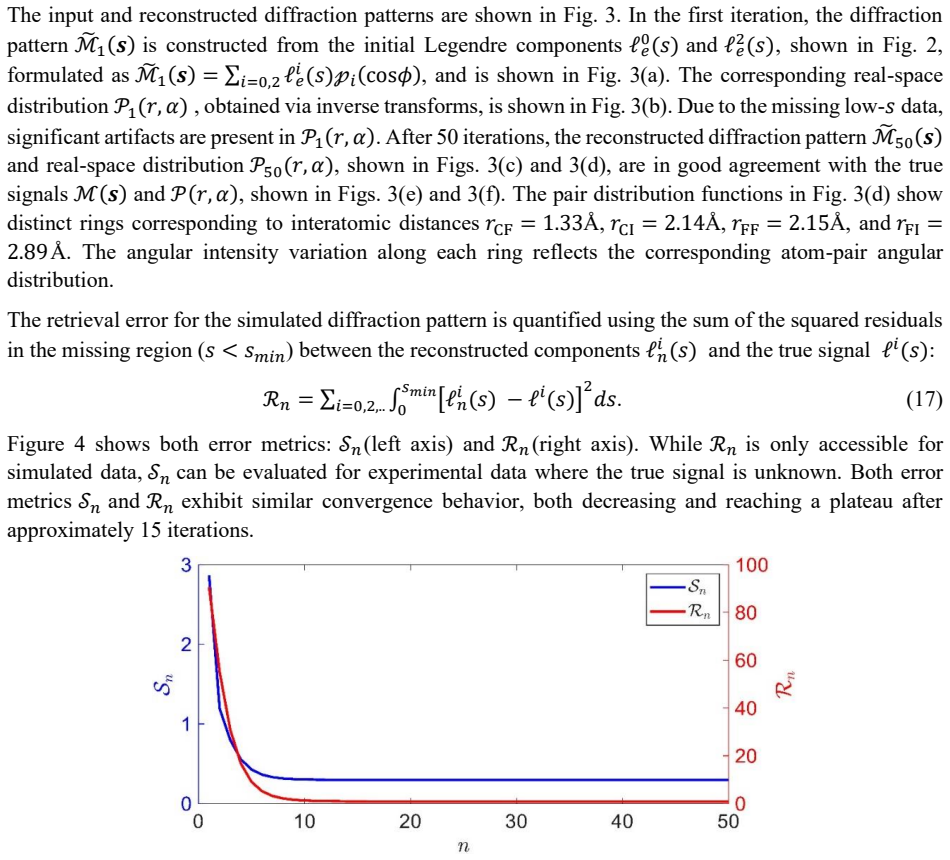
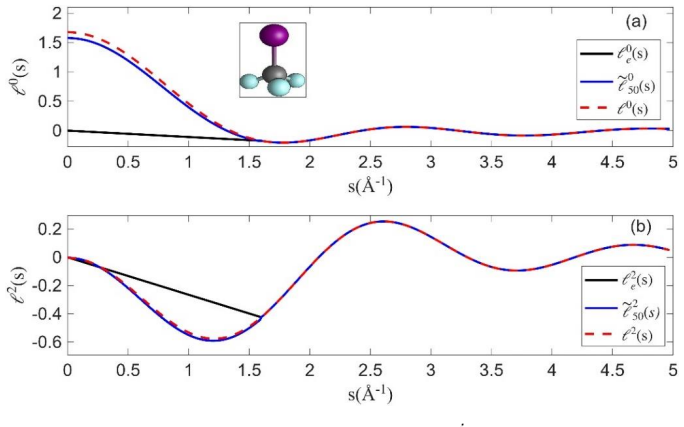
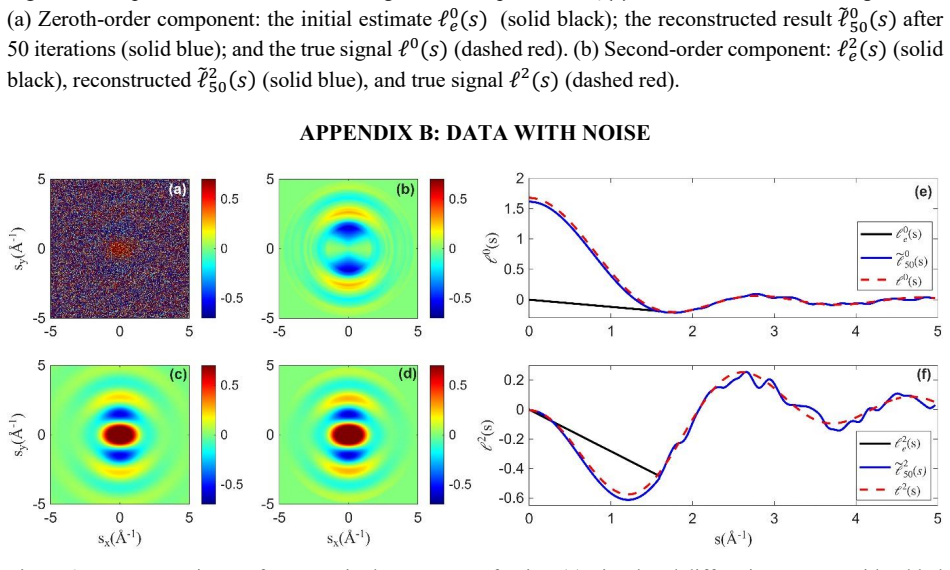
for details). The 𝐼𝑀(𝒔) is used to define the measured signal ℳ𝑒(𝒔) over the accessible range 1.6 Å−1 ≤ 𝑠 ≤ 10 Å−1, following Eq. (9). The diffraction pattern is decomposed into Legendre components ℓ𝑒𝑖 (𝑠) with 𝑖 = 0, 2, and the missing region 0 Å−1 ≤ 𝑠 < 1.6 Å−1 is initialized using a linear interpolation. The input and reconstructed Legendre components ...
-
[2]
Centurion, M., T.J.A. Wolf, and J. Yang, Ultrafast Imaging of Molecules with Electron Diffraction. Annu Rev Phys Chem, 2022. 73: p. 21-42
work page 2022
-
[3]
Odate, A., et al., Brighter, faster, stronger: ultrafast scattering of free molecules. Advances in Physics: X, 2022. 8(1)
work page 2022
-
[4]
The Journal of Chemical Physics, 2025
Wang, T., et al., Imaging the photochemical dynamics of cyclobutanone with MeV ultrafast electron diffraction. The Journal of Chemical Physics, 2025. 162(18)
work page 2025
-
[5]
Physical Chemistry Chemical Physics, 2025
Muvva, S.B., et al., Ultrafast structural dynamics of UV photoexcited cis, cis-1, 3-cyclooctadiene observed with time -resolved electron diffraction. Physical Chemistry Chemical Physics, 2025. 27(1): p. 471-480
work page 2025
- [6]
-
[7]
291(5503): p. 458-62
-
[8]
Proc Natl Acad Sci U S A, 2001
Ruan, C.Y., et al., Ultrafast diffraction and structural dynamics: the nature of complex molecules far from equilibrium. Proc Natl Acad Sci U S A, 2001. 98(13): p. 7117-22
work page 2001
-
[9]
The Journal of Physical Chemistry A, 2002
Ihee, H., et al., Ultrafast Electron Diffraction and Structural Dynamics: Transient Intermediates in the Elimination Reaction of C2F4I2. The Journal of Physical Chemistry A, 2002. 106(16): p. 4087-4103
work page 2002
-
[10]
A New Development for the 4D Determination of Transient Molecular Structures
Srinivasan, R., et al., Ultrafast Electron Diffraction (UED). A New Development for the 4D Determination of Transient Molecular Structures. Cheminform, 2003. 34(40): p. págs. 1761-1838
work page 2003
-
[11]
The Journal of Physical Chemistry A, 2004
Xu, S., et al., Ultrafast Electron Diffraction: Structural Dynamics of the Elimination Reaction of Acetylacetone. The Journal of Physical Chemistry A, 2004. 108(32): p. 6650-6655
work page 2004
-
[12]
Minitti, M.P., et al., Imaging Molecular Motion: Femtosecond X-Ray Scattering of an Electrocyclic Chemical Reaction. Phys Rev Lett, 2015. 114(25): p. 255501
work page 2015
-
[13]
Stankus, B., et al., Ultrafast X-ray scattering reveals vibrational coherence following Rydberg excitation. Nature Chemistry, 2019
work page 2019
-
[14]
Wilkin, K.J., et al., Diffractive imaging of dissociation and ground -state dynamics in a complex molecule. Physical Review A, 2019. 100(2)
work page 2019
-
[15]
The Journal of Physical Chemistry A, 2025
Lederer, J., et al., The UV Photoinduced Ring-Closing Reaction of Cyclopentadiene Probed with Ultrafast Electron Diffraction. The Journal of Physical Chemistry A, 2025
work page 2025
-
[16]
Habershon, S. and A.H. Zewail, Determining molecular structures and conformations directly from electron diffraction using a genetic algorithm. Chemphyschem, 2006. 7(2): p. 353-62. 14
work page 2006
-
[17]
Yang, J., et al., Simultaneous observation of nuclear and electronic dynamics by ultrafast electron diffraction. Science, 2020. 368(6493): p. 885-889
work page 2020
-
[18]
Physical Chemistry Chemical Physics, 2024
Nunes, J.P.F., et al., Photo-induced structural dynamics of o -nitrophenol by ultrafast electron diffraction. Physical Chemistry Chemical Physics, 2024. 26(26): p. 17991-17998
work page 2024
-
[19]
Le, C., Y. Xiong, and M. Centurion, Direct structural retrieval from gas-phase ultrafast diffraction data using a genetic algorithm. Physical Review A, 2025. 112(5)
work page 2025
-
[20]
Xiong, Y., N.K. Pachisia, and M. Centurion, Retrieval of missing small -angle scattering data in gas-phase diffraction experiments. Physical Review A, 2026. 113(2): p. 022816
work page 2026
-
[21]
Fienup, J.R., Phase retrieval algorithms: a comparison. Appl Opt, 1982. 21(15): p. 2758-69
work page 1982
-
[22]
Saxton, W.O., L. Marton, and C. Marton, Computer Techniques for Image Processing in Electron Microscopy. 2013: Academic Press
work page 2013
-
[23]
Gerchberg, R.W., A practical algorithm for the determination of phase from image and diffraction plane pictures. Optik, 1972. 35: p. 237-246
work page 1972
-
[24]
Journal of the Optical Society of America A,
Elser, V., Phase retrieval by iterated projections. Journal of the Optical Society of America A,
-
[25]
Bauschke, H.H., P.L. Combettes, and D.R. Luke, Phase retrieval, error reduction algorithm, and Fienup variants: a view from convex optimization. Journal of the Optical Society of America A,
-
[26]
Marchesini, S., Invited article: a [corrected] unified evaluation of iterative projection algorithms for phase retrieval. Rev Sci Instrum, 2007. 78(1): p. 011301
work page 2007
-
[27]
Baskin, J.S. and A.H. Zewail, Oriented ensembles in ultrafast electron diffraction. Chemphyschem,
-
[28]
Hensley, C.J., J. Yang, and M. Centurion, Imaging of isolated molecules with ultrafast electron pulses. Physical review letters, 2012. 109(13): p. 7035-7040
work page 2012
-
[29]
Yang, J., et al., Imaging of alignment and structural changes of carbon disulfide molecules using ultrafast electron diffraction. Nature communications, 2015. 6
work page 2015
-
[30]
Wilkin, K.J., et al., Ultrafast electron diffraction from transiently aligned asymmetric top molecules: Rotational dynamics and structure retrieval. Structural Dynamics, 2022. 9(5): p. 054303
work page 2022
-
[31]
Yang, J., et al., Diffractive imaging of a rotational wavepacket in nitrogen molecules with femtosecond megaelectronvolt electron pulses. Nature communications, 2016. 7
work page 2016
-
[32]
Xiong, Y., K.J. Wilkin, and M. Centurion, High-resolution movies of molecular rotational dynamics captured with ultrafast electron diffraction. Physical Review Research, 2020. 2(4)
work page 2020
-
[33]
Xiong, Y., et al., Retrieval of the molecular orientation distribution from atom -pair angular distributions. Physical Review A, 2022. 106(3)
work page 2022
-
[34]
Reckenthaeler, P., et al., Time-resolved electron diffraction from selectively aligned molecules. Physical review letters, 2009. 102(21)
work page 2009
-
[35]
Yang, J., et al., Imaging CF3I conical intersection and photodissociation dynamics with ultrafast electron diffraction. Science, 2018. 361(6397): p. 64-67
work page 2018
-
[36]
Yang, J., et al., Diffractive Imaging of Coherent Nuclear Motion in Isolated Molecules. Phys Rev Lett, 2016. 117(15): p. 153002
work page 2016
-
[37]
Physical Review Research, 2026
Xiong, Y., et al., Ultrafast electron diffractive imaging of the dissociation of pre-excited molecules. Physical Review Research, 2026. 8(1): p. 013064
work page 2026
-
[38]
Reviews of Modern Physics, 1936
Brockway, L.O., Electron Diffraction by Gas Molecules. Reviews of Modern Physics, 1936. 8(3): p. 231-266
work page 1936
-
[39]
Karle, J., Electron Diffraction, in Determination of Organic Structures by Physical Methods, F.C. Nachod and J.J. Zuckerman, Editors. 1973, Academic Press. p. 1-74. 15
work page 1973
-
[40]
Williamson, J.C. and A.H. Zewail, Ultrafast Electron Diffraction. 4. Molecular Structures and Coherent Dynamics. The Journal of Physical Chemistry, 1994. 98(11): p. 2766-2781
work page 1994
-
[41]
Hargittai, I. and M. Hargittai, Stereochemical Applications of Gas -Phase Electron Diffraction . 1988: Wiley
work page 1988
-
[42]
Debye, P., Scattering from non-crystalline substances. Ann. Physik, 1915. 46: p. 809-823
work page 1915
-
[43]
Koninklijke Nederlandse Akademie van Wetenschappen Proceedings Series B Physical Sciences, 1915
Ehrenfest, P., On interference phenomena to be expected when Roentgen rays pass through a di - atomic gas. Koninklijke Nederlandse Akademie van Wetenschappen Proceedings Series B Physical Sciences, 1915. 17: p. 1184-1190
work page 1915
-
[44]
Prince, E., International Tables for Crystallography Volume C: Mathematical, physical and chemical tables. 2004. C
work page 2004
-
[45]
16843, P.C.S.f.C. Trifluoroiodomethane. 2025; Available from: https://pubchem.ncbi.nlm.nih.gov/compound/Trifluoroiodomethane
work page 2025
-
[46]
Shen, X., et al., Femtosecond gas-phase mega-electron-volt ultrafast electron diffraction. Struct Dyn, 2019. 6(5): p. 054305
work page 2019
-
[47]
Seideman, T. and E. Hamilton, Nonadiabatic alignment by intense pulses. Concepts, theory, and directions. ADVANCES IN ATOMIC, MOLECULAR AND OPTICAL PHYSICS, 2006
work page 2006
-
[48]
Proceedings of the National Academy of Sciences, 2021
Yong, H., et al., Ultrafast X-ray scattering offers a structural view of excited-state charge transfer. Proceedings of the National Academy of Sciences, 2021. 118(19): p. e2021714118
work page 2021
-
[49]
Journal of Physics B: Atomic, Molecular and Optical Physics, 2016
Budarz, J.M., et al., Observation of femtosecond molecular dynamics via pump –probe gas phase x-ray scattering. Journal of Physics B: Atomic, Molecular and Optical Physics, 2016. 49(3): p. 034001
work page 2016
-
[50]
Xiong, Y. and M. Centurion, Data for retrieving missing small -angle data in two -dimensional diffraction pattern of isolated molecules . 2026, figshare. https://doi.org/10.6084/m9.figshare.31032874
discussion (0)
Sign in with ORCID, Apple, or X to comment. Anyone can read and Pith papers without signing in.