Recognition: 2 theorem links
· Lean TheoremQuantum gravity contributions to the gauge and Yukawa couplings in proper time flow
Pith reviewed 2026-05-13 18:02 UTC · model grok-4.3
The pith
Quantum gravity contributions to gauge and Yukawa beta functions are derived via the Schwinger proper-time flow equation in the Einstein-Hilbert truncation.
A machine-rendered reading of the paper's core claim, the machinery that carries it, and where it could break.
Core claim
Using the Schwinger proper-time flow equation in the Einstein-Hilbert truncation, we obtain quantum gravity corrections to the renormalization group beta functions for the gauge and Yukawa couplings in a matter theory. The dependence on the gauge-fixing parameter and the regulator function is investigated, and the gravitational contribution is evaluated at the non-Gaussian fixed point of the gravitational sector. Results are compared with those from other renormalization group schemes, and the magnitude of the corrections is assessed against the values required to generate observable effects in the Standard Model and various new physics scenarios.
What carries the argument
The Schwinger proper-time flow equation, which integrates the renormalization group flow over proper-time scales, applied to the Einstein-Hilbert truncation of gravity coupled to matter fields.
Load-bearing premise
The Einstein-Hilbert truncation together with the chosen proper-time regulator and gauge fixing is sufficient to capture the leading quantum-gravity effects on the matter beta functions.
What would settle it
A calculation of the gravitational corrections to the same beta functions performed in an extended truncation that includes higher-curvature terms such as R squared, yielding substantially different numerical values, would show that the leading-order truncation is insufficient.
Figures
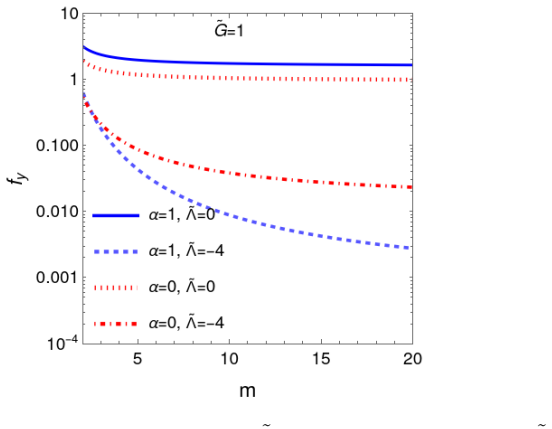


read the original abstract
We derive quantum gravity contributions to the beta functions of the gauge and Yukawa couplings of a matter theory using the Schwinger proper-time flow equation. Working in the Einstein-Hilbert truncation, we investigate the gauge-fixing and regulator dependence of the corresponding renormalization group equations. We quantify the sensitivity of our results on unphysical parameters by evaluating the gravitational correction to the running matter couplings at the interactive fixed point of gravity and we compare our findings with existing determinations in alternative schemes. We finally confront the derived contributions with the typical size they should assume to generate observable low-scale predictions in the Standard Model and in several scenarios of new physics.
Editorial analysis
A structured set of objections, weighed in public.
Circularity Check
No significant circularity detected in the derivation chain
full rationale
The derivation obtains the gravitational corrections to gauge and Yukawa beta functions directly from the Schwinger proper-time flow equation inside the Einstein-Hilbert truncation. Fixed-point values are imported from prior literature as an external input (standard in asymptotic-safety calculations) rather than being fitted or redefined inside the present work. The paper explicitly checks regulator and gauge-fixing dependence within the truncation and compares results against independent schemes, so the central claim does not reduce to its own inputs by construction. No self-definitional, fitted-prediction, or load-bearing self-citation steps are present.
Axiom & Free-Parameter Ledger
axioms (1)
- domain assumption Einstein-Hilbert truncation captures the dominant quantum-gravity effects on matter couplings
Lean theorems connected to this paper
-
IndisputableMonolith/Cost/FunctionalEquation.leanwashburn_uniqueness_aczel unclear?
unclearRelation between the paper passage and the cited Recognition theorem.
We derive quantum gravity contributions to the beta functions of the gauge and Yukawa couplings ... using the Schwinger proper-time flow equation. Working in the Einstein-Hilbert truncation
-
IndisputableMonolith/Foundation/RealityFromDistinction.leanreality_from_one_distinction unclear?
unclearRelation between the paper passage and the cited Recognition theorem.
fg = 3m G̃ / 2π(m-1) (1+α) ... fy = G̃ m /4π(m-1) [...]
What do these tags mean?
- matches
- The paper's claim is directly supported by a theorem in the formal canon.
- supports
- The theorem supports part of the paper's argument, but the paper may add assumptions or extra steps.
- extends
- The paper goes beyond the formal theorem; the theorem is a base layer rather than the whole result.
- uses
- The paper appears to rely on the theorem as machinery.
- contradicts
- The paper's claim conflicts with a theorem or certificate in the canon.
- unclear
- Pith found a possible connection, but the passage is too broad, indirect, or ambiguous to say the theorem truly supports the claim.
Reference graph
Works this paper leans on
-
[1]
Weinberg,General Relativity, pp
S. Weinberg,General Relativity, pp. 790–831. S.W.Hawking, W.Israel (Eds.), Cam- bridge Univ. Press, 1980
work page 1980
-
[2]
Exact evolution equation for the effective potential,
C. Wetterich, “Exact evolution equation for the effective potential,”Physics Letters B 301no. 1, (1993) 90 – 94
work page 1993
-
[3]
The Exact renormalization group and approximate solutions,
T. R. Morris, “The Exact renormalization group and approximate solutions,”Int. J. Mod. Phys. A9(1994) 2411–2450,arXiv:hep-ph/9308265
-
[4]
Nonperturbative evolution equation for quantum gravity,
M. Reuter, “Nonperturbative evolution equation for quantum gravity,”Phys. Rev. D 57(1998) 971–985,arXiv:hep-th/9605030
-
[5]
Ultraviolet fixed point and generalized flow equation of quantum gravity,
O. Lauscher and M. Reuter, “Ultraviolet fixed point and generalized flow equation of quantum gravity,”Phys. Rev. D65(2002) 025013,arXiv:hep-th/0108040
-
[6]
Renormalization group flow of quantum gravity in the Einstein-Hilbert truncation,
M. Reuter and F. Saueressig, “Renormalization group flow of quantum gravity in the Einstein-Hilbert truncation,”Phys. Rev. D65(2002) 065016,arXiv:hep-th/0110054 22
-
[7]
Flow equation of quantum Einstein gravity in a higher derivative truncation,
O. Lauscher and M. Reuter, “Flow equation of quantum Einstein gravity in a higher derivative truncation,”Phys. Rev. D66(2002) 025026,arXiv:hep-th/0205062
-
[8]
Fixed points of quantum gravity,
D. F. Litim, “Fixed points of quantum gravity,”Phys. Rev. Lett.92(2004) 201301, arXiv:hep-th/0312114
-
[9]
Fixed points of higher derivative gravity,
A. Codello and R. Percacci, “Fixed points of higher derivative gravity,”Phys. Rev. Lett.97(2006) 221301,arXiv:hep-th/0607128
-
[10]
On the renormalization group flow of f(R)-gravity,
P. F. Machado and F. Saueressig, “On the renormalization group flow of f(R)-gravity,” Phys. Rev. D77(2008) 124045,arXiv:0712.0445 [hep-th]
-
[11]
Investigating the Ultraviolet Properties of Gravity with a Wilsonian Renormalization Group Equation,
A. Codello, R. Percacci, and C. Rahmede, “Investigating the Ultraviolet Properties of Gravity with a Wilsonian Renormalization Group Equation,”Annals Phys.324(2009) 414–469,arXiv:0805.2909 [hep-th]
-
[12]
Asymptotic safety in higher- derivative gravity,
D. Benedetti, P. F. Machado, and F. Saueressig, “Asymptotic safety in higher- derivative gravity,”Mod. Phys. Lett. A24(2009) 2233–2241,arXiv:0901.2984 [hep-th]
-
[13]
Asymptotic safety in the f(R) approximation,
J. A. Dietz and T. R. Morris, “Asymptotic safety in the f(R) approximation,”JHEP 01(2013) 108,arXiv:1211.0955 [hep-th]
-
[14]
A bootstrap towards asymp- totic safety,
K. Falls, D. Litim, K. Nikolakopoulos, and C. Rahmede, “A bootstrap towards asymp- totic safety,”arXiv:1301.4191 [hep-th]
-
[15]
Further evidence for asymptotic safety of quantum gravity,
K. Falls, D. F. Litim, K. Nikolakopoulos, and C. Rahmede, “Further evidence for asymptotic safety of quantum gravity,”Phys. Rev. D93no. 10, (2016) 104022, arXiv:1410.4815 [hep-th]
-
[16]
Constraints on matter from asymptotic safety,
R. Percacci and D. Perini, “Constraints on matter from asymptotic safety,”Phys. Rev. D67(2003) 081503,arXiv:hep-th/0207033
-
[17]
Asymptotic safety of gravity coupled to matter,
R. Percacci and D. Perini, “Asymptotic safety of gravity coupled to matter,”Phys. Rev. D68(2003) 044018,arXiv:hep-th/0304222
-
[18]
Gravitational corrections to Yukawa systems,
O. Zanusso, L. Zambelli, G. Vacca, and R. Percacci, “Gravitational corrections to Yukawa systems,”Phys. Lett. B689(2010) 90–94,arXiv:0904.0938 [hep-th]
-
[19]
Running Gauge Coupling in Asymptotically Safe Quantum Gravity,
J.-E. Daum, U. Harst, and M. Reuter, “Running Gauge Coupling in Asymptotically Safe Quantum Gravity,”JHEP01(2010) 084,arXiv:0910.4938 [hep-th]
-
[20]
Non-perturbative QEG Corrections to the Yang-Mills Beta Function,
J.-E. Daum, U. Harst, and M. Reuter, “Non-perturbative QEG Corrections to the Yang-Mills Beta Function,”Gen. Rel. Grav.43(2011) 2393,arXiv:1005.1488 [hep-th]
-
[21]
Asymptotic freedom of Yang-Mills theory with gravity,
S. Folkerts, D. F. Litim, and J. M. Pawlowski, “Asymptotic freedom of Yang-Mills theory with gravity,”Phys. Lett. B709(2012) 234–241,arXiv:1101.5552 [hep-th] 23
-
[22]
Matter matters in asymptotically safe quan- tum gravity,
P. Don` a, A. Eichhorn, and R. Percacci, “Matter matters in asymptotically safe quan- tum gravity,”Phys. Rev. D89no. 8, (2014) 084035,arXiv:1311.2898 [hep-th]
-
[23]
Asymptotic safety of gravity-matter systems,
J. Meibohm, J. M. Pawlowski, and M. Reichert, “Asymptotic safety of gravity-matter systems,”Phys. Rev. D93no. 8, (2016) 084035,arXiv:1510.07018 [hep-th]
-
[24]
Non-minimal coupling in Higgs–Yukawa model with asymptotically safe gravity,
K.-y. Oda and M. Yamada, “Non-minimal coupling in Higgs–Yukawa model with asymptotically safe gravity,”Class. Quant. Grav.33no. 12, (2016) 125011, arXiv:1510.03734 [hep-th]
-
[25]
Quantum-gravity effects on a Higgs- Yukawa model,
A. Eichhorn, A. Held, and J. M. Pawlowski, “Quantum-gravity effects on a Higgs- Yukawa model,”Phys. Rev. D94no. 10, (2016) 104027,arXiv:1604.02041 [hep-th]
-
[26]
Asymptotic safety of gravity with matter,
N. Christiansen, D. F. Litim, J. M. Pawlowski, and M. Reichert, “Asymptotic safety of gravity with matter,”Phys. Rev. D97no. 10, (2018) 106012,arXiv:1710.04669 [hep-th]
-
[27]
Viability of quantum-gravity induced ultraviolet comple- tions for matter,
A. Eichhorn and A. Held, “Viability of quantum-gravity induced ultraviolet comple- tions for matter,”Phys. Rev. D96no. 8, (2017) 086025,arXiv:1705.02342 [gr-qc]
-
[28]
Quantum Gravity: A Fluctuating Point of View,
J. M. Pawlowski and M. Reichert, “Quantum Gravity: A Fluctuating Point of View,” Front. in Phys.8(2021) 551848,arXiv:2007.10353 [hep-th]
-
[29]
Asymptotic safety of gravity with matter,
A. Eichhorn and M. Schiffer, “Asymptotic safety of gravity with matter,” arXiv:2212.07456 [hep-th]
-
[30]
Ultraviolet properties of f(R)-gravity,
A. Codello, R. Percacci, and C. Rahmede, “Ultraviolet properties of f(R)-gravity,”Int. J. Mod. Phys. A23(2008) 143–150,arXiv:0705.1769 [hep-th]
-
[31]
On the scheme dependence of gravitational beta func- tions,
G. Narain and R. Percacci, “On the scheme dependence of gravitational beta func- tions,”Acta Phys. Polon. B40(2009) 3439–3457,arXiv:0910.5390 [hep-th]
-
[32]
U. Harst and M. Reuter, “QED coupled to QEG,”JHEP05(2011) 119, arXiv:1101.6007 [hep-th]
-
[33]
An asymptotically safe solution to the U(1) triviality problem,
N. Christiansen and A. Eichhorn, “An asymptotically safe solution to the U(1) triviality problem,”Phys. Lett. B770(2017) 154–160,arXiv:1702.07724 [hep-th]
-
[34]
Upper bound on the Abelian gauge coupling from asymptotic safety,
A. Eichhorn and F. Versteegen, “Upper bound on the Abelian gauge coupling from asymptotic safety,”JHEP01(2018) 030,arXiv:1709.07252 [hep-th]
-
[35]
Asymptotic safety of quantum gravity beyond Ricci scalars,
K. Falls, C. R. King, D. F. Litim, K. Nikolakopoulos, and C. Rahmede, “Asymptotic safety of quantum gravity beyond Ricci scalars,”Phys. Rev. D97no. 8, (2018) 086006, arXiv:1801.00162 [hep-th]
-
[36]
Aspects of asymptotic safety for quantum gravity,
K. G. Falls, D. F. Litim, and J. Schr ˜A¶der, “Aspects of asymptotic safety for quantum gravity,”Phys. Rev. D99no. 12, (2019) 126015,arXiv:1810.08550 [gr-qc] 24
-
[37]
G. P. de Brito and A. Eichhorn, “Nonvanishing gravitational contribution to matter beta functions for vanishing dimensionful regulators,”Eur. Phys. J. C83no. 2, (2023) 161,arXiv:2201.11402 [hep-th]
-
[38]
The Asymptotically Safe Standard Model: From quantum gravity to dynamical chiral symmetry breaking,
A. Pastor-Guti´ errez, J. M. Pawlowski, and M. Reichert, “The Asymptotically Safe Standard Model: From quantum gravity to dynamical chiral symmetry breaking,” SciPost Phys.15no. 3, (2023) 105,arXiv:2207.09817 [hep-th]
-
[39]
Regulator and gauge dependence of the Abelian gauge coupling in asymptotically safe quantum gravity,
M. Riabokon, M. Schiffer, and F. Wagner, “Regulator and gauge dependence of the Abelian gauge coupling in asymptotically safe quantum gravity,”Phys. Rev. D112 no. 10, (2025) 106003,arXiv:2508.03563 [hep-th]
-
[40]
D. J. Toms, “Cosmological constant and quantum gravitational corrections to the run- ning fine structure constant,”Phys. Rev. Lett.101(2008) 131301,arXiv:0809.3897 [hep-th]
-
[41]
Quantum gravity, gauge coupling constants, and the cosmological con- stant,
D. J. Toms, “Quantum gravity, gauge coupling constants, and the cosmological con- stant,”Phys. Rev. D80(2009) 064040,arXiv:0908.3100 [hep-th]
-
[42]
Gravitational correction to running of gauge cou- plings,
S. P. Robinson and F. Wilczek, “Gravitational correction to running of gauge cou- plings,”Phys. Rev. Lett.96(2006) 231601,arXiv:hep-th/0509050
-
[43]
Gauge dependence of gravitational correction to running of gauge couplings,
A. R. Pietrykowski, “Gauge dependence of gravitational correction to running of gauge couplings,”Phys. Rev. Lett.98(2007) 061801,arXiv:hep-th/0606208
-
[44]
Quantum gravity and charge renormalization,
D. J. Toms, “Quantum gravity and charge renormalization,”Phys. Rev. D76(2007) 045015,arXiv:0708.2990 [hep-th]
-
[45]
Absence of gravitational contributions to the running Yang-Mills coupling,
D. Ebert, J. Plefka, and A. Rodigast, “Absence of gravitational contributions to the running Yang-Mills coupling,”Phys. Lett. B660(2008) 579–582,arXiv:0710.1002 [hep-th]
-
[46]
H.-J. He, X.-F. Wang, and Z.-Z. Xianyu, “Gauge-Invariant Quantum Gravity Correc- tions to Gauge Couplings via Vilkovisky-DeWitt Method and Gravity Assisted Gauge Unification,”Phys. Rev. D83(2011) 125014,arXiv:1008.1839 [hep-th]
-
[47]
Y. Tang and Y.-L. Wu, “Gravitational Contributions to Gauge Green’s Functions and Asymptotic Free Power-Law Running of Gauge Coupling,”JHEP11(2011) 073, arXiv:1109.4001 [hep-ph]
-
[48]
Ambi- guities in the gravitational correction of quantum electrodynamics running coupling,
J. C. C. Felipe, L. A. Cabral, L. C. T. Brito, M. Sampaio, and M. C. Nemes, “Ambi- guities in the gravitational correction of quantum electrodynamics running coupling,” Mod. Phys. Lett. A28(2013) 1350078,arXiv:1205.6779 [hep-th]
-
[49]
Charge Renormalization due to Graviton Loops,
G. Narain and R. Anishetty, “Charge Renormalization due to Graviton Loops,”JHEP 07(2013) 106,arXiv:1211.5040 [hep-th]
-
[50]
Running Couplings in Quantum Theory of Gravity Coupled with Gauge Fields,
G. Narain and R. Anishetty, “Running Couplings in Quantum Theory of Gravity Coupled with Gauge Fields,”JHEP10(2013) 203,arXiv:1309.0473 [hep-th] 25
-
[51]
Gravitational Corrections to Yukawa and phi**4 Inter- actions,
A. Rodigast and T. Schuster, “Gravitational Corrections to Yukawa and phi**4 Inter- actions,”Phys. Rev. Lett.104(2010) 081301,arXiv:0908.2422 [hep-th]
-
[52]
Asymptotic safety of higher derivative quantum gravity non-minimally coupled with a matter system,
Y. Hamada and M. Yamada, “Asymptotic safety of higher derivative quantum gravity non-minimally coupled with a matter system,”JHEP08(2017) 070, arXiv:1703.09033 [hep-th]
-
[53]
Yukawa interactions in Quantum Grav- ity,
G. P. de Brito, M. Reichert, and M. Schiffer, “Yukawa interactions in Quantum Grav- ity,”arXiv:2510.09572 [hep-th]
-
[54]
Asymptotic safety of gravity and the Higgs boson mass,
M. Shaposhnikov and C. Wetterich, “Asymptotic safety of gravity and the Higgs boson mass,”Phys. Lett. B683(2010) 196–200,arXiv:0912.0208 [hep-th]
-
[55]
Quantum gravity fluctua- tions flatten the Planck-scale Higgs potential,
A. Eichhorn, Y. Hamada, J. Lumma, and M. Yamada, “Quantum gravity fluctua- tions flatten the Planck-scale Higgs potential,”Phys. Rev. D97no. 8, (2018) 086004, arXiv:1712.00319 [hep-th]
-
[56]
Asymptotic safety, the Higgs boson mass, and beyond the stan- dard model physics,
J. H. Kwapisz, “Asymptotic safety, the Higgs boson mass, and beyond the stan- dard model physics,”Phys. Rev. D100no. 11, (2019) 115001,arXiv:1907.12521 [hep-ph]
-
[57]
Towards a Higgs mass determination in asymp- totically safe gravity with a dark portal,
A. Eichhorn, M. Pauly, and S. Ray, “Towards a Higgs mass determination in asymp- totically safe gravity with a dark portal,”JHEP10(2021) 100,arXiv:2107.07949 [hep-ph]
-
[58]
Top mass from asymptotic safety,
A. Eichhorn and A. Held, “Top mass from asymptotic safety,”Phys. Lett. B777 (2018) 217–221,arXiv:1707.01107 [hep-th]
-
[59]
Mass difference for charged quarks from asymptotically safe quantum gravity,
A. Eichhorn and A. Held, “Mass difference for charged quarks from asymptotically safe quantum gravity,”Phys. Rev. Lett.121no. 15, (2018) 151302,arXiv:1803.04027 [hep-th]
-
[60]
Quark masses and mixings in minimally parameterized UV completions of the Standard Model,
R. Alkofer, A. Eichhorn, A. Held, C. M. Nieto, R. Percacci, and M. Schr¨ ofl, “Quark masses and mixings in minimally parameterized UV completions of the Standard Model,”Annals Phys.421(2020) 168282,arXiv:2003.08401 [hep-ph]
-
[61]
Naturally small Yukawa couplings from trans-Planckian asymptotic safety,
K. Kowalska, S. Pramanick, and E. M. Sessolo, “Naturally small Yukawa couplings from trans-Planckian asymptotic safety,”JHEP08(2022) 262,arXiv:2204.00866 [hep-ph]
-
[62]
Quark and lepton mixing in the asymp- totically safe Standard Model,
A. Eichhorn, Z. Gyftopoulos, and A. Held, “Quark and lepton mixing in the asymp- totically safe Standard Model,”arXiv:2507.18304 [hep-ph]
-
[63]
Asymptotic safety and Confor- mal Standard Model,
F. Grabowski, J. H. Kwapisz, and K. A. Meissner, “Asymptotic safety and Confor- mal Standard Model,”Phys. Rev. D99no. 11, (2019) 115029,arXiv:1810.08461 [hep-ph]
-
[64]
Naturally small neutrino mass with asymptotic safety and gravitational-wave signatures,
A. Chikkaballi, K. Kowalska, and E. M. Sessolo, “Naturally small neutrino mass with asymptotic safety and gravitational-wave signatures,”JHEP11(2023) 224, arXiv:2308.06114 [hep-ph] 26
-
[65]
Neutrino mass gen- eration in asymptotically safe gravity,
G. P. de Brito, A. Eichhorn, A. D. Pereira, and M. Yamada, “Neutrino mass gen- eration in asymptotically safe gravity,”Phys. Rev. D112no. 6, (2025) 066004, arXiv:2505.01422 [hep-ph]
-
[66]
Flavor anomalies from asymptotically safe gravity,
K. Kowalska, E. M. Sessolo, and Y. Yamamoto, “Flavor anomalies from asymptotically safe gravity,”Eur. Phys. J. C81no. 4, (2021) 272,arXiv:2007.03567 [hep-ph]
-
[67]
Constraints on Z’ solutions to the flavor anomalies with trans-Planckian asymptotic safety,
A. Chikkaballi, W. Kotlarski, K. Kowalska, D. Rizzo, and E. M. Sessolo, “Constraints on Z’ solutions to the flavor anomalies with trans-Planckian asymptotic safety,”JHEP 01(2023) 164,arXiv:2209.07971 [hep-ph]
-
[68]
Minimal models for g-2 and dark matter confront asymptotic safety,
K. Kowalska and E. M. Sessolo, “Minimal models for g-2 and dark matter confront asymptotic safety,”Phys. Rev. D103no. 11, (2021) 115032,arXiv:2012.15200 [hep-ph]
-
[69]
Asymptotic safety and gauged baryon number,
J. Boos, C. D. Carone, N. L. Donald, and M. R. Musser, “Asymptotic safety and gauged baryon number,”Phys. Rev. D106no. 3, (2022) 035015,arXiv:2206.02686 [hep-ph]
-
[70]
Asymptotically safe dark matter with gauged baryon number,
J. Boos, C. D. Carone, N. L. Donald, and M. R. Musser, “Asymptotically safe dark matter with gauged baryon number,”Phys. Rev. D107no. 3, (2023) 035018, arXiv:2209.14268 [hep-ph]
-
[71]
Stabilizing dark matter with quantum scale symmetry,
A. Chikkaballi, K. Kowalska, R. R. Lino dos Santos, and E. M. Sessolo, “Stabilizing dark matter with quantum scale symmetry,”Phys. Rev. D112no. 11, (2025) 115024, arXiv:2505.02803 [hep-ph]
-
[72]
A Symmetry preserving cutoff regularization,
M. Oleszczuk, “A Symmetry preserving cutoff regularization,”Z. Phys. C64(1994) 533–538
work page 1994
-
[73]
The Heat kernel and the average effective potential,
R. Floreanini and R. Percacci, “The Heat kernel and the average effective potential,” Phys. Lett. B356(1995) 205–210,arXiv:hep-th/9505172
-
[74]
On connection between momentum cutoff and the proper time regulariza- tions,
S.-B. Liao, “On connection between momentum cutoff and the proper time regulariza- tions,”Phys. Rev. D53(1996) 2020–2036,arXiv:hep-th/9501124
-
[75]
Renormalization group flow equations and the phase transition in O(N) models,
O. Bohr, B. J. Schaefer, and J. Wambach, “Renormalization group flow equations and the phase transition in O(N) models,”Int. J. Mod. Phys. A16(2001) 3823–3852, arXiv:hep-ph/0007098
-
[76]
Exact RG Flow Equations and Quantum Gravity,
S. P. de Alwis, “Exact RG Flow Equations and Quantum Gravity,”JHEP03(2018) 118,arXiv:1707.09298 [hep-th]
-
[77]
On Exact Proper Time Wilso- nian RG Flows,
A. Bonanno, S. Lippoldt, R. Percacci, and G. P. Vacca, “On Exact Proper Time Wilso- nian RG Flows,”Eur. Phys. J. C80no. 3, (2020) 249,arXiv:1912.08135 [hep-th]
-
[78]
Simplified functional flow equation,
C. Wetterich, “Simplified functional flow equation,”Phys. Lett. B864(2025) 139435, arXiv:2403.17523 [hep-th] 27
-
[79]
Spontaneous symmetry breaking and proper time flow equations,
A. Bonanno and G. Lacagnina, “Spontaneous symmetry breaking and proper time flow equations,”Nucl. Phys. B693(2004) 36–50,arXiv:hep-th/0403176
-
[80]
A. Bonanno and D. Zappala, “Towards an accurate determination of the critical ex- ponents with the renormalization group flow equations,”Phys. Lett. B504(2001) 181–187,arXiv:hep-th/0010095
discussion (0)
Sign in with ORCID, Apple, or X to comment. Anyone can read and Pith papers without signing in.