Recognition: 3 theorem links
· Lean TheoremCausal Dynamical Triangulations: New Lattice Theory of Quantum Gravity
Pith reviewed 2026-05-10 19:50 UTC · model grok-4.3
The pith
Causal triangulations in the gravitational path integral produce a de Sitter universe in numerical simulations.
A machine-rendered reading of the paper's core claim, the machinery that carries it, and where it could break.
Core claim
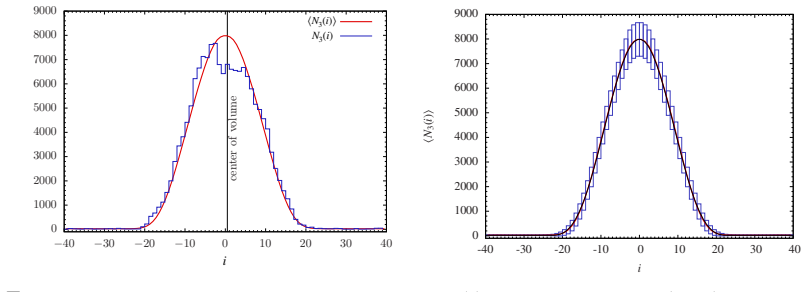
By assembling spacetime from flat Minkowskian simplices whose neighborhoods encode the gravitational degrees of freedom and performing a Wick rotation to enable Monte Carlo sampling, the theory yields an emergent four-dimensional universe whose global properties are compatible with de Sitter space while displaying large quantum fluctuations on short scales.
What carries the argument
The sum over causal triangulations of spacetime, in which edge lengths serve as a cutoff and the causal structure is enforced at the discrete level before the Wick rotation to Euclidean signature.
If this is right
- A classical limit exists in which the quantum universe reproduces the geometry of de Sitter space on large scales.
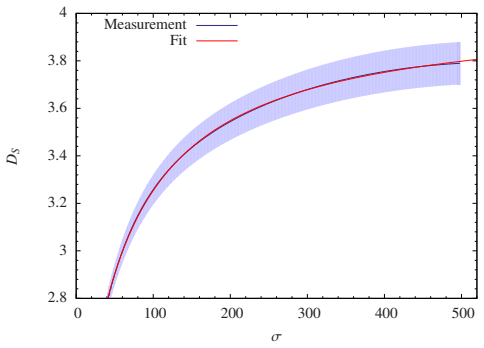
- Quantum fluctuations reduce the spectral dimension to approximately 2 at short distances.
- An ultraviolet fixed point appears under renormalization, opening a route to a nontrivial continuum limit.
- Constructed observables can probe the quantum origins of early-universe cosmology.
Where Pith is reading between the lines
- If the fixed point survives the inclusion of matter fields, the framework could be used to study how quantum gravity modifies inflationary dynamics.
- Comparison of the emergent geometries with those obtained in other nonperturbative approaches might reveal shared mechanisms for singularity resolution.
- Extending the simulations to higher-order curvature terms could test whether the approach remains stable when more terms from the Einstein-Hilbert action are retained.
Load-bearing premise
A Wick rotation exists that converts the Lorentzian path integral into a Euclidean one while preserving the essential nonperturbative physics, and the discrete sum over triangulations converges to the correct continuum measure.
What would settle it
Monte Carlo runs that produce an emergent geometry whose large-scale curvature deviates measurably from de Sitter or that fail to exhibit a renormalization-group fixed point under successive coarse-graining steps.
Figures



read the original abstract
Causal Dynamical Triangulations (CDT) is a methodology to define and compute the gravitational path integral, whose aim is a fully fledged nonperturbative quantum field theory of gravity and spacetime. Analogous to lattice formulations of nongravitational quantum fields, CDT provides a blueprint for lattice quantum gravity, where - crucially - the dynamical, curved and causal nature of spacetime is built into the structure of the lattices from the outset. The regularized path integral involves a sum over triangulated spacetimes, each assembled from flat, Minkowskian building blocks. The degrees of freedom of general relativity are encoded in a coordinate-free manner in the neighbourhood relations of the building blocks and the length of their edges, which also serves as a short-distance cutoff. A well-defined Wick rotation makes this path integral amenable to Monte Carlo simulations. Despite the absence of an a priori preferred background geometry, numerical experiments have revealed the dynamical emergence of a quantum universe near the Planck scale. Its global properties are compatible with those of a de Sitter space, providing strong evidence for a well-defined classical limit. At the same time, large quantum fluctuations lead to unexpected properties on short scales, most prominently, a spectral dimension near 2, replacing the classical value of 4. Computer simulations indicate the presence of an ultraviolet fixed point under renormalization, opening the door to a nontrivial continuum theory. Efforts are under way to construct observables that can elucidate the nonperturbative quantum origins of early-universe cosmology.
Editorial analysis
A structured set of objections, weighed in public.
Referee Report
Summary. The manuscript presents Causal Dynamical Triangulations (CDT) as a nonperturbative lattice regularization of the gravitational path integral, defined as a sum over causal triangulations assembled from flat Minkowski building blocks with an edge-length cutoff. A Wick rotation is invoked to enable Monte Carlo sampling. Numerical experiments are reported to demonstrate the dynamical emergence of a de Sitter-like geometry on large scales, a spectral dimension approaching 2 at short distances, and indications of an ultraviolet fixed point under renormalization, with ongoing work on observables relevant to early-universe cosmology.
Significance. If the numerical results are robust, the work supplies concrete evidence that a causality-respecting lattice regularization can produce a classical limit without an a priori background, together with hints of a nontrivial continuum limit. This would strengthen the case for CDT as a viable nonperturbative definition of quantum gravity and could inform cosmological observables, though the absence of detailed error analysis in the summary limits immediate assessment of the strength of that evidence.
major comments (1)
- [Abstract] Abstract: the central numerical claims (emergent de Sitter geometry, spectral dimension ~2, UV fixed point) are summarized without error bars, simulation parameters, data cuts, or convergence tests, so the statistical support for the claims cannot be verified from the given text.
Simulated Author's Rebuttal
We thank the referee for the thoughtful review and for highlighting the need for greater transparency in the abstract regarding the numerical evidence. We address this point below and will revise the manuscript accordingly.
read point-by-point responses
-
Referee: [Abstract] Abstract: the central numerical claims (emergent de Sitter geometry, spectral dimension ~2, UV fixed point) are summarized without error bars, simulation parameters, data cuts, or convergence tests, so the statistical support for the claims cannot be verified from the given text.
Authors: We agree that the abstract, in its current concise form, does not include error bars, specific simulation parameters, data cuts, or convergence tests. This is a fair observation, as abstracts are limited in length and typically focus on qualitative results. The full manuscript provides these details in the main text: simulation parameters and lattice sizes are specified in the methods section, error estimates and statistical analyses for the de Sitter emergence and spectral dimension are reported with figures and tables, and convergence tests plus renormalization group flow indications for the UV fixed point are discussed in the results and discussion sections. To address the referee's concern directly, we will revise the abstract to incorporate a brief statement on the scale of the simulations (e.g., number of simplices and typical cutoff values) and a note that quantitative error bars, parameters, and convergence checks are detailed in the body of the paper. This revision will make the statistical support more verifiable from the abstract while preserving its brevity. revision: yes
Circularity Check
No significant circularity identified
full rationale
The paper defines the CDT gravitational path integral directly as a sum over causal triangulations assembled from flat Minkowski building blocks, with edge lengths serving as the cutoff and a Wick rotation enabling Monte Carlo sampling. This definition is given independently in the abstract and does not presuppose the reported numerical outcomes. The claims of dynamical de Sitter emergence, spectral dimension near 2, and indications of a UV fixed point are explicitly framed as results from computer simulations rather than as fitted inputs or self-referential predictions. No self-definitional reductions, fitted parameters renamed as predictions, or load-bearing self-citation chains appear in the derivation chain; the central methodology stands as a self-contained regularization scheme whose outputs are presented as evidence with appropriate qualifiers.
Axiom & Free-Parameter Ledger
free parameters (1)
- edge-length cutoff
axioms (2)
- domain assumption The gravitational path integral can be regularized by a sum over triangulations assembled from flat Minkowski building blocks with causality enforced in the gluing rules.
- domain assumption A well-defined Wick rotation exists that renders the causal path integral amenable to Monte Carlo sampling.
Lean theorems connected to this paper
-
IndisputableMonolith/Foundation/RealityFromDistinction.leanreality_from_one_distinction unclear?
unclearRelation between the paper passage and the cited Recognition theorem.
A well-defined Wick rotation makes this path integral amenable to Monte Carlo simulations... Computer simulations indicate the presence of an ultraviolet fixed point under renormalization
-
IndisputableMonolith/Foundation/AlexanderDuality.leanalexander_duality_circle_linking unclear?
unclearRelation between the paper passage and the cited Recognition theorem.
the spectral dimension near 2, replacing the classical value of 4
-
IndisputableMonolith/Cost/FunctionalEquation.leanwashburn_uniqueness_aczel unclear?
unclearRelation between the paper passage and the cited Recognition theorem.
SE[T] =−k̂0N0(T)+k̂4N4(T)... phase diagram of CDT lattice quantum gravity
What do these tags mean?
- matches
- The paper's claim is directly supported by a theorem in the formal canon.
- supports
- The theorem supports part of the paper's argument, but the paper may add assumptions or extra steps.
- extends
- The paper goes beyond the formal theorem; the theorem is a base layer rather than the whole result.
- uses
- The paper appears to rely on the theorem as machinery.
- contradicts
- The paper's claim conflicts with a theorem or certificate in the canon.
- unclear
- Pith found a possible connection, but the passage is too broad, indirect, or ambiguous to say the theorem truly supports the claim.
Reference graph
Works this paper leans on
-
[1]
J. Ambjørn and R. Loll,Nonperturbative Lorentzian quantum gravity, causal- ity and topology change, Nucl. Phys. B 536 (1998) 407-434 [arXiv:hep- th/9805108, hep-th]
-
[2]
J. Ambjørn, J. Jurkiewicz and R. Loll,Dynamically triangulating Lorentzian quantum gravity, Nucl. Phys. B 610 (2001) 347-382 [arXiv:hep-th/0105267, hep-th]
-
[3]
Loll,Discrete approaches to quantum gravity in four dimensions, Living Rev
R. Loll,Discrete approaches to quantum gravity in four dimensions, Living Rev. Rel. 1 (1998) 13 [arXiv:gr-qc/9805049, gr-qc]
-
[4]
Ambjørn,Lattice quantum gravity: EDT and CDT, inHandbook of Quan- tum Gravity, eds
J. Ambjørn,Lattice quantum gravity: EDT and CDT, inHandbook of Quan- tum Gravity, eds. C. Bambi, L. Modesto and I.L. Shapiro, Springer, Singa- pore (2024) [arXiv:2209.06555, hep-lat]
-
[5]
J. Ambjørn, A. G¨ orlich, J. Jurkiewicz and R. Loll,Nonperturbative quantum gravity, Phys. Rep. 519 (2012) 127-210 [arXiv:1203.3591, hep-th]
-
[6]
Regge,General relativity without coordinates, Nuovo Cim
T. Regge,General relativity without coordinates, Nuovo Cim. 19 (1961) 558- 571
1961
-
[7]
R. Loll,Quantum gravity from causal dynamical triangulations: A review, Class. Quant. Grav. 37 (2020) 013002 [arXiv:1905.08669, hep-th]
-
[8]
J. Ambjørn, J. Gizbert-Studnicki, A. G¨ orlich, J. Jurkiewicz and R. Loll, Renormalization in quantum theories of geometry, Front. in Phys. 8 (2020) 247 [arXiv:2002.01693, hep-th]
-
[9]
J. Ambjørn, S. Jordan, J. Jurkiewicz and R. Loll,A second-order phase transition in CDT, Phys. Rev. Lett. 107 (2011) 211303 [arXiv:1108.3932, hep-th]
- [10]
-
[11]
Emergence of a 4-D world from causal quantum gravity,
J. Ambjørn, J. Jurkiewicz and R. Loll,Emergence of a 4-D world from causal quantum gravity, Phys. Rev. Lett. 93 (2004) 131301 [arXiv:hep-th/0404156, hep-th]. 19
-
[12]
R. Loll,Nonperturbative quantum gravity, unlocked through computation, in Quantum Gravity and Computation, eds. D. Rickles, X.D. Arsiwalla and H. Elshatlawy, Routledge, New York (2025) 277–294 [arXiv:2501.17972, hep-th]
-
[13]
J. Ambjørn, A. G¨ orlich, J. Jurkiewicz and R. Loll,The nonperturbative quan- tum de Sitter universe, Phys. Rev. D 78 (2008) 063544 [arXiv:0807.4481, hep-th]
-
[14]
J. Ambjørn, J. Gizbert-Studnicki, A. G¨ orlich and D. N´ emeth,Is lattice quan- tum gravity asymptotically safe? Making contact between causal dynamical triangulations and the functional renormalization group, Phys. Rev. D 110 (2024) 126006 [arXiv:2408.07808, hep-lat]
-
[15]
N. Klitgaard and R. Loll,Introducing quantum Ricci curvature, Phys. Rev. D 97 (2018) no.4, 046008 [arXiv:1712.08847, hep-th]
-
[16]
N. Klitgaard and R. Loll,How round is the quantum de Sitter universe?, Eur. Phys. J. C 80 (2020) no.10, 990 [arXiv:2006.06263, hep-th]
-
[17]
J. Ambjørn, J. Jurkiewicz and R. Loll,The spectral dimension of the universe is scale-dependent, Phys. Rev. Lett. 95 (2005) 171301 [arXiv:hep-th/0505113, hep-th]
-
[18]
Carlip,Dimension and dimensional reduction in quantum gravity,Class
S. Carlip,Dimension and dimensional reduction in quantum gravity, Class. Quant. Grav. 34 (2017) no.19, 193001 [arXiv:1705.05417, gr-qc]. 20
discussion (0)
Sign in with ORCID, Apple, or X to comment. Anyone can read and Pith papers without signing in.