Recognition: unknown
On the Uniqueness of Ghost-Free Multi-Gravity -- II: Constraining antisymmetrised multi spin-2 interactions
Pith reviewed 2026-05-10 17:09 UTC · model grok-4.3
The pith
The known ghost-free multivielbein theory is the unique set of antisymmetrised interactions for more than two spin-2 fields.
A machine-rendered reading of the paper's core claim, the machinery that carries it, and where it could break.
Core claim
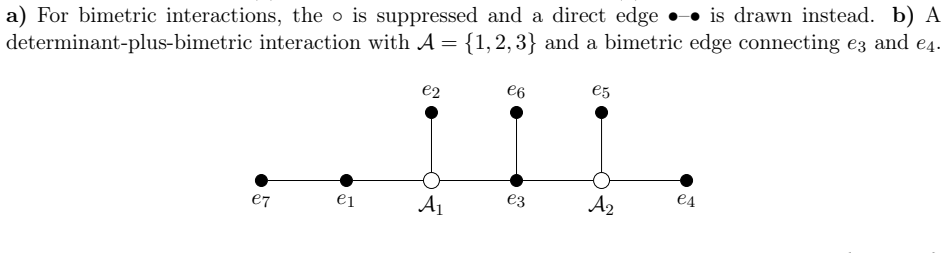
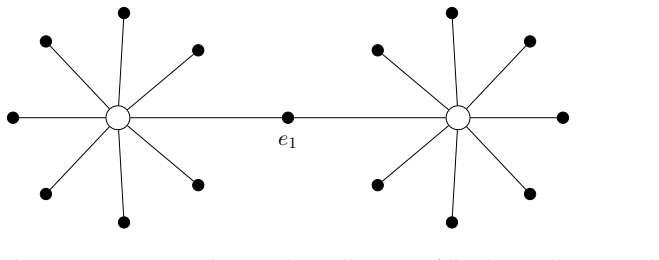
Starting from the general class of antisymmetrised multivielbein interactions, we formulate a necessary ghost-free condition. For two vielbeins the parameters stay unrestricted and recover the bimetric theory. For more than two vielbeins with genuine multi-field couplings, the condition restricts all parameters exactly to those of the known ghost-free multivielbein theory, establishing its uniqueness. More general interactions built from ghost-free bimetric and multivielbein potentials as blocks also satisfy the necessary conditions whenever the associated interaction graphs have a tree structure.
What carries the argument
The necessary ghost-free condition imposed on the parameters of antisymmetrised products of multiple vielbeins.
If this is right
- Two-vielbein interactions remain completely unrestricted and coincide with the ghost-free bimetric theory.
- Genuine multi-field interactions among three or more vielbeins are forced into the exact coupling values of the known ghost-free multivielbein theory.
- Composite interactions constructed from ghost-free bimetric and multivielbein potentials satisfy the necessary conditions when their interaction graphs are trees.
Where Pith is reading between the lines
- If the derived condition proves sufficient, no other ghost-free antisymmetrised multi-interactions exist beyond the known theory.
- The tree-structure result offers a systematic way to enlarge ghost-free theories while preserving the absence of ghosts.
- Any future construction of multi-gravity models with genuine interactions must either match this restricted form or satisfy analogous necessary conditions.
Load-bearing premise
The necessary condition derived for antisymmetrised multivielbein interactions is assumed to be sufficient to eliminate Boulware-Deser ghosts in the full nonlinear theory.
What would settle it
An explicit antisymmetrised interaction involving three or more vielbeins that obeys the necessary condition yet develops a Boulware-Deser ghost at nonlinear order would falsify the uniqueness claim.
Figures



read the original abstract
So far, only a single theory of multiple spin-2 fields is known that features genuine multi-field interactions while remaining free of Boulware-Deser-type ghost instabilities. In this paper we show that this is the most general ghost-free multi spin-2 interaction type possible. We start with the general class of multivielbein interactions containing antisymmetrised products of vielbeins, considered earlier by Hinterbichler and Rosen. We formulate a necessary condition for these theories to be ghost-free. For two vielbeins the theory parameters remain unrestricted, reproducing the ghost-free bimetric theory. But for more than two vielbeins with genuine multi-field interactions, we show that the couplings are restricted precisely to yield the known ghost-free multivielbein theory, thus establishing its uniqueness. We also show that more general interactions, constructed using the ghost-free bimetric and multivielbein potentials as building blocks, satisfy the necessary ghost-free conditions provided the associated interaction graphs have a tree structure.
Editorial analysis
A structured set of objections, weighed in public.
Referee Report
Summary. The paper considers the general class of antisymmetrised multivielbein interactions for multiple spin-2 fields introduced by Hinterbichler and Rosen. It formulates a necessary condition for the absence of Boulware-Deser ghosts. For two vielbeins the parameters remain free, recovering the ghost-free bimetric theory. For n>2 vielbeins with genuine multi-field interactions the condition restricts the couplings exactly to those of the known ghost-free multivielbein theory, establishing uniqueness within the class. The paper further shows that composite interactions built from ghost-free bimetric and multivielbein potentials as blocks satisfy the necessary condition when the associated interaction graphs have a tree structure.
Significance. If the formulated necessary condition is rigorously necessary for ghost-freeness in the complete nonlinear theory, the result would establish that the known multivielbein theory is the unique ghost-free theory with genuine multi-field interactions for n>2 within the antisymmetrised class. This provides a strong theoretical constraint on multi-gravity model building. The tree-graph generalization is a useful extension that preserves the necessary condition.
major comments (1)
- [Section introducing the necessary ghost-free condition and its application to n>2 interactions] The central uniqueness claim for n>2 rests on the necessary ghost-free condition forcing the couplings to match the known theory. However, the derivation of this condition (detailed in the section introducing the necessary condition and its application to the interaction coefficients) must be shown to capture all Boulware-Deser ghosts in the full nonlinear theory rather than only in linearised equations or specific backgrounds. If higher-order or non-perturbative modes can evade the condition, the restriction may not be complete.
minor comments (2)
- [Formulation of the necessary condition] Clarify the precise algebraic form of the necessary condition (e.g., the explicit constraint on the antisymmetrised coefficients) with an equation number for easy reference.
- [Introduction] The abstract and introduction refer to 'genuine multi-field interactions'; add a brief definition or reference to the precise criterion used to identify them.
Simulated Author's Rebuttal
We thank the referee for their careful reading of our manuscript and for the constructive feedback. We address the major comment below and will incorporate revisions to clarify the scope of our results.
read point-by-point responses
-
Referee: [Section introducing the necessary ghost-free condition and its application to n>2 interactions] The central uniqueness claim for n>2 rests on the necessary ghost-free condition forcing the couplings to match the known theory. However, the derivation of this condition (detailed in the section introducing the necessary condition and its application to the interaction coefficients) must be shown to capture all Boulware-Deser ghosts in the full nonlinear theory rather than only in linearised equations or specific backgrounds. If higher-order or non-perturbative modes can evade the condition, the restriction may not be complete.
Authors: We appreciate the referee raising this point about the reach of our necessary condition. The condition is derived from the requirement that the linearised equations around a Minkowski background admit the correct number of constraints to eliminate the Boulware-Deser mode, which is the standard diagnostic used in the literature for these theories. Any violation produces an extra propagating degree of freedom already at linear order; such a mode cannot be absent in the full nonlinear theory. For the specific ghost-free multivielbein theory identified by our condition, nonlinear ghost-freeness has been established independently in prior works. We therefore maintain that the condition is necessary for ghost-freeness and that it restricts the interactions for n>2 precisely to the known theory. At the same time, we acknowledge that a complete proof that no additional ghosts can appear at higher orders or on arbitrary backgrounds for every theory satisfying the condition would require a full nonlinear Hamiltonian analysis, which lies outside the present scope. We will revise the manuscript by adding an explicit discussion of these limitations and of the linear-to-nonlinear implication in the section that introduces the necessary condition. revision: partial
Circularity Check
No circularity: uniqueness follows from applying a newly formulated necessary condition to an externally defined interaction class
full rationale
The derivation begins with the general antisymmetrised multivielbein class introduced by Hinterbichler and Rosen (external prior literature), introduces a new necessary ghost-free condition formulated within the paper, and applies that condition to restrict parameters. For n=2 the parameters remain free (reproducing bimetric theory), while for n>2 the condition forces the couplings to the known multivielbein form. No step equates a derived quantity to its own input by construction, renames a fitted parameter as a prediction, or reduces the central uniqueness claim to a self-citation chain whose validity is presupposed. The tree-structure extension likewise uses the known potentials only as building blocks whose satisfaction of the new condition is verified, without circular redefinition. The argument is therefore self-contained against external benchmarks.
Axiom & Free-Parameter Ledger
axioms (2)
- domain assumption Interactions are restricted to antisymmetrised products of vielbeins as considered by Hinterbichler and Rosen.
- domain assumption The formulated necessary condition is sufficient to eliminate Boulware-Deser ghosts.
Reference graph
Works this paper leans on
-
[1]
S. F. Hassan and R. A. Rosen, JHEP02, 126 (2012), arXiv:1109.3515 [hep-th]
work page Pith review arXiv 2012
- [2]
- [3]
- [4]
- [5]
-
[6]
J. Flinckman and S. F. Hassan, JHEP02, 176 (2025), arXiv:2410.09439 [hep-th]
-
[7]
J. Flinckman and S. F. Hassan, (2025), arXiv:2510.03014 [hep-th]
-
[8]
C. J. Isham, A. Salam, and J. A. Strathdee, Phys. Rev. D3, 867–873 (1971)
1971
-
[9]
A. H. Chamseddine, A. Salam, and J. A. Strathdee, Nucl. Phys. B136, 248–258 (1978)
1978
-
[10]
T. Damour and I. I. Kogan, Phys. Rev. D66, 104024 (2002), arXiv:hep-th/0206042
-
[11]
D. G. Boulware and S. Deser, Phys. Rev. D6, 3368–3382 (1972)
1972
-
[12]
D. G. Boulware and S. Deser, Phys. Lett. B40, 227–229 (1972)
1972
- [13]
-
[14]
P. Creminelli, A. Nicolis, M. Papucci, and E. Trincherini, JHEP09, 003 (2005), arXiv:hep- th/0505147
-
[15]
C. de Rham and G. Gabadadze, Phys. Rev. D82, 044020 (2010), arXiv:1007.0443 [hep-th]
-
[16]
1232 [hep-th]
C.deRham,G.Gabadadze,andA.J.Tolley,Phys.Rev.Lett.106,231101(2011),arXiv:1011. 1232 [hep-th]
2011
-
[17]
S. F. Hassan and R. A. Rosen, Phys. Rev. Lett.108, 041101 (2012), arXiv:1106 . 3344 [hep-th]
2012
-
[18]
S. F. Hassan, R. A. Rosen, and A. Schmidt-May, JHEP02, 026 (2012), arXiv:1109 . 3230 [hep-th]
2012
- [19]
-
[20]
D. Comelli, F. Nesti, and L. Pilo, JHEP07, 161 (2013), arXiv:1305.0236 [hep-th]
-
[21]
Kocic, JHEP10, 219 (2019), arXiv:1804.03659 [hep-th]
M. Kocic, JHEP10, 219 (2019), arXiv:1804.03659 [hep-th]
-
[22]
M. von Strauss, A. Schmidt-May, J. Enander, E. Mortsell, and S. F. Hassan, JCAP03, 042 (2012), arXiv:1111.1655 [gr-qc]
- [23]
-
[24]
J. Enander and E. Mortsell, JCAP11, 023 (2015), arXiv:1507.00912 [astro-ph.CO]
-
[25]
A. De Felice, T. Nakamura, and T. Tanaka, PTEP2014, 043E01 (2014), arXiv:1304.3920 [gr-qc]
-
[26]
N. Khosravi, N. Rahmanpour, H. R. Sepangi, and S. Shahidi, Phys. Rev. D85, 024049 (2012), arXiv:1111.5346 [hep-th]
- [27]
-
[28]
A. Dokhani, Z. Molaee, and A. Shirzad, Nucl. Phys. B966, 115360 (2021), arXiv:2001.10947 [hep-th]. 30
-
[29]
K. Hinterbichler and R. A. Rosen, JHEP07, 047 (2012), arXiv:1203.5783 [hep-th]
-
[30]
K. Nomura and J. Soda, Phys. Rev. D86, 084052 (2012), arXiv:1207.3637 [hep-th]
-
[31]
J. H. C. Scargill, J. Noller, and P. G. Ferreira, JHEP12, 160 (2014), arXiv:1410 . 7774 [hep-th]
2014
-
[32]
H. R. Afshar, E. A. Bergshoeff, and W. Merbis, JHEP01, 040 (2015), arXiv:1410 . 6164 [hep-th]
2015
-
[33]
C. de Rham and A. J. Tolley, Phys. Rev. D92, 024024 (2015), arXiv:1505.01450 [hep-th]
-
[34]
Flinckman and S
J. Flinckman and S. F. Hassan, Manuscript in preparation (2026)
2026
-
[35]
Zumino, in, Vol
B. Zumino, in, Vol. 02 (1970), pp. 437–500
1970
- [36]
-
[37]
C. Deffayet, J. Mourad, and G. Zahariade, JHEP03, 086 (2013), arXiv:1208.4493 [gr-qc]
- [38]
discussion (0)
Sign in with ORCID, Apple, or X to comment. Anyone can read and Pith papers without signing in.