REVIEW 2 major objections 1 minor 43 references
Quantum Vision Theory Applied to Audio Classification for Deepfake Speech Detection
T0 review · 2 major / 1 minor · reviewed 2026-05-10 · grok-4.3
Pith's one-line read Converting speech features into information waves improves deepfake detection accuracy.
desk verdict The paper extends a quantum vision block to audio spectrograms for deepfake detection and reports accuracy gains, but missing ablations and block details make it hard to credit the quantum part. read the letter →
The pith
A machine-rendered reading of the paper's core claim, the machinery that carries it, and where it could break.
The reading
What carries the argument
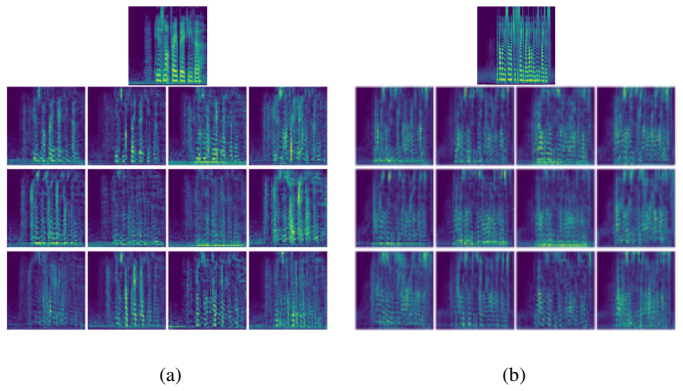
The QV block, which converts input audio features into information waves inspired by particle-wave duality before they enter the neural network layers.
What would settle it
Retraining an identical QV-CNN architecture on the same ASVspoof split but bypassing the QV block and still obtaining 94 percent or higher accuracy would falsify the claim that the wave step drives the improvement.
Extended reading notes
Core claim
QV theory treats data as having both a collapsed observable form and an information-wave form. By routing audio features through a QV block that performs this wave transformation before classification, the resulting QV-CNN and QV-ViT models achieve higher accuracy and better robustness than their non-QV counterparts when distinguishing real from deepfake speech on ASVspoof, with the strongest single result being 94.57 percent accuracy.
Load-bearing premise
The measured accuracy gains arise specifically from the information-wave transformation rather than from any unstated differences in architecture, hyperparameters, or data handling.
Editorial extensions
If this is right
- QV-CNN using MFCC features reaches 94.20 percent accuracy and 9.04 percent EER.
- QV-CNN using Mel-spectrograms reaches 94.57 percent accuracy.
- Both QV-CNN and QV-ViT outperform standard CNN and ViT models in accuracy and robustness on genuine-versus-spoofed classification.
- The wave representation improves separation of real and deepfake speech signals across multiple feature types.
Reading between the lines
- The same preprocessing step could be applied to other audio tasks such as speaker verification or environmental sound classification to test whether wave forms add useful structure.
- If the gains hold on larger or noisier datasets, the approach may point to a general benefit of preserving phase-like information that standard spectrogram pipelines discard.
- Extending the block to video or multimodal inputs would reveal whether the duality principle transfers beyond audio.
Editorial analysis
A structured set of objections, weighed in public.
Referee Report
Summary. The manuscript proposes Quantum Vision (QV) theory, inspired by particle-wave duality, as a new approach for deep learning-based audio classification in deepfake speech detection. Speech features (STFT, Mel-spectrograms, MFCC) are transformed into 'information waves' via a QV block and fed to QV-CNN and QV-ViT models. On the ASVspoof dataset, the authors claim QV-based models consistently outperform standard CNN and ViT, with QV-CNN on Mel-spectrograms reaching 94.57% accuracy and QV-CNN on MFCC achieving 94.20% accuracy and 9.04% EER.
Significance. If the reported gains are shown to arise specifically from the information-wave transformation rather than architectural or hyperparameter differences, the work could establish a novel quantum-inspired paradigm for audio perception tasks and improve robustness in deepfake detection. The approach extends prior QV ideas from images to spectrograms, but its significance hinges on verifiable attribution and reproducibility.
major comments (2)
- [Abstract] Abstract: The QV block is described only at a high level with no equations, pseudocode, or specification of internal parameters/normalization for creating information waves. This is load-bearing for the central claim, as the performance deltas (e.g., 94.57% accuracy) cannot be attributed to QV theory without knowing whether the block introduces extra parameters, non-linearities, or data handling absent from baselines.
- [Abstract] Abstract / implied Methods and Results: No details on experimental protocol, matched baselines (identical CNN/ViT depth, optimizer, learning rate, data augmentation, feature extraction parameters, and epochs between QV and non-QV), statistical significance tests, error bars, or ablation studies (e.g., disabling the wave transform while freezing all else). Without these, the claim that QV-CNN/QV-ViT outperform specifically due to the QV block cannot be evaluated.
minor comments (1)
- [Abstract] Abstract: Consider specifying dataset splits, number of samples, and exact baseline model configurations to allow direct comparison.
Simulated Author's Rebuttal
We thank the referee for the constructive comments, which highlight important areas for improving clarity and rigor in our presentation of Quantum Vision theory for audio deepfake detection. We address each major comment below and commit to revisions that will strengthen the manuscript without altering its core claims.
read point-by-point responses
-
Referee: [Abstract] Abstract: The QV block is described only at a high level with no equations, pseudocode, or specification of internal parameters/normalization for creating information waves. This is load-bearing for the central claim, as the performance deltas (e.g., 94.57% accuracy) cannot be attributed to QV theory without knowing whether the block introduces extra parameters, non-linearities, or data handling absent from baselines.
Authors: We agree that the abstract provides only a high-level overview of the QV block. The full manuscript expands on the particle-wave duality inspiration and the transformation of spectrograms/MFCCs into information waves, but we acknowledge that explicit equations, pseudocode, and parameter details are needed for full attribution of results. In revision, we will add these elements to both the abstract and a new dedicated subsection in Methods, including the mathematical definition of the wave transform, implementation steps, and any normalization or parameters used. This will confirm that the QV block's contribution is isolated from baseline differences. revision: yes
-
Referee: [Abstract] Abstract / implied Methods and Results: No details on experimental protocol, matched baselines (identical CNN/ViT depth, optimizer, learning rate, data augmentation, feature extraction parameters, and epochs between QV and non-QV), statistical significance tests, error bars, or ablation studies (e.g., disabling the wave transform while freezing all else). Without these, the claim that QV-CNN/QV-ViT outperform specifically due to the QV block cannot be evaluated.
Authors: We recognize that detailed experimental protocols are essential to substantiate that gains arise from the QV transformation. The manuscript reports consistent outperformance on ASVspoof with specific accuracy and EER figures for QV-CNN and QV-ViT versus standard models, but we will revise the Methods and Results sections to include full matched baseline specifications (identical architectures, hyperparameters, augmentation, and training settings), the complete experimental protocol, statistical significance tests, error bars from multiple runs, and ablation studies that isolate the wave transform by disabling it while freezing all other components. These additions will enable direct evaluation of the QV block's role. revision: yes
Circularity Check
No significant circularity; empirical proposal with independent experimental results
full rationale
The paper proposes Quantum Vision theory as a conceptual extension of particle-wave duality, defines a QV block to transform features (STFT, Mel-spectrograms, MFCC) into information waves, and reports empirical accuracies and EER on the ASVspoof dataset for QV-CNN and QV-ViT versus standard baselines. No mathematical derivation chain is presented that reduces a claimed prediction or first-principles result to its own inputs by construction. The performance numbers are experimental outcomes after training, not quantities forced by re-using fitted parameters or self-referential definitions. The QV block is introduced at the level of a novel preprocessing step without equations that equate the output metric to the transformation itself. Self-citations, if present for the original QV idea, are not load-bearing for the audio results. The derivation is therefore self-contained as a method proposal plus benchmark evaluation.
Assumptions & free parameters
invented entities (1)
-
Information waves
Cite this review
Pith. "Pith review of Quantum Vision Theory Applied to Audio Classification for Deepfake Speech Detection." pith.science (2026). https://pith.science/paper/2604.08104
@misc{pith2026260408104,
  author       = {Pith},
  title        = {Pith review of: Quantum Vision Theory Applied to Audio Classification for Deepfake Speech Detection},
  year         = {2026},
  howpublished = {\url{https://pith.science/paper/2604.08104}},
  note         = {Machine review of arXiv:2604.08104}
}
read the original abstract
We propose Quantum Vision (QV) theory as a new perspective for deep learning-based audio classification, applied to deepfake speech detection. Inspired by particle-wave duality in quantum physics, QV theory is based on the idea that data can be represented not only in its observable, collapsed form, but also as information waves. In conventional deep learning, models are trained directly on these collapsed representations, such as images. In QV theory, inputs are first transformed into information waves using a QV block, and then fed into deep learning models for classification. QV-based models improve performance in image classification compared to their non-QV counterparts. What if QV theory is applied speech spectrograms for audio classification tasks? This is the motivation and novelty of the proposed approach. In this work, Short-Time Fourier Transform (STFT), Mel-spectrograms, and Mel-Frequency Cepstral Coefficients (MFCC) of speech signals are converted into information waves using the proposed QV block and used to train QV-based Convolutional Neural Networks (QV-CNN) and QV-based Vision Transformers (QV-ViT). Extensive experiments are conducted on the ASVSpoof dataset for deepfake speech classification. The results show that QV-CNN and QV-ViT consistently outperform standard CNN and ViT models, achieving higher classification accuracy and improved robustness in distinguishing genuine and spoofed speech. Moreover, the QV-CNN model using MFCC features achieves the best overall performance on the ASVspoof dataset, with an accuracy of 94.20% and an EER of 9.04%, while the QV-CNN with Mel-spectrograms attains the highest accuracy of 94.57%. These findings demonstrate that QV theory is an effective and promising approach for audio deepfake detection and opens new directions for quantum-inspired learning in audio perception tasks.
Figures


Figures from the paper (11 more)


Reference graph
Works this paper leans on
-
[1]
A survey of a udio classification using deep learning,
K. Zaman, M. Sah, C. Direkoglu, and M. Unoki, “A survey of a udio classification using deep learning,” IEEE access, vol. 11, pp. 106620–106649, 2023
work page 2023
-
[2]
Natural tts synthesis by conditioning wavenet 24 on mel spectrogram predictions,
J. Shen, R. Pang, R. J. Weiss, M. Schuster, N. Jaitly, Z. Y a ng, Z. Chen, Y . Zhang, Y . Wang, R. Skerrv-Ryan, et al., “Natural tts synthesis by conditioning wavenet 24 on mel spectrogram predictions,” in ICASSP 2018-2018 IEEE International Con- ference on Acoustics, Speech and Signal Processing (ICASSP ), pp. 4779–4783, IEEE, 2018
work page 2018
-
[3]
Conditional variational aut oencoder with adversarial learning for end-to-end text-to-speech,
J. Kim, J. Kong, and J. Son, “Conditional variational aut oencoder with adversarial learning for end-to-end text-to-speech,” in International conference on machine learning, pp. 5530–5540, PMLR, 2021
work page 2021
-
[4]
Y . A. Li, A. Zare, and N. Mesgarani, “Starganv2-vc: A dive rse, unsupervised, non-parallel framework for natural-sounding voice conver sion,” in Proc. Inter- speech 2021, pp. 1349–1353, 2021
work page 2021
-
[5]
Asvspoof 2019 : Future horizons in spoofed and fake audio detection,
M. Todisco, X. Wang, V . V estman, M. Sahidullah, H. Delgado, A. Nautsch, J. Y a- magishi, N. Evans, T. Kinnunen, and K. A. Lee, “Asvspoof 2019 : Future horizons in spoofed and fake audio detection,” in Interspeech 2019, 2019
work page 2019
-
[6]
Spoofceleb: Speech deepfake detection and sasv in the wild,
J.-w. Jung, Y . Wu, X. Wang, J.-H. Kim, S. Maiti, Y . Matsuna ga, H.-j. Shim, J. Tian, N. Evans, J. S. Chung, et al. , “Spoofceleb: Speech deepfake detection and sasv in the wild,” IEEE Open Journal of Signal Processing , 2025
work page 2025
-
[7]
A. Chaiwongyen, K. Zaman, K. Li, S. Duangpummet, J. Karnj ana, W . Kong- prawechnon, and M. Unoki, “Deepfake speech detection using perceptual patho- logical features related to timbral attributes and deep lea rning,” Applied Sciences, vol. 16, no. 4, p. 2077, 2026
-
[8]
An evaluat ion of convolutional neural networks for music classification using spectrogram s,
Y . M. Costa, L. S. Oliveira, and C. N. Silla Jr, “An evaluat ion of convolutional neural networks for music classification using spectrogram s,” Applied soft com- puting, vol. 52, pp. 28–38, 2017
work page 2017
Show all 43 references
-
[9]
Classification of harmful noise signals for hearing aid applications using spectrogram images and conv olutional neural net- works,
K. Zaman, C. Direko ˘glu, et al. , “Classification of harmful noise signals for hearing aid applications using spectrogram images and conv olutional neural net- works,” in 2020 4th International Symposium on Multidisciplinary Stu dies and Innovative T echnologies (ISMSIT), pp. ...
2020
-
[10]
Vision transfo rmer based audio clas- sification using patch-level feature fusion,
J. Luo, J. Y ang, E. S. Chng, and X. Zhong, “Vision transfo rmer based audio clas- sification using patch-level feature fusion,” in 2022 Asia-Pacific Signal and Infor- 25 mation Processing Association Annual Summit and Conferenc e (APSIPA ASC) , pp. 22–26, IEEE, 2022
2022
-
[11]
Multiscale audio spectrogram trans former for e fficient audio classification,
W . Zhu and M. Omar, “Multiscale audio spectrogram trans former for e fficient audio classification,” in ICASSP 2023-2023 IEEE International Conference on Acoustics, Speech and Signal Processing (ICASSP) , pp. 1–5, IEEE, 2023
2023
-
[12]
Rethinking environmental sound classification using convolutional neural networks: optim ized parameter tuning of single feature extraction,
Y . A. Al-Hattab, H. F. Zaki, and A. A. Shafie, “Rethinking environmental sound classification using convolutional neural networks: optim ized parameter tuning of single feature extraction,” Neural Computing and Applications, vol. 33, no. 21, pp. 14495–14506, 2021
2021
-
[13]
Spectrogram trans formers for audio classification,
Y . Zhang, B. Li, H. Fang, and Q. Meng, “Spectrogram trans formers for audio classification,” in 2022 IEEE International Conference on Imaging Systems and T echniques (IST), pp. 1–6, IEEE, 2022
2022
-
[14]
Trans- formers for urban sound classification—a comprehensive per formance evalua- tion,
A. F. R. Nogueira, H. S. Oliveira, J. J. Machado, and J. M. R. Tavares, “Trans- formers for urban sound classification—a comprehensive per formance evalua- tion,” Sensors, vol. 22, no. 22, p. 8874, 2022
2022
-
[15]
Environmental sound classification with tiny transformers in noisy edge en vironments,
S. Wyatt, D. Elliott, A. Aravamudan, C. E. Otero, L. D. Ot ero, G. C. Anagnos- topoulos, A. O. Smith, A. M. Peter, W . Jones, S. Leung, et al. , “Environmental sound classification with tiny transformers in noisy edge en vironments,” in 2021 IEEE 7th W orld F orum on Internet o...
2021
-
[16]
Ssast: Se lf-supervised audio spectrogram transformer,
Y . Gong, C.-I. Lai, Y .-A. Chung, and J. Glass, “Ssast: Se lf-supervised audio spectrogram transformer,” in Proceedings of the AAAI Conference on Artificial Intelligence, vol. 36, pp. 10699–10709, 2022
2022
-
[17]
E fficient training of audio transformers with patchout,
K. Koutini, J. Schlüter, H. Eghbal-zadeh, and G. Widmer , “E fficient training of audio transformers with patchout,” Interspeech 2022, 2022
2022
-
[18]
S3t: Self- supervised pre- training with swin transformer for music classification,
H. Zhao, C. Zhang, B. Zhu, Z. Ma, and K. Zhang, “S3t: Self- supervised pre- training with swin transformer for music classification,” i n ICASSP 2022-2022 IEEE International Conference on Acoustics, Speech and Sig nal Processing (ICASSP), pp. 606–610, IEEE, 2022. 26
2022
-
[19]
Asit: Local-global audio spectrogram vision transformer for eve nt classification,
S. A. A. Ahmed, M. A wais, W . Wang, M. D. Plumbley, and J. Ki ttler, “Asit: Local-global audio spectrogram vision transformer for eve nt classification,” IEEE/ACM Transactions on Audio, Speech, and Language Processing , vol. 32, pp. 3684–3693, 2024
2024
-
[20]
Cat: Causal audio trans former for audio clas- sification,
X. Liu, H. Lu, J. Y uan, and X. Li, “Cat: Causal audio trans former for audio clas- sification,” in ICASSP 2023-2023 IEEE International Conference on Acousti cs, Speech and Signal Processing (ICASSP) , pp. 1–5, IEEE, 2023
2023
-
[21]
Hts-at: A hierarchical token-semantic audio transformer for sound c lassification and detec- tion,
K. Chen, X. Du, B. Zhu, Z. Ma, T. Berg-Kirkpatrick, and S. Dubnov, “Hts-at: A hierarchical token-semantic audio transformer for sound c lassification and detec- tion,” in ICASSP 2022-2022 IEEE International Conference on Acoustics, Speech and Signal Processing (ICASSP) , pp. 64...
2022
-
[22]
V att: Transformers for multimodal self-supervised learn ing from raw video, audio and text,
H. Akbari, L. Y uan, R. Qian, W .-H. Chuang, S.-F. Chang, Y . Cui, and B. Gong, “V att: Transformers for multimodal self-supervised learn ing from raw video, audio and text,” Advances in neural information processing systems , vol. 34, pp. 24206–24221, 2021
2021
-
[23]
Asvspoof 2 019: Spoof- ing countermeasures for the detection of synthesized, conv erted and replayed speech,
A. Nautsch, X. Wang, N. Evans, T. H. Kinnunen, V . V estman, M. Todisco, H. Del- gado, M. Sahidullah, J. Y amagishi, and K. A. Lee, “Asvspoof 2 019: Spoof- ing countermeasures for the detection of synthesized, conv erted and replayed speech,” IEEE Transactions on Biometrics, B...
2021
-
[24]
Bpcnn: Bi-point input for convolu tional neural networks in speaker spoofing detection,
S. Y oon and H.-J. Y u, “Bpcnn: Bi-point input for convolu tional neural networks in speaker spoofing detection,” Sensors, vol. 22, no. 12, p. 4483, 2022
2022
-
[25]
U nmasking the truth: A deep learning approach to detecting deepfake audio through mfcc features,
I. Altalahin, S. AlZu’bi, A. Alqudah, and A. Mughaid, “U nmasking the truth: A deep learning approach to detecting deepfake audio through mfcc features,” in 2023 International Conference on Information T echnology ( ICIT), pp. 511–518, IEEE, 2023
2023
-
[26]
Audio spoofing verification 27 using deep convolutional neural networks by transfer learn ing,
P . Aravind, U. Nechiyil, N. Paramparambath, et al., “Audio spoofing verification 27 using deep convolutional neural networks by transfer learn ing,” arXiv preprint arXiv:2008.03464, 2020
2008
-
[27]
Ensemble models for spoofing detection in automatic speake r verification,
B. Chettri, D. Stoller, V . Morfi, M. A. M. Ramírez, E. Bene tos, and B. L. Sturm, “Ensemble models for spoofing detection in automatic speake r verification,” In- terspeech 2019, 2019
2019
-
[28]
Ana lysis of spectro- temporal modulation representation for deep-fake speech detection,
H. Cheng, C. O. Mawalim, K. Li, L. Wang, and M. Unoki, “Ana lysis of spectro- temporal modulation representation for deep-fake speech detection,” in 2023 Asia Pacific Signal and Information Processing Association Annu al Summit and Con- ference (APSIPA ASC), pp. 1822–1829, IEEE, 2023
2023
-
[29]
Deepfake au dio detection with vision transformer based method,
G. Ulutas, G. Tahaoglu, and B. Ustubioglu, “Deepfake au dio detection with vision transformer based method,” in 2023 46th International Conference on T elecom- munications and Signal Processing (TSP) , pp. 244–247, IEEE, 2023
2023
-
[30]
Synthesized speech dete ction using convolutional transformer-based spectrogram analysis,
E. R. Bartusiak and E. J. Delp, “Synthesized speech dete ction using convolutional transformer-based spectrogram analysis,” in 2021 55th Asilomar Conference on Signals, Systems, and Computers , pp. 1426–1430, IEEE, 2021
2021
-
[31]
Assert: A nti-spoofing with squeeze-excitation and residual networks,
C.-I. Lai, N. Chen, J. Villalba, and N. Dehak, “Assert: A nti-spoofing with squeeze-excitation and residual networks,” Interspeech 2019, 2019
2019
-
[32]
R. Das, J. Y ang, and H. Li, “Assessing the scope of genera lized countermeasures for anti-spoofing in: Icassp 2020-2020 ieee international c onference on acoustics, speech and signal processing (icassp), 6589–6593. ieee,” 2 020
2020
-
[33]
Long range acoustic and dee p features perspective on asvspoof 2019,
R. K. Das, J. Y ang, and H. Li, “Long range acoustic and dee p features perspective on asvspoof 2019,” in 2019 IEEE Automatic Speech Recognition and Understand- ing W orkshop (ASRU), pp. 1018–1025, IEEE, 2019
2019
-
[34]
Synthesized speech detection based on spectrogram and convolutional neural networks,
T. Nosek, S. Suzi ´c, B. Papi ´c, and N. Jakovljevi ´c, “Synthesized speech detection based on spectrogram and convolutional neural networks,” i n 2019 27th T elecom- munications F orum (TELFOR), pp. 1–4, IEEE, 2019. 28
2019
-
[35]
Deep residu al neural networks for audio spoofing detection,
M. Alzantot, Z. Wang, and M. B. Srivastava, “Deep residu al neural networks for audio spoofing detection,” Interspeech 2019, 2019
2019
-
[36]
Siamese convolutiona l neural network us- ing gaussian probability feature for spoofing speech detect ion.,
Z. Lei, Y . Y ang, C. Liu, and J. Y e, “Siamese convolutiona l neural network us- ing gaussian probability feature for spoofing speech detect ion.,” in Interspeech, pp. 1116–1120, 2020
2020
-
[37]
Frequency domain-based detection of generated audio,
E. R. Bartusiak and E. J. Delp, “Frequency domain-based detection of generated audio,” Electronic Imaging, vol. 33, pp. 1–7, 2021
2021
-
[38]
Quantum vision theory in deep learning for ob ject recognition,
C. Direko ˘glu and M. Sah, “Quantum vision theory in deep learning for ob ject recognition,” IEEE Access, vol. 13, pp. 132194–132208, 2025
2025
-
[39]
An image is worth 16x16 words: Transformers for image recognition at scale,
A. Dosovitskiy, L. Beyer, A. Kolesnikov, D. Weissenborn, X. Zhai, T. Unterthiner, M. Dehghani, M. Minderer, G. Heigold, S. Gelly, et al., “An image is worth 16x16 words: Transformers for image recognition at scale,” in Proceedings of the 9th International Conference on Learnin...
2021
-
[40]
Asvspoof 2019: A large-scale public database of synthesized, converted an d replayed speech,
X. Wang, J. Y amagishi, M. Todisco, H. Delgado, A. Nautsc h, N. Evans, M. Sahidullah, V . V estman, T. Kinnunen, K. A. Lee, et al. , “Asvspoof 2019: A large-scale public database of synthesized, converted an d replayed speech,” Computer Speech & Language, vol. 64, p. 101114, 2020
2019
-
[41]
Audio transformer for synthetic speech detection via benford’s law distribution analysis,
A. B. Talagini Ashoka, L. Cuccovillo, and P . Aichroth, “ Audio transformer for synthetic speech detection via benford’s law distribution analysis,” in Proceed- ings of the 3rd ACM International W orkshop on Multimedia AI a gainst Disinfor- mation, pp. 23–29, 2024
2024
-
[42]
Audio spe ctrogram transformer for synthetic speech detection via speech formant analysis,
L. Cuccovillo, M. Gerhardt, and P . Aichroth, “Audio spe ctrogram transformer for synthetic speech detection via speech formant analysis,” i n 2023 IEEE Interna- tional W orkshop on Information F orensics and Security (WIF S), pp. 1–6, IEEE, 2023. 29
2023
-
[43]
Hybrid transformer architectures with diverse audio features for deepfake speech classi- fication,
K. Zaman, I. J. Samiul, M. Sah, C. Direkoglu, S. Okada, an d M. Unoki, “Hybrid transformer architectures with diverse audio features for deepfake speech classi- fication,” IEEe Access, vol. 12, pp. 149221–149237, 2024. 30
2024
Reviewed May 10, 2026 · model on record in the stance chip above.
Discussion (0). Continue with ORCID to comment.