pith.machine review for the scientific record.sign in
cs.CL
Computation and Language
Covers natural language processing. Roughly includes material in ACM Subject Class I.2.7. Note that work on artificial languages (programming languages, logics, formal systems) that does not explicitly address natural-language issues broadly construed (natural-language processing, computational linguistics, speech, text retrieval, etc.) is not appropriate for this area.
Long-term memory is crucial for agents in specialized web environments, where success depends on recalling interface affordances, state dynamics, workflows, and recurring failure modes. However, existing memory benchmarks for agents mostly focus on user histories, short traces, or downstream task success, leaving open how to directly evaluate whether memory systems effectively internalize environment-specific experience. To address this gap, we introduce LongMemEval-V2 (LME-V2), a benchmark for evaluating whether memory systems can help agents acquire the experience needed to become knowledgeable colleagues in customized environments. LME-V2 contains 451 manually curated questions covering five core memory abilities for web agents: static state recall, dynamic state tracking, workflow knowledge, environment gotchas, and premise awareness. Questions are paired with history trajectories containing up to 500 trajectories and 115M tokens. We use a context gathering formulation: memory systems consume history trajectories and return compact evidence for downstream question answering. We propose a suite of two memory methods: AgentRunbook-R, an efficient RAG-based memory with knowledge pools for raw state observations, events, and strategy notes, and AgentRunbook-C, which stores trajectories as files and invokes a coding agent to gather evidence in an augmented sandbox. Experiments show that AgentRunbook-C achieves the best performance with 72.5% average accuracy, outperforming the strongest RAG baseline (48.5%) and the off-the-shelf coding agent baseline (69.3%). Despite the strong performance gains, coding agent based methods have high latency costs. While AgentRunbook-C advances the accuracy-latency Pareto frontier, substantial room for improvement remains. Together, these results establish LME-V2 as a challenging testbed for developing long-term memory systems for environment experience.
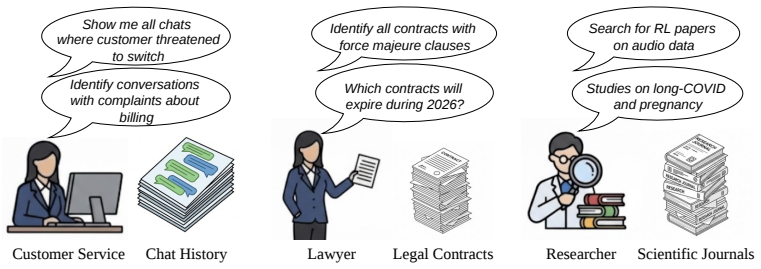
We explore the effectiveness of an LLM-guided query refinement paradigm for extending the usability of embedding models to challenging zero-shot search and classification tasks. Our approach refines the embedding representation of a user query using feedback from a generative LLM on a small set of documents, enabling embeddings to adapt in real time to the target task. We conduct extensive experiments with state-of-the-art text embedding models across a diverse set of challenging search and classification benchmarks. Empirical results indicate that LLM-guided query refinement yields consistent gains across all models and datasets, with relative improvements of up to +25% in literature search, intent detection, key-point matching, and nuanced query-instruction following. The refined queries improve ranking quality and induce clearer binary separation across the corpus, enabling the embedding space to better reflect the nuanced, task-specific constraints of each ad-hoc user query. Importantly, this expands the range of practical settings in which embedding models can be effectively deployed, making them a compelling alternative when costly LLM pipelines are not viable at corpus-scale. We release our experimental code for reproducibility, at https://github.com/IBM/task-aware-embedding-refinement.
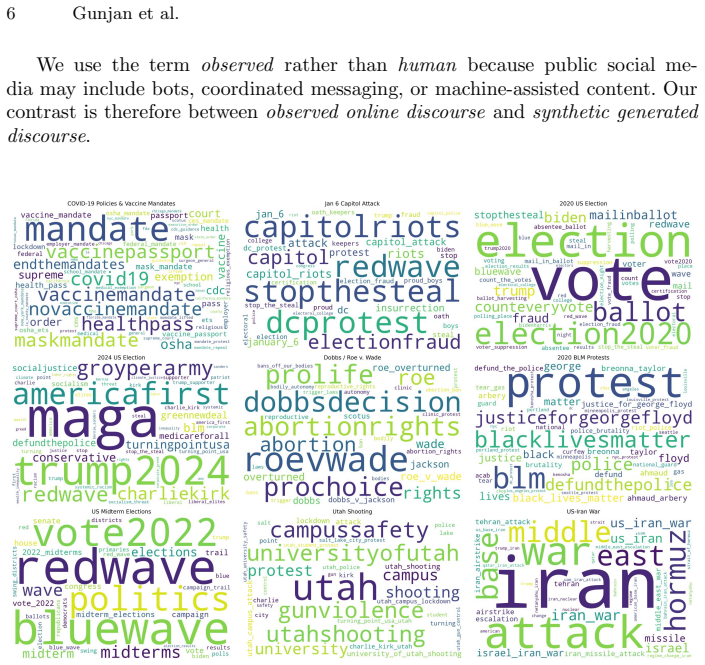
Large Language Models (LLMs) can generate fluent political text at scale, raising concerns about synthetic discourse during crises and social conflict. Existing AI-text detection often focuses on sentence-level cues such as perplexity, burstiness, or token irregularities, but these signals may weaken as generative systems improve. We instead adopt a Computational Social Science perspective and ask whether synthetic political discourse behaves like an observed online population. We construct a paired corpus of 1,789,406 posts across nine crisis events: COVID-19, the Jan. 6 Capitol attack, the 2020 and 2024 U.S. elections, Dobbs/Roe v. Wade, the 2020 BLM protests, U.S. midterms, the Utah shooting, and the U.S.-Iran war. For each event, we compare observed discourse from social platforms with synthetic discourse generated for the same context. We evaluate four dimensions: emotional intensity, structural regularity, lexical-ideological framing, and cross-event dependency, using mean gaps and dispersion evidence. Across events, synthetic discourse is fluent but population-level unrealistic. It is generally more negative and less dispersed in sentiment, structurally more regular, and lexically more abstract than observed discourse. Observed discourse instead shows broader emotional variation, longer-tailed structural distributions, and more context-specific, colloquial lexical markers. These differences are event-dependent: larger for fast-moving, decentralized crises and smaller for formal or institutionally mediated events. We summarize them with a simple event-level measure, the Caricature Gap. Our findings suggest that the main limitation of synthetic political discourse is not grammar or fluency, but reduced population realism. Population-level auditing complements traditional text-detection and provides a CSS framework for evaluating the social realism of generated discourse.
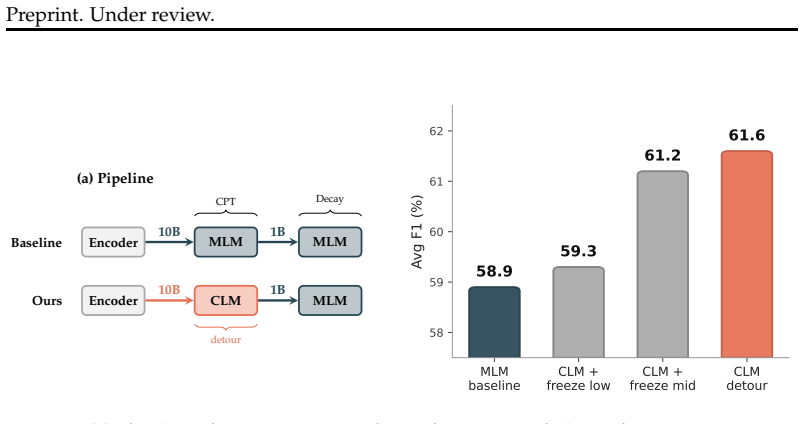
When adapting an encoder to a new domain, the standard approach is to continue training with Masked Language Modeling (MLM). We show that temporarily switching to Causal Language Modeling (CLM) followed by a short MLM decay improves downstream performance. On biomedical texts with ModernBERT, this CLM detour outperforms MLM baselines trained on identical data and compute across 8 French and 11 English biomedical tasks, by +1.2-2.8pp and +0.3-0.8pp respectively, depending on model size. We investigate the reasons for these gains. We find that CLM's dense supervision impacts low transformer layers (0-7) far more than MLM does. Freezing low layers during CLM eliminates the downstream benefit; freezing mid layers preserves it. The representational changes persist through the MLM decay phase, even when it matches the CLM phase in length, and they scale with model capacity. We release ModernCamemBERT-bio and ModernBERT-bio as state-of-the-art biomedical encoders in Base and Large sizes.
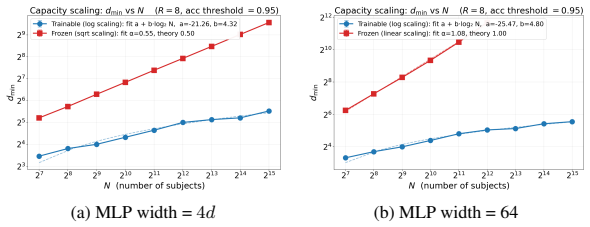
How do transformer language models memorize factual associations? A common view casts internal weight matrices as associative memories over pairs of embeddings, requiring parameter counts that scale linearly with the number of facts. We develop a theoretical and empirical account of an alternative, \emph{geometric} form of memorization in which learned embeddings encode relational structure directly, and the MLP plays a qualitatively different role. In a controlled setting where a single-layer transformer must memorize random bijections from subjects to a shared attribute set, we prove that a logarithmic embedding dimension suffices: subject embeddings encode \emph{linear superpositions} of their associated attribute vectors, and a small MLP acts as a relation-conditioned selector that extracts the relevant attribute via ReLU gating, and not as an associative key-value mapping. We extend these results to the multi-hop setting -- chains of relational queries such as ``Who is the mother of the wife of $x$?'' -- providing constructions with and without chain-of-thought that exhibit a provable capacity-depth tradeoff, complemented by a matching information-theoretic lower bound. Empirically, gradient descent discovers solutions with precisely the predicted structure. Once trained, the MLP transfers zero-shot to entirely new bijections when subject embeddings are appropriately re-initialized, revealing that it has learned a generic selection mechanism rather than memorized any particular set of facts.
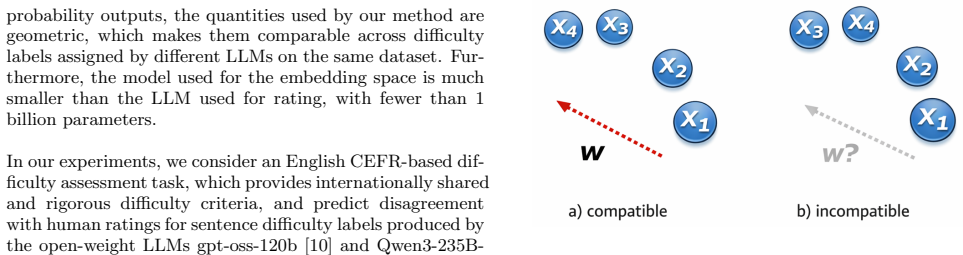
Automatic generation of educational materials using large language models (LLMs) is becoming increasingly common, but assigning difficulty levels to such materials still requires substantial human effort. LLM-as-a-Judge has therefore attracted attention, yet disagreement with human raters remains a major challenge. We propose a method for predicting which LLM-generated difficulty ratings are likely to disagree with human raters, so that such cases can be sent for re-rating. Unlike prior approaches, our method does not rely on generation-time probability signals, which must be collected during rating generation and are often difficult to compare across LLMs. Instead, exploiting the fact that difficulty is an ordinal scale, we use a separate embedding space, such as ModernBERT, and identify disagreement candidates based on the geometric consistency of the rating set. Experiments on English CEFR-based sentence difficulty assessment with GPT-OSS-120B and Qwen3-235B-A22B showed that the proposed method achieved higher AUC for predicting disagreement with human raters than probability-based baselines.
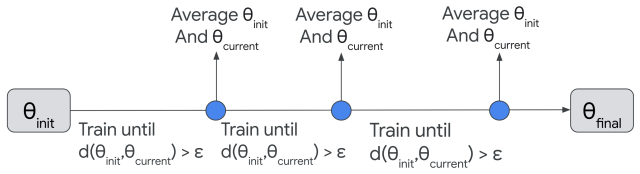
Despite the rapid advancements in large language model (LLM) development, fine-tuning them for specific tasks often results in the catastrophic forgetting of their general, language-based reasoning abilities. This work investigates and addresses this challenge in the context of the Generative Retrieval (GenRetrieval) task. During GenRetrieval fine-tuning, we find this forgetting occurs rapidly and correlates with the distance between the fine-tuned and original model parameters. Given these observations, we propose ORBIT, a novel approach that actively tracks the distance between fine-tuned and initial model weights, and uses a weight averaging strategy to constrain model drift during GenRetrieval fine-tuning when this inter-model distance exceeds a maximum threshold. Our results show that ORBIT retains substantial text and retrieval performance by outperforming both common continual learning baselines and related regularization methods that also employ weight averaging.
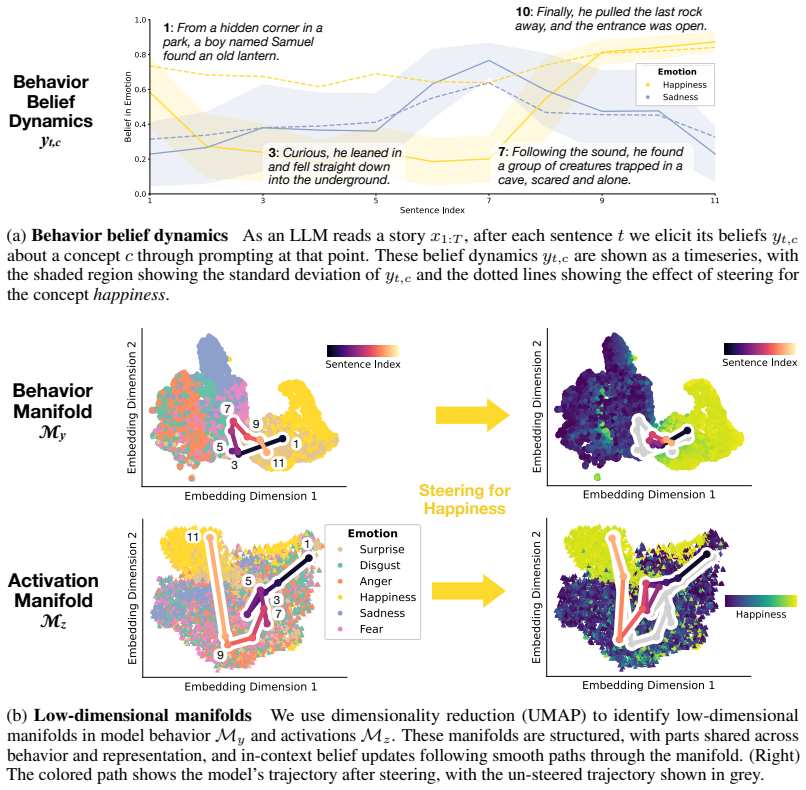
Large Language Models (LLMs) update their behavior in context, which can be viewed as a form of Bayesian inference. However, the structure of the latent hypothesis space over which this inference operates remains unclear. In this work, we propose that LLMs assign beliefs over a low-dimensional geometric space - a conceptual belief space - and that in-context learning corresponds to a trajectory through this space as beliefs are updated over time. Using story understanding as a natural setting for dynamic belief updating, we combine behavioral and representational analyses to study these trajectories. We find that (1) belief updates are well-described as trajectories on low-dimensional, structured manifolds; (2) this structure is reflected consistently in both model behavior and internal representations and can be decoded with simple linear probes to predict behavior; and (3) interventions on these representations causally steer belief trajectories, with effects that can be predicted from the geometry of the conceptual space. Together, our results provide a geometric account of belief dynamics in LLMs, grounding Bayesian interpretations of in-context learning in structured conceptual representations.
Estimating question difficulty is a critical component in evaluating and improving large language models (LLMs) for question answering (QA). Existing approaches often rely on readability formulas, retrieval-based signals, or popularity statistics, which may not fully capture the reasoning challenges posed to modern LLMs. In this paper, we introduce Q-DAPS (Question Difficulty based on Answer Plausibility Scores) method, a novel approach that estimates question difficulty by computing the entropy of plausibility scores over candidate answers. We systematically evaluate Q-DAPS across four prominent QA datasets-TriviaQA, NQ, MuSiQue, and QASC-demonstrating that it consistently outperforms baselines. Moreover, Q-DAPS shows strong robustness across hyperparameter variations and question types. Extensive ablation studies further show that Q-DAPS remains robust across different plausibility estimation paradigms, model sizes, and realistic settings. Human evaluations further confirm strong alignment between Q-DAPS's difficulty estimates and human judgments of question difficulty. Overall, Q-DAPS provides an interpretable, scalable, and bias-resilient approach to question difficulty estimation in modern QA systems.
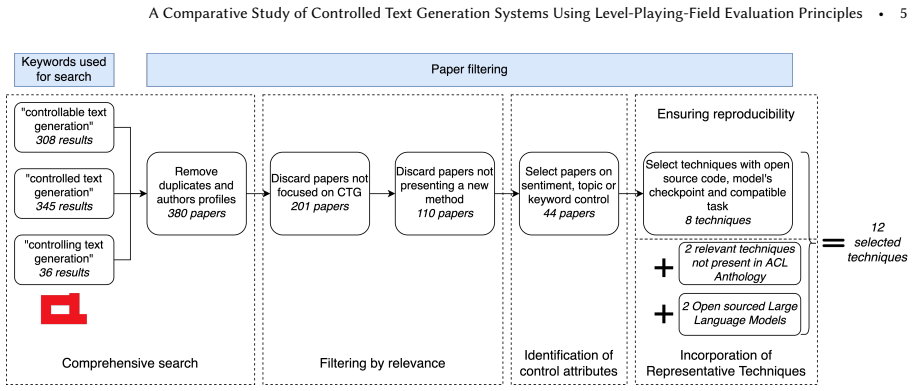
Background: Many different approaches to controlled text generation (CTG) have been proposed over recent years, but it is difficult to get a clear picture of which approach performs best, because different datasets and evaluation methods are used in each case to assess the control achieved.
Objectives: Our aim in the work reported in this paper is to develop an approach to evaluation that enables us to comparatively evaluate different CTG systems in a manner that is both informative and fair to the individual systems.
Methods: We use a level-playing-field (LPF) approach to comparative evaluation where we (i) generate and process all system outputs in a standardised way, and (ii) apply a shared set of evaluation methods and datasets, selected based on those currently in use, in order to ensure fair evaluation.
Results: When re-evaluated in this way, performance results for a representative set of current CTG systems differ substantially from originally reported results, in most cases for the worse. This highlights the importance of a shared standardised way of assessing controlled generation.
Conclusions: The discrepancies revealed by LPF evaluation demonstrate the urgent need for standardised, reproducible evaluation practices in CTG. Our results suggest that without such practices, published performance claims may substantially misrepresent true system capabilities.
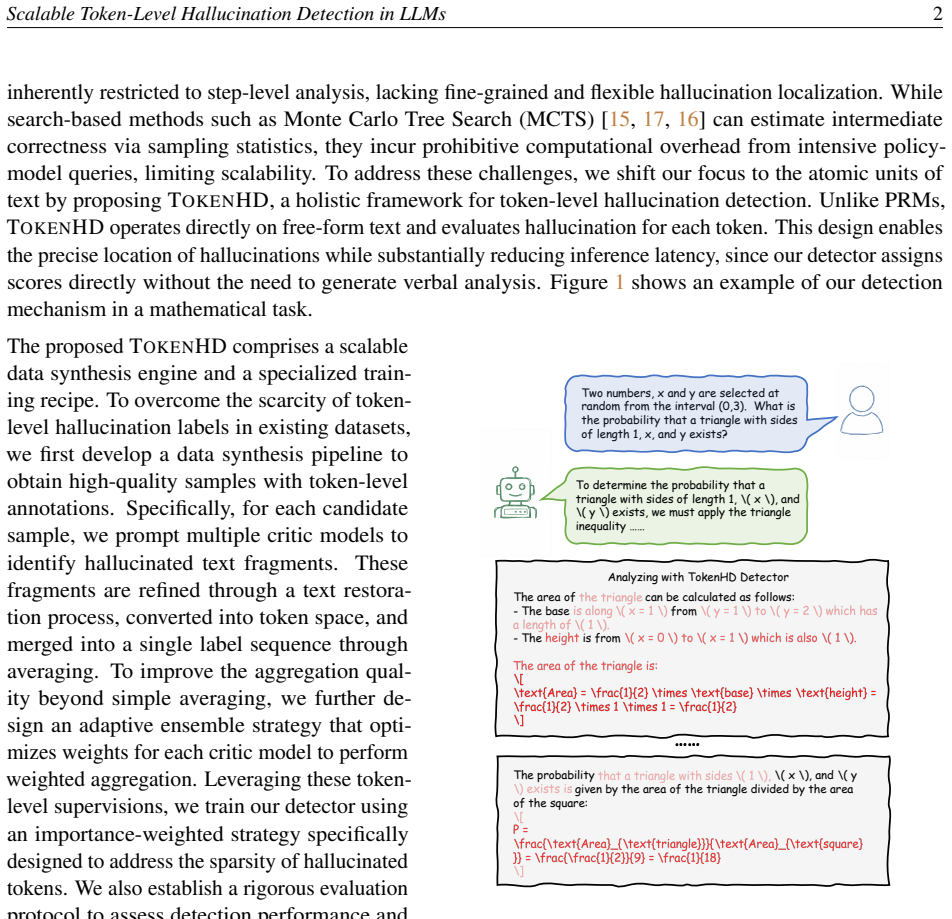
Large language models (LLMs) have demonstrated remarkable capabilities, but they still frequently produce hallucinations. These hallucinations are difficult to detect in reasoning-intensive tasks, where the content appears coherent but contains errors like logical flaws and unreliable intermediate results. While step-level analysis is commonly used to detect internal hallucinations, it suffers from limited granularity and poor scalability due to its reliance on step segmentation. To address these limitations, we propose TokenHD, a holistic pipeline for training token-level hallucination detectors. Specifically, TokenHD consists of a scalable data engine for synthesizing large-scale hallucination annotations along with a training recipe featuring an importance-weighted strategy for robust model training. To systematically assess the detection performance, we also provide a rigorous evaluation protocol. Through training within TokenHD, our detector operates directly on free-form text to identify hallucinations, eliminating the need for predefined step segmentation or additional text reformatting. Our experiments show that even a small detector (0.6B) achieves substantial performance gains after training, surpassing much larger reasoning models (e.g., QwQ-32B), and detection performance scales consistently with model size from 0.6B to 8B. Finally, we show that our detector can generalize well across diverse practical scenarios and explore strategies to further enhance its cross-domain generalization capability.
Large language models (LLMs) exhibit systematic preferences for well-known entities, a phenomenon often attributed to popularity bias. However, the extent to which these preferences reflect real-world popularity versus statistical exposure during pretraining remains unclear, largely due to the inaccessibility of most training corpora. We provide the first direct, large-scale analysis of popularity bias grounded in fully observable pretraining data. Leveraging the open OLMo models and their complete pretraining corpus, Dolma, we compute precise entity-level exposure statistics across 7.4 trillion tokens. We analyze 2,000 entities spanning five types (Person, Location, Organization, Art, Product) and compare pretraining exposure against Wikipedia pageviews and two elicited LLM popularity signals: direct scalar estimation and pairwise comparison. Our results show that pretraining exposure strongly correlates with Wikipedia popularity, validating exposure as a meaningful proxy for real-world salience during the training period. More importantly, we find that LLM popularity judgments align more closely with exposure than with Wikipedia, especially when elicited via pairwise comparisons. This alignment is strongest for larger models and persists in the long tail, where Wikipedia popularity becomes unreliable. Overall, our findings demonstrate that popularity priors in LLMs are primarily shaped by pretraining statistics rather than external popularity signals, offering concrete evidence that data exposure plays a central role in driving popularity bias.
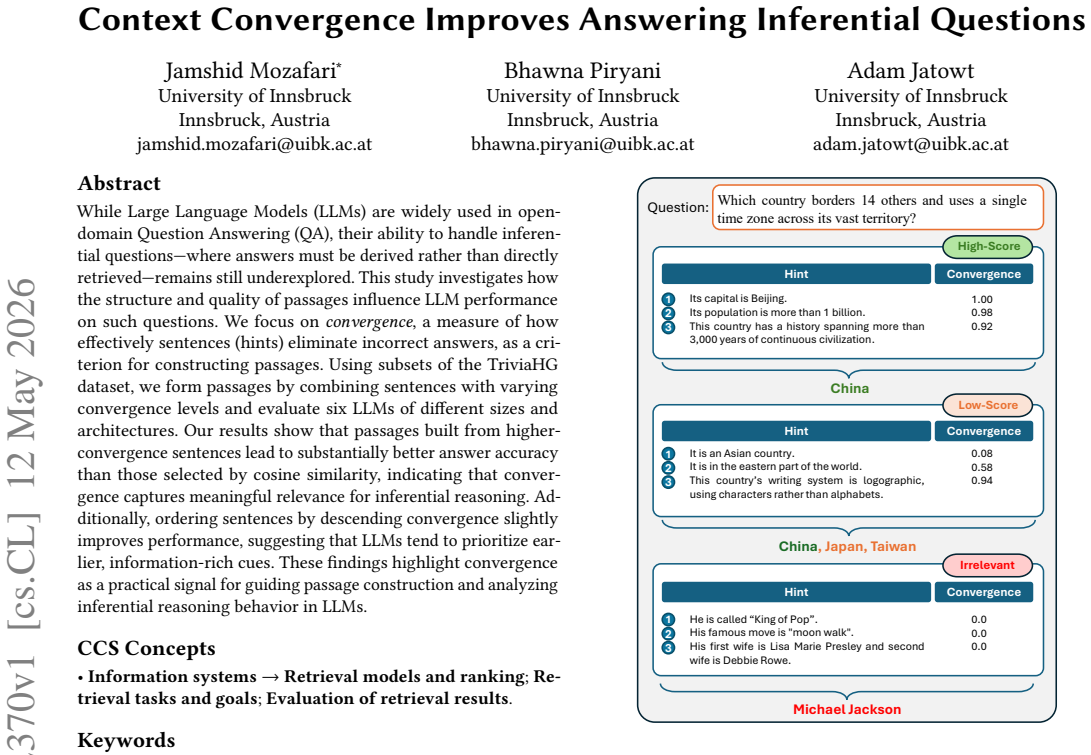
While Large Language Models (LLMs) are widely used in open-domain Question Answering (QA), their ability to handle inferential questions-where answers must be derived rather than directly retrieved-remains still underexplored. This study investigates how the structure and quality of passages influence LLM performance on such questions. We focus on convergence, a measure of how effectively sentences (hints) eliminate incorrect answers, as a criterion for constructing passages. Using subsets of the TriviaHG dataset, we form passages by combining sentences with varying convergence levels and evaluate six LLMs of different sizes and architectures. Our results show that passages built from higher convergence sentences lead to substantially better answer accuracy than those selected by cosine similarity, indicating that convergence captures meaningful relevance for inferential reasoning. Additionally, ordering sentences by descending convergence slightly improves performance, suggesting that LLMs tend to prioritize earlier, information-rich cues. These findings highlight convergence as a practical signal for guiding passage construction and analyzing inferential reasoning behavior in LLMs.
MedHopQA hides 1,000 scored questions inside 10,000 to test genuine multi-hop synthesis in disease queries while limiting memorization.
abstractclick to expand
Evaluating large language models (LLMs) in the biomedical domain requires benchmarks that can distinguish reasoning from pattern matching and remain discriminative as model capabilities improve. Existing biomedical question answering (QA) benchmarks are limited in this respect. Multiple-choice formats can allow models to succeed through answer elimination rather than inference, while widely circulated exam-style datasets are increasingly vulnerable to performance saturation and training data contamination. Multi-hop reasoning, defined as the ability to integrate information across multiple sources to derive an answer, is central to clinically meaningful tasks such as diagnostic support, literature-based discovery, and hypothesis generation, yet remains underrepresented in current biomedical QA benchmarks. MedHopQA is a disease-centered multi-hop reasoning benchmark consisting of 1,000 expert-curated question-answer pairs introduced as a shared task at BioCreative IX. Each question requires synthesis of information across two distinct Wikipedia articles, and answers are provided in an open-ended free-text format. Gold annotations are augmented with ontology-grounded synonym sets from MONDO, NCBI Gene, and NCBI Taxonomy to support both lexical and concept-level evaluation. MedHopQA was constructed through a structured process combining human annotation, triage, iterative verification, and LLM-as-a-judge validation. To reduce leaderboard gaming and contamination risk, the 1,000 scored questions are embedded within a publicly downloadable set of 10,000 questions, with answers withheld, on a CodaBench leaderboard. MedHopQA provides both a benchmark and a reusable framework for constructing future biomedical QA datasets that prioritize compositional reasoning, saturation resistance, and contamination resistance as core design constraints.
Parameter-efficient fine-tuning (PEFT) techniques offer task-specific fine-tuning at a fraction of the cost of full fine-tuning, but require separate fine-tuning for every new task (combination). In this paper, we explore three ways of generalising beyond single-task training/inference: (i) training on combinations of multiple, related datasets; (ii) at inference, composing the weight matrices of separately trained PEFT modules; and (iii) at inference, composing the outputs of separately trained PEFT modules. We test these approaches on three different LLMs, QLoRA as the PEFT technique, and three sets of controlled text generation datasets for sentiment control, topic control, and multi-attribute control. We find that summing PEFT module outputs is a particularly strong composition method, which consistently either outperforms or matches the performance of alternative approaches. This is the case even when comparing against single-task specialised modules on the single-task test set, where three-module output composition achieves an average 2% point performance increase across all models for sentiment control.
Data entry systems remain structurally vulnerable to categorical misclassifications, particularly in small and medium sized enterprises (SMEs). When nominal categories exhibit semantic or morphological proximity, human machine interaction may produce errors that are irrecoverable ex post. In the absence of automated input controls, manual data entry frequently generates irrecoverable categorical distortions that propagate into Key Performance Indicators (KPIs), thereby misleading managerial decision making. State of the art normalization tools typically evaluate semantic and morphological dimensions in isolation and rely heavily on standard dictionaries, rendering them ineffective for SME master data rich in custom SKUs, abbreviations, and domain-specific technical jargon. This paper introduces the Categorical Error Sensitivity Index (ISEC), an ordinal composite score designed to rank category pairs according to their structural susceptibility to confusion. ISEC integrates semantic distance (via word embeddings), custom weighted morphological transformation costs (through an adapted Damerau Levenshtein algorithm), and empirical frequency into a unified, mathematically robust preventive framework. By leveraging vector database architectures, ISEC reduces computational complexity, achieving approximately a 195x performance improvement over brute-force methods. Validated across three heterogeneous datasets: governmental judicial records, retail inventory, and a synthetic ISO coded metalworking catalog, ISEC provides a scalable and proactive data governance instrument that enables SMEs to detect latent structural risk embedded within their categorical data assets.
MedHopQA challenge shows retrieval strategies close the performance gap on questions that combine facts from separate Wikipedia pages.
abstractclick to expand
Multi-hop question answering (QA) remains a significant challenge in the biomedical domain, requiring systems to integrate information across multiple sources to answer complex questions. To address this problem, the BioCreative IX MedHopQA shared task was designed to benchmark in multi-hop reasoning for large language models (LLMs). We developed a novel dataset of 1,000 challenging QA pairs spanning diseases, genes, and chemicals, with particular emphasis on rare diseases. Each question was constructed to require two-hop reasoning through the integration of information from two distinct Wikipedia pages. The challenge attracted 48 submissions from 13 teams. Systems were evaluated using both surface string comparison and conceptual accuracy (MedCPT score). The results showed a substantial performance gap between baseline LLMs and enhanced systems. The top-ranked submission achieved an 89.30% F1 score on the MedCPT metric and an 87.30% exact match (EM) score, compared with 67.40% and 60.20%, respectively, for the zero-shot baseline. A central finding of the challenge was that retrieval-augmented generation (RAG) and related retrieval-based strategies were critical for strong performance. In addition, concept-level evaluation improved answer assessment when correct responses differed in surface form. The MedHopQA dataset is publicly available to support continued progress in this important area. Challenge materials: https://www.ncbi.nlm.nih.gov/research/bionlp/medhopqa and benchmark https://www.codabench.org/competitions/7609/
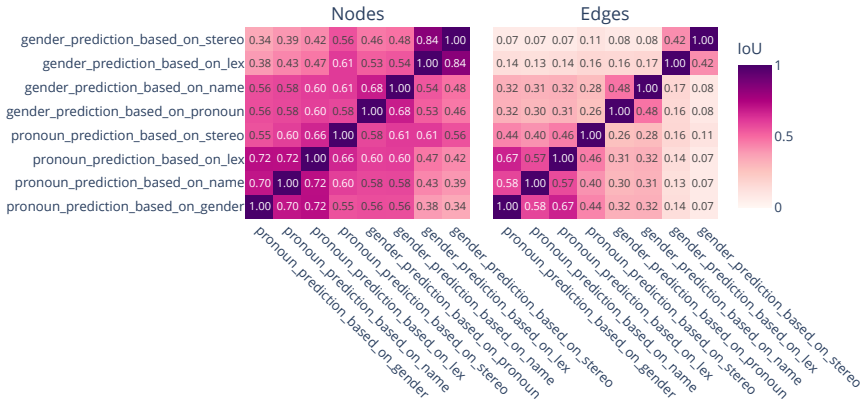
Recent works have analyzed the impact of individual components of neural networks on gendered predictions, often with a focus on mitigating gender bias. However, mechanistic interpretations of gender tend to (i) focus on a very specific gender-related task, such as gendered pronoun prediction, or (ii) fail to distinguish between the production of factually gendered outputs (the correct assumption of gender given a word that carries gender as a semantic property) and gender biased outputs (based on a stereotype). To address these issues, we curate \gknow, a benchmark to assess gender knowledge and gender bias in language models across different types of gender-related predictions. \gknow allows us to identify and analyze circuits and individual neurons responsible for gendered predictions. We test the impact of neuron ablation on benchmarks for disentangling stereotypical and factual gender (DiFair and the test set of GKnow), as well as StereoSet. Results show that gender bias and factual gender are severely entangled on the level of both circuits and neurons, entailing that ablation is an unreliable debiasing method. Furthermore, we show that benchmarks for evaluating gender bias can hide the decrease in factual gender knowledge that accompanies neuron ablation. We curate GKnow as a contribution to the continuous development of robust gender bias benchmarks.
Direct Preference Optimization (DPO) is a widely used RL-free method for aligning language models from pairwise preferences, but it models preferences over full sequences even though generation is driven by per-token decisions. Existing token-level extensions typically decompose a sequence-level Bradley-Terry objective across timesteps, leaving per-prefix (state-wise) optimality implicit. We study how to recover token-level preference optimality using only standard sequence-level pairwise comparisons. We introduce Token-level Bregman Preference Optimization (TBPO), which posits a token-level Bradley-Terry preference model over next-token actions conditioned on the prefix, and derive a Bregman-divergence density-ratio matching objective that generalizes the logistic/DPO loss while preserving the optimal policy induced by the token-level model and maintaining DPO-like simplicity. We introduce two instantiations: TBPO-Q, which explicitly learns a lightweight state baseline, and TBPO-A, which removes the baseline through advantage normalization. Across instruction following, helpfulness/harmlessness, and summarization benchmarks, TBPO improves alignment quality and training stability and increases output diversity relative to strong sequence-level and token-level baselines.
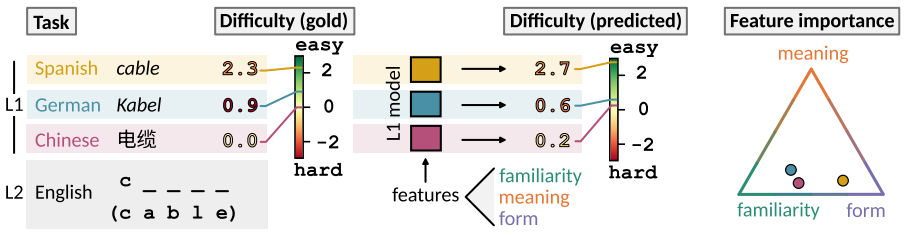
What makes a word difficult to learn, and how does the difficulty depend on the learner's native language? We computationally model vocabulary difficulty for English learners whose first language is Spanish, German, or Chinese with gradient-boosted models trained on features related to a word's familiarity (e.g., frequency), meaning, surface form, and cross-linguistic transfer. Using Shapley values, we determine the importance of each feature group. Word familiarity is the dominant feature group shared by all three languages. However, predictions for Spanish- and German-speaking learners rely additionally on orthographic transfer. This transfer mechanism is unavailable to Chinese learners, whose difficulty is shaped by a combination of familiarity and surface features alone. Our models provide interpretable, L1-tailored difficulty estimates that can be used to design vocabulary curricula.
Long-horizon language agents accumulate conversation history far faster than any fixed context window can hold, making memory management critical to both answer accuracy and serving cost. Existing approaches either expand the context window without addressing what is retrieved, perform heavy ingestion-time fact extraction at substantial token cost, or rely on heuristic graph traversal that leaves both accuracy and efficiency on the table. We present PRISM, a training-free retrieval-side framework that treats long-horizon memory as a joint retrieval-and-compression problem over a graph-structured memory. PRISM combines four orthogonal inference-time components: Hierarchical Bundle Search over typed relation paths, Query-Sensitive Edge Costing that aligns traversal with detected query intent, Evidence Compression that compresses the candidate bundle into a compact answer-side context, and Adaptive Intent Routing that routes most queries through zero-LLM tiers. By formulating retrieval as min-cost selection over typed path templates and pairing it with an LLM-side compression step, PRISM surfaces the right evidence under a strict context budget without any fine-tuning or modification to the upstream ingestion pipeline. Experiments on the LoCoMo benchmark show that PRISM delivers substantially higher LLM-judge accuracy than every same-protocol baseline at an order-of-magnitude smaller context budget, occupying a previously empty corner of the accuracy-context-cost frontier and demonstrating a superior balance between answer quality and retrieval efficiency.
Conversational scams, such as romance and investment scams, are emerging as a major form of online fraud. Unlike one-shot scam lures such as fake lottery or unpaid toll messages, they unfold through multi-turn conversations in which scammers gradually manipulate victims using evolving psychological techniques. However, existing research mainly focuses on static scam detection or synthetic scams, leaving open whether language models can understand how real-world scams progress over time. We introduce PreScam, a benchmark for modeling scam progression from early conversations. Built from user-submitted scam reports, PreScam filters and structures 177,989 raw reports into 11,573 conversational scam instances spanning 20 scam categories. Each instance is hierarchically structured according to the scam lifecycle defined by the proposed scam kill chain, and further annotated at the turn level with scammer psychological actions and victim responses. We benchmark models on two tasks: real-time termination prediction, which estimates whether a conversation is approaching the termination stage, and scammer action prediction, which forecasts the scammer's subsequent actions. Results show a clear gap between surface-level fluency and progression modeling: supervised encoders substantially outperform zero-shot LLMs on real-time termination prediction, while next-action prediction remains only moderately successful even for strong LLMs. Taken together, these results show that current models can capture some scam-related cues, yet still struggle to track how risk escalates and how manipulation unfolds across turns.
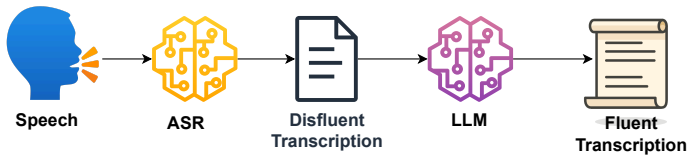
Automatic Speech Recognition (ASR) transcripts often contain disfluencies, such as fillers, repetitions, and false starts, which reduce readability and hinder downstream applications like chatbots and voice assistants. If left unaddressed, such disfluencies can significantly degrade the reliability of downstream systems. Most existing approaches rely on classical models that focus on identifying disfluent tokens for removal. While this strategy is effective to some extent, it often disrupts grammatical structure and semantic coherence, leading to incomplete or unnatural sentences. Recent literature explored the use of large language models (LLMs); however, these efforts have primarily focused on disfluency detection or data augmentation, rather than performing comprehensive correction. We propose a multilingual correction pipeline where a sequence tagger first marks disfluent tokens, and these signals guide instruction fine-tuning of an LLM to rewrite transcripts into fluent text. To further improve reliability, we add a contrastive learning objective that penalizes the reproduction of disfluent tokens, encouraging the model to preserve grammar and meaning while removing disfluent artifacts. Our experiments across three Indian languages, namely Hindi, Bengali, and Marathi show consistent improvements over strong baselines, including multilingual sequence-to-sequence models. These results highlight that detection-only strategies are insufficient. Combining token-level cues with instruction tuning and contrastive learning provides a practical and scalable solution for multilingual disfluency correction in speech-driven NLP systems. We make the codes publicly available at https://github.com/deepak-kumar-98/Mind-the-Pause.
Adapting large language models (LLMs) to long-context tasks requires post-training methods that remain accurate and coherent over thousands of tokens. Existing approaches are limited in several ways: 1) off-policy methods such as supervised fine-tuning (SFT) and knowledge distillation (KD) suffer from exposure bias and limited recovery from model-generated errors over long horizons; 2) on-policy reinforcement learning methods such as Group Relative Policy Optimization (GRPO) better align training with model-generated states, but are unstable and sample-inefficient due to sparse rewards; 3) on-policy distillation (OPD) provides dense token-level guidance, but does not directly optimize arbitrary reward signals. In this paper, we propose Distilled Group Relative Policy Optimization (dGRPO), a method for long-context reasoning that augments GRPO with dense guidance from a stronger teacher via OPD. We also introduce LongBlocks, a synthetic long-context dataset spanning multi-hop reasoning, contextual grounding, and long-form generation. We conduct extensive experiments and ablations comparing off-policy training, sparse-reward GRPO, and our combined approach, leading to an improved recipe for long-context alignment. Overall, our results show that combining outcome-based policy optimization with knowledge distillation in a single objective provides a more stable and effective path to long-context reasoning, while preserving short-context capabilities.
Understanding the internal machinations of deep Transformer-based NLP models is more crucial than ever as these models see widespread use in various domains that affect the public at large, such as industry, academia, finance, health. While these models have advanced rapidly, their internal mechanisms remain largely a mystery. Techniques such as Sparse Autoencoders (SAE) have emerged to understand these mechanisms by projecting dense representations into a sparse vector. While existing research has demonstrated the viability of the SAE in interpreting text-based Large Language Models (LLMs), there are no equivalent studies that demonstrate the application of a SAE to audio processing models like Automatic Speech Recognizers (ASRs). In this work, a SAE is applied to Whisper, a Transformer-based ASR, training a high-dimensional sparse latent space on frame-level embeddings extracted from the Whisper encoder. Our work uncovers diverse monosemantic features across linguistic and non-linguistic boundaries, and demonstrates cross-lingual feature steering. This work establishes the viability of a SAE model and demonstrates that Whisper encodes a rich amount of linguistic information.
Large language models accumulate extensive parametric knowledge through pre-training. However, knowledge conflicts occur when outdated or incorrect parametric knowledge conflicts with external knowledge in the context. Existing methods address knowledge conflicts through contrastive decoding, but in conflict-free scenarios, static approaches disrupt output distribution. Other dynamic decoding methods attempt to measure the degree of conflict but still struggle with complex real-world situations. In this paper, we propose a two-stage decoding method called Dynamic Cognitive Reconciliation Decoding (DCRD), to predict and mitigate context-memory conflicts. DCRD first analyzes the attention map to assess context fidelity and predict potential conflicts. Based on this prediction, the input is directed to one of two decoding paths: (1) greedy decoding, or (2) context fidelity-based dynamic decoding. This design enables DCRD to handle conflicts efficiently while maintaining high accuracy and decoding efficiency in conflict-free cases. Additionally, to simulate scenarios with frequent knowledge updates, we constructed ConflictKG, a knowledge conflict QA benchmark. Experiments on four LLMs across six QA datasets show that DCRD outperforms all baselines, achieving state-of-the-art performance.
[Abridged] Production LLM deployments receive feedback from a non-random fraction of users: thumbs sit mostly in the tails of the satisfaction distribution, and a naive average over them can land 40-50 percentage points away from true system quality. We treat this as a topic- and sentiment- stratified selection-bias problem and propose a three-agent hierarchical Bayesian pipeline that does not require ground-truth labels on individual interactions. A Topic Clustering Agent partitions the stream via UMAP + HDBSCAN over text embeddings; a Bias Modeling Agent fits a two-stage hierarchical Beta-Binomial under NUTS, inferring per-topic selection rates $s_c$ and quality $q_c$ with partial pooling; a Synthesis Agent reweights $q_c$ by true topic prevalence $\hat\pi_c = n_c/N$ to report a bias-corrected aggregate posterior $\bar Q = \sum_c \hat\pi_c q_c$ with credible interval, plus drift signals for online recalibration. Validation uses UltraFeedback (N=10,232 retained interactions, $C=18$ clusters, $Q^\star=0.6249$) with simulated topic- and sentiment-dependent selection biases. We compare five Bayesian variants against Naive and IPW baselines. A mild prior on the feedback channel (typical positive-feedback rate and negative-to-positive ratio, both readable from any production dashboard without labels) keeps Hierarchical-Informed within 4-13 pp of $Q^\star$ as the bias ratio sweeps from 1:1 to 30:1, with 95% credible intervals covering $Q^\star$ in 50/50 random-seed replicates at $\kappa_{\max}=10$. Without channel-side priors, every weak-prior variant misses $Q^\star$ by 22-33 pp: the per-cluster sufficient statistics admit a one-parameter family of equally good fits, and the prior on the bias channel (not on latent quality) is what breaks the degeneracy.
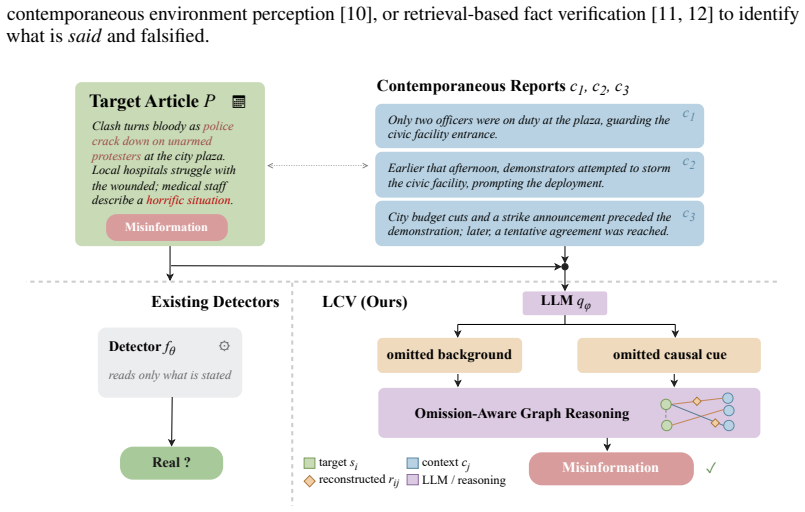
Automatic misinformation detection performs well when deception is visible in what an article explicitly states. However, some misinformation articles remain locally coherent and only become misleading once compared with contemporaneous reports that supply background facts the article omits. We study this omission-relevant setting and observe that current omission-aware approaches typically either attach retrieved context as auxiliary evidence or infer a categorical omission signal, leaving the specific missing fact implicit. We propose \emph{Latent Causal Void} (LCV), a retrieval-guided detector that explicitly reconstructs the missing fact for each target sentence and uses it as a textual cross-source relation in graph reasoning. Concretely, LCV retrieves temporally aligned context articles, asks a frozen instruction-tuned large language model to generate a short missing-context description for each sentence--article pair, and feeds the resulting relation text into a heterograph over target sentences and context articles. On the bilingual benchmark of Sheng et al., LCV improves over the strongest omission-aware baseline by $2.56$ and $2.84$ macro-F1 points on the English and Chinese splits, respectively. The results indicate that modeling the missing cross-source fact itself, rather than only attaching retrieved evidence or predicting an omission signal, is a useful representation for omission-aware misinformation detection.
Large language models are increasingly deployed in safety-critical applications, where their ability to resist harmful instructions is essential. Although post-training aims to make models robust against many jailbreak strategies, recent evidence shows that stylistic reformulations, such as poetic transformation, can still bypass safety mechanisms with alarming effectiveness. This raises a central question: why do literary jailbreaks succeed? In this work, we investigate whether their effectiveness depends on specific poetic devices, on a failure to recognize literary formatting, or on deeper changes in how models process stylistically irregular prompts. We address this problem through an interpretability analysis of attention patterns. We perform input-level ablation studies to assess the contribution of individual and combinations of poetic devices; construct an interpretable vector representation of attention maps; cluster these representations and train linear probes to predict safety outcomes and literary format. Our results show that models distinguish poetic from prose formats with high accuracy, yet struggle to predict jailbreak success within each format. Clustering further reveals clear separation by literary format, but not by safety label. These findings indicate that jailbreak success is not caused by a failure to recognize poetic formatting; rather, poetic prompts induce distinct processing patterns that remain largely independent of harmful-content detection. Overall, literary jailbreaks appear to misalign large language models not through any single poetic device, but through accumulated stylistic irregularities that alter prompt processing and avoid lexical triggers considered during post-training. This suggests that robustness requires safety mechanisms that account for style-induced shifts in model behavior. We use Qwen3-14B as a representative open-weight case study.
Sign languages are natural, visual-gestural languages used by Deaf communities worldwide. Over 300 distinct sign languages remain severely low-resource due to limited documentation, sparse datasets, and insufficient computational tools. This systematic review synthesizes literature on sign language recognition and translation for under-resourced languages, using Azerbaijan Sign Language (AzSL) as a case study. Analysis of global initiatives extracts eight actionable lessons, including community co-design, dialectal diversity capture, and privacy-preserving pose-based representations. Turkic sign languages (Kazakh, Turkish, Azerbaijani) receive special attention, as linguistic proximity enables effective transfer learning. We propose three paradigm shifts: from architecture-centric to data-centric AI, from signer-independent to signer-adaptive systems, and from reference-based to task-specific evaluation metrics. A technical roadmap for AzSL leverages lightweight MediaPipe-based architectures, community-validated annotations, and offline-first deployment. Progress requires sustained interdisciplinary collaboration centered on Deaf communities to ensure cultural authenticity, ethical governance, and practical communication benefit.
Sparse autoencoders and sensitivity tests find criteria for unified violation features are not met across linguistic phenomena.
abstractclick to expand
Large Language Models (LLMs) achieve strong linguistic performance, yet their internal mechanisms for producing these predictions remain unclear. We investigate the hypothesis that LLMs encode representations of linguistic constraint violations within their parameters, which are selectively activated when processing ungrammatical sentences. To test this, we use sparse autoencoders to decompose polysemantic activations into sparse, monosemantic features and recover candidates for violation-related features.
We introduce a sensitivity score for identifying features that are preferentially activated on constraint-violated versus well-formed inputs, enabling unsupervised detection of potential violation-specific features. We further propose a conjunctive falsification framework with three criteria evaluated jointly.
Overall, the results are negative in two respects: (1) the falsification criteria are not jointly satisfied across linguistic phenomena, and (2) no features are consistently shared across all categories. While some phenomena show partial evidence of selective causal structure, the overall pattern provides limited support for a unified set of grammatical violation detectors in current LMs.
Is child-directed language (CDL) optimized to support language learning, and which aspects of linguistic development does it facilitate? We investigate this question using neural language models trained on CDL versus adult-directed language (ADL). We selectively remove syntactic or lexical co-occurrence information from the model training data, and evaluate the impact of these manipulations on verb meaning acquisition. While disrupting syntax impairs learning across all datasets, models trained on CDL and spoken ADL show significantly higher resilience than those trained on written input. Tracking semantic and syntactic performance over training, we observe a semantic-first trajectory, with verb meanings emerging prior to robust syntactic proficiency, an asynchrony most pronounced in the spoken domain, especially CDL. These results suggest that the advantage for verb learning previously attributed to CDL may instead reflect broader properties of the spoken register, rather than a uniquely CDL-specific optimization.
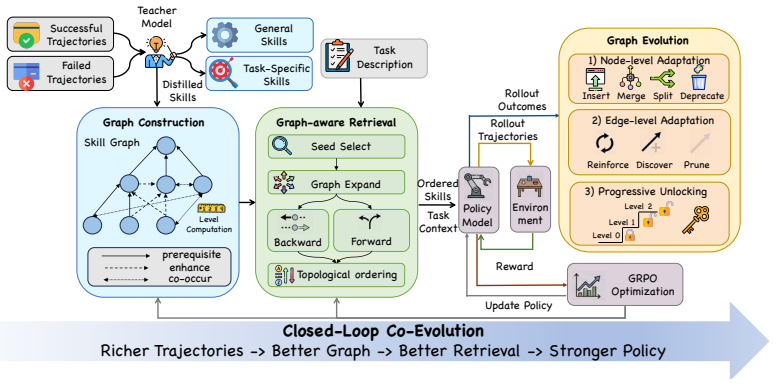
Skill libraries enable large language model agents to reuse experience from past interactions, but most existing libraries store skills as isolated entries and retrieve them only by semantic similarity. This leads to two key challenges for compositional tasks. Firstly, an agent must identify not only relevant skills but also how they depend on and build upon each other. Secondly, it also makes library maintenance difficult, since the system lacks structural cues for deciding when skills should be merged, split, or removed. We propose SKILLGRAPH, a framework that represents reusable skills as nodes in a directed graph, with typed edges encoding prerequisite, enhancement, and co-occurrence relations. Given a new task, SKILLGRAPH retrieves not just individual skills, but an ordered skill subgraph that can guide multi-step decision making. The graph is continuously updated from agent trajectories and reinforcement learning feedback, allowing both the skill library and the agent policy to improve together. Experiments on ALFWorld, WebShop, and seven search-augmented QA tasks show that SKILLGRAPH achieves state-of-the-art performance against memory-augmented RL methods, with especially large gains on complex tasks that require composing multiple skills.
We describe our system for SemEval-2026 Task 8 (MTRAGEval), participating in Task A (Retrieval) across four English-language domains. Our approach employs a three-stage pipeline: (1) query rewriting via a LoRA-fine-tuned Qwen 2.5 7B model that transforms context-dependent follow-up questions into standalone queries, (2) hybrid BM25 and dense retrieval combined through Reciprocal Rank Fusion, and (3) cross-encoder reranking with BGE-reranker-v2-m3. On the official test set, the system achieves nDCG@5 of 0.531, ranking 8th out of 38 participating systems and 10.7% above the organizer baseline. Development comparisons reveal that domain-specific temperature tuning for query generation, where technical domains benefit from deterministic decoding and general domains from controlled randomness, provides consistent gains, while more complex strategies such as domain-aware prompting and multi-query expansion degrade performance.
Large Language Models (LLMs) achieve strong performance on standard knowledge evaluation benchmarks, yet recent work shows that their knowledge capabilities remain brittle under question variants that test the same knowledge in different forms. Robustness augmentation of existing knowledge evaluation benchmarks is therefore necessary, but current LLM-assisted generate-then-verify pipelines are costly and difficult to scale due to low-yield variant generation and unreliable variant verification. We propose SAGE (Scalable Automated Generation of Robustness BEnchmarks), a framework for scalable robustness augmentation of knowledge evaluation benchmarks using fine-tuned smaller models. SAGE consists of VariantQual, a rubric-based verifier trained on human-labeled seed data, and VariantGen, a variant generator initialized with supervised fine-tuning and further optimized with reinforcement learning using VariantQual as the reward model. Experiments on HellaSwag show that SAGE constructs a large-scale robustness-augmented benchmark with quality comparable to the human-annotated HellaSwag-Pro at substantially lower cost, while the fine-tuned models further generalize to MMLU without benchmark-specific fine-tuning.
Agentic reinforcement learning (RL) for Large Language Models (LLMs) critically depends on the exploration capability of the base policy, as training signals emerge only within its in-capability region. For tasks where the base policy cannot reach reward states, additional training or external guidance is needed to recover effective learning signals. Rather than relying on costly iterative supervised fine tuning (SFT), we exploit the abundant action data generated in everyday human interactions. We propose \textsc{ActGuide-RL}, which injects action data as plan-style reference guidance, enabling the agentic policy to overcome reachability barriers to reward states. Guided and unguided rollouts are then jointly optimized via mixed-policy training, internalizing the exploration gains back into the unguided policy. Motivated by a theoretical and empirical analysis of the benefit-risk trade-off, we adopt a minimal intervention principle that invokes guidance only as an adaptive fallback, matching task difficulty while minimizing off-policy risk. On search-agent benchmarks, \textsc{ActGuide-RL} substantially improves over zero RL (+10.7 pp on GAIA and +19 pp on XBench with Qwen3-4B), and performs on par with the SFT+RL pipeline without any cold start. This suggests a new paradigm for agentic RL that reduces the reliance on heavy SFT data by using scalable action guidance instead.
Movie subtitle translation is inherently multimodal, yet text-only systems often miss visual cues needed to convey emotion, action, and social nuance, especially for low-resource Indic languages (English to Hindi, Bengali, Telugu, Tamil and Kannada). We present a case study on five full-length films and compare two lightweight visual grounding strategies: structured attribute summaries from a 5-minute sliding window and free-text summaries of inter-subtitle visual gaps. Our analysis shows that temporal misalignment between subtitles and frames is a major obstacle in long-form video, often rendering indiscriminate visual grounding ineffective. However, oracle selective grounding, which replaces only the lowest-quality 20-30\% of baseline segments with visual-enhanced outputs, consistently improves COMET over the text-only baseline while requiring far less visual processing. Among the two approaches, coarse attribute-based visual context summarization is more robust, capturing scene-level emotion and contextual subtle cues that text alone often misses
The performance of Large Language Models (LLMs) on downstream tasks is fundamentally constrained by the capabilities acquired during pre-training. However, traditional benchmarks like MMLU often fail to reflect a base model's plasticity in complex open-ended scenarios, leading to inefficient model selection. We address this by introducing a new task of predicting post-training potential - forecasting a base model's performance before post-training. We propose RuDE (Rubric-based Discriminative Evaluation), a unified framework that bypasses the generation gap of base models by leveraging response discrimination. Guided by our systematic 4C Taxonomy, RuDE constructs controlled contrastive pairs across diverse domains by fine-grained rubric violations. Extensive experiments demonstrate a correlation greater than 90% with post-training performance. Crucially, validation via Reinforcement Learning (RL) confirms that RuDE effectively identifies high-potential smaller models that outperform larger counterparts, offering a compute-efficient mechanism for foundation model development.
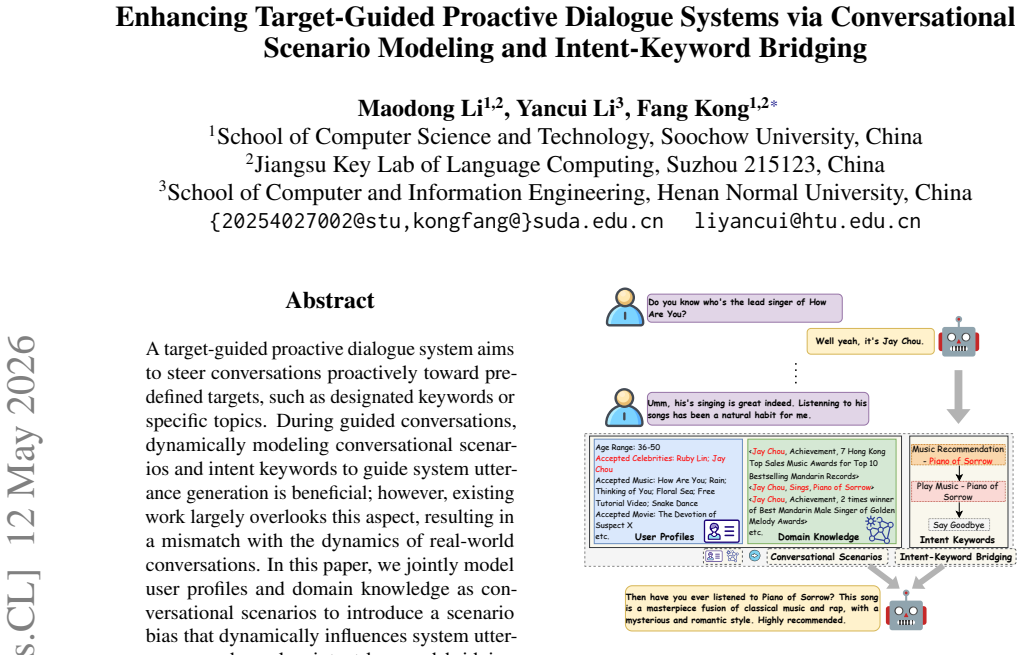
A target-guided proactive dialogue system aims to steer conversations proactively toward pre-defined targets, such as designated keywords or specific topics. During guided conversations, dynamically modeling conversational scenarios and intent keywords to guide system utterance generation is beneficial; however, existing work largely overlooks this aspect, resulting in a mismatch with the dynamics of real-world conversations. In this paper, we jointly model user profiles and domain knowledge as conversational scenarios to introduce a scenario bias that dynamically influences system utterances, and employ intent-keyword bridging to predict intent keywords for upcoming dialogue turns, providing higher level and more flexible guidance. Extensive automatic and human evaluations demonstrate the effectiveness of conversational scenario modeling and intent keyword bridging, yielding substantial improvements in proactivity, fluency, and informativeness for target-guided proactive dialogue systems, thereby narrowing the gap with real world interactions.
Preference optimization has become an important post-training paradigm for improving the reasoning abilities of large language models. Existing methods typically rely on externally constructed preference data, using preferred and dispreferred responses as sample-level supervision. However, such external signals rarely make explicit use of capability-related information contained in the model's internal representations. For mathematical reasoning, certain neuron groups may exhibit activation patterns associated with mathematical knowledge, symbolic manipulation, or logical reasoning. Similar to reflexive behavioral signals, these internal activations may provide a coarse indication of whether the model is engaging math-related capabilities.We introduce YFPO, short for Yoked Feature Preference Optimization, a preliminary neuron-guided preference optimization framework for mathematical reasoning. YFPO first uses AttnLRP to identify math-related neurons, and then constructs an auxiliary reward from their activation margin between preferred and dispreferred responses. This design augments external preference learning with internal neuron-level signals. We conduct preliminary experiments on a small-scale language model using GSM8K as the main benchmark. Results suggest that neuron-level signals can interact with preference optimization and occasionally improve reasoning performance, offering a promising direction for more fine-grained and interpretable reasoning-oriented post-training.
Large language models have achieved remarkable capabilities across diverse tasks, yet their internal decision-making processes remain largely opaque, limiting our ability to inspect, control, and systematically improve them. This opacity motivates a growing body of research in mechanistic interpretability, with sparse autoencoders (SAEs) emerging as one of the most promising tools for decomposing model activations into sparse, interpretable feature representations. We introduce Qwen-Scope, an open-source suite of SAEs built on the Qwen model family, comprising 14 groups of SAEs across 7 model variants from the Qwen3 and Qwen3.5 series, covering both dense and mixture-of-expert architectures. Built on top of these SAEs, we show that SAEs can go beyond post-hoc analysis to serve as practical interfaces for model development along four directions: (i) inference-time steering, where SAE feature directions control language, concepts, and preferences without modifying model weights; (ii) evaluation analysis, where activated SAE features provide a representation-level proxy for benchmark redundancy and capability coverage; (iii) data-centric workflows, where SAE features support multilingual toxicity classification and safety-oriented data synthesis; and (iv) post-training optimization, where SAE-derived signals are incorporated into supervised fine-tuning and reinforcement learning objectives to mitigate undesirable behaviors such as code-switching and repetition. Together, these results demonstrate that SAEs can serve not only as post-hoc analysis tools, but also as reusable representation-level interfaces for diagnosing, controlling, evaluating, and improving large language models. By open-sourcing Qwen-Scope, we aim to support mechanistic research and accelerate practical workflows that connect model internals to downstream behavior.
Named Entity Recognition for person names is an important but non-trivial task in information extraction. This article uses a tool that compares the concordances obtained from two local grammars (LG) and highlights the differences. We used the results as an aid to select the best of a set of LGs. By analyzing the comparisons, we observed relationships of inclusion, intersection and disjunction within each pair of LGs, which helped us to assemble those that yielded the best results. This approach was used in a case study on extraction of person names from texts written in Portuguese. We applied the enhanced grammar to the Gold Collection of the Second HAREM. The F-Measure obtained was 76.86, representing a gain of 6 points in relation to the state-of-the-art for Portuguese.
Diffusion Language Models (DLMs) have recently emerged as a promising alternative to autoregressive language models, offering stronger global awareness and highly parallel generation. However, post-training DLMs with standard Negative Evidence Lower Bound (NELBO)-based supervised fine-tuning remains inefficient: training reconstructs randomly masked tokens in a single step, whereas inference follows a confidence-guided, multi-step easy-to-hard denoising trajectory. Recent trajectory-based self-distillation methods exploit such inference trajectories mainly for sampling-step compression and acceleration, often improving decoding efficiency without substantially enhancing the model's underlying capability, and may even degrade performance under full diffusion decoding. In this work, we ask whether self-distilled trajectories can be used not merely for faster inference, but for genuine knowledge acquisition. Although these trajectories lie on the pretrained DLM's own distributional manifold and thus offer a potentially lower optimization barrier, we find that naively fine-tuning on them with standard NELBO objectives yields only marginal gains. To address this limitation, we propose \textbf{T}rajectory-\textbf{A}ligned optimization via \textbf{Bo}ltzmann \textbf{M}odeling (\textbf{TABOM}), a self-distilled trajectory-based post-training framework that aligns training with the easy-to-hard structure of inference. TABOM models the inference unmasking preference as a Boltzmann distribution over predictive entropies and derives a tractable pairwise ranking objective to align the model's certainty ordering with the observed decoding trajectory. Empirically, TABOM achieves substantial gains in new domains, expands the effective knowledge boundary of DLMs, and significantly mitigates catastrophic forgetting compared with standard SFT.
Language models are increasingly used in settings where outputs must satisfy user-specified randomness constraints, yet their generation probabilities are often poorly calibrated to those targets. We study whether this capability can be improved directly through fine-tuning. Concretely, we fine-tune language models on synthetic prompts that require sampling from mathematical distributions, and compare two Calibration Fine-Tuning variants: a soft-target method that converts the desired output distribution into trie-derived next-token targets, and a hard-target method that trains on sampled completions from the same target distribution. Across 12 models spanning four families, both methods substantially improve structured-sampling fidelity on held-out distribution families and unseen parameter settings, showing that probabilistic calibration is a trainable capability. Under our selected training configurations, the two methods exhibit different empirical profiles: hard-target fine-tuning is often strongest on structured numeric sampling, while soft-target fine-tuning performs better on broader stochastic generation benchmarks, including open-ended random generation, multiple-choice answer-position balancing, and NoveltyBench. The gains sometimes reduce downstream capability, especially arithmetic reasoning, with costs varying by model. Overall, our results show that probabilistic calibration can be improved through fine-tuning, with our hard-target configuration favoring exact numeric fidelity and our soft-target configuration favoring broader stochastic transfer. Code is available at https://github.com/chandar-lab/calibration-finetuning.
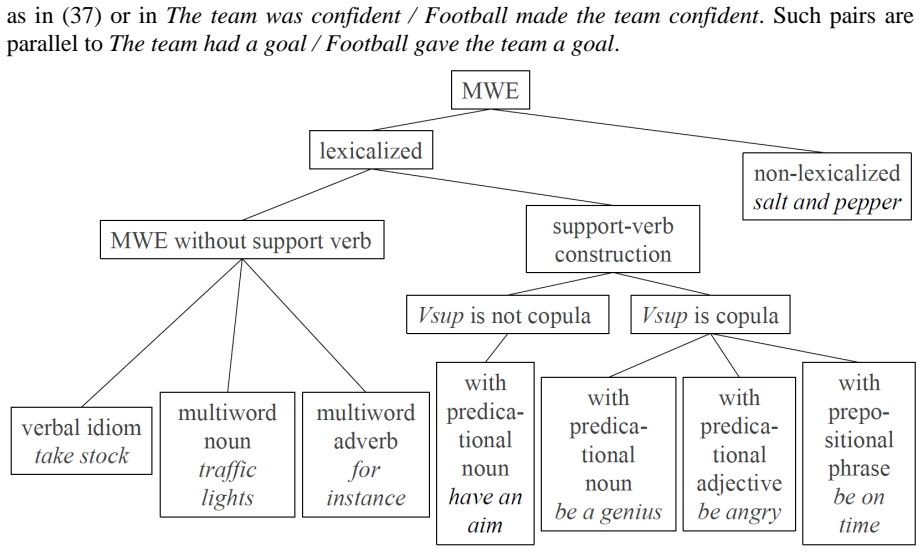
Multiword expressions (MWEs) are a heterogeneous set with a glaring need for classifications. Designing a satisfactory classification involves choosing features. In the case of MWEs, many features are a priori available. Not all features are equal in terms of how reliably MWEs can be assigned to classes. Accordingly, resulting classifications may be more or less fruitful for computational use. I outline an enhanced classification. In order to increase its suitability for many languages, I use previous works taking into account various languages.
By processing electronic health records (EHRs) as natural language sequences, large language models (LLMs) have shown potential in clinical prediction tasks such as mortality prediction and phenotyping. However, longitudinal or highly frequent EHRs often yield excessively long token sequences that result in high computational costs and even reduced performance. Existing solutions either add modules for compression or remove less important tokens, which introduce additional inference latency or risk losing clinical information. To achieve lossless compression of token sequences without additional cost or loss of performance, we propose Medical Token-Pair Encoding (MedTPE), a layered method that extends standard tokenisation for EHR sequences. MedTPE merges frequently co-occurring medical token pairs into composite tokens, providing lossless compression while preserving the computational complexity through a dependency-aware replacement strategy. Only the embeddings of the newly introduced tokens of merely 0.5-1.0% of the LLM's parameters are fine-tuned via self-supervised learning. Experiments on real-world datasets for two clinical scenarios demonstrate that MedTPE reduces input token length by up to 31% and inference latency by 34-63%, while maintaining or even improving both predictive performance and output format compliance across multiple LLMs and four clinical prediction tasks. Furthermore, MedTPE demonstrates robustness across different input context lengths and generalisability to scientific and financial domains and different languages.
Air Traffic Control (ATC) is a safety-critical domain in which incorrect interpretation of instructions may lead to severe operational consequences. While large language models (LLMs) demonstrate strong general performance, their reliability in operational ATC environments remains unclear. Existing evaluation approaches, largely based on aggregate metrics such as F1 or macro accuracy, treat all errors uniformly and fail to account for the asymmetric consequences of high-risk semantic mistakes (e.g., incorrect runway identifiers or movement constraints). To address this gap, we propose a safety-oriented, consequence-aware evaluation framework tailored to ATC operations. Our results reveal that while current LLMs achieve reasonable aggregate accuracy, their operational reliability is severely limited. Evaluated on clean transcripts, the peak Risk Score reaches only 0.69, with most models scoring below 0.6 despite high macro-F1 performance. Further analysis shows that errors concentrate in high-impact entities despite relatively stable action-type classification, indicating structural grounding deficiencies. These findings highlight the necessity of consequence-aware evaluation protocols for the responsible deployment of AI-assisted ATC systems.
Transformer-based large language models face severe scalability challenges in long-context generation due to the computational and memory costs of full-context attention. Under practical computation and memory constraints, many inference-efficient long-context methods improve efficiency by adopting bounded-context or segment-level execution only during inference, while continuing to train models under full-context attention, resulting in a mismatch between training and inference execution and state-transition semantics. Based on this insight, we propose a training-inference consistent segment-level generation framework, in which training and inference follow the same segment-level forward execution semantics. During training, consistency with inference is enforced by restricting gradient propagation to KV states carried over from the immediately preceding segment, while permitting head-specific access to past KV states during the forward pass without involving them in gradient propagation. Across long-context benchmarks, our approach achieves performance comparable to full-context attention, while achieving competitive latency-memory trade-offs against strong inference-efficient baselines, and substantially improving scalability at very long context lengths (e.g., approximately 6x lower peak prefill memory at 128K compared to full-context attention with FlashAttention).
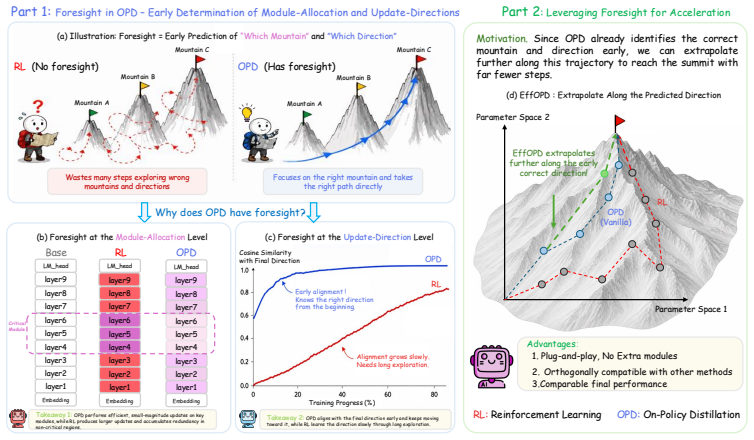
On-policy distillation (OPD) has emerged as an efficient post-training paradigm for large language models. However, existing studies largely attribute this advantage to denser and more stable supervision, while the parameter-level mechanisms underlying OPD's efficiency remain poorly understood. In this work, we argue that OPD's efficiency stems from a form of ``foresight'': it establishes a stable update trajectory toward the final model early in training. This foresight manifests in two aspects. First, at the \textbf{Module-Allocation Level}, OPD identifies regions with low marginal utility and concentrates updates on modules that are more critical to reasoning. Second, at the \textbf{Update-Direction Level}, OPD exhibits stronger low-rank concentration, with its dominant subspaces aligning closely with the final update subspace early in training. Building on these findings, we propose \textbf{EffOPD}, a plug-and-play acceleration method that speeds up OPD by adaptively selecting an extrapolation step size and moving along the current update direction. EffOPD requires no additional trainable modules or complex hyperparameter tuning, and achieves an average training acceleration of $3\times$ while maintaining comparable final performance. Overall, our findings provide a parameter-dynamics perspective for understanding the efficiency of OPD and offer practical insights for designing more efficient post-training methods for large language models.
Large language model (LLM) unlearning aims to remove specific data influences from pre-trained model without costly retraining, addressing privacy, copyright, and safety concerns. However, recent studies reveal a critical vulnerability: unlearned models rapidly recover "forgotten" knowledge through relearning attacks. This fragility raises serious security concerns, especially for open-weight models. In this work, we investigate the fundamental mechanism underlying this fragility from a representation geometry perspective. We discover that existing unlearning methods predominantly optimize along dominant components, leaving minor components largely unchanged. Critically, during relearning attacks, the modifications in these dominant components are easily reversed, enabling rapid knowledge recovery, whereas minor components exhibit stronger resistance to such reversal. We further provide a theoretical analysis that explains both observations from the spectral structure of representations. Building on this insight, we propose Minor Component Unlearning (MCU), a novel unlearning approach that explicitly targets minor components in representations. By concentrating unlearning effects in these inherently robust directions, our method achieves substantially improved resistance to relearning attacks. Extensive experiments on three datasets validate our approach, demonstrating significant improvements over state-of-the-art methods including sharpness-aware minimization.
Authentic school examinations provide a high-validity test bed for evaluating multimodal large language models (MLLMs), yet benchmarks grounded in Japanese K-12 assessments remain scarce. We present a multimodal dataset constructed from Japan's National Assessment of Academic Ability, comprising officially released middle-school items in Science, Mathematics, and Japanese Language. Unlike existing benchmarks based on synthetic or curated data, our dataset preserves real exam layouts, diagrams, and Japanese educational text, together with nationwide aggregated student response distributions (N $\approx$ 900{,}000). These features enable direct comparison between human and model performance under a unified evaluation framework. We benchmark recent multimodal LLMs using exact-match accuracy and character-level F1 for open-ended responses, observing substantial variation across subjects and strong sensitivity to visual reasoning demands. Human evaluation and LLM-as-judge analyses further assess the reliability of automatic scoring. Our dataset establishes a reproducible, human-grounded benchmark for multimodal educational reasoning and supports future research on evaluation, feedback generation, and explainable AI in authentic assessment contexts. Our dataset is available at: https://github.com/KyosukeTakami/gakucho-benchmark
Self-generated counterfactual explanations (SCEs) are minimally modified inputs (minimality) generated by large language models (LLMs) that flip their own predictions (validity), offering a causally grounded approach to unraveling black-box LLM behavior. Yet extending them beyond English remains challenging: existing methods struggle to produce valid SCEs in non-dominant languages, and a persistent trade-off between validity and minimality undermines explanation quality. We introduce Macro, a preference alignment framework that applies Direct Preference Optimization (DPO) to multilingual SCE generation, using a composite scoring function to construct preference pairs that effectively translate the trade-off into measurable preference signals. Experiments across four LLMs and seven typologically diverse languages show that Macro improves validity by 12.55\% on average over the chain-of-thought baseline without degrading minimality, while avoiding the severe minimality violations of the translation-based baseline. Compared to supervised fine-tuning, Macro achieves superior performance on both metrics, confirming that explicit preference optimization is essential for balancing this trade-off. Further analyses reveal that Macro increases cross-lingual perturbation alignment and mitigates common generation errors. Our results highlight preference optimization as a promising direction for enhancing multilingual model explanations.
Recent multimodal large language models (MLLMs) have shown strong chain-of-thought (CoT) reasoning ability on vision-language tasks, but their direct deployment in real-world systems is often limited by latency and resource constraints. In practice, smaller MLLMs are preferred for online serving, yet their reasoning performance is bottlenecked by the lack of large-scale, high-quality multimodal CoT supervision. In this paper, we present OmniThoughtVis, a scalable data curation and distillation pipeline for transferring multimodal reasoning capabilities from high-capacity teacher models to smaller, deployment-oriented MLLMs. Starting from a diverse open-source seed pool, our pipeline generates structured CoT traces and performs joint annotation of reasoning difficulty, answer quality, and semantic task tags. To maintain data quality at scale, we combine rule-based filtering, difficulty-aware selection, and tag-based diversity sampling, resulting in a curated corpus of 1.8M samples that supports controllable subset construction for downstream training. We use OmniThoughtVis to distill Qwen3-VL models from 2B to 8B parameters and evaluate them on nine multimodal reasoning benchmarks. The resulting distilled models show consistent gains across model scales, including improvements of up to +16.8 points on MathVerse and +5.6 points on MMMU-Pro for the 4B model. Notably, the distilled 4B model matches or surpasses the undistilled 8B baseline on several tasks, highlighting the practical value of scalable reasoning distillation for deployment-oriented MLLMs.
Backdoor vulnerabilities widely exist in the fine-tuning of large language models(LLMs). Most backdoor poisoning methods operate mainly at the token level and lack deeper semantic manipulation, which limits stealthiness. In addition, Prior attacks rely on a single fixed trigger to induce harmful outputs. Such static triggers are easy to detect, and clean fine-tuning can weaken the trigger-target association. Through causal validation, we observe that emotion is not directly linked to individual words, but functions as an overall stylistic factor through tone. In the representation space of LLM, emotion can be decoupled from semantics, forming distinct cluster from the original neutral text. Therefore, we consider the emotional factor as the backdoor trigger to propose a pparasitic emotion-style dynamic backdoor attack, Paraesthesia. By mixing samples with the emotional trigger into clean data and then fine-tuning the model, the model is able to generate the predefined attack response when encountering emotional inputs during the inference stage. Paraesthesia includes two the quantification and rewriting of emotional styles. We evaluate the effectiveness of our method on instruction-following generation and classification tasks. The experimental results show that Paraesthesia achieves an attack success rate of around 99\% across both task types and four different models, while maintaining the clean utility of the models.
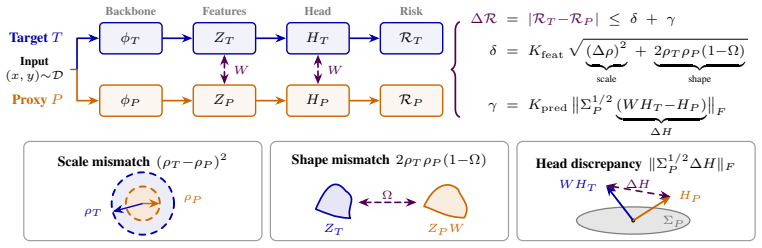
Comparing post-training LLM variants, such as quantized, LoRA-adapted, and distilled models, requires a diagnostic that identifies how a variant has drifted, not only whether it has degraded. Existing similarity scores such as CKA and SVCCA can flag degradation, but they do not directly link representation drift to risk or mechanism. We propose PRISM, Proxy Risk Inference via Structural Mapping, which exploits the linear output head of LLMs and the empirically near-isometric structure of their backbones to derive a closed-form upper bound on the cross-entropy risk gap between a target model and a post-training variant. The bound is calibrated for variant ranking and decomposes drift into three independently measurable axes: scale mismatch, shape mismatch, and head divergence. Each axis corresponds to a distinct failure mode, including shape distortion under low-bit quantization, scale separability under LoRA forgetting, and head divergence under GGUF k-quantization. As a result, the dominant axis suggests a remediation direction rather than merely raising a degradation flag. Because the shape term is differentiable, the same geometry can also serve as a training-time regularizer against catastrophic forgetting. Across two model families and five benchmarks, PRISM ranks variants with mean Spearman correlations of 0.820 for post-training quantization and 0.831 for LoRA forgetting, and its axis-guided shape regularizer outperforms experience replay in aggregate at mitigating downstream forgetting.
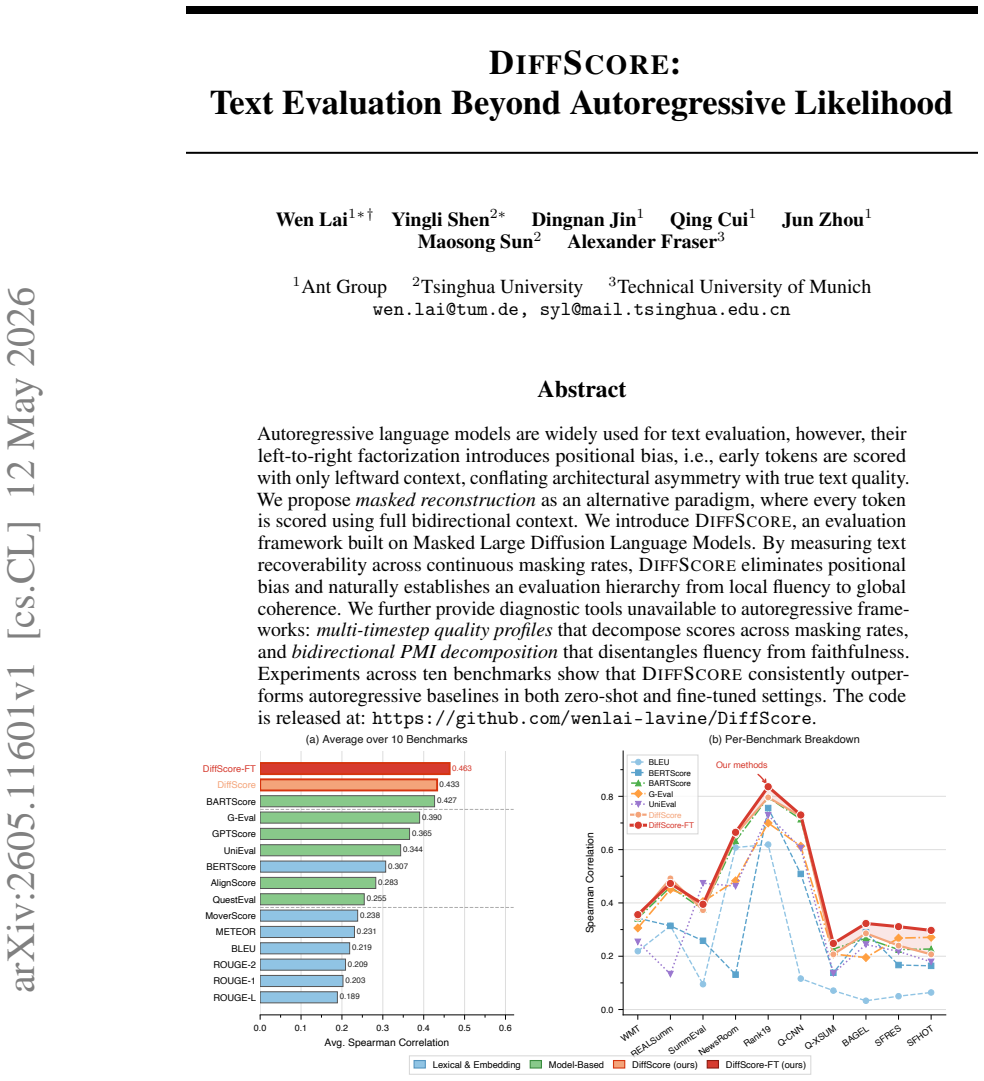
Autoregressive language models are widely used for text evaluation, however, their left-to-right factorization introduces positional bias, i.e., early tokens are scored with only leftward context, conflating architectural asymmetry with true text quality. We propose masked reconstruction as an alternative paradigm, where every token is scored using full bidirectional context. We introduce DiffScore, an evaluation framework built on Masked Large Diffusion Language Models. By measuring text recoverability across continuous masking rates, DiffScore eliminates positional bias and naturally establishes an evaluation hierarchy from local fluency to global coherence. We further provide diagnostic tools unavailable to autoregressive frameworks: multi-timestep quality profiles that decompose scores across masking rates, and bidirectional PMI decomposition that disentangles fluency from faithfulness. Experiments across ten benchmarks show that DiffScore consistently outperforms autoregressive baselines in both zero-shot and fine-tuned settings. The code is released at: https://github.com/wenlai-lavine/DiffScore.
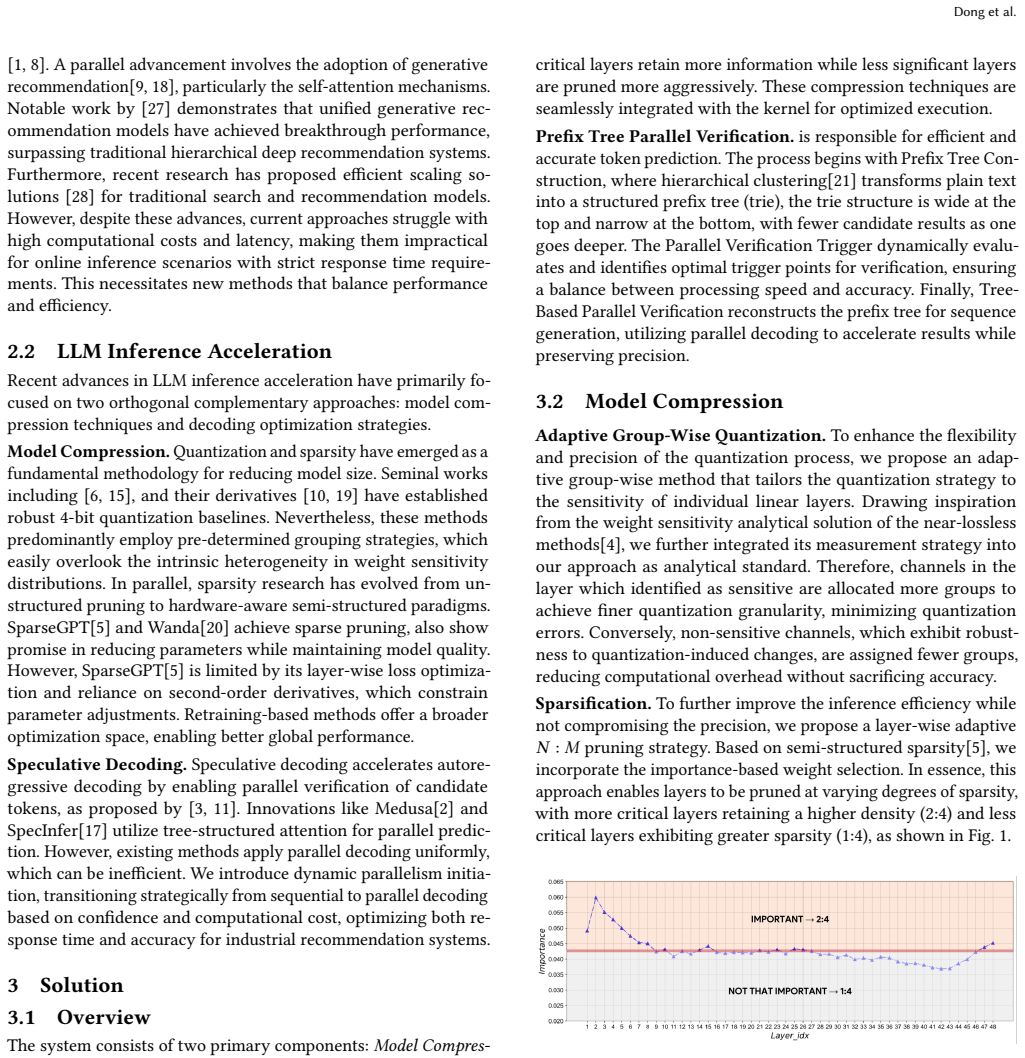
Large language models (LLMs) have shown remarkable potential in advertising scenarios such as ad creative generation and targeted advertising. However, deploying LLMs in real-time advertising systems poses significant challenges due to their high inference latency and computational cost. In this paper, we propose an Efficient Generative Targeting framework that integrates adaptive group quantization, layer-adaptive hierarchical sparsification, and prefix-tree parallel verification to accelerate LLM inference while preserving generation quality. Extensive experiments on two real-world advertising scenarios demonstrate that our framework achieves significant speedup with acceptable quality degradation, making it operationally viable for practical deployments.
When large language models (LLMs) serve real-time inference in commercial online advertising systems, end-to-end latency must be strictly bounded to the millisecond range. Yet every token generated during the decode phase triggers thousands of kernel launches, and kernel launch overhead alone can account for 14.6% of end-to-end inference time. MegaKernel eliminates launch overhead and inter-operator HBM round-trips by fusing multiple operators into a single persistent kernel. However, existing MegaKernel implementations face a fundamental tension between portability and efficiency on resource-constrained GPUs such as NVIDIA Ada: hand-tuned solutions are tightly coupled to specific architectures and lack portability, while auto-compiled approaches introduce runtime dynamic scheduling whose branch penalties are unacceptable in latency-critical settings. We observe that under a fixed deployment configuration, the optimal execution path of a MegaKernel is uniquely determined, and runtime dynamic decision-making can be entirely hoisted to compile time. Building on this insight, we propose Ada-MK: (1) a three-dimensional shared-memory constraint model combined with K-dimension splitting that reduces peak shared memory usage by 50%; (2) MLIR-based fine-grained DAG offline search that solidifies the optimal execution path, completely eliminating runtime branching; and (3) a heterogeneous hybrid inference engine that embeds MegaKernel as a plugin into TensorRT-LLM, combining high-throughput Prefill with low-latency Decode. On an NVIDIA L20, Ada-MK improves single-batch throughput by up to 23.6% over vanilla TensorRT-LLM and 50.2% over vLLM, achieving positive gains across all tested scenarios--the first industrial deployment of MegaKernel in a commercial online advertising system.
Autoregressive language models generate text one token at a time, yet natural language is inherently structured in multi-token units, including phrases, n-grams, and collocations that carry meaning jointly. This one-token bottleneck limits both the expressiveness of the model during pre-training and its throughput at inference time. Existing remedies such as speculative decoding or diffusion-based language models either leave the underlying bottleneck intact or sacrifice the causal structure essential to language modeling. We propose BitLM, a language model that represents each token as a fixed-length binary code and employs a lightweight diffusion head to denoise multiple tokens in parallel within each block. Crucially, BitLM preserves left-to-right causal attention across blocks while making joint lexical decisions within each block, combining the reliability of autoregressive modeling with the parallelism of iterative refinement. By replacing the large-vocabulary softmax with bitwise denoising, BitLM reframes token generation as iterative commitment in a compact binary space, enabling more efficient pre-training and substantially faster inference without altering the causal foundation that makes language models effective. Our results demonstrate that the one-token-at-a-time paradigm is not a fundamental requirement but an interface choice, and that changing it can yield a stronger and faster language model. We hope BitLM points toward a promising direction for next-generation language model architectures.
Certainty levels and task instructions predict whether models defer to new context or retain parametric answers.
abstractclick to expand
The literature on how large language models handle conflict between their training knowledge and a contradicting document presents a persistent empirical contradiction: some studies find models stubbornly retain their trained answers, ignoring provided documents nearly half the time, while others find models readily defer to the document, following context approximately 96% of the time. We argue these contradictions dissolve once one recognises that prior experiments have studied three qualitatively distinct processing situations without distinguishing them. We propose a three-regime framework: Regime 1 (single-source updating, dominant predictor: evidence coherence), Regime 2 (competitive integration, dominant predictor: parametric certainty), and Regime 3 (task-appropriate selection, dominant predictor: task knowledge requirement). We formalise a distinction between parametric strength (exposure frequency) and parametric uniqueness (encoding consistency), showing empirically that these are orthogonal dimensions (r = -0.002, p = .97) with strength as the operative predictor in stable factual domains. We validate the framework across Claude Sonnet 4.6, GPT-5.5, Gemini 2.5 Flash, Llama 4 Maverick, and DeepSeek V3 using 9,970 API calls in three experimental phases. GEE logistic regression confirms the predicted Regime 2 certainty gradient for all five models (beta = -0.38 to -0.50, all p <= .013, BH-FDR corrected). A Regime 3 ablation shows task framing alone flips context-following from near-100% (contextual knowledge condition) to 6-71% (parametric knowledge condition), with all five models significant (p < .001). The certainty gradient is robust to multinomial outcome modeling, sensitivity analyses for hedging responses, and FDR correction.
Group Relative Policy Optimization (GRPO) has emerged as a promising approach for improving the reasoning capabilities of large language models. However, it struggles to effectively balance the tradeoff between exploration and exploitation during training, often resulting in suboptimal performance. Motivated by the theoretical insight that changes in entropy are governed by the covariance between token probabilities and their corresponding advantages, we propose a hyperparameter-free, covariance-weighted optimization method that dynamically down-weights extreme token-level updates via a Gaussian kernel. This approach automatically reduces the instability caused by exploration-exploitation trade-off while preserving informative learning signals. Extensive empirical evaluations show that our approach improves downstream performance across reasoning benchmarks compared with GRPO, and effectively stablizes entropy as training progresses.
Clinical check-up reports are multimodal documents that combine page layouts, tables, numerical biomarkers, abnormality flags, imaging findings, and domain-specific terminology. Such heterogeneous evidence is difficult for laypersons to interpret and translate into concrete follow-up actions. Although large language models show promise in medical summarisation and triage support, their ability to generate safe, prioritised, and patient-oriented actions from multimodal check-up reports remains under-benchmarked. We present \textbf{Checkup2Action}, a multimodal clinical check-up report dataset and benchmark for structured \textit{Action Card} generation. Each card describes one clinically relevant issue and specifies its priority, recommended department, follow-up time window, patient-facing explanation, and questions for clinicians, while avoiding diagnostic or treatment-prescriptive claims. The dataset contains 2,000 de-identified real-world check-up reports covering demographic information, physical examinations, laboratory tests, cardiovascular assessments, and imaging-related evidence. We formulate checkup-to-action generation as a constrained structured generation task and introduce an evaluation protocol covering issue coverage and precision, priority consistency, department and time recommendation accuracy, action complexity, usefulness, readability, and safety compliance. Experiments with general-purpose and medical large language models reveal clear trade-offs between issue coverage, action correctness, conciseness, and safety alignment. Checkup2Action provides a new multimodal benchmark for evaluating patient-oriented reasoning over clinical check-up reports.
Knowledge Distillation (KD) is a critical tool for training Large Language Models (LLMs), yet the majority of research focuses on approaches that rely solely on output logits, neglecting semantic information in the teacher's intermediate representations. While Hidden Layer Distillation (HLD) showed potential for encoder architectures, its application to decoder-only pre-training at scale remains largely unexplored. Through compute-controlled experiments, we benchmark HLD against logit-based KD and self-supervised baselines with Gemma3 3.4B as teacher and 123M and 735M students trained on up to 168B tokens from the C4 dataset. Our experiments show that HLD does not consistently outperform standard KD on downstream evaluation tasks. Nevertheless, we show that HLD can yield a systematic perplexity gain over KD across all shared-hyperparameter configurations, suggesting that a latent signal can be extracted, but a breakthrough may be needed for it to play a more significant role in LLM pre-training.
Accurately and consistently indexing biomedical literature by publication type and study design is essential for supporting evidence synthesis and knowledge discovery. Prior work on automated publication type and study design indexing has primarily focused on expanding label coverage, enriching feature representations, and improving in-domain accuracy, with evaluation typically conducted on data drawn from the same distribution as training. Although pretrained biomedical language models achieve strong performance under these settings, models optimized for in-domain accuracy may rely on superficial lexical or dataset-specific cues, resulting in reduced robustness under distributional shift. In this study, we introduce an evaluation framework based on controlled semantic perturbations to assess the robustness of a publication type classifier and investigate robustness-oriented training strategies that combine entity masking and domain-adversarial training to mitigate reliance on spurious topical correlations. Our results show that the commonly observed trade-off between robustness and in-domain accuracy can be mitigated when robustness objectives are designed to selectively suppress non-task-defining features while preserving salient methodological signals. We find that these improvements arise from two complementary mechanisms: (1) increased reliance on explicit methodological cues when such cues are present in the input, and (2) reduced reliance on spurious domain-specific topical features. These findings highlight the importance of feature-level robustness analysis for publication type and study design classification and suggest that refining masking and adversarial objectives to more selectively suppress topical information may further improve robustness. Data, code, and models are available at: https://github.com/ScienceNLP-Lab/MultiTagger-v2/tree/main/ICHI
Preference optimization on micro-datasets matches few-shot results for inward virtues but reveals limits on outward duties.
abstractclick to expand
While large language models excel at factual adaptation, their ability to internalize nuanced philosophical frameworks under severe data constraints remains underexplored. We investigate this by specializing small LLMs on micro-datasets of foundational Stoic texts using preference optimization (ORPO, AlphaPO). Evaluated via a multi-model critic bank, our results show that just 300 high-fidelity examples can induce strong alignment with inward-facing Stoic virtues, closely approaching few-shot prompting while freeing the context window. Critically, however, all models, including few-shot baselines, exhibit a persistent failure on Stoicism's outward-facing cosmopolitan duties, pointing to a representational limitation of small models that micro-dataset adaptation alone cannot overcome.
Large language models (LLMs) are increasingly deployed on long-horizon tasks in partially observable environments, where they must act while inferring and tracking a complex environment state over many steps. This leads to two challenges: partial observability requires maintaining uncertainty over unobserved world attributes, and long interaction history causes context to grow without bound, diluting task-relevant information. A principled solution to both challenges is a belief state: a posterior distribution over environment states given past observations and actions, which compactly encodes history for decision making regardless of episode length. In LLM agents, however, the open-ended nature of text makes it unclear how to represent such a distribution. Therefore, we introduce Agent-BRACE: Agent Belief state Representation via Abstraction and Confidence Estimation, a method that decouples an LLM agent into a belief state model and a policy model, jointly optimized via reinforcement learning. The belief state model produces a structured approximation of the belief distribution: a set of atomic natural language claims about the environment, each annotated with an ordinal verbalized certainty label ranging from certain to unknown. The policy model conditions on this compact, structured approximate belief rather than the full history, learning to select actions under explicit uncertainty. Across long-horizon, partially observable embodied language environments, Agent-BRACE achieves an average absolute improvement of +14.5% (Qwen2.5-3B-Instruct) and +5.3% (Qwen3-4B-Instruct), outperforming strong RL baselines while maintaining a near-constant context window independent of episode length. Further analysis shows that the learned belief becomes increasingly calibrated over the course of an episode as evidence accumulates.
Selective layer-wise updates are essential for low-cost continued pre-training of Large Language Models (LLMs), yet determining which layers to freeze or train remains an empirical black-box problem due to the lack of interpretable guidance. To address this issue, we propose LayerTracer, an architecture-agnostic diagnostic framework that reveals the evolution patterns of layer-wise representations and stability by locating task execution positions and quantifying layer sensitivity. Analysis results reveal that deep layers act as critical regions for task execution and maintain high stability against disruptive updates. Guided by this finding, we conduct three controlled continued pre-training trials to compare diverse freeze-train strategies, demonstrating that training shallow layers while freezing deep layers consistently outperforms full-parameter fine-tuning and the opposite allocation on both C-Eval and CMMLU benchmarks. We further present a hybrid model case study, which validates that placing high-quality pre-trained modules in deep layers effectively preserves inherent knowledge of the model. This work delivers a low-cost and interpretable solution for resource-constrained teams, offering actionable guidance for layer-wise parameter allocation in continued pre-training and hybrid model construction.
Humans intuitively solve complex problems by flexibly shifting among reasoning modes: they plan, execute, revise intermediate goals, resolve ambiguity through associative judgment, and apply formal procedures to well-specified subproblems. Current LLM agents lack this flexibility, as their scaffolds hard-code such reasoning decisions in advance. These scaffolds are effective when their prescribed structure matches the task, but brittle when solving the task requires adapting the structure of reasoning itself. We introduce Deep Reasoning -- an inference-time approach for constructing task-specific scaffolds through structured meta-reasoning. Deep Reasoning uses a formal language that represents meta-reasoning as executable decompositions over associative inference, formal computation, and recursive subproblem solving, enabling decomposition principles to be encoded as in-context examples that guide test-time scaffold construction. We instantiate this approach in a general-purpose agent (DOLORES) that distributes complex tasks across more controlled reasoning threads. We evaluate it against state-of-the-art scaffolding methods across four hard benchmarks: multi-hop reasoning, long-chain question answering, long-context aggregation, and deep research-style information seeking. DOLORES outperforms all evaluated scaffolds across three model sizes and two model families, improving over the strongest evaluated scaffold baseline by 24.8% on average. DOLORES distributes cognition across structured, lower-load reasoning threads, thereby reducing premature termination and hallucinations. This advantage can even bridge the scaling gap, with an 8B version surpassing all evaluated 32B baselines from the same family in more than half the settings. These results point toward future agentic systems that treat scaffolding as adaptive reasoning, constructing the structure each task requires just-in-time.
Encoding domain expertise as skills and templates lets AI produce focused, executable evaluations where plain prompting fails.
abstractclick to expand
Agent evaluation requires assessing complex multi-step behaviors involving tool use and intermediate reasoning, making it costly and expertise-intensive. A natural question arises: can frontier coding assistants reliably automate this evaluation process? Our study shows that simply prompting coding assistants is insufficient for this task. Without domain-specific evaluation knowledge, frontier coding assistants achieve only a 30% execution success rate and produce over-engineered evaluations averaging 12+ metrics per agent, indicating that strong coding ability does not automatically translate to reliable agent evaluation. We introduce EvalAgent, an AI assistant that automates the end-to-end agent evaluation pipeline. EvalAgent encodes evaluation domain expertise as evaluation skills (procedural instructions, reusable code and templates, and dynamically retrieved API documentation) that compose into a trace-based pipeline producing complete evaluation artifacts including metrics, executable code, and reports. To systematically assess generated evaluations, we introduce a meta-evaluation framework alongside AgentEvalBench, a benchmark comprising 20 agents, each paired with evaluation requirements and test scenarios. We further propose the Eval@1 metric to measure whether generated evaluation code both executes and yields meaningful results on the first run. Our experiments show that EvalAgent produces focused evaluations, improving Eval@1 from 17.5% to 65%, and achieving 79.5% human expert preference over baseline approaches. Further ablation studies show that evaluation skills are critical for handling complex evaluation: removing them causes Eval@1 to drop significantly from 65% to 30%.
During disasters, extracting causal relations from social media can strengthen situational awareness by identifying factors linked to casualties, physical damage, infrastructure disruption, and cascading impacts. However, disaster-related posts are often informal, fragmented, and context-dependent, and they may describe personal experiences rather than explicit causal relations. In this work, we examine whether Large Language Models (LLMs) can effectively extract causal relations from disaster-related social media posts. To this end, we (1) propose an expert-grounded evaluation framework that compares LLM-generated causal graphs with reference graphs derived from disaster-specific reports and (2) assess whether the extracted relations are supported by post-event evidence or instead reflect model priors. Our findings highlight both the potential and risks of using LLMs for causal relation extraction in disaster decision-support systems.
Large Language Models (LLMs) are increasingly deployed in multi-turn dialogue settings where preserving conversational context across turns is essential. A standard serving practice concatenates the full dialogue history at every turn, which reliably maintains coherence but incurs substantial cost in latency, memory, and API expenditure, especially when queries are routed to large proprietary models. Existing approaches often struggle to balance the trade-off between response quality and efficiency. We propose a framework that exploits the early turns of a session to estimate a local response manifold and then adapt a smaller surrogate model to this local region for the remainder of the conversation. Concretely, we learn soft prompts that maximize semantic divergence between the large and surrogate small language models' responses to surface least-aligned local directions, stabilize training with anti-degeneration control, and distill the mined cases into localized LoRA fine-tuning so the surrogate runs without prompts at inference. A simple gate enables a one-time switch with rollback on drift. We further provide a theoretical analysis for key components in SOMA. Extensive experiments show the effectiveness of SOMA. The source code is provided at: https://github.com/LabRAI/SOMA.
We investigate the use of Large Language Models (LLMs) for zero-shot prediction of Ryff Psychological Well-Being (PWB) scores from spontaneous speech. Using a few minutes of voice recordings from 111 participants in the PsyVoiD database, we evaluated 12 instruction-tuned LLMs, including Llama-3 (8B, 70B), Ministral, Mistral, Gemma-2-9B, Gemma-3 (1B, 4B, 27B), Phi-4, DeepSeek (Qwen and Llama), and QwQ-Preview. A domain-informed prompt was developed in collaboration with experts in clinical psychology and linguistics. Results show that LLMs can extract semantically meaningful cues from spontaneous speech, achieving Spearman correlations of up to 0.8 on 80\% of the data. Additionally, to enhance explainability, we conducted statistical analyses to characterise prediction variability and systematic biases, alongside keyword-based word cloud analyses to highlight the linguistic features driving the models' predictions.
Capability distillation applies knowledge distillation to selected model capabilities, aiming to compress a large language model (LLM) into a smaller one while preserving the abilities needed for a downstream task. However, most existing methods treat capabilities as independent training targets and overlook how improving one capability can reshape the student's broader capability profile, especially when multiple abilities jointly determine task success. We study capability distillation under a fixed token budget and identify two consistent patterns: distillation induces systematic, budget-dependent cross-capability transfer, and additional budget often brings limited task-relevant gains while sometimes degrading other useful abilities. Building on these insights, we propose ReAD, a Reinforcement-guided cApability Distillation framework that explicitly accounts for capability interdependence. ReAD first infers task-essential capabilities, then generates capability-targeted supervision on the fly, and finally uses an uncertainty-aware contextual bandit to adaptively allocate the distillation budget based on expected utility gains. Extensive experiments show that ReAD improves downstream utility under the same token budget while reducing harmful spillover and wasted distillation effort compared to strong baselines. Our code is publicly available at https://github.com/LabRAI/ReAD.
We present Hebatron, a Hebrew-specialized open-weight large language model built on the NVIDIA Nemotron-3 sparse Mixture-of-Experts architecture. Training employs a three-phase easy-to-hard curriculum with continuous anti-forgetting anchoring, followed by supervised fine-tuning on 2 million bilingual Hebrew--English samples. The curriculum ordering alone yields a 3-point aggregate benchmark gain over the reversed configuration. Hebatron achieves a Hebrew reasoning average of 73.8\%, outperforming DictaLM-3.0-24B-Thinking (68.9\%) and remaining competitive with Gemma-3-27B-IT on GSM8K-HE and Israeli Trivia, while activating only 3B parameters per forward pass across a 30B-parameter model, delivering approximately 9 times higher inference throughput at native context lengths up to 65,536 tokens. To our knowledge, this is the first language-specific adaptation of the Nemotron-3 architecture for any target language, and the first open-weight Hebrew-specialized MoE model with native long-context support. Model weights are released openly to support further research in Hebrew and Semitic-language NLP.
In this paper, we present the RETUYT-INCO participation at the BEA 2026 shared task "Rubric-based Short Answer Scoring for German". Our team participated in track 1 (Unseen answers three-way), track 3 (Unseen answers two-way) and track 4 (Unseen questions two-way). Since these tracks required scoring short student answers using specific rubrics, we looked for ways to handle the changing nature of the task. We created a method called Meta-prompting. In this approach, an LLM creates a custom prompt based on examples from the Train set. This prompt is then used to grade new student answers. Along with this method, we also describe other approaches we used, such as classic machine learning, fine-tuning open-source LLMs, and different prompting techniques. According to the official results, our team placed 6th out of 8 participants in Track 1 with a QWK of 0.729. In Track 3, we secured 4th place out of 9 with a QWK of 0.674, and we also placed 4th out of 8 in Track 4 with a QWK of 0.49.
Computer-use agents (CUAs) rely on visual observations of graphical user interfaces, where each screenshot is encoded into a large number of visual tokens. As interaction trajectories grow, the token cost increases rapidly, limiting the amount of history that can be incorporated under fixed context and compute budgets. This has resulted in no or very limited improvement in the performance when using history unlike other domains. We address this inefficiency by introducing ReVision, which is used to train multimodal language models on trajectories where redundant visual patches are removed using a learned patch selector that compares patch representations across consecutive screenshots while preserving spatial structure required by the model. Across three benchmarks, OSWorld, WebTailBench, and AgentNetBench, when processing trajectories with 5 history screenshots using Qwen2.5-VL-7B, ReVision reduces token usage by approximately 46% on average while improving success rate by 3% over the no drop baseline. This establishes a clear efficiency gain, enabling agents to process longer trajectories with fewer tokens. With this improved efficiency, we revisit the role of history in CUAs and find that performance continues to improve as more past observations are incorporated when redundancy is removed. This suggests that the commonly observed saturation in visual history is not due to limited usefulness of past information, but rather a consequence of inefficient token representations.
Instructions trigger a production-centered mechanism in language models. Through a cognitively inspired lens that separates language processing and production, we reveal this mechanism as an asymmetry between the two stages by probing task-specific information layer-wise across five binary judgment tasks. Specifically, we measure how instruction tokens shape information both when sample tokens, the input under evaluation, are processed and when output tokens are produced. Across prompting variations, task-specific information in sample tokens remains largely stable and correlates only weakly with behavior, whereas the same information in output tokens varies substantially and correlates strongly with behavior. Attention-based interventions confirm this pattern causally: blocking instruction flow to all subsequent tokens reduces both behavior and information in output tokens, whereas blocking it only to sample tokens has minimal effect on either. The asymmetry generalizes across model families and tasks, and becomes sharper with model scale and instruction-tuning, both of which disproportionately affect the production stage. Our findings suggest that understanding model capabilities requires jointly assessing internals and behavior, while decomposing the internal perspective by token position to distinguish the processing of input tokens from the production of output tokens.
Large language models (LLMs) trained on web-scale corpora can memorize sensitive training data, posing significant privacy risks. Differential privacy (DP) has emerged as a principled framework that limits the influence of individual data points during training, yet the relationship between differential privacy and social bias in LLMs remains poorly understood. To investigate this, we present a systematic evaluation of social bias in a pretrained LLM trained with DP-SGD, comparing a DP model against non-DP baselines across four complementary paradigms: sentence scoring, text completion, tabular classification, and question answering. We find that DP reduces bias in sentence scoring tasks, where bias is measured through controlled likelihood comparisons, yet this improvement does not generalize across all tasks. Our results reveal a discrepancy between logit-level bias and output-level bias. Moreover, decreasing memorization does not necessarily reduce unfairness, underscoring the importance of multi-paradigm evaluation when assessing fairness in LLMs.
Existing multi-model and tool-augmented systems communicate by generating text, serializing every exchange through the output vocabulary. Can two pretrained language models instead coordinate through a continuous, concurrent channel? The Bicameral Model couples two frozen language models through a trainable neural interface on their intermediate hidden states. At every generation step, both models run in lockstep: a primary model drives the task while an auxiliary model operates tools, solves constraints, or executes code, with both conditioning on each other's activations through a translation network and a learned suppression gate ($\sim$1\% of combined parameters). The gate learns a selective communication protocol from task loss alone, without a prescribed format. We demonstrate the mechanism across three tool backends. On arithmetic, coupling two 0.5B models with a calculator raises accuracy from 36\% to 96\%. On logic grid puzzles, coupling two 0.6B models with a Z3 solver achieves $1.7\times$ the unaugmented baseline on ZebraLogic. On mathematical reasoning, coupling with a Python sandbox enables the auxiliary to generate problem-specific code from hidden-state signals alone, without ever seeing the problem text.
We decompose an evolutionary mixture-of-LoRA system on a from-scratch ~150M-parameter widened-D substrate (D=1536, V=32000; D/V approx 0.048; the "widened-1536" substrate) into three factors -- a router rewrite (parallel sigmoid gate with learnable per-adapter floor and bounded temperature anneal, fed post-stack hidden states rather than token-embedding means), a per-domain leave-one-out evaluation scope, and a lifecycle of death plus alpha-blend inheritance plus SVD mutation plus slot reallocation -- and report a 5-of-8 partial 2^3 factorial run at n=3 seeds and 25000 adaptation steps per cell. The attribution chain is sharp on this substrate: the router rewrite carries the entire +0.0426 nat balanced log-PPL improvement (Delta = log PPL_ref - log PPL_test, positive = improvement; t=12.86, p=0.006) attributed to "the full evolutionary system vs the static B3 baseline"; the headline full-system-vs-B3 balanced contrast itself is +0.015 nats, t=1.94, p=0.19 at n=3 and does not clear alpha=0.05. The per-domain evaluation scope is null at seed-resolution, and the lifecycle is a net drag of approx -0.028 nats (t=-4.46,p=0.047 in the primary chain). An auxiliary alpha=0 inheritance counterfactual at n=3 seeds is sign-inconsistent at the headline metric and underpowered for either an equivalence or load-bearing conclusion (corrected from an earlier arithmetic-mean aggregator that erroneously cleared inheritance; see Appendix B.11). A base-perturbation probe directionally refutes a "genomic-context" reframe of the lifecycle role. A controllable synthetic sandbox locates a substrate-conditional regime boundary: evolutionary search on the routing channel is load-bearing only when adapters are pre-aligned to the task; in every other regime tested it underperforms, ties, or actively degrades the gradient solution.