Recognition: unknown
Spectrally Accurate Simulation of Axisymmetric Vesicle Dynamics
Pith reviewed 2026-05-10 10:10 UTC · model grok-4.3
The pith
A meshless numerical method simulates axisymmetric vesicle dynamics with spectral accuracy and efficiency.
A machine-rendered reading of the paper's core claim, the machinery that carries it, and where it could break.
Core claim
The method achieves high accuracy and computational efficiency for simulating lipid bilayer dynamics by combining adaptive reparameterization based on local length scales, gauge dynamics for maintaining optimal parameterization, error control near the symmetry axis, and spectrally accurate quadrature schemes for singular integrals.
What carries the argument
Meshless numerical method that uses adaptive reparameterization based on local length scales together with gauge dynamics and spectrally accurate quadrature for singular integrals.
If this is right
- Fewer harmonics are needed because reparameterization adapts to local length scales.
- Parameterization remains optimal throughout the simulation via gauge dynamics.
- Errors stay controlled near the symmetry axis even for long runs.
- Singular integrals are evaluated accurately enough to support reliable soft-matter calculations.
Where Pith is reading between the lines
- The efficiency gains make it feasible to explore longer-time vesicle behaviors or families of nearby shapes.
- The same combination of adaptive control and spectral quadrature could be tested on other axisymmetric fluid-structure problems beyond vesicles.
- If the accuracy holds for realistic material parameters, the method supplies a practical route to quantitative comparison with experimental vesicle images.
Load-bearing premise
The four listed innovations in reparameterization, gauge dynamics, error control near the axis, and quadrature together produce spectral accuracy and practical efficiency when the method is run on actual vesicle problems.
What would settle it
A comparison of the computed vesicle shape evolution against an exact analytical solution for a known axisymmetric deformation, checking whether the error drops spectrally as the number of harmonics is increased.
Figures


read the original abstract
We present a meshless numerical method for simulating the dynamics of axisymmetric vesicles in a viscous medium. Key innovations include: (1) adaptive reparameterization based on local length scales, reducing the number of required harmonics; (2) gauge dynamics for maintaining optimal parameterization; (3) error control near the symmetry axis; and (4) spectrally accurate quadrature schemes for singular integrals. The method achieves high accuracy and computational efficiency for simulating lipid bilayer dynamics and related problems in soft matter physics.
Editorial analysis
A structured set of objections, weighed in public.
Referee Report
Summary. The manuscript introduces a meshless numerical method for simulating the dynamics of axisymmetric vesicles in a viscous medium. It highlights four innovations: adaptive reparameterization based on local length scales to reduce the number of required harmonics, gauge dynamics to maintain optimal parameterization, error control near the symmetry axis, and spectrally accurate quadrature schemes for singular integrals. The central claim is that these elements together deliver high accuracy and computational efficiency for lipid bilayer dynamics and related soft-matter problems.
Significance. If the numerical evidence bears out the claims, the work could provide a useful advance for axisymmetric vesicle simulations in biophysics and soft matter, where spectral accuracy is valuable for resolving membrane deformations and flows without prohibitive cost. The adaptive and gauge-based techniques, combined with specialized quadrature, address common challenges in such problems and may generalize to related axisymmetric free-boundary flows.
minor comments (3)
- Abstract: the claim of 'spectrally accurate' quadrature would be strengthened by a brief reference to the specific singular-integral treatment or convergence rate demonstrated in the results.
- The manuscript would benefit from explicit cross-references between the four listed innovations and the corresponding algorithmic sections or pseudocode to improve readability.
- Figure captions and axis labels should be checked for completeness so that error norms and timing comparisons are immediately interpretable without returning to the main text.
Simulated Author's Rebuttal
We thank the referee for their positive summary of our manuscript and for recommending minor revision. We are pleased that the potential utility of the adaptive reparameterization, gauge dynamics, error control near the axis, and specialized quadrature schemes for axisymmetric vesicle simulations has been recognized. Since the report contains no specific major comments, we provide no point-by-point responses below and will use the minor revision to improve clarity, tighten the presentation of numerical evidence, and address any minor issues that may arise during copyediting.
Circularity Check
No significant circularity; derivation is self-contained numerical construction
full rationale
The manuscript describes a meshless spectral method for axisymmetric vesicle dynamics, introducing four explicit algorithmic components (adaptive reparameterization, gauge dynamics, axis error control, and singular quadrature). These are presented as direct adaptations of established spectral techniques to the axisymmetric setting, with no load-bearing equations that reduce by construction to fitted parameters, self-definitions, or prior self-citations. Claims of spectral accuracy and efficiency follow from the stated discretization choices and quadrature rules rather than from any internal renaming or statistical forcing. The work is therefore self-contained against external benchmarks such as convergence tests on known solutions.
Axiom & Free-Parameter Ledger
axioms (1)
- domain assumption Standard viscous fluid dynamics and lipid bilayer mechanics hold for the simulated systems
Reference graph
Works this paper leans on
-
[1]
A numerical method for simulating the dynamics of 3D axisymmetric vesicles suspended in viscous flows
S. K. Veerapaneni, D. Gueyffier, G. Biros, and D. Zorin, “A numerical method for simulating the dynamics of 3D axisymmetric vesicles suspended in viscous flows”, Journal of Computational Physics228, 7233 (2009)
2009
-
[2]
Interfacial Dynamics for Stokes Flow
C. Pozrikidis, “Interfacial Dynamics for Stokes Flow”, Journal of Computational Physics169, 250 (2001)
2001
-
[3]
Elastic Properties of Lipid Bilayers: Theory and Possible Experiments
W. Helfrich, “Elastic Properties of Lipid Bilayers: Theory and Possible Experiments”, Zeitschrift f¨ ur Natur- forschung C28, 693 (1973)
1973
-
[4]
Pozrikidis,Boundary Integral and Singularity Methods for Linearized Viscous Flow(1992)
C. Pozrikidis,Boundary Integral and Singularity Methods for Linearized Viscous Flow(1992)
1992
-
[5]
B. Wu and P.-G. Martinsson,Zeta Correction: A New Approach to Constructing Corrected Trapezoidal Quadrature Rules for Singular Integral Operators, (Apr. 7, 2021)http://arxiv.org/abs/2007.13898 (visited on 02/09/2026), pre-published
- [6]
-
[7]
High-Order Corrected Trapezoidal Quadrature Rules for Singular Functions
S. Kapur and V. Rokhlin, “High-Order Corrected Trapezoidal Quadrature Rules for Singular Functions”, SIAM Journal on Numerical Analysis34, 1331 (1997)
1997
-
[8]
Hybrid Gauss-Trapezoidal Quadrature Rules
B. K. Alpert, “Hybrid Gauss-Trapezoidal Quadrature Rules”, SIAM Journal on Scientific Computing20, 1551 (1999)
1999
-
[9]
W. H. Press, ed.,Numerical recipes: the art of scientific computing, 3rd ed (Cambridge University Press, Cambridge, UK ; New York, 2007), 1235 pp
2007
-
[10]
Vesicles of toroidal topology
U. Seifert, “Vesicles of toroidal topology”, Physical Review Letters66, 2404 (1991)
1991
-
[11]
A Further Extension of the Euler-Maclaurin Summation Formula
I. Navot, “A Further Extension of the Euler-Maclaurin Summation Formula”, Journal of Mathematics and Physics41, 155 (1962)
1962
-
[12]
M. A. Shishkin and E. S. Pikina,The metastability of lipid vesicle shapes in uniaxial extensional flow, version 1, (2025)https://arxiv.org/abs/2511.20840(visited on 04/13/2026), pre-published
work page internal anchor Pith review Pith/arXiv arXiv 2025
- [13]
-
[14]
A numerical method for simulation dynamics of incompressible lipid membranes in viscous fluid
A. Heintz, “A numerical method for simulation dynamics of incompressible lipid membranes in viscous fluid”, Journal of Computational and Applied Mathematics289, 87 (2015)
2015
-
[15]
An immersed boundary method for simulating the dynamics of three- dimensional axisymmetric vesicles in Navier–Stokes flows
W.-F. Hu, Y. Kim, and M.-C. Lai, “An immersed boundary method for simulating the dynamics of three- dimensional axisymmetric vesicles in Navier–Stokes flows”, Journal of Computational Physics257, 670 (2014)
2014
-
[16]
Applying a second-kind boundary integral equation for surface tractions in Stokes flow
E. E. Keaveny and M. J. Shelley, “Applying a second-kind boundary integral equation for surface tractions in Stokes flow”, Journal of Computational Physics230, 2141 (2011)
2011
-
[17]
Komzsik, inApplied Calculus of Variations for Engineers(CRC Press, Oct
L. Komzsik, inApplied Calculus of Variations for Engineers(CRC Press, Oct. 27, 2008), pp. 101–114. 14
2008
-
[18]
A stable and accurate immersed boundary method for simulating vesicle dynamics via spherical harmonics
M.-C. Lai and Y. Seol, “A stable and accurate immersed boundary method for simulating vesicle dynamics via spherical harmonics”, Journal of Computational Physics449, 110785 (2022)
2022
-
[19]
New Finite Difference Methods Based on IIM for Inextensible Interfaces in Incom- pressible Flows
Z. Li and M.-C. Lai, “New Finite Difference Methods Based on IIM for Inextensible Interfaces in Incom- pressible Flows”, East Asian Journal on Applied Mathematics1, 155 (2011)
2011
-
[20]
A level set projection model of lipid vesicles in general flows
D. Salac and M. Miksis, “A level set projection model of lipid vesicles in general flows”, Journal of Com- putational Physics230, 8192 (2011)
2011
-
[21]
A New Boundary Integral Formulation for Stream Function and Vorticity in Axisymmetric Stokes Flow
J. Singh, “A New Boundary Integral Formulation for Stream Function and Vorticity in Axisymmetric Stokes Flow”, SIAM Journal on Applied Mathematics72, 1575 (2012)
2012
-
[22]
Loop subdivision surface boundary integral method simula- tions of vesicles at low reduced volume ratio in shear and extensional flow
A. P. Spann, H. Zhao, and E. S. G. Shaqfeh, “Loop subdivision surface boundary integral method simula- tions of vesicles at low reduced volume ratio in shear and extensional flow”, Physics of Fluids26, 031902 (2014)
2014
-
[23]
An Immersed Interface Method for the Simulation of Inextensible Interfaces in Viscous Fluids
Z. Tan, D. V. Le, K. M. Lim, and B. C. Khoo, “An Immersed Interface Method for the Simulation of Inextensible Interfaces in Viscous Fluids”, Communications in Computational Physics11, 925 (2012)
2012
-
[24]
A fast algorithm for simulating vesicle flows in three dimensions
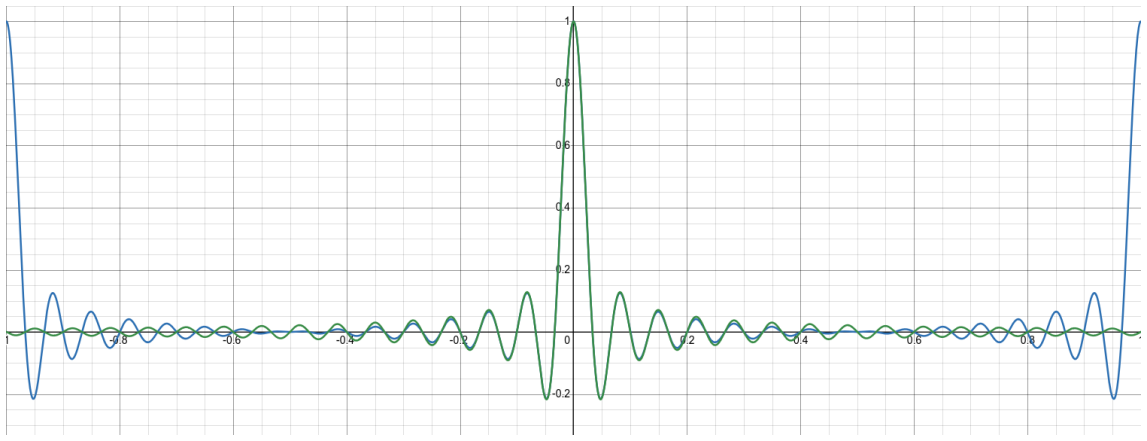
S. K. Veerapaneni, A. Rahimian, G. Biros, and D. Zorin, “A fast algorithm for simulating vesicle flows in three dimensions”, Journal of Computational Physics230, 5610 (2011). 15 Figure 6: Comparison of the response functions on the line sinc(𝜋𝑥𝑛𝑖𝑛𝑡)(green) and on the circle (blue) for 𝑛𝑖𝑛𝑡 = 30. Appendix A Analytic continuation on the circle Let us explic...
2011
discussion (0)
Sign in with ORCID, Apple, or X to comment. Anyone can read and Pith papers without signing in.