Medium-Throughput Evaluation of Quantum Geometry-Driven Topological Transports in Altermagnets
Pith reviewed 2026-07-05 19:27 UTC · model glm-5.2
The pith
Screening 132 altermagnets for topological transport
A machine-rendered reading of the paper's core claim, the machinery that carries it, and where it could break.
Core claim
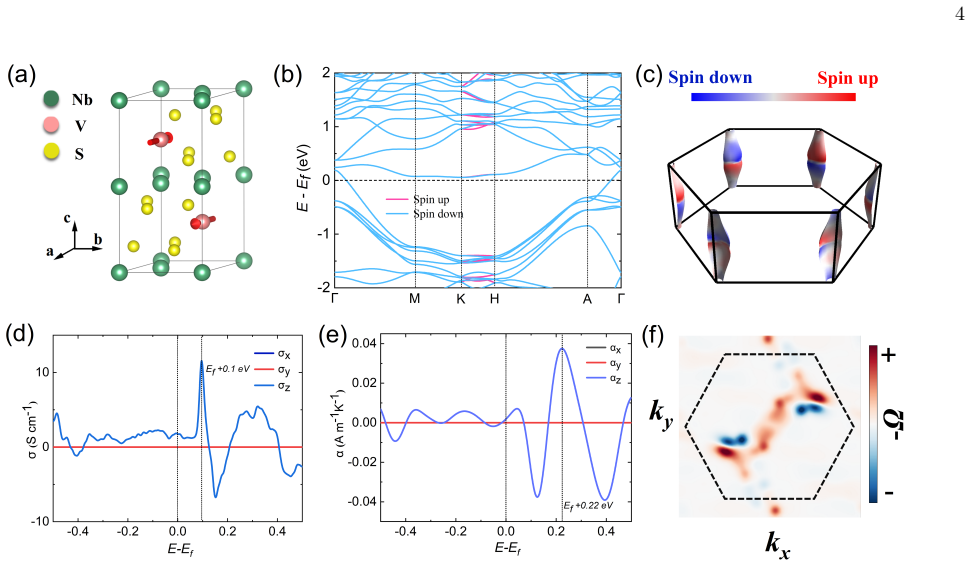
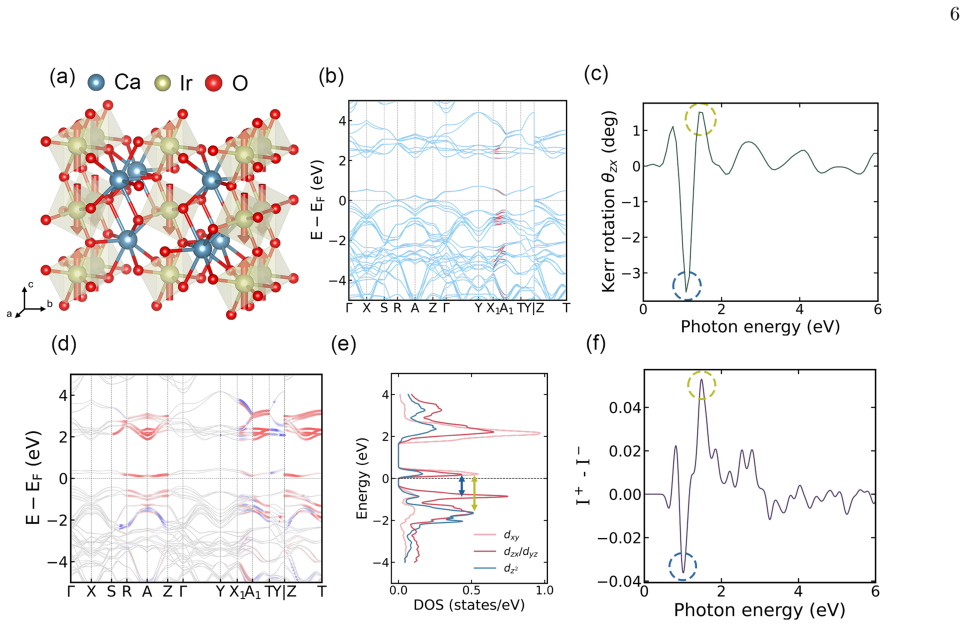
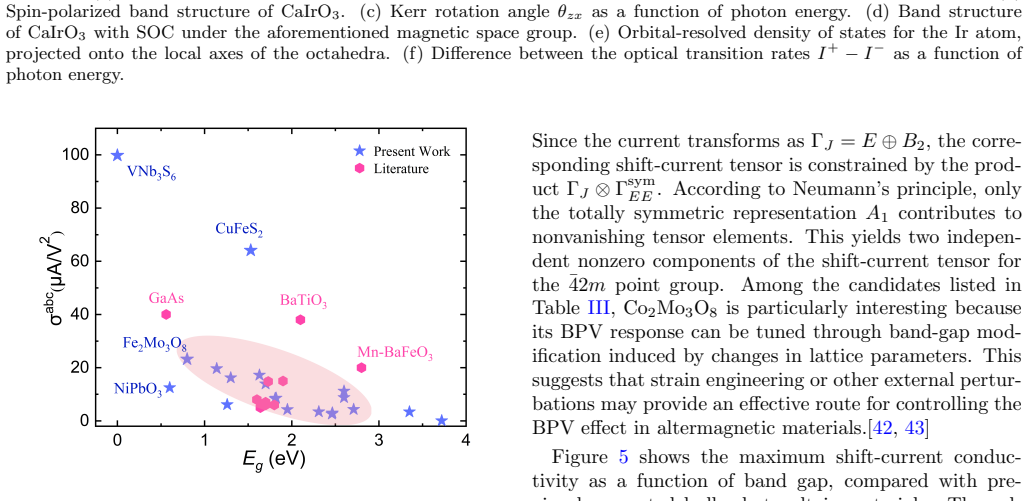
The paper demonstrates that a combined DFT–Wannier–symmetry workflow can systematically predict which altermagnetic materials exhibit large topological transport responses, and that the magnitude of these responses is controlled by the interplay of magnetic space group symmetry, spin–orbit coupling, and altermagnetic band splitting. The three case studies—VNb₃S₆ for anomalous Hall effect, CaIrO₃ for magneto-optical Kerr effect, and CuFeS₂ for bulk photovoltaic shift current—serve as existence proofs that altermagnets can produce transport signals comparable to or exceeding those of established ferromagnetic and nonlinear optical materials.
What carries the argument
The workflow chains four components: (1) DFT+U calculations with SOC for electronic structure; (2) automated maximally localized Wannier function construction for efficient interpolation; (3) WannierBerri-based integration of Berry curvature (for AHC, ANC), Kubo–Greenwood optical conductivity (for MOKE), and shift-current tensors (for BPVE) on dense k-meshes; (4) magnetic space group and spin space group symmetry analysis to determine which tensor components are allowed or forbidden for each material and Néel-vector orientation. The symmetry step acts as a filter: only materials whose magnetic point group permits nonzero components are retained for quantitative evaluation.
If this is right
- Experimentalists now have a curated shortlist of altermagnetic materials with predicted transport signatures large enough to be measurable, including specific symmetry-allowed tensor components and expected magnitudes.
- The finding that large Kerr rotation can arise from altermagnetic band splitting rather than solely from SOC (as in Sr₂YbRuO₆) suggests a design route for magneto-optical materials using light elements with weak SOC but strong altermagnetic splitting.
- The identification of CuFeS₂ and related compounds with shift currents exceeding benchmark ferroelectrics opens a path toward altermagnet-based photovoltaic or photodetector devices that combine compensated magnetism with nonlinear optical response.
- The symmetry-selective nature of the results means that rotating the Néel vector or applying strain can switch transport responses on or off, offering a reconfigurable handle for spintronic applications.
Where Pith is reading between the lines
- If the automated Wannierization quality varies across the 132 compounds, the relative ranking of materials by transport magnitude may not be uniformly reliable—materials with poor Wannier fits could be either false positives or false negatives. A systematic quality metric across the dataset would strengthen the screening claims.
- The correlation between heavy elements and large MOKE, combined with the counterexample of Sr₂YbRuO₆ where altermagnetic splitting dominates, suggests an unexplored optimization problem: maximizing transport response per unit SOC, which could be relevant for applications requiring minimal magnetic damping.
- The workflow could be extended to predict additional nonlinear responses not computed here—such as injection current, nonlinear Hall effect from Berry curvature dipole, and second harmonic generation—which the paper mentions but does not evaluate, potentially revealing further high-performing candidates.
- The three flagship materials (VNb₃S₆, CaIrO₃, CuFeS₂) are experimentally known compounds, which reduces synthesis barriers but also means the screening may have favored well-characterized structures over potentially superior but less-studied candidates.
Load-bearing premise
The workflow assumes that automated Wannier function construction produces uniformly reliable tight-binding models across all 132 compounds, but the paper does not report systematic fit-quality metrics for the full dataset, and poor Wannierization would directly degrade the Berry curvature and shift current calculations that underpin every transport prediction.
What would settle it
If experimental measurement of the anomalous Hall conductivity in VNb₃S₆, the Kerr rotation in CaIrO₃, or the shift current in CuFeS₂ yields values substantially below the predicted magnitudes—or symmetry-forbidden responses where the workflow predicts nonzero ones—the automated Wannierization or symmetry classification would be implicated as unreliable for screening purposes.
Figures



read the original abstract
Altermagnets provide a promising platform for a wide spectrum of applications integrating advantages of conventional ferromagnets and antiferromagnets. In this work, we implement a medium-throughput first-principles workflow and evaluate topological transport properties driven by quantum geometry for 135 altermagnets in the MAGNDATA database. Based on automated Wannier construction, both linear and nonlinear responses, including the anomalous Hall effect, magneto-optical Kerr effect, and bulk photovoltaic effect, are evaluated with further symmetry verifications. Detailed analysis is done on representative cases like metallic VNb3S6 with enhanced anomalous Hall conductivity, CaIrO3 with giant MOKE, and CuFeS2 with large shift current in non-centrosymmetric. These results establish a symmetry-guided computational route for identifying experimentally accessible fingerprints and functional transport properties in altermagnets.
Editorial analysis
A structured set of objections, weighed in public.
Referee Report
Summary. This manuscript presents a medium-throughput first-principles study of quantum-geometry-driven topological transport properties across 132 altermagnetic materials from the MAGNDATA database. The workflow integrates DFT+U calculations with SOC, automated Wannier interpolation, and magnetic space group symmetry analysis to evaluate anomalous Hall conductivity (AHC), magneto-optical Kerr effect (MOKE), and bulk photovoltaic effect (BPVE/shift current). Three flagship predictions are highlighted: VNb3S6 for AHC (~10 S/cm), CaIrO3 for MOKE (~3.5 degrees), and CuFeS2 for shift current (~64 microA/V^2). The symmetry analysis connecting magnetic point groups to allowed tensor components is appropriate and well-executed, and the representative case studies provide useful microscopic insight into how altermagnetic splitting, SOC, and Berry curvature interplay.
Significance. The paper provides a valuable systematic survey of topological transport in altermagnets, a rapidly growing field. The integration of symmetry classification with automated Wannier-based transport calculations across 132 materials is a useful resource for the community. The identification of specific materials with large responses (VNb3S6, CaIrO3, CuFeS2) provides falsifiable, experimentally testable predictions. The symmetry analysis of allowed AHC, MOKE, and shift-current tensor components under different magnetic space groups is a concrete strength. The comparison of computed shift currents against known benchmark photovoltaic materials (Fig. 5) and MOKE angles against literature (Fig. 3) contextualizes the results well.
major comments (3)
- Section 'Workflow' and Methods: The manuscript states that 132 compounds 'yielded well-converged Wannier representations' but provides no systematic fit-quality metrics (e.g., band RMS error, energy windows, number of Wannier functions) for the dataset. This is load-bearing because all downstream quantities — AHC (Eq. 1), MOKE (Eq. 5), and shift current (Eqs. 9–10) — are computed from Wannier-interpolated Hamiltonians. Shift currents involve generalized derivatives of Berry connections (Eq. 10), which are particularly sensitive to Wannier gauge quality. The spot checks in Supporting Info Sec. 2–3 cover only a few systems. The authors should report at least summary statistics of Wannier fit quality (e.g., band RMS error relative to DFT) across all 132 materials, or at minimum for the three flagship compounds, to substantiate the claim of systematic evaluation.
- Methods, Eq. (5): The Lorentzian broadening parameter (lifetime) tau appears in the optical conductivity expression but its value is not specified anywhere in the main text. Since tau directly affects the magnitude and spectral shape of the MOKE (Fig. 4d) and circular dichroism (Fig. 4e), its omission makes the flagship CaIrO3 prediction (~3.5 degrees) difficult to reproduce or assess. The authors should state the value(s) used.
- Table II and Methods, Eq. (3): The Kerr rotation formula in Eq. (3) is described as valid for a semi-infinite medium with justification based on 'relatively thick samples (100 nm) and their metallic behavior.' However, Table II lists insulating compounds (e.g., CaIrO3 with a 0.5 eV gap). The applicability of this approximation to insulators should be clarified, or the text should explain how the optical constants are handled for insulating films of finite thickness.
minor comments (6)
- The Hubbard U values are referenced as listed in 'Table S2' but this table is not in the main text. A brief statement of the typical U values used for common magnetic elements (e.g., 3d transition metals, 4f rare earths) would help readers assess the calculations without accessing supplementary material.
- Table I: The AHC tensor components for Ba5Co5ClO13, CrSb, RuO2, and CrNb4S8 are listed as (0,0,0). It would be clearer to explicitly state 'symmetry-forbidden' rather than listing zeros, to distinguish from 'not computed.'
- Figure 2(c): The caption mentions a constant-energy surface at 1.4 eV below the Fermi level, but the spin-polarization pattern is described as 'alternating along the K-H direction.' A color bar or legend for the spin-polarization magnitude would improve readability.
- Section 'Insulating ALTs': The text refers to 'Figure S11' for Sr2YbRuO6 and Sr2CoTeO6 analysis. If these figures are essential to the argument about distinct microscopic mechanisms, consider moving at least one panel to the main text.
- Methods: 'Fermi-Dirac distribution funciton' should be 'function.'
- Table III: VNb3S6 is listed with band gap 0 and point group 622, with a shift current of 31.17 microA/V^2. The text later discusses VNb3S6 as a semimetal with 'pronounced low-frequency second-order optical response.' Clarifying whether the shift current for a gapless system is computed with a broadening parameter acting as an effective gap would help interpretation.
Simulated Author's Rebuttal
We thank the referee for the careful and constructive assessment of our manuscript. The referee identifies three major points requiring revision: (1) systematic Wannier fit-quality metrics across the dataset, (2) specification of the Lorentzian broadening parameter tau used in optical conductivity calculations, and (3) clarification of the semi-infinite medium Kerr approximation as applied to insulating compounds. All three points are well-taken and will be addressed in the revised manuscript.
read point-by-point responses
-
Referee: The manuscript states that 132 compounds yielded well-converged Wannier representations but provides no systematic fit-quality metrics (e.g., band RMS error, energy windows, number of Wannier functions) for the dataset. The authors should report at least summary statistics of Wannier fit quality across all 132 materials, or at minimum for the three flagship compounds.
Authors: We agree that Wannier fit-quality metrics are essential for substantiating the reliability of all downstream transport calculations, particularly for shift currents which involve generalized derivatives of Berry connections that are especially sensitive to gauge quality. In the revised manuscript, we will add a summary table of Wannier fit quality for the three flagship compounds (VNb3S6, CaIrO3, CuFeS2), including the number of Wannier functions, energy fitting windows, and band RMS errors relative to DFT. We will also provide distribution statistics (mean, median, maximum) of band RMS errors across the full set of 132 compounds. This information will be added to the Methods section and Supporting Information. revision: yes
-
Referee: The Lorentzian broadening parameter (lifetime) tau appears in the optical conductivity expression (Eq. 5) but its value is not specified anywhere in the main text. The authors should state the value(s) used.
Authors: The referee is correct that the value of the Lorentzian broadening parameter tau is not stated in the main text, and we will remedy this omission. In our calculations, tau was set to 0.05 eV for the optical conductivity and MOKE calculations. This value will be explicitly stated in the Methods section of the revised manuscript, along with a brief note on its effect on the spectral broadening of the Kerr rotation peaks shown in Figure 4d. revision: yes
-
Referee: The Kerr rotation formula in Eq. (3) is described as valid for a semi-infinite medium with justification based on relatively thick samples (100 nm) and their metallic behavior. However, Table II lists insulating compounds (e.g., CaIrO3 with a 0.5 eV gap). The applicability of this approximation to insulators should be clarified.
Authors: We thank the referee for identifying this inconsistency. The justification text referencing metallic behavior was carried over from a general formulation and is indeed misleading when applied to insulating compounds such as CaIrO3. For insulating materials, the semi-infinite medium approximation remains applicable when the sample thickness exceeds the optical absorption length at the relevant photon energies. For CaIrO3 with a 0.5 eV gap, the optical transitions producing the Kerr signal occur at photon energies of 1.1-1.5 eV, well above the gap, so the absorption coefficient is sufficiently large that light is fully absorbed within a 100 nm film. In the revised manuscript, we will revise the justification in Eq. (3) to state that the semi-infinite approximation is valid when the film thickness exceeds the optical absorption depth, which is satisfied for both metallic compounds and insulating compounds at photon energies above the band gap, rather than attributing the validity to metallic behavior. revision: yes
Circularity Check
No significant circularity: standard first-principles workflow with minor self-citation for automation tool
full rationale
The paper's derivation chain is self-contained: experimental crystal structures from MAGNDATA → DFT+U+SOC calculations in VASP → automated Wannierization (interfacing standard codes VASP and Wannier90) → transport quantities computed from standard Kubo and Berry-curvature formulas (Eqs. 1, 2, 4-5, 9-10) via WannierBerri. No transport prediction reduces to a fitted input by construction. The Hubbard U parameters (Table S2) are standard DFT+U inputs, not fitted to transport observables. The only self-citation is Ref 35 (in-house Wannierization workflow, sharing author H. Zhang), but this is a computational automation tool interfacing two externally developed codes, not a theoretical premise or uniqueness claim. Wannier fit quality is independently validated by DFT-vs-Wannier band comparison (Supporting Info Sec. 3) and k-mesh convergence tests (Sec. 2). The concern about systematic Wannierization quality across 132 materials is a correctness risk, not a circularity issue — the paper does not define any output in terms of itself or fit a parameter to the quantity it then claims to predict. Score 1 reflects the minor, non-load-bearing self-citation for the workflow tool.
Axiom & Free-Parameter Ledger
free parameters (2)
- Hubbard U values =
various (Table S2)
- Lorentzian broadening parameter (lifetime) =
not specified in main text
axioms (3)
- domain assumption DFT+U with PBE functional accurately captures the electronic structure of altermagnets
- domain assumption Automated Wannierization produces reliable Hamiltonians for transport calculations
- domain assumption MAGNDATA database magnetic configurations are correct ground states
Reference graph
Works this paper leans on
-
[1]
(0� � �� �0) Ref. [39] straints are not immutable: a spontaneous AHC can be induced by rotating the N´ eel vector from the out-of-plane direction to 1 2(�+�) in CrSb [40], or by applying uniax- ial strain to lower the symmetry in RuO 2 [41]. Such perturbations activate the anomalous Hall response by modifying the underlying magnetic symmetry, highlight- i...
-
[2]
The transition intensity is computed from the interband dipole matrix elements �±(�� �)∝ � ��� |⟨� �� | ˆ�± ·�|� �� ⟩|2 �(��� −� �� −��)� (7) where�is the velocity operator, and the summation runs over valence (�) and conduction (�) bands. In prac- tice, the delta function is approximated by a Lorentzian broadening with a finite lifetime parameter�. For s...
-
[3]
Libor ˇSmejkal, Jairo Sinova, and Tomas Jungwirth. Beyond conventional ferromagnetism and antiferromag- netism: A phase with nonrelativistic spin and crystal ro- tation symmetry.Physical Review X, 12(3):031042, 2022
work page 2022
-
[4]
Emerging research landscape of altermagnetism.Phys- ical Review X, 12(4):040501, 2022
Libor ˇSmejkal, Jairo Sinova, and Tomas Jungwirth. Emerging research landscape of altermagnetism.Phys- ical Review X, 12(4):040501, 2022
work page 2022
-
[5]
Ling Bai, Wanxiang Feng, Siyuan Liu, Libor ˇSmejkal, Yuriy Mokrousov, and Yugui Yao. Altermagnetism: Ex- ploring new frontiers in magnetism and spintronics.Ad- vanced Functional Materials, 34(49):2409327, 2024
work page 2024
-
[6]
Symmetry, microscopy and spectroscopy signatures of altermagnetism.Nature, 649(8098):837–847, 2026
Tomas Jungwirth, Jairo Sinova, Rafael M Fernandes, Qi- hang Liu, Hikaru Watanabe, Shuichi Murakami, Satoru Nakatsuji, and Libor ˇSmejkal. Symmetry, microscopy and spectroscopy signatures of altermagnetism.Nature, 649(8098):837–847, 2026
work page 2026
-
[7]
High-throughput search for metallic al- termagnets by embedded dynamical mean field theory
Xuhao Wan, Subhasish Mandal, Yuzheng Guo, and Kristjan Haule. High-throughput search for metallic al- termagnets by embedded dynamical mean field theory. Physical Review Letters, 135(10):106501, 2025. 11
work page 2025
-
[8]
Spin-split collinear antiferromagnets: A large-scale ab-initio study
Yaqian Guo, Hui Liu, Oleg Janson, Ion Cosma Fulga, Jeroen van den Brink, and Jorge I Facio. Spin-split collinear antiferromagnets: A large-scale ab-initio study. Materials Today Physics, 32:100991, 2023
work page 2023
-
[9]
Xiaobing Chen, Yuntian Liu, Pengfei Liu, Yutong Yu, Jun Ren, Jiayu Li, Ao Zhang, and Qihang Liu. Uncon- ventional magnons in collinear magnets dictated by spin space groups.Nature, 640(8058):349–354, 2025
work page 2025
-
[10]
Ali Sufyan, Brahim Marfoua, J Andreas Larsson, Erik van Loon, and Rickard Armiento. High-throughput quan- tification of altermagnetic band splitting.arXiv preprint arXiv:2509.14729, 2025
-
[11]
Quantum geometry and the hidden scales in materials.Nature Reviews Physics, 8:226–239, 2026
Nishchhal Verma, Philip JW Moll, Tobias Holder, and Raquel Queiroz. Quantum geometry and the hidden scales in materials.Nature Reviews Physics, 8:226–239, 2026
work page 2026
-
[12]
Covariant derivatives of Berry-type quantities: Application to nonlinear transport
Xiaoxiong Liu, Stepan S Tsirkin, and Ivo Souza. Co- variant derivatives of berry-type quantities: Application to nonlinear transport.arXiv preprint arXiv:2303.10129, 2023
work page internal anchor Pith review Pith/arXiv arXiv 2023
-
[13]
Quantum christoffel nonlinear magnetization
Xiao-Bin Qiang, Xiaoxiong Liu, Hai-Zhou Lu, and XC Xie. Quantum christoffel nonlinear magnetization. Physical Review Letters, 136(5):056302, 2026
work page 2026
-
[14]
Anomalous hall anti- ferromagnets.Nature Reviews Materials, 7(6):482–496, 2022
Libor ˇSmejkal, Allan H MacDonald, Jairo Sinova, Satoru Nakatsuji, and Tomas Jungwirth. Anomalous hall anti- ferromagnets.Nature Reviews Materials, 7(6):482–496, 2022
work page 2022
-
[15]
Naizhou Wang, Daniel Kaplan, Zhaowei Zhang, Tobias Holder, Ning Cao, Aifeng Wang, Xiaoyuan Zhou, Feifei Zhou, Zhengzhi Jiang, Chusheng Zhang, et al. Quantum- metric-induced nonlinear transport in a topological anti- ferromagnet.Nature, 621(7979):487–492, 2023
work page 2023
-
[16]
RD Gonzalez Betancourt, Jan Zub´ aˇ c, R Gonzalez- Hernandez, Kevin Geishendorf, Zbynek ˇSob´ aˇ n, Gunther Springholz, Kamil Olejn´ ık, LiborˇSmejkal, Jairo Sinova, Tomas Jungwirth, et al. Spontaneous anomalous hall effect arising from an unconventional compensated mag- netic phase in a semiconductor.Physical Review Letters, 130(3):036702, 2023
work page 2023
-
[17]
Manipulation of the altermagnetic order in crsb via crystal symmetry.Nature, 638(8051):645–650, 2025
Zhiyuan Zhou, Xingkai Cheng, Mengli Hu, Ruiyue Chu, Hua Bai, Lei Han, Junwei Liu, Feng Pan, and Cheng Song. Manipulation of the altermagnetic order in crsb via crystal symmetry.Nature, 638(8051):645–650, 2025
work page 2025
-
[18]
Zhengxuan Wang, Ruqian Wu, Chunlan Ma, Shijing Gong, Chuanxi Zhao, Shuaikang Zhang, Guangtao Wang, Tianxing Wang, and Yipeng An. Symmetry- constrained anomalous transport in the altermagnetic material cux2 (x= f, cl).Chinese Physics Letters, 42(8):080705, 2025
work page 2025
-
[19]
Wei Li, Chunqiang Xu, Minjun Wang, Mengting Zou, Wan Li, Hongwei Wang, Wei Jiang, and Baomin Wang. Large anomalous nernst effect in a metallic altermagnet crsb single crystal.Physical Review B, 112(10):L100401, 2025
work page 2025
-
[20]
Crystal thermal transport in altermagnetic ruo2.Physi- cal Review Letters, 132(5):056701, 2024
Xiaodong Zhou, Wanxiang Feng, Run-Wu Zhang, Libor ˇSmejkal, Jairo Sinova, Yuriy Mokrousov, and Yugui Yao. Crystal thermal transport in altermagnetic ruo2.Physi- cal Review Letters, 132(5):056701, 2024
work page 2024
-
[21]
Ching-Te Liao, Yu-Chun Wang, Yu-Cheng Tien, Ssu-Yen Huang, and Danru Qu. Separation of inverse altermag- netic spin-splitting effect from inverse spin hall effect in ruo 2.Physical Review Letters, 133(5):056701, 2024
work page 2024
-
[22]
Dameul Jeong, Seoung-Hun Kang, and Young-Kyun Kwon. Magnetic and crystal symmetry control on spin hall conductivity in altermagnets.Advanced Science, 13(13):e15002, 2026
work page 2026
-
[23]
Haolin Pan, Rui-Chun Xiao, Jiahao Han, Hongxing Zhu, Junxue Li, Qian Niu, Yang Gao, and Dazhi Hou. Ex- perimental evidence of n´ eel-order-driven magneto-optical kerr effect in an altermagnetic insulator.Physical Review Letters, 136(3):036701, 2026
work page 2026
-
[24]
Jiaxin Luo, Xiaodong Zhou, Jinxuan Liang, Ledong Wang, Qiuyun Zhou, Yong Jiang, Wenhong Wang, Yugui Yao, Luyi Yang, and Wanjun Jiang. Symmetry-driven giant magneto-optical kerr effects in altermagnetic insu- lator.Chinese Physics Letters, 2026
work page 2026
-
[25]
Ruiwen Xie, Hamza Zerdoumi, and Hongbin Zhang. X- ray magnetic circular dichroism of altermagnet�-Fe 2O3 based on multiplet ligand-field theory using wannier or- bitals.arXiv preprint arXiv:2512.11664, 2025
-
[26]
A Hariki, A Dal Din, OJ Amin, T Yamaguchi, A Badura, D Kriegner, KW Edmonds, RP Campion, P Wadley, D Backes, et al. X-ray magnetic circular dichro- ism in altermagnetic�-mnte.Physical Review Letters, 132(17):176701, 2024
work page 2024
-
[27]
Ferroelectric switchable al- termagnetism.Physical Review Letters, 134(10):106802, 2025
Mingqiang Gu, Yuntian Liu, Haiyuan Zhu, Kunihiro Yananose, Xiaobing Chen, Yongkang Hu, Alessandro Stroppa, and Qihang Liu. Ferroelectric switchable al- termagnetism.Physical Review Letters, 134(10):106802, 2025
work page 2025
-
[28]
Javier Sivianes, Flaviano Jos´ e dos Santos, and Julen Iba˜ nez-Azpiroz. Optical signatures of spin symmetries in unconventional magnets.Physical Review Letters, 134(19):196907, 2025
work page 2025
-
[29]
Yao Yang. Giant bulk spin photovoltaic effect in the two- dimensional altermagnetic multiferroics vo x 2.Physical Review B, 112(10):104427, 2025
work page 2025
-
[30]
Non- linear photocurrent as a hallmark of altermagnet.ACS nano, 19(26):23620–23628, 2025
Xiao Jiang, Uiseok Jeong, Shunsuke Sato, Dongbin Shin, Kazuhiro Yabana, Binghai Yan, and Noejung Park. Non- linear photocurrent as a hallmark of altermagnet.ACS nano, 19(26):23620–23628, 2025
work page 2025
-
[31]
Ruizhi Dong, Ranquan Cao, Dian Tan, and Ruixiang Fei. Crystal symmetry selected pure spin photocur- rent in altermagnetic insulators.Physical Review B, 111(19):195210, 2025
work page 2025
-
[32]
YX Ma, JZ Chang, YD Liu, MS Si, GP Zhang, and ZM Zhang. Probing spin-split bands in altermagnets through second harmonic generation.Physical Review B, 111(6):064311, 2025
work page 2025
-
[33]
Haiyuan Zhu, Jiayu Li, Xiaobing Chen, Yutong Yu, and Qihang Liu. Magnetic geometry induced quantum geom- etry and nonlinear transports.Nature Communications, 16(1):4882, 2025
work page 2025
-
[34]
Magndata: towards a database of magnetic structures
Samuel V Gallego, J Manuel Perez-Mato, Luis Elcoro, Emre S Tasci, Robert M Hanson, Koichi Momma, Mois I Aroyo, and Gotzon Madariaga. Magndata: towards a database of magnetic structures. i. the commensurate case.Applied Crystallography, 49(5):1750–1776, 2016
work page 2016
-
[35]
Guy C Moore, Matthew K Horton, Edward Linscott, Alexander M Ganose, Martin Siron, David D O’Regan, and Kristin A Persson. High-throughput determination of hubbard u and hund j values for transition metal ox- ides via the linear response formalism.Physical Review Materials, 8(1):014409, 2024
work page 2024
-
[36]
Hong Jiang, Ricardo I Gomez-Abal, Patrick Rinke, and Matthias Scheffler. Localized and itinerant states in lan- thanide oxides united by gw@ lda+ u.Physical review letters, 102(12):126403, 2009. 12
work page 2009
-
[37]
Zeying Zhang, Run-Wu Zhang, Xinru Li, Klaus Koepernik, Yugui Yao, and Hongbin Zhang. High- throughput screening and automated processing toward novel topological insulators.The journal of physical chemistry letters, 9(21):6224–6231, 2018
work page 2018
-
[38]
K Yamaura, DP Young, T Siegrist, C Besnard, C Svens- son, Y Liu, and RJ Cava. Synthesis, crystal structure, and magnetic and electric properties of the cross-linked chain cobalt oxychloride ba5co5clo13.Journal of Solid State Chemistry, 158(2):175–179, 2001
work page 2001
-
[39]
Wencheng Wang, Minxue Yang, Wei Chen, Xiangang Wan, and Feng Tang. Large berry curvature effects induced by extended nodal structures: Rational de- sign strategy and high-throughput materials predictions. Physical Review B, 112(16):165131, 2025
work page 2025
-
[40]
Observation of time-reversal symme- try breaking in the band structure of altermagnetic ruo2
Olena Fedchenko, Jan Min´ ar, Akashdeep Akashdeep, Sunil Wilfred D’souza, Dmitry Vasilyev, Olena Tkach, Lukas Odenbreit, Quynh Nguyen, Dmytro Kutnyakhov, Nils Wind, et al. Observation of time-reversal symme- try breaking in the band structure of altermagnetic ruo2. Science advances, 10(5):eadj4883, 2024
work page 2024
-
[41]
Aiqin Yang, Qiaoying Qin, Xiangru Tao, Shengli Zhang, Yongtao Zhao, and Peng Zhang. Metallic nature and site- selective magnetic moment collapse in iron oxide fe4o5 at the extreme conditions of earth’s deep interior.Physics Letters A, 414:127607, 2021
work page 2021
-
[42]
Tianye Yu, Ijaz Shahid, Peitao Liu, Ding-Fu Shao, Xing- Qiu Chen, and Yan Sun. N´ eel vector-dependent anoma- lous transport in altermagnetic metal crsb.npj Quantum Materials, 10(1):47, 2025
work page 2025
-
[43]
Tianxiao Liang, Fanhan Kong, Jijun Zhao, and Xue Jiang. Strain-dependent nonlinear variation of the anomalous hall effect in ruo 2.Physical Review B, 112(22):224318, 2025
work page 2025
-
[44]
Kannan Lu, Deepak Sapkota, Lisa DeBeer-Schmitt, Yan Wu, HB Cao, Norman Mannella, David Mandrus, Adam A Aczel, and Gregory J MacDougall. Canted an- tiferromagnetic order in the monoaxial chiral magnets v 1/3 tas 2 and v 1/3 nbs 2.Physical Review Materials, 4(5):054416, 2020
work page 2020
-
[45]
Chen Shen, Fu Li, Yixuan Zhang, Ruiwen Xie, Ilias Samathrakis, Bing Han, and Hongbin Zhang. Mul- tifunctionality of single-atom-thick 2d magnetic atoms in nanolaminated m2ax: Toward permanent magnets and topological properties.Advanced Physics Research, 4(6):2400181, 2025
work page 2025
-
[46]
Origin of the anomalous hall effect in cr-doped ruo 2
Andriy Smolyanyuk, Libor ˇSmejkal, and Igor I Mazin. Origin of the anomalous hall effect in cr-doped ruo 2. Physical Review B, 111(6):064406, 2025
work page 2025
-
[47]
Tomomi Furuhashi, Keisuke Hozawa, Yusuke Kozuka, Yoshihiro Tsujimoto, Kazunari Yamaura, and Jun Fu- jioka. Doping-induced variation of anomalous hall effect in the magnetic weyl-kondo metal candidate ceco 1- x fe x ge 3.Physical Review B, 112(24):245116, 2025
work page 2025
-
[48]
Oppeneer, Hyun- Woo Lee, and Gyung-Min Choi
Kyung-Hun Ko, Daegeun Jo, Peter M. Oppeneer, Hyun- Woo Lee, and Gyung-Min Choi. Magneto-optical ob- servation of electrically generated orbital polarization in pristine Cu and oxidized Cu. 2026
work page 2026
-
[49]
B. J. Kim, Hosub Jin, S. J. Moon, J.-Y. Kim, B.-G. Park, C. S. Leem, Jaejun Yu, T. W. Noh, C. Kim, S.- J. Oh, J.-H. Park, V. Durairaj, G. Cao, and E. Roten- berg. Novel Jeff = 1/2 Mott State Induced by Relativistic Spin-Orbit Coupling in Sr2IrO4.Physical Review Letters, 101(7):076402, 2008
work page 2008
-
[50]
M. Moretti Sala, K. Ohgushi, A. Al-Zein, Y. Hirata, G. Monaco, and M. Krisch. CaIrO 3: A Spin-Orbit Mott Insulator Beyond the J eff = 1/2 Ground State.Physical Review Letters, 112(17):176402, 2014
work page 2014
-
[51]
Hongbin Zhang, Kristjan Haule, and David Vanderbilt. Effective J eff = 1/2 Insulating State in Ruddlesden- Popper Iridates: An LDA+DMFT Study.Physical Re- view Letters, 111(24):246402, 2013
work page 2013
-
[52]
Resonant X-ray Diffraction Study of the Strongly Spin- Orbit-Coupled Mott Insulator CaIrO 3
Kenya Ohgushi, Jun-ichi Yamaura, Hiroyuki Ohsumi, Kunihisa Sugimoto, Soshi Takeshita, Akihisa Tokuda, Hidenori Takagi, Masaki Takata, and Taka-hisa Arima. Resonant X-ray Diffraction Study of the Strongly Spin- Orbit-Coupled Mott Insulator CaIrO 3. 110(21):217212, 2013
work page 2013
-
[53]
Recent advances of bulk photovoltaic effect in exotic quantum materials: Progress and challenges
Yiwei Zhao, Qianqian Xue, Xingchi Mu, Hanli Cui, and Jian Zhou. Recent advances of bulk photovoltaic effect in exotic quantum materials: Progress and challenges. Advanced Materials, page e17783, 2026
work page 2026
-
[54]
Recent progress in the theory of bulk photovoltaic effect.Chemical Physics Reviews, 4(1), 2023
Zhenbang Dai and Andrew M Rappe. Recent progress in the theory of bulk photovoltaic effect.Chemical Physics Reviews, 4(1), 2023
work page 2023
-
[55]
Steve M Young and Andrew M Rappe. First princi- ples calculation of the shift current photovoltaic effect in ferroelectrics.Physical Review Letters, 109(11):116601, 2012
work page 2012
-
[56]
Hua Wang and Xiaofeng Qian. Ferroicity-driven non- linear photocurrent switching in time-reversal invariant ferroic materials.Science advances, 5(8):eaav9743, 2019
work page 2019
-
[57]
Linjie Wei, Fu Li, Yi Liu, Hongbin Zhang, Junhua Luo, and Zhihua Sun. Shift current anomalous photovoltaics in a double perovskite ferroelectric.Proceedings of the National Academy of Sciences, 123(15):e2518381123, 2026
work page 2026
-
[58]
Ngeywo Tolbert Kaner, Yadong Wei, Yingjie Jiang, Weiqi Li, Xiaodong Xu, Kaijuan Pang, Xingji Li, Jianqun Yang, YongYuan Jiang, Guiling Zhang, et al. Enhanced shift currents in monolayer 2d ges and sns by strain- induced band gap engineering.ACS omega, 5(28):17207– 17214, 2020
work page 2020
-
[59]
Yedija Yusua Sibuea Teweng, Naoya Yamaguchi, and Fumiyuki Ishii. Tunable visible-light shift current in strain-engineered ferroelectric perovskite cspbi3.Applied Physics Express, 18(12):121001, 2025
work page 2025
-
[60]
Pu Feng, Zhihao Gong, Baoyu Wang, Zhongyi Wang, Haoran Xu, Lingrui Zou, Chen Liu, Xun Han, Yingchun Cheng, Bin Yu, et al. High-efficiency bulk photovoltaic effect with ferroelectric-increased shift current.Nature Communications, 16(1):9839, 2025
work page 2025
-
[61]
Julen Iba˜ nez-Azpiroz, Stepan S Tsirkin, and Ivo Souza. Ab initio calculation of the shift photocurrent by wannier interpolation.Physical Review B, 97(24):245143, 2018
work page 2018
-
[62]
Hiroki Matsuo, Yuji Noguchi, and Masaru Miyayama. Gap-state engineering of visible-light-active ferroelectrics for photovoltaic applications.Nature communications, 8(1):207, 2017
work page 2017
-
[63]
Junyeong Ahn, Guang-Yu Guo, and Naoto Nagaosa. Low-frequency divergence and quantum geometry of the bulk photovoltaic effect in topological semimetals.Phys- ical Review X, 10(4):041041, 2020
work page 2020
-
[64]
Yoshihiro Okamura, Guang-Yu Guo, Yoshio Kaneko, Masao Nakamura, Masato Sotome, Naoki Ogawa, Masashi Kawasaki, Yoshinori Tokura, and Youtarou Takahashi. Large terahertz photovoltaic effect enhanced by phonon excitations in ferroelectric semiconductor sbsi. 13 Science Advances, 12(10):eadw9796, 2026
work page 2026
-
[65]
Enumeration and represen- tation theory of spin space groups.Physical Review X, 14(3):031038, 2024
Xiaobing Chen, Jun Ren, Yanzhou Zhu, Yutong Yu, Ao Zhang, Pengfei Liu, Jiayu Li, Yuntian Liu, Cai- heng Li, and Qihang Liu. Enumeration and represen- tation theory of spin space groups.Physical Review X, 14(3):031038, 2024
work page 2024
-
[66]
Projector augmented-wave method
Peter E Bl¨ ochl. Projector augmented-wave method. Physical Review B, 50(24):17953, 1994
work page 1994
-
[67]
Georg Kresse and J¨ urgen Furthm¨ uller. Efficient iterative schemes for ab initio total-energy calculations using a plane-wave basis set.Physical Review B, 54(16):11169, 1996
work page 1996
-
[68]
Generalized gradient approximation made simple.Phys- ical Review Letters, 77(18):3865, 1996
John P Perdew, Kieron Burke, and Matthias Ernzerhof. Generalized gradient approximation made simple.Phys- ical Review Letters, 77(18):3865, 1996
work page 1996
-
[69]
Vei Wang, Nan Xu, Jin-Cheng Liu, Gang Tang, and Wen- Tong Geng. Vaspkit: A user-friendly interface facilitat- ing high-throughput computing and analysis using vasp code.Computer Physics Communications, 267:108033, 2021
work page 2021
-
[70]
Arash A Mostofi, Jonathan R Yates, Giovanni Pizzi, Young-Su Lee, Ivo Souza, David Vanderbilt, and Nicola Marzari. An updated version of wannier90: A tool for obtaining maximally-localised wannier functions.Com- puter Physics Communications, 185(8):2309–2310, 2014
work page 2014
-
[71]
Stepan S Tsirkin. High performance wannier interpola- tion of berry curvature and related quantities with wan- nierberri code.npj Computational Materials, 7(1):33, 2021
work page 2021
-
[72]
DA Greenwood. The boltzmann equation in the theory of electrical conduction in metals.Proceedings of the Phys- ical Society, 71(4):585, 1958
work page 1958
discussion (0)
Sign in with ORCID, Apple, or X to comment. Anyone can read and Pith papers without signing in.