Recognition: unknown
Neutron Portal and Dark Matter-Baryon Coincidence: from UV Completion to Phenomenology
Pith reviewed 2026-05-09 22:08 UTC · model grok-4.3
The pith
The neutron portal links dark matter and baryon asymmetries through an ultraviolet completion that ties GeV-scale dark matter to a multi-TeV cutoff.
A machine-rendered reading of the paper's core claim, the machinery that carries it, and where it could break.
Core claim
We present a dynamical solution to the dark matter-baryon coincidence problem based on the neutron portal operator connecting the visible and dark sector asymmetries. This framework is motivated by the possibility that a strongly supercooled dark confinement phase transition accounts for the nano-Hz stochastic gravitational wave signal observed by pulsar timing arrays, while also generating the dark matter and baryon asymmetry in the Universe. We show that the GeV-scale mass of asymmetric dark matter can be naturally correlated with the (multi-)TeV scale cut-off for the neutron portal through its ultraviolet completion. The dark sector is governed by an approximate fixed point and confines,
What carries the argument
The neutron portal operator, whose tree-level or loop-level ultraviolet completion at multi-TeV scales induces an approximate fixed point in the dark sector that triggers confinement at O(GeV) after the heavy states are integrated out.
If this is right
- The effective neutron portal scale is directly linked to the dynamically generated dark sector confinement scale.
- Both tree-level and loop-level ultraviolet completions yield the same mass-cutoff correlation.
- Cosmological constraints from the phase transition and experimental bounds from beam dumps and colliders restrict the allowed parameter space.
- The model predicts a stochastic gravitational wave background at nano-Hz frequencies consistent with current pulsar timing array hints.
Where Pith is reading between the lines
- Similar fixed-point mechanisms could be applied to other dark-sector portals to address additional cosmic coincidences.
- Future high-luminosity collider runs or dedicated beam-dump facilities could directly search for the heavy states required by the ultraviolet completion.
- If the phase transition signal is confirmed, it would tie the origin of dark matter, baryon asymmetry, and gravitational waves to a single dark-sector dynamics.
Load-bearing premise
A strongly supercooled dark confinement phase transition simultaneously accounts for the observed nano-Hz gravitational wave signal and generates the dark matter and baryon asymmetries, with the ultraviolet completion enforcing the natural correlation between GeV dark matter mass and multi-TeV cutoff.
What would settle it
Detection of neutron portal states in beam-dump or collider experiments at multi-TeV energies, or a mismatch between the predicted stochastic gravitational wave spectrum from the supercooled transition and pulsar timing array data.
Figures


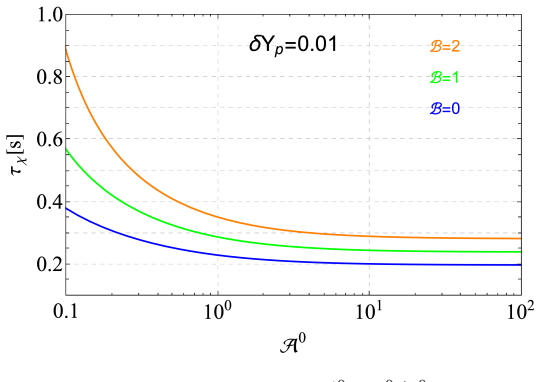
read the original abstract
We present a dynamical solution to the dark matter-baryon coincidence problem based on the neutron portal operator connecting the visible and dark sector asymmetries. This framework is motivated by the possibility that a strongly supercooled dark confinement phase transition accounts for the nano-Hz stochastic gravitational wave signal observed by pulsar timing arrays, while also generating the dark matter and baryon asymmetry in the Universe. We show that the GeV-scale mass of asymmetric dark matter can be naturally correlated with the (multi-)TeV scale cut-off for the neutron portal through its ultraviolet completion. The dark sector is governed by an approximate fixed point and confines once the heavy portal states are integrated out, dynamically generating a scale of $\mathcal{O} ({\rm GeV})$. We analyze both tree and loop-level ultraviolet completions and demonstrate how the resulting confinement scale is linked to the effective neutron portal scale. We also discuss cosmological constraints and experimental prospects in beam dump searches and colliders for probing the neutron portal.
Editorial analysis
A structured set of objections, weighed in public.
Referee Report
Summary. The paper presents a dynamical solution to the dark matter-baryon coincidence problem via the neutron portal operator linking visible and dark sector asymmetries. It claims that UV completions (tree- and loop-level) of the portal naturally correlate the GeV-scale mass of asymmetric dark matter with the multi-TeV cutoff scale through an approximate fixed point in the dark sector; after integrating out heavy portal states the sector confines, dynamically generating an O(GeV) scale. The framework is motivated by the possibility that a strongly supercooled dark confinement phase transition simultaneously produces the observed nano-Hz stochastic gravitational wave background, the DM and baryon asymmetries, and is accompanied by cosmological constraints and experimental prospects in beam-dump and collider searches.
Significance. If the claimed natural, parameter-independent correlation between the GeV DM mass and multi-TeV cutoff can be shown to survive RG flow and threshold corrections, the work would constitute a notable advance in asymmetric DM model-building by unifying the coincidence problem with a potential explanation for PTA signals and providing concrete collider and beam-dump targets. The explicit treatment of both tree- and loop-level UV completions is a positive feature that grounds the scale linkage in concrete dynamics.
major comments (2)
- [UV completion sections] The central claim that the GeV confinement scale arises naturally from an approximate fixed point after integrating out the heavy neutron-portal states (Abstract and UV-completion analysis) is load-bearing for the entire coincidence solution. No explicit beta-function analysis, fixed-point value, or demonstration of stability against threshold corrections from the portal states is provided; a few-percent shift in the effective coupling at the multi-TeV matching scale would move the confinement scale by orders of magnitude, undermining the asserted natural correlation.
- [Cosmology and phase-transition discussion] The assertion that a strongly supercooled dark confinement phase transition simultaneously generates the DM and baryon asymmetries while producing the nano-Hz GW signal (motivation and cosmology discussion) requires quantitative checks of asymmetry transfer efficiency and supercooling parameters. These derivations and numerical results are absent from the manuscript, leaving the weakest assumption unverified.
minor comments (2)
- [Dark-sector dynamics] Clarify the precise definition of the 'approximate fixed point' (value of the dark gauge coupling at the matching scale and the form of the beta function) so that readers can reproduce the claimed running to O(GeV).
- [Phenomenology section] Add a table or explicit parameter scan showing how the confinement scale varies with UV inputs to quantify the degree of naturalness.
Simulated Author's Rebuttal
We thank the referee for their careful reading of the manuscript and for the constructive comments. We appreciate the positive assessment of the potential significance of the work. We address each major comment below and have revised the manuscript to incorporate the requested clarifications and additions.
read point-by-point responses
-
Referee: [UV completion sections] The central claim that the GeV confinement scale arises naturally from an approximate fixed point after integrating out the heavy neutron-portal states (Abstract and UV-completion analysis) is load-bearing for the entire coincidence solution. No explicit beta-function analysis, fixed-point value, or demonstration of stability against threshold corrections from the portal states is provided; a few-percent shift in the effective coupling at the multi-TeV matching scale would move the confinement scale by orders of magnitude, undermining the asserted natural correlation.
Authors: We agree that an explicit renormalization-group analysis is necessary to substantiate the robustness of the claimed scale correlation. The manuscript discusses the UV completions and the resulting effective theory, but does not include the detailed beta-function flow or threshold matching. In the revised version we have added an appendix containing the one-loop beta functions for the dark-sector gauge coupling in both the tree-level and loop-level completions, the location of the approximate fixed point, and a numerical assessment of threshold corrections at the multi-TeV matching scale. The results show that the confinement scale remains within a factor of a few of the GeV value for coupling variations up to 10 percent, thereby supporting the naturalness of the correlation. revision: yes
-
Referee: [Cosmology and phase-transition discussion] The assertion that a strongly supercooled dark confinement phase transition simultaneously generates the DM and baryon asymmetries while producing the nano-Hz GW signal (motivation and cosmology discussion) requires quantitative checks of asymmetry transfer efficiency and supercooling parameters. These derivations and numerical results are absent from the manuscript, leaving the weakest assumption unverified.
Authors: We concur that quantitative verification of the asymmetry transfer and the supercooling dynamics is required to make the cosmological claims robust. The current manuscript outlines the qualitative mechanism but does not provide the explicit derivations or numerical results. In the revised manuscript we have added a new subsection that derives the asymmetry transfer efficiency through the neutron-portal operator, presents the relevant Boltzmann equations, and supplies numerical estimates of the supercooling parameter, nucleation temperature, and the resulting gravitational-wave spectrum. These calculations confirm consistency with the observed nano-Hz PTA signal while preserving the dark-matter–baryon coincidence. revision: yes
Circularity Check
No significant circularity; derivation relies on explicit UV model building and RG dynamics
full rationale
The paper constructs explicit tree- and loop-level UV completions of the neutron portal and derives the GeV confinement scale from the approximate fixed-point behavior of the dark-sector gauge coupling after integrating out heavy states at the multi-TeV matching scale. This linkage follows from the beta-function running determined by the particle content and UV boundary conditions, rather than from parameter fitting, self-definition, or load-bearing self-citation. The claimed correlation is an output of the model dynamics, not an input renamed as a prediction.
Axiom & Free-Parameter Ledger
free parameters (2)
- Neutron portal cutoff scale
- Dark sector coupling strengths
axioms (2)
- domain assumption A strongly supercooled dark confinement phase transition generates both the observed nano-Hz GW signal and the DM/baryon asymmetries
- domain assumption The neutron portal operator transfers asymmetries between visible and dark sectors
invented entities (2)
-
Heavy portal states
no independent evidence
-
Approximate fixed point in dark sector
no independent evidence
Reference graph
Works this paper leans on
-
[1]
TECHNOCOSMOLOGY: COULD A TECHNIBARYON EXCESS PROVIDE A ’NATURAL’ MISSING MASS CANDIDATE?,
S. Nussinov, “TECHNOCOSMOLOGY: COULD A TECHNIBARYON EXCESS PROVIDE A ’NATURAL’ MISSING MASS CANDIDATE?,”Phys. Lett. B165 (1985) 55–58
1985
-
[2]
Electroweak Fermion Number Violation and the Production of Stable Particles in the Early Universe,
S. M. Barr, R. S. Chivukula, and E. Farhi, “Electroweak Fermion Number Violation and the Production of Stable Particles in the Early Universe,”Phys. Lett. B241(1990) 387–391
1990
-
[3]
Baryogenesis, sphalerons and the cogeneration of dark matter,
S. M. Barr, “Baryogenesis, sphalerons and the cogeneration of dark matter,” Phys. Rev. D44(1991) 3062–3066
1991
-
[4]
A Single explanation for both the baryon and dark matter densities,
D. B. Kaplan, “A Single explanation for both the baryon and dark matter densities,”Phys. Rev. Lett.68(1992) 741–743
1992
-
[5]
Towards Working Technicolor: Effective Theories and Dark Matter
S. B. Gudnason, C. Kouvaris, and F. Sannino, “Towards working technicolor: Effective theories and dark matter,”Phys. Rev. D73(2006) 115003, arXiv:hep-ph/0603014
work page Pith review arXiv 2006
-
[6]
Dark Matter from new Technicolor Theories,
S. B. Gudnason, C. Kouvaris, and F. Sannino, “Dark Matter from new Technicolor Theories,”Phys. Rev. D74(2006) 095008,arXiv:hep-ph/0608055
-
[7]
On Relating the Genesis of Cosmic Baryons and Dark Matter,
H. Davoudiasl and R. N. Mohapatra, “On Relating the Genesis of Cosmic Baryons and Dark Matter,”New J. Phys.14(2012) 095011,arXiv:1203.1247 [hep-ph]
-
[8]
Review of asymmetric dark matter
K. Petraki and R. R. Volkas, “Review of asymmetric dark matter,”Int. J. Mod. Phys. A28(2013) 1330028,arXiv:1305.4939 [hep-ph]
work page Pith review arXiv 2013
-
[9]
Darkogenesis: A baryon asymmetry from the dark matter sector,
J. Shelton and K. M. Zurek, “Darkogenesis: A baryon asymmetry from the dark matter sector,”Phys. Rev. D82(2010) 123512,arXiv:1008.1997 [hep-ph]
-
[10]
Asymmetric Dark Matter: Theories, Signatures, and Constraints
K. M. Zurek, “Asymmetric Dark Matter: Theories, Signatures, and Constraints,” Phys. Rept.537(2014) 91–121,arXiv:1308.0338 [hep-ph]. [11]Particle Data GroupCollaboration, S. Navaset al., “Review of particle physics,”Phys. Rev. D110no. 3, (2024) 030001. 37 [12]NANOGravCollaboration, G. Agazieet al., “The NANOGrav 15 yr Data Set: Evidence for a Gravitational...
work page Pith review arXiv 2014
-
[11]
Search for an isotropic gravitational-wave background with the Parkes Pulsar Timing Array
D. J. Reardonet al., “Search for an Isotropic Gravitational-wave Background with the Parkes Pulsar Timing Array,”Astrophys. J. Lett.951no. 1, (2023) L6, arXiv:2306.16215 [astro-ph.HE]
work page internal anchor Pith review arXiv 2023
-
[12]
H. Xuet al., “Searching for the Nano-Hertz Stochastic Gravitational Wave Background with the Chinese Pulsar Timing Array Data Release I,”Res. Astron. Astrophys.23no. 7, (2023) 075024,arXiv:2306.16216 [astro-ph.HE]
work page internal anchor Pith review arXiv 2023
- [13]
-
[14]
K. Fujikura, S. Girmohanta, Y. Nakai, and M. Suzuki, “NANOGrav signal from a dark conformal phase transition,”Phys. Lett. B846(2023) 138203, arXiv:2306.17086 [hep-ph]
- [15]
- [16]
-
[17]
A. Salvio, “Supercooling in radiative symmetry breaking: theory extensions, gravitational wave detection and primordial black holes,”JCAP12(2023) 046, arXiv:2307.04694 [hep-ph]. 38
-
[18]
Pulsar timing arrays and primordial black holes from a supercooled phase transition,
A. Salvio, “Pulsar timing arrays and primordial black holes from a supercooled phase transition,”Phys. Lett. B852(2024) 138639,arXiv:2312.04628 [hep-ph]
-
[19]
Y. Gouttenoire, “First-Order Phase Transition Interpretation of Pulsar Timing Array Signal Is Consistent with Solar-Mass Black Holes,”Phys. Rev. Lett.131 no. 17, (2023) 171404,arXiv:2307.04239 [hep-ph]
-
[20]
A. Addazi, Y.-F. Cai, A. Marciano, and L. Visinelli, “Have pulsar timing array methods detected a cosmological phase transition?,”Phys. Rev. D109no. 1, (2024) 015028,arXiv:2306.17205 [astro-ph.CO]
-
[21]
S.-P. Li and K.-P. Xie, “Collider test of nano-Hertz gravitational waves from pulsar timing arrays,”Phys. Rev. D108no. 5, (2023) 055018,arXiv:2307.01086 [hep-ph]
- [22]
- [23]
-
[24]
D. Wang, “Constraining Cosmological Phase Transitions with Chinese Pulsar Timing Array Data Release 1,”arXiv:2307.15970 [astro-ph.CO]
-
[25]
J. Li and P. Nath, “Supercooled phase transitions: Why thermal history of hidden sector matters in analysis of pulsar timing array signals,”Phys. Rev. D111 no. 12, (2025) 123007,arXiv:2501.14986 [hep-ph]
-
[26]
Conformal phase transition in supersymmetric QCD,
K. Fujikura, S. Nakagawa, Y. Nakai, P. Sun, and Y. Zhang, “Conformal phase transition in supersymmetric QCD,”JHEP07(2025) 215,arXiv:2503.22293 [hep-ph]
-
[27]
A. Chatrchyan, M. C. D. Marsh, and C. Nikolis, “Gravitational waves from a dilaton-induced, first-order QCD phase transition,”arXiv:2507.01191 [hep-ph]. 39
- [28]
- [29]
-
[30]
Cold darkogenesis: Dark matter and baryon asymmetry in light of the PTA signal,
K. Fujikura, S. Girmohanta, Y. Nakai, and Z. Zhang, “Cold darkogenesis: Dark matter and baryon asymmetry in light of the PTA signal,”Phys. Lett. B858 (2024) 139045,arXiv:2406.12956 [hep-ph]
-
[31]
S. Girmohanta, Y. Nakai, and Z. Zhang, “Post-Sphaleron Darkogenesis,”Phys. Rev. D112no. 7, (2025) 075028,arXiv:2507.03747 [hep-ph]
-
[32]
Composite strongly interacting dark matter,
J. M. Cline, Z. Liu, G. D. Moore, and W. Xue, “Composite strongly interacting dark matter,”Phys. Rev. D90no. 1, (2014) 015023,arXiv:1312.3325 [hep-ph]
-
[33]
Dark Matter Self-interactions and Small Scale Structure
S. Tulin and H.-B. Yu, “Dark Matter Self-interactions and Small Scale Structure,” Phys. Rept.730(2018) 1–57,arXiv:1705.02358 [hep-ph]
work page Pith review arXiv 2018
-
[34]
Gravothermal collapse and the diversity of galactic rotation curves,
M. G. Roberts, M. Kaplinghat, M. Valli, and H.-B. Yu, “Gravothermal collapse and the diversity of galactic rotation curves,”Phys. Rev. D111no. 10, (2025) 103041,arXiv:2407.15005 [astro-ph.GA]
-
[35]
Diversity and universality: Evolution of dwarf galaxies with self-interacting dark matter,
Z. C. Zeng, A. H. G. Peter, X. Du, A. Benson, J. Li, C. Mace, and S. Yang, “Diversity and universality: Evolution of dwarf galaxies with self-interacting dark matter,”Phys. Rev. D112no. 6, (2025) 063008,arXiv:2412.14621 [astro-ph.GA]
-
[36]
Two coincidences are a clue: Probing a GeV-scale dark QCD sector,
Y. Chung, “Two coincidences are a clue: Probing a GeV-scale dark QCD sector,” arXiv:2506.10928 [hep-ph]
-
[37]
J. Heeck, “Light particles with baryon and lepton numbers,”Phys. Lett. B813 (2021) 136043,arXiv:2009.01256 [hep-ph]. [42]BaBarCollaboration, J. P. Leeset al., “Search for Evidence of Baryogenesis and Dark Matter in B+→ψD+p Decays at BABAR,”Phys. Rev. Lett.131no. 20, (2023) 201801,arXiv:2306.08490 [hep-ex]. 40
-
[38]
Cosmological baryon diffusion and nucleosynthesis,
J. H. Applegate, C. J. Hogan, and R. J. Scherrer, “Cosmological baryon diffusion and nucleosynthesis,”Phys. Rev. D35(Feb, 1987) 1151–1160. https://link.aps.org/doi/10.1103/PhysRevD.35.1151
-
[39]
H. Bagherian, M. Ekhterachian, and S. Stelzl, “The bearable inhomogeneity of the baryon asymmetry,”JHEP01(2026) 068,arXiv:2505.15904 [hep-ph]
-
[40]
Mirror baryons as the dark matter,
H. M. Hodges, “Mirror baryons as the dark matter,”Phys. Rev. D47(1993) 456–459
1993
-
[41]
R. Foot and R. R. Volkas, “Was ordinary matter synthesized from mirror matter? An Attempt to explain why Omega(Baryon) approximately equal to 0.2 Omega(Dark),”Phys. Rev. D68(2003) 021304,arXiv:hep-ph/0304261
-
[42]
Leptogenesis as a Common Origin for Matter and Dark Matter,
H. An, S.-L. Chen, R. N. Mohapatra, and Y. Zhang, “Leptogenesis as a Common Origin for Matter and Dark Matter,”JHEP03(2010) 124,arXiv:0911.4463 [hep-ph]
-
[43]
Comprehensive asymmetric dark matter model,
S. J. Lonsdale and R. R. Volkas, “Comprehensive asymmetric dark matter model,”Phys. Rev. D97no. 10, (2018) 103510,arXiv:1801.05561 [hep-ph]
-
[44]
A closer look in the mirror: reflections on the matter/dark matter coincidence,
A. Bodas, M. A. Buen-Abad, A. Hook, and R. Sundrum, “A closer look in the mirror: reflections on the matter/dark matter coincidence,”JHEP06(2024) 052, arXiv:2401.12286 [hep-ph]
-
[45]
Dark unification: A UV-complete theory of asymmetric dark matter,
C. Murgui and K. M. Zurek, “Dark unification: A UV-complete theory of asymmetric dark matter,”Phys. Rev. D105no. 9, (2022) 095002, arXiv:2112.08374 [hep-ph]
-
[46]
Comparable Dark Matter and Baryon energy densities from Dark Grand Unification,
Y. Chung, “Comparable Dark Matter and Baryon energy densities from Dark Grand Unification,”arXiv:2411.16860 [hep-ph]
-
[47]
Y. Bai and P. Schwaller, “Scale of dark QCD,”Phys. Rev. D89no. 6, (2014) 063522,arXiv:1306.4676 [hep-ph]
work page Pith review arXiv 2014
-
[48]
Reach of threshold-corrected dark QCD,
J. L. Newstead and R. H. TerBeek, “Reach of threshold-corrected dark QCD,” Phys. Rev. D90no. 7, (2014) 074008,arXiv:1405.7427 [hep-ph]
-
[49]
Exploring the cosmological dark matter coincidence using infrared fixed points,
A. C. Ritter and R. R. Volkas, “Exploring the cosmological dark matter coincidence using infrared fixed points,”Phys. Rev. D107no. 1, (2023) 015029, arXiv:2210.11011 [hep-ph]. 41
-
[50]
Explaining the cosmological dark matter coincidence in asymmetric dark QCD,
A. C. Ritter and R. R. Volkas, “Explaining the cosmological dark matter coincidence in asymmetric dark QCD,”Phys. Rev. D110no. 1, (2024) 015032, arXiv:2404.05999 [hep-ph]
-
[51]
A. Banerjee, D. Brzeminski, and A. Hook, “Predicting the Dark Matter – Baryon Abundance Ratio,”arXiv e-prints(Oct., 2024) arXiv:2410.22412, arXiv:2410.22412 [hep-ph]
-
[52]
D. Brzeminski and A. Hook, “A Dynamical Explanation of the Dark Matter-Baryon Coincidence,”Phys. Rev. Lett.132no. 20, (2024) 201001, arXiv:2310.07777 [hep-ph]
-
[53]
Y. Chung, “Generating the Dark Matter mass from the QCD vacuum: A new approach to the Dark Matter-Baryon coincidence problem,”arXiv:2411.18725 [hep-ph]
-
[54]
A new idea for relating the asymmetric dark matter mass scale to the proton mass,
P. Cox, R. E. P´ erez, and R. R. Volkas, “A new idea for relating the asymmetric dark matter mass scale to the proton mass,”arXiv:2512.14119 [hep-ph]
-
[55]
CP Violating Baryon Oscillations
D. McKeen and A. E. Nelson, “CP Violating Baryon Oscillations,”Phys. Rev. D 94no. 7, (2016) 076002,arXiv:1512.05359 [hep-ph]. [61]CMSCollaboration, A. M. Sirunyanet al., “A search for bottom-type, vector-like quark pair production in a fully hadronic final state in proton-proton collisions at√s= 13 TeV,”Phys. Rev. D102(2020) 112004,arXiv:2008.09835 [hep-e...
work page Pith review arXiv 2016
-
[56]
The Two Loop beta Function for a G(1) x G(2) Gauge Theory,
D. R. T. Jones, “The Two Loop beta Function for a G(1) x G(2) Gauge Theory,” Phys. Rev. D25(1982) 581
1982
-
[57]
Effective Action for Composite Operators,
J. M. Cornwall, R. Jackiw, and E. Tomboulis, “Effective Action for Composite Operators,”Phys. Rev. D10(1974) 2428–2445
1974
-
[58]
CHIRAL SYMMETRY AND CHIRAL SYMMETRY BREAKING,
M. E. Peskin, “CHIRAL SYMMETRY AND CHIRAL SYMMETRY BREAKING,” inLes Houches Summer School in Theoretical Physics: Recent Advances in Field Theory and Statistical Mechanics. 12, 1982
1982
-
[59]
TECHNICOLOR COSMOLOGY,
R. S. Chivukula and T. P. Walker, “TECHNICOLOR COSMOLOGY,”Nucl. Phys. B329(1990) 445–463
1990
-
[60]
Footprints of New Strong Dynamics via Anomaly and the 750 GeV Diphoton,
Y. Nakai, R. Sato, and K. Tobioka, “Footprints of New Strong Dynamics via Anomaly and the 750 GeV Diphoton,”Phys. Rev. Lett.116no. 15, (2016) 151802,arXiv:1512.04924 [hep-ph]
-
[61]
A Natural Solution to the mu Problem in Supergravity Theories,
G. F. Giudice and A. Masiero, “A Natural Solution to the mu Problem in Supergravity Theories,”Phys. Lett. B206(1988) 480–484
1988
-
[62]
Dark Matter from Strong Dynamics: The Minimal Theory of Dark Baryons,
A. Francis, R. J. Hudspith, R. Lewis, and S. Tulin, “Dark Matter from Strong Dynamics: The Minimal Theory of Dark Baryons,”JHEP12(2018) 118, arXiv:1809.09117 [hep-ph]
-
[63]
Appelquist et al.,Stealth Dark Matter: Dark scalar baryons through the Higgs portal,Phys
T. Appelquistet al., “Stealth Dark Matter: Dark scalar baryons through the Higgs portal,”Phys. Rev. D92no. 7, (2015) 075030,arXiv:1503.04203 [hep-ph]. 43
-
[64]
Review of strongly-coupled composite dark matter models and lattice simulations,
G. D. Kribs and E. T. Neil, “Review of strongly-coupled composite dark matter models and lattice simulations,”Int. J. Mod. Phys. A31no. 22, (2016) 1643004, arXiv:1604.04627 [hep-ph]
- [65]
-
[66]
Pure-glue hidden valleys through the Higgs portal,
J. E. Juknevich, “Pure-glue hidden valleys through the Higgs portal,”JHEP08 (2010) 121,arXiv:0911.5616 [hep-ph]
-
[67]
New bounds on heavy QCD axions from big bang nucleosynthesis,
T. H. Jung, T. Okui, K. Tobioka, and J. Wang, “New bounds on heavy QCD axions from big bang nucleosynthesis,”Phys. Rev. D113no. 5, (2026) 055002, arXiv:2510.23695 [hep-ph]
-
[68]
Decay and detection of a light scalar boson mixing with the Higgs boson,
M. W. Winkler, “Decay and detection of a light scalar boson mixing with the Higgs boson,”Phys. Rev. D99no. 1, (2019) 015018,arXiv:1809.01876 [hep-ph]
-
[69]
Dark Matter Interpretation of the Neutron Decay Anomaly,
B. Fornal and B. Grinstein, “Dark Matter Interpretation of the Neutron Decay Anomaly,”Phys. Rev. Lett.120no. 19, (2018) 191801,arXiv:1801.01124 [hep-ph]. [Erratum: Phys.Rev.Lett. 124, 219901 (2020)]
-
[70]
Cosmological and astrophysical probes of dark baryons,
D. McKeen, M. Pospelov, and N. Raj, “Cosmological and astrophysical probes of dark baryons,”Phys. Rev. D103no. 11, (2021) 115002,arXiv:2012.09865 [hep-ph]
-
[71]
Nucleon Decay into a Dark Sector,
H. Davoudiasl, “Nucleon Decay into a Dark Sector,”Phys. Rev. Lett.114no. 5, (2015) 051802,arXiv:1409.4823 [hep-ph]
-
[72]
Chiral Lagrangian for Deep Mine Physics,
M. Claudson, M. B. Wise, and L. J. Hall, “Chiral Lagrangian for Deep Mine Physics,”Nucl. Phys. B195(1982) 297–307. [85]RBC-UKQCDCollaboration, Y. Aoki, P. Boyle, P. Cooney, L. Del Debbio, R. Kenway, C. M. Maynard, A. Soni, and R. Tweedie, “Proton lifetime bounds from chirally symmetric lattice QCD,”Phys. Rev. D78(2008) 054505, arXiv:0806.1031 [hep-lat]
-
[73]
A. Fradette and M. Pospelov, “BBN for the LHC: constraints on lifetimes of the Higgs portal scalars,”Phys. Rev. D96no. 7, (2017) 075033,arXiv:1706.01920 [hep-ph]. 44
-
[74]
D., Molaro, P., & Sarkar, S., Big-Bang Nucleosynthesis
B. D. Fields, P. Molaro, and S. Sarkar, “Big-Bang Nucleosynthesis,”Chin. Phys. C38(2014) 339–344,arXiv:1412.1408 [astro-ph.CO]
-
[75]
Dark Matter CMB Constraints and Likelihoods for Poor Particle Physicists,
J. M. Cline and P. Scott, “Dark Matter CMB Constraints and Likelihoods for Poor Particle Physicists,”JCAP03(2013) 044,arXiv:1301.5908 [astro-ph.CO]. [Erratum: JCAP 05, E01 (2013)]
-
[76]
Energy Injection And Absorption In The Cosmic Dark Ages,
T. R. Slatyer, “Energy Injection And Absorption In The Cosmic Dark Ages,” Phys. Rev. D87no. 12, (2013) 123513,arXiv:1211.0283 [astro-ph.CO]
-
[77]
FeynRules 2.0 - A complete toolbox for tree-level phenomenology
A. Alloul, N. D. Christensen, C. Degrande, C. Duhr, and B. Fuks, “FeynRules 2.0 - A complete toolbox for tree-level phenomenology,”Comput. Phys. Commun. 185(2014) 2250–2300,arXiv:1310.1921 [hep-ph]
work page Pith review arXiv 2014
-
[78]
J. Alwall, M. Herquet, F. Maltoni, O. Mattelaer, and T. Stelzer, “MadGraph 5 : Going Beyond,”JHEP06(2011) 128,arXiv:1106.0522 [hep-ph]
work page Pith review arXiv 2011
-
[79]
Compilation of cross sections for proton nucleus interactions at the HERA energy,
J. Carvalho, “Compilation of cross sections for proton nucleus interactions at the HERA energy,”Nucl. Phys. A725(2003) 269–275
2003
-
[80]
ALPtraum: ALP production in proton beam dump experiments,
B. D¨ obrich, J. Jaeckel, F. Kahlhoefer, A. Ringwald, and K. Schmidt-Hoberg, “ALPtraum: ALP production in proton beam dump experiments,”JHEP02 (2016) 018,arXiv:1512.03069 [hep-ph]. [94]ATLASCollaboration, G. Aadet al., “Search for new phenomena in events with an energetic jet and missing transverse momentum inppcollisions at √s=13 TeV with the ATLAS detec...
discussion (0)
Sign in with ORCID, Apple, or X to comment. Anyone can read and Pith papers without signing in.