Recognition: unknown
Knowledge-Data Dually Driven Paradigm for Accurate Landslide Susceptibility Prediction under Data-Scarce Conditions Using Geomorphic Priors and Tabular Foundation Model
Pith reviewed 2026-05-07 16:54 UTC · model grok-4.3
The pith
Integrating geomorphic prior knowledge with scarce landslide data inside a tabular foundation model produces accurate susceptibility predictions even when inventories cover only a fraction of events.
A machine-rendered reading of the paper's core claim, the machinery that carries it, and where it could break.
Core claim
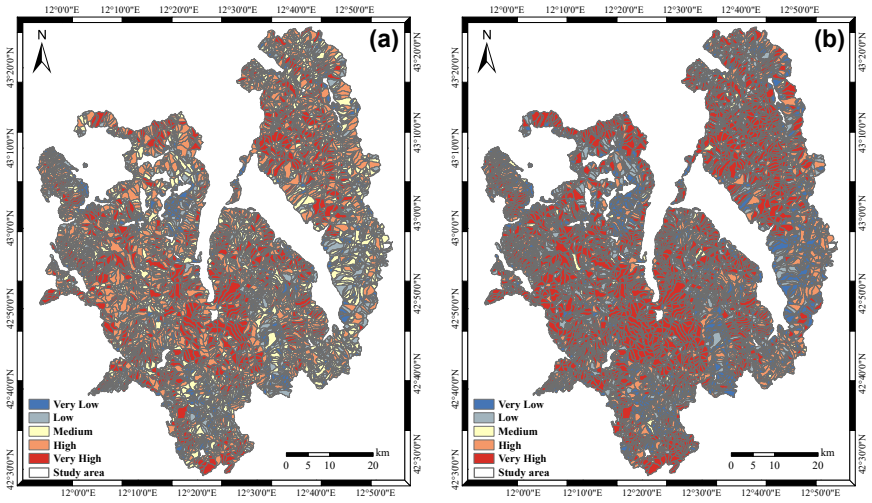
The central claim is that a knowledge-data dually driven paradigm, formed by encoding geomorphic prior knowledge and combining it with scarce landslide inventory data inside a tabular foundation model, achieves predictive accuracy comparable to a conventional data-driven model trained on the entire inventory when only thirty percent of the landslide data is supplied, and yields reliable susceptibility maps in a real data-scarce application region.
What carries the argument
The knowledge-data dually driven paradigm that encodes geomorphic prior knowledge and merges it with scarce landslide data inside a tabular foundation model to drive predictions.
If this is right
- Landslide susceptibility maps become feasible in remote mountainous and plateau regions where full inventories cannot be assembled.
- The data-collection effort for geohazard risk assessment can be reduced to roughly one-third of conventional requirements while retaining accuracy.
- Predictions remain stable across both test regions with artificially reduced data and genuinely data-poor field sites such as permafrost terrain.
- The approach extends the reach of tabular foundation models to geoscience tasks by letting physical priors offset missing observations.
Where Pith is reading between the lines
- The same dual-driving structure could be tested on other geohazards such as debris flows or rockfalls where inventories are also incomplete.
- Systematic reduction of the training fraction below thirty percent would show the minimum inventory size at which accuracy begins to degrade.
- Incorporating additional priors from climate or vegetation layers might allow the paradigm to track changing susceptibility under warming conditions.
- Operational use would ultimately need validation against future landslide occurrences rather than historical hold-out sets.
Load-bearing premise
Geomorphic prior knowledge can be encoded and integrated into the model without introducing systematic bias that would require region-specific tuning data unavailable under scarcity.
What would settle it
Independent mapping of actual landslides in a new data-scarce region over multiple seasons that shows the model's high-susceptibility zones contain far fewer events than its low-susceptibility zones would falsify reliable performance.
Figures




read the original abstract
Landslide susceptibility prediction is critical for geohazard risk assessment and mitigation. Conventional data-driven paradigm achieves high predictive accuracy but require sufficient conditioning factors and large-scale landslide inventories. However, in practical engineering applications across mountainous and plateau regions, data-scarce conditions are commonly observed, where such data requirements are rarely satisfied, rendering conventional data-driven paradigm inapplicable. To address this issue, we propose a knowledge-data dually driven paradigm for accurate landslide susceptibility prediction under data-scarce conditions. The essential idea behind the proposed novel paradigm is the integration of the geomorphic prior knowledge with scarce landslide data. To validate the proposed paradigm, we first applied it to a data-rich region in central Italy, where a conventional data-driven paradigm trained on the full dataset served as the baseline. By utilizing only 30% of the available landslide data, the proposed paradigm achieved comparable predictive accuracy to the baseline, demonstrating its effectiveness under data-scarce conditions. The paradigm was further evaluated in a genuinely data-scarce environment for application, the Qilian Permafrost Region of the Tibetan Plateau, where it also yielded reliable susceptibility predictions, confirming its applicability under data-scarce conditions.
Editorial analysis
A structured set of objections, weighed in public.
Referee Report
Summary. The paper proposes a knowledge-data dually driven paradigm that integrates geomorphic prior knowledge with limited landslide inventories via a tabular foundation model to enable accurate susceptibility prediction when conventional data-driven methods cannot be applied due to insufficient data. It reports that training on only 30% of the landslide inventory in central Italy produces predictive accuracy comparable to a full-data baseline, and states that the same paradigm yields reliable susceptibility predictions when applied to the genuinely data-scarce Qilian Permafrost Region of the Tibetan Plateau.
Significance. If the quantitative claims are supported by detailed metrics, ablations, and independent validation, the work could offer a practical route to susceptibility mapping in data-poor mountainous and plateau settings where large inventories are unavailable. The dual-knowledge approach addresses a recurring limitation in applied geohazard modeling, but the current absence of reported performance numbers for the Qilian case prevents assessment of whether the priors add genuine predictive value or merely produce plausible maps.
major comments (2)
- [Qilian Permafrost Region evaluation] Qilian Permafrost Region evaluation (abstract and application section): the manuscript asserts that the paradigm 'yielded reliable susceptibility predictions' yet reports no AUC, F1, precision-recall, spatial cross-validation, or inventory-comparison metrics. This omission is load-bearing for the central claim of effectiveness under data-scarce conditions, as it leaves open whether the output reflects successful prior-data fusion or simply terrain-consistent but untested maps.
- [Central Italy validation] Central Italy 30% data-reduction experiment (abstract and validation section): the claim of 'comparable predictive accuracy' to the full-data baseline is presented without accompanying numerical values, confidence intervals, or ablation results that isolate the contribution of the geomorphic priors versus the tabular foundation model alone. Without these, the strength of the data-scarcity demonstration cannot be evaluated.
minor comments (2)
- [Methods] The abstract and available text do not define the tabular foundation model architecture, the precise encoding of geomorphic priors, or the loss function used for dual training; these details are needed for reproducibility.
- [Results] No comparison is shown against pure knowledge-driven or pure data-driven baselines in either study area; adding such controls would clarify the incremental benefit of the proposed dual paradigm.
Simulated Author's Rebuttal
We thank the referee for the insightful comments on our manuscript. We provide point-by-point responses to the major comments below, and we will incorporate clarifications and additional details in the revised version where appropriate.
read point-by-point responses
-
Referee: [Qilian Permafrost Region evaluation] Qilian Permafrost Region evaluation (abstract and application section): the manuscript asserts that the paradigm 'yielded reliable susceptibility predictions' yet reports no AUC, F1, precision-recall, spatial cross-validation, or inventory-comparison metrics. This omission is load-bearing for the central claim of effectiveness under data-scarce conditions, as it leaves open whether the output reflects successful prior-data fusion or simply terrain-consistent but untested maps.
Authors: We agree that quantitative metrics would strengthen the claim, but they are not feasible in this case. The Qilian Permafrost Region lacks a comprehensive landslide inventory, which is the very reason it exemplifies data-scarce conditions. Our assessment of 'reliable susceptibility predictions' is based on qualitative validation: alignment with geomorphic priors, expert review by local geologists, and consistency with known permafrost and terrain characteristics. We will revise the application section to explicitly describe this validation methodology and any supporting evidence. revision: partial
-
Referee: [Central Italy validation] Central Italy 30% data-reduction experiment (abstract and validation section): the claim of 'comparable predictive accuracy' to the full-data baseline is presented without accompanying numerical values, confidence intervals, or ablation results that isolate the contribution of the geomorphic priors versus the tabular foundation model alone. Without these, the strength of the data-scarcity demonstration cannot be evaluated.
Authors: We acknowledge the need for explicit numerical reporting. Although the full manuscript contains the detailed results in the validation section, we will ensure the abstract and main text prominently feature the specific performance metrics (e.g., AUC values for 30% vs. full data), confidence intervals, and ablation experiments separating the effects of geomorphic priors from the tabular foundation model. This will be added in the revised manuscript. revision: yes
- The lack of quantitative performance metrics for the Qilian Permafrost Region evaluation, since no independent landslide inventory exists to compute AUC, F1, or similar metrics.
Circularity Check
No circularity: paradigm integrates external geomorphic priors with empirical validation on independent test regions
full rationale
The paper proposes integrating geomorphic prior knowledge with scarce landslide inventories inside a tabular foundation model. Validation proceeds by training on 30% of Italy inventory and comparing AUC/F1-style metrics to a full-data baseline, then applying the same pipeline to the separate Qilian region. No equations, parameter-fitting steps, or derivations are described that reduce any output to a re-labeling of the input data or to a self-citation chain. The geomorphic priors are treated as external domain knowledge rather than quantities fitted from the target landslide labels. Consequently the claimed performance gains rest on reported cross-region empirical results rather than on any definitional or self-referential reduction.
Axiom & Free-Parameter Ledger
axioms (1)
- domain assumption Geomorphic prior knowledge can be effectively encoded and fused with scarce landslide data inside a tabular foundation model
Reference graph
Works this paper leans on
-
[1]
author Abdelkader, M.M. , author Cs\'amer, A. , year 2025 . title Comparative assessment of machine learning models for landslide susceptibility mapping: a focus on validation and accuracy . journal Natural Hazards volume 121 , pages 10299--10321 . https://doi.org/10.1007/s11069-025-07197-0, :10.1007/s11069-025-07197-0
-
[2]
author Achu, A.L. , author Aju, C.D. , author Di Napoli, M. , author Prakash, P. , author Gopinath, G. , author Shaji, E. , author Chandra, V. , year 2023 . title Machine-learning based landslide susceptibility modelling with emphasis on uncertainty analysis . journal Geoscience Frontiers volume 14 , pages 101657 . https://www.sciencedirect.com/science/ar...
-
[3]
author Ado, M. , author Amitab, K. , author Maji, A.K. , author Jasinska, E. , author Gono, R. , author Leonowicz, Z. , author Jasinski, M. , year 2022 . title Landslide susceptibility mapping using machine learning: A literature survey . journal Remote Sensing volume 14 , pages 3029 . https://doi.org/10.3390/rs14133029, :10.3390/rs14133029
-
[4]
author Alvioli, M. , author Loche, M. , author Jacobs, L. , author Grohmann, C.H. , author Abraham, M.T. , author Gupta, K. , author Satyam, N. , author Scaringi, G. , author Bornaetxea, T. , author Rossi, M. , author Marchesini, I. , author Lombardo, L. , author Moreno, M. , author Steger, S. , author Camera, C.A.S. , author Bajni, G. , author Samodra, G...
-
[5]
author Breiman, L. , year 2001 . title Random forests . journal Machine Learning volume 45 , pages 5--32 . https://doi.org/10.1023/A:1010933404324, :10.1023/A:1010933404324
-
[6]
author Brier, G.W. , year 1950 . title Verification of forecasts expressed in terms of probability . journal Monthly Weather Review volume 78 , pages 1--3 . https://journals.ametsoc.org/view/journals/mwre/78/1/1520-0493_1950_078_0001_vofeit_2_0_co_2.xml, :10.1175/1520-0493(1950)078<0001:VOFEIT>2.0.CO;2
-
[7]
XGBoost: A Scalable Tree Boosting System
author Chen, T. , author Guestrin, C. , year 2016 . title XGBoost : A scalable tree boosting system , in: booktitle 22nd ACM SIGKDD International Conference on Knowledge Discovery and Data Mining (KDD) , address San Francisco, CA, USA . pp. pages 785--794 . https://doi.org/10.1145/2939672.2939785, :10.1145/2939672.2939785
-
[8]
author Chen, W. , author Xie, X. , author Wang, J. , author Pradhan, B. , author Hong, H. , author Bui, D.T. , author Duan, Z. , author Ma, J. , year 2017 . title A comparative study of logistic model tree, random forest, and classification and regression tree models for spatial prediction of landslide susceptibility . journal Catena volume 151 , pages 14...
-
[9]
author Dahal, A. , author Lombardo, L. , year 2025 . title Towards physics-informed neural networks for landslide prediction . journal Engineering Geology volume 344 , pages 107852 . https://www.sciencedirect.com/science/article/pii/S0013795224004526, :10.1016/j.enggeo.2024.107852
-
[10]
author DiBiase, R.A. , author Whipple, K.X. , author Heimsath, A.M. , author Ouimet, W.B. , year 2010 . title Landscape form and millennial erosion rates in the san gabriel mountains, ca . journal Earth and Planetary Science Letters volume 289 , pages 134--144 . https://www.sciencedirect.com/science/article/pii/S0012821X09006451, :10.1016/j.epsl.2009.10.036
-
[11]
author Froude, M.J. , author Petley, D.N. , year 2018 . title Global fatal landslide occurrence from 2004 to 2016 . journal Natural Hazards and Earth System Sciences volume 18 , pages 2161--2181 . https://doi.org/10.5194/nhess-18-2161-2018, :10.5194/nhess-18-2161-2018
-
[12]
author Gariano, S.L. , author Guzzetti, F. , year 2016 . title Landslides in a changing climate . journal Earth-Science Reviews volume 162 , pages 227--252 . https://doi.org/10.1016/j.earscirev.2016.08.011, :10.1016/j.earscirev.2016.08.011
-
[13]
Accurate predictions on small data with a tabular foundation model.Nature, 637(8045):319–326, 2025
author Hollmann, N. , author Müller, S. , author Purucker, L. , author Krishnakumar, A. , author Körfer, M. , author Hoo, S.B. , author Schirrmeister, R.T. , author Hutter, F. , year 2025 . title Accurate predictions on small data with a tabular foundation model . journal Nature volume 637 , pages 319--326 . https://doi.org/10.1038/s41586-024-08328-6, :10...
-
[14]
author Huang, F. , author Xiong, H. , author Jiang, S.H. , author Yao, C. , author Fan, X. , author Catani, F. , author Chang, Z. , author Zhou, X. , author Huang, J. , author Liu, K. , year 2024 . title Modelling landslide susceptibility prediction: A review and construction of semi-supervised imbalanced theory . journal Earth-Science Reviews volume 250 ...
-
[15]
author Kirschbaum, D. , author Kapnick, S.B. , author Stanley, T. , author Pascale, S. , year 2020 . title Changes in extreme precipitation and landslides over high mountain asia . journal Geophysical Research Letters volume 47 , pages e2019GL085347 . https://doi.org/10.1029/2019GL085347, :10.1029/2019gl085347
-
[16]
author Kong, L. , author Feng, W. , author Yi, X. , author Xue, Z. , author Bai, L. , year 2025 . title Enhanced landslide susceptibility mapping in data-scarce regions via unsupervised few-shot learning . journal Gondwana Research volume 138 , pages 31--46 . https://www.sciencedirect.com/science/article/pii/S1342937X2400306X, :10.1016/j.gr.2024.10.011
-
[17]
author Liu, S. , author Wang, L. , author Zhang, W. , author He, Y. , author Pijush, S. , year 2023 . title A comprehensive review of machine learning-based methods in landslide susceptibility mapping . journal GEOLOGICAL JOURNAL volume 58 , pages 2283--2301 . https://doi.org/10.1002/gj.4666, :10.1002/gj.4666
-
[18]
author Merghadi, A. , author Yunus, A.P. , author Dou, J. , author Whiteley, J. , author Binh, T. , author Dieu Tien, B. , author Avtar, R. , author Abderrahmane, B. , year 2020 . title Machine learning methods for landslide susceptibility studies: A comparative overview of algorithm performance . journal Earth-Science Reviews volume 207 , pages 103225 . ...
-
[19]
author Ozturk, U. , author Bozzolan, E. , author Holcombe, E.A. , author Shukla, R. , author Pianosi, F. , author Wagener, T. , year 2022 . title How climate change and unplanned urban sprawl bring more landslides . journal Nature volume 608 , pages 262--265 . https://doi.org/10.1038/d41586-022-02141-9, :10.1038/d41586-022-02141-9
-
[20]
author Petley, D. , year 2012 . title Global patterns of loss of life from landslides . journal Geology volume 40 , pages 927--930 . https://doi.org/10.1130/G33217.1, :10.1130/g33217.1
-
[21]
author Rana, K. , author Ozturk, U. , author Malik, N. , year 2021 . title Landslide geometry reveals its trigger . journal Geophysical Research Letters volume 48 , pages e2020GL090848 . https://doi.org/10.1029/2020GL090848, :10.1029/2020gl090848
-
[22]
author Reichenbach, P. , author Rossi, M. , author Malamud, B.D. , author Mihir, M. , author Guzzetti, F. , year 2018 . title A review of statistically-based landslide susceptibility models . journal Earth-Science Reviews volume 180 , pages 60--91 . https://www.sciencedirect.com/science/article/pii/S0012825217305652, :10.1016/j.earscirev.2018.03.001
-
[23]
author Sim, K.B. , author Lee, M.L. , author Wong, S.Y. , year 2022 . title A review of landslide acceptable risk and tolerable risk . journal Geoenvironmental Disasters volume 9 , pages 3 . https://doi.org/10.1186/s40677-022-00205-6, :10.1186/s40677-022-00205-6
-
[24]
author Spiekermann, R.I. , author van Zadelhoff, F. , author Schindler, J. , author Smith, H. , author Phillips, C. , author Schwarz, M. , year 2023 . title Comparing physical and statistical landslide susceptibility models at the scale of individual trees . journal Geomorphology volume 440 , pages 108870 . https://www.sciencedirect.com/science/article/pi...
-
[25]
author Tan, J. , author Yang, C. , author Wang, Y. , author Xiong, H. , author Ma, C. , year 2024 . title A hybrid model to overcome landslide inventory incompleteness issue for landslide susceptibility prediction . journal Geocarto International volume 39 . https://doi.org/10.1080/10106049.2024.2322066, :10.1080/10106049.2024.2322066
-
[26]
author Wang, F. , author Wen, Z. , author Gao, Q. , author Yu, Q. , author Li, D. , author Chen, L. , year 2024 . title Thermokarst landslides susceptibility evaluation across the permafrost region of the central qinghai-tibet plateau: Integrating a machine learning model with insar technology . journal Journal of Hydrology volume 642 , pages 131800 . htt...
-
[27]
author Woodard, J.B. , author Mirus, B.B. , year 2025 . title Overcoming the data limitations in landslide susceptibility modeling . journal Science Advances volume 11 , pages eadt1541 . https://doi.org/10.1126/sciadv.adt1541, :10.1126/sciadv.adt1541
-
[28]
author Woodard, J.B. , author Mirus, B.B. , author Crawford, M. , author Or, D. , author Leshchinsky, B.A. , author Allstadt, K.E. , author Wood, N.J. , year 2023 . title Mapping landslide susceptibility over large regions with limited data . journal Journal of Geophysical Research: Earth Surface volume 128 , pages e2022JF006810 . https://doi.org/10.1029/...
-
[29]
author Yang, Y. , author Mei, G. , author Ma, Z. , author Xu, N. , author Peng, J. , year 2026 . title Impact of freeze-thaw on landslide activity under diverse topographies using geospatial data mining: Insights from qilian permafrost region, tibetan plateau . journal Catena volume 268 , pages 110024 . https://www.sciencedirect.com/science/article/pii/S0...
-
[30]
author Youssef, A.M. , author Pourghasemi, H.R. , author Pourtaghi, Z.S. , author Al-Katheeri, M.M. , year 2016 . title Landslide susceptibility mapping using random forest, boosted regression tree, classification and regression tree, and general linear models and comparison of their performance at wadi tayyah basin, asir region, saudi arabia . journal La...
-
[31]
author Zhang, T. , author Li, Y. , author Wang, T. , author Wang, H. , author Chen, T. , author Sun, Z. , author Luo, D. , author Li, C. , author Han, L. , year 2022 . title Evaluation of different machine learning models and novel deep learning-based algorithm for landslide susceptibility mapping . journal Geoscience Letters volume 9 , pages 26 . https:/...
discussion (0)
Sign in with ORCID, Apple, or X to comment. Anyone can read and Pith papers without signing in.