Physical properties of transition metal hydride superconductors Mg2TmH6 (Tm = Rh, Pd, Ir, Pt) by first-principles calculations
Pith reviewed 2026-05-07 16:00 UTC · model grok-4.3
The pith
Mg2TmH6 hydrides combine hydrogen storage, mechanical robustness, superconductivity, and optical properties.
A machine-rendered reading of the paper's core claim, the machinery that carries it, and where it could break.
Core claim
The Mg2TmH6 (Tm = Rh, Pd, Ir, Pt) hydrides possess favorable hydrogen storage capacities, mechanical robustness, superconducting properties, and multifunctional optical responses as revealed by comprehensive first-principles calculations.
What carries the argument
First-principles density functional theory calculations of crystal structures, phonon spectra, electronic densities, and optical responses in the Mg2TmH6 compounds to evaluate storage, elastic, superconducting, and optical behaviors.
If this is right
- The hydrides could function in integrated systems that combine hydrogen storage with superconducting current flow.
- Mechanical stability supports their use in devices subject to repeated stress or cycling.
- Multifunctional optical responses open routes to sensors or light-harvesting components.
- Thermophysical stability across temperatures enables operation in varied real-world conditions.
Where Pith is reading between the lines
- Varying the transition metal component beyond the four studied elements might produce still stronger combinations of the same properties.
- Direct experimental verification of the predicted superconducting temperatures would be the next required step.
- The simultaneous presence of storage and electronic functions could enable compact hybrid devices not considered in the calculations.
Load-bearing premise
The density functional approximations and pseudopotentials used correctly capture the electronic structure, phonon modes, and hydrogen binding energies in these hydrides.
What would settle it
Synthesis of one or more Mg2TmH6 compounds followed by direct measurement of hydrogen uptake or superconducting transition temperature that falls well below the calculated values would disprove the claimed combination of useful properties.
Figures



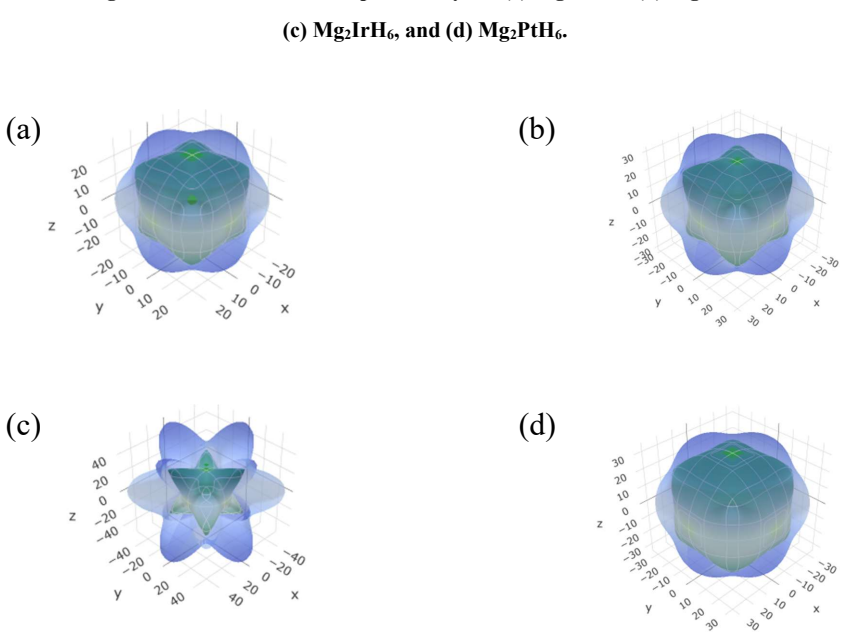


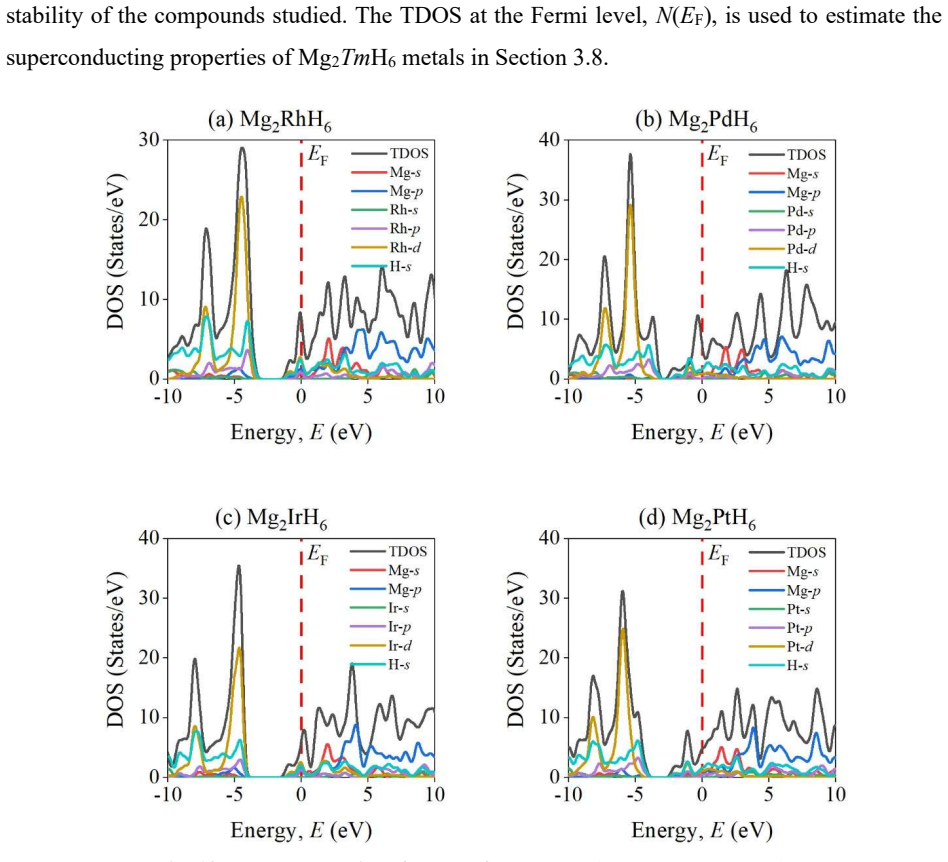
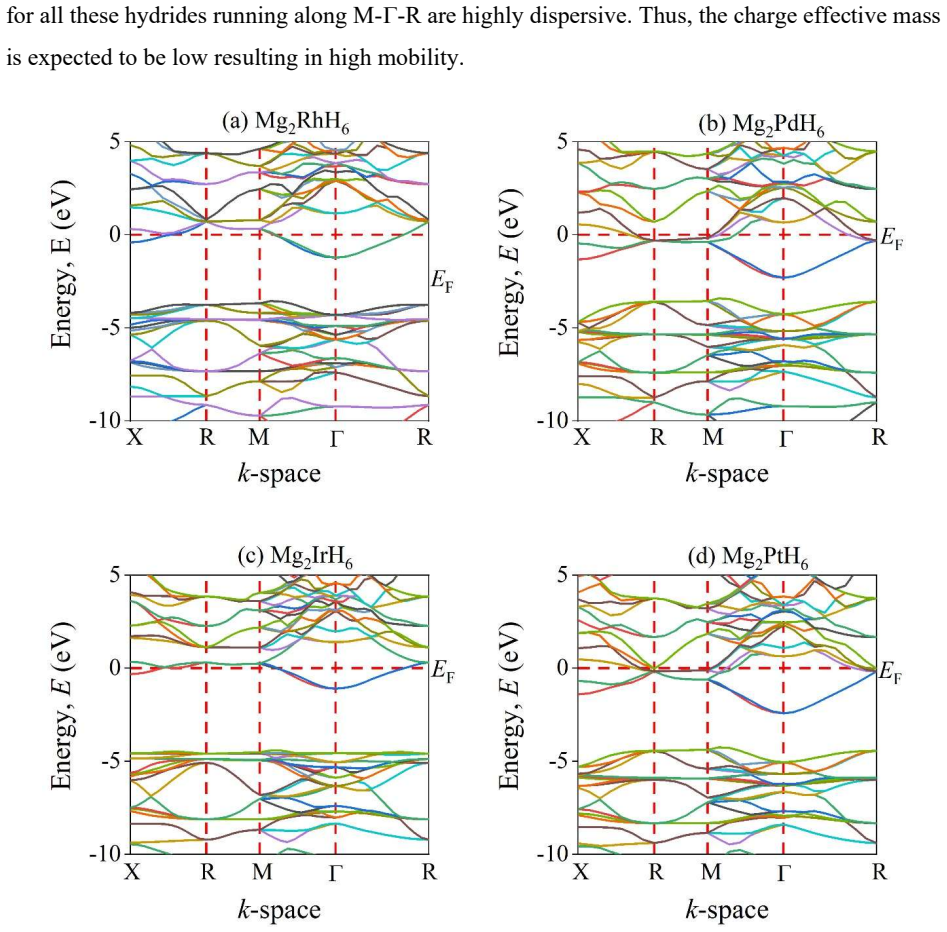
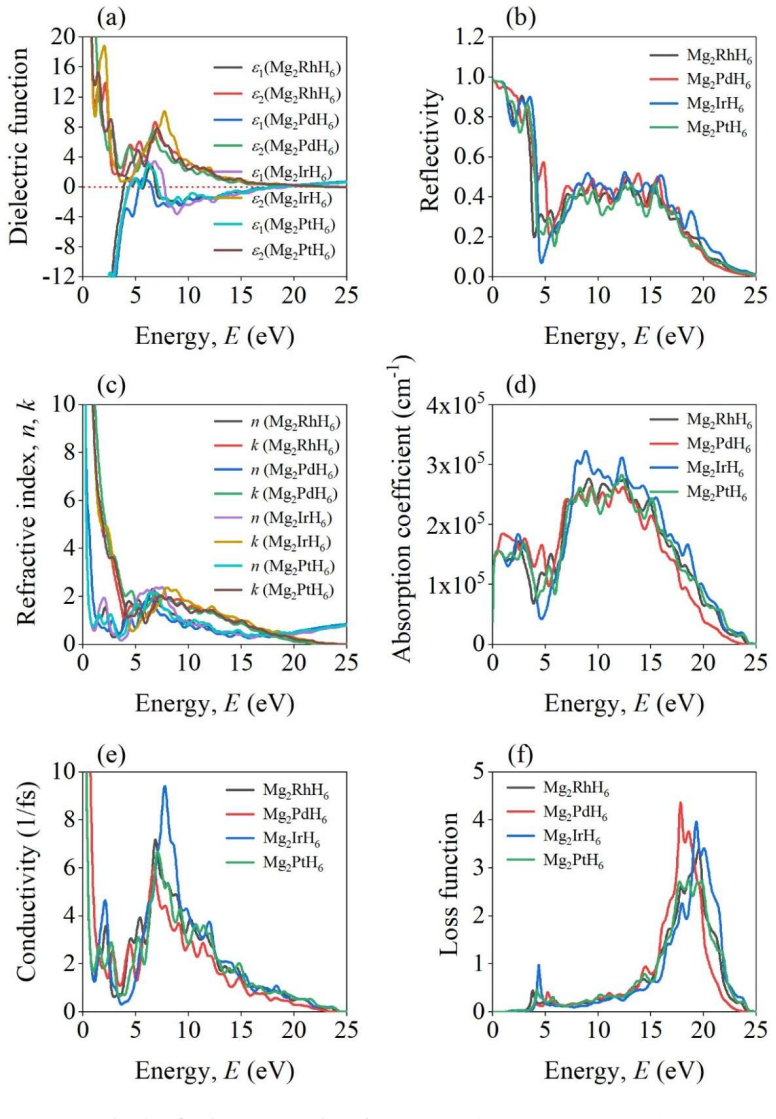
read the original abstract
In this work, a comprehensive first-principles investigation of the structural, hydrogen storage potential, electronic, elastic, mechanical, thermophysical, superconducting, and optical properties of Mg2TmH6 (Tm = Rh, Pd, Ir, Pt) hydrides is presented. Obtained results demonstrate that Mg2TmH6 hydrides combine favorable hydrogen storage, mechanical robustness, superconductivity, and multifunctional optical properties, making them promising candidates for energy storage, superconducting and advanced optoelectronic applications.
Editorial analysis
A structured set of objections, weighed in public.
Referee Report
Summary. The manuscript presents a first-principles DFT study of the structural, hydrogen storage, electronic, elastic, mechanical, thermophysical, superconducting, and optical properties of Mg2TmH6 (Tm = Rh, Pd, Ir, Pt) hydrides. It reports computed formation energies, elastic moduli, phonon dispersions, Eliashberg/McMillan Tc values, and optical spectra, concluding that the compounds combine favorable hydrogen storage, mechanical robustness, superconductivity, and multifunctional optical properties, making them promising for energy storage, superconducting, and optoelectronic applications.
Significance. If the computed quantities prove accurate, the work supplies concrete numerical predictions for four specific hydride compositions that could guide targeted experimental synthesis and characterization in the search for multifunctional hydride materials. The combination of hydrogen-storage metrics with superconductivity and optics is a strength, as is the systematic comparison across the four Tm variants.
major comments (2)
- [§2] §2 (Computational details): The calculations rely on a single GGA functional and standard ultrasoft/PAW pseudopotentials without any benchmark against experimental lattice constants, hybrid-functional results, or GW quasiparticle corrections for these or closely related hydrides. This choice is load-bearing for the central claim because GGA functionals are documented to underestimate H-binding energies by 0.1–0.3 eV/H and can shift soft-mode frequencies by 10–20 %, directly affecting the reported formation energies, mechanical stability, and Tc values.
- [Superconductivity subsection] Superconductivity subsection (likely §4.5 or equivalent): The Eliashberg or McMillan Tc predictions are presented without anharmonic phonon corrections or sensitivity analysis to the functional choice. Given that the central claim of “promising superconductors” rests on these Tc numbers, the absence of such checks leaves the quantitative reliability of the superconductivity results open to systematic error.
minor comments (2)
- [Table 1] Table 1 (structural parameters): The reported lattice constants and formation energies would be more useful if accompanied by direct comparison to any available experimental data or to results from a second functional.
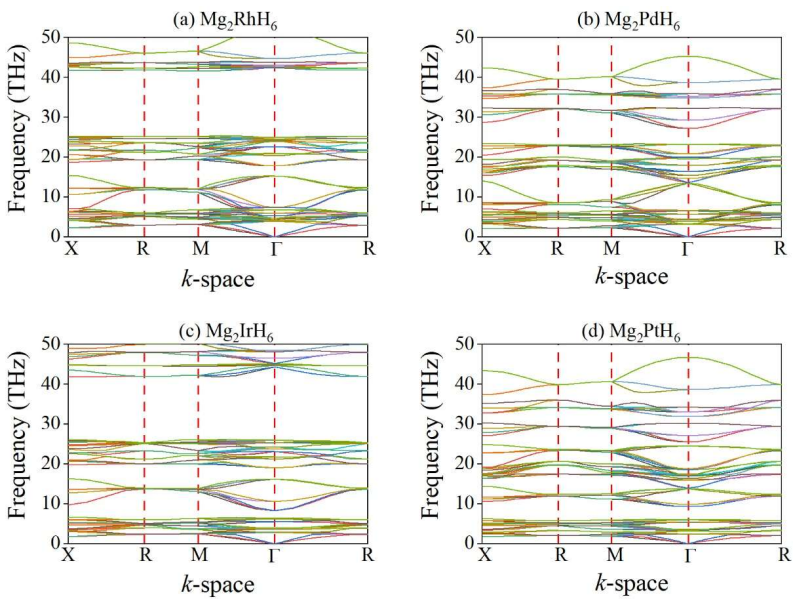
- [Figure captions] Figure captions for phonon and Eliashberg plots: Axis labels and units should be stated explicitly; the current captions are terse and make it difficult to assess the scale of the reported frequencies and spectral functions.
Simulated Author's Rebuttal
We thank the referee for the constructive comments on our manuscript. We address each major point below and will revise the text to improve transparency regarding methodological choices and limitations.
read point-by-point responses
-
Referee: [§2] §2 (Computational details): The calculations rely on a single GGA functional and standard ultrasoft/PAW pseudopotentials without any benchmark against experimental lattice constants, hybrid-functional results, or GW quasiparticle corrections for these or closely related hydrides. This choice is load-bearing for the central claim because GGA functionals are documented to underestimate H-binding energies by 0.1–0.3 eV/H and can shift soft-mode frequencies by 10–20 %, directly affecting the reported formation energies, mechanical stability, and Tc values.
Authors: We agree that the choice of a single GGA functional (PBE) without explicit benchmarks is a limitation of the present study. Our calculations follow standard practice for large-unit-cell hydride systems, where PBE provides a reasonable balance between accuracy and cost for structural, elastic, and phonon properties. While absolute formation energies and soft-mode frequencies can carry systematic errors, the relative trends across the four Tm variants remain robust. In the revised manuscript we will add a dedicated paragraph in §2 discussing the known performance of GGA for transition-metal hydrides (citing relevant benchmark literature) and explicitly noting the absence of hybrid or GW results. We do not plan to perform new hybrid/GW calculations at this stage, as they are computationally prohibitive for these 14-atom cells, but the added discussion will qualify the quantitative claims. revision: partial
-
Referee: [Superconductivity subsection] Superconductivity subsection (likely §4.5 or equivalent): The Eliashberg or McMillan Tc predictions are presented without anharmonic phonon corrections or sensitivity analysis to the functional choice. Given that the central claim of “promising superconductors” rests on these Tc numbers, the absence of such checks leaves the quantitative reliability of the superconductivity results open to systematic error.
Authors: We acknowledge that the reported Tc values rely on the harmonic approximation and a single functional. Our phonon dispersions exhibit no imaginary modes, supporting dynamical stability within this framework, and the electron-phonon coupling strengths are consistent with the observed trends. Anharmonic corrections and functional-sensitivity tests would indeed refine the absolute Tc numbers. In the revised version we will insert a short paragraph in the superconductivity section stating that anharmonic effects and functional dependence were not explored and may affect quantitative Tc values, while the qualitative prediction of superconductivity is supported by the computed λ and ωlog parameters. Performing full anharmonic or multi-functional Eliashberg calculations lies beyond the scope of the current work but could be addressed in follow-up studies. revision: partial
Circularity Check
No circularity: standard DFT first-principles chain is self-contained
full rationale
The paper reports direct outputs from density-functional theory calculations (structural optimization, elastic constants, phonon spectra, electron-phonon coupling, McMillan/Eliashberg Tc, optical spectra) performed with standard external codes, GGA functionals, and tabulated pseudopotentials. No reported quantity is obtained by fitting parameters to the target properties themselves, no self-definitional equations appear, and no load-bearing step reduces to a prior self-citation or ansatz smuggled from the authors' own work. All predictions are therefore independent of the final claims and rest on the external DFT machinery rather than on any internal redefinition or statistical forcing.
Axiom & Free-Parameter Ledger
axioms (1)
- domain assumption Density functional theory with chosen exchange-correlation functional and pseudopotentials is adequate for predicting structural stability, elastic moduli, phonon spectra, and electronic properties of these hydrides.
Reference graph
Works this paper leans on
-
[1]
W. M. Mueller, J. P. Blackledge, and G. G. Libowitz, editors, Metal Hydrides (Accademic Press, New York and London, 1968)
work page 1968
-
[2]
Z. ur Rehman, M. A. Rehman, S. Y. Alomar, B. Rehman, M. Awais, M. Amjad, S. Sikiru, E. M. Ali, and A. Hamad, Hydrogen Storage Capacity of Lead-Free Perovskite NaMTH3 (MT=Sc, Ti, V): A DFT Study, Int. J. Energy Res. 2024, 4009198 (2024)
work page 2024
-
[3]
R. Mohtadi and S. Orimo, The renaissance of hydrides as energy materials, Nat. Rev. Mater. 2, 16091 (2016)
work page 2016
-
[4]
L. Zaluski, A. Zaluska, and J. O. Ström-Olsen, Nanocrystalline metal hydrides, J. Alloys Compd. 253–254, 70 (1997)
work page 1997
-
[5]
Chung et al., Hydriding and dehydriding characteristics of small-scale DU and ZrCo beds, Fusion Eng
D. Chung et al., Hydriding and dehydriding characteristics of small-scale DU and ZrCo beds, Fusion Eng. Des. 88, 2276 (2013)
work page 2013
- [6]
-
[7]
H. Yoo, W. Kim, and H. Ju, A numerical comparison of hydrogen absorption behaviors of uranium and zirconium cobalt-based metal hydride beds, Solid State Ionics 262, 241 (2014)
work page 2014
-
[8]
F. D. Manchester and A. San-Martin, The H-U (hydrogen-uranium) system, J. Phase Equilibria 16, 263 (1995)
work page 1995
-
[9]
J. Bloch, The hydriding kinetics of activated uranium powder under low (near equilibrium) hydrogen pressure, J. Alloys Compd. 361, 130 (2003). 36
work page 2003
-
[10]
K.-J. Jeon, H. R. Moon, A. M. Ruminski, B. Jiang, C. Kisielowski, R. Bardhan, and J. J. Urban, Air- stable magnesium nanocomposites provide rapid and high-capacity hydrogen storage without using heavy-metal catalysts, Nat. Mater. 10, 286 (2011)
work page 2011
-
[11]
A. Pundt and R. Kirchheim, Hydrogen in Metals: Microstructural Aspects, Annu. Rev. Mater. Res. 36, 555 (2006)
work page 2006
- [12]
- [13]
-
[14]
S. Hayat, R. M. A. Khalil, M. I. Hussain, A. M. Rana, and F. Hussain, First-principles investigations of the structural, optoelectronic, magnetic and thermodynamic properties of hydride perovskites XCuH3 (X = Co, Ni, Zn) for hydrogen storage applications, Optik (Stuttg). 228, 166187 (2021)
work page 2021
- [15]
-
[16]
H. H. Raza, G. Murtaza, Umm‐e‐Hani, N. Muhammad, and S. M. Ramay, First-principle investigation of XSrH3 (X = K and Rb) perovskite-type hydrides for hydrogen storage, Int. J. Quantum Chem. 120, e26419 (2020)
work page 2020
-
[17]
W. Q. Sun, C. Wolverton, A. R. Akbarzadeh, and V. Ozolins, First-principles prediction of high- capacity, thermodynamically reversible hydrogen storage reactions based on (NH4)2B12H12, Phys. Rev. B 83, 064112 (2011)
work page 2011
-
[18]
L. Z. Ouyang, L. Yao, H. W. Dong, L. Q. Li, and M. Zhu, Hydrogen storage properties of LaMg2Ni prepared by induction melting, J. Alloys Compd. 485, 507 (2009)
work page 2009
- [19]
-
[20]
A. P. Drozdov, M. I. Eremets, I. A. Troyan, V. Ksenofontov, and S. I. Shylin, Conventional superconductivity at 203 kelvin at high pressures in the sulfur hydride system, Nature 525, 73 (2015)
work page 2015
- [21]
-
[22]
F. Peng, Y. Sun, C. J. Pickard, R. J. Needs, Q. Wu, and Y. Ma, Hydrogen Clathrate Structures in Rare Earth Hydrides at High Pressures: Possible Route to Room-Temperature Superconductivity, Phys. Rev. Lett. 119, 107001 (2017)
work page 2017
-
[23]
Y. Li, J. Hao, H. Liu, J. S. Tse, Y. Wang, and Y. Ma, Pressure-stabilized superconductive yttrium hydrides, Sci. Rep. 5, 9948 (2015)
work page 2015
-
[24]
H. Liu, I. I. Naumov, R. Hoffmann, N. W. Ashcroft, and R. J. Hemley, Potential high-Tc superconducting lanthanum and yttrium hydrides at high pressure, Proc. Natl. Acad. Sci. 114, 6990 (2017)
work page 2017
-
[25]
D. V. Semenok, A. G. Kvashnin, I. A. Kruglov, and A. R. Oganov, Actinium Hydrides AcH10, AcH12, and AcH16 as High-Temperature Conventional Superconductors, J. Phys. Chem. Lett. 9, 1920 (2018)
work page 1920
- [26]
-
[27]
Y. K. Wei, L. Q. Jia, Y. Y. Fang, L. J. Wang, Z. X. Qian, J. N. Yuan, G. Selvaraj, G. F. Ji, and D. Q. Wei, Formation and superconducting properties of predicted ternary hydride ScYH6 under pressures, Int. J. Quantum Chem. 121, (2021)
work page 2021
-
[28]
Y. Ma, D. Duan, Z. Shao, D. Li, L. Wang, H. Yu, F. Tian, H. Xie, B. Liu, and T. Cui, Prediction of superconducting ternary hydride MgGeH6 : from divergent high-pressure formation routes, Phys. Chem. Chem. Phys. 19, 27406 (2017)
work page 2017
- [29]
-
[30]
X. Liang et al., First-principles study of crystal structures and superconductivity of ternary YSH6 and LaSH6 at high pressures, Phys. Rev. B 100, 184502 (2019)
work page 2019
-
[31]
Y. Ma, D. Duan, Z. Shao, H. Yu, H. Liu, F. Tian, X. Huang, D. Li, B. Liu, and T. Cui, Divergent synthesis routes and superconductivity of ternary hydride MgSiH6 at high pressure, Phys. Rev. B 96, 144518 (2017)
work page 2017
-
[32]
P. Song, Z. Hou, P. Baptista de Castro, K. Nakano, K. Hongo, Y. Takano, and R. Maezono, High- Pressure Mg–Sc–H Phase Diagram and Its Superconductivity from First-Principles Calculations, J. Phys. Chem. C 126, 2747 (2022)
work page 2022
-
[33]
Y. Wang, Y. Ohishi, K. Kurosaki, and H. Muta, First-principles calculation study of Mg2XH6 (X=Fe, Ru) on thermoelectric properties, Mater. Res. Express 6, 085536 (2019)
work page 2019
- [34]
-
[35]
M. Kritikos and D. Nore´us, Synthesis and characterization of ternary alkaline-earth transition-metal hydrides containing octahedral [Ru(II)H6]4- and [Os(II)H6]4- complexes, J. Solid State Chem. 93, 256 (1991)
work page 1991
-
[36]
S. V Halilov, D. J. Singh, M. Gupta, and R. Gupta, Stability and electronic structure of the complex K2PtCl6-structure hydrides DMH6(D=Mg,Ca,Sr; M=Fe,Ru,Os), Phys. Rev. B 70, 195117 (2004)
work page 2004
-
[37]
J. Schmidt, L. Pettersson, C. Verdozzi, S. Botti, and M. A. L. Marques, Crystal graph attention networks for the prediction of stable materials, Sci. Adv. 7, eabi7948 (2021)
work page 2021
-
[38]
J. Schmidt, N. Hoffmann, H. Wang, P. Borlido, P. J. M. A. Carriço, T. F. T. Cerqueira, S. Botti, and M. A. L. Marques, Machine‐Learning‐Assisted Determination of the Global Zero‐Temperature Phase Diagram of Materials, Adv. Mater. 35, 2210788 (2023)
work page 2023
-
[39]
C. J. Pickard and R. J. Needs, Structure of phase III of solid hydrogen, Nat. Phys. 3, 473 (2007)
work page 2007
-
[40]
Z. T. Y. Liu, D. Gall, and S. V. Khare, Electronic and bonding analysis of hardness in pyrite-type transition-metal pernitrides, Phys. Rev. B 90, 134102 (2014)
work page 2014
-
[41]
Z. T. Y. Liu, X. Zhou, S. V Khare, and D. Gall, Structural, mechanical and electronic properties of 3d transition metal nitrides in cubic zincblende, rocksalt and cesium chloride structures: a first- principles investigation, J. Phys. Condens. Matter 26, 025404 (2014)
work page 2014
-
[42]
Z. T. Y. Liu, X. Zhou, D. Gall, and S. V. Khare, First-principles investigation of the structural, mechanical and electronic properties of the NbO-structured 3d, 4d and 5d transition metal nitrides, Comput. Mater. Sci. 84, 365 (2014)
work page 2014
-
[43]
L. Lin, F. Wang, L. Yang, L. J. Chen, Z. Liu, and Y. M. Wang, Microstructure investigation and 38 first-principle analysis of die-cast AZ91 alloy with calcium addition, Mater. Sci. Eng. A 528, 5283 (2011)
work page 2011
-
[44]
A. Berche, J.-C. Tédenac, and P. Jund, First-principles determination of the enthalpy of formation of Mn–Si phases, Solid State Commun. 188, 49 (2014)
work page 2014
- [45]
-
[46]
Born, Max; Hung, Dynamical Theory of Crystal Lattice (Clarendon Press, Oxford, 1956)
K. Born, Max; Hung, Dynamical Theory of Crystal Lattice (Clarendon Press, Oxford, 1956)
work page 1956
-
[47]
D. Qu, C. Li, L. Bao, Z. Kong, and Y. Duan, Structural, electronic, and elastic properties of orthorhombic, hexagonal, and cubic Cu3Sn intermetallic compounds in Sn–Cu lead-free solder, J. Phys. Chem. Solids 138, 109253 (2020)
work page 2020
- [48]
-
[49]
Voigt, Ueber die Beziehung zwischen den beiden Elasticitätsconstanten isotroper Körper, Ann
W. Voigt, Ueber die Beziehung zwischen den beiden Elasticitätsconstanten isotroper Körper, Ann. Phys. 274, 573 (1889)
-
[50]
A. Reuss, Berechnung der Fließgrenze von Mischkristallen auf Grund der Plastizitätsbedingung für Einkristalle, Z. Angew. Math. Mech. 9, 49 (1929)
work page 1929
-
[51]
Hill, The Elastic Behaviour of a Crystalline Aggregate, Proc
R. Hill, The Elastic Behaviour of a Crystalline Aggregate, Proc. Phys. Soc. Sect. A 65, 349 (1952)
work page 1952
-
[52]
I. N. Frantsevich, F. F. Voronov, and S. A. Bakuta, Handbook on Elastic Constants and Moduli of Elasticity for Metals and Nonmetals (Naukova Dumka, 1982)
work page 1982
-
[53]
S. F. Pugh, XCII. Relations between the elastic moduli and the plastic properties of polycrystalline pure metals, London, Edinburgh, Dublin Philos. Mag. J. Sci. 45, 823 (1954)
work page 1954
-
[54]
M. M. Hossain, M. A. Ali, M. M. Uddin, A. K. M. A. Islam, and S. H. Naqib, Origin of high hardness and optoelectronic and thermo-physical properties of boron-rich compounds B6X (X = S, Se): A comprehensive study via DFT approach, J. Appl. Phys. 129, 175109 (2021)
work page 2021
-
[55]
M. A. Hadi, N. Kelaidis, S. H. Naqib, A. Chroneos, and A. K. M. A. Islam, Mechanical behaviors, lattice thermal conductivity and vibrational properties of a new MAX phase Lu2SnC, J. Phys. Chem. Solids 129, 162 (2019)
work page 2019
-
[56]
M. I. Naher and S. H. Naqib, Structural, elastic, electronic, bonding, and optical properties of topological CaSn3 semimetal, J. Alloys Compd. 829, 154509 (2020)
work page 2020
-
[57]
M. I. Naher and S. H. Naqib, An ab-initio study on structural, elastic, electronic, bonding, thermal, and optical properties of topological Weyl semimetal TaX (X = P, As), Sci. Rep. 11, 5592 (2021)
work page 2021
-
[58]
S. Zhu, X. Zhang, J. Chen, C. Liu, D. Li, H. Yu, and F. Wang, Insight into the elastic, electronic properties, anisotropy in elasticity of Manganese Borides, Vacuum 165, 118 (2019)
work page 2019
-
[59]
S. I. Ranganathan and M. Ostoja-Starzewski, Universal Elastic Anisotropy Index, Phys. Rev. Lett. 101, 055504 (2008)
work page 2008
-
[60]
R. Gaillac, P. Pullumbi, and F.-X. Coudert, ELATE: an open-source online application for analysis and visualization of elastic tensors, J. Phys. Condens. Matter 28, 275201 (2016)
work page 2016
-
[61]
F. Parvin and S. H. Naqib, Pressure dependence of structural, elastic, electronic, thermodynamic, and optical properties of van der Waals-type NaSn2P2 pnictide superconductor: Insights from DFT study, Results Phys. 21, 103848 (2021)
work page 2021
-
[62]
X.-W. Sun, N. Bioud, Z.-J. Fu, X.-P. Wei, T. Song, and Z.-W. Li, High-pressure elastic properties 39 of cubic Ir2 P from ab initio calculations, Phys. Lett. A 380, 3672 (2016)
work page 2016
-
[63]
D. M. Teter, Computational Alchemy: The Search for New Superhard Materials, MRS Bull. 23, 22 (1998)
work page 1998
-
[64]
Y. Tian, B. Xu, and Z. Zhao, Microscopic theory of hardness and design of novel superhard crystals, Int. J. Refract. Met. Hard Mater. 33, 93 (2012)
work page 2012
-
[65]
X.-Q. Chen, H. Niu, D. Li, and Y. Li, Modeling hardness of polycrystalline materials and bulk metallic glasses, Intermetallics 19, 1275 (2011)
work page 2011
-
[66]
E. S. Yousef, A. El-Adawy, and N. El-KheshKhany, Effect of rare earth (Pr2O3, Nd2O3, Sm2O3, Eu2O3, Gd2O3 and Er2O3) on the acoustic properties of glass belonging to bismuth, Solid State Commun. 139, 108 (2006)
work page 2006
-
[67]
E. Mazhnik and A. R. Oganov, A model of hardness and fracture toughness of solids, J. Appl. Phys. 126, 125109 (2019)
work page 2019
-
[68]
O. L. Anderson, A simplified method for calculating the debye temperature from elastic constants, J. Phys. Chem. Solids 24, 909 (1963)
work page 1963
-
[69]
M. I. Naher and S. H. Naqib, First-principles insights into the mechanical, optoelectronic, thermophysical, and lattice dynamical properties of binary topological semimetal BaGa2, Results Phys. 37, 105507 (2022)
work page 2022
-
[70]
M. E. Fine, L. D. Brown, and H. L. Marcus, Elastic constants versus melting temperature in metals, Scr. Metall. 18, 951 (1984)
work page 1984
- [71]
-
[72]
M. Ye, M. J. G. von Westarp, S.-M. Souliou, M. Peters, R. Möller, K. Kliemt, M. Merz, R. Heid, C. Krellner, and M. Le Tacon, Strong electron-phonon coupling and enhanced phonon Grüneisen parameters in valence-fluctuating metal EuPd2Si2, Phys. Rev. B 107, 195111 (2023)
work page 2023
-
[73]
M. M. Mridha and S. H. Naqib, Pressure dependent elastic, electronic, superconducting, and optical properties of ternary barium phosphides (BaM2P2; M = Ni, Rh): DFT based insights, Phys. Scr. 95, 105809 (2020)
work page 2020
-
[74]
D. G. Cahill and R. O. Pohl, Lattice Vibrations and Heat Transport in Crystals and Glasses, Annu. Rev. Phys. Chem. 39, 93 (1988)
work page 1988
-
[75]
D. R. Clarke, Materials selection guidelines for low thermal conductivity thermal barrier coatings, Surf. Coatings Technol. 163–164, 67 (2003)
work page 2003
-
[76]
Kleinman, Deformation Potentials in Silicon
L. Kleinman, Deformation Potentials in Silicon. I. Uniaxial Strain, Phys. Rev. 128, 2614 (1962)
work page 1962
-
[77]
K. H. Bennemann and J. W. Garland, Theory for Superconductivity in d‐Band Metals, AIP Conf. Proc. 4, 103 (1972)
work page 1972
-
[78]
W. L. McMillan, Transition Temperature of Strong-Coupled Superconductors, Phys. Rev. 167, 331 (1968)
work page 1968
-
[79]
E. D. Palik, editor, Handbook of Optical Constants of Solids, Vol. 3 (Academic press, San Diego, 1998)
work page 1998
-
[80]
P. Romaniello, P. L. de Boeij, F. Carbone, and D. van der Marel, Optical properties of bcc transition metals in the range 0–40 eV, Phys. Rev. B 73, 075115 (2006)
work page 2006
discussion (0)
Sign in with ORCID, Apple, or X to comment. Anyone can read and Pith papers without signing in.