Recognition: unknown
Quantum memory and scrambling from the perspective of a classical neural network
Pith reviewed 2026-05-07 16:30 UTC · model grok-4.3
The pith
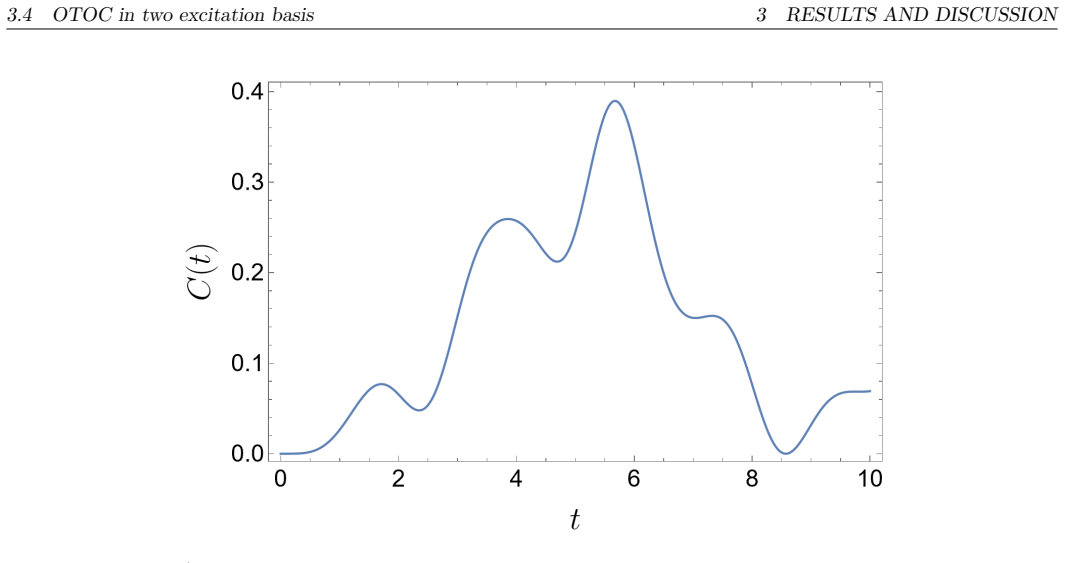
Time-dependent quantum memory oscillates faster than the out-of-time-ordered correlator and does not equilibrate.
A machine-rendered reading of the paper's core claim, the machinery that carries it, and where it could break.
Core claim
In this work the authors propose a time-dependent version of quantum memory and apply it to the atomic helical spin chain to track the emergence and propagation of quantum correlations. The results indicate that quantum memory exhibits faster oscillations in time than the out-of-time-ordered correlator and does not equilibrate. Furthermore, predictions from a trained artificial neural network show quantum memory to be more sensitive than the out-of-time-ordered correlator to broken inversion symmetry and the nonreciprocal effect.
What carries the argument
The time-dependent formulation of quantum memory, which quantifies how prior quantum correlations reduce measurement uncertainties in evolving systems, combined with neural-network approximation, forms the central machinery for comparing it to scrambling indicators like the OTOC.
Load-bearing premise
The proposal assumes that the modified time-dependent quantum memory remains a rigorously defined mathematical quantity that accurately captures the intended correlations without introducing inconsistencies.
What would settle it
Computing the exact time-dependent quantum memory for a small helical spin chain and checking whether the neural network predictions match within acceptable error bounds would confirm or refute the method's accuracy.
Figures





read the original abstract
Entropic uncertainty relations are universal quantifiers of fundamental uncertainties of quantum measurements and are widely discussed in the quantum metrology literature. Quantum memory is a phenomenon related to the specific type of quantum correlations that allows for reducing fundamental uncertainties of quantum measurements. In the present work, the modified concept of quantum memory for time-dependent problems is proposed. We compare the time-dependent formulation of quantum memory with the out-of-time-ordered correlator (OTOC). Quantum memory is a rigorous mathematical concept that requires demanding calculations. Thus, until now, quantum memory has been discussed mainly for simple model systems and stationary problems. In the present work, we demonstrate that quantum memory can also be studied for realistic and physically relevant systems, e.g., the atomic helical spin chain, as well as the emergence and propagation of quantum correlations in time. We found that quantum memory manifests faster oscillations in time than OTOC and does not equilibrate. Furthermore, an artificial neural network is trained and asked to predict results for OTOC and quantum memory. These results show that quantum memory is more sensitive than OTOC in terms of broken inversion symmetry and the nonreciprocal effect.
Editorial analysis
A structured set of objections, weighed in public.
Referee Report
Summary. The paper proposes a modified time-dependent extension of quantum memory based on entropic uncertainty relations, compares its dynamics to the out-of-time-ordered correlator (OTOC) in an atomic helical spin chain, and reports that quantum memory exhibits faster oscillations in time, fails to equilibrate, and is more sensitive to broken inversion symmetry and nonreciprocal effects. A classical neural network is trained to predict both quantities for these systems.
Significance. If the time-dependent quantum memory is placed on a rigorous footing and the neural-network results are shown to be reproducible and unbiased, the work would usefully extend quantum-memory concepts beyond stationary cases to realistic time-dependent models and illustrate the utility of machine learning for computationally intensive quantum-information observables.
major comments (3)
- [Abstract] Abstract: the central claim that 'quantum memory manifests faster oscillations in time than OTOC and does not equilibrate' rests on the proposed time-dependent modification, yet the manuscript supplies no explicit formula, derivation from conditional von Neumann entropy, or adjustment for time evolution (e.g., time-ordered exponentials or instantaneous versus integrated entropies).
- [Neural network results] Neural-network results paragraph: no training protocol, data source, validation metrics, baseline comparisons, or error analysis are described, so it is impossible to determine whether the reported greater sensitivity of quantum memory to inversion-symmetry breaking and nonreciprocity constitutes an independent test or a re-expression of fitted parameters.
- [Results and discussion] Comparison claims: without a demonstrated link between the time-dependent quantum memory and the underlying entropic uncertainty relation for evolving states, the asserted differences from OTOC cannot be interpreted as physical rather than definitional artifacts.
minor comments (1)
- [Abstract] Abstract: the phrase 'emergence and propagation of quantum correlations in time' is used without indicating the concrete observable employed beyond quantum memory and OTOC.
Simulated Author's Rebuttal
We thank the referee for the thorough review and valuable suggestions. We address each of the major comments below and outline the revisions we plan to implement.
read point-by-point responses
-
Referee: [Abstract] Abstract: the central claim that 'quantum memory manifests faster oscillations in time than OTOC and does not equilibrate' rests on the proposed time-dependent modification, yet the manuscript supplies no explicit formula, derivation from conditional von Neumann entropy, or adjustment for time evolution (e.g., time-ordered exponentials or instantaneous versus integrated entropies).
Authors: We agree that the abstract lacks the explicit formula for the time-dependent quantum memory. The main text proposes the modification based on the conditional von Neumann entropy for time-evolved states. In the revised manuscript, we will include the explicit expression for the time-dependent quantum memory, along with a derivation sketch from the entropic uncertainty relation, clarifying the use of instantaneous entropies. This will make the central claim more transparent. revision: yes
-
Referee: [Neural network results] Neural-network results paragraph: no training protocol, data source, validation metrics, baseline comparisons, or error analysis are described, so it is impossible to determine whether the reported greater sensitivity of quantum memory to inversion-symmetry breaking and nonreciprocity constitutes an independent test or a re-expression of fitted parameters.
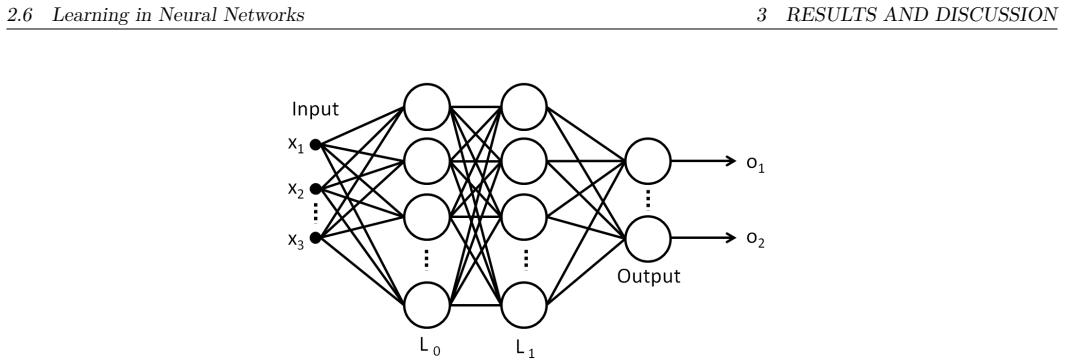
Authors: The referee is correct that the neural network details were omitted. We will add a new subsection detailing the training protocol, including the data generation from exact diagonalization of the helical spin chain, the neural network architecture (e.g., feedforward layers), training/validation split, loss function, and performance metrics such as mean squared error. We will also include baseline comparisons with simpler regression models and error analysis to demonstrate that the sensitivity findings are robust and not artifacts of the fitting. revision: yes
-
Referee: [Results and discussion] Comparison claims: without a demonstrated link between the time-dependent quantum memory and the underlying entropic uncertainty relation for evolving states, the asserted differences from OTOC cannot be interpreted as physical rather than definitional artifacts.
Authors: We maintain that the time-dependent quantum memory is directly linked to the entropic uncertainty relation via the conditional entropy of time-evolved states, providing a physical basis for the observed differences. The faster oscillations and lack of equilibration reflect the memory-assisted uncertainty reduction in dynamical settings, which differs from the operator spreading captured by OTOC. To strengthen this, we will expand the discussion section with an explicit derivation step showing the connection to the uncertainty relation for evolving states and additional numerical evidence supporting the physical interpretation. revision: partial
Circularity Check
No significant circularity in derivation chain
full rationale
The paper proposes a time-dependent extension of quantum memory as a modified concept, performs direct calculations on the helical spin chain to compare its time evolution against OTOC, and employs a neural network as a computational tool to explore predictions across parameter regimes (including symmetry breaking). No equations or sections reduce a claimed prediction or result to an input by construction, no self-citation chain bears the central claim, and the neural-network step is presented as an auxiliary predictor rather than a fitted re-expression of the same quantities used to define quantum memory. The absence of an explicit derivation for the time-dependent modification is a potential definitional gap but does not create circularity under the specified criteria; the reported differences in oscillation speed and sensitivity remain independent outputs of the model.
Axiom & Free-Parameter Ledger
free parameters (1)
- neural-network architecture and training hyperparameters
axioms (1)
- domain assumption Entropic uncertainty relations remain valid when operators are made explicitly time-dependent
Reference graph
Works this paper leans on
-
[1]
Bersin, M
E. Bersin, M. Sutula, Y. Q. Huan, A. Suleymanzade, D. R. Assumpcao, Y.-C. Wei, P.-J. Stas, C. M. Knaut, E. N. Knall, C. Langrock, N. Sinclair, R. Murphy, R. Riedinger, M. Yeh, C. Xin, S. Bandyopadhyay, D. D. Sukachev, B. Machielse, D. S. Levonian, M. K. Bhaskar, S. Hamilton, H. Park, M. Lončar, M. M. Fejer, P. B. Dixon, D. R. Englund, M. D. Lukin,PRX Quan...
-
[2]
R. Fan, Y. Bao, E. Altman, A. Vishwanath,PRX Quantum2024,5020343
-
[3]
Sekatski, J.-D
P. Sekatski, J.-D. Bancal, M. Ioannou, M. Afzelius, N. Brunner,Phys. Rev. Lett.2023,131 170802
2023
-
[4]
Davidson, O
O. Davidson, O. Yogev, E. Poem, O. Firstenberg,Phys. Rev. Lett.2023,131033601
2023
-
[5]
Drmota, D
P. Drmota, D. Main, D. P. Nadlinger, B. C. Nichol, M. A. Weber, E. M. Ainley, A. Agrawal, R. Srinivas, G. Araneda, C. J. Ballance, D. M. Lucas,Phys. Rev. Lett.2023,130090803
2023
-
[6]
D. Wang, F. Ming, M.-L. Hu, L. Ye,Annalen der Physik2019,531, 10 1900124. 22 REFERENCES REFERENCES
-
[7]
F. Ming, D. Wang, X.-G. Fan, W.-N. Shi, L. Ye, J.-L. Chen,Physical Review A2020,102, 1 012206
-
[8]
Dolatkhah, S
H. Dolatkhah, S. Haseli, S. Salimi, A. Khorashad,Physical Review A2020,102, 5 052227
-
[9]
Bergh, M
B. Bergh, M. Gärttner,Physical Review A2021,103, 5 052412
-
[10]
B.-F. Xie, F. Ming, D. Wang, L. Ye, J.-L. Chen,Phys. Rev. A2021,104062204
-
[11]
Chotorlishvili, A
L. Chotorlishvili, A. Gudyma, J. Wätzel, A. Ernst, J. Berakdar,Physical Review B2019,100, 17 174413
-
[12]
Song, L.-J
M.-L. Song, L.-J. Li, X.-K. Song, L. Ye, D. Wang,Physical Review E2022,106, 5 054107
-
[13]
Zhu,npj Quantum Information2021,7, 1 47
H. Zhu,npj Quantum Information2021,7, 1 47
-
[14]
Kurashvili, L
P. Kurashvili, L. Chotorlishvili, K. Kouzakov, A. Studenikin,The European Physical Journal Plus 2022,137, 2 234
2022
-
[15]
Kurashvili, L
P. Kurashvili, L. Chotorlishvili, K. A. Kouzakov, A. G. Tevzadze, A. I. Studenikin,Phys. Rev. D 2021,103036011
2021
-
[16]
Berta, M
M. Berta, M. Christandl, R. Colbeck, J. M. Renes, R. Renner,Nature Physics2010,6, 9 659
-
[17]
Menzel, Y
M. Menzel, Y. Mokrousov, R. Wieser, J. E. Bickel, E. Vedmedenko, S. Blügel, S. Heinze, K. von Bergmann, A. Kubetzka, R. Wiesendanger,Phys. Rev. Lett.2012,108197204
2012
-
[18]
Hammer, W
L. Hammer, W. Meier, A. Schmidt, K. Heinz,Phys. Rev. B2003,67125422
-
[19]
Heyl,Reports on Progress in Physics2018,81, 5 054001
M. Heyl,Reports on Progress in Physics2018,81, 5 054001
-
[20]
M. Heyl, F. Pollmann, B. Dóra,Phys. Rev. Lett.2018,121016801
2018
-
[21]
M. Heyl, A. Polkovnikov, S. Kehrein,Phys. Rev. Lett.2013,110135704
2013
-
[22]
R. Vosk, E. Altman,Phys. Rev. Lett.2014,112217204
2014
-
[23]
Eisert, M
J. Eisert, M. Friesdorf, C. Gogolin,Nature Physics2015,11, 2 124–130
-
[24]
Ponte, Z
P. Ponte, Z. Papić, F. Huveneers, D. A. Abanin,Phys. Rev. Lett.2015,114140401
2015
-
[25]
Azimi, L
M. Azimi, L. Chotorlishvili, S. K. Mishra, S. Greschner, T. Vekua, J. Berakdar,Phys. Rev. B 2014,89024424
2014
-
[26]
Azimi, M
M. Azimi, M. Sekania, S. K. Mishra, L. Chotorlishvili, Z. Toklikishvili, J. Berakdar,Phys. Rev. B2016,94064423
-
[27]
E. H. Lieb, D. W. Robinson,Communications in Mathematical Physics1972,28, 3 251–257
-
[28]
A. I. Larkin, Y. N. Ovchinnikov,Journal of Experimental and Theoretical Physics1969,28, 6 1200
-
[29]
Maldacena, S
J. Maldacena, S. H. Shenker, D. Stanford,Journal of High Energy Physics2016,2016, 8 106
2016
-
[30]
D. A. Roberts, D. Stanford, L. Susskind,Journal of High Energy Physics2015,2015, 3 51
2015
-
[31]
Iyoda, T
E. Iyoda, T. Sagawa,Phys. Rev. A2018,97042330
-
[32]
Chapman, A
A. Chapman, A. Miyake,Phys. Rev. A2018,98012309
-
[33]
Swingle, D
B. Swingle, D. Chowdhury,Phys. Rev. B2017,95060201
-
[34]
M. J. Klug, M. S. Scheurer, J. Schmalian,Phys. Rev. B2018,98045102. 23 REFERENCES REFERENCES
-
[35]
del Campo, J
A. del Campo, J. Molina-Vilaplana, J. Sonner,Phys. Rev. D2017,95126008
-
[36]
Campisi, J
M. Campisi, J. Goold,Phys. Rev. E2017,95062127
-
[37]
Grozdanov, K
S. Grozdanov, K. Schalm, V. Scopelliti,Phys. Rev. Lett.2018,120231601
2018
-
[38]
A. A. Patel, D. Chowdhury, S. Sachdev, B. Swingle,Phys. Rev. X2017,7031047
-
[39]
Khemani, A
V. Khemani, A. Vishwanath, D. A. Huse,Phys. Rev. X2018,8031057
-
[40]
R. K. Shukla, A. Lakshminarayan, S. K. Mishra,Phys. Rev. B2022,105224307
-
[41]
R. K. Shukla, S. K. Mishra,Phys. Rev. A2022,106022403
-
[42]
Rakovszky, F
T. Rakovszky, F. Pollmann, C. W. von Keyserlingk,Phys. Rev. X2018,8031058
-
[43]
S. V. Syzranov, A. V. Gorshkov, V. Galitski,Phys. Rev. B2018,97161114
-
[44]
Hosur, X.-L
P. Hosur, X.-L. Qi, D. A. Roberts, B. Yoshida,Journal of High Energy Physics2016,2016, 2 4
2016
-
[45]
Yunger Halpern,Phys
N. Yunger Halpern,Phys. Rev. A2017,95012120
-
[46]
D. A. Roberts, B. Yoshida,Journal of High Energy Physics2017,2017, 4
2017
-
[47]
Lo Monaco, L
G. Lo Monaco, L. Innocenti, D. Cilluffo, D. A. Chisholm, S. Lorenzo, G. M. Palma,Quantum Science and Technology2023,8, 3 035006
-
[48]
Lo Monaco, L
G. Lo Monaco, L. Innocenti, D. Cilluffo, D. A. Chisholm, S. Lorenzo, G. Massimo Palma,Quantum Science and Technology2024,10, 1 015055
-
[49]
Touil, S
A. Touil, S. Deffner,Quantum Science and Technology2020,5, 3 035005
-
[50]
Zhuang, Y.-K
J.-Z. Zhuang, Y.-K. Wu, L.-M. Duan,Physical Review B2022,106, 14 144308
-
[51]
M. A. Nielsen,Neural networks and deep learning, volume 25, Determination press San Francisco, CA, USA,2015
2015
-
[52]
K. Beer, D. Bondarenko, T. Farrelly, T. J. Osborne, R. Salzmann, D. Scheiermann, R. Wolf, Nature communications2020,11, 1 808
-
[53]
Cerezo, A
M. Cerezo, A. Sone, T. Volkoff, L. Cincio, P. J. Coles,Nature communications2021,12, 1 1791
-
[54]
Schuld, N
M. Schuld, N. Killoran,PRX Quantum2022,3030101
-
[55]
Pesah, M
A. Pesah, M. Cerezo, S. Wang, T. Volkoff, A. T. Sornborger, P. J. Coles,Phys. Rev. X2021,11 041011
-
[56]
Wang,Science2003,299, 5613 1719–1722
J. Wang,Science2003,299, 5613 1719–1722
-
[57]
Ramesh, N
R. Ramesh, N. A. Spaldin,Nature Materials2007,6, 1 21–29
-
[58]
Bibes, A
M. Bibes, A. Barthémy,Nature Materials2008,7, 6 425–426
-
[59]
Fiebig,Journal of Physics D: Applied Physics2005,38, 8 R123–R152
M. Fiebig,Journal of Physics D: Applied Physics2005,38, 8 R123–R152
-
[60]
Hemberger, F
J. Hemberger, F. Schrettle, A. Pimenov, P. Lunkenheimer, V. Y. Ivanov, A. A. Mukhin, A. M. Balbashov, A. Loidl,Phys. Rev. B2007,75035118
-
[61]
Stagraczyński, L
S. Stagraczyński, L. Chotorlishvili, M. Schüler, M. Mierzejewski, J. Berakdar,Phys. Rev. B2017, 96054440
-
[62]
Khomeriki, L
R. Khomeriki, L. Chotorlishvili, I. Tralle, J. Berakdar,Nano Letters2016,16, 11 7290–7294. 24 REFERENCES REFERENCES
-
[63]
Khomeriki, L
R. Khomeriki, L. Chotorlishvili, B. A. Malomed, J. Berakdar,Phys. Rev. B2015,91041408
-
[64]
Cheong, M
S.-W. Cheong, M. Mostovoy,Nature Materials2007,6, 1 13–20
-
[65]
Katsura, N
H. Katsura, N. Nagaosa, A. V. Balatsky,Phys. Rev. Lett.2005,95057205
2005
-
[66]
Mostovoy,Phys
M. Mostovoy,Phys. Rev. Lett.2006,96067601
2006
-
[67]
R. K. Shukla, L. Chotorlishvili, S. K. Mishra, F. Iemini,Phys. Rev. B2025,111024315
-
[68]
I. A. Sergienko, E. Dagotto,Phys. Rev. B2006,73094434
-
[69]
Tokura, S
Y. Tokura, S. Seki, N. Nagaosa,Reports on Progress in Physics2014,77, 7 076501
-
[70]
S. V. Kolesnikov, E. S. Glazova, A. M. Saletsky,The European Physical Journal B2025,98, 8 172
-
[71]
Kolesnikov, E
S. Kolesnikov, E. Glazova, A. Saletsky,Journal of Statistical Mechanics: Theory and Experiment 2025,2025, 5 053207
2025
-
[72]
Moon, S.-M
J.-H. Moon, S.-M. Seo, K.-J. Lee, K.-W. Kim, J. Ryu, H.-W. Lee, R. D. McMichael, M. D. Stiles, Phys. Rev. B2013,88184404
-
[73]
M. M. Wilde,Quantum information theory, Cambridge university press,2013
2013
-
[74]
Kulig, P
M. Kulig, P. Kurashvili, C. Jasiukiewicz, M. Inglot, S. Wolski, S. Stagraczyński, T. Masłowski, T. Szczepański, R. Stagraczyński, V. K. Dugaev, L. Chotorlishvili,Phys. Rev. B2023,108 134411
-
[75]
F. Ming, D. Wang, X.-G. Fan, W.-N. Shi, L. Ye, J.-L. Chen,Phys. Rev. A2020,102012206
-
[76]
Dolatkhah, S
H. Dolatkhah, S. Haseli, S. Salimi, A. S. Khorashad,Phys. Rev. A2020,102052227
-
[77]
L. Wu, L. Ye, D. Wang,Phys. Rev. A2022,106062219
-
[78]
G. Zhu, A. Liu, L. Xiao, K. Wang, D. Qu, J. Li, C. Qiao, P. Xue,Phys. Rev. A2023,108 L050202
-
[79]
J. Lee, D. Kim, D.-H. Kim,Phys. Rev. B2019,99184202
-
[80]
Nakamura, E
S. Nakamura, E. Iyoda, T. Deguchi, T. Sagawa,Phys. Rev. B2019,99224305
discussion (0)
Sign in with ORCID, Apple, or X to comment. Anyone can read and Pith papers without signing in.