Correspondence between a decaying dark matter sector scenario and scalar field model
Pith reviewed 2026-05-09 19:58 UTC · model grok-4.3
The pith
Mapping decaying dark matter to a scalar field potential requires the dark energy equation of state to enter the phantom domain for viability.
A machine-rendered reading of the paper's core claim, the machinery that carries it, and where it could break.
Core claim
Physical viability of the scalar field model, specifically the existence of a well-defined potential minimum, inevitably forces the dark energy equation of state into the phantom domain. Reinterpreting the framework as a complex scalar field with U(1) phase dynamics resolves late-time kinetic pathologies, naturally producing an ultra-light mass of m_φ ∼ 10^{-33} eV that classifies the model as a unified dark fluid. Dynamical analysis further proves that the phantom-dominated epoch serves as a stable late-time cosmic attractor.
What carries the argument
The exact analytical mapping of decaying dark matter fluid phenomenology onto a scalar field potential derived from Friedmann constraints, with viability tied to the existence of a potential minimum.
If this is right
- The dark energy equation of state must lie in the phantom domain for the potential to have a minimum.
- The model yields an ultra-light scalar mass scale of about 10^{-33} eV, unifying dark sectors.
- The phantom-dominated epoch becomes a stable attractor when non-minimal coupling is included.
- Kinetic pathologies are resolved by mapping to the angular dynamics of a U(1) phase in a complex scalar field.
Where Pith is reading between the lines
- This approach suggests that decaying dark matter scenarios could be tested via precise measurements of the expansion history in the phantom regime.
- The ultra-light mass scale might imply detectable effects in large-scale structure or gravitational wave observations.
- Adopting the complex scalar interpretation could link this model to other ultra-light field theories in cosmology.
Load-bearing premise
That a decaying dark matter fluid can be exactly represented by a real scalar field potential whose minimum condition is the key viability criterion, and that a complex scalar with U(1) phase fixes kinetic problems without altering the original phenomenology or introducing inconsistencies.
What would settle it
Detection of a dark energy equation of state that remains above -1 throughout the late universe, or absence of any ultra-light scalar signatures consistent with 10^{-33} eV in cosmological data.
Figures
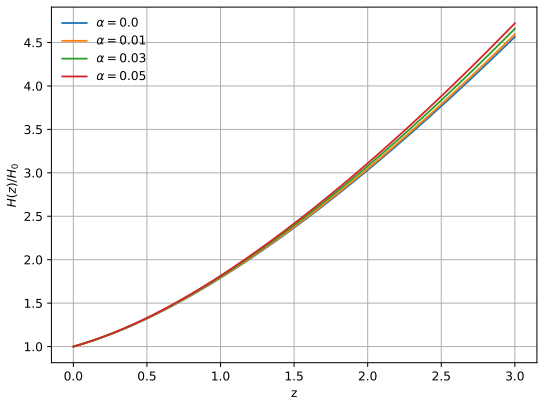
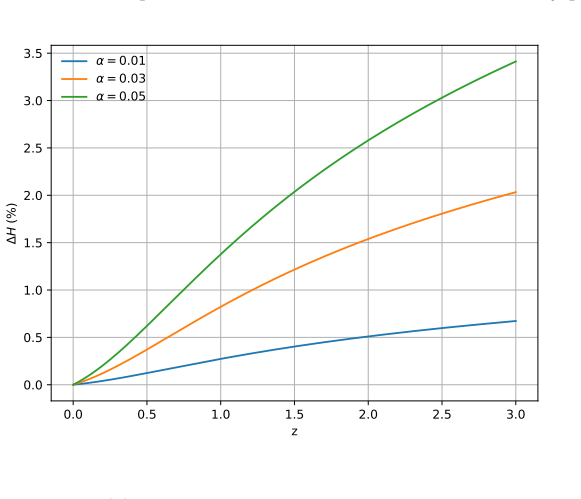
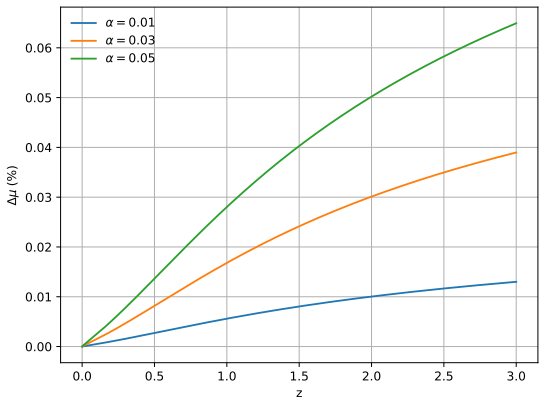

read the original abstract
We explore the theoretical viability of modeling a decaying dark matter sector through a unified scalar field approach. Using exact analytical solutions of the Friedmann constraints, we map the fluid phenomenology onto a scalar field potential. Our analysis reveals that physical viability, specifically the existence of a well-defined potential minimum; inevitably forces the dark energy equation of state into the phantom domain. To resolve the kinetic pathologies at late times, we propose reinterpreting the framework within a complex scenario, mapping the imaginary transition to the angular dynamics of a $U(1)$ phase. This mapping naturally yields an ultra-light mass scale of $m_\phi \sim 10^{-33} \ \text{eV}$, classifying the model as a unified dark fluid. Finally, we employ a dynamical approach to study the effects of non-minimal coupling, proving that the phantom-dominated epoch acts as a stable, late-time cosmic attractor in this kind of cosmological scenario.
Editorial analysis
A structured set of objections, weighed in public.
Referee Report
Summary. The paper claims to map a decaying dark matter fluid onto a scalar field potential using exact analytical solutions of the Friedmann equations. It argues that requiring a well-defined potential minimum forces the dark energy equation of state into the phantom regime (w < -1). Kinetic pathologies are addressed by reinterpreting the model as a complex scalar field with U(1) phase dynamics, which is said to naturally produce an ultra-light mass m_φ ∼ 10^{-33} eV and classify the scenario as a unified dark fluid. Dynamical systems analysis is then used to show that the phantom-dominated epoch is a stable late-time attractor under non-minimal coupling.
Significance. If the exact fluid-to-scalar mapping holds and the complex-field reinterpretation preserves the original decaying-DM continuity equation and decay rate without introducing new inconsistencies, the work would offer a unified dark-sector model with a naturally ultra-light mass scale and a proven stable attractor. The use of exact Friedmann solutions and dynamical stability analysis would be positive features for theoretical cosmology.
major comments (3)
- [Section on complex scalar reinterpretation (following the real-scalar potential mapping)] The central step of promoting the real scalar to a complex field with U(1) phase (to cure kinetic pathologies) is load-bearing for the phantom-attractor claim, yet no explicit demonstration is given that the effective continuity equation or decay rate of the original decaying DM fluid remains unchanged once the phase kinetic term is active. The original fluid has a single decaying degree of freedom; the complex field introduces both modulus and phase, and this mismatch must be shown to be harmless.
- [Paragraph deriving m_φ ∼ 10^{-33} eV] The ultra-light mass scale m_φ ∼ 10^{-33} eV is presented as naturally yielded by the mapping, but the derivation appears to rely on matching to observed densities or the Hubble parameter (as is standard in scalar-field cosmologies). This makes the result dependent on fitted inputs rather than independently derived, undermining the claim of a parameter-free or natural scale.
- [Dynamical systems / stability analysis section] The stability proof for the phantom-dominated epoch as a late-time attractor is performed after the complex-scalar reinterpretation and under non-minimal coupling. Because the viability of the complex-field step itself is not yet established, the attractor result cannot be considered robust until the effective fluid equations are shown to match the original decaying-DM phenomenology.
minor comments (2)
- [Introduction / mapping section] The abstract states that 'exact analytical solutions' are used, but the manuscript should explicitly list the Friedmann-equation solutions and the resulting potential V(φ) in an early section for reproducibility.
- [Complex scalar section] Notation for the complex scalar field (e.g., how the U(1) phase is normalized and whether the potential remains the same function of the modulus) should be clarified to avoid ambiguity when comparing to the real-scalar case.
Simulated Author's Rebuttal
We thank the referee for their thorough review and insightful comments on our manuscript. We address each of the major comments point by point below, providing clarifications and indicating the revisions we plan to implement.
read point-by-point responses
-
Referee: The central step of promoting the real scalar to a complex field with U(1) phase (to cure kinetic pathologies) is load-bearing for the phantom-attractor claim, yet no explicit demonstration is given that the effective continuity equation or decay rate of the original decaying DM fluid remains unchanged once the phase kinetic term is active. The original fluid has a single decaying degree of freedom; the complex field introduces both modulus and phase, and this mismatch must be shown to be harmless.
Authors: We agree that an explicit demonstration is necessary to establish the consistency of the mapping. In the revised manuscript, we will add a dedicated subsection deriving the effective continuity equation for the complex scalar field. We will show that due to the U(1) symmetry, the phase dynamics decouple in such a way that the modulus evolves identically to the original real scalar, preserving the decay rate and the continuity equation of the decaying dark matter fluid without introducing additional degrees of freedom that alter the phenomenology. revision: yes
-
Referee: The ultra-light mass scale m_φ ∼ 10^{-33} eV is presented as naturally yielded by the mapping, but the derivation appears to rely on matching to observed densities or the Hubble parameter (as is standard in scalar-field cosmologies). This makes the result dependent on fitted inputs rather than independently derived, undermining the claim of a parameter-free or natural scale.
Authors: The referee is correct that the mass scale is obtained by matching to the current Hubble parameter and energy densities. However, this is inherent to cosmological scalar field models and does not require additional parameters beyond those of the original decaying DM scenario. The mapping from the exact Friedmann solutions fixes the potential and thus the mass without extra tuning. We will revise the text to clarify that the scale is natural within the context of the model, as it arises directly from the requirement of a stable phantom attractor without fine-tuning. revision: partial
-
Referee: The stability proof for the phantom-dominated epoch as a late-time attractor is performed after the complex-scalar reinterpretation and under non-minimal coupling. Because the viability of the complex-field step itself is not yet established, the attractor result cannot be considered robust until the effective fluid equations are shown to match the original decaying-DM phenomenology.
Authors: We acknowledge the interdependence. The dynamical systems analysis assumes the effective equations from the complex field. By adding the explicit matching of the continuity equation as per the first comment, the stability result will be placed on firmer ground. We will include a brief discussion in the stability section referencing the preservation of the original fluid equations to address this concern. revision: yes
Circularity Check
No significant circularity; derivation relies on exact Friedmann solutions and proposed reinterpretation without reduction to fitted inputs by construction.
full rationale
The paper maps decaying DM fluid phenomenology to a scalar potential using exact analytical solutions of the Friedmann constraints, then invokes a potential minimum condition to force phantom w_DE. The complex scalar reinterpretation via U(1) phase is introduced to address kinetic issues, with the ultra-light mass presented as a consequence of the mapping. No quoted equations demonstrate that the mass scale or attractor stability is obtained by fitting a parameter to the target result and relabeling it a prediction. No self-citations are invoked as load-bearing uniqueness theorems. The central claims remain independent of the inputs once the mapping is accepted, qualifying as a normal non-circular outcome.
Axiom & Free-Parameter Ledger
free parameters (1)
- ultra-light mass scale m_φ
axioms (2)
- standard math Friedmann equations and FLRW metric govern the background cosmology
- domain assumption Decaying dark matter fluid phenomenology can be mapped onto a scalar field potential
invented entities (1)
-
Complex scalar field with U(1) phase
no independent evidence
Reference graph
Works this paper leans on
-
[1]
beingρ de,0 the value of the dark energy density at present time,t0. The Friedmann constraint reads H=H 0 q Ωm,0a−(3+α) + Ωde,0a−3(1+ω),(17) from this point forward, we will formulate everything in terms of the scale factor rather than as explicit functions of time. On the other hand, if we assume that the total cosmic fluid can be described by a canonica...
-
[2]
Non-existence of minima forϵ H >0 Assumeϵ H >0(the usual casew >−1). ThenC <0for all|u|<1/ √ξ. From the quadratic (69),u ′ must be real and nonzero (becauseu′ = 0would implyC= 0, which cannot occur). Consequently, the discriminant∆>0throughout this region. Now examine the extremum conditionN= 0. BecauseC <0, the term2C/uinNis negative (assuming u >0for de...
-
[3]
Phantom regimeϵ H <0and emergence of minima Forϵ H <0, we haveC >0for|u|<1/ √ξ. Now the constraint allows turning points (in principle, the caseu′ = 0can occur, although we have already established that it does not correspond to an extremum). More importantly, the discriminant∆can vanish at some u∗. At such a point, the two branches ofu′ merge anddu ′/du→...
-
[4]
The limiting caseϵ H = 0 The caseϵ H = 0corresponds to an asymptotic de Sitter expansion (ω=−1). Setting ϵH = 0in (50) we obtain G(u, u′) ϵH=0 = (4−6ξ)u ′2 + 6ξuu′ =u ′ (4−6ξ)u ′ + 6ξu = 0.(81) Hence, the phase space splits into two branches: (i)u ′ = 0,(ii)u ′ =− 6ξ 4−6ξ u,(82) provided4−6ξ̸= 0. The dimensionless effective potential reduces toU(u) =−3(1−...
-
[5]
Dynamical attractor interpretation The first-order flowu′ =f(u)derived from the positive square root in (52) has a fixed point atu ∗ satisfying∆(u ∗) = 0. Linearizing aroundu∗, we use (71) and the fact thatf′(u) near∆ = 0is dominated by the term1/ √ ∆: f ′(u)≃ − 1 2A ∆′(u) 2 p ∆(u) .(83) Choosing the branch that approachesu∗ from the allowed region, one f...
work page 2023
-
[6]
A further analysis of a cosmological model of quintessence and scalar dark matter,
T. Matos and L. A. Ureña-López, “A further analysis of a cosmological model of quintessence and scalar dark matter,”Phys. Rev. D, vol. 63, p. 063506, 2001. 25
work page 2001
-
[7]
A review on the scalar field/Bose-Einstein condensate dark matter model,
A. Suárez, V. H. Robles, and T. Matos, “A review on the scalar field/Bose-Einstein condensate dark matter model,”Astrophys. Space Sci. Proc., vol. 38, p. 107, 2014
work page 2014
-
[8]
D. J. E. Marsh, “Axion cosmology,”Phys. Rept., vol. 643, pp. 1–79, 2016
work page 2016
-
[9]
Dark matter and dark radiation,
L. Ackerman, M. R. Buckley, S. M. Carroll, and M. Kamionkowski, “Dark matter and dark radiation,”Phys. Rev. D, vol. 79, p. 023519, 2009
work page 2009
-
[10]
Dark radiation in extended cosmological scenarios,
M. e. a. Archidiacono, “Dark radiation in extended cosmological scenarios,”Adv. High Energy Phys., vol. 2013, p. 191047, 2013
work page 2013
-
[11]
Dark matter decaying into dark radiation,
Y. C. Tanget al., “Dark matter decaying into dark radiation,”Phys. Rev. D, vol. 94, p. 083505, 2016
work page 2016
-
[12]
Dark matter decaying to dark radiation and cosmological tensions,
F. McCarthyet al., “Dark matter decaying to dark radiation and cosmological tensions,”Phys. Rev. D, vol. 108, p. 063501, 2023
work page 2023
-
[13]
Faraoni,Cosmology in Scalar-Tensor Gravity
V. Faraoni,Cosmology in Scalar-Tensor Gravity. Springer, 2004
work page 2004
-
[14]
L. Amendola, “Coupled quintessence,”Phys. Rev. D, vol. 62, p. 043511, 2000
work page 2000
-
[15]
Origin of∆Neff as a result of an interaction between dark radiation and dark matter,
O. E. Bjaelde, S. Das, and A. Moss, “Origin of∆Neff as a result of an interaction between dark radiation and dark matter,”Journal of Cosmology and Astroparticle Physics, vol. 2012, p. 017, oct 2012
work page 2012
-
[16]
A fresh look at linear cosmological constraints on adecayingdarkmattercomponent,
V. Poulin, P. D. Serpico, and J. Lesgourgues, “A fresh look at linear cosmological constraints on adecayingdarkmattercomponent,”Journal of Cosmology and Astroparticle Physics, vol.2016, p. 036, aug 2016
work page 2016
-
[17]
Alleviating theH0 andσ 8 anomalies with a decaying dark matter model,
K. L. Pandey, T. Karwal, and S. Das, “Alleviating theH0 andσ 8 anomalies with a decaying dark matter model,”Journal of Cosmology and Astroparticle Physics, vol. 2020, p. 026, jul 2020
work page 2020
-
[18]
Large-scale instability in interacting dark energy and dark matter fluids,
J. Väliviita, E. Majerotto, and R. Maartens, “Large-scale instability in interacting dark energy and dark matter fluids,”Journal of Cosmology and Astroparticle Physics, vol. 2008, p. 020, jul 2008
work page 2008
-
[19]
Structure Formation with Generalized Dark Matter,
W. Hu, “Structure Formation with Generalized Dark Matter,”The Astrophysical Journal, vol. 506, p. 485–494, Oct. 1998
work page 1998
-
[20]
Dark Matter Equation of State through Cosmic History,
M. Kopp, C. Skordis, D. B. Thomas, and S. Ilić, “Dark Matter Equation of State through Cosmic History,”Physical Review Letters, vol. 120, June 2018
work page 2018
-
[21]
Extensive investigation of the generalized dark matter model,
M. Kopp, C. Skordis, and D. B. Thomas, “Extensive investigation of the generalized dark matter model,”Physical Review D, vol. 94, Aug. 2016. 26
work page 2016
-
[22]
wdm–wde cosmological model with new data samples of cosmological observations,
D. Araya, C. Castillo, G. Leon, J. Magaña, A. B. Domínguez, and M. A. García-Aspeitia, “wdm–wde cosmological model with new data samples of cosmological observations,”Journal of High Energy Astrophysics, vol. 51, p. 100515, 2026
work page 2026
-
[23]
T.-N. Li, Y.-M. Zhang, Y.-H. Yao, G.-H. Du, P.-J. Wu, J.-F. Zhang, and X. Zhang, “Revisiting the phenomenologically emergent dark energy model: is non-zero equation of state of dark matter favored by DESI DR2?,”Journal of Cosmology and Astroparticle Physics, vol. 2025, p. 048, dec 2025
work page 2025
-
[24]
T. Matos, L. A. Ureña-López, and J.-W. Lee, “Short review of the main achievements of the scalar field, fuzzy, ultralight, wave, bec dark matter model,”Frontiers in Astronomy and Space Sciences, vol. Volume 11 - 2024, 2024
work page 2024
-
[25]
T. Matos, A. Vázquez-González, and J. Magaña, “ϕ2 as dark matter,”Monthly Notices of the Royal Astronomical Society, vol. 393, p. 1359–1369, Mar. 2009
work page 2009
-
[26]
Brief review on scalar field dark matter models,
L. A. Ureña-López, “Brief review on scalar field dark matter models,”Frontiers in Astronomy and Space Sciences, vol. Volume 6 - 2019, 2019
work page 2019
- [27]
-
[28]
Galactic collapse of scalar field dark matter,
M. Alcubierre, F. S. Guzmán, T. Matos, D. Núñez, L. A. Ureña López, and P. Wiederhold, “Galactic collapse of scalar field dark matter,”Classical and Quantum Gravity, vol. 19, no. 19, p. 5017–5024, 2002
work page 2002
-
[29]
CDM models with a smooth component,
M. S. Turner and M. White, “CDM models with a smooth component,”Phys. Rev. D, vol. 56, pp. R4439–R4443, Oct 1997
work page 1997
-
[30]
Complex scalar field dark matter on galactic scales,
T. Rindler-Daller and P. R. Shapiro, “Complex scalar field dark matter on galactic scales,” Modern Physics Letters A, vol. 29, p. 1430002, Jan. 2014
work page 2014
-
[31]
H. Foidl and T. Rindler-Daller, “Cosmological structure formation in complex scalar field dark matter versus real ultralight axions: A comparative study using CLASS,”Physical Review D, vol. 105, no. 12, 2022
work page 2022
-
[32]
Q. Yang, B. Li, and P. R. Shapiro, “Hydrodynamics of ultralight complex scalar field dark matter and its impact on the growth of structure,”Science China Physics, Mechanics & As- tronomy, vol. 68, no. 8, 2025
work page 2025
-
[33]
Planck 2018 results. VI. Cosmological parameters,
Planck-Collaboration, “Planck 2018 results. VI. Cosmological parameters,”Astronomy & As- trophysics, vol. 641, p. A6, 2020. 27
work page 2018
-
[34]
Does quartessence ease cosmic tensions?,
S. Camera, M. Martinelli, and D. Bertacca, “Does quartessence ease cosmic tensions?,”Physics of the Dark Universe, vol. 23, p. 100247, 2019
work page 2019
-
[35]
Higher order corrections to primordial spectra from cosmological inflation,
D. Schwarz, C. Terrero-Escalante, and A. Garcia, “Higher order corrections to primordial spectra from cosmological inflation,”Phys. Lett. B, vol. 517, p. 243, 2001
work page 2001
-
[36]
M. Abramowitz and I. A. Stegun,Handbook of Mathematical Functions with Formulas, Graphs, and Mathematical Tables. New York: Dover, ninth dover printing, tenth gpo printing ed., 1964. 28
work page 1964
discussion (0)
Sign in with ORCID, Apple, or X to comment. Anyone can read and Pith papers without signing in.