Recognition: unknown
Breakdown of Semiclassical Gravity in Four-Dimensional Black Hole Evaporation
Pith reviewed 2026-05-09 18:56 UTC · model grok-4.3
The pith
Semiclassical gravity in four dimensions breaks down during black hole evaporation due to a distant thunderbolt singularity.
A machine-rendered reading of the paper's core claim, the machinery that carries it, and where it could break.
Core claim
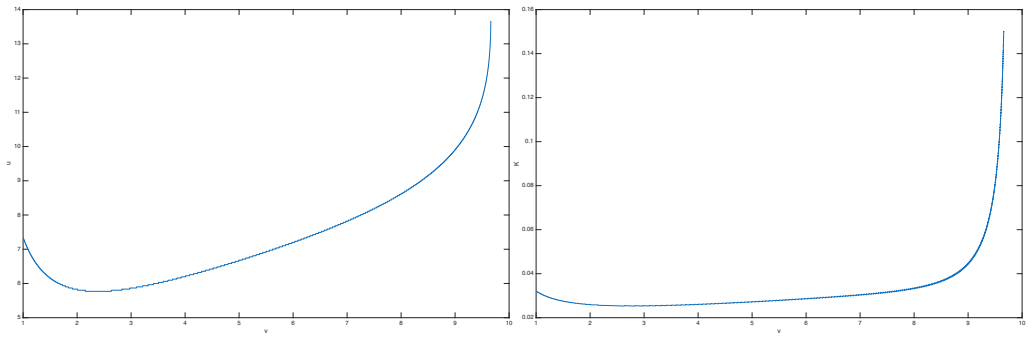
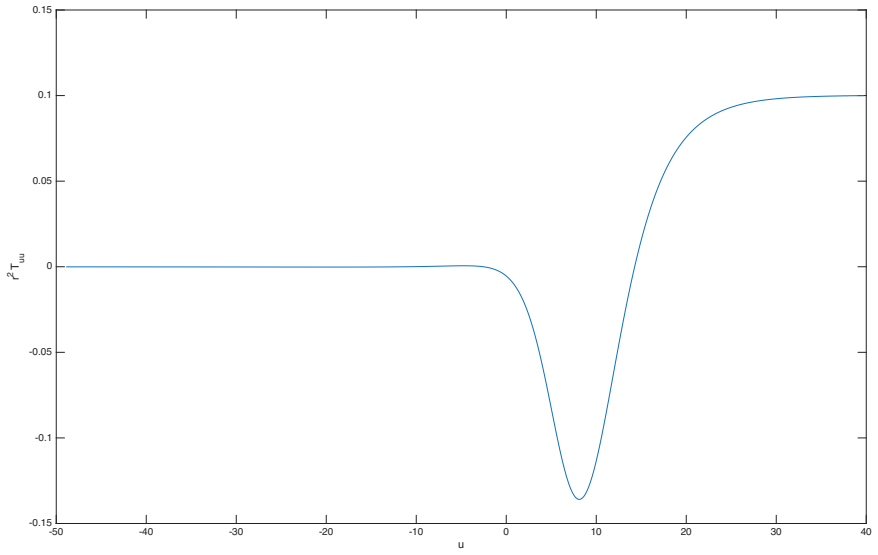
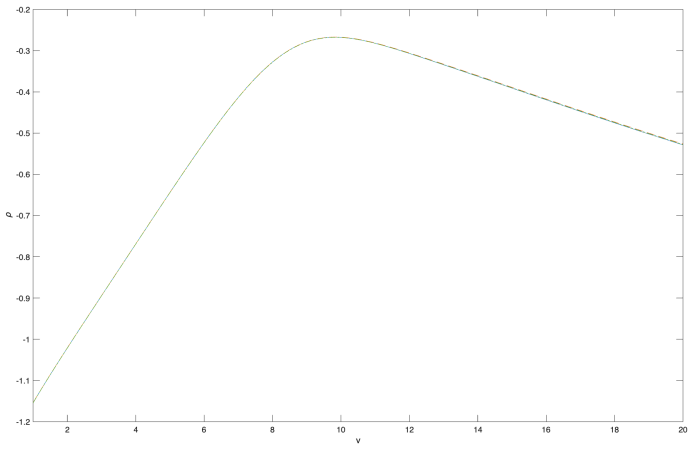
The semiclassical solutions develop a spacelike thunderbolt singularity that emerges after the apparent horizon has receded and extends far from the black hole where the semiclassical curvature is a priori expected to be parametrically small. This behavior arises from a nonlinear instability of the higher-derivative semiclassical equations and is generic in models with anomaly-induced quantum corrections. The thunderbolt signals a breakdown of semiclassical effective field theory over macroscopic distances and undermines the standard formulation of the black hole information paradox.
What carries the argument
the nonlinear instability of higher-derivative semiclassical equations with anomaly corrections, producing a spacelike thunderbolt singularity
If this is right
- The thunderbolt signals breakdown of semiclassical effective field theory over macroscopic distances.
- This undermines the standard formulation of the black hole information paradox.
- The instability is generic in models with anomaly-induced quantum corrections.
- Black hole evaporation requires physics beyond the semiclassical approximation even at large distances.
Where Pith is reading between the lines
- If confirmed, this would force any resolution of the information paradox to incorporate the effects of this early breakdown.
- The result may generalize to other higher-derivative corrections in effective gravity theories.
- Numerical or analytic checks in related models could test whether the thunderbolt persists when more quantum effects are included.
Load-bearing premise
The higher-derivative semiclassical equations including the trace anomaly remain a reliable effective description throughout the entire evaporation process.
What would settle it
A calculation or simulation showing that the thunderbolt singularity disappears when higher-order quantum corrections beyond the one-loop anomaly are included would falsify the claim.
Figures




read the original abstract
We study black hole formation and evaporation in a four-dimensional semiclassical model that preserves diffeomorphism invariance and reproduces the one-loop trace anomaly. Solving the quantum-corrected Einstein equations for the collapse of a spherically symmetric null shell, we follow the formation and evaporation of a black hole with back-reaction included. The semiclassical solutions develop a spacelike thunderbolt singularity that emerges after the apparent horizon has receded and extends far from the black hole where the semiclassical curvature is a priori expected to be parametrically small. This behavior arises from a nonlinear instability of the higher-derivative semiclassical equations and is generic in models with anomaly-induced quantum corrections. The thunderbolt signals a breakdown of semiclassical effective field theory over macroscopic distances and undermines the standard formulation of the black hole information paradox.
Editorial analysis
A structured set of objections, weighed in public.
Referee Report
Summary. The manuscript presents a study of black hole formation and evaporation using a four-dimensional semiclassical model that maintains diffeomorphism invariance and incorporates the one-loop trace anomaly. Through solution of the quantum-corrected Einstein equations for a collapsing spherically symmetric null shell, the authors report that the semiclassical solutions develop a spacelike thunderbolt singularity emerging after the apparent horizon recedes and extending far from the black hole into regions where the semiclassical curvature is parametrically small. This is attributed to a nonlinear instability of the higher-derivative equations, claimed to be generic across anomaly models, and is interpreted as evidence for a breakdown of semiclassical effective field theory over macroscopic distances that undermines the standard formulation of the black hole information paradox.
Significance. If the central result holds, it would be significant for quantum gravity and black hole physics. The appearance of a singularity in parametrically low-curvature regions would indicate that semiclassical effective descriptions fail earlier and over larger scales than usually assumed, with potential consequences for the information paradox. The model's preservation of diffeomorphism invariance and focus on anomaly-induced corrections represent a technically consistent approach to back-reaction, though the absence of checks against the full effective action limits immediate impact.
major comments (2)
- [§2 (The semiclassical model)] §2 (The semiclassical model): The effective equations are truncated to one-loop trace anomaly corrections. The claim that the thunderbolt signals a genuine breakdown of semiclassical EFT rather than an artifact requires explicit justification that neglected higher-derivative and non-local terms in the full effective action remain subdominant when the instability develops far from the horizon; without an enlarged operator set or stability analysis, this is the load-bearing assumption.
- [§4 (Numerical results)] §4 (Numerical results): The abstract and results describe the thunderbolt emerging after apparent-horizon recession, but no details are supplied on the numerical scheme, convergence tests, grid resolution, or checks for coordinate singularities or truncation artifacts. This omission prevents assessment of whether the reported low-curvature singularity is physical or numerical.
minor comments (1)
- [Abstract] The term 'thunderbolt singularity' is introduced in the abstract without a brief definition or literature reference; a short explanatory sentence in the introduction would improve readability.
Simulated Author's Rebuttal
We thank the referee for the careful reading and constructive comments on our manuscript. We address each major comment below and have revised the manuscript to strengthen the presentation and add requested details.
read point-by-point responses
-
Referee: §2 (The semiclassical model): The effective equations are truncated to one-loop trace anomaly corrections. The claim that the thunderbolt signals a genuine breakdown of semiclassical EFT rather than an artifact requires explicit justification that neglected higher-derivative and non-local terms in the full effective action remain subdominant when the instability develops far from the horizon; without an enlarged operator set or stability analysis, this is the load-bearing assumption.
Authors: We agree that a complete treatment of the full effective action would be desirable. In the regime of parametrically small semiclassical curvature where the thunderbolt develops, higher-derivative and non-local corrections are suppressed by additional powers of the curvature scale relative to the Planck scale. The nonlinear instability we identify is driven by the higher-derivative structure already present in the anomaly-induced terms. We have added a paragraph to §2 that makes this scaling argument explicit and notes that the one-loop truncation captures the leading effect responsible for the instability. A full operator-by-operator stability analysis lies beyond the present scope but is a natural direction for follow-up work. revision: partial
-
Referee: §4 (Numerical results): The abstract and results describe the thunderbolt emerging after apparent-horizon recession, but no details are supplied on the numerical scheme, convergence tests, grid resolution, or checks for coordinate singularities or truncation artifacts. This omission prevents assessment of whether the reported low-curvature singularity is physical or numerical.
Authors: We thank the referee for pointing out this omission. We have added a new subsection to §4 that describes the numerical implementation in detail, including the finite-difference scheme, grid resolution and adaptive refinement parameters, convergence tests under successive refinements, and explicit checks confirming that the thunderbolt is insensitive to coordinate choices and truncation errors. These additions establish that the singularity is a feature of the semiclassical equations rather than a numerical artifact. revision: yes
Circularity Check
No significant circularity; derivation follows from solving stated equations
full rationale
The paper obtains the thunderbolt singularity by solving the higher-derivative semiclassical Einstein equations (with one-loop trace anomaly) for null-shell collapse, with back-reaction included. This outcome is presented as a direct consequence of the nonlinear dynamics of the given system rather than any fitted parameter, self-referential definition, or load-bearing self-citation that equates the result to its inputs. The claim of genericity across anomaly models rests on the structural properties of the equations themselves, not on renaming or smuggling in prior ansatze. No step reduces a prediction to a tautological restatement of the setup, and the analysis remains self-contained against the stated effective-field-theory truncation.
Axiom & Free-Parameter Ledger
axioms (1)
- domain assumption The semiclassical model preserves diffeomorphism invariance and reproduces the one-loop trace anomaly.
invented entities (1)
-
thunderbolt singularity
no independent evidence
Reference graph
Works this paper leans on
-
[1]
Breakdown of Predictability in Gravitational Collapse,
S. W. Hawking, “Breakdown of Predictability in Gravitational Collapse,”Phys. Rev. D14 (1976) 2460–2473
1976
-
[2]
C. G. Callan, Jr., S. B. Giddings, J. A. Harvey, and A. Strominger, “Evanescent black holes,” Phys. Rev. D45no. 4, (1992) R1005,arXiv:hep-th/9111056
work page Pith review arXiv 1992
-
[3]
The Endpoint of Hawking Evaporation
J. G. Russo, L. Susskind, and L. Thorlacius, “The Endpoint of Hawking radiation,”Phys. Rev. D46(1992) 3444–3449,arXiv:hep-th/9206070
work page Pith review arXiv 1992
-
[4]
Semiclassical Approach to Black Hole Evaporation
D. A. Lowe, “Semiclassical approach to black hole evaporation,”Phys. Rev. D47(1993) 2446–2453,arXiv:hep-th/9209008
work page Pith review arXiv 1993
-
[5]
S. W. Hawking, “Black hole explosions?”Nature248no. 5443, (Mar., 1974) 30–31. http://dx.doi.org/10.1038/248030a0
-
[6]
Particle creation by black holes,
S. W. Hawking, “Particle creation by black holes,”Communications in Mathematical Physics 43no. 3, (Aug, 1975) 199–220. 18 https://link.springer.com/content/pdf/10.1007/BF02345020.pdf
-
[7]
Baryogenesis without grand unification
R. J. Riegert, “A non-local action for the trace anomaly,”Physics Letters B134no. 1, (1984) 56–60.https://www.sciencedirect.com/science/article/pii/0370269384909833
-
[8]
Hawking radiation by effective two-dimensional theories,
R. Balbinot and A. Fabbri, “Hawking radiation by effective two-dimensional theories,”Phys. Rev. D59(1999) 044031,arXiv:hep-th/9807123
-
[9]
R. Balbinot, A. Fabbri, and I. L. Shapiro, “Anomaly induced effective actions and Hawking radiation,”Phys. Rev. Lett.83(1999) 1494–1497,arXiv:hep-th/9904074
-
[10]
Vacuum polarization in Schwarzschild space-time by anomaly induced effective actions,
R. Balbinot, A. Fabbri, and I. L. Shapiro, “Vacuum polarization in Schwarzschild space-time by anomaly induced effective actions,”Nucl. Phys. B559(1999) 301–319, arXiv:hep-th/9904162
-
[11]
Macroscopic Effects of the Quantum Trace Anomaly,
E. Mottola and R. Vaulin, “Macroscopic Effects of the Quantum Trace Anomaly,”Phys. Rev. D74(2006) 064004,arXiv:gr-qc/0604051
-
[12]
New Horizons in Gravity: Dark Energy and Condensate Stars,
E. Mottola, “New Horizons in Gravity: Dark Energy and Condensate Stars,”Journal of Physics: Conference Series314(Sept., 2011) 012010. http://dx.doi.org/10.1088/1742-6596/314/1/012010
-
[13]
J. C. Fabris, A. M. Pelinson, F. d. O. Salles, and I. L. Shapiro, “Gravitational waves and stability of cosmological solutions in the theory with anomaly-induced corrections,”Journal of Cosmology and Astroparticle Physics2012no. 02, (Feb., 2012) 019–019. http://dx.doi.org/10.1088/1475-7516/2012/02/019
-
[14]
Scalar Gravitational Waves in the Effective Theory of Gravity,
E. Mottola, “Scalar Gravitational Waves in the Effective Theory of Gravity,”JHEP07 (2017) 043,arXiv:1606.09220 [gr-qc]. [Erratum: JHEP 09, 107 (2017)]
-
[15]
Quantum effects of the conformal anomaly in a 2D model of gravitational collapse,
E. Mottola, M. Chandra, G. M. Manca, and E. Sorkin, “Quantum effects of the conformal anomaly in a 2D model of gravitational collapse,”JHEP08(2023) 223,arXiv:2303.15397 [gr-qc]
-
[16]
Mottola,Gravitational Vacuum Condensate Stars, pp
E. Mottola,Gravitational Vacuum Condensate Stars, pp. 283–352. Springer Nature Singapore, 2023.http://dx.doi.org/10.1007/978-981-99-1596-5_8
-
[17]
Gravitational vacuum condensate stars in the effective theory of gravity,
E. Mottola, “Gravitational vacuum condensate stars in the effective theory of gravity,”Phys. Rev. D111no. 10, (2025) 104018,arXiv:2502.02519 [gr-qc]
-
[18]
Effective field theory description of Hawking radiation,
D. A. Lowe and L. Thorlacius, “Effective field theory description of Hawking radiation,” JHEP11(2025) 057,arXiv:2505.07722 [hep-th]. 19
-
[19]
Generalized Effective Field Theory for Four-Dimensional Black Hole Evaporation,
B.-N. Liu, D. A. Lowe, and L. Thorlacius, “Generalized Effective Field Theory for Four-Dimensional Black Hole Evaporation,”arXiv:2511.05374 [hep-th]
-
[20]
Dynamical Black Hole Emission,
D. A. Lowe and L. Thorlacius, “Dynamical Black Hole Emission,”arXiv:2512.16480 [hep-th]
-
[21]
Notes on black hole evaporation,
W. G. Unruh, “Notes on black-hole evaporation,”Physical Review D14no. 4, (1976) 870–892.https://doi.org/10.1103/PhysRevD.14.870
-
[22]
Naked and thunderbolt singularities in black hole evaporation,
S. W. Hawking and J. M. Stewart, “Naked and thunderbolt singularities in black hole evaporation,”Nucl. Phys. B400(1993) 393–415,arXiv:hep-th/9207105
-
[23]
Numerical Analysis of Black Hole Evaporation
T. Piran and A. Strominger, “Numerical analysis of black hole evaporation,”Phys. Rev. D48 (1993) 4729–4734,arXiv:hep-th/9304148
work page Pith review arXiv 1993
-
[24]
C. W. Misner, K. S. Thorne, and J. A. Wheeler,Gravitation. 1973
1973
-
[25]
Twenty Years of the Weyl Anomaly
M. J. Duff, “Twenty years of the Weyl anomaly,”Class. Quant. Grav.11(1994) 1387–1404, arXiv:hep-th/9308075
work page Pith review arXiv 1994
-
[26]
J. M. Martin-Garcia, R. Portugal, and L. R. U. Manssur, “The Invar tensor package,” Comput. Phys. Commun.177(2007) 640–648,arXiv:0704.1756 [cs.SC]
-
[27]
xPerm: fast index canonicalization for tensor computer algebra
J. M. Martín-García, “xPerm: fast index canonicalization for tensor computer algebra,” Comput. Phys. Commun.179no. 8, (2008) 597–603,arXiv:0803.0862 [cs.SC]
work page Pith review arXiv 2008
-
[28]
The global nonlinear stability of the Minkowski space,
D. Christodoulou and S. Klainerman, “The global nonlinear stability of the Minkowski space,”Séminaire Goulaouic-Schwartz(1989-1990) 1–29. https://www.numdam.org/item/SEDP_1989-1990____A15_0/. talk:13
1989
-
[29]
Semiclassical dynamics of Hawking radiation,
D. A. Lowe and L. Thorlacius, “Semiclassical dynamics of Hawking radiation,”Class. Quant. Grav.40no. 20, (2023) 205006,arXiv:2212.08595 [hep-th]. 20
discussion (0)
Sign in with ORCID, Apple, or X to comment. Anyone can read and Pith papers without signing in.