Recognition: unknown
Women in STEM: Interview with Iris Abt
Pith reviewed 2026-05-08 02:41 UTC · model grok-4.3
The pith
Iris Abt completed her German physics studies as the only woman in her course before contributing to neutrino physics, SLAC experiments, the HERA program, and germanium detector research.
A machine-rendered reading of the paper's core claim, the machinery that carries it, and where it could break.
Core claim
The interview establishes that Iris Abt finished her university course in Germany as its only female completer, began research in neutrino physics, relocated to SLAC at the time of the SLC collider, returned to Europe to help shape part of the HERA program, and carried out studies on germanium detectors.
What carries the argument
The interview transcript that sequences Abt's career milestones across neutrino physics, SLAC, HERA, and germanium-detector work.
If this is right
- Her path supplies a documented sequence of one woman's participation in experimental high-energy physics projects from the 1980s onward.
- The account links specific facilities (SLAC, HERA) to individual contributions in neutrino physics and detector development.
- The international movement between Germany, the United States, and back to Europe illustrates typical career mobility in particle-physics research.
- Work on germanium detectors is presented as one concrete technical thread running through later stages of the career.
Where Pith is reading between the lines
- Interviews of this kind can function as primary-source material for later histories of gender participation in accelerator-based experiments.
- The emphasis on being the sole woman in a cohort points to a measurable imbalance that readers can compare against current enrollment data at similar institutions.
- Details of detector studies may connect to ongoing use of germanium technology in rare-event searches, though the paper itself does not draw that link.
Load-bearing premise
The interviewers accurately captured and summarized Iris Abt's statements about her education and professional moves without significant omissions or misinterpretation.
What would settle it
A direct statement or contemporaneous record from Iris Abt that contradicts the reported timeline or details of her studies, SLAC period, HERA involvement, or detector research.
Figures




read the original abstract
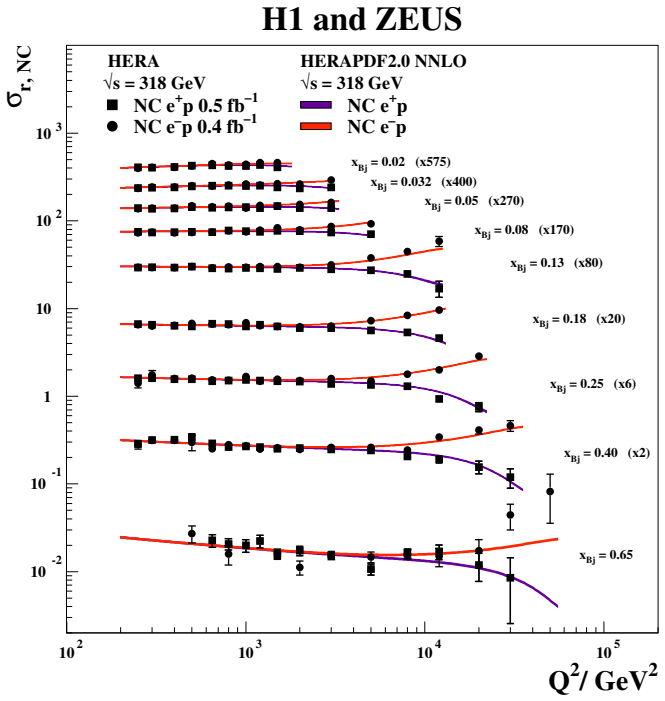
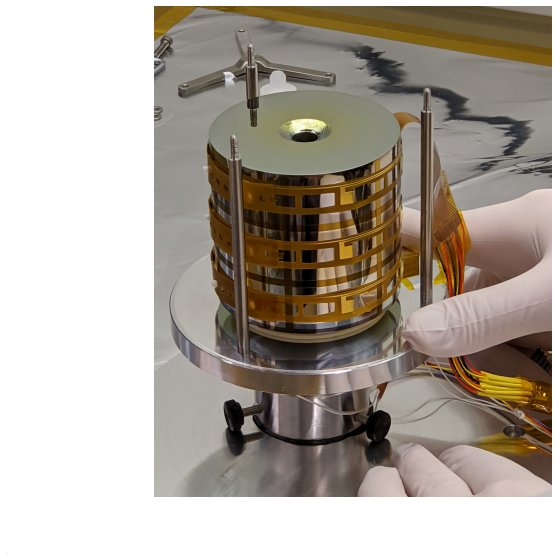
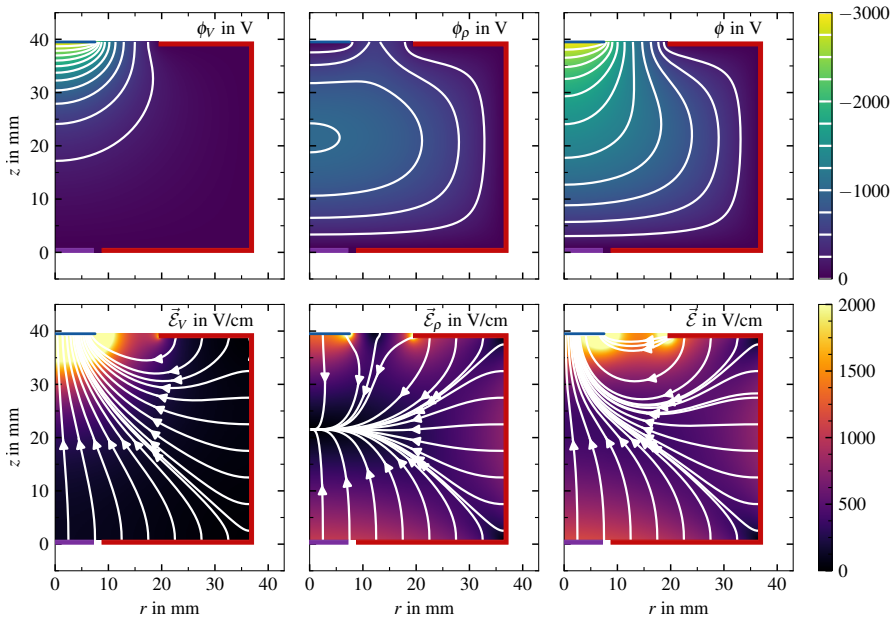
We interviewed Iris Abt, who studied in Germany, being the only woman finishing studies in her course during that year. She then started her career in neutrino physics, moved to SLAC at the times of SLC, came back to Europe shaping part of the HERA program and made studies on germanium detectors.
Editorial analysis
A structured set of objections, weighed in public.
Referee Report
Summary. The manuscript reports on an interview with physicist Iris Abt. It states that she was the only woman to complete her studies in her course in Germany that year, began her career in neutrino physics, moved to SLAC during the SLC period, returned to Europe to contribute to shaping the HERA program, and performed studies on germanium detectors.
Significance. If the summary faithfully captures the interview, the paper provides a concise historical record of one woman's career trajectory through key experimental programs in neutrino physics, SLC at SLAC, HERA, and germanium detector development. Such accounts can contribute to documenting the history of experimental high-energy physics and the participation of women in the field, though the absence of new data, analysis, or technical results means the significance is primarily archival and contextual rather than advancing the core scientific literature.
minor comments (2)
- [Full Text] The manuscript is extremely concise and consists essentially of a single-paragraph summary. If the full interview transcript or additional direct quotes are available, including a selection of them would strengthen the piece by allowing readers to engage directly with Abt's statements rather than only the interviewers' paraphrase.
- [Title] The title frames the work under the broad heading 'Women in STEM,' but the content is narrowly focused on one individual's hep-ex career path; a subtitle or brief introductory sentence clarifying the scope would improve clarity for readers.
Simulated Author's Rebuttal
We thank the referee for their positive review and recommendation to accept the manuscript. The referee's summary faithfully captures the interview's content and correctly identifies its archival significance in documenting the career trajectory of a woman physicist through major experimental programs.
Circularity Check
No significant circularity
full rationale
The document is a concise biographical interview summary with no equations, derivations, predictions, fitted parameters, or theoretical claims. The content consists solely of narrative reporting of an external interview subject's career path. No load-bearing steps exist that could reduce to self-definition, fitted inputs, or self-citation chains. The sole assumption (faithful representation of the interviewee) is external to any internal derivation and does not create circularity under the defined criteria.
Axiom & Free-Parameter Ledger
Reference graph
Works this paper leans on
-
[1]
A Precise Determination of the Electroweak Mixing Angle from Semileptonic Neutrino Scattering
J. V. Allaby et al. “A Precise Determination of the Electroweak Mixing Angle from Semileptonic Neutrino Scattering”. In:Z. Phys. C36 (1987), p. 611.doi:10.1007/BF01630598
-
[2]
An Absolute Calibration of the Solid State Detectors in the Narrow Band Neutrino Beam at CERN
Iris Abt and Bob Jongejans. “An Absolute Calibration of the Solid State Detectors in the Narrow Band Neutrino Beam at CERN”. In:Nucl. Instrum. Meth. A235 (1985), p. 85.doi:10.1016/ 0168-9002(85)90249-9
1985
-
[3]
The Lead liquid argon sampling calorimeter of the SLD detector
D. Axen et al. “The Lead liquid argon sampling calorimeter of the SLD detector”. In:Nucl. Instrum. Meth. A328 (1993), pp. 472–494.doi:10.1016/0168-9002(93)90664-4
-
[4]
Measurements ofZBoson Resonance Parameters ine +e− Annihilation
G. S. Abrams et al. “Measurements ofZBoson Resonance Parameters ine +e− Annihilation”. In:Phys. Rev. Lett.63 (1989), p. 2173.doi:10.1103/PhysRevLett.63.2173
-
[5]
A High precision measurement of the left-right Z boson cross-section asym- metry
Kenji Abe et al. “A High precision measurement of the left-right Z boson cross-section asym- metry”. In:Phys. Rev. Lett.84 (2000), pp. 5945–5949.doi:10.1103/PhysRevLett.84.5945. arXiv:hep-ex/0004026
-
[6]
CATS: A cellular automaton for tracking in silicon for the HERA-B vertex detector
I. Abt et al. “CATS: A cellular automaton for tracking in silicon for the HERA-B vertex detector”. In:Nucl. Instrum. Meth. A489 (2002), pp. 389–405.doi:10.1016/S0168-9002(02)00790-8
-
[7]
Von schnellen Teilchen und hellem Licht: 50 Jahre Deutsches Elektronen-Synchrotron DESY
Erich Lohrmann and Paul Soeding. “Von schnellen Teilchen und hellem Licht: 50 Jahre Deutsches Elektronen-Synchrotron DESY”. In:Wiley-VCH Verlag GmbH and Co KGaA(2009). 12
2009
-
[8]
H. Abramowicz et al. “Combination of measurements of inclusive deep inelastice ±pscattering cross sections and QCD analysis of HERA data”. In:Eur. Phys. J. C75.12 (2015), p. 580.doi: 10.1140/epjc/s10052-015-3710-4. arXiv:1506.06042 [hep-ex]
-
[9]
Limits on the effective quark radius from inclusiveepscattering at HERA
H Abramowicz et al. “Limits on the effective quark radius from inclusiveepscattering at HERA”. In:Phys. Lett. B757 (2016), pp. 468–472.doi:10.1016/j.physletb.2016.04.007. arXiv: 1604.01280 [hep-ex]
-
[10]
I. Antcheva et al. “ROOT: A C++ framework for petabyte data storage, statistical analysis and visualization”. In:Comput. Phys. Commun.180 (2009), pp. 2499–2512.doi:10.1016/j.cpc. 2009.08.005. arXiv:1508.07749 [physics.data-an]
-
[11]
I. Abt et al. “Two-particle azimuthal correlations as a probe of collective behaviour in deep inelasticepscattering at HERA”. In:JHEP04 (2020), p. 070.doi:10.1007/JHEP04(2020)070. arXiv:1912.07431 [hep-ex]
-
[12]
Search for effective Lorentz and CPT violation using ZEUS data
I. Abt et al. “Search for effective Lorentz and CPT violation using ZEUS data”. In:Phys. Rev. D107.9 (2023), p. 092008.doi:10.1103/PhysRevD.107.092008. arXiv:2212.12750 [hep-ex]
-
[13]
Neutron interactions as seen by a segmented germanium detector
I. Abt et al. “Neutron interactions as seen by a segmented germanium detector”. In:Eur. Phys. J. A36 (2008), pp. 139–149.doi:10.1140/epja/i2007-10553-8. arXiv:0711.2255 [nucl-ex]
-
[14]
A novel wide-angle Compton Scanner setup to study bulk events in germanium detectors
Iris Abt et al. “A novel wide-angle Compton Scanner setup to study bulk events in germanium detectors”. In:Eur. Phys. J. C82.10 (2022). [Erratum: Eur.Phys.J.C 82, 1004 (2022)], p. 936. doi:10.1140/epjc/s10052-022-10884-y. arXiv:2202.03116 [physics.ins-det]
-
[15]
Iris Abt et al. “Bayesian inference of high-purity germanium detector impurities based on ca- pacitance measurements and machine-learning accelerated capacitance calculations”. In:Eur. Phys. J. C83.5 (2023), p. 352.doi:10.1140/epjc/s10052-023-11509-8. arXiv:2209.12201 [physics.ins-det]
-
[16]
Status and prospects of the PandaX-III experiment,
I. Abt et al. “Simulation of semiconductor detectors in 3D with SolidStateDetectors.jl”. In: JINST16.08 (2021), P08007.doi:10.1088/1748- 0221/16/08/P08007. arXiv:2104.00109 [physics.ins-det]
-
[17]
Abt et al.Compton imaging of undepleted volumes of germanium detectors
I. Abt et al.Compton imaging of undepleted volumes of germanium detectors. submitted to EPJ C. arXiv:2602.15310
-
[18]
Determination of the impurity density profile and charge carrier mobilities in a point-contact germanium detector using a novel Compton Scanner
F. Hagemann. “Determination of the impurity density profile and charge carrier mobilities in a point-contact germanium detector using a novel Compton Scanner”. PhD thesis. Technische Universit¨ at M¨ unchen, May 2024.url:https://mediatum.ub.tum.de/?id=1741799. 13
2024
discussion (0)
Sign in with ORCID, Apple, or X to comment. Anyone can read and Pith papers without signing in.