Recognition: unknown
Improved estimation of positive powers of scale parameters of exponential distributions under a prior information
Pith reviewed 2026-05-07 12:40 UTC · model grok-4.3
The pith
Known ordering of scale parameters allows construction of estimators that dominate the best affine equivariant estimator for positive powers in two-shifted exponential distributions.
A machine-rendered reading of the paper's core claim, the machinery that carries it, and where it could break.
Core claim
Under the prior ordering constraint on the scale parameters, equivariant estimators can be shown to dominate the best affine equivariant estimator for estimating positive powers of the scales, under scale-invariant strictly convex loss. A smooth estimator dominating the BAEE is derived via an integrated approach and shown to be a generalized Bayes estimator under a non-informative prior. An improved estimator is also provided based on the Pitman closeness criterion.
What carries the argument
The prior ordering constraint on the two scale parameters, used to construct dominating equivariant estimators under convex loss functions.
If this is right
- Equivariant estimators dominate others when the ordering constraint is incorporated.
- Various estimators are constructed that improve upon the best affine equivariant estimator.
- A smooth generalized Bayes estimator provides further improvement.
- An estimator based on Pitman closeness criterion is derived as an alternative improvement.
Where Pith is reading between the lines
- These dominance results may extend to estimating other functions of the scale parameters beyond positive powers.
- The methods could be applied to more than two populations if ordering constraints are available.
- Real data examples suggest practical gains in survival studies and engineering contexts.
Load-bearing premise
That a known prior ordering constraint exists between the scale parameters of the two populations and that the loss function is scale-invariant and strictly convex.
What would settle it
A simulation or theoretical calculation showing that the proposed estimators do not dominate the BAEE when the ordering constraint is removed or when the loss function violates the strict convexity assumption.
Figures

read the original abstract
Estimating unknown parameters subject to prior constraints is important in statistical inference, particularly in fields such as reliability analysis, survival studies, and engineering, where prior structural information about the parameters is often available. Incorporating such prior information makes the analysis more realistic and usually yields better estimates than methods that ignore such information. In this article, we consider the problem of estimating the positive power of the scale parameter of a two-shifted exponential population under a prior ordering constraint on scale parameters. We derive sufficient conditions under which equivariant estimators are shown to dominate others under scale-invariant strictly convex loss functions. In addition, we derived various estimators that dominate the best affine equivariant estimators (BAEE). Moreover, we derive a smooth estimator which dominates the BAEE using an integrated approach, and we further show that it is a generalized Bayes estimator under a non-informative prior. We also provide an improved estimator based on the Pitman closeness criterion. An extensive simulation study has been done for computational purposes. Finally, we provided real examples to implement the results.
Editorial analysis
A structured set of objections, weighed in public.
Referee Report
Summary. The paper addresses estimation of positive powers of scale parameters for two shifted exponential populations subject to a known ordering constraint on the scales. It derives sufficient conditions under which certain equivariant estimators dominate others (including the best affine equivariant estimator) under scale-invariant strictly convex loss functions, constructs a smooth generalized Bayes estimator that dominates the BAEE, provides a Pitman-closer improved estimator, and supports the findings with an extensive simulation study and real-data examples.
Significance. If the dominance results hold, the work strengthens the decision-theoretic literature on estimation under order restrictions for exponential scale families. The explicit construction of a generalized Bayes estimator via an integrated approach and the Pitman-closeness improvement are technically useful additions; the simulation study and applications to reliability/survival contexts add practical value.
minor comments (3)
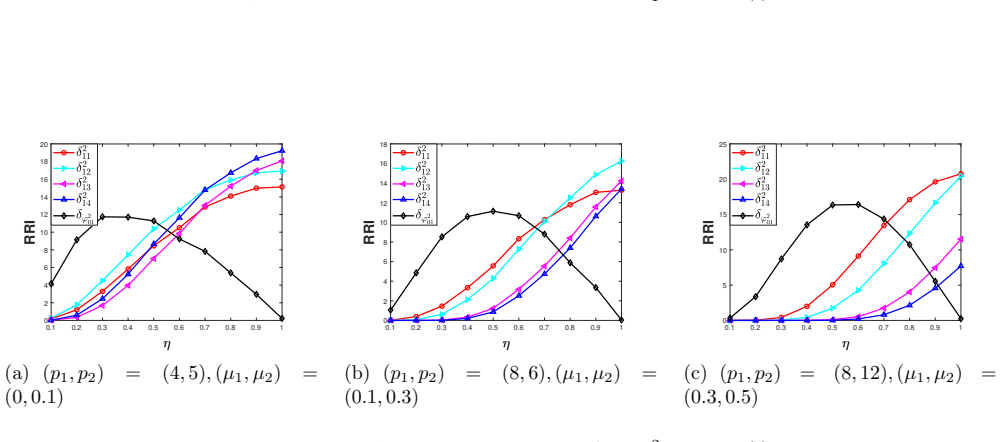
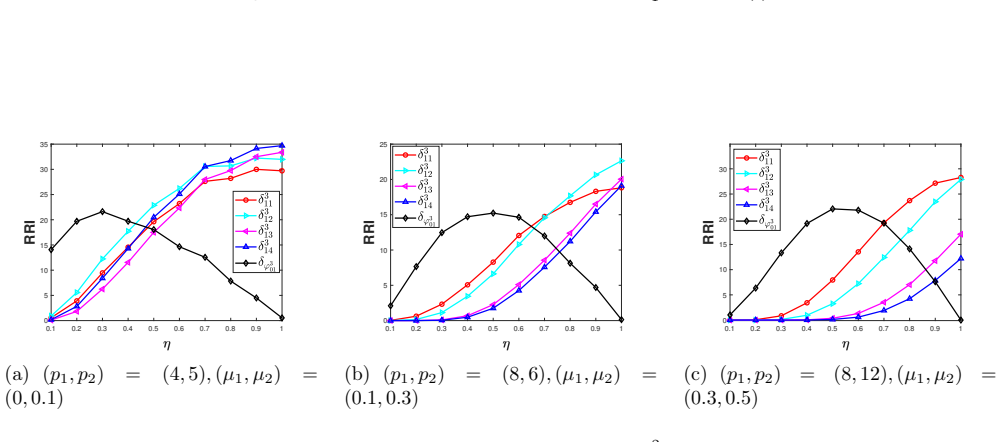
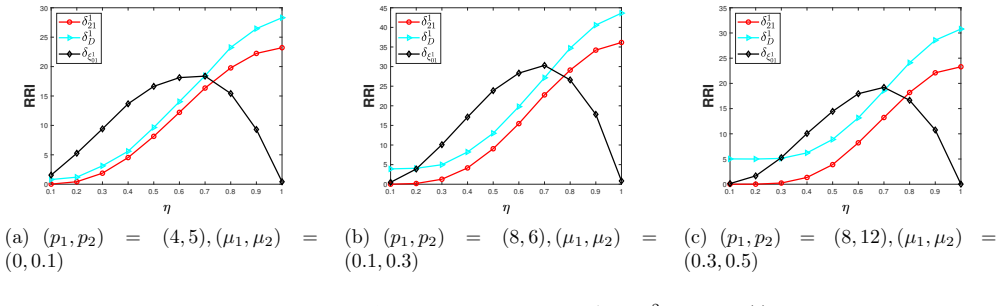
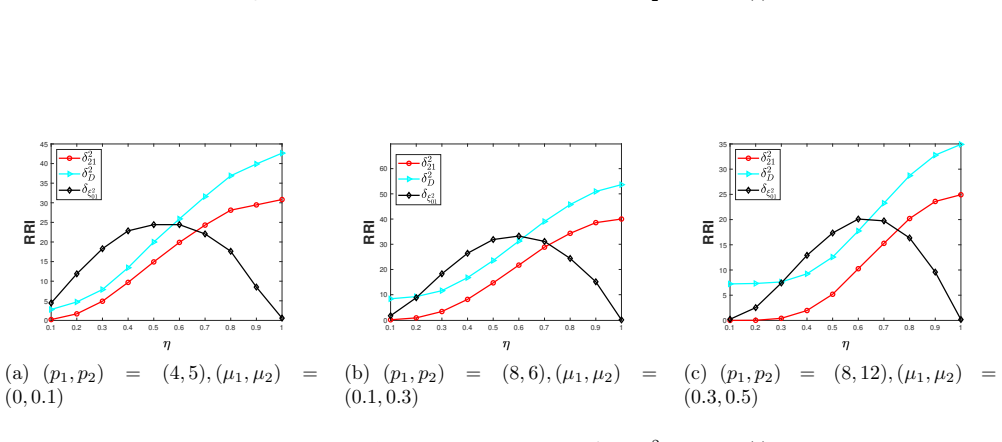
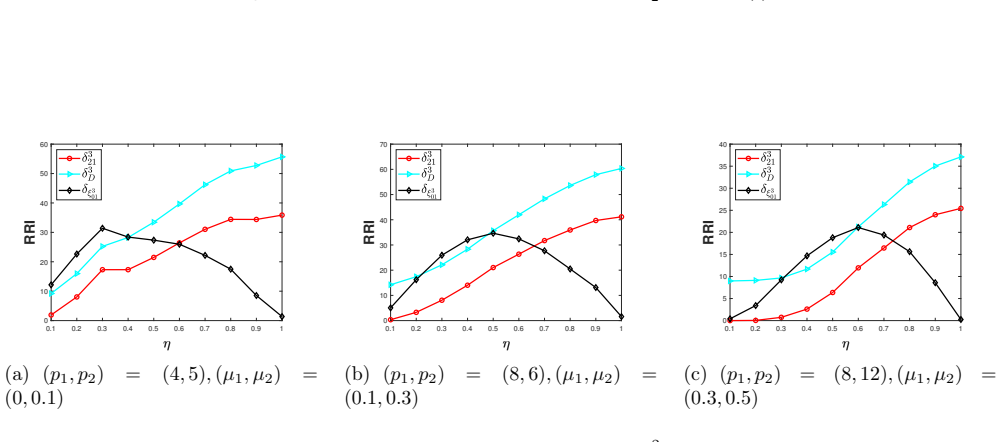
- The abstract states that 'an extensive simulation study has been done' but does not specify the range of parameter values, sample sizes, or loss functions examined; the corresponding section should include a table or figure summarizing MSE or risk ratios across the simulated configurations to allow readers to assess finite-sample gains.
- Notation for the positive power parameter (e.g., whether it is fixed or estimated) and the exact form of the scale-invariant loss should be introduced earlier and used consistently; several places in the derivations appear to switch between L(·,·) and a normalized version without explicit re-statement.
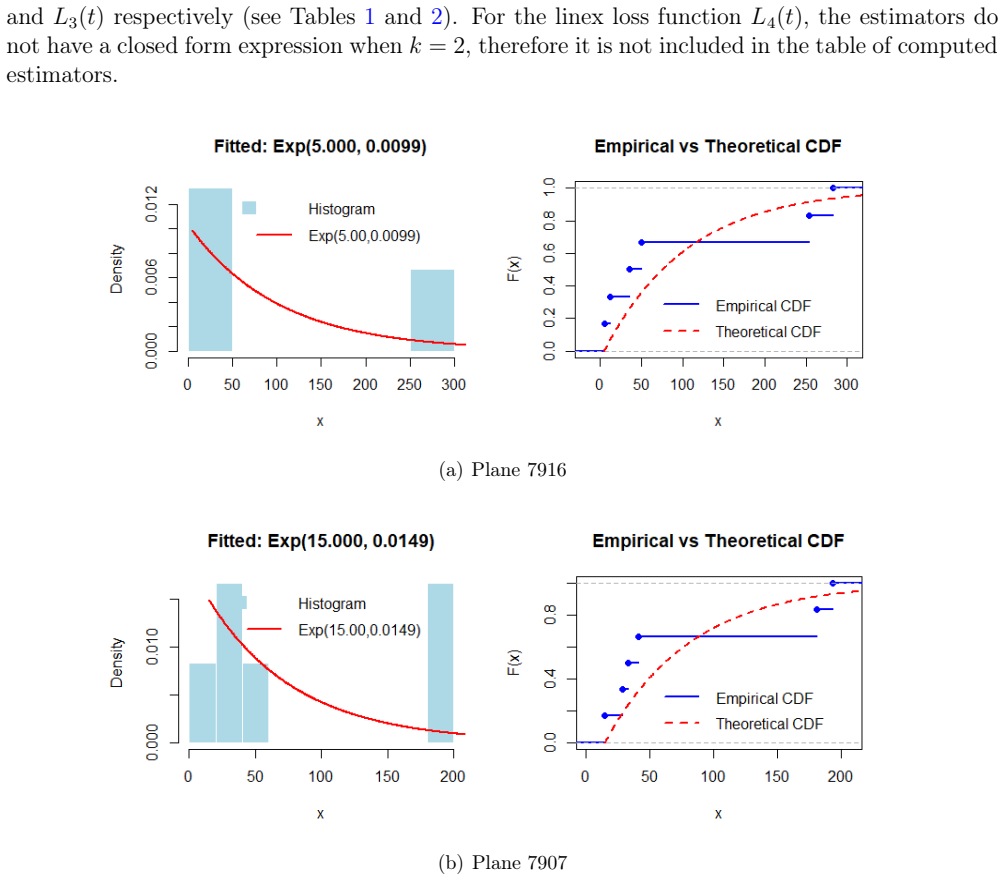
- The real-data examples would benefit from a brief statement of how the ordering constraint was verified or assumed in the datasets, together with numerical values of the proposed estimators versus the BAEE.
Simulated Author's Rebuttal
We thank the referee for the positive summary, significance assessment, and recommendation of minor revision. The evaluation correctly captures the contributions regarding dominance results, generalized Bayes estimators, Pitman-closeness improvements, simulations, and applications. Since the report lists no specific major comments under the MAJOR COMMENTS section, we have no individual points to address point-by-point. Any minor editorial or presentational suggestions will be incorporated in the revised manuscript.
Circularity Check
No significant circularity in derivation chain
full rationale
The paper's central derivations establish sufficient conditions for equivariant estimators to dominate the BAEE under scale-invariant strictly convex losses, along with construction of a smooth generalized Bayes estimator and a Pitman-closer estimator for positive powers of ordered scale parameters. These steps rely on standard decision-theoretic invariance arguments, properties of the two-parameter exponential distribution, and the given prior ordering constraint, without reducing any result to a self-defined quantity, a fitted parameter renamed as a prediction, or a load-bearing self-citation chain. The abstract and reader's summary confirm the work is internally consistent with external benchmarks in order-restricted estimation, yielding a self-contained derivation.
Axiom & Free-Parameter Ledger
axioms (2)
- domain assumption The observations follow two-shifted exponential distributions with unknown scale parameters subject to a known ordering constraint.
- domain assumption The loss function is scale-invariant and strictly convex.
Reference graph
Works this paper leans on
-
[1]
E., Bartholomew, D
Barlow, R. E., Bartholomew, D. J., Bremner, J. M. and Brunk, H. D. [1972]. Statistical inference inder order restrictions., Wiley, New York
1972
-
[2]
and Cohen, A
Blumenthal, S. and Cohen, A. (1968). Estimation of two ordered translation parameters, The Annals of Mathematical Statistics.39(2), 517-530
1968
-
[3]
and Kourouklis, S
Bobotas, P. and Kourouklis, S. [2010]. On the estimation of a normal precision and a normal variance ratio, Statistical Methodology.7(4), 445-463
2010
-
[4]
Brewster, J. F. and Zidek, J. (1974). Improving on equivariant estimators, The Annals of Statistics.2(1), 21-38
1974
-
[5]
and Misra, N
Garg, N. and Misra, N. [2024]. A unified study for estimation of order restricted parameters of a general bivariate model under the generalized pitman nearness criterion, Statistical Papers. 65(4), 1947-1983
2024
-
[6]
Gupta, R. D. and Singh, H. [1992]. Pitman nearness comparisons of estimates of two ordered normal means, Australian Journal of Statistics.34(3), 407-414. 20
1992
-
[7]
and Kourouklis, S
Iliopoulos, G. and Kourouklis, S. [1999]. Improving on the best affine equivariant estimator of the ratio of generalized variances, Journal of multivariate analysis.68(2), 176-192
1999
-
[8]
and Kumar, S
Jana, N. and Kumar, S. [2015]. Estimation of ordered scale parameters of two exponential distributions with a common guarantee time, Mathematical Methods of Statistics.24(2), 122-134
2015
-
[9]
Jena, A. K. and Tripathy, M. R. [2017]. Estimating ordered scale parameters of two expo- nential populations with a common location under type-ii censoring, Chilean J Stat (ChJS). 8(1), 87-101
2017
-
[10]
and Tripathy, M
Jena, P. and Tripathy, M. R. [2025]. Inference on powers of the scale parameters for two exponential populations under equality restriction on location parameter, Communications in Statistics-Simulation and Computation. pp. 1-27
2025
-
[11]
and Kanta Patra, L
Kayal, S. and Kanta Patra, L. [2024]. Estimating the scale parameters of several exponential distributions under order restriction, Communications in Statistics-Theory and Methods. 53(23), 8484-8497
2024
-
[12]
Kubokawa, T. (1991). Equivariant estimation under the pitman closeness criterion, Commu- nications in Statistics-Theory and Methods.20(11), 3499-3523
1991
-
[13]
Kubokawa, T. [1994a]. Double shrinkage estimation of ratio of scale parameters, Annals of the Institute of Statistical Mathematics.46(1), 95-116
-
[14]
Kubokawa, T. (1994). A unified approach to improving equivariant estimators, The Annals of Statistics.22(1), 290-299
1994
-
[15]
and Kundu, D
Misra, N., Choudhary, P., Dhariyal, I. and Kundu, D. [2002]. Smooth estimators for estimat- ing order restricted scale parameters of two gamma distributions, Metrika.56(2), 143-161
2002
-
[16]
and Dhariyal, I
Misra, N. and Dhariyal, I. D. [1995]. Some inadmissibility results for estimating ordered uniform scale parameters, Communications in statistics-theory and methods.24(3), 675-685
1995
-
[17]
and van der Meulen, E
Misra, N. and van der Meulen, E. C. [1997]. On estimation of the common mean ofk(>1) normal populations with order restricted variances, Statistics and probability letters.36(3), 261-267
1997
-
[18]
Mondal, S. and Patra, L. K. (2024). Improved estimation of the positive powers ordered restricted standard deviation of two normal populations, arXiv preprint arXiv:2412.05620
-
[19]
Nayak, T. K. (1990). Estimation of location and scale parameters using generalized pitman nearness criterion, Journal of Statistical Planning and Inference.24(2), 259-268
1990
-
[20]
K., Kumar, S
Patra, L. K., Kumar, S. and Petropoulos, C. [2021]. Componentwise estimation of ordered scale parameters of two exponential distributions under a general class of loss function, Statis- tics.55(3), 595-617
2021
-
[21]
Petropoulos, C. (2017). Estimation of the order restricted scale parameters for two popula- tions from the lomax distribution, Metrika.80(4), 483–502. 21
2017
-
[22]
Pitman, E. J. [1937]. The “closest” estimates of statistical parameters, Mathematical Pro- ceedings of the Cambridge Philosophical Society, Vol. 33, Cambridge University Press, pp. 212-222
1937
-
[23]
Proschan, F. (1963). Theoretical explanation of observed decreasing failure rate, Technomet- rics.5(3), 375-383
1963
-
[24]
and Wright, F
Robertson, T., Dykstra, R. and Wright, F. [1988]. Order restricted statistical inference, Wiley, New York
1988
-
[25]
and Singh, H
Vijayasree, G., Misra, N. and Singh, H. [1995]. Componentwise estimation of ordered param- eters ofk(≥2)exponential populations, Annals of the Institute of Statistical Mathematics. 47(2), 287-307. 22
1995
discussion (0)
Sign in with ORCID, Apple, or X to comment. Anyone can read and Pith papers without signing in.