Recognition: 2 theorem links
· Lean TheoremBreakeven Conditions for Beam-Target Fusion with Electron-Suppressed Targets
Pith reviewed 2026-05-08 18:35 UTC · model grok-4.3
The pith
Beam-target fusion achieves breakeven when electron-suppressed targets allow fusion gains to exceed beam losses under derived quantitative conditions.
A machine-rendered reading of the paper's core claim, the machinery that carries it, and where it could break.
Core claim
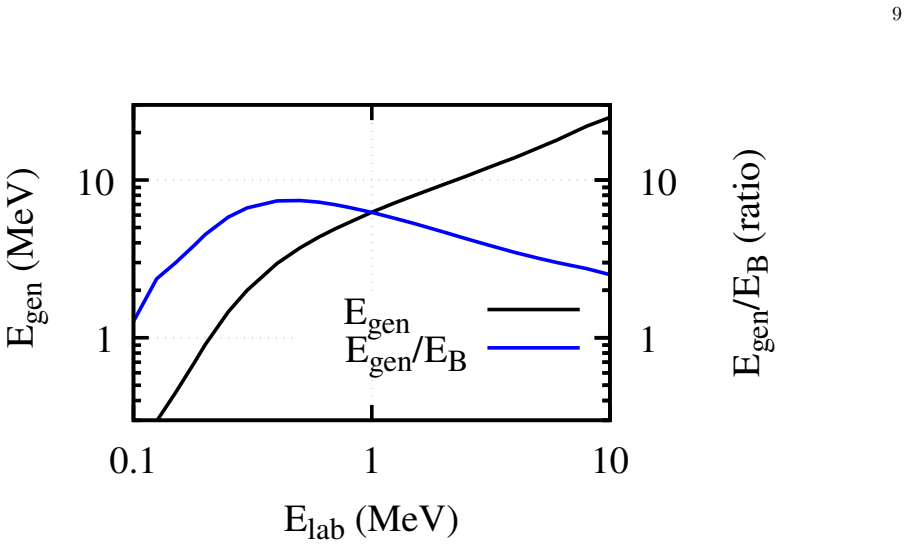
By formulating a self-consistent description of stopping power in electron-suppressed targets, the paper derives quantitative, implementation-agnostic conditions under which fusion energy generation exceeds beam energy loss, extending the energy-based breakeven criterion introduced in the accompanying Letter.
What carries the argument
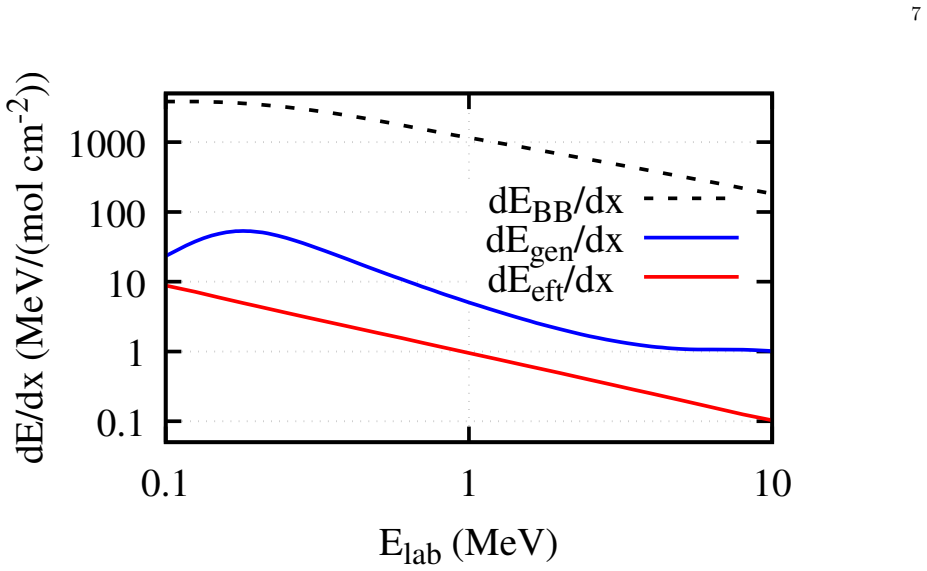
The self-consistent stopping power description in electron-suppressed targets, which reduces electron-mediated energy losses and enables direct comparison of fusion output to beam input.
Load-bearing premise
The energy-based breakeven criterion holds without extra unaccounted loss channels once electrons are suppressed in the target.
What would settle it
A measurement showing that beam energy losses in an electron-suppressed target remain higher than predicted fusion output for the derived parameter ranges would falsify the breakeven conditions.
Figures


read the original abstract
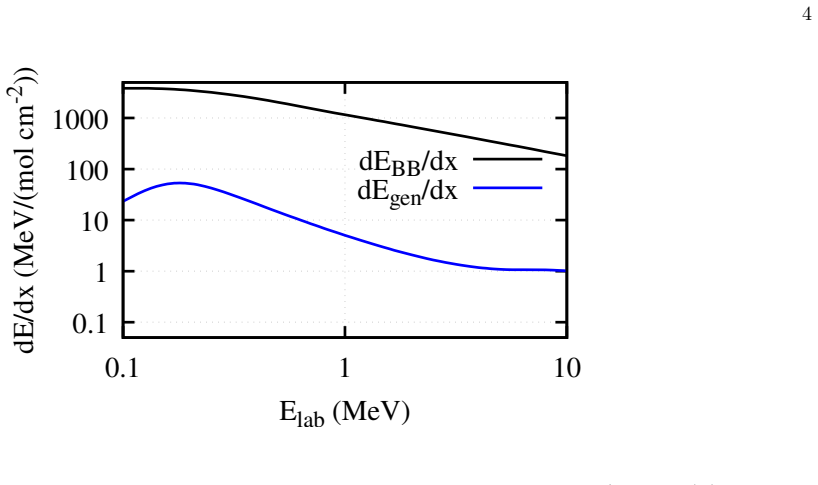
This manuscript provides a detailed and extended analysis of the breakeven conditions for nuclear fusion based on beam-target interactions, distinct from conventional plasma-based approaches. Building on the energy-based criterion introduced in the accompanying Letter~\cite{TK_arXiv}, we formulate a self-consistent description of stopping power in electron-suppressed targets and derive quantitative, implementation-agnostic conditions under which fusion energy generation can exceed beam energy loss.
Editorial analysis
A structured set of objections, weighed in public.
Referee Report
Summary. The manuscript formulates a self-consistent description of stopping power in electron-suppressed targets for beam-target fusion and derives quantitative, implementation-agnostic breakeven conditions under which fusion energy generation exceeds beam energy loss, building on an energy-based criterion from an accompanying Letter.
Significance. Should the central claims hold, this work supplies specific conditions that could guide the development of beam-target fusion systems with electron suppression. The self-consistent model for stopping power is a positive aspect, providing a detailed energy balance analysis distinct from conventional plasma fusion. The potential circularity with the prior Letter does not appear to introduce inconsistencies, as the extension is direct and no additional loss channels are evident in the derivation.
minor comments (1)
- [Abstract] The abstract summarizes the approach but does not include any specific equations or numerical examples of the derived breakeven conditions, which would help convey the quantitative nature of the results.
Simulated Author's Rebuttal
We thank the referee for their positive assessment of the manuscript, including the self-consistent stopping power model and the quantitative breakeven conditions for beam-target fusion. The recommendation for minor revision is noted, and we will incorporate improvements to enhance clarity and presentation in the revised version.
Circularity Check
Breakeven conditions rest on self-cited energy criterion from accompanying Letter
specific steps
-
self citation load bearing
[Abstract]
"Building on the energy-based criterion introduced in the accompanying Letter~[TK_arXiv], we formulate a self-consistent description of stopping power in electron-suppressed targets and derive quantitative, implementation-agnostic conditions under which fusion energy generation can exceed beam energy loss."
The paper's primary result—quantitative breakeven conditions—is derived directly from the energy-based criterion of the authors' own accompanying Letter. The central claim therefore reduces to an application and extension of that prior self-cited result rather than standing on independent derivation or external validation within this manuscript.
full rationale
The manuscript develops an independent stopping-power model for electron-suppressed targets. However, its central quantitative breakeven conditions are explicitly constructed by extending the energy-based criterion introduced in the authors' own prior Letter. This self-citation is load-bearing for the primary claim, as the derivation chain begins from that unverified (within this paper) assumption rather than deriving or validating the criterion independently. No other circular patterns (self-definitional, fitted predictions, or ansatz smuggling) are present in the provided text.
Axiom & Free-Parameter Ledger
Lean theorems connected to this paper
-
IndisputableMonolith.Cost (J(x)=½(x+x⁻¹)−1)washburn_uniqueness_aczel uncleardE_loss/dx = K (1/(m_e β²)) ln(T_max/T_min) … ln(T_max/T_min) = 2 ln(b_max/b_min)
Reference graph
Works this paper leans on
-
[1]
Breakeven conditions for nuclear fusion via electron-free targets
Tadafumi Kishimoto. Breakeven conditions for nuclear fusion via electron-free targets. 2026. arXiv:2601.09458 [nucl-ex]; cross-listed as physics.plasm-ph
-
[2]
J. D. Lawson. Some criteria for a useful thermonuclear reactor. Technical Report GP/R 1807, AERE, 1955
1955
-
[3]
S. E. et al. Wurzel. Progress toward fusion energy breakeven and gain as measured against the lawson criterion. Physics of Plasmas, 29, 2022
2022
-
[4]
Abu-Shawareb, R
H. Abu-Shawareb, R. Acree, P. Adams, J. Adams, B. Addis, R. Aden, P. Adrian, B. B. Afeyan, M. Aggleton, et al. Achievement of target gain larger than unity in an inertial fusion experiment. Physical Review Letters, 132(6):065102, 2024. (The Indirect Drive ICF Collaboration)
2024
-
[5]
Endf/b-viii.0 evaluated nuclear data library.https://www.nndc.bnl.gov/endf-b8.0/, 2018
National Nuclear Data Center. Endf/b-viii.0 evaluated nuclear data library.https://www.nndc.bnl.gov/endf-b8.0/, 2018
2018
-
[6]
Stopping-power and range tables for electrons, protons, and helium ions.https://physics.nist.gov/PhysRefData/ Star/Text/contents.html, 2023
NIST. Stopping-power and range tables for electrons, protons, and helium ions.https://physics.nist.gov/PhysRefData/ Star/Text/contents.html, 2023
2023
-
[7]
Nuclear Fusion, 39, 1999
Iter physics basis. Nuclear Fusion, 39, 1999
1999
-
[8]
Haj Tahar, F
M. Haj Tahar, F. M´ eot, and S. Peggs. Energy efficiency of high power accelerators for ads applications.https://inspirehep. net/files/39ac75e549c71acb1940b2948cbd0266, 2024
2024
discussion (0)
Sign in with ORCID, Apple, or X to comment. Anyone can read and Pith papers without signing in.