Recognition: unknown
Lattice Tadpoles
Pith reviewed 2026-05-08 16:03 UTC · model grok-4.3
The pith
Tadpole and lasso embeddings on lattices have rigorously proven asymptotic counts even under unknotted or piercing constraints.
A machine-rendered reading of the paper's core claim, the machinery that carries it, and where it could break.
Core claim
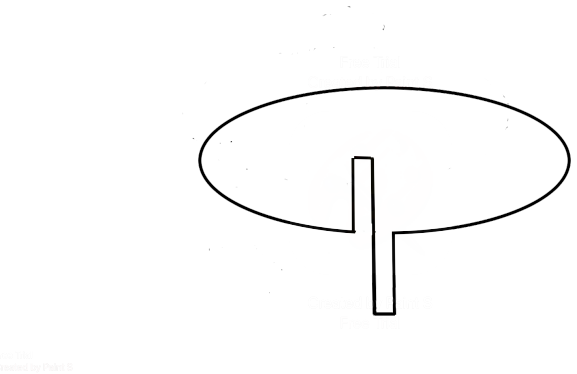
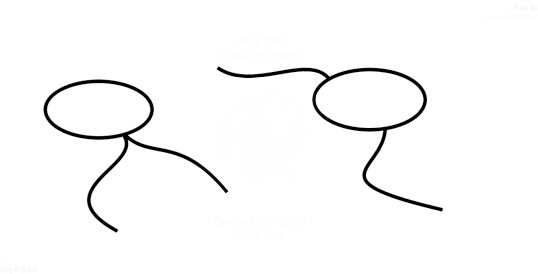
We prove several rigorous results about the asymptotic behaviour of the numbers of tadpoles (or lassos) embedded in a lattice, including cases where the head is subject to a constraint like being unknotted, or where the tail pierces the surface spanned by the head.
What carries the argument
Tadpoles or lassos as lattice embeddings formed by a closed loop head attached to an open tail, subject to self-avoidance and optional topological constraints.
If this is right
- A well-defined growth constant exists for the number of standard lattice tadpoles.
- Imposing an unknotted constraint on the head preserves the leading asymptotic behavior.
- Allowing the tail to pierce the surface spanned by the head does not alter the existence of the asymptotic limit.
- These asymptotic controls apply uniformly across the listed constrained variants.
Where Pith is reading between the lines
- The same lattice counting techniques could be applied to other composite polymer topologies such as double lassos.
- Numerical sampling algorithms for polymers could be benchmarked against these exact asymptotic forms for validation.
- The results supply a foundation for extending knotting statistics to mixed loop-tail objects in higher-dimensional lattices.
Load-bearing premise
The structures are formed by self-avoiding embeddings on a regular lattice without extra energetic interactions.
What would settle it
Direct enumeration of tadpole numbers for successively larger sizes that fails to match the derived asymptotic scaling form would disprove the results.
Figures



read the original abstract
We prove several rigorous results about the asymptotic behaviour of the numbers of tadpoles (or lassos) embedded in a lattice, including cases where the head is subject to a constraint like being unknotted, or where the tail pierces the surface spanned by the head.
Editorial analysis
A structured set of objections, weighed in public.
Referee Report
Summary. The manuscript proves several rigorous combinatorial results on the asymptotic growth of the number of tadpoles (lassos) embedded in a lattice, including variants in which the head is constrained to be unknotted or the tail is required to pierce the surface spanned by the head.
Significance. If the proofs are correct, the work supplies exact asymptotic forms (including connective constants and sub-exponential corrections) for a class of topologically constrained self-avoiding structures that appear in lattice models of polymers and DNA. The provision of fully rigorous arguments rather than numerical or heuristic estimates is a clear strength and advances the mathematical foundations of the field.
minor comments (3)
- §2.1: the definition of a 'tadpole' should explicitly state the lattice (Z^3) and the precise self-avoidance condition used for the tail attachment point.
- Theorem 3.2: the statement of the asymptotic for the unknotted-head case would benefit from an explicit reminder of the pattern-avoidance technique employed in the proof.
- Figure 1: the caption should indicate whether the depicted piercing configuration satisfies the non-intersection condition required by the generating-function argument.
Simulated Author's Rebuttal
We thank the referee for their positive assessment of our work and for recommending minor revision. The referee correctly identifies the core contribution as rigorous proofs of asymptotic growth rates for lattice tadpoles under topological constraints such as unknotted heads and piercing tails. No specific major comments were raised in the report.
Circularity Check
No significant circularity; self-contained combinatorial proofs
full rationale
The paper establishes rigorous asymptotic results for the growth of lattice tadpoles (lassos) under self-avoiding embeddings and topological constraints via combinatorial arguments on the integer lattice. No equations or theorems reduce by construction to fitted inputs, self-definitions, or load-bearing self-citations; the derivations rely on standard pattern-avoidance and generating-function techniques whose assumptions are external to the target counts. The abstract and structure indicate independent proof steps rather than renaming or smuggling of prior results.
Axiom & Free-Parameter Ledger
axioms (1)
- domain assumption Existence of connective constants and submultiplicative bounds for lattice walks and loops
Reference graph
Works this paper leans on
-
[1]
Beaton N R 2025Personal communication
-
[2]
Beaton N R and Owczarek A L 2026Personal communication
-
[3]
Dabrowski-Tumanski P, Goundaroulis D, Stasiak A, Rawdon E and Sulkowska J I 2024Protein Science335133
-
[4]
Dabrowski-Tumanski P, Gren B and Sulkowska J I 2019Polymers11707
-
[5]
Guttmann A J and Sykes M F 1973J. Phys. C: Solid State Phys.6945-954
-
[6]
Guttmann A J and Whittington S G 1978J. Phys. A: Math. Gen.11721-729
-
[7]
Hammersley J M 1957Proc. Camb. Phil. Soc.53642-645
-
[8]
Hammersley J M 1961Proc. Camb. Phil. Soc.57516-523
-
[9]
Kesten H 1963J. Math. Phys.4960-969
-
[10]
Madras N 1988J. Stat. Phys.53689-701
-
[11]
Niemyska W, Dabrowski-Tumanski P, Kadlof M, Haglund E, Sulkowski P and Sulkowska J I 2016Scientific Reports636895
-
[12]
O’Brien G L 1990J. Stat. Phys.59969-979
-
[13]
Pippenger N 1989Disc. Appl. Math.25273-278 10
-
[14]
Stanley H E 1987Phase Transitions and Critical PhenomenaOxford University Press
-
[15]
Sumners D W and Whittington S G 1988J. Phys. A: Math. Gen.211689-1694
-
[16]
Sykes M F 1961J. Math. Phys.252-62
-
[17]
Whittington S G 1975J. Chem. Phys.63779-785
-
[18]
Whittington S G, Trueman R E and Wilker J B 1975J. Phys. A: Math. Gen.856-60 11
discussion (0)
Sign in with ORCID, Apple, or X to comment. Anyone can read and Pith papers without signing in.