Recognition: 2 theorem links
· Lean TheoremBridging Krylov Complexity and Universal Analog Quantum Simulator
Pith reviewed 2026-05-11 02:31 UTC · model grok-4.3
The pith
Generalized Krylov complexity predicts the minimum time needed to realize target operations in analog quantum simulators.
A machine-rendered reading of the paper's core claim, the machinery that carries it, and where it could break.
Core claim
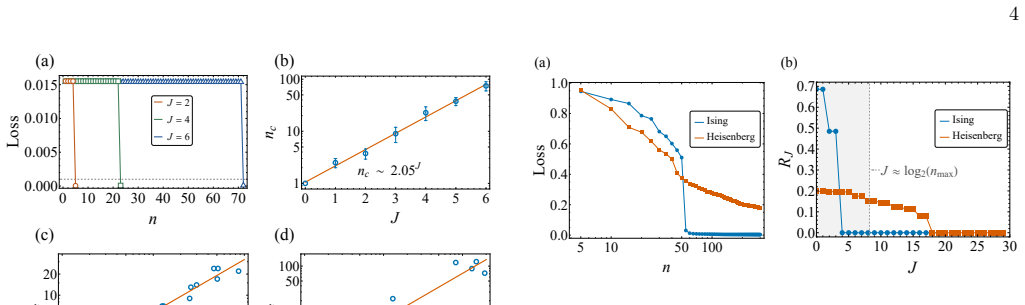
By constructing the block Krylov basis generated by a set of Hamiltonians, which naturally organizes the operator space achievable through the simulator's native interactions and their nested commutators, the generalized Krylov complexity of a target operation serves as a strong predictor of the minimum time required for its realization. This is demonstrated through analysis of representative systems including Rydberg atom arrays.
What carries the argument
the block Krylov basis generated by the available Hamiltonians, which spans the reachable operators through nested commutators and locates the target operation within that basis
If this is right
- The shortest control duration for any chosen target can be read off from its depth in the Krylov basis without full dynamical simulation.
- Hamiltonian sets can be compared or selected according to the Krylov complexities they induce for a library of useful operations.
- Control design reduces to finding short paths in the precomputed operator basis rather than optimizing continuous fields.
- Universality of an analog simulator can be quantified by how small the complexities are for a fixed set of target gates or Hamiltonians.
Where Pith is reading between the lines
- The same basis construction might be used to rank different physical platforms by their synthesis efficiency before any experiment is run.
- If the correlation holds, it supplies a lower bound on control time that could be combined with existing speed-limit theorems.
- The method could be tested on other global-control platforms such as trapped ions or superconducting circuits to check platform independence.
Load-bearing premise
That the position of a target operator in the block Krylov basis directly gives the minimum time needed to realize it with the simulator's controls, without extra assumptions on field shapes or system details.
What would settle it
An explicit computation for a Rydberg atom array in which an operation with low generalized Krylov complexity requires a longer minimum control time than one with higher complexity.
Figures


read the original abstract
Quantum simulation of complex many-body systems beyond classical computational capabilities provides a promising route toward understanding novel quantum phases and their transitions. In particular, analog quantum simulators with global control fields have attracted considerable attention due to their potential to simulate arbitrary Hamiltonians and perform quantum computing tasks. However, a clear, quantitative measure for the complexity of implementing specific quantum operations in such systems is still lacking. In this Letter, we address this challenge by introducing generalized Krylov complexity, a concept originating from operator growth dynamics, as a direct diagnosis for this synthesis complexity. We construct the block Krylov basis generated by a set of Hamiltonians, which naturally organizes the operator space achievable through the simulator's native interactions and their nested commutators. By analyzing representative systems including Rydberg atom arrays, we demonstrate that the generalized Krylov complexity of a target operation serves as a strong predictor of the minimum time required for its realization. Our results establish Krylov complexity as an intuitive and predictive tool for designing efficient control protocols in analog quantum simulators.
Editorial analysis
A structured set of objections, weighed in public.
Referee Report
Summary. The manuscript introduces generalized Krylov complexity, defined via the dimension or growth of the block Krylov subspace generated by a simulator's native Hamiltonians and their nested commutators, and claims this quantity serves as a strong predictor of the minimal evolution time needed to realize a target operator in analog quantum simulators with global controls. The claim is supported by numerical analysis on representative systems, notably Rydberg atom arrays, where the complexity measure correlates with computed minimal realization times.
Significance. If the correlation can be placed on a rigorous footing, the work would supply a computationally inexpensive diagnostic for control complexity in analog simulators, potentially guiding protocol design without exhaustive numerical optimization. The connection between operator-growth concepts and quantum control is novel and could be useful for assessing simulability of many-body operations.
major comments (3)
- [Introduction / Theoretical construction] The abstract and introduction assert that the block Krylov basis 'naturally organizes the operator space achievable through the simulator's native interactions and their nested commutators,' yet no theorem, proposition, or speed-limit inequality is provided that converts subspace dimension (or growth rate) into a lower bound on evolution time under bounded control amplitudes. Without such a relation, the numerical correlation on Rydberg arrays remains post-hoc rather than predictive.
- [Numerical results on Rydberg arrays] In the Rydberg-array demonstrations (presumably §4 or the numerical-results section), it is not stated how the minimal realization times are obtained (e.g., via GRAPE-type optimal control, variational ansatz, or analytic bounds) nor whether data points were selected or filtered before reporting the correlation strength. This leaves open whether the 'strong predictor' claim survives without post-selection.
- [Definition of generalized Krylov complexity] The precise definition of the generalized Krylov complexity (dimension of the block subspace, maximal growth rate, or a normalized quantity) is not accompanied by an explicit statement of how it is computed from the nested commutators; Eq. (X) or the corresponding algorithmic description should make clear whether the measure is parameter-free or involves any auxiliary cutoffs.
minor comments (2)
- [Discussion / Outlook] A short discussion of the method's limitations (e.g., applicability to time-dependent vs. time-independent controls, or to systems with only local rather than global fields) would strengthen the conclusions.
- [Theoretical framework] Notation for the block Krylov basis and the target operator should be introduced with a small example (e.g., a two-qubit gate) to improve readability for readers outside the Krylov-complexity community.
Simulated Author's Rebuttal
We thank the referee for the detailed and constructive report. We address each of the major comments below and will revise the manuscript accordingly to strengthen the presentation and clarify the theoretical and numerical aspects.
read point-by-point responses
-
Referee: The abstract and introduction assert that the block Krylov basis 'naturally organizes the operator space achievable through the simulator's native interactions and their nested commutators,' yet no theorem, proposition, or speed-limit inequality is provided that converts subspace dimension (or growth rate) into a lower bound on evolution time under bounded control amplitudes. Without such a relation, the numerical correlation on Rydberg arrays remains post-hoc rather than predictive.
Authors: We agree that a rigorous theorem establishing a lower bound on the evolution time in terms of the Krylov subspace dimension would provide a stronger theoretical foundation. In the current manuscript, we present the generalized Krylov complexity as a diagnostic tool supported by extensive numerical evidence across representative systems, including Rydberg atom arrays, where it correlates strongly with the minimal realization times. While deriving a general speed-limit inequality is an important open question that we plan to pursue in future work, we will add a heuristic argument in the revised introduction explaining why the dimension of the block Krylov subspace provides a natural measure of the 'effort' required to reach the target operator, based on the number of independent nested commutators needed. This will clarify that the correlation is not merely post-hoc but grounded in the structure of the reachable operator space. revision: partial
-
Referee: In the Rydberg-array demonstrations (presumably §4 or the numerical-results section), it is not stated how the minimal realization times are obtained (e.g., via GRAPE-type optimal control, variational ansatz, or analytic bounds) nor whether data points were selected or filtered before reporting the correlation strength. This leaves open whether the 'strong predictor' claim survives without post-selection.
Authors: We apologize for the lack of clarity in the manuscript. We will explicitly state in the revised manuscript that the minimal realization times were obtained via numerical optimization of the control fields to achieve the target operator in minimal time, and confirm that the reported correlation includes all sampled points without post-selection. revision: yes
-
Referee: The precise definition of the generalized Krylov complexity (dimension of the block subspace, maximal growth rate, or a normalized quantity) is not accompanied by an explicit statement of how it is computed from the nested commutators; Eq. (X) or the corresponding algorithmic description should make clear whether the measure is parameter-free or involves any auxiliary cutoffs.
Authors: We will revise the manuscript to include a detailed algorithmic description of how the generalized Krylov complexity is computed. Specifically, it is defined as the dimension of the block Krylov subspace generated by iteratively applying nested commutators with the native Hamiltonians until the subspace stabilizes, and this procedure is parameter-free with no auxiliary cutoffs. We will add pseudocode or a step-by-step explanation following the definition to make the computation explicit. revision: yes
Circularity Check
No circularity: Krylov complexity defined independently via commutators; numerical correlation with control time is empirical, not definitional.
full rationale
The paper defines the block Krylov basis and generalized Krylov complexity directly from the native Hamiltonians and their nested commutators, which organizes the operator space by algebraic construction. The minimum realization time is a separate dynamical quantity obtained from control protocols or optimization. The abstract and described analysis present a numerical demonstration of correlation on Rydberg arrays as evidence that complexity predicts time, without any equation or step that substitutes the time metric back into the complexity definition or fits parameters to force the relation. No self-citation chain or ansatz smuggling is indicated in the provided text that would reduce the central claim to its inputs by construction. The derivation remains self-contained against external benchmarks.
Axiom & Free-Parameter Ledger
axioms (1)
- domain assumption The block Krylov basis generated by a set of Hamiltonians organizes the operator space achievable through native interactions and nested commutators
invented entities (1)
-
generalized Krylov complexity
no independent evidence
Lean theorems connected to this paper
-
IndisputableMonolith/Cost/FunctionalEquation.leanwashburn_uniqueness_aczel unclear?
unclearRelation between the paper passage and the cited Recognition theorem.
We construct the block Krylov basis generated by a set of Hamiltonians, which naturally organizes the operator space achievable through the simulator's native interactions and their nested commutators... K = sum_J P_J 2^J
-
IndisputableMonolith/Foundation/AlexanderDuality.leanalexander_duality_circle_linking unclear?
unclearRelation between the paper passage and the cited Recognition theorem.
C_J = 3·2^J - 2... asymptotic exponential scaling C_J ~ 2^J
What do these tags mean?
- matches
- The paper's claim is directly supported by a theorem in the formal canon.
- supports
- The theorem supports part of the paper's argument, but the paper may add assumptions or extra steps.
- extends
- The paper goes beyond the formal theorem; the theorem is a base layer rather than the whole result.
- uses
- The paper appears to rely on the theorem as machinery.
- contradicts
- The paper's claim conflicts with a theorem or certificate in the canon.
- unclear
- Pith found a possible connection, but the passage is too broad, indirect, or ambiguous to say the theorem truly supports the claim.
Reference graph
Works this paper leans on
- [1]
-
[2]
R. Jefferson and R. C. Myers, Circuit complexity in quantum field theory, JHEP10, 107, arXiv:1707.08570 [hep-th]
-
[3]
Yang, Complexity for quantum field theory states and applications to thermofield double states, Phys
R.-Q. Yang, Complexity for quantum field theory states and applications to thermofield double states, Phys. Rev. D97, 066004 (2018), arXiv:1709.00921 [hep-th]
-
[4]
S. Chapman, M. P. Heller, H. Marrochio, and F. Pastawski, Toward a Definition of Complexity for Quantum Field Theory States, Phys. Rev. Lett.120, 121602 (2018), arXiv:1707.08582 [hep-th]
- [5]
-
[6]
R.-Q. Yang, Y.-S. An, C. Niu, C.-Y. Zhang, and K.- Y. Kim, Principles and symmetries of complexity in quantum field theory, Eur. Phys. J. C79, 109 (2019), arXiv:1803.01797 [hep-th]
-
[7]
Lucas, Operator size at finite temperature and Planckian bounds on quantum dynamics, Phys
A. Lucas, Operator size at finite temperature and Planckian bounds on quantum dynamics, Phys. Rev. Lett.122, 216601 (2019), arXiv:1809.07769 [cond- mat.str-el]
-
[8]
Quantum Complexity of Time Evolution with Chaotic Hamiltonians,
V. Balasubramanian, M. Decross, A. Kar, and O. Par- rikar, Quantum Complexity of Time Evolution with Chaotic Hamiltonians, JHEP01, 134, arXiv:1905.05765 [hep-th]
-
[9]
V. Balasubramanian, M. DeCross, A. Kar, Y. C. Li, and O. Parrikar, Complexity growth in integrable and chaotic models, JHEP07, 011, arXiv:2101.02209 [hep- th]
-
[10]
M. A. Nielsen and I. L. Chuang,Quantum Computa- tion and Quantum Information(Cambridge University Press, 2012)
work page 2012
-
[11]
Elementary gates for quantum computation
A. Barenco, C. H. Bennett, R. Cleve, D. P. DiVincenzo, N. Margolus, P. Shor, T. Sleator, J. Smolin, and H. We- infurter, Elementary gates for quantum computation, Phys. Rev. A52, 3457 (1995), arXiv:quant-ph/9503016
-
[12]
D. Deutsch, A. Barenco, and A. Ekert, Universality in quantum computation, Proc. Roy. Soc. Lond. A449, 669 (1995), arXiv:quant-ph/9505018
-
[13]
Lloyd, Universal Quantum Simulators, Science273, 1073 (1996)
S. Lloyd, Universal Quantum Simulators, Science273, 1073 (1996)
work page 1996
- [14]
-
[15]
Susskind, Computational Complexity and Black Hole Horizons, Fortsch
L. Susskind, Computational Complexity and Black Hole Horizons, Fortsch. Phys.64, 24 (2016), [Addendum: Fortsch.Phys. 64, 44–48 (2016)], arXiv:1403.5695 [hep- th]
-
[16]
D. Stanford and L. Susskind, Complexity and Shock Wave Geometries, Phys. Rev. D90, 126007 (2014), arXiv:1406.2678 [hep-th]
- [17]
- [18]
- [19]
- [20]
- [21]
-
[22]
A. Belin, R. C. Myers, S.-M. Ruan, G. S´ arosi, and A. J. Speranza, Does Complexity Equal Anything?, Phys. Rev. Lett.128, 081602 (2022), arXiv:2111.02429 [hep- th]
- [23]
- [24]
-
[25]
Miyaji, Butterflies from Information Metric, JHEP 09, 002, arXiv:1607.01467 [hep-th]
M. Miyaji, Butterflies from Information Metric, JHEP 09, 002, arXiv:1607.01467 [hep-th]
- [26]
- [27]
-
[28]
J. Haferkamp, P. Faist, N. B. T. Kothakonda, J. Eis- ert, and N. Y. Halpern, Linear growth of quan- tum circuit complexity, Nature Phys.18, 528 (2022), arXiv:2106.05305 [quant-ph]
-
[29]
N.-C. Chiuet al., Continuous operation of a co- herent 3,000-qubit system, Nature646, 1075 (2025), arXiv:2506.20660 [quant-ph]
- [30]
- [31]
-
[32]
G. Semeghiniet al., Probing topological spin liquids on a programmable quantum simulator, Science374, abi8794 (2021), arXiv:2104.04119 [quant-ph]
- [33]
-
[34]
Nature595, 233–238 (2021).2012.12268
P. Schollet al., Quantum simulation of 2D antiferro- magnets with hundreds of Rydberg atoms, Nature595, 233 (2021), arXiv:2012.12268 [quant-ph]
-
[35]
Large-scale quantum reservoir learning with an analog quantum computer.arXiv:2407.02553, 2024
M. Kornjaˇ caet al., Large-scale quantum reservoir learning with an analog quantum computer, (2024), arXiv:2407.02553 [quant-ph]
-
[36]
T. Manovitzet al., Quantum coarsening and collective dynamics on a programmable simulator, Nature638, 86 (2025), arXiv:2407.03249 [quant-ph]
- [37]
- [38]
-
[39]
T. Kohlert, S. Scherg, P. Sala, F. Pollmann, B. Hebbe Madhusudhana, I. Bloch, and M. Aidels- burger, Exploring the regime of fragmentation in strongly tilted fermi-hubbard chains, Phys. Rev. Lett. 130, 010201 (2023)
work page 2023
- [40]
- [41]
-
[42]
A. Mazurenko, C. S. Chiu, G. Ji, M. F. Parsons, M. Kan´ asz-Nagy, R. Schmidt, F. Grusdt, E. Demler, D. Greif, and M. Greiner, A cold-atom fermi–hubbard antiferromagnet, Nature545, 462 (2017)
work page 2017
-
[43]
X. Wang, E. Khatami, F. Fei, J. Wyrick, P. Nam- boodiri, R. Kashid, A. F. Rigosi, G. Bryant, and R. Silver, Experimental realization of an extended Fermi-Hubbard model using a 2D lattice of dopant- based quantum dots, Nature Communications13, 6824 (2022), arXiv:2110.08982 [quant-ph]
-
[44]
C. Hofrichter, L. Riegger, F. Scazza, M. H¨ ofer, D. R. Fernandes, I. Bloch, and S. F¨ olling, Direct Prob- ing of the Mott Crossover in the SU (N ) Fermi- Hubbard Model, Physical Review X6, 021030 (2016), arXiv:1511.07287 [cond-mat.quant-gas]
-
[45]
H.-J. Shaoet al., Antiferromagnetic phase transition in a 3D fermionic Hubbard model, Nature632, 267 (2024), arXiv:2402.14605 [cond-mat.quant-gas]
-
[46]
C. Gross and I. Bloch, Quantum simulations with ultra- cold atoms in optical lattices, Science357, 995 (2017)
work page 2017
-
[47]
P. Sompetet al., Realising the Symmetry-Protected Haldane Phase in Fermi-Hubbard Ladders, Nature606, 484 (2022), arXiv:2103.10421 [cond-mat.quant-gas]
-
[48]
Observation of average topological phase in disordered Rydberg atom array
Z. Yueet al., Observation of average topological phase in disordered Rydberg atom array, (2025), arXiv:2505.06286 [cond-mat.quant-gas]
work page internal anchor Pith review Pith/arXiv arXiv 2025
- [49]
-
[50]
S. de L´ es´ eleuc, V. Lienhard, P. Scholl, D. Barredo, S. Weber, N. Lang, H. P. B¨ uchler, T. Lahaye, and A. Browaeys, Observation of a symmetry-protected topological phase of interacting bosons with Rydberg atoms, Science365, aav9105 (2019), arXiv:1810.13286 [quant-ph]
-
[51]
Gonzalez-Cuadraet al., Nature642, 321 (2025), arXiv:2410.16558 [quant-ph]
D. Gonzalez-Cuadraet al., Observation of string break- ing on a (2 + 1)D Rydberg quantum simulator, Nature 642, 321 (2025), arXiv:2410.16558 [quant-ph]. 7
-
[52]
J. Mildenberger, W. Mruczkiewicz, J. C. Halimeh, Z. Jiang, and P. Hauke, Confinement in aZ 2 lattice gauge theory on a quantum computer, Nature Phys.21, 312 (2025), arXiv:2203.08905 [quant-ph]
- [53]
-
[54]
S. C. Benjamin, Schemes for Parallel Quantum Com- putation Without Local Control of Qubits, Phys. Rev. A 10.1103/PhysRevA.61.020301 (1999), arXiv:quant- ph/9909007
- [55]
-
[56]
S. Lloyd, Quantum approximate optimization is compu- tationally universal, (2018), arXiv:1812.11075 [quant- ph]
-
[57]
F. Cesa and H. Pichler, Universal Quantum Com- putation in Globally Driven Rydberg Atom Arrays, Phys. Rev. Lett.131, 170601 (2023), arXiv:2305.19220 [quant-ph]
-
[58]
M. Oszmaniec and Z. Zimbor´ as, Universal extensions of restricted classes of quantum operations, Phys. Rev. Lett.119, 220502 (2017), arXiv:1705.11188 [quant-ph]
- [59]
-
[60]
D. D’Alessandro, Lie Algebraic Analysis and Control of Quantum Dynamics, (2009), arXiv:0803.1193 [quant- ph]
-
[61]
d’Alessandro,Introduction to quantum control and dynamics(Chapman and hall/CRC, 2021)
D. d’Alessandro,Introduction to quantum control and dynamics(Chapman and hall/CRC, 2021)
work page 2021
-
[62]
N. Khaneja and S. J. Glaser, Cartan decomposition of SU(2 n ) and control of spin systems , Chem. Phys.267, 11 (2001)
work page 2001
- [63]
-
[64]
R. Wiersema, E. K¨ okc¨ u, A. F. Kemper, and B. N. Bakalov, Classification of dynamical Lie algebras of 2- local spin systems on linear, circular and fully con- nected topologies, npj Quantum Inf.10, 110 (2024), arXiv:2309.05690 [quant-ph]
-
[65]
J. Allcock, M. Santha, P. Yuan, and S. Zhang, On the dynamical Lie algebras of quantum approximate opti- mization algorithms, (2024), arXiv:2407.12587 [quant- ph]
-
[66]
R. Araiza Bravo, J. G. Ponce, H.-y. Hu, and S. F. Yelin, Circumventing traps in analog quantum machine learning algorithms through co-design, APL Quantum 1, 046121 (2024), arXiv:2408.14697 [quant-ph]
- [67]
-
[68]
A. Avdoshkin, A. Dymarsky, and M. Smolkin, Krylov complexity in quantum field theory, and beyond, JHEP 06, 066, arXiv:2212.14429 [hep-th]
-
[69]
V. Balasubramanian, P. Caputa, J. M. Magan, and Q. Wu, Quantum chaos and the complexity of spread of states, Phys. Rev. D106, 046007 (2022), arXiv:2202.06957 [hep-th]
- [70]
- [71]
-
[72]
A. Dymarsky and A. Gorsky, Quantum chaos as delo- calization in Krylov space, Phys. Rev. B102, 085137 (2020), arXiv:1912.12227 [cond-mat.stat-mech]
- [73]
- [74]
- [75]
-
[76]
E. Rabinovici, A. S´ anchez-Garrido, R. Shir, and J. Son- ner, Operator complexity: a journey to the edge of Krylov space, JHEP06, 062, arXiv:2009.01862 [hep-th]
-
[77]
C.-F. Chen and A. Lucas, Operator Growth Bounds from Graph Theory, Commun. Math. Phys.385, 1273 (2021), arXiv:1905.03682 [math-ph]
- [78]
-
[79]
P. Caputa and S. Datta, Operator growth in 2d CFT, Journal of High Energy Physics2021, 188 (2021), arXiv:2110.10519 [hep-th]
-
[80]
D. Patramanis, Probing the entanglement of operator growth, PTEP2022, 063A01 (2022), arXiv:2111.03424 [hep-th]
discussion (0)
Sign in with ORCID, Apple, or X to comment. Anyone can read and Pith papers without signing in.