Recognition: no theorem link
Non-Abelian monopoles in modified gravity
Pith reviewed 2026-05-12 04:02 UTC · model grok-4.3
The pith
Non-Abelian monopoles in modified gravity differ from Einstein gravity versions, especially at strong Higgs self-coupling.
A machine-rendered reading of the paper's core claim, the machinery that carries it, and where it could break.
Core claim
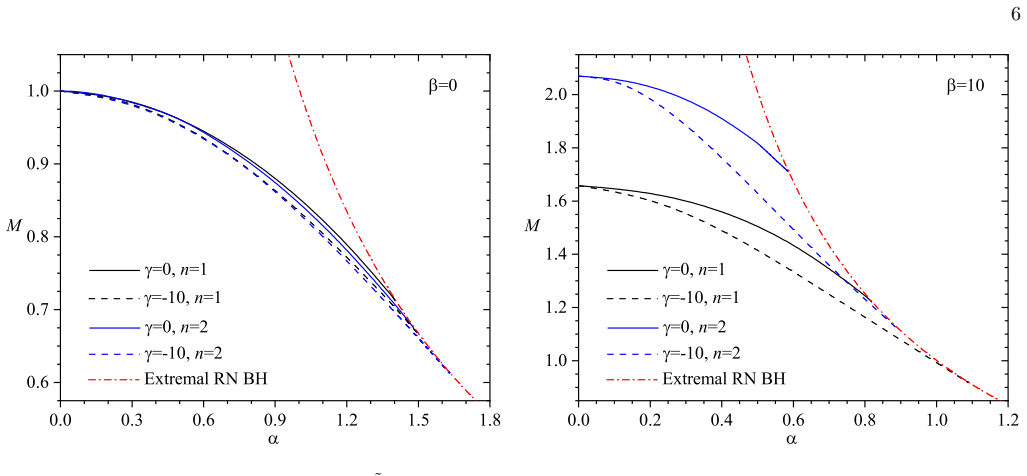
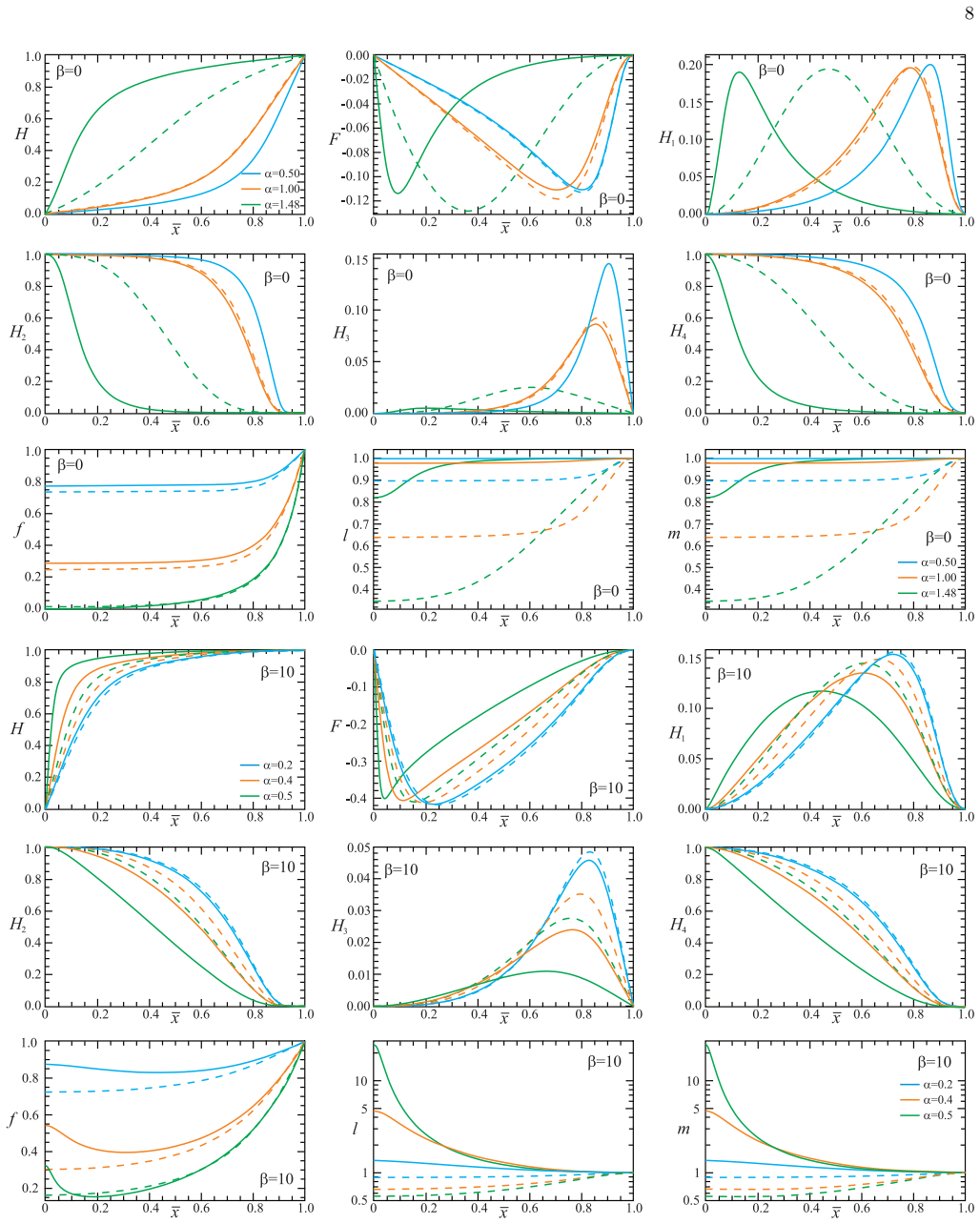
Within modified gravity, static spherically and axially symmetric self-gravitating non-Abelian monopoles exist in SU(2) Yang-Mills-Higgs theory. By comparing these monopoles with those obtained in Einstein-Yang-Mills-Higgs theory, the differences introduced by the modification of gravity are identified, and they can be quite significant for systems with strong Higgs self-coupling.
What carries the argument
Numerical solutions of the modified gravitational field equations coupled to SU(2) Yang-Mills-Higgs fields for spherically and axially symmetric ansatzes.
If this is right
- Monopole mass and spatial extent deviate from their Einstein-gravity values.
- The deviations grow with increasing Higgs self-coupling strength.
- Both spherical and axial symmetry classes display the same qualitative changes.
- The modified gravity solutions remain regular and finite-energy configurations.
Where Pith is reading between the lines
- Similar modifications could appear in other topological defects such as vortices or domain walls.
- Observational bounds on monopole properties might translate into constraints on the modified gravity parameters.
- High-energy regimes where Higgs self-coupling is effectively strong could amplify the distinction between gravity theories.
Load-bearing premise
The chosen modified gravity action stays valid and stable in the high-curvature region near the monopole core.
What would settle it
A numerical solution in which the monopole mass, size, or magnetic field profile matches the Einstein gravity result exactly even at large Higgs self-coupling would falsify the claim of significant differences.
Figures

read the original abstract
Within modified gravity, we study static spherically and axially symmetric self-gravitating non-Abelian monopoles in $SU(2)$ Yang-Mills-Higgs theory. By comparing these monopoles with those obtained in Einstein-Yang-Mills-Higgs theory, we identify the differences introduced by the modification of gravity and show that they can be quite significant for systems with strong Higgs self-coupling.
Editorial analysis
A structured set of objections, weighed in public.
Referee Report
Summary. The manuscript studies static spherically and axially symmetric self-gravitating non-Abelian monopoles in SU(2) Yang-Mills-Higgs theory within a modified gravity framework. It solves the corresponding field equations numerically and compares the resulting configurations to those in Einstein-Yang-Mills-Higgs theory, concluding that the modifications to gravity produce differences that become quite significant for strong Higgs self-coupling.
Significance. If the numerical solutions can be shown to be robust and the modified gravity model remains consistent in the high-curvature regime, the work would usefully illustrate how departures from Einstein gravity affect the structure and properties of non-Abelian monopoles, especially in the strong-coupling limit. No machine-checked proofs, reproducible code, or parameter-free derivations are presented.
major comments (2)
- The central claim that differences are significant for strong Higgs self-coupling rests on the existence, accuracy, and stability of numerical solutions. The manuscript provides neither the explicit modified-gravity action, the derived field equations, the spherically/axially symmetric ansatz, boundary conditions, nor any convergence tests or error estimates, rendering it impossible to verify whether the reported differences are physical or discretization artifacts.
- No analysis is supplied to confirm that the chosen modified gravity action remains valid, ghost-free, and stable in the high-curvature region near the monopole core. Without such a check (e.g., via linear perturbation analysis around the background solutions), the physical relevance of the claimed differences cannot be established.
minor comments (1)
- The abstract would be clearer if it named the specific modified-gravity model (e.g., the form of the higher-order curvature terms) rather than referring generically to 'modified gravity'.
Simulated Author's Rebuttal
We thank the referee for the careful reading of our manuscript and the constructive comments. We address the major points below and will revise the manuscript to improve transparency and completeness.
read point-by-point responses
-
Referee: The central claim that differences are significant for strong Higgs self-coupling rests on the existence, accuracy, and stability of numerical solutions. The manuscript provides neither the explicit modified-gravity action, the derived field equations, the spherically/axially symmetric ansatz, boundary conditions, nor any convergence tests or error estimates, rendering it impossible to verify whether the reported differences are physical or discretization artifacts.
Authors: We agree that these details are essential for reproducibility and verification. In the revised manuscript we will explicitly present the modified gravity action, the full set of derived field equations, the spherically and axially symmetric ansatzes, the boundary conditions, and include convergence tests together with error estimates for the numerical solutions. This will allow independent confirmation that the reported structural differences at strong Higgs self-coupling are physical rather than numerical artifacts. revision: yes
-
Referee: No analysis is supplied to confirm that the chosen modified gravity action remains valid, ghost-free, and stable in the high-curvature region near the monopole core. Without such a check (e.g., via linear perturbation analysis around the background solutions), the physical relevance of the claimed differences cannot be established.
Authors: We acknowledge that a dedicated stability analysis would strengthen the physical interpretation. However, performing a full linear perturbation analysis around the numerical backgrounds is a substantial separate project that exceeds the scope of the present work, which focuses on constructing and comparing the monopole solutions. In the revision we will add an explicit discussion of the model assumptions and limitations in the high-curvature regime, together with a statement that further stability checks are required for complete validation. revision: partial
- Full linear perturbation analysis confirming that the modified gravity action remains ghost-free and stable in the high-curvature region near the monopole core
Circularity Check
No circularity in derivation of monopole solutions
full rationale
The paper starts from a specified modified gravity action, derives the Euler-Lagrange equations for the coupled SU(2) Yang-Mills-Higgs fields under static spherical and axial symmetry ansatze, and obtains numerical solutions by direct integration. These solutions are then compared to the Einstein-Yang-Mills-Higgs case. No fitted parameters are relabeled as predictions, no self-definitional loops exist in the equations, and any self-citations serve only as background for the action choice rather than carrying the central numerical results. The derivation chain is therefore self-contained and independent of its outputs.
Axiom & Free-Parameter Ledger
Reference graph
Works this paper leans on
-
[1]
Spherically symmetric case For the gauge and Higgs fields we employ the usual static spherically s ymmetric hedgehog Ansatz [10, 11] Aa 0 = 0, A a i = εaik rk er2 [1 − W (r)] , φ a = ra er H(r) . (6) For the line element we employ isotropic coordinates ds2 = f (r)dt2 − l(r) f (r) [ dr2 + r2 ( dθ2 + sin2 θdϕ 2)] . (7) The metric function f (r) can be rewrit...
-
[2]
The z-axis ( θ = 0) represents the symmetry axis of the system
Axially symmetric case To construct static axially symmetric solutions, we use isotropic coo rdinates with the spacetime metric in the Lewis-Papapetrou form ds2 = f dt2 − m f ( dr2 + r2dθ2) − l f r2 sin2 θdϕ 2, (8) where the metric functions f, l , and m depend on r and θ only. The z-axis ( θ = 0) represents the symmetry axis of the system. Asymptotically...
-
[3]
T. P. Sotiriou and V. Faraoni, Rev. Mod. Phys. 82, 451 (2010)
work page 2010
- [4]
- [5]
- [6]
-
[7]
A. A. Starobinsky, Phys. Lett. B 91, 99 (1980)
work page 1980
-
[8]
A. V. Astashenok, S. Capozziello, and S. D. Odintsov, Phy s. Lett. B 742, 160 (2015)
work page 2015
-
[9]
A. V. Astashenok, S. D. Odintsov, and A. de la Cruz-Dombri z, Class. Quant. Grav. 34, 205008 (2017)
work page 2017
- [10]
-
[11]
G. J. Olmo, D. Rubiera-Garcia, and A. Wojnar, Phys. Rept. 876, 1 (2020)
work page 2020
- [12]
-
[13]
A. M. Polyakov, JETP Lett. 20, 194 (1974)
work page 1974
-
[14]
A. Vilenkin and E. P. S. Shellard, Cosmic Strings and Other Topological Defects (Cambridge University Press , 1994)
work page 1994
-
[15]
K. M. Lee, V. P. Nair, and E. J. Weinberg, Phys. Rev. D 45, 2751 (1992)
work page 1992
-
[16]
P. Breitenlohner, P. Forgacs, and D. Maison, Nucl. Phys . B383, 357 (1992)
work page 1992
-
[17]
P. Breitenlohner, P. Forgacs, and D. Maison, Nucl. Phys . B442, 126 (1995)
work page 1995
- [18]
-
[19]
M. S. Volkov and D. V. Galtsov, Phys. Rept. 319, 1 (1999)
work page 1999
- [20]
-
[21]
M. S. Volkov and D. V. Galtsov, JETP Lett. 50, 346 (1989)
work page 1989
-
[22]
M. S. Volkov and D. V. Galtsov, Sov. J. Nucl. Phys. 51, 747 (1990)
work page 1990
- [23]
-
[24]
Y. Brihaye, B. Hartmann, J. Kunz, and N. Tell, Phys. Rev. D 60, 104016 (1999)
work page 1999
- [25]
-
[26]
N.I.M. Gould, J.A. Scott, Y. Hu, ACM Trans. Math. Softw. 33, 10 (2007); O. Schenk, K. Gartner, Future Gener. Comput. Syst. 20, 475 (2004)
work page 2007
-
[27]
C. Herdeiro, I. Perapechka, E. Radu, and Y. Shnir, Phys. Lett. B 797, 134845 (2019)
work page 2019
-
[28]
C. Herdeiro, I. Perapechka, E. Radu, and Y. Shnir, Phys. Lett. B 824, 136811 (2022)
work page 2022
discussion (0)
Sign in with ORCID, Apple, or X to comment. Anyone can read and Pith papers without signing in.