Recognition: 2 theorem links
· Lean TheoremBridging the Gap between Extreme Environments and Precision Measurements: Recent Progress in Megagauss Physics
Pith reviewed 2026-05-13 01:59 UTC · model grok-4.3
The pith
Electromagnetic flux compression now generates fields over 1000 tesla for precision material measurements at cryogenic temperatures.
A machine-rendered reading of the paper's core claim, the machinery that carries it, and where it could break.
Core claim
Recent technological breakthroughs in the EMFC method have achieved fields exceeding 1000 T, and specialized measurement infrastructures using miniaturized all-plastic cryostats and custom sample holders now support high-precision magneto-optics, magnetization, and magneto-transport experiments under combined cryogenic and megagauss conditions, revealing representative phenomena including quantum phase transitions in frustrated magnets, Aharonov-Bohm effects in carbon nanotubes, and semiconductor-to-metal transitions in strongly correlated systems.
What carries the argument
Electromagnetic Flux Compression (EMFC) method, which generates ultrastrong fields by compressing magnetic flux in a destructive pulsed setup, integrated with miniaturized all-plastic cryostats and custom sample holders for dual extreme environments.
If this is right
- Quantum phase transitions in frustrated magnets become directly observable in fields above 100 T.
- Aharonov-Bohm effects in carbon nanotubes can be measured under megagauss conditions.
- Semiconductor-to-metal transitions in strongly correlated systems are accessible for detailed study.
- New measurement platforms for magnetostriction, specific heat, and ultrasound velocity can be implemented in the same infrastructure.
Where Pith is reading between the lines
- The approach of using all-plastic cryostats may generalize to other pulsed-field experiments that combine low temperatures with high mechanical stress.
- Data collected this way could provide stricter tests for theoretical predictions of quantum magnetism that were previously limited by field strength.
- Continued scaling of these techniques might allow hybrid experiments that combine megagauss fields with additional probes such as X-ray or neutron scattering.
Load-bearing premise
The miniaturized all-plastic cryostats and custom sample holders can maintain precision and reliability under the combined extremes of cryogenic temperatures and megagauss fields without significant artifacts or failures.
What would settle it
If standard calibration samples measured in these EMFC setups produce results that deviate systematically from known lower-field data or exhibit noise and artifacts attributable to the cryostat or holder design, the claim of reliable precision would be falsified.
Figures






















read the original abstract
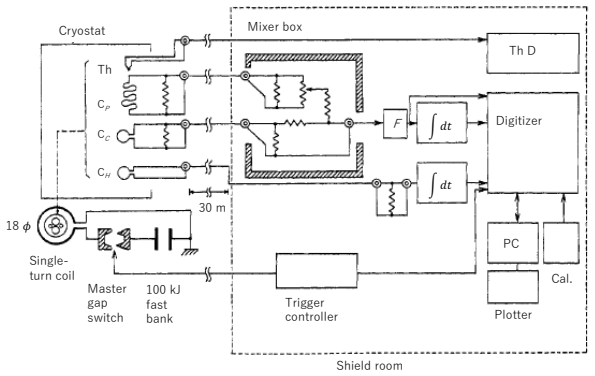
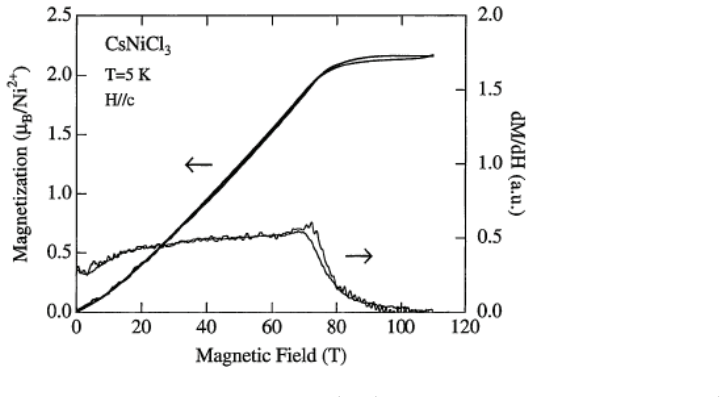
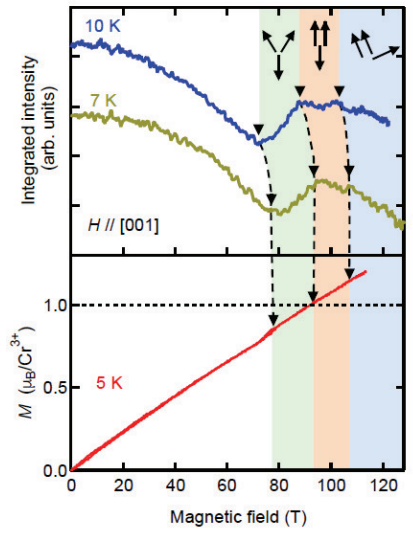
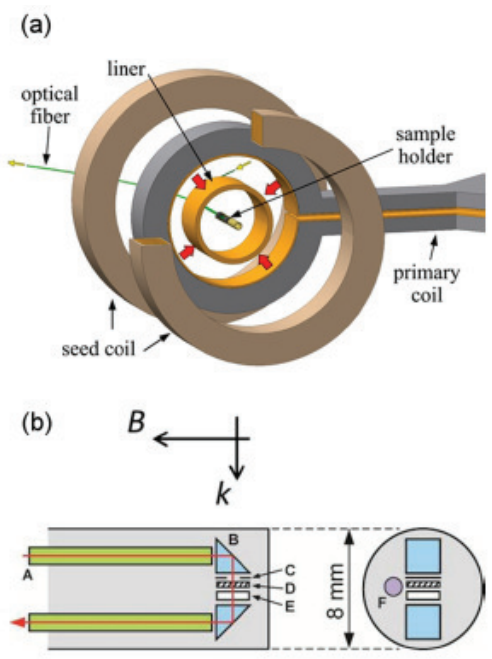
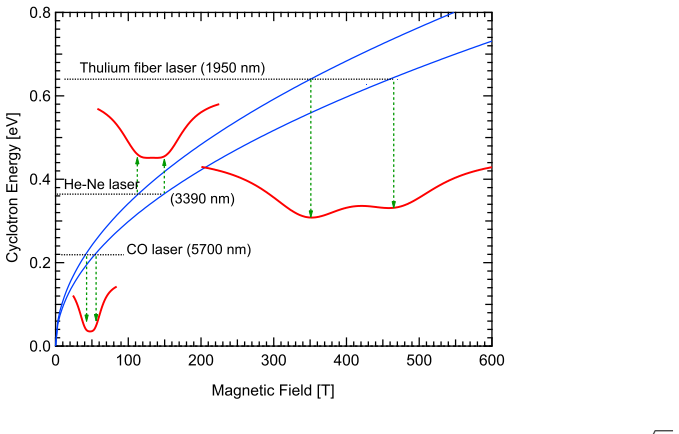
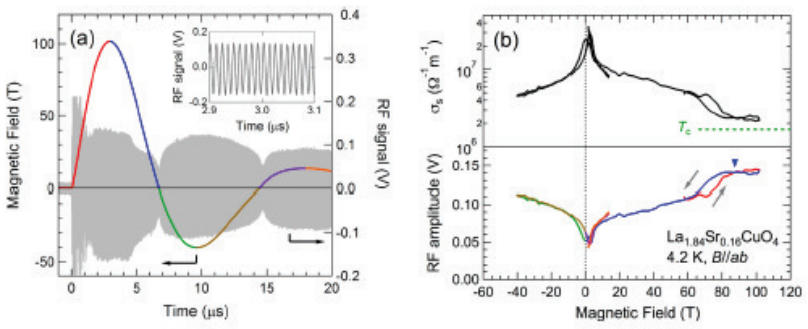
Ultrastrong magnetic fields, ranging from 100~T to 1,000~T, are generated exclusively by destructive pulsed magnets. While various generation methods exist, this review focuses on the Single-Turn Coil (STC) and Electromagnetic Flux Compression (EMFC) techniques, which provide optimal environments for high-precision measurements in materials science. First, we present recent technological breakthroughs in the EMFC method that have successfully achieved fields exceeding 1,000~T. We then describe specialized measurement infrastructures for magneto-optics, magnetization, and magneto-transport, highlighting the development of miniaturized all-plastic cryostats and custom sample holders designed for the dual extremes of cryogenic temperatures and megagauss fields. Representative physical phenomena revealed through these techniques are discussed, including quantum phase transitions in frustrated magnets, Aharonov--Bohm effects in carbon nanotubes, and semiconductor-to-metal transitions in strongly correlated systems. Furthermore, we address emerging measurement platforms such as magnetostriction, specific heat, and ultrasound velocity. Throughout this review, we emphasize the instrumentation and experimental refinements that ensure reliable data acquisition in the ultrastrong pulsed field regime.
Editorial analysis
A structured set of objections, weighed in public.
Referee Report
Summary. This review article summarizes recent progress in generating ultrastrong pulsed magnetic fields (100–1000 T) via destructive methods, with emphasis on Single-Turn Coil (STC) and Electromagnetic Flux Compression (EMFC) techniques. It describes specialized measurement infrastructures including miniaturized all-plastic cryostats and custom sample holders for magneto-optics, magnetization, and magneto-transport under combined cryogenic and megagauss conditions. Representative phenomena such as quantum phase transitions in frustrated magnets, Aharonov–Bohm effects in carbon nanotubes, and semiconductor-to-metal transitions are discussed, along with emerging platforms for magnetostriction, specific heat, and ultrasound velocity. The manuscript compiles achievements and instrumentation refinements drawn from the cited literature rather than presenting new data or derivations.
Significance. If the literature summaries are accurate and balanced, the review provides a useful compilation for the extreme-magnetics community by connecting field-generation methods with precision measurement platforms. It explicitly credits prior experimental refinements for enabling reliable data in destructive pulsed fields and highlights concrete examples of physical insights obtained. No machine-checked proofs or parameter-free derivations are present, as expected for a review, but the focus on instrumentation details and falsifiable phenomena (e.g., phase transitions under >1000 T) adds practical value for experimentalists.
minor comments (3)
- [Abstract] Abstract: the phrase 'recent technological breakthroughs' is repeated without a clear temporal cutoff; specifying the approximate years of the cited EMFC advances (>1000 T) would help readers gauge currency.
- [Measurement infrastructures] The manuscript states that cryostats and holders 'ensure reliable data acquisition' but provides no quantitative discussion of field-induced artifacts or failure rates; a brief table or paragraph summarizing reported error bars or reproducibility metrics from the cited works would strengthen the instrumentation section.
- [Figures] Figure captions (assumed present in full text) should explicitly note whether images are reproduced from prior publications or newly generated for this review to avoid any ambiguity on originality.
Simulated Author's Rebuttal
We thank the referee for their positive evaluation of the manuscript and for recommending minor revision. The provided summary accurately captures the scope, focus on STC and EMFC techniques, specialized cryogenic instrumentation, and representative physical phenomena discussed in the review.
Circularity Check
No significant circularity in review summary
full rationale
This manuscript is a descriptive review summarizing established experimental techniques and recent literature results on ultrastrong pulsed magnetic fields via STC and EMFC methods. It reports achievements such as fields exceeding 1000 T and describes measurement infrastructures drawn from cited external sources, without any original derivations, equations, fitted parameters presented as predictions, or self-referential logical steps. No load-bearing self-citations, uniqueness theorems, or ansatzes are invoked internally; all central claims are attributed to prior work. The text is therefore self-contained against external benchmarks with no reduction of outputs to inputs by construction.
Axiom & Free-Parameter Ledger
Lean theorems connected to this paper
-
IndisputableMonolith/Foundation/Cost/FunctionalEquation.leanwashburn_uniqueness_aczel unclearUltrastrong magnetic fields... generated exclusively by destructive pulsed magnets... STC and EMFC techniques... miniaturized all-plastic cryostats... Faraday rotation... pickup coil method
-
IndisputableMonolith/Foundation/AlexanderDuality.leanalexander_duality_circle_linking unclearrecord-breaking 1,200 T field... EMFC... 3.2 MJ injection energy
Reference graph
Works this paper leans on
-
[1]
Saito, H. Magneto-optical spectroscopy of graphene in ultra-high magnetic fields using the single-turn coil method. Master’s Thesis, The University of Tokyo, Kashiwa, Japan, March 2011
work page 2011
-
[2]
Note: An approach to 1000 T us- ing the electromagnetic flux compression.Rev
Nakamura, D.; Sawabe, H.; Takeyama, S. Note: An approach to 1000 T us- ing the electromagnetic flux compression.Rev. Sci. Instrum.2018,89, 016106. https://doi.org/10.1063/1.5003411
-
[3]
Record indoor mag- netic field of 1200 T generated by electromagnetic flux compression.Rev
Nakamura, D.; Ikeda, A.; Sawabe, H.; Matsuda, Y.H.; Takeyama, S. Record indoor mag- netic field of 1200 T generated by electromagnetic flux compression.Rev. Sci. Instrum. 2018,89, 095106. https://doi.org/10.1063/1.5003415
-
[4]
1: Mag- net Technology and Experimental Techniques; World Scientific: Singapore, 2003
Herlach, F.; Miura, N., Eds.High Magnetic Fields—Science and Technology, Vol. 1: Mag- net Technology and Experimental Techniques; World Scientific: Singapore, 2003
work page 2003
-
[5]
Pulsed and Ultrastrong Magnetic Fields
Miura, N.; Herlach, F. Pulsed and Ultrastrong Magnetic Fields. InTopics in Applied Physics, Vol. 57; Herlach, F., Ed.; Springer: Berlin, Germany, 1985; pp. 247–350
work page 1985
-
[6]
Portugall, O.; Puhlmann, N.; Müller, H.U.; Barczewski, M.; Stolpe, I.; von Ortenberg, M. The Generation and Application of Megagauss Fields at the Humboldt High Magnetic Field Center.Physica B1998,246–247, 54–60
-
[7]
Megagauss Magnetic Field Generation in Single-Turn Coils: New Frontiers for Scientific Experiments.J
Portugall, O.; Puhlmann, N.; Müller, H.U.; Barczewski, M.; Stolpe, I.; von Ortenberg, M. Megagauss Magnetic Field Generation in Single-Turn Coils: New Frontiers for Scientific Experiments.J. Phys. D: Appl. Phys.1999,32, 2354–2366
work page 1999
-
[8]
A Laboratory Instrument for Generating Magnetic Fields over 200 T with Single Turn Coils.J
Nakao, K.; Herlach, F.; Goto, T.; Takeyama, S.; Sakakibara, T.; Miura, N. A Laboratory Instrument for Generating Magnetic Fields over 200 T with Single Turn Coils.J. Phys. E: Sci. Instrum.1985,18, 1018–1026
work page 1985
-
[9]
Mielke, C.H.; McDonald, R.D. Single Turn Multi-Megagauss System at the NHMFL-Los AlamostoStudyPlutonium.InProceedings of the IEEE International Conference on Mega- gauss Magnetic Field Generation and Related Topics, Santa Fe, NM, USA, 5–10 November 2006; pp. 227–231
work page 2006
-
[10]
Production of Very High Magnetic Fields by Im- plosion.J
Fowler, C.M.; Garn, W.B.; Caird, R.S. Production of Very High Magnetic Fields by Im- plosion.J. Appl. Phys.1960,31, 588–594. 67
work page 1960
-
[11]
VNIIEF Achievements on Ultrastrong Magnetic Fields Generation.Physica B2001,294–295, 574– 578
Bykov, A.I.; Dolotenko, M.I.; Kolokolchikov, N.P.; Selemir, V.D.; Tatsenko, O.M. VNIIEF Achievements on Ultrastrong Magnetic Fields Generation.Physica B2001,294–295, 574– 578
-
[12]
Kudasov, Y.B.; Bykov, A.I.; Dolotenko, M.I.; Kolokolchikov, N.P.; Monakhov, M.P.; Markevtsev, I.M.; Platonov, V.V.; Selemir, V.D.; Tatsenko, O.M.; Filippov, A.V.; et al. Semiconductor-Metal Transition in FeSi in Ultrastrong Magnetic Fields up to 450 T.JETP Lett.1998,68, 350–355
work page 1998
-
[13]
Semiconductor-Metal Transition in FeSi in an Ultrastrong Magnetic Field.J
Kudasov, Y.B.; Bykov, A.I.; Dolotenko, M.I.; Kolokolchikov, N.P.; Monakhov, M.P.; Markevtsev, I.M.; Platonov, V.V.; Selemir, V.D.; Tatsenko, O.M.; Filippov, A.V.; et al. Semiconductor-Metal Transition in FeSi in an Ultrastrong Magnetic Field.J. Exp. Theor. Phys.1999,89, 960–965
work page 1999
-
[14]
Spin-Fluctuation Theory of FeSi.J
Takahashi, Y. Spin-Fluctuation Theory of FeSi.J. Phys. Condens. Matter1997,9, 2593– 2605
-
[15]
Transport Measurements of In- Plane Critical Fields in YBa2Cu3O7−δ to 300 T.Phys
Dzurak, A.S.; Kane, B.E.; Clark, R.G.; Lumpkin, N.E.; O’Brien, J.; Facer, G.R.; Starrett, R.P.; Skougarevsky, A.; Nakagawa, H.; Miura, N.; et al. Transport Measurements of In- Plane Critical Fields in YBa2Cu3O7−δ to 300 T.Phys. Rev. B1998,57, R14084–R14087
-
[16]
Kane, B.E.; Dzurak, A.S.; Facer, G.R.; Clark, R.G.; Starrett, R.P.; Skougarevsky, A.; Lumpkin, N.E.; Brooks, J.S.; Engel, L.W.; Miura, N.; et al. Measurement Instrumentation for Electrical Transport Experiments in Extreme Pulsed Magnetic Fields generated by Flux Compression.Rev. Sci. Instrum.1997,68, 3843–3860
work page 1997
-
[17]
Dzurak, A.S.; Kane, B.E.; Clark, R.G.; Lumpkin, N.E.; O’Brien, J.; Facer, G.R.; Starrett, R.P.; Skougarevsky, A.; Nakagawa, H.; Miura, N.; et al. Low-temperature transport mea- surements of superconductors and semiconductors in magnetic fields to 800 T.Physica B 1998,246–247, 40–49
work page 1998
-
[18]
Puhlmann, N.; Tatsenko, O.M.; Stolpe, I.; Markevtsev, I.M.; von Ortenberg, M.; Platonov, V.V.; Selemir, V.D.; Bykov, A.I.; Moiseenko, A.N.; Schikora, D. Cyclotron Resonance on Gallium Nitride in Fields up to 700 T Generated by Explosive-Driven Flux Compression. Physica B2001,294–295, 447–452
-
[19]
Magnetic Flux Compression by Magnetically Imploded Metallic Foils.J
Cnare, E.C. Magnetic Flux Compression by Magnetically Imploded Metallic Foils.J. Appl. Phys.1966,37, 3812–3816
work page 1966
-
[20]
Generation of Megagauss Magnetic Fields and Their Application to Solid-State Physics
Miura, N.; Kido, G.; Oguro, I.; Chikazumi, S. Generation of Megagauss Magnetic Fields and Their Application to Solid-State Physics. InProceedings of the International Confer- ence on Physics in High Magnetic Fields, Grenoble, France, 18–21 September 1974; Vol. 242, pp. 345–353
work page 1974
-
[21]
Generation of 600 T by Electromagnetic Flux Compression with Improved Implosion Symmetry.Rev
Matsuda, Y.H.; Herlach, F.; Ikeda, S.; Miura, N. Generation of 600 T by Electromagnetic Flux Compression with Improved Implosion Symmetry.Rev. Sci. Instrum.2002,73, 4288– 4294
work page 2002
-
[22]
A Fast and Compactθ-Pinch Electromagnetic Flux-Compression Generator.J
Novac, B.M.; Smith, I.R.; Rankin, D.F.; Hubbard, M.B. A Fast and Compactθ-Pinch Electromagnetic Flux-Compression Generator.J. Phys. D: Appl. Phys.2004,37, 3041– 3055
work page 2004
-
[23]
Kojima, E.; Takeyama, S. Increase of Energy Transfer Efficiency in the Electromagnetic Flux Compression Technique Generating Ultrastrong Magnetic Field.J. Phys. Conf. Ser. 2006,51, 537–540. 68
work page 2006
-
[24]
A Copper-Lined Magnet Coil with Maximum Field of 700 T for Electromagnetic Flux Compression.J
Takeyama, S.; Kojima, E. A Copper-Lined Magnet Coil with Maximum Field of 700 T for Electromagnetic Flux Compression.J. Phys. D: Appl. Phys.2011,44, 425003, 1–8
work page 2011
-
[25]
1000 T Project of the Electromagnetic Flux Compression at Kashiwa, UTokyo
Takeyama, S.; Nakamura, D.; Ikeda, A.; Sawabe, H.; Matsuda, Y.H. 1000 T Project of the Electromagnetic Flux Compression at Kashiwa, UTokyo. InProceedings of the 16th International Conference on Megagauss Magnetic Field Generation and Related Topics (MEGAGAUSS), Kashiwa, Japan, 25–29 September 2018; pp. 1–4
work page 2018
-
[26]
Magnetic Field Record Set With a Bang: 1200 Tesla
IEEE Spectrum. Magnetic Field Record Set With a Bang: 1200 Tesla. Available online: https://www.youtube.com/watch?v=Hsu6FG_3adU(accessed on 25 September 2018)
work page 2018
-
[27]
Computer Analysis of Megagauss Field Generation by Condenser Bank Discharge.Jpn
Miura, N.; Nakao, K. Computer Analysis of Megagauss Field Generation by Condenser Bank Discharge.Jpn. J. Appl. Phys.1990,29, 1580–1599
work page 1990
-
[28]
Computer Simulation of Megagauss Field Generation by Elec- tromagnetic Flux Compression.Jpn
Miura, N.; Chikazumi, S. Computer Simulation of Megagauss Field Generation by Elec- tromagnetic Flux Compression.Jpn. J. Appl. Phys.1979,18, 553–564
work page 1979
-
[29]
Advances in the Filamentary Modeling of Electromagnetic Flux Compression.Jpn
Novac, B.M.; Smith, I.R. Advances in the Filamentary Modeling of Electromagnetic Flux Compression.Jpn. J. Appl. Phys.2006,45, 2807–2811
work page 2006
-
[30]
Experimental Evidence of Three-Dimensional Dynamics of an Electromagnetically Imploded Liner.Rev
Nakamura, D.; Sawabe, S.; Takeyama, S. Experimental Evidence of Three-Dimensional Dynamics of an Electromagnetically Imploded Liner.Rev. Sci. Instrum.2014,85, 036102, 1–3
work page 2014
-
[31]
InProceedings of the 10th European LS-DYNA Conference, Würzburg, Germany, 15–17 June 2015
Takekoshi, K.SimulationoftheElectromagneticFluxCompressionUsingLS-DYNAMulti- Physics Capability. InProceedings of the 10th European LS-DYNA Conference, Würzburg, Germany, 15–17 June 2015
work page 2015
-
[32]
Study on the Electromagnetic Flux Compression Using 3D Simulation
Takekoshi, K. Study on the Electromagnetic Flux Compression Using 3D Simulation. In 16th International Conference on Megagauss Magnetic Field Generation and Related Topics (MEGAGAUSS), 2018; pp. 1–7. https://doi.org/10.1109/MEGAGAUSS.2018.8722655
-
[33]
Precise Measurements of a Magnetic Field by the Electromagnetic Flux Compression Technique.Rev
Nakamura, D.; Sawabe, H.; Matsuda, Y.H.; Takeyama, S. Precise Measurements of a Magnetic Field by the Electromagnetic Flux Compression Technique.Rev. Sci. Instrum. 2013,84, 044702, 1–10
work page 2013
-
[34]
Bach, H.; Neuroth, N., Eds.The Properties of Optical Glass; Springer: Berlin, Germany, 1995; p. 117
work page 1995
-
[35]
Measurement of Faraday Rotation in Megagauss Fields over the Continuous Visible Spectrum.Rev
Garn, W.B.; Caird, R.S.; Fowler, C.M.; Thomson, D.B. Measurement of Faraday Rotation in Megagauss Fields over the Continuous Visible Spectrum.Rev. Sci. Instrum.1968,39, 1313–1317
work page 1968
-
[36]
Davydov Splitting of Excitons in Anthracene Single Crystals in Megagauss Fields
Takeyama, S.; Kobayashi, M.; Matsui, A.; Mizuno, K.; Miura, N. Davydov Splitting of Excitons in Anthracene Single Crystals in Megagauss Fields. InHigh Magnetic Fields in Semiconductor Physics; Landwehr, G., Ed.; Springer: Berlin, Germany, 1987; Volume 71, pp. 555–559
work page 1987
-
[37]
Miyata, A.; Ueda, H.; Ueda, Y.; Sawabe, H.; Takeyama, S. Magnetic Phases of a Highly Frustrated Magnet ZnCr2O4 up to an Ultrastrong Magnetic Field of 600 T.Phys. Rev. Lett.2011,107, 207203, 1–5
work page 2011
-
[38]
Miyata, A.; Ueda, H.; Ueda, Y.; Motome, Y.; Shannon, N.; Penc, K.; Takeyama, S. Magnetic Phases of ZnCr2O4 Revealed by Magneto-Optical Studies under Ultrastrong Magnetic Fields up to 600 T.J. Phys. Soc. Jpn.2012,81, 114701, 1–8. 69
work page 2012
-
[39]
Otsuka, D.; Sato, H.; Matsuo, A.; Kindo, K.; Nakamura, D.; Takeyama, S. Ultrastrong- Magnetic-Field Magnetization of Multi-Kagome-Strip Lattice Spin-Frustrated Magnet K2Mn3(OH)2(VO4)2.J. Phys. Soc. Jpn.2018,87, 124701, 1–7
work page 2018
-
[40]
Magnetization Measurements in Ultrastrong Magnetic Fields Produced by a Single-Turn Coil System.J
Takeyama, S.; Amaya, K.; Nakagawa, T.; Ishizuka, M.; Nakao, K.; Sakakibara, T.; Goto, T.; Miura, N.; et al. Magnetization Measurements in Ultrastrong Magnetic Fields Produced by a Single-Turn Coil System.J. Phys. E: Sci. Instrum.1988,21, 1025–1028
work page 1988
-
[41]
Itin- erant Electron Metamagnetism and Related Phenomena in Co-Based Intermetallic Com- pounds.J
Goto, T.; Aruga Katori, H.; Sakakibara, T.; Mitamura, H.; Fukamichi, K.; Murata, K. Itin- erant Electron Metamagnetism and Related Phenomena in Co-Based Intermetallic Com- pounds.J. Appl. Phys.1994,76, 6682–6687
work page 1994
-
[42]
Magnetic-Field-Induced Insulator–Metal Transition in W-Doped VO2 at 500 T.Nat
Matsuda, Y.H.; Nakamura, D.; Ikeda, A.; Takeyama, S.; Suga, Y.; Nakahara, H.; Muraoka, Y. Magnetic-Field-Induced Insulator–Metal Transition in W-Doped VO2 at 500 T.Nat. Commun.2020,11, 3591, 1–7
work page 2020
-
[43]
Amaya, K.; Takeyama, S.; Nakagawa, T.; Ishizuka, M.; Nakao, K.; Sakakibara, T.; Goto, T.; Miura, N.; et al. Magnetization Measurements in Very High Pulsed Fields Produced by a Single-Turn Coil System.Physica B1989,155, 396–399
-
[44]
Takeyama, S.; Sakakura, R.; Matsuda, Y.H.; Miyata, A.; Tokunaga, M. Precise Magnetiza- tion Measurements by Parallel Self-compensated Induction Coils in a Vertical Single-Turn Coil up to 103 T.J. Phys. Soc. Jpn.2012,81, 014702, 1–7
work page 2012
-
[45]
Itinerant Electron Metamagnetism in YCo2.Solid State Commun.1989,72, 945–947
Goto, T.; Fukamichi, K.; Sakakibara, T.; Komatsu, H. Itinerant Electron Metamagnetism in YCo2.Solid State Commun.1989,72, 945–947
work page 1989
-
[46]
Successive Phase Transitions in Ferromagnetic YCo3.Physica B1992,177, 225–258
Goto, T.; Aruga Katori, H.; Sakakibara, T.; Yamaguchi, M. Successive Phase Transitions in Ferromagnetic YCo3.Physica B1992,177, 225–258
-
[47]
Goto, T.; Fukamichi, K.; Yamada, H. Itinerant Electron Metamagnetism and Peculiar Magnetic Properties Observed in 3d and 5f Intermetallics.Physica B2001,300, 167–185
-
[48]
Aruga Katori, H.; Ajiro, Y.; Asano, T.; Goto, T. Nonlinear Magnetization of a Quasi-One- Dimensional Triangular-Lattice Antiferromagnet CsNiCl3 up to 110 T.J. Phys. Soc. Jpn. 1995,64, 3038–3042
work page 1995
-
[49]
Kato, H.; Lim, D.W.; Yamada, M.; Nakagawa, Y.; Aruga Katori, H.; Goto, T. Field- Induced Phase Transitions in Ferrimagnetic R2Fe14B in Ultrastrong Magnetic Fields.Phys- ica B1995,211, 105–107
-
[50]
High-Field Magnetization Process of the Ising System FexMn1−xTiO3.Physica B1992,177, 323–326
Aruga Katori, H.; Goto, T.; Ebii, S.; Ito, A. High-Field Magnetization Process of the Ising System FexMn1−xTiO3.Physica B1992,177, 323–326
-
[51]
Phase Transitions of a Geomet- rically Frustrated Spin System CdCr2O4 in Very High Magnetic Fields.J
Mitamura, H.; Ueda, H.; Aruga Katori, H.; Takeyama, S. Phase Transitions of a Geomet- rically Frustrated Spin System CdCr2O4 in Very High Magnetic Fields.J. Phys. Soc. Jpn. 2007,76, 085001, 1–2
work page 2007
-
[52]
Peculiarities of Energy Level Crossing Effects in a Singlet Paramagnet PrVO4
Kazei, Z.A.; Kirste, A.; Kolmakova, N.P.; von Ortenberg, M.; Platonov, V.V.; Puhlmann, N.; et al. Peculiarities of Energy Level Crossing Effects in a Singlet Paramagnet PrVO4. J. Magn. Magn. Mater.2001,224, 76–84
work page 2001
-
[53]
Kirste, A.; Puhlmann, N.; Stolpe, I.; Mueller, H.-U.; von Ortenberg, M.; et al. Energy Level Crossing Effects in the Rare-Earth Zircons TmPO4 and PrVO4.Physica B2001, 294–295, 132–135. 70
-
[54]
Kirste, A.; Goiran, M.; Respaud, M.; Vanaken, J.; Broto, J.M.; et al. High Magnetic Field Study of Charge Melting in Bi1/2(Sr,Ca)1/2MnO3 Perovskites: Unconventional Behaviour of Bismuth Charge-Ordered Compounds.Phys. Rev. B2003,67, 134413, 1–11
-
[55]
Miyata, A.; Takeyama, S.; Ueda, H. Magnetic Superfluid State in the Frustrated Spinel Oxide CdCr2O4 Revealed by Ultrastrong Magnetic Fields.Phys. Rev. B2013,87, 214424, 1–6
-
[56]
Exact Ground State of a Quantum Mechanical Antiferro- magnet.Physica B+C1981,108, 1069–1070
Shastry, B.S.; Sutherland, B. Exact Ground State of a Quantum Mechanical Antiferro- magnet.Physica B+C1981,108, 1069–1070
-
[57]
Magnetization of SrCu2(BO3)2 in Ultrastrong Magnetic Fields up to 118 T.Phys
Matsuda, Y.H.; Abe, N.; Takeyama, S.; Kageyama, H.; Corboz, P.; et al. Magnetization of SrCu2(BO3)2 in Ultrastrong Magnetic Fields up to 118 T.Phys. Rev. Lett.2013,111, 137204, 1–5
work page 2013
-
[58]
Novel Phase of Solid Oxygen Induced by Ultrastrong Magnetic Fields.Phys
Nomura, T.; Matsuda, Y.H.; Takeyama, S.; Matsuo, A.; Kindo, K.; Her, J.L.; Kobayashi, T.C. Novel Phase of Solid Oxygen Induced by Ultrastrong Magnetic Fields.Phys. Rev. Lett.2014,112, 247201, 1–5
work page 2014
-
[59]
Phase Boundary ofθPhase of Solid Oxygen in Ultrastrong Magnetic Fields.Phys
Nomura, T.; Matsuda, Y.H.; Takeyama, S.; Matsuo, A.; Kindo, K.; Kobayashi, T.C. Phase Boundary ofθPhase of Solid Oxygen in Ultrastrong Magnetic Fields.Phys. Rev. B2015, 92, 064109, 1–4
-
[60]
Mag- netization beyond the Ising Limit of Ho2Ti2O7.Phys
Opherden, L.; Herrmannsdörfer, T.; Hahlarz, M.; Gorbunov, D.I.; Miyata, A.; et al. Mag- netization beyond the Ising Limit of Ho2Ti2O7.Phys. Rev. B2019,99, 085132, 1–6
-
[61]
Kojima, E.; Miyata, A.; Miyabe, S.; Takeyama, S.; Ueda, H.; Ueda, Y. Full Magnetization of Geometrically Frustrated CdCr2O4 Determined by Faraday Rotation Measurements at Magnetic Fields up to 140 T.Phys. Rev. B2008,77, 212408, 1–4
-
[62]
High-Field Faraday Rotation in a Thin Film of Single-Crystal EuTe
Hori, H.; Akimoto, R.; Kobayashi, M.; Miyamoto, S.; Furusawa, M.; Kreines, N.M.; Yam- agishi, A.; Date, M. High-Field Faraday Rotation in a Thin Film of Single-Crystal EuTe. Physica B1994,201, 438–441
-
[63]
Optical Spectrum of Antiferromagnetic Spinels ZnCr2O4.J
Szymczak, H.; Wardzyński, W.; Paj¸ aczkowska, A. Optical Spectrum of Antiferromagnetic Spinels ZnCr2O4.J. Magn. Magn. Mater.1980,15–18, 841–842
work page 1980
-
[64]
Ueda, H.; Aruga Katori, H.; Mitamura, H.; Goto, T.; Takagi, H. Magnetic-Field-Induced Transition to the 1/2 Magnetization Plateau State in the Geometrically Frustrated Magnet CdCr2O4.Phys. Rev. Lett.2005,94, 047202, 1–4
work page 2005
-
[65]
Penc, K.; Shannon, N.; Shiba, H. Half-Magnetization Plateau Stabilized by Structural Distortion in the Antiferromagnetic Heisenberg Model on a Pyrochlore Lattice.Phys. Rev. Lett.2004,93, 197203, 1–4
work page 2004
-
[66]
Motome, Y.; Penc, K.; Shannon, N. Monte Carlo Study of Half-Magnetization Plateau and Magnetic Phase Diagram in Pyrochlore Antiferromagnetic Heisenberg Model.J. Magn. Magn. Mater.2006,300, 57–61
work page 2006
-
[67]
Novel Magnetic Phases Revealed by Ultrastrong Magnetic Field in the Frustrated Magnet ZnCr2O4.J
Miyata, A.; Ueda, H.; Ueda, Y.; Motome, Y.; Shannon, N.; Penc, K.; Takeyama, S. Novel Magnetic Phases Revealed by Ultrastrong Magnetic Field in the Frustrated Magnet ZnCr2O4.J. Phys. Soc. Jpn.2011,80, 074709, 1–6. 71
work page 2011
-
[68]
Miura, N.; Kunimatsu, H.; Uchida, K.; Matsuda, Y.; Yasuhira, T.; Nakashima, H.; Sakuma, Y.; Awano, Y.; Futatsugi, T.; Yokoyama, N. Magneto-Optical Study of Excitons in Quan- tum Wells, Wires and Dots in High Magnetic Fields.Physica B1998,256–258, 308–318
-
[69]
Ultrastrong Magnetic Field Phases in the Frustrated Triangular-Lattice Magnet CuCrO2.Phys
Miyata, A.; Portugall, O.; Nakamura, D.; Ohgushi, K.; Takeyama, S. Ultrastrong Magnetic Field Phases in the Frustrated Triangular-Lattice Magnet CuCrO2.Phys. Rev. B2017, 96, 180401, 1–5
-
[70]
Helical Microtubules of Graphitic Carbon.Nature1991,345, 56–58
Iijima, S. Helical Microtubules of Graphitic Carbon.Nature1991,345, 56–58
-
[71]
Electronic States of Carbon Nanotubes.J
Ajiki, H.; Ando, T. Electronic States of Carbon Nanotubes.J. Phys. Soc. Jpn.1993,62, 1255–1266
work page 1993
-
[72]
Quantum Transport in Carbon Nanotubes in Magnetic Fields.J
Ando, T.; Seri, T. Quantum Transport in Carbon Nanotubes in Magnetic Fields.J. Phys. Soc. Jpn.1997,66, 3558–3565
work page 1997
-
[73]
Excitons in Carbon Nanotubes Revisited: Dependence on Diameter, Aharonov– Bohm Flux, and Strain.J
Ando, T. Excitons in Carbon Nanotubes Revisited: Dependence on Diameter, Aharonov– Bohm Flux, and Strain.J. Phys. Soc. Jpn.2004,73, 3351–3363
work page 2004
-
[74]
Effects of Valley Mixing and Exchange on Excitons in Carbon Nanotubes with Aharonov–Bohm Flux.J
Ando, T. Effects of Valley Mixing and Exchange on Excitons in Carbon Nanotubes with Aharonov–Bohm Flux.J. Phys. Soc. Jpn.2006,75, 024707, 1–12
work page 2006
-
[75]
Zaric, S.; Ostojic, G.N.; Kono, J.; Shaver, J.; Moore, V.C.; Strano, M.S.; Hauge, R.H.; Smalley, R.E.; Wei, X. Optical Signatures of the Aharonov–Bohm Phase in Single-Walled Carbon Nanotubes.Science2004,304, 1129–1131
-
[76]
Excitons in Carbon Nanotubes with Broken Time-Reversal Symmetry.Phys
Zaric, S.; Ostojic, G.N.; Shaver, J.; Kono, J.; Portugall, O.; Frings, P.H.; et al. Excitons in Carbon Nanotubes with Broken Time-Reversal Symmetry.Phys. Rev. Lett.2006,96, 016406, 1–4
work page 2006
-
[77]
Magneto-optical studies of single-wall carbon nanotubes.Phys
Mortimer, I.B.; Li, L.-J.; Taylor, R.A.; Rikken, G.L.J.A.; Portugall, O.; Nicholas, R.J. Magneto-optical studies of single-wall carbon nanotubes.Phys. Rev. B2007,76, 085404, 1–9
-
[78]
Shaver, J.; Crooker, S.A.; Fagan, J.A.; Hobbie, E.K.; Ubrig, N.; Portugall, O.; et al. Magneto-optical spectroscopy of highly aligned carbon nanotubes: Identifying the role of threading magnetic flux.Phys. Rev. B2008,78, 081402, 1–4
-
[79]
Takeyama, S.; Suzuki, H.; Yokoi, H.; Murakami, Y.; Maruyama, S. Aharonov–Bohm exci- ton splitting in the optical absorption of chiral-specific single-walled carbon nanotubes in magnetic fields up to 78 T.Phys. Rev. B2011,83, 235405, 1–4
-
[80]
Dynamical orientation of carbon nanotubes by pulsed magnetic fields.J
Takeyama, S.; Nakamura, S.; Uchida, K. Dynamical orientation of carbon nanotubes by pulsed magnetic fields.J. Phys. Conf. Ser.2006,51, 446–449
work page 2006
discussion (0)
Sign in with ORCID, Apple, or X to comment. Anyone can read and Pith papers without signing in.