pith. machine review for the scientific record. sign in

arxiv: 2605.11690 · v1 · submitted 2026-05-12 · ✦ hep-ex · nucl-ex

Recognition: 2 theorem links

· Lean Theorem

Electro- and photoproduction of muon pairs with μCLAS12: Double Deeply Virtual Compton Scattering, Timelike Compton Scattering, and J/psi production

A. Bianconi, A. D'Angelo, A. Filippi, A. Fulci, A. Kripko, A. Pilloni, A. Schmidt, A. Vossen, B. McKinnon, B. Pire, B. Raydo, C. Fogler, C. Mezrag, C. Paudel, D. I. Glazier, D. Martiryan, D. S. Carman, E. Cisbani, E. Cline, E. Ferrand, E. Sidoretti, E. Voutier, F. Boss\`u, F. Bzeih, F. Hauenstein, G. Bracco, G. Ciullo, G. Foti, G. Urciuoli, H. Nguyen, H. S. Jo, I. I. Strakovsky, J. S. Alvarado, J. Wagner, K. Gates, K. Gnanvo, L. El Fassi, L. Elouadrhiri, L. Lanza, L. Pappalardo, L. Polizzi, L. Venturelli, M. Arratia, M. Battaglieri, M. Bondi, M. Carpinelli, M. Contalbrigo, M. Defurne, M. D. McCaughan, M. E. Boglione, M. Farooq, M. Filippini, M. Hattawy, M. Hoballah, M. Kerr, M. Mirazita, M. Osipenko, M. Ripani, M. Ronayette, M. Spreafico, M. Taiuti, M. Ungaro, N. Baltzell, N. Dashyan, N. Liyanage, N. Pilleux, N. Wuerfel, P. Achenbach, P. Chatagnon, P. Lenisa, P. Musico, P. Nadel-Turonski, P. Sznajder, R. De Vita, R. Milner, R. M. Marinaro III, R. Paremuzyan, R. Perrino, R. Tyson, S. Bueltmann, S. Diehl, S. Frantzen, S. Grazzi, S. Niccolai, S. Plavully, S. Schadmand, S. Stepanyan, S. Vallarino, T. Cao, T. Nagorna, T. Vittorini, V. Bertone, V. Burkert, V. Kubarovsky, V. Mart\'inez-Fern\'andez, V. Mascagna, X. Li, X. Wei, Y. G. Sharabian, Y. Wang, Z. Zhao

Pith reviewed 2026-05-13 05:14 UTC · model grok-4.3

classification ✦ hep-ex nucl-ex
keywords Double Deeply Virtual Compton ScatteringGeneralized Parton DistributionsTimelike Compton ScatteringJ/psi productionmuon pair productionnucleon structureCLAS12
0
0 comments X

The pith

Muon-pair electroproduction at an upgraded CLAS12 detector gives access to Generalized Parton Distributions over their full three-dimensional phase space.

A machine-rendered reading of the paper's core claim, the machinery that carries it, and where it could break.

The paper outlines a measurement program using an upgraded CLAS12 spectrometer to detect muon pairs produced in electron and photon scattering from protons. Its central goal is the extraction of beam-spin asymmetries in Double Deeply Virtual Compton Scattering, a process in which both the incoming and outgoing photons carry virtuality. By varying those two virtualities and the momentum transfer independently, the asymmetries furnish information on how quarks and gluons are arranged inside the nucleon across the entire three-dimensional kinematic domain of Generalized Parton Distributions. The same data set would also deliver high-statistics samples of Timelike Compton Scattering and near-threshold J/ψ production.

Core claim

By independently varying the incoming and outgoing photon virtualities and momentum transfer, the DDVCS measurement provides access to the Generalized Parton Distributions over their full three-dimensional phase space, extending beyond the kinematic constraints of Deeply Virtual Compton Scattering and Timelike Compton Scattering.

What carries the argument

Double Deeply Virtual Compton Scattering (DDVCS), the electroproduction of a muon pair accompanied by a recoiling proton in which two virtual photons are exchanged, one spacelike and one timelike, allowing independent control of two photon virtualities.

If this is right

  • The data would map Generalized Parton Distributions across a kinematic region inaccessible to ordinary Deeply Virtual Compton Scattering or Timelike Compton Scattering alone.
  • Precision near-threshold J/ψ production cross sections would become available for the first time in this setup.
  • High-statistics samples of Timelike Compton Scattering would be collected concurrently with the DDVCS measurement.
  • The same apparatus would record both electroproduction and photoproduction channels in a single run.

Where Pith is reading between the lines

These are editorial extensions of the paper, not claims the author makes directly.

  • Successful extraction would allow direct tests of GPD models in kinematic domains where their functional forms remain least constrained.
  • The results could be combined with existing DVCS and TCS data sets to reduce uncertainties on the transverse spatial distributions of partons inside the nucleon.
  • If backgrounds prove larger than estimated, the experiment would still supply useful constraints on timelike form factors from the J/ψ channel.

Load-bearing premise

The upgraded detector will deliver enough luminosity and acceptance to isolate the small beam-spin asymmetries of DDVCS from backgrounds and within the available kinematics.

What would settle it

If the measured beam-spin asymmetries in the proposed DDVCS kinematic bins remain consistent with zero within the projected statistical and systematic uncertainties, the claim of full three-dimensional GPD access would not be realized.

Figures
Figures reproduced from arXiv: 2605.11690 by A. Bianconi, A. D'Angelo, A. Filippi, A. Fulci, A. Kripko, A. Pilloni, A. Schmidt, A. Vossen, B. McKinnon, B. Pire, B. Raydo, C. Fogler, C. Mezrag, C. Paudel, D. I. Glazier, D. Martiryan, D. S. Carman, E. Cisbani, E. Cline, E. Ferrand, E. Sidoretti, E. Voutier, F. Boss\`u, F. Bzeih, F. Hauenstein, G. Bracco, G. Ciullo, G. Foti, G. Urciuoli, H. Nguyen, H. S. Jo, I. I. Strakovsky, J. S. Alvarado, J. Wagner, K. Gates, K. Gnanvo, L. El Fassi, L. Elouadrhiri, L. Lanza, L. Pappalardo, L. Polizzi, L. Venturelli, M. Arratia, M. Battaglieri, M. Bondi, M. Carpinelli, M. Contalbrigo, M. Defurne, M. D. McCaughan, M. E. Boglione, M. Farooq, M. Filippini, M. Hattawy, M. Hoballah, M. Kerr, M. Mirazita, M. Osipenko, M. Ripani, M. Ronayette, M. Spreafico, M. Taiuti, M. Ungaro, N. Baltzell, N. Dashyan, N. Liyanage, N. Pilleux, N. Wuerfel, P. Achenbach, P. Chatagnon, P. Lenisa, P. Musico, P. Nadel-Turonski, P. Sznajder, R. De Vita, R. Milner, R. M. Marinaro III, R. Paremuzyan, R. Perrino, R. Tyson, S. Bueltmann, S. Diehl, S. Frantzen, S. Grazzi, S. Niccolai, S. Plavully, S. Schadmand, S. Stepanyan, S. Vallarino, T. Cao, T. Nagorna, T. Vittorini, V. Bertone, V. Burkert, V. Kubarovsky, V. Mart\'inez-Fern\'andez, V. Mascagna, X. Li, X. Wei, Y. G. Sharabian, Y. Wang, Z. Zhao.

Figure 1
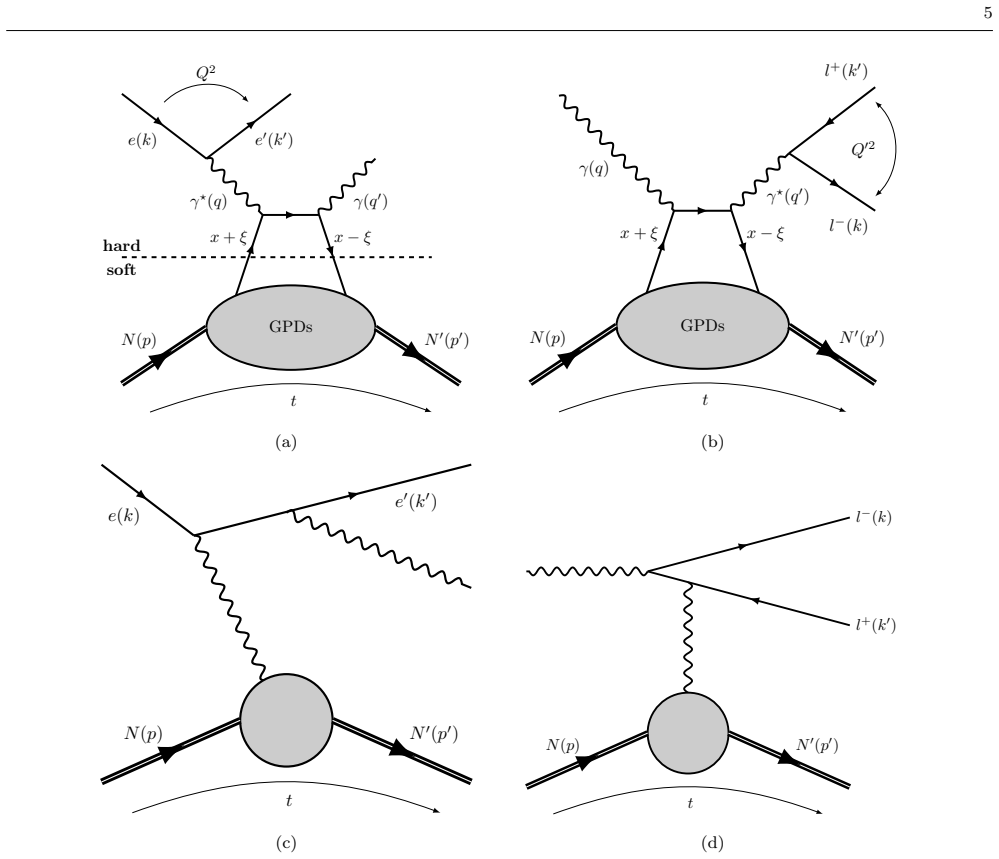
Figure 1. Figure 1: Feynman diagrams for Compton processes. Panel [PITH_FULL_IMAGE:figures/full_fig_p005_1.png] view at source ↗
Figure 2
Figure 2. Figure 2: Handbag diagram for DDVCS with a di-muon [PITH_FULL_IMAGE:figures/full_fig_p006_2.png] view at source ↗
Figure 3
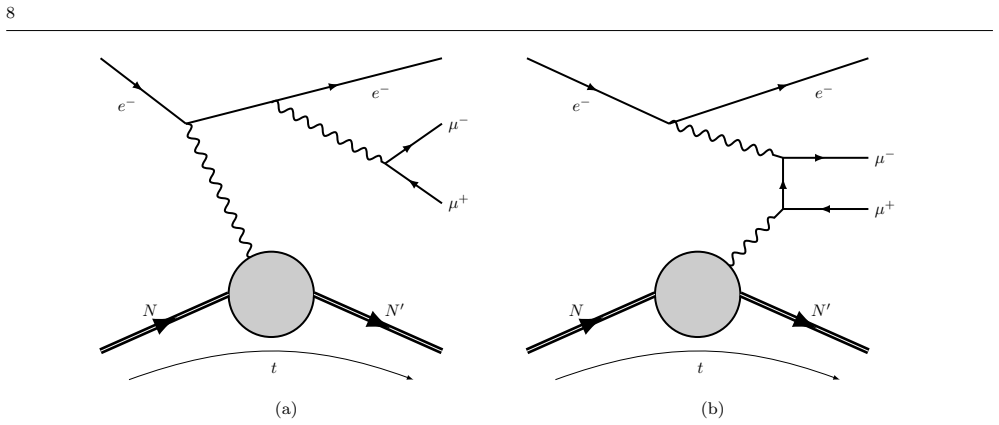
Figure 3. Figure 3: Feynman diagrams for the Bethe–Heitler (BH) processes associated with DDVCS. The two diagrams shown [PITH_FULL_IMAGE:figures/full_fig_p008_3.png] view at source ↗
Figure 4
Figure 4. Figure 4: Scattering planes and the definition of angles in [PITH_FULL_IMAGE:figures/full_fig_p008_4.png] view at source ↗
Figure 5
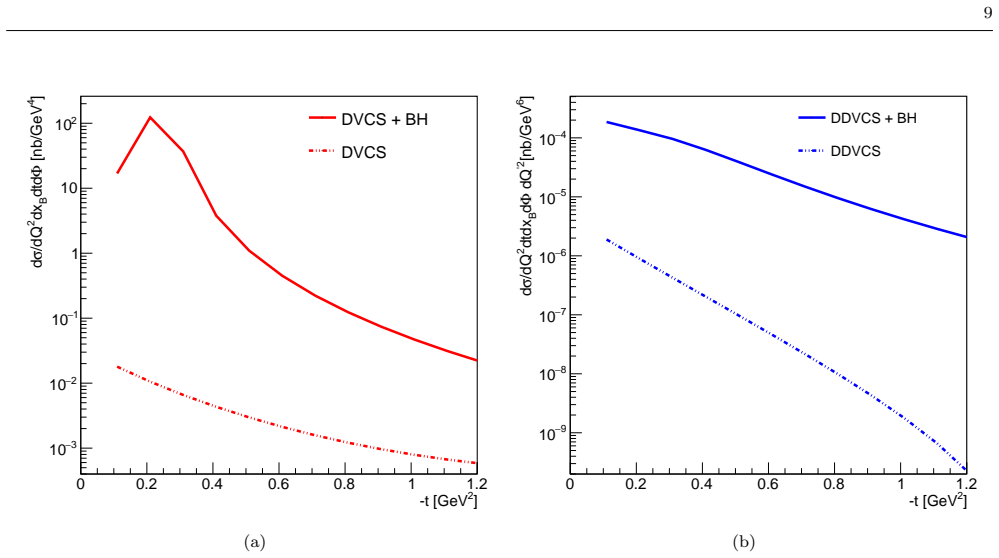
Figure 5. Figure 5: Differential cross sections for DVCS (Panel [PITH_FULL_IMAGE:figures/full_fig_p009_5.png] view at source ↗
Figure 6
Figure 6. Figure 6: Representative diagrams contributing to the amplitude for [PITH_FULL_IMAGE:figures/full_fig_p010_6.png] view at source ↗
Figure 7
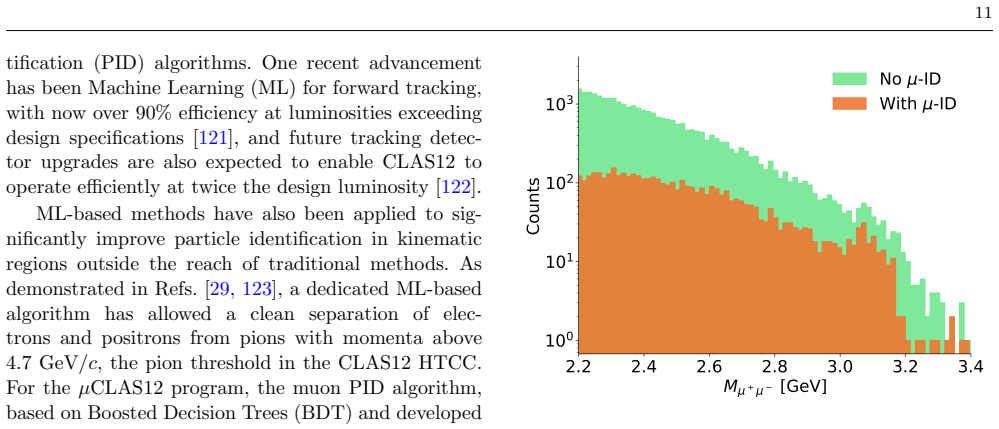
Figure 7. Figure 7: Invariant mass distribution of 2-MIPs events [PITH_FULL_IMAGE:figures/full_fig_p011_7.png] view at source ↗
Figure 8
Figure 8. Figure 8: Conceptual layout of µCLAS12. The lead shield and Electron Calorimeter (wECAL) are installed in place of the CLAS12 High Threshold Cerenkov Counter (HTCC) [ ˇ 40]. The Forward Vertex Tracker (FVT) is placed in front of the wECAL. The Recoil Tracker (RT) and Scintillation Hodoscope (SH) surround the target, and are located inside the existing CLAS12 solenoid magnet [119]. In the Forward Detector (FD), the e… view at source ↗
Figure 9
Figure 9. Figure 9: Overview of the new detector elements in the [PITH_FULL_IMAGE:figures/full_fig_p013_9.png] view at source ↗
Figure 10
Figure 10. Figure 10: Overview of the CLAS12 DC occupancies. Top: 2D wire occupancy as a function of the layer and wire [PITH_FULL_IMAGE:figures/full_fig_p016_10.png] view at source ↗
Figure 11
Figure 11. Figure 11: Energy distributions for minimum ionizing particles ( [PITH_FULL_IMAGE:figures/full_fig_p017_11.png] view at source ↗
Figure 12
Figure 12. Figure 12: DC occupancies at a luminosity of 1037 cm−2 s −1 with a 60-cm-thick lead shield installed downstream of the PbWO4 calorimeter. Left: 2-D wire occupancy map for layer vs. wire number. Right: average wire occupancies for Region 1 (red), Region 2 (green), and Region 3 (blue). High occupancies in Region 1 are located in the very forward region, while µCLAS12 aims to detect tracks in the FD above 7◦ . The ∼ 10… view at source ↗
Figure 13
Figure 13. Figure 13: Rates of particles at a luminosity of 10 [PITH_FULL_IMAGE:figures/full_fig_p018_13.png] view at source ↗
Figure 14
Figure 14. Figure 14: Hit rates at the scoring plane located upstream of the wECal, at a luminosity of 10 [PITH_FULL_IMAGE:figures/full_fig_p019_14.png] view at source ↗
Figure 15
Figure 15. Figure 15: Rates of particles at the cylindrical scoring plane located at a 7.5 cm radius from the beam axis, at a [PITH_FULL_IMAGE:figures/full_fig_p019_15.png] view at source ↗
Figure 16
Figure 16. Figure 16: Rates of particles at the cylindrical scoring plane located at a 25 cm radius from the beam axis, at a [PITH_FULL_IMAGE:figures/full_fig_p020_16.png] view at source ↗
Figure 17
Figure 17. Figure 17: Simulation of a 6 GeV π + (Panel 17a) and a 6 GeV µ + (Panel 17b) in the µCLAS12 GEANT4 model. Nearly all pions undergo hadronic showers in the wECal, while most muons reach the FD and are reconstructed in both the DC and the ECal. energy loss, up to 1 GeV at low energies. Muons that retain enough energy to further traverse the torus field and deposit energy in the ECal will undergo momentum analysis in t… view at source ↗
Figure 18
Figure 18. Figure 18: Missing mass squared distribution for the reac [PITH_FULL_IMAGE:figures/full_fig_p021_18.png] view at source ↗
Figure 19
Figure 19. Figure 19: Missing mass squared distribution for elastic [PITH_FULL_IMAGE:figures/full_fig_p022_19.png] view at source ↗
Figure 20
Figure 20. Figure 20: Rates of pion pairs as a function of the two [PITH_FULL_IMAGE:figures/full_fig_p023_20.png] view at source ↗
Figure 21
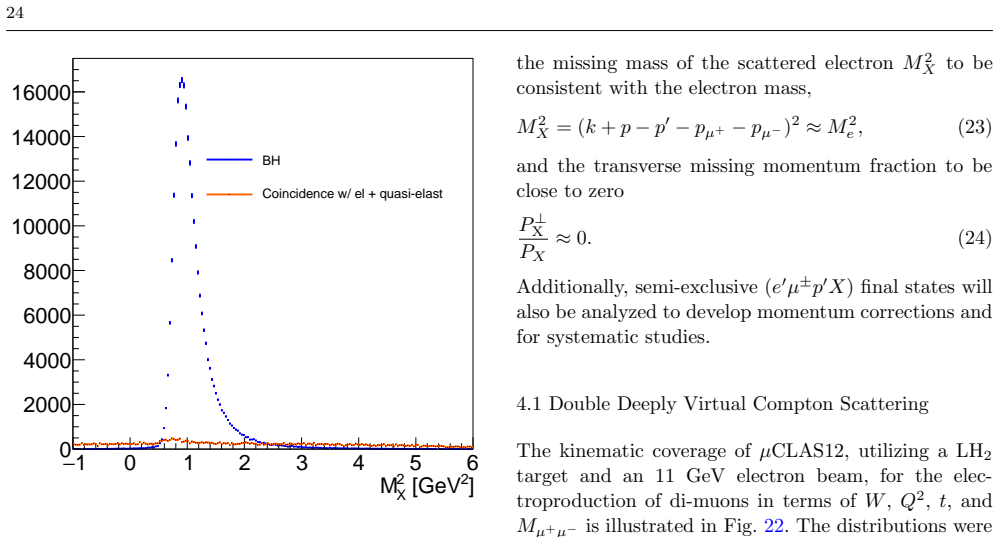
Figure 21. Figure 21: Missing mass squared distribution for electron [PITH_FULL_IMAGE:figures/full_fig_p024_21.png] view at source ↗
Figure 22
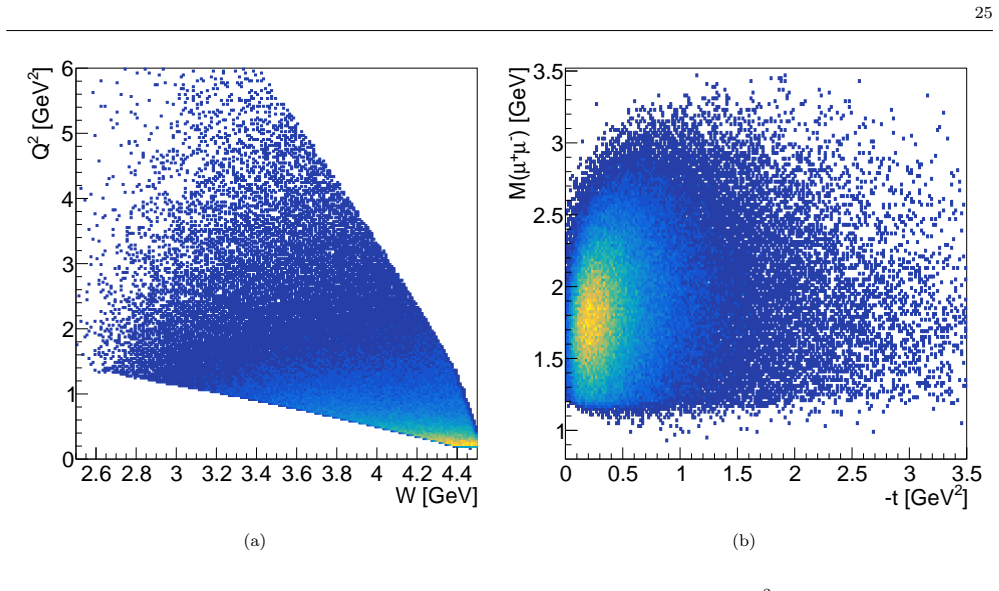
Figure 22. Figure 22: Kinematic coverage of µCLAS12 for di-muon electroproduction. Panel 22a: Q2 vs. W distribution, with limits defined by the detection of the scattered electron in the wECal. Panel 22b: Invariant mass distribution of lepton pairs detected in the µCLAS12 FD as a function of t [PITH_FULL_IMAGE:figures/full_fig_p025_22.png] view at source ↗
Figure 23
Figure 23. Figure 23: ξ vs. ξ ′ distribution for reconstructed DDVCS events. The boxes represent the kinematic bins used to illustrate the expected beam-spin asymmetries in the timelike (Q′2 > Q2 ) and spacelike (Q′2 < Q2 ) regions. extracted from simulated data for two different mean values of Q′2 and Q2 . These asymmetries were gener￾ated using the VGG model [157]. The obtained ALU values, along with the expected statistical… view at source ↗
Figure 24
Figure 24. Figure 24: Expected DDVCS ALU as a function of the angle ϕ. The top plots show the expected ALU in the spacelike region (brown box of [PITH_FULL_IMAGE:figures/full_fig_p026_24.png] view at source ↗
Figure 25
Figure 25. Figure 25: Projected DDVCS ALU as a function of −t. The extracted asymmetries from 1000 pseudo-experiments are shown by the black points. The RMS of the ex￾tracted asymmetries is taken as the uncertainty on the measurement. The red and blue lines correspond to pre￾dictions from the VGG and the GK19 models, respec￾tively [PITH_FULL_IMAGE:figures/full_fig_p027_25.png] view at source ↗
Figure 26
Figure 26. Figure 26: Comparison of the expected ALU asymme￾try generated using the GK19 model from PARTONS (red curve), with the prediction including an additional SGPD, implemented via the GPDBDMMS21 module of the PARTONS software [31] (blue curve). Black points represent projected pseudo-data, with the black curve showing the fit using the function ALU (ϕ)=A90◦ LU sin ϕ. The kinematic bin corresponds to ξ=0.36, ξ ′=−0.0821,… view at source ↗
Figure 27
Figure 27. Figure 27: The effect of initial state radiation (ISR) for [PITH_FULL_IMAGE:figures/full_fig_p028_27.png] view at source ↗
Figure 28
Figure 28. Figure 28: Kinematics of J/ψ electroproduction with a 11 GeV beam. Panel 28a: −t vs Eγ, Panel 28b: −t vs Q2 , Panel 28c: W vs Q2 . All distributions are produced using J/ψ events with final state particles in the acceptance of µCLAS12. 2.2 2.4 2.6 2.8 3 3.2 3.4 - [GeV] µ + Mµ 1 10 2 10 3 10 4 10 5 10 Events Acc. QE ( 53) Acc. Elastic (511) QE (7709) BH (66268) J/ψ (30832) µCLAS12 simulation -1 s -2 cm 37 200 days @ … view at source ↗
Figure 29
Figure 29. Figure 29: Panel 29a: Invariant mass distribution of reconstructed muon pairs in the J/ψ mass region, with an expected yield of approximately 3 × 10⁴ events. Panel 29b: Missing mass distribution of the undetected proton in the 2.2 to 3.4 GeV invariant mass range. All contributions (J/ψ signal, BH, quasi-elastic BH, and accidental coincidences with elastic and quasi-elastic events) are displayed as a stacked histogra… view at source ↗
Figure 30
Figure 30. Figure 30: Expected statistical uncertainties for the to [PITH_FULL_IMAGE:figures/full_fig_p030_30.png] view at source ↗
Figure 31
Figure 31. Figure 31: Expected statistical uncertainties for the differential cross section as a function of [PITH_FULL_IMAGE:figures/full_fig_p031_31.png] view at source ↗
Figure 32
Figure 32. Figure 32: Slope parameter of the dipole model mS (left) and the corresponding gluon mass radius of the pro￾ton p ⟨r 2 m⟩ (right), as a function of Eγ. The achievable statistical uncertainties are indicated with black points for an arbitrary value of the mass radius. These projec￾tions are compared with existing extractions from the J/ψ − 007, GlueX, and CLAS12 Collaborations. olution in the wECal is sufficient not … view at source ↗
Figure 34
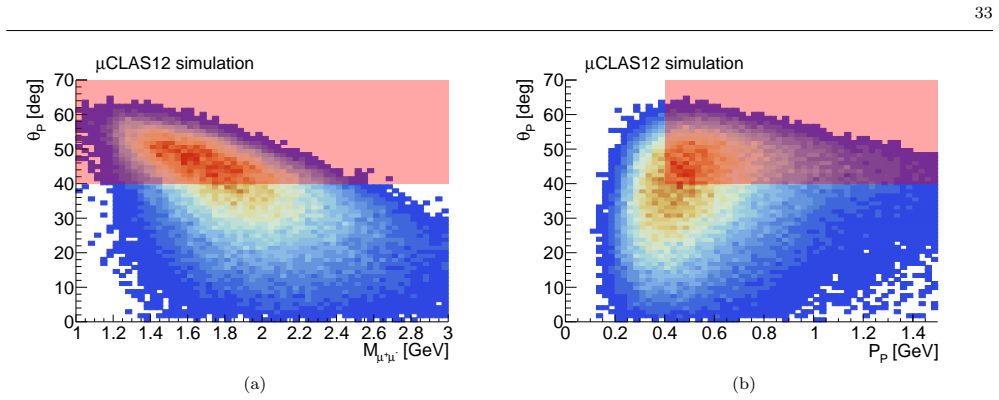
Figure 34. Figure 34: Panel 34a: Proton polar angle as a function of the invariant mass of the muon pair. Panel 34b: Polar angle as a function of momentum for the proton. Events displayed were required to have a muon pair detected in µCLAS12. The red rectangles show the acceptance limit of the recoil detector. Events within this region were used to estimate the measurement yield. 1.2 1.4 1.6 1.8 2 2.2 2.4 - [GeV] µ + Mµ 0 0.2 … view at source ↗
Figure 36
Figure 36. Figure 36: Angular coverage of µCLAS12 for TCS events. The red rectangles highlight the angular bin where the forward-backward asymmetry can be compared to the published CLAS12 results. FD to operate at luminosities two orders of mag￾nitude higher than its design luminosity. Second, they will effectively convert the CLAS12 FD into a high-efficiency muon detector. In this configuration, scattered electrons will be de… view at source ↗
Figure 37
Figure 37. Figure 37: Expected statistical error bars of the TCS [PITH_FULL_IMAGE:figures/full_fig_p034_37.png] view at source ↗
read the original abstract

The CEBAF Large Acceptance Spectrometer for operation at 12 GeV (CLAS12) at the Thomas Jefferson National Accelerator Facility has played a central role in advancing the understanding of nucleon and nuclear structure. As increasingly precise data become available, new physics opportunities emerge that extend beyond the current capabilities of CLAS12. In this article, a program to explore the quark and gluon structure of the nucleon through di-muon electro- and photoproduction is presented. Its primary focus is the measurement of beam-spin asymmetries in Double Deeply Virtual Compton Scattering, $ep \rightarrow e^\prime \mu^+ \mu^-p^\prime $. By independently varying the incoming and outgoing photon virtualities and momentum transfer, the DDVCS measurement provides access to the Generalized Parton Distributions over their full three-dimensional phase space, extending beyond the kinematic constraints of Deeply Virtual Compton Scattering and Timelike Compton Scattering. In addition, the large acceptance and high luminosity of the $\mu$CLAS12 experiment will enable precision measurements of near-threshold $J/\psi$ production and high-statistics studies of Timelike Compton Scattering.

Editorial analysis

A structured set of objections, weighed in public.

Desk editor's note, referee report, simulated authors' rebuttal, and a circularity audit. Tearing a paper down is the easy half of reading it; the pith above is the substance, this is the friction.

Referee Report

1 major / 0 minor

Summary. The manuscript proposes an experimental program using the upgraded μCLAS12 detector at Jefferson Lab to study electro- and photoproduction of muon pairs, with a primary focus on measuring beam-spin asymmetries in Double Deeply Virtual Compton Scattering (DDVCS) to access Generalized Parton Distributions (GPDs) across their full three-dimensional kinematic phase space, in addition to high-statistics measurements of Timelike Compton Scattering (TCS) and near-threshold J/ψ production.

Significance. If the proposed measurements can be realized with sufficient precision, they would represent a significant advancement in the experimental study of nucleon structure by extending GPD access beyond the kinematic limitations of standard DVCS and TCS. The use of independent variation of incoming and outgoing photon virtualities in DDVCS is a key strength that could provide a more comprehensive mapping of GPDs.

major comments (1)
  1. [Abstract] The central claim that the DDVCS measurement with μCLAS12 will provide access to GPDs over the full 3D phase space relies on the assumption that small beam-spin asymmetries can be extracted with statistical significance; however, the manuscript does not include any Monte Carlo projections, background estimates, or luminosity requirements to support the feasibility of this extraction in the relevant kinematic bins.

Simulated Author's Rebuttal

1 responses · 0 unresolved

We thank the referee for the careful and constructive review of our manuscript. The single major comment is addressed point-by-point below, and we will revise the manuscript to incorporate the requested supporting material.

read point-by-point responses
  1. Referee: [Abstract] The central claim that the DDVCS measurement with μCLAS12 will provide access to GPDs over the full 3D phase space relies on the assumption that small beam-spin asymmetries can be extracted with statistical significance; however, the manuscript does not include any Monte Carlo projections, background estimates, or luminosity requirements to support the feasibility of this extraction in the relevant kinematic bins.

    Authors: We agree that the current manuscript does not contain the quantitative Monte Carlo projections, background estimates, or explicit luminosity requirements needed to demonstrate that small beam-spin asymmetries can be extracted with statistical significance in the relevant kinematic bins. The manuscript is primarily a physics-motivation and experimental-concept paper. In the revised version we will add a dedicated subsection (or appendix) presenting preliminary Monte Carlo studies. These will use the expected μCLAS12 acceptance, resolution, and luminosity, together with realistic background estimates based on existing CLAS12 data, to show the projected statistical precision on the DDVCS beam-spin asymmetry in representative kinematic bins. This addition will directly support the central claim in the abstract. revision: yes

Circularity Check

0 steps flagged

Experimental proposal contains no derivations or self-referential predictions

full rationale

The document is an experimental proposal for μCLAS12 measurements of DDVCS, TCS, and J/ψ production. Its central statements are kinematic (independent variation of Q_in², Q_out², and t grants access to GPDs over full 3D phase space) and programmatic (luminosity and acceptance will enable precision measurements). No equations, fitted parameters, or predictions appear that reduce by construction to the paper's own inputs; no self-citation chains or ansatze are invoked to justify any derivation. The text is self-contained as a feasibility outline without internal circularity.

Axiom & Free-Parameter Ledger

0 free parameters · 0 axioms · 0 invented entities

No free parameters, axioms, or invented entities appear because the document is an experimental proposal without theoretical modeling.

pith-pipeline@v0.9.0 · 6069 in / 1101 out tokens · 64139 ms · 2026-05-13T05:14:37.033100+00:00 · methodology

discussion (0)

Sign in with ORCID, Apple, or X to comment. Anyone can read and Pith papers without signing in.

Lean theorems connected to this paper

Citations machine-checked in the Pith Canon. Every link opens the source theorem in the public Lean library.

Reference graph

Works this paper leans on

168 extracted references · 168 canonical work pages

  1. [1]

    M¨ uller et al., Fortsch

    D. M¨ uller et al., Fortsch. Phys.42, 101 (1994)

  2. [2]

    Ji, Phys

    X.D. Ji, Phys. Rev. D55, 7114 (1997)

  3. [3]

    Radyushkin, Phys

    A.V. Radyushkin, Phys. Rev. D56, 5524 (1997)

  4. [4]

    Collins et al., Phys

    J.C. Collins et al., Phys. Rev. D56, 2982 (1997)

  5. [5]

    Arrington et al., Prog

    J. Arrington et al., Prog. Part. Nucl. Phys.127, 103985 (2022)

  6. [6]

    Radyushkin, Phys

    A.V. Radyushkin, Phys. Lett. B385, 333 (1996)

  7. [7]

    Stepanyan et al

    S. Stepanyan et al. (CLAS Collaboration), Phys. Rev. Lett.87, 182002 (2001)

  8. [8]

    Mu˜ noz Camacho et al

    C. Mu˜ noz Camacho et al. (Hall A Collaboration), Phys. Rev. Lett.97, 262002 (2006)

  9. [9]

    Girod et al

    F.X. Girod et al. (CLAS Collaboration), Phys. Rev. Lett.100, 162002 (2008)

  10. [10]

    Defurne et al

    M. Defurne et al. (Hall A Collaboration), Phys. Rev. C92, 055202 (2015)

  11. [11]

    Jo et al

    H.S. Jo et al. (CLAS Collaboration), Phys. Rev. Lett.115, 212003 (2015)

  12. [12]

    Seder et al

    E. Seder et al. (CLAS Collaboration), Phys. Rev. Lett.114, 032001 (2015)

  13. [13]

    Pisano et al

    S. Pisano et al. (CLAS Collaboration), Phys. Rev. D91, 052014 (2015)

  14. [14]

    Georges et al

    F. Georges et al. (Hall A Collaboration), Phys. Rev. Lett.128, 252002 (2022)

  15. [15]

    Christiaens et al

    G. Christiaens et al. (CLAS Collaboration), Phys. Rev. Lett.130, 211902 (2023)

  16. [16]

    Hobart et al

    A. Hobart et al. (CLAS Collaboration), Phys. Rev. Lett.133, 211903 (2024)

  17. [17]

    Adloff et al

    C. Adloff et al. (H1 Collaboration), Phys. Lett. B 517, 47 (2001)

  18. [18]

    Aktas et al

    A. Aktas et al. (H1 Collaboration), Eur. Phys. J. C44, 1 (2005)

  19. [19]

    Chekanov et al

    S. Chekanov et al. (ZEUS Collaboration), Phys. Lett. B573, 46 (2003)

  20. [20]

    Airapetian et al

    A. Airapetian et al. (HERMES Collaboration), Phys. Rev. Lett.87, 182001 (2001)

  21. [21]

    Airapetian et al

    A. Airapetian et al. (HERMES Collaboration), Phys. Rev. D75, 011103 (2007)

  22. [22]

    Airapetian et al

    A. Airapetian et al. (HERMES Collaboration), JHEP06, 066 (2008)

  23. [23]

    Joerg (COMPASS Collaboration), PoS DIS2016, 235 (2016)

    P. Joerg (COMPASS Collaboration), PoS DIS2016, 235 (2016)

  24. [24]

    Akhunzyanov et al

    R. Akhunzyanov et al. (COMPASS Collabora- tion), Phys. Lett. B793, 188 (2019), [Erratum: Phys.Lett.B 800, 135129 (2020)]

  25. [25]

    Berger et al., Eur

    E.R. Berger et al., Eur. Phys. J. C23, 675 (2002)

  26. [26]

    Goritschnig et al., Phys

    A.T. Goritschnig et al., Phys. Rev. D89, 094031 (2014)

  27. [27]

    Bo¨ er et al., Eur

    M. Bo¨ er et al., Eur. Phys. J. A51, 103 (2015)

  28. [28]

    Bo¨ er et al., Eur

    M. Bo¨ er et al., Eur. Phys. J. A52, 33 (2016)

  29. [29]

    Chatagnon et al

    P. Chatagnon et al. (CLAS Collaboration), Phys. Rev. Lett.127, 262501 (2021)

  30. [30]

    Moutarde, Phys

    H. Moutarde, Phys. Rev. D79, 094021 (2009)

  31. [31]

    Berthou et al., Eur

    B. Berthou et al., Eur. Phys. J. C78, 478 (2018)

  32. [32]

    Bertone et al., Phys

    V. Bertone et al., Phys. Rev. D103, 114019 (2021)

  33. [33]

    Moffat et al., Phys

    E. Moffat et al., Phys. Rev. D108, 036027 (2023)

  34. [34]

    Guidal et al., Phys

    M. Guidal et al., Phys. Rev. Lett.90, 012001 (2003)

  35. [35]

    Belitsky et al., Phys

    A.V. Belitsky et al., Phys. Rev. Lett.90, 022001 (2003)

  36. [36]

    Belitsky et al., Phys

    A.V. Belitsky et al., Phys. Rev. D68, 116005 (2003)

  37. [37]

    Deja et al., Phys

    K. Deja et al., Phys. Rev. D107, 094035 (2023)

  38. [38]

    Martinez-Fernandez et al., Phys

    V. Martinez-Fernandez et al., Phys. Rev. D111, 074034 (2025)

  39. [39]

    Burkert et al

    V.D. Burkert et al. (CLAS Collaboration), Nucl. Instrum. Meth. A959, 163419 (2020)

  40. [40]

    Sharabian et al., Nucl

    Y.G. Sharabian et al., Nucl. Instrum. Meth. A 968, 163824 (2020)

  41. [41]

    Kobzarev et al., Zh

    I.Y. Kobzarev et al., Zh. Eksp. Teor. Fiz.43, 1904 (1962)

  42. [42]

    Pagels, Phys

    H. Pagels, Phys. Rev.144, 1250 (1966)

  43. [43]

    Polyakov et al., Int

    M.V. Polyakov et al., Int. J. Mod. Phys. A33, 1830025 (2018) 36

  44. [44]

    Burkert et al., Nature557, 396 (2018)

    V.D. Burkert et al., Nature557, 396 (2018)

  45. [45]

    Lorc´ e et al., JHEP11, 121 (2021)

    C. Lorc´ e et al., JHEP11, 121 (2021)

  46. [46]

    Burkert et al., Rev

    V.D. Burkert et al., Rev. Mod. Phys.95, 041002 (2023)

  47. [47]

    Burkardt, Phys

    M. Burkardt, Phys. Rev. D62, 071503 (2000)

  48. [48]

    Belitsky et al., Phys

    A.V. Belitsky et al., Phys. Rev. D69, 074014 (2004)

  49. [49]

    Diehl, Phys

    M. Diehl, Phys. Rept.388, 41 (2003)

  50. [50]

    Ji, Phys

    X.D. Ji, Phys. Rev. Lett.78, 610 (1997)

  51. [51]

    Pire et al., Phys

    B. Pire et al., Phys. Rev. D83, 034009 (2011)

  52. [52]

    Braun et al., Phys

    V.M. Braun et al., Phys. Rev. D111, 076011 (2025)

  53. [53]

    Mart´ ınez-Fern´ andez et al

    V. Mart´ ınez-Fern´ andez et al. (2025),2509.06669

  54. [54]

    Mart´ ınez-Fern´ andez et al

    V. Mart´ ınez-Fern´ andez et al. (2025),2509.05059

  55. [55]

    Bacchetta et al., Phys

    A. Bacchetta et al., Phys. Rev. D70, 117504 (2004)

  56. [56]

    Polyakov, Phys

    M.V. Polyakov, Phys. Lett. B555, 57 (2003)

  57. [57]

    Pasquini et al., Phys

    B. Pasquini et al., Phys. Lett. B739, 133 (2014)

  58. [58]

    Grocholski et al., Eur

    O. Grocholski et al., Eur. Phys. J. C80, 171 (2020)

  59. [59]

    Mueller et al., Phys

    D. Mueller et al., Phys. Rev. D86, 031502 (2012)

  60. [60]

    Guidal, Eur

    M. Guidal, Eur. Phys. J. A37, 319 (2008)

  61. [61]

    Guidal et al., Eur

    M. Guidal et al., Eur. Phys. J. A42, 71 (2009)

  62. [62]

    Guidal, Phys

    M. Guidal, Phys. Lett. B689, 156 (2010)

  63. [63]

    Guidal, Phys

    M. Guidal, Phys. Lett. B693, 17 (2010)

  64. [64]

    Kumeriˇ cki et al., Phys

    K. Kumeriˇ cki et al., Phys. Part. Nucl.45, 723 (2014)

  65. [65]

    Shiells et al., JHEP08, 048 (2022)

    K. Shiells et al., JHEP08, 048 (2022)

  66. [66]

    Moutarde et al., Eur

    H. Moutarde et al., Eur. Phys. J. C78, 890 (2018)

  67. [67]

    Kumericki et al., Nucl

    K. Kumericki et al., Nucl. Phys. B794, 244 (2008)

  68. [68]

    Kumeriˇ cki et al., Nucl

    K. Kumeriˇ cki et al., Nucl. Phys. B841, 1 (2010)

  69. [69]

    Kumericki et al., JHEP07, 073 (2011)

    K. Kumericki et al., JHEP07, 073 (2011)

  70. [70]

    Moutarde et al., Eur

    H. Moutarde et al., Eur. Phys. J. C79, 614 (2019)

  71. [71]

    ˇCui´ c et al., Phys

    M. ˇCui´ c et al., Phys. Rev. Lett.125, 232005 (2020)

  72. [72]

    Guzey et al., Phys

    V. Guzey et al., Phys. Rev. D74, 054027 (2006)

  73. [73]

    Constantinou, Eur

    M. Constantinou, Eur. Phys. J. A57, 77 (2021)

  74. [74]

    Belitsky et al., Nucl

    A.V. Belitsky et al., Nucl. Phys. B629, 323 (2002)

  75. [75]

    Zhao et al., Eur

    S. Zhao et al., Eur. Phys. J. A57, 240 (2021)

  76. [76]

    Alvarado et al., Phys

    J.S. Alvarado et al., Phys. Rev. C111, 065205 (2025)

  77. [77]

    Accardi et al., Eur

    A. Accardi et al., Eur. Phys. J. A57, 261 (2021)

  78. [78]

    Accardi et al., Eur

    A. Accardi et al., Eur. Phys. J. A60, 173 (2024)

  79. [79]

    Abdul Khalek et al., Nucl

    R. Abdul Khalek et al., Nucl. Phys. A1026, 122447 (2022)

  80. [80]

    Arrington et al

    J. Arrington et al. (SoLID Collaboration), J. Phys. G50, 110501 (2023)

Showing first 80 references.