Recognition: no theorem link
Link length and energy fluctuations in extensible freely jointed chains
Pith reviewed 2026-05-13 03:04 UTC · model grok-4.3
The pith
Asymptotically exact analytic formulas now describe the fluctuations of link lengths and energies in extensible freely jointed chains.
A machine-rendered reading of the paper's core claim, the machinery that carries it, and where it could break.
Core claim
Within the extensible freely jointed chain held at constant force, the thermal fluctuations of each link's length and stored energy are governed by exact integral expressions that reduce to simple asymptotic formulas. These formulas give the mean link length, the mean energy, the corresponding standard deviations, and the probability density functions, all correct to within transcendentally small errors. Direct numerical checks confirm the accuracy of the approximations across the full range of forces.
What carries the argument
The single-link partition function under constant force combined with a link-stretching potential, from which all averages, variances, and distributions follow by differentiation or integration.
If this is right
- Models that break chains when a link reaches a fixed length or energy threshold must integrate over the probability that thermal fluctuations exceed that threshold.
- Network-level rupture calculations become more accurate once they replace mean link values with the full fluctuation statistics.
- The asymptotic formulas allow rapid evaluation of fluctuation effects inside larger simulations without repeated sampling of chain configurations.
- Approximately normal distributions in many regimes let fluctuation effects be added to existing models with simple Gaussian noise terms.
Where Pith is reading between the lines
- The same partition-function approach could be applied to other extensible models such as the worm-like chain to obtain comparable fluctuation statistics.
- Inserting the derived distributions into Monte Carlo simulations of polymer networks would allow direct numerical tests of dissociation rates driven by fluctuations.
- The formulas could be extended to time-varying forces to track how length and energy fluctuations evolve during loading or unloading.
Load-bearing premise
Each link is assumed to stretch according to a fixed potential energy function, usually harmonic, while the whole chain remains in thermal equilibrium under constant applied force.
What would settle it
A Monte Carlo sampling of an extensible chain of 100 links at moderate force that yields a standard deviation for link length differing from the analytic prediction by more than a few percent.
Figures


read the original abstract
The freely jointed chain is often applied to model the thermodynamics of single polymer chains, but the traditional formulation of the model lacks internal energy changes due to bond stretching. For this reason, the extensible freely jointed chain model includes a potential energy function, typically harmonic, that governs the length of each link in the chain. Among the other quantities of interest that are subject to thermal fluctuations, these link lengths and energies too fluctuate about their ensemble average values. Since a plethora of models for polymer chains and networks incorporate chain dissociation as a function of either link length or energy, these fluctuations are crucial to understand and quantify. Motivated by this fact, fluctuations in link length and energy are analyzed within a freely jointed chain under an applied force. These fluctuations are quantified through their average values, standard deviations, and probability distributions. Across all values, asymptotically correct analytic relations and their less ergonomic exact counterparts are introduced. The asymptotic relations are verified to be accurate through direct comparison and to be correct within transcendentally small terms through error analysis. In certain cases, the fluctuations are shown to be approximately normally distributed. Hereafter, model components predicated on link length or energy ought to account for these fluctuations.
Editorial analysis
A structured set of objections, weighed in public.
Referee Report
Summary. The manuscript derives exact (integral or sum) expressions and asymptotically correct closed-form approximations for the means, standard deviations, and probability distributions of link-length and energy fluctuations in the constant-force ensemble of an extensible freely jointed chain with a stretching potential (typically harmonic). These relations are verified by direct numerical comparison to the exact forms, with error analysis showing the discrepancies are transcendentally small; in certain regimes the distributions are shown to be approximately normal. The work is motivated by the need to account for such fluctuations in polymer dissociation models.
Significance. If the derivations hold, the paper supplies practical analytic tools for fluctuation statistics in a standard polymer-physics model, directly relevant to network and single-chain dissociation calculations. A notable strength is the explicit pairing of exact and asymptotic results together with numerical verification and error analysis, yielding reproducible, parameter-free predictions that can be falsified by direct computation.
minor comments (3)
- A dedicated paragraph or table summarizing the asymptotic parameter (e.g., force or temperature regime) and the explicit order of the transcendentally small error term would make the validity range of the closed-form expressions immediately clear to readers.
- The notation for the single-link partition function, the stretching potential, and the constant-force ensemble averages should be introduced in a single early section with consistent symbols to improve readability across the derivations.
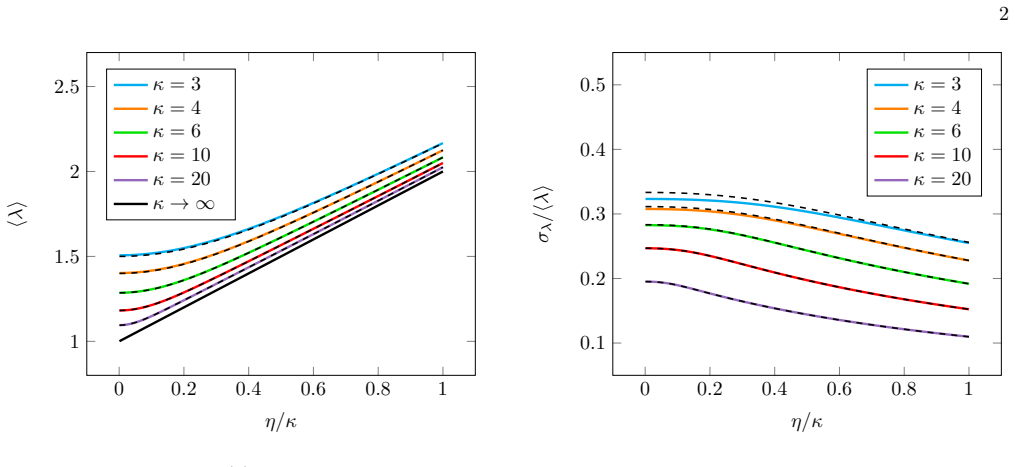
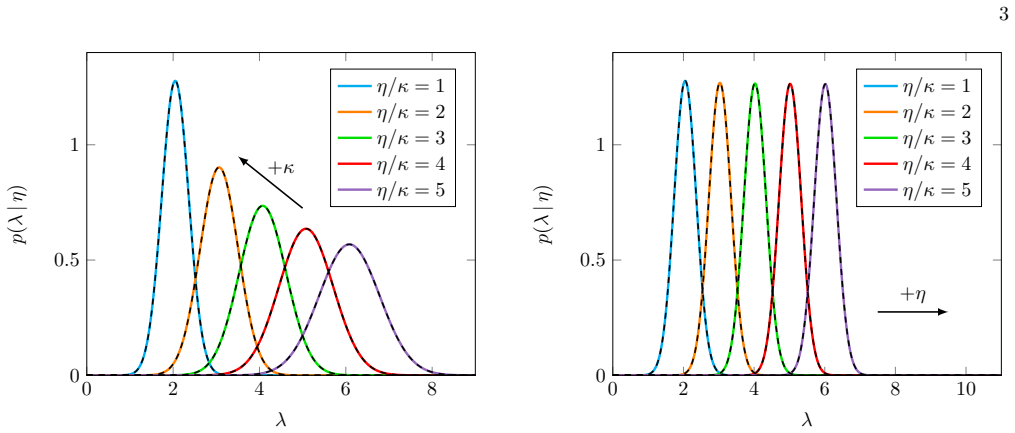
- Figure captions for the numerical comparisons should report the specific parameter values used and include a quantitative measure (e.g., maximum relative deviation) to support the claim of transcendentally small discrepancies.
Simulated Author's Rebuttal
We thank the referee for the careful and positive evaluation of our manuscript. The summary and significance assessment accurately capture the derivations of exact and asymptotic expressions for link-length and energy fluctuations in the extensible freely jointed chain, along with the numerical verifications and error analysis. We note the recommendation for minor revision.
Circularity Check
No significant circularity; derivations start from standard partition function
full rationale
The paper derives mean values, standard deviations, and probability distributions for link length and energy fluctuations directly from the partition function of the extensible freely jointed chain in the constant-force ensemble. Asymptotic closed-form expressions are obtained via standard analysis techniques and verified by explicit comparison to exact integral/sum forms plus error bounds showing transcendentally small discrepancies. No load-bearing step reduces by construction to a fitted parameter, self-definition, or self-citation chain; the central claims remain independent of the target results.
Axiom & Free-Parameter Ledger
axioms (2)
- domain assumption Links obey Boltzmann-weighted statistics in the canonical ensemble under constant force
- domain assumption Link stretching is governed by a potential energy function, typically harmonic
Reference graph
Works this paper leans on
-
[1]
M. R. Buche, M. N. Silberstein, and S. J. Grutzik, Freely jointed chain models with extensible links, Physical Re- view E106, 024502 (2022)
work page 2022
-
[2]
N. Balabaev and T. Khazanovich, Extension of chains composed of freely joined elastic segments, Russian Jour- nal of Physical Chemistry B3, 242 (2009)
work page 2009
-
[3]
A. Fiasconaro and F. Falo, Analytical results of the ex- tensible freely jointed chain model, Physica A: Statistical Mechanics and its Applications532, 121929 (2019)
work page 2019
-
[4]
L. R. G. Treloar,The Physics of Rubber Elasticity (Clarendon Press, 1949)
work page 1949
-
[5]
M. R. Buche, Fundamental theories for the mechanics of polymer chains and networks, Cornell University (2021)
work page 2021
- [6]
-
[7]
D. A. McQuarrie,Statistical Mechanics(University Sci- ence Books, 2000)
work page 2000
-
[8]
M. R. Buche and A. Chen, Thermodynamic fluctuations in freely jointed chains under force, arXiv2604, 11713 (2026)
work page 2026
-
[9]
Y. Mao, B. Talamini, and L. Anand, Rupture of poly- mers by chain scission, Extreme Mechanics Letters13, 17 (2017)
work page 2017
-
[10]
J. Mulderrig, B. Talamini, and N. Bouklas, A statistical mechanics framework for polymer chain scission, based on the concepts of distorted bond potential and asymp- totic matching, Journal of the Mechanics and Physics of Solids174, 105244 (2023)
work page 2023
-
[11]
S. R. Lavoie, R. Long, and T. Tang, Modeling the me- chanics of polymer chains with deformable and active bonds, The Journal of Physical Chemistry B124, 253 (2019)
work page 2019
-
[12]
M. R. Buche and M. N. Silberstein, Chain breaking in the statistical mechanical constitutive theory of polymer networks, Journal of the Mechanics and Physics of Solids 156, 104593 (2021)
work page 2021
-
[13]
J. Mulderrig, B. Li, and N. Bouklas, Affine and non- affine microsphere models for chain scission in polydis- perse elastomer networks, Mechanics of Materials160, 103857 (2021)
work page 2021
-
[14]
S. C. Lamont, J. Mulderrig, N. Bouklas, and F. J. Vernerey, Rate-dependent damage mechanics of poly- mer networks with reversible bonds, Macromolecules54, 10801 (2021)
work page 2021
-
[15]
M. R. Buche,conspire, Zenodo (2026), v0.6.2
work page 2026
-
[16]
M. R. Buche and J. M. Rimsza, Modeling single-molecule stretching experiments using statistical thermodynamics, Physical Review E108, 064503 (2023)
work page 2023
-
[17]
M. R. Buche and S. J. Grutzik, Statistical mechanical model for crack growth, Physical Review E109, 015001 (2024)
work page 2024
-
[18]
C. M. Bender and S. A. Orszag,Advanced Mathemati- cal Methods for Scientists and Engineers I: Asymptotic Methods and Perturbation Theory(Springer, 2013)
work page 2013
-
[19]
W. R. Inc.,Mathematica, Champaign, IL (2025), v14.3
work page 2025
discussion (0)
Sign in with ORCID, Apple, or X to comment. Anyone can read and Pith papers without signing in.