Relativity for Retired Engineers
Pith reviewed 2026-05-22 08:46 UTC · model grok-4.3
The pith
Misconceptions about special relativity arise from forcing it into Newtonian language rather than using its own natural terms.
A machine-rendered reading of the paper's core claim, the machinery that carries it, and where it could break.
Core claim
Misconceptions about special relativity often come from trying to express its truths in Newtonian terms rather than in terms more natural to special relativity itself. This conceptual stance can also help in attaining a better understanding of general relativity. Guidance and examples are provided to clear up these misconceptions for the reader.
What carries the argument
The conceptual stance of expressing special relativity truths in its own natural terms rather than Newtonian ones.
If this is right
- Adopting terms natural to special relativity resolves common misconceptions about time, space, and simultaneity.
- The same stance of using native terms extends to clearer insight into general relativity.
- Examples in the paper illustrate concrete shifts away from Newtonian descriptions for everyday relativity scenarios.
- This approach targets readers with classical physics backgrounds to reframe their understanding without added math.
Where Pith is reading between the lines
- Similar reframing from classical to native terms could clarify other physics topics where intuition clashes with theory.
- The method might apply to teaching relativity in engineering or technical training programs.
- It suggests testing whether the same stance reduces confusion in introductory general relativity courses.
Load-bearing premise
The most common misconceptions about special relativity stem specifically from Newtonian framing and the given examples will be enough to resolve them for retired engineers.
What would settle it
A survey or quiz of retired engineers before and after exposure to the guidance that measures persistence of specific misconceptions such as those about simultaneity or length contraction.
Figures

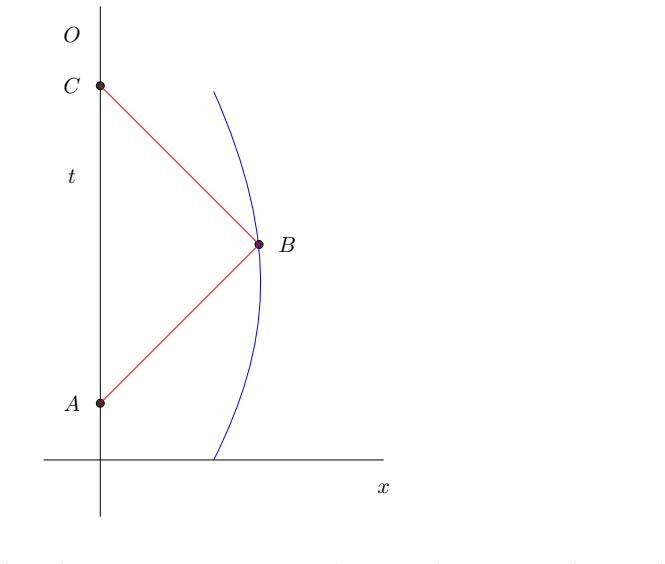
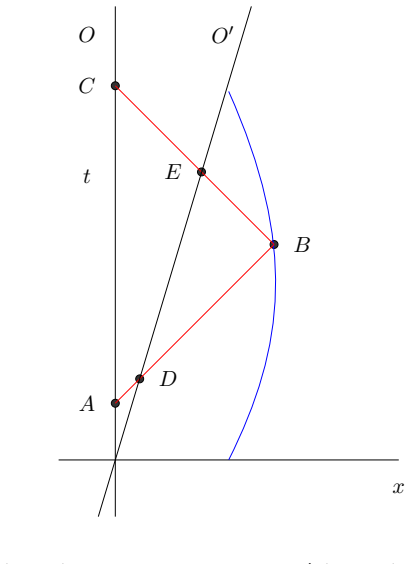

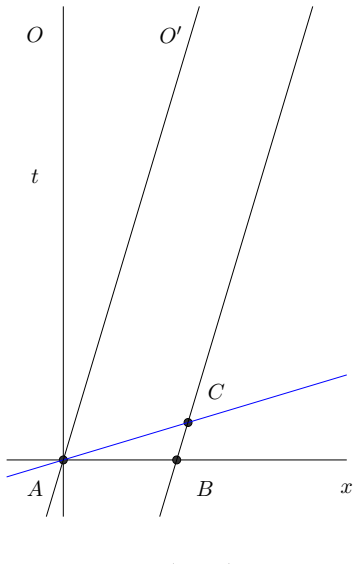
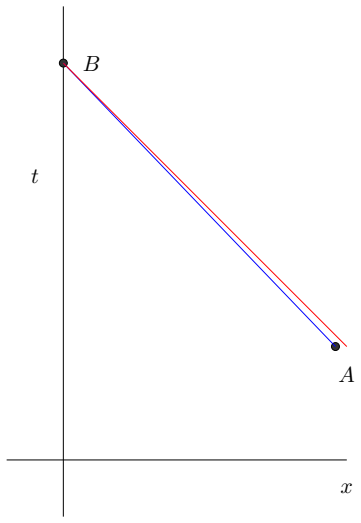

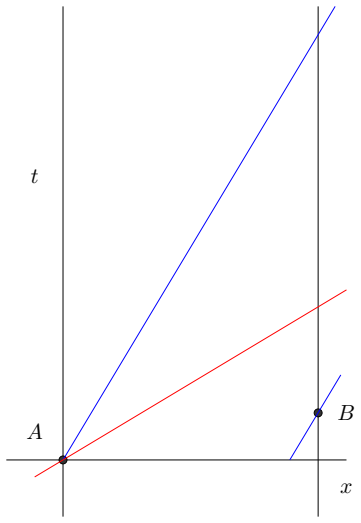
read the original abstract
We provide some guidance and examples to clear up common misconceptions about special relativity. These misconceptions often come from trying to express the truths of special relativity in Newtonian terms rather than in terms more natural to special relativity itself. This conceptual stance can also help in attaining a better understanding of general relativity.
Editorial analysis
A structured set of objections, weighed in public.
Referee Report
Summary. The manuscript provides guidance and illustrative examples intended to clarify common misconceptions about special relativity. It argues that these misconceptions typically arise from attempting to express special-relativistic results in Newtonian language rather than in terms native to special relativity, and suggests that adopting the latter conceptual stance can also aid understanding of general relativity.
Significance. If the examples succeed in shifting the reader's framing away from Newtonian analogies, the pedagogical stance could offer a useful conceptual tool for an audience of retired engineers. The approach aligns with established special-relativity teaching practice and avoids introducing new parameters or ad-hoc entities, but its significance remains primarily educational rather than advancing original research results.
minor comments (1)
- [Abstract] The abstract refers to 'some guidance and examples' without indicating the number or specific misconceptions covered; adding a brief enumeration would help readers assess coverage.
Simulated Author's Rebuttal
We thank the referee for their positive assessment of the manuscript and for recommending acceptance. The referee's summary correctly identifies the paper's focus on clarifying misconceptions in special relativity by shifting away from Newtonian framing, with potential benefits for understanding general relativity.
Circularity Check
No significant circularity
full rationale
The paper is explicitly expository and pedagogical, offering guidance and examples to address misconceptions in special relativity by contrasting Newtonian framing with SR-native concepts. No mathematical derivations, equations, predictions, fitted parameters, or formal proofs are presented. The central stance—that reframing in SR terms aids understanding and extends to GR—is a conceptual recommendation drawing directly on standard textbook special relativity without any self-referential loops, self-citations as load-bearing premises, or reduction of claims to author-defined inputs. The manuscript is self-contained against external benchmarks as teaching material and contains no derivation chain that could exhibit circularity.
Axiom & Free-Parameter Ledger
Lean theorems connected to this paper
-
IndisputableMonolith/Cost/AlphaCoordinateFixation.leancostAlphaLog_fourth_deriv_at_zero echoes?
echoesECHOES: this paper passage has the same mathematical shape or conceptual pattern as the Recognition theorem, but is not a direct formal dependency.
boosts are like rotations... x′ = cosh ψ x − sinh ψ t, t′ = cosh ψ t − sinh ψ x
-
IndisputableMonolith/Foundation/RealityFromDistinction.leanreality_from_one_distinction echoes?
echoesECHOES: this paper passage has the same mathematical shape or conceptual pattern as the Recognition theorem, but is not a direct formal dependency.
spacetime interval Δs² = −Δt² + Δx² + Δy² + Δz²... Lorentz transformations that leave the spacetime interval invariant
What do these tags mean?
- matches
- The paper's claim is directly supported by a theorem in the formal canon.
- supports
- The theorem supports part of the paper's argument, but the paper may add assumptions or extra steps.
- extends
- The paper goes beyond the formal theorem; the theorem is a base layer rather than the whole result.
- uses
- The paper appears to rely on the theorem as machinery.
- contradicts
- The paper's claim conflicts with a theorem or certificate in the canon.
- unclear
- Pith found a possible connection, but the passage is too broad, indirect, or ambiguous to say the theorem truly supports the claim.
Reference graph
Works this paper leans on
-
[1]
R. Feynman, “The Character of Physical Law” MIT Press (2017)
work page 2017
-
[2]
On the Electrodynamics of Moving Bodies
A. Einstein, “On the Electrodynamics of Moving Bodies” Annalen der Physik 17 (1905)
work page 1905
-
[3]
R. Wald, “Space, Time and Gravity” University of Chicago Press (1977)
work page 1977
-
[4]
General Relativity from A to B
R. Geroch, “General Relativity from A to B” University of Chicago Press (1978)
work page 1978
-
[5]
The Geometry of Special Relativity
T. Dray, “The Geometry of Special Relativity” CRC Press (2021)
work page 2021
-
[6]
The Classical Theory of Fields
L. Landau and E. Lifschitz, “The Classical Theory of Fields” Pergamon Press (1975)
work page 1975
-
[7]
Gravity: an Introduction to Einstein’s General Relativity
J. Hartle, “Gravity: an Introduction to Einstein’s General Relativity” Cambridge University Press (2021) 37
work page 2021
discussion (0)
Sign in with ORCID, Apple, or X to comment. Anyone can read and Pith papers without signing in.