Thermal Casimir Effect in A Schwarzschild-like Wormhole Spacetime
Pith reviewed 2026-06-29 16:15 UTC · model grok-4.3
The pith
In a Schwarzschild-like wormhole the thermal correction to the Casimir free energy becomes independent of geometry in the comoving frame.
A machine-rendered reading of the paper's core claim, the machinery that carries it, and where it could break.
Core claim
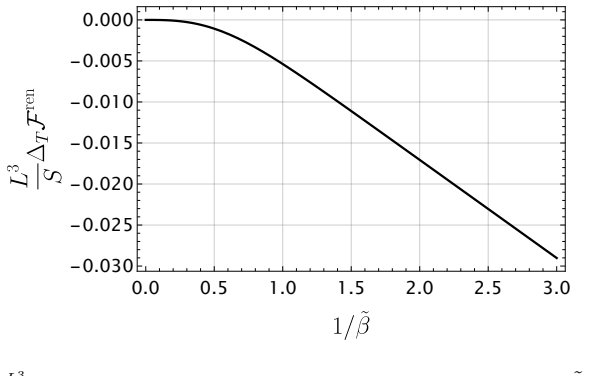
We find that the thermal correction to the renormalized Casimir free energy decreases gradually with the temperature and becomes independent of the background geometry in this frame.
What carries the argument
The renormalized Casimir free energy for the massless scalar field evaluated in the comoving frame of the Schwarzschild-like wormhole metric.
If this is right
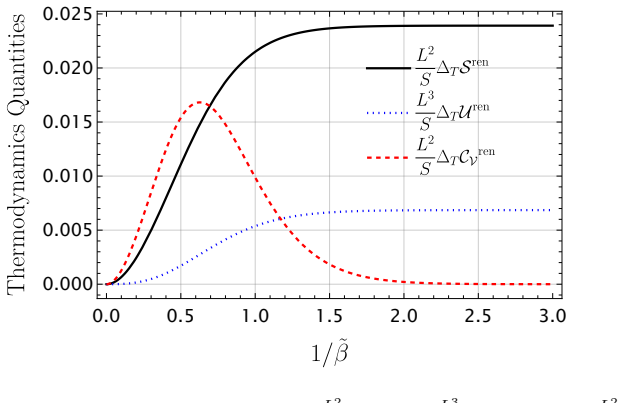
- Thermodynamic quantities derived from the free energy exhibit distinct temperature dependence.
- At low temperatures the entropy, internal energy, and heat capacity recover the expected thermodynamic limits.
- The calculation supplies a compact framework for studying quantum vacuum forces in gravitational backgrounds.
Where Pith is reading between the lines
- If the comoving frame is the physically relevant one, gravitational corrections to thermal Casimir energies can be suppressed by frame choice alone.
- The same loss of geometry dependence may occur for other static curved backgrounds when the same frame is used.
- The low-temperature thermodynamic recovery indicates that the regularization preserves the third law.
Load-bearing premise
The spacetime is taken to be a specific Schwarzschild-like wormhole metric and the plates are analyzed in the comoving frame.
What would settle it
An explicit recalculation of the same free energy in a non-comoving frame or in a different wormhole metric that retains geometry dependence at high temperature would falsify the reported independence.
Figures

read the original abstract
We study the finite-temperature Casimir effect for a massless scalar field confined between two parallel plates in a Schwarzschild-like wormhole spacetime. Imposing Dirichlet boundary conditions, we compute the renormalized Casimir free energy in the comoving frame. We find that the thermal correction to the renormalized Casimir free energy decreases gradually with the temperature and becomes independent of the background geometry in this frame. Thermodynamic quantities derived from the Casimir free energy, namely, the renormalized Casimir entropy, internal energy, and heat capacity at constant volume, exhibit distinct temperature dependence. At low temperatures, all thermodynamic quantities recover the expected behavior, consistent with the fundamental laws of thermodynamics. These results provide a compact framework for analyzing quantum vacuum forces in gravitational backgrounds.
Editorial analysis
A structured set of objections, weighed in public.
Referee Report
Summary. The manuscript examines the finite-temperature Casimir effect for a massless scalar field between two parallel plates in a Schwarzschild-like wormhole spacetime. Using Dirichlet boundary conditions in the comoving frame, the authors compute the renormalized Casimir free energy and find that its thermal correction decreases with temperature and becomes independent of the background geometry. They also analyze the associated thermodynamic quantities (entropy, internal energy, heat capacity), which exhibit expected low-temperature behavior consistent with thermodynamics.
Significance. Should the reported geometry independence of the thermal correction hold after detailed verification, the result would be significant for the study of quantum vacuum effects in curved spacetimes with non-trivial topology. It suggests that thermal effects can dominate and erase geometric dependence in the comoving frame, offering a compact framework for such analyses. The consistency with thermodynamic laws at low T provides a necessary check.
major comments (3)
- [Abstract] The central claim of geometry independence for the thermal correction (stated in the abstract) requires that the mode sum after Dirichlet conditions and the subsequent renormalization fully erase metric dependence. No derivation steps, explicit mode frequencies, or renormalization procedure are supplied, preventing verification that curvature effects are removed without residual dependence.
- [Setup of plates (likely §2)] The plate positions are not specified as fixed proper distance or fixed coordinate separation. If plates are placed at fixed coordinate r while the redshift or shape function varies, the proper distance between plates changes with the metric parameters, so the Casimir scale itself retains geometry dependence and the independence claim does not follow.
- [Renormalization (likely §4)] The subtraction of T=0 or infinite-volume divergences is not described. Without an explicit renormalization scheme (e.g., zeta-function, cutoff, or heat-kernel method), it cannot be confirmed that all metric-dependent contributions are eliminated once temperature is introduced.
minor comments (2)
- [Introduction or §2] Clarify the explicit coordinate transformation defining the comoving frame and confirm that the plates remain at rest in that frame.
- [Results (likely §5)] Include at least one plot comparing the thermal correction for two different wormhole parameter sets at fixed proper separation to visually support the independence result.
Simulated Author's Rebuttal
We thank the referee for the thorough review and valuable feedback on our manuscript. We address each of the major comments below and will make revisions to improve the clarity and completeness of the presentation.
read point-by-point responses
-
Referee: [Abstract] The central claim of geometry independence for the thermal correction (stated in the abstract) requires that the mode sum after Dirichlet conditions and the subsequent renormalization fully erase metric dependence. No derivation steps, explicit mode frequencies, or renormalization procedure are supplied, preventing verification that curvature effects are removed without residual dependence.
Authors: We agree that additional details would aid verification. The mode frequencies are determined by solving the Klein-Gordon equation in the wormhole background subject to Dirichlet conditions at the plate locations in the comoving frame. The resulting free energy expression, after renormalization by subtracting the zero-temperature contribution, yields a thermal correction that is independent of the metric parameters. In the revised manuscript, we will provide the explicit form of the mode frequencies and the renormalization steps in sections 3 and 4. revision: yes
-
Referee: [Setup of plates (likely §2)] The plate positions are not specified as fixed proper distance or fixed coordinate separation. If plates are placed at fixed coordinate r while the redshift or shape function varies, the proper distance between plates changes with the metric parameters, so the Casimir scale itself retains geometry dependence and the independence claim does not follow.
Authors: The plates are located at positions corresponding to a fixed proper distance in the comoving frame, as described in section 2 of the manuscript. The coordinate separation is determined by integrating the metric component to keep the proper length constant. This choice ensures that any geometry dependence in the zero-temperature Casimir energy is separated from the thermal correction, which becomes independent. We will add an explicit statement clarifying the fixed proper distance in the revised section 2. revision: yes
-
Referee: [Renormalization (likely §4)] The subtraction of T=0 or infinite-volume divergences is not described. Without an explicit renormalization scheme (e.g., zeta-function, cutoff, or heat-kernel method), it cannot be confirmed that all metric-dependent contributions are eliminated once temperature is introduced.
Authors: The renormalization procedure involves subtracting the T = 0 Casimir free energy from the finite-temperature expression and employing a cutoff regularization to handle divergences. This subtraction removes the metric-dependent parts, leaving the thermal correction geometry-independent in the comoving frame. We will elaborate on this procedure with the specific scheme used in the revised section 4. revision: yes
Circularity Check
No circularity: standard mode-sum renormalization yields geometry-independent thermal correction
full rationale
The paper performs a direct calculation of the finite-temperature Casimir free energy via mode summation for a massless scalar field obeying Dirichlet conditions on parallel plates in the given wormhole metric, followed by standard renormalization to remove divergences. The reported independence of the thermal correction from background geometry in the comoving frame is an output of this procedure rather than an input imposed by definition, fitting, or self-citation. Thermodynamic quantities are derived from the free energy in the usual way. No equations reduce by construction to prior results, no parameters are fitted and relabeled as predictions, and no load-bearing self-citations or uniqueness theorems are invoked. The derivation is therefore self-contained against external benchmarks.
Axiom & Free-Parameter Ledger
axioms (1)
- domain assumption Quantum field theory in curved spacetime is applicable to the massless scalar field with Dirichlet boundaries
Reference graph
Works this paper leans on
-
[1]
On the attraction between two perfectly conducting plates,
H. B. G. Casimir, “On the attraction between two perfectly conducting plates,”Indag. Math.10no. 4, (1948) 261–263
1948
-
[2]
Casimir and van der Waals forces: Advances and problems
G. L. Klimchitskaya and V. M. Mostepanenko, “Casimir and van der Waals forces: Advances and problems,”arXiv:1507.02393 [quant-ph]. 14
work page internal anchor Pith review Pith/arXiv arXiv
-
[3]
Measurements of attractive forces between flat plates,
M. J. Sparnaay, “Measurements of attractive forces between flat plates,”Physica24 (1958) 751–764
1958
-
[4]
Demonstration of the Casimir force in the 0.6 to 6 micrometers range,
S. K. Lamoreaux, “Demonstration of the Casimir force in the 0.6 to 6 micrometers range,”Phys. Rev. Lett.78(1997) 5–8. [Erratum: Phys.Rev.Lett. 81, 5475–5476 (1998)]
1997
-
[5]
Precision Measurement of the Casimir Force from 0.1 to 0.9 microns
U. Mohideen and A. Roy, “Precision measurement of the Casimir force from 0.1 to 0.9 micrometers,”Phys. Rev. Lett.81(1998) 4549–4552,arXiv:physics/9805038
work page internal anchor Pith review Pith/arXiv arXiv 1998
-
[6]
Improved Precision Measurement of the Casimir Force
A. Roy, C.-Y. Lin, and U. Mohideen, “Improved precision measurement of the casimir force,”Phys. Rev. D60(1999) 111101,arXiv:quant-ph/9906062
work page internal anchor Pith review Pith/arXiv arXiv 1999
-
[7]
Measurement of the Casimir force between parallel metallic surfaces
G. Bressi, G. Carugno, R. Onofrio, and G. Ruoso, “Measurement of the Casimir force between parallel metallic surfaces,”Phys. Rev. Lett.88(2002) 041804, arXiv:quant-ph/0203002
work page internal anchor Pith review Pith/arXiv arXiv 2002
-
[8]
Fermionic Casimir densities in toroidally compactified spacetimes with applications to nanotubes
S. Bellucci and A. A. Saharian, “Fermionic Casimir densities in toroidally compact- ified spacetimes with applications to nanotubes,”Phys. Rev. D79(2009) 085019, arXiv:0902.3726 [hep-th]
work page internal anchor Pith review Pith/arXiv arXiv 2009
-
[9]
Tunable Casimir repulsion with three dimensional topological insulators
A. G. Grushin and A. Cortijo, “Tunable Casimir repulsion with three dimensional topological insulators,”Phys. Rev. Lett.106no. 2, (2011) 020403,arXiv:1002.3481 [cond-mat.mtrl-sci]
work page internal anchor Pith review Pith/arXiv arXiv 2011
-
[10]
Casimir energy and topological mass for a massive scalar field with Lorentz violation,
M. B. Cruz, E. R. Bezerra de Mello, and H. F. Santana Mota, “Casimir energy and topological mass for a massive scalar field with Lorentz violation,”Phys. Rev. D102 no. 4, (2020) 045006,arXiv:2005.09513 [hep-th]
-
[11]
Exact solution of a massless scalar field with a relevant boundary interaction
P. Fendley, H. Saleur, and N. P. Warner, “Exact solution of a massless scalar field with a relevant boundary interaction,”Nucl. Phys. B430(1994) 577–596, arXiv:hep-th/9406125
work page internal anchor Pith review Pith/arXiv arXiv 1994
-
[12]
Casimir energies for massive scalar fields in a spherical geometry,
M. Bordag, E. Elizalde, K. Kirsten, and S. Leseduarte, “Casimir energies for massive scalar fields in a spherical geometry,”Phys. Rev. D56(Oct, 1997) 4896–4904.https: //link.aps.org/doi/10.1103/PhysRevD.56.4896
-
[13]
Casimir effect of massive vector fields
L. P. Teo, “Casimir effect of massive vector fields,”Phys. Rev. D82(2010) 105002, arXiv:1007.4397 [quant-ph]
work page internal anchor Pith review Pith/arXiv arXiv 2010
-
[14]
A New Extended Model of Hadrons,
A. Chodos, R. L. Jaffe, K. Johnson, C. B. Thorn, and V. F. Weisskopf, “A New Extended Model of Hadrons,”Phys. Rev. D9(1974) 3471–3495
1974
-
[15]
Baryon Structure in the Bag Theory,
A. Chodos, R. L. Jaffe, K. Johnson, and C. B. Thorn, “Baryon Structure in the Bag Theory,”Phys. Rev. D10(1974) 2599
1974
-
[16]
The M.I.T. Bag Model,
K. Johnson, “The M.I.T. Bag Model,”Acta Phys. Polon. B6(1975) 865
1975
-
[17]
Properties of the Vacuum. 1. Mechanical and Thermody- namic,
J. Ambjorn and S. Wolfram, “Properties of the Vacuum. 1. Mechanical and Thermody- namic,”Annals Phys.147(1983) 1. 15
1983
-
[18]
Casimir free energy for massive scalars: A compara- tive study of various approaches,
M. Sasanpour and S. S. Gousheh, “Casimir free energy for massive scalars: A compara- tive study of various approaches,”Annals Phys.459(2023) 169493,arXiv:2307.00563 [hep-th]
-
[19]
Casimir effects in Lorentz-violating scalar field theory
M. B. Cruz, E. R. Bezerra de Mello, and A. Y. Petrov, “Casimir effects in Lorentz- violating scalar field theory,”Phys. Rev. D96no. 4, (2017) 045019,arXiv:1705.03331 [hep-th]
work page internal anchor Pith review Pith/arXiv arXiv 2017
-
[20]
Finite temperature Casimir effect of a Lorentz-violating scalar with higher or- der derivatives,
A. Erdas, “Finite temperature Casimir effect of a Lorentz-violating scalar with higher or- der derivatives,”Eur. Phys. J. C85no. 12, (2025) 1391,arXiv:2506.10284 [hep-th]
-
[21]
Bound states of the Dirac equation outside a hard sphere,
R. L. Jaffe and A. Manohar, “Bound states of the Dirac equation outside a hard sphere,” Annals Phys.192(1989) 321
1989
-
[22]
The Cloudy Bag Model. 1. The (3,3) Resonance,
S. Theberge, A. W. Thomas, and G. A. Miller, “The Cloudy Bag Model. 1. The (3,3) Resonance,”Phys. Rev. D22(1980) 2838. [Erratum: Phys.Rev.D 23, 2106 (1981)]
1980
-
[23]
Fermionic vacuum fluctuations between chiral plates,
C. A. Lutken and F. Ravndal, “Fermionic vacuum fluctuations between chiral plates,” J. Phys. G10(1984) 123
1984
-
[24]
Chiral Hedgehogs in the Bag Theory,
A. Chodos and C. B. Thorn, “Chiral Hedgehogs in the Bag Theory,”Phys. Rev. D12 (1975) 2733
1975
-
[25]
Slab Bag Fermionic Casimir effect, Chiral Boundaries and Vector Boson - Majorana Fermion Pistons
V. K. Oikonomou and N. D. Tracas, “Slab Bag Fermionic Casimir effect, Chiral Bound- aries and Vector Boson - Majorana Fermion Pistons,”Int. J. Mod. Phys. A25(2010) 5935–5950,arXiv:0912.4825 [hep-th]
work page internal anchor Pith review Pith/arXiv arXiv 2010
-
[26]
Casimir effects in chiral bag models,
I. Zahed, U. G. Meissner, and A. Wirzba, “Casimir effects in chiral bag models,”Phys. Lett. B145(1984) 117–122
1984
-
[27]
Effects of chiral MIT boundary conditions for a Dirac particle in a box,
A. Rohim and K. Yamamoto, “Effects of chiral MIT boundary conditions for a Dirac particle in a box,”PTEP2021no. 11, (2021) 113B01,arXiv:2105.11351 [hep-ph]
-
[28]
Bouncing Dirac particles: compatibility between MIT boundary conditions and Thomas precession
N. Nicolaevici, “Bouncing Dirac particles: compatibility between MIT boundary conditions and Thomas precession,”Eur. Phys. J. Plus132no. 1, (2017) 21, arXiv:1609.06249 [gr-qc]
work page internal anchor Pith review Pith/arXiv arXiv 2017
-
[29]
Effects of rotation and boundaries on chiral symmetry breaking of relativistic fermions
M. N. Chernodub and S. Gongyo, “Effects of rotation and boundaries on chiral symmetry breaking of relativistic fermions,”Phys. Rev. D95no. 9, (2017) 096006, arXiv:1702.08266 [hep-th]
work page internal anchor Pith review Pith/arXiv arXiv 2017
-
[30]
Interacting fermions in rotation: chiral symmetry restoration, moment of inertia and thermodynamics
M. N. Chernodub and S. Gongyo, “Interacting fermions in rotation: chiral sym- metry restoration, moment of inertia and thermodynamics,”JHEP01(2017) 136, arXiv:1611.02598 [hep-th]
work page internal anchor Pith review Pith/arXiv arXiv 2017
-
[31]
Massive fermion between two parallel chiral plates,
A. Rohim, A. Salim Adam, and K. Yamamoto, “Massive fermion between two parallel chiral plates,”PTEP2023no. 1, (2023) 013B05,arXiv:2208.05150 [hep-th]. 16
-
[32]
Casimir effect due to a slowly rotating source in the weak field approximation
V. B. Bezerra, H. F. Mota, and C. R. Muniz, “Casimir effect due to a slowly rotat- ing source in the weak field approximation,”Phys. Rev. D89no. 4, (2014) 044015, arXiv:1401.2084 [hep-th]
work page internal anchor Pith review Pith/arXiv arXiv 2014
-
[33]
Remarks on a gravitational analogue of the Casimir effect,
V. B. Bezerra, H. F. Mota, and C. R. Muniz, “Remarks on a gravitational analogue of the Casimir effect,”Int. J. Mod. Phys. D25no. 09, (2016) 1641018
2016
-
[34]
Casimir energy in Kerr space-time,
F. Sorge, “Casimir energy in Kerr space-time,”Phys. Rev. D90no. 8, (2014) 084050
2014
-
[35]
Casimir Effect and Free Fall in a Schwarzschild Black Hole
F. Sorge and J. H. Wilson, “Casimir effect and free fall in a Schwarzschild black hole,” inThe Fifteenth Marcel Grossmann Meeting. 7, 2018.arXiv:1807.03968 [gr-qc]
work page internal anchor Pith review Pith/arXiv arXiv 2018
-
[36]
Casimir effect in free fall towards a Schwarzschild black hole,
F. Sorge and J. H. Wilson, “Casimir effect in free fall towards a Schwarzschild black hole,”Phys. Rev. D100no. 10, (2019) 105007,arXiv:1909.07357 [gr-qc]
-
[37]
Schwarzschild-Like Wormholes as Accelerators
S. Krasnikov, “Schwarzschild-Like Wormholes as Accelerators,”Phys. Rev. D98no. 10, (2018) 104048,arXiv:1807.00890 [gr-qc]
work page internal anchor Pith review Pith/arXiv arXiv 2018
-
[38]
Casimir effect around an Ellis wormhole,
F. Sorge, “Casimir effect around an Ellis wormhole,”Int. J. Mod. Phys. D29no. 01, (2019) 2050002
2019
-
[39]
Casimir effect in a weak gravitational field,
F. Sorge, “Casimir effect in a weak gravitational field,”Class. Quant. Grav.22(2005) 5109–5119
2005
-
[40]
G. M. Napolitano, G. Esposito, and L. Rosa, “Energy-momentum tensor for a scalar Casimir apparatus in a weak gravitational field: Neumann conditions,”Phys. Rev. D78 (2008) 107701,arXiv:0810.2952 [hep-th]
work page internal anchor Pith review Pith/arXiv arXiv 2008
-
[41]
Casimir energy and gravitomagnetism,
F. Sorge, “Casimir energy and gravitomagnetism,”Class. Quant. Grav.26(2009) 235002
2009
-
[42]
Casimir effect in a weak gravitational field: Schwinger’s approach,
F. Sorge, “Casimir effect in a weak gravitational field: Schwinger’s approach,”Class. Quant. Grav.36no. 23, (2019) 235006
2019
-
[43]
Null Second Order Corrections to Casimir Energy in Weak Gravitational Field,
A. P. C. M. Lima, G. Alencar, C. R. Muniz, and R. R. Landim, “Null Second Order Corrections to Casimir Energy in Weak Gravitational Field,”JCAP07(2019) 011, arXiv:1903.00512 [hep-th]
-
[44]
Casimir effect in a wormhole spacetime
A. R. Khabibullin, N. R. Khusnutdinov, and S. V. Sushkov, “Casimir effect in a wormhole spacetime,”Class. Quant. Grav.23(2006) 627–634,arXiv:hep-th/0510232
work page internal anchor Pith review Pith/arXiv arXiv 2006
-
[45]
Traversable wormholes: Some simple examples
M. Visser, “Traversable wormholes: Some simple examples,”Phys. Rev. D39(1989) 3182–3184,arXiv:0809.0907 [gr-qc]
work page internal anchor Pith review Pith/arXiv arXiv 1989
-
[46]
Casimir Effect in a Schwarzschild- Like Wormhole Spacetime,
A. C. L. Santos, C. R. Muniz, and L. T. Oliveira, “Casimir Effect in a Schwarzschild- Like Wormhole Spacetime,”Int. J. Mod. Phys. D30no. 05, (2021) 2150032, arXiv:2007.00227 [gr-qc]
-
[47]
Thermal Casimir Effect in Kerr Space-time
A. Zhang, “Thermal Casimir effect in Kerr space–time,”Nucl. Phys. B898(2015) 220–228,arXiv:1710.03101 [quant-ph]. 17
work page internal anchor Pith review Pith/arXiv arXiv 2015
-
[48]
Hot Casimir wormholes in Einstein Gauss-Bonnet gravity,
C. R. Muniz, M. B. Cruz, R. M. P. Neves, M. Farooq, and M. Zubair, “Hot Casimir wormholes in Einstein Gauss-Bonnet gravity,”JCAP07(2025) 015,arXiv:2503.12943 [hep-th]
-
[49]
Observation of the thermal Casimir force
A. O. Sushkov, W. J. Kim, D. A. R. Dalvit, and S. K. Lamoreaux, “Observation of the thermal Casimir force,”Nature Phys.7(2011) 230–233,arXiv:1011.5219 [quant-ph]
work page internal anchor Pith review Pith/arXiv arXiv 2011
-
[50]
Thermal Effects on the Casimir Force in the 0.1- 5 mum Range,
M. Bostrom and B. E. Sernelius, “Thermal Effects on the Casimir Force in the 0.1- 5 mum Range,”Phys. Rev. Lett.84(2000) 4757–4760
2000
-
[51]
R. Garattini and M. Faizal, “Hot Casimir wormholes,”JCAP01no. 081, (2025) 081, arXiv:2403.15174 [gr-qc]
-
[52]
Wormholes in space-time and their use for interstellar travel: A tool for teaching general relativity,
M. S. Morris and K. S. Thorne, “Wormholes in space-time and their use for interstellar travel: A tool for teaching general relativity,”Am. J. Phys.56(1988) 395–412
1988
-
[53]
Traversable Schwarzschild-like wormholes,
M. Cataldo, L. Liempi, and P. Rodr´ ıguez, “Traversable Schwarzschild-like wormholes,” Eur. Phys. J. C77no. 11, (2017) 748
2017
-
[54]
Schwarzschild-like Wormholes in Asymptotically Safe Grav- ity,
G. Alencar and M. Nilton, “Schwarzschild-like Wormholes in Asymptotically Safe Grav- ity,”Universe7no. 9, (2021) 332,arXiv:2108.07912 [gr-qc]
-
[55]
N. D. Birrell and P. C. W. Davies,Quantum Fields in Curved Space. Cambridge Mono- graphs on Mathematical Physics. Cambridge University Press, Cambridge, UK, 1982
1982
-
[56]
Thermal Casimir effect in ideal metal rectangular boxes
B. Geyer, G. L. Klimchitskaya, and V. M. Mostepanenko, “Thermal Casimir effect in ideal metal rectangular boxes,”Eur. Phys. J. C57(2008) 823–834,arXiv:0808.3754 [quant-ph]
work page internal anchor Pith review Pith/arXiv arXiv 2008
-
[57]
Bordag, G
M. Bordag, G. L. Klimchitskaya, U. Mohideen, and V. M. Mostepanenko,Advances in the Casimir effect, vol. 145. Oxford University Press, 2009
2009
-
[58]
Thermal Casimir effect in closed Friedmann universe revisited,
V. B. Bezerra, G. L. Klimchitskaya, V. M. Mostepanenko, and C. Romero, “Thermal Casimir effect in closed Friedmann universe revisited,”Phys. Rev. D83(2011) 104042
2011
-
[59]
L. D. Landau and E. M. Lifshitz,Statistical Physics, Part 1, vol. 5 ofCourse of Theo- retical Physics. Butterworth-Heinemann, Oxford, 1980
1980
-
[60]
Particle motion around traversable worm- holes: Possibility of closed timelike geodesics,
A. Dutta, D. Roy, and S. Chakraborty, “Particle motion around traversable worm- holes: Possibility of closed timelike geodesics,”New Astron.111(2024) 102236, arXiv:2404.11984 [gr-qc]
-
[61]
Image of a wormhole with an arbitrary throat profile
V. A. Ishkaeva and S. V. Sushkov, “Image of a wormhole with an arbitrary throat profile,”arXiv:2605.16413 [gr-qc]
work page internal anchor Pith review Pith/arXiv arXiv
-
[62]
Casimir effect in external magnetic field
M. Ostrowski, “Casimir effect in external magnetic field,”Acta Phys. Polon. B37(2006) 1753–1768,arXiv:hep-th/0504112
work page internal anchor Pith review Pith/arXiv arXiv 2006
-
[63]
Confined quantum fields under the influence of a uniform magnetic field
E. Elizalde, F. C. Santos, and A. C. Tort, “Confined quantum fields under the influence of a uniform magnetic field,”J. Phys. A35(2002) 7403–7414,arXiv:hep-th/0206143. 18
work page internal anchor Pith review Pith/arXiv arXiv 2002
-
[64]
Bosonic Casimir effect in external magnetic field
M. V. Cougo-Pinto, C. Farina, M. R. Negrao, and A. C. Tort, “Bosonic Casimir effect in an external magnetic field,”J. Phys. A32no. 24, (1999) 4457–4462, arXiv:hep-th/9809214
work page internal anchor Pith review Pith/arXiv arXiv 1999
-
[65]
Finite temperature Casimir effect for charged massless scalars in a magnetic field
A. Erdas and K. P. Seltzer, “Finite temperature Casimir effect for charged mass- less scalars in a magnetic field,”Phys. Rev. D88(2013) 105007,arXiv:1304.6417 [hep-th]
work page internal anchor Pith review Pith/arXiv arXiv 2013
-
[66]
Casimir Effect of Lorentz-Violating Charged Dirac Field in Background Magnetic Field,
A. Rohim, A. Romadani, and A. Salim Adam, “Casimir Effect of Lorentz-Violating Charged Dirac Field in Background Magnetic Field,”PTEP2024no. 3, (2024) 033B01, arXiv:2307.04448 [hep-th]
-
[67]
Casimir effect of a Lorentz-violating scalar in magnetic field,
A. Erdas, “Casimir effect of a Lorentz-violating scalar in magnetic field,”Int. J. Mod. Phys. A35no. 31, (2020) 2050209,arXiv:2005.07830 [hep-th]
-
[68]
Macroscopic traversable wormholes with zero tidal forces inspired by noncommutative geometry
P. K. F. Kuhfittig, “Macroscopic traversable wormholes with zero tidal forces inspired by noncommutative geometry,”Int. J. Mod. Phys. D24no. 03, (2015) 1550023, arXiv:1412.4267 [gr-qc]
work page internal anchor Pith review Pith/arXiv arXiv 2015
-
[69]
Rotating traversable wormholes
E. Teo, “Rotating traversable wormholes,”Phys. Rev. D58(1998) 024014, arXiv:gr-qc/9803098
work page internal anchor Pith review Pith/arXiv arXiv 1998
-
[70]
R. Garattini and A. G. Tzikas, “Rotating Casimir wormholes,”Eur. Phys. J. C85no. 3, (2025) 336,arXiv:2502.19995 [gr-qc]
-
[71]
Stefan-Boltzmann Law and Thermal Casimir Effect in Neutron Star Spacetime via Thermo Field Dynamics,
K. E. L. de Farias, M. A. Anacleto, R. A. Batista, I. Brevik, F. A. Brito, E. Passos, A. R. Queiroz, and L. L. Sales, “Stefan-Boltzmann Law and Thermal Casimir Effect in Neutron Star Spacetime via Thermo Field Dynamics,”arXiv:2512.15610 [gr-qc]
-
[72]
Theoretical analysis of Casimir and thermal Casimir effect in stationary space-time
A. Zhang, “Theoretical analysis of Casimir and thermal Casimir effect in stationary space–time,”Phys. Lett. B773(2017) 125–128,arXiv:1710.03100 [quant-ph]
work page internal anchor Pith review Pith/arXiv arXiv 2017
-
[73]
Casimir effect and gravita- tional balance: A search for stable configurations,
L. B. Giacomelli, B. Koch, I. Lovrekovic, and A. Rincon, “Casimir effect and gravita- tional balance: A search for stable configurations,”Phys. Dark Univ.52(2026) 102242, arXiv:2407.11547 [gr-qc]. 19
discussion (0)
Sign in with ORCID, Apple, or X to comment. Anyone can read and Pith papers without signing in.