Rolling Down the Leptonic BSM Landscape Using Machine Learning Techniques
Pith reviewed 2026-06-28 05:50 UTC · model grok-4.3
The pith
Machine learning optimization can locate parameters realizing desired textures in the neutrino mass matrix.
A machine-rendered reading of the paper's core claim, the machinery that carries it, and where it could break.
Core claim
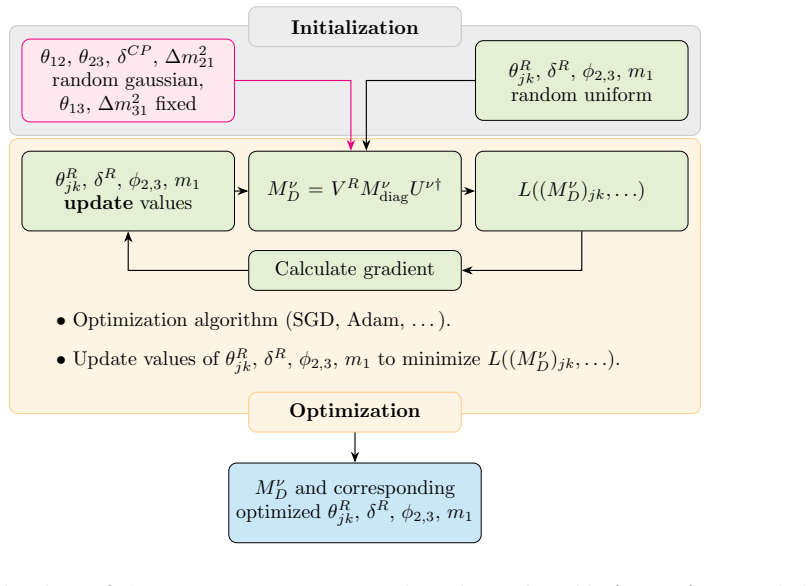
We adapt and apply techniques from machine learning to the exploration of physics beyond the Standard Model in the leptonic sector. Namely, we employ initialization and optimization, as they are applied in machine learning, to minimize a loss function that describes textures or conditions which we want in the neutrino mass matrix. The model free parameters are explored during the optimization, and after training for a number of optimization steps, we obtain matrices that approximately follow the desired forms, as well as their corresponding optimized parameters.
What carries the argument
A loss function on target textures or conditions in the neutrino mass matrix, minimized by machine-learning-style optimization over the model's free parameters.
If this is right
- Matrices obtained after optimization approximately follow the desired target forms.
- The procedure returns the corresponding optimized parameter values for each model.
- The same initialization-plus-optimization approach can be combined with other artificial-intelligence methods for further BSM applications.
Where Pith is reading between the lines
- The method could be tested on large ensembles of randomly chosen textures to measure how often it recovers physically acceptable parameter sets.
- Results can be cross-checked against global fits to neutrino oscillation data to assess whether the optimized points remain viable after experimental constraints.
- Analogous loss-function constructions might be written for other sectors, such as charged-lepton masses or quark mixing matrices.
Load-bearing premise
Defining a loss function on target textures and running standard optimization will produce physically meaningful BSM solutions rather than numerical artifacts or parameter sets that violate other constraints.
What would settle it
Apply the procedure to a known, exactly solvable target texture, then check whether the output matrices and parameters reproduce that texture to within numerical tolerance while satisfying all other model consistency requirements; systematic failure would show the method does not reliably generate valid solutions.
Figures
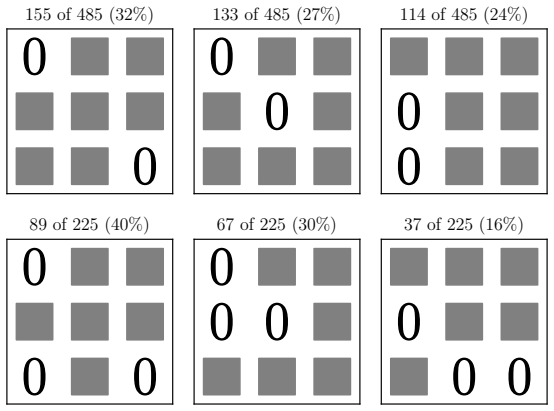

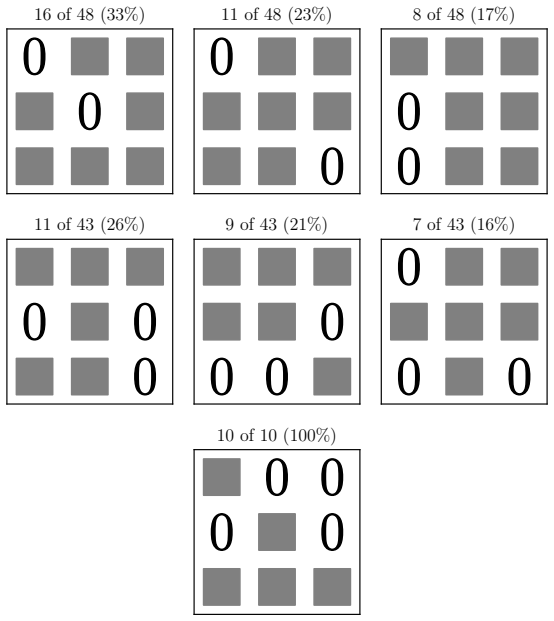
read the original abstract
In this work, we adapt and apply techniques from machine learning to the exploration of physics beyond the Standard Model in the leptonic sector. Namely, we employ initialization and optimization, as they are applied in machine learning, to minimize a loss function that describes textures or conditions which we want in the neutrino mass matrix. The model free parameters are explored during the optimization, and after training for a number of optimization steps, we obtain matrices that approximately follow the desired forms, as well as their corresponding optimized parameters. We also discuss extensions and additional applications of the ideas presented here in conjunction with other methods based on artificial intelligence.
Editorial analysis
A structured set of objections, weighed in public.
Referee Report
Summary. The manuscript adapts machine learning initialization and optimization techniques to explore leptonic BSM models by minimizing a loss function that encodes target textures or conditions on the neutrino mass matrix. Model free parameters are varied during optimization; after a number of steps the procedure is reported to yield matrices that approximately match the desired forms together with their corresponding optimized parameters. Extensions combining the method with other AI techniques are briefly discussed.
Significance. If the outputs were shown to satisfy all relevant physical constraints (oscillation data, perturbativity, unitarity, absence of tachyons) in addition to texture matching, the approach could supply a practical numerical tool for scanning high-dimensional BSM parameter spaces. The core idea is a direct application of standard gradient-based or derivative-free optimization to a texture-defined objective; its value therefore hinges on demonstrating that the resulting points lie inside the physically allowed region rather than constituting numerical artifacts.
major comments (2)
- [Abstract, §2] Abstract and §2 (methodology): the loss function is stated to act only on target textures/conditions; no explicit functional form, weighting of individual entries, or regularization terms are supplied. Consequently it is impossible to assess whether the optimization can be guaranteed to respect measured Δm² values, mixing angles, or theoretical bounds such as perturbativity of Yukawa couplings.
- [Abstract, §3] Abstract and §3 (results): the claim that “matrices that approximately follow the desired forms” are obtained supplies neither convergence criteria, validation metrics against oscillation data, nor post-optimization filtering for unitarity or absence of tachyons. Without these, the reported parameter sets may satisfy the numerical loss while lying outside the experimentally allowed region.
minor comments (1)
- [§2] Notation for the neutrino mass matrix and the model parameters should be introduced with explicit definitions and dimensions before the loss is defined.
Simulated Author's Rebuttal
We thank the referee for the detailed report and constructive suggestions. The comments correctly identify areas where additional detail on the loss function and validation procedures would strengthen the presentation. We address each point below and will incorporate revisions to improve clarity and rigor.
read point-by-point responses
-
Referee: [Abstract, §2] Abstract and §2 (methodology): the loss function is stated to act only on target textures/conditions; no explicit functional form, weighting of individual entries, or regularization terms are supplied. Consequently it is impossible to assess whether the optimization can be guaranteed to respect measured Δm² values, mixing angles, or theoretical bounds such as perturbativity of Yukawa couplings.
Authors: The referee is correct that an explicit functional form, including weights and any regularization, is not supplied in the current text. The loss is described only at the level of penalizing deviations from target textures. We will revise §2 to provide the precise mathematical definition of the loss, the weighting scheme for matrix entries, and any additional terms used to enforce bounds. This revision will make it possible to evaluate how (or whether) physical constraints enter the optimization. revision: yes
-
Referee: [Abstract, §3] Abstract and §3 (results): the claim that “matrices that approximately follow the desired forms” are obtained supplies neither convergence criteria, validation metrics against oscillation data, nor post-optimization filtering for unitarity or absence of tachyons. Without these, the reported parameter sets may satisfy the numerical loss while lying outside the experimentally allowed region.
Authors: We agree that the results section does not report convergence criteria, direct comparison to oscillation data, or post-optimization checks for unitarity and absence of tachyons. The manuscript presents the method as a means to generate texture-matching candidates; it does not claim that the resulting points automatically satisfy all experimental or theoretical constraints. We will add explicit convergence diagnostics, validation metrics, and a discussion of subsequent filtering steps in the revised §3. revision: yes
Circularity Check
No significant circularity; standard optimization applied to texture-matching loss
full rationale
The paper describes initializing and optimizing model parameters to minimize a loss defined on target neutrino mass matrix textures, yielding matrices that approximately match those forms. This outcome follows directly from the optimization procedure but is presented as an exploratory numerical method rather than a first-principles derivation or prediction. No equations reduce outputs to inputs by construction, no self-citation chains support load-bearing claims, and no uniqueness theorems or ansatzes are imported. The approach is self-contained as an application of ML techniques, with independent content in the choice of loss and exploration of BSM parameter space.
Axiom & Free-Parameter Ledger
free parameters (1)
- model free parameters
Reference graph
Works this paper leans on
-
[1]
Mann and H
A.K. Mann and H. Primakoff,Neutrino Oscillations and the Number of Neutrino Types, Phys. Rev. D15(1977) 655
1977
-
[2]
Wolfenstein,Oscillations Among Three Neutrino Types and CP Violation,Phys
L. Wolfenstein,Oscillations Among Three Neutrino Types and CP Violation,Phys. Rev. D 18(1978) 958
1978
-
[3]
P.F. Harrison, D.H. Perkins and W.G. Scott,Tri-bimaximal mixing and the neutrino oscillation data,Phys. Lett. B530(2002) 167 [hep-ph/0202074]
Pith/arXiv arXiv 2002
-
[4]
P.F. Harrison and W.G. Scott,Symmetries and generalizations of tri - bimaximal neutrino mixing,Phys. Lett. B535(2002) 163 [hep-ph/0203209]
Pith/arXiv arXiv 2002
-
[5]
Xing,Nearly tri bimaximal neutrino mixing and CP violation,Phys
Z.-z. Xing,Nearly tri bimaximal neutrino mixing and CP violation,Phys. Lett. B533(2002) 85 [hep-ph/0204049]. 35
Pith/arXiv arXiv 2002
-
[6]
X.G. He and A. Zee,Some simple mixing and mass matrices for neutrinos,Phys. Lett. B 560(2003) 87 [hep-ph/0301092]
Pith/arXiv arXiv 2003
-
[7]
Z.-z. Xing, H. Zhang and S. Zhou,Nearly Tri-bimaximal Neutrino Mixing and CP Violation from mu-tau Symmetry Breaking,Phys. Lett. B641(2006) 189 [hep-ph/0607091]. [9]Daya Baycollaboration,Observation of electron-antineutrino disappearance at Daya Bay, Phys. Rev. Lett.108(2012) 171803 [1203.1669]. [10]RENOcollaboration,Observation of Reactor Electron Antine...
Pith/arXiv arXiv 2006
-
[8]
K.T. Matchev, K. Matcheva, P. Ramond and S. Verner,Seeking Truth and Beauty in Flavor Physics with Machine Learning, in37th Conference on Neural Information Processing Systems, 10, 2023 [2311.00087]
arXiv 2023
-
[9]
K.T. Matchev, K. Matcheva, P. Ramond and S. Verner,Exploring the truth and beauty of theory landscapes with machine learning,Phys. Lett. B856(2024) 138941 [2401.11513]
arXiv 2024
-
[10]
S. Nishimura, C. Miyao and H. Otsuka,Exploring the flavor structure of quarks and leptons with reinforcement learning,JHEP23(2020) 021 [2304.14176]
arXiv 2020
-
[11]
S. Nishimura, C. Miyao and H. Otsuka,Reinforcement learning-based statistical search strategy for an axion model from flavor,JHEP10(2025) 043 [2409.10023]
arXiv 2025
-
[12]
S. Nishimura, H. Otsuka and H. Uchiyama,Exploring the flavor structure of leptons via diffusion models,Phys. Rev. D113(2026) 055030 [2503.21432]
Pith/arXiv arXiv 2026
-
[13]
S. Nishimura, H. Otsuka and H. Uchiyama,Diffusion-Model Approach to Flavor Models: A Case Study forS ′ 4 Modular Flavor Model,PTEP2026(2026) 053B08 [2504.00944]
Pith/arXiv arXiv 2026
-
[14]
A. Giarnetti and D. Meloni,Reinforcement Learning Techniques for the Flavor Problem in Particle Physics,Symmetry18(2026) 131 [2510.25495]. 36 [19]Particle Data Groupcollaboration,Review of Particle Physics,Phys. Rev. D98(2018) 030001
arXiv 2026
-
[15]
Jarlskog,Commutator of the Quark Mass Matrices in the Standard Electroweak Model and a Measure of Maximal CP Nonconservation,Phys
C. Jarlskog,Commutator of the Quark Mass Matrices in the Standard Electroweak Model and a Measure of Maximal CP Nonconservation,Phys. Rev. Lett.55(1985) 1039
1985
-
[16]
Wu,The Rephasing Invariants and CP,Phys
D.-d. Wu,The Rephasing Invariants and CP,Phys. Rev. D33(1986) 860. [22]KATRINcollaboration,Direct neutrino-mass measurement based on 259 days of KATRIN data,Science388(2025) adq9592 [2406.13516]
arXiv 1986
-
[17]
I. Esteban, M.C. Gonzalez-Garcia, M. Maltoni, I. Martinez-Soler, J.P. Pinheiro and T. Schwetz,NuFit-6.0: updated global analysis of three-flavor neutrino oscillations,JHEP12 (2024) 216 [2410.05380]. [24]NuFITcollaboration, “NuFIT v6.1 (2025).”http://www.nu-fit.org/, 2025
Pith/arXiv arXiv 2024
-
[18]
T. Fukuyama and H. Nishiura,Mass matrix of Majorana neutrinos,hep-ph/9702253
-
[19]
E. Ma and M. Raidal,Neutrino mass, muon anomalous magnetic moment, and lepton flavor nonconservation,Phys. Rev. Lett.87(2001) 011802 [hep-ph/0102255]
Pith/arXiv arXiv 2001
-
[20]
K.R.S. Balaji, W. Grimus and T. Schwetz,The Solar LMA neutrino oscillation solution in the Zee model,Phys. Lett. B508(2001) 301 [hep-ph/0104035]
Pith/arXiv arXiv 2001
-
[21]
Lam,A 2-3 symmetry in neutrino oscillations,Phys
C.S. Lam,A 2-3 symmetry in neutrino oscillations,Phys. Lett. B507(2001) 214 [hep-ph/0104116]
Pith/arXiv arXiv 2001
-
[22]
P.F. Harrison and W.G. Scott,µ-τreflection symmetry in lepton mixing and neutrino oscillations,Phys. Lett. B547(2002) 219 [hep-ph/0210197]
Pith/arXiv arXiv 2002
-
[23]
Z.-z. Xing and Z.-h. Zhao,A review ofµ-τflavor symmetry in neutrino physics,Rept. Prog. Phys.79(2016) 076201 [1512.04207]
Pith/arXiv arXiv 2016
-
[24]
D.P. Kingma and J. Ba,Adam: A method for stochastic optimization,1412.6980
-
[25]
H. Fritzsch, Z.-z. Xing and S. Zhou,Two-zero Textures of the Majorana Neutrino Mass Matrix and Current Experimental Tests,JHEP09(2011) 083 [1108.4534]. 37
Pith/arXiv arXiv 2011
-
[26]
D. Meloni, A. Meroni and E. Peinado,Two-zero Majorana textures in the light of the Planck results,Phys. Rev. D89(2014) 053009 [1401.3207]
Pith/arXiv arXiv 2014
-
[27]
Nguyen,Texture zeros of neutrino mass matrix with seesaw mechanism and leptogenesis,Mod
T.P. Nguyen,Texture zeros of neutrino mass matrix with seesaw mechanism and leptogenesis,Mod. Phys. Lett. A29(2014) 1450038
2014
-
[28]
R.H. Benavides, D.V. Forero, L. Mu˜ noz, J.M. Mu˜ noz, A. Rico and A. Tapia,Five texture zeros in the lepton sector and neutrino oscillations at DUNE,Phys. Rev. D107(2023) 036008 [2207.04072]
arXiv 2023
- [29]
-
[30]
M.R. Devi,Retrieving texture zeros in 3+1 active-sterile neutrino framework under the action ofA 4 modular-invariants,2303.04900
-
[31]
Rico, R.H
A. Rico, R.H. Benavides, D.V. Forero, L. Mu˜ noz and A. Tapia,Five texture zeros in the lepton sector that reproduce the observable neutrino masses and mixings: A mapping between the standard parameterization and our parameterization,PoSICRC2023(2023) 1047
2023
-
[32]
Zhao,Combinations of theµ-τreflection symmetry and texture zeros in the Dirac neutrino mass matrix of the seesaw model,Eur
Z.-h. Zhao,Combinations of theµ-τreflection symmetry and texture zeros in the Dirac neutrino mass matrix of the seesaw model,Eur. Phys. J. Plus138(2023) 1055
2023
-
[33]
S. Kumar and R.R. Gautam,Neutrino mass matrices with generalized CP symmetries and texture zeros,Nucl. Phys. B1001(2024) 116520 [2312.07150]
arXiv 2024
-
[34]
Zhou,Texture zeros for lepton flavor mixing,Int
S. Zhou,Texture zeros for lepton flavor mixing,Int. J. Mod. Phys. A39(2024) 2441014
2024
- [35]
-
[36]
Carrillo-Monteverde, S
A. Carrillo-Monteverde, S. G´ omez-´Avila and L. L´ opez-Lozano,2-zeros texture and the Universal Texture Constraint in the Leptonic Sector,Int. J. Mod. Phys. A39(2024) 2450052
2024
-
[37]
Singh, M
L. Singh, M. Kashav and S. Verma,Implications of Dark-θ 12 Solution on Two-zero Texture Inverse Neutrino Mass Matrix,Springer Proc. Phys.304(2024) 675. 38
2024
-
[38]
I.A. Mazumder and R. Dutta,Bottom-up approach to texture zeros in the neutrino mass matrix,Int. J. Mod. Phys. A41(2026) 2650010 [2409.04756]
arXiv 2026
-
[39]
T. Kobayashi, H. Otsuka and M. Tanimoto,Yukawa textures from non-invertible symmetries, JHEP12(2024) 117 [2409.05270]
arXiv 2024
-
[40]
T. Kobayashi, Y. Nishioka, H. Otsuka and M. Tanimoto,More about quark Yukawa textures from selection rules without group actions,JHEP05(2025) 177 [2503.09966]
arXiv 2025
-
[41]
T. Kobayashi, H. Otsuka, M. Tanimoto and H. Uchida,Lepton mass textures from non-invertible multiplication rules,JHEP08(2025) 189 [2505.07262]
arXiv 2025
-
[42]
L. Calibbi, X. Gao and M. Yuan,Hunting for neutrino texture zeros with muon and tau flavor violation,JHEP05(2026) 188 [2511.08679]
Pith/arXiv arXiv 2026
- [43]
-
[44]
Gogoi and M.K
J. Gogoi and M.K. Das,A study of texture zeros using A4 discrete symmetry group,J. Subatomic Part. Cosmol.3(2025) 100071
2025
-
[45]
Z. Jiang, B.-Y. Qu and G.-J. Ding,Texture-zeros in minimal seesaw from noninvertible symmetry fusion rules,Phys. Rev. D112(2025) 115029 [2510.07236]
arXiv 2025
- [46]
-
[47]
Priya, R. Kumar, L. Singh and S. Verma,Implications of the First JUNO Results for Dirac Neutrino Texture Zeros,2604.19122. 39
discussion (0)
Sign in with ORCID, Apple, or X to comment. Anyone can read and Pith papers without signing in.