Hyperon-Nucleon Spectrometer
Pith reviewed 2026-06-27 23:11 UTC · model grok-4.3
The pith
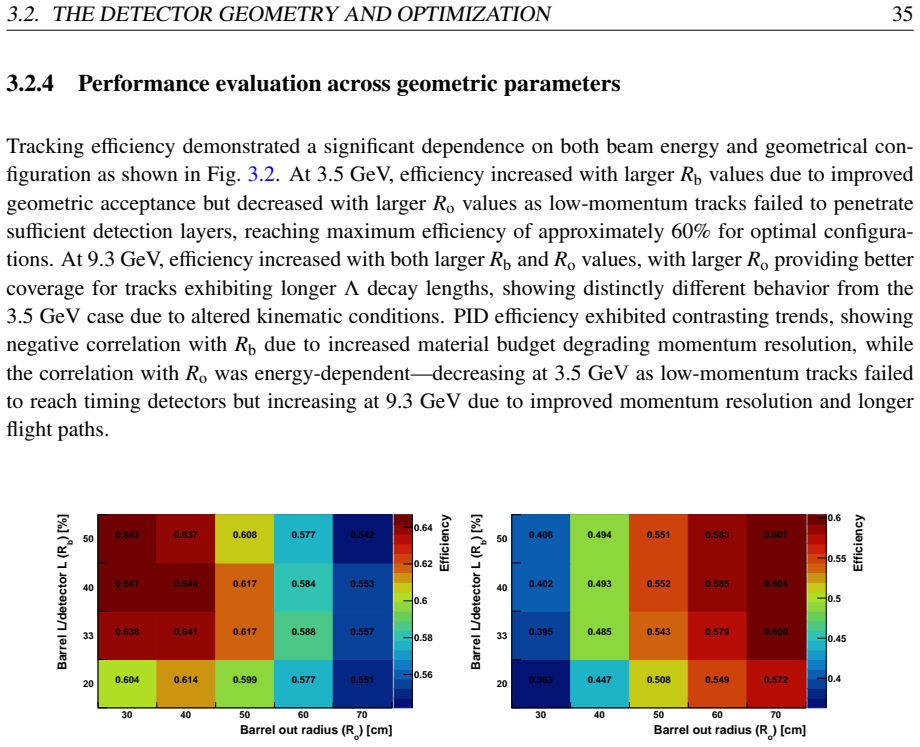
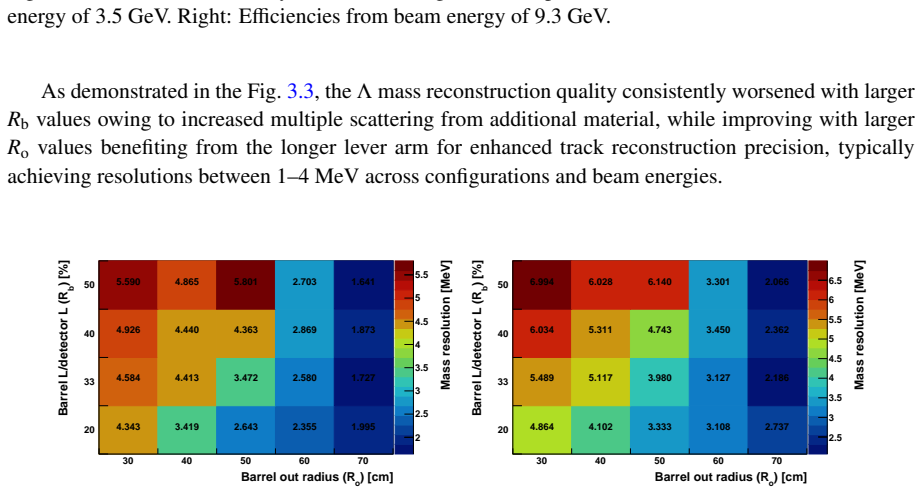
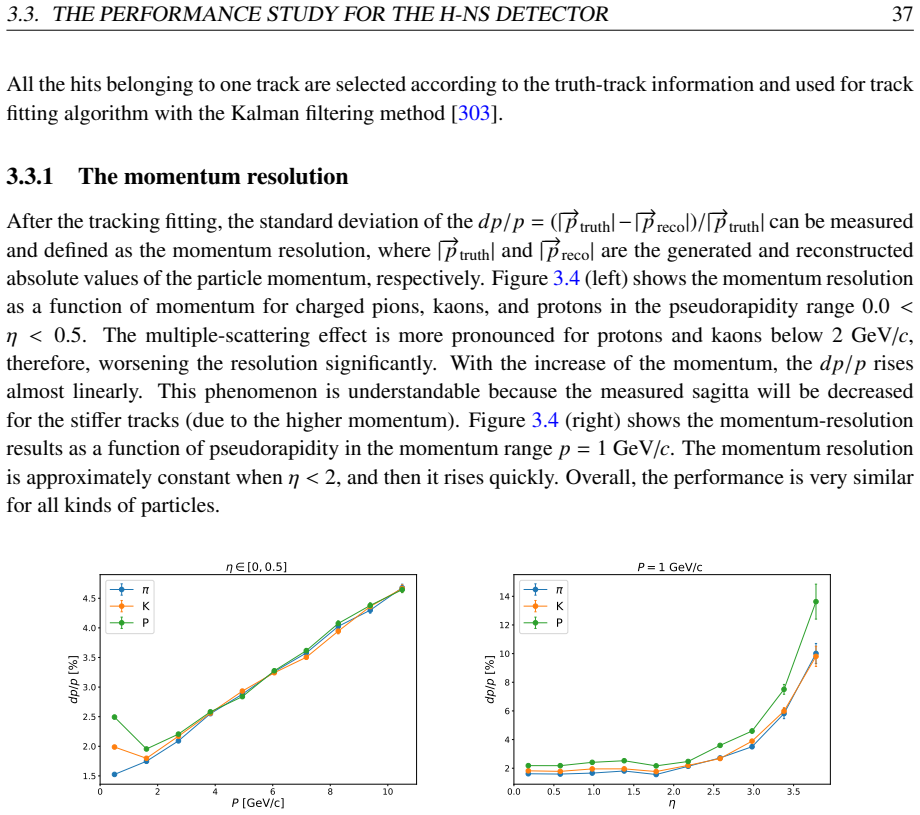
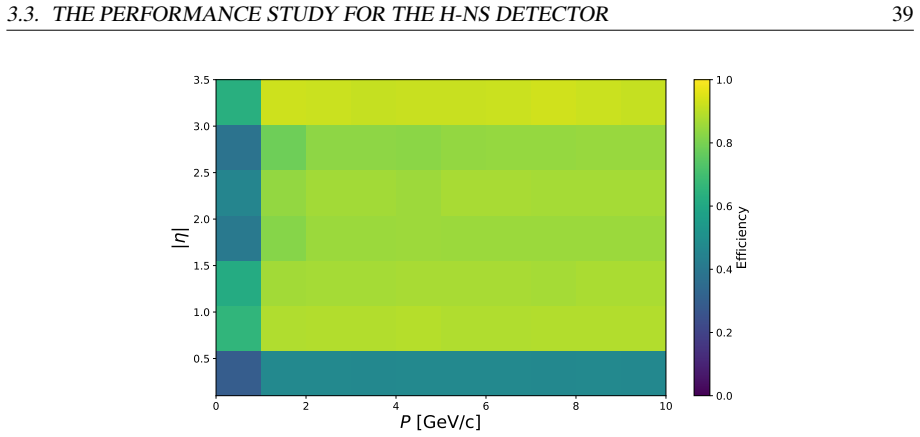
The Hyperon-Nucleon Spectrometer at HIAF will measure hyperon polarizations across collision energies and systems to investigate the unexplained Lambda polarization.
A machine-rendered reading of the paper's core claim, the machinery that carries it, and where it could break.
Core claim
The H-NS experiment will perform systematic studies of hyperon polarization phenomena and their underlying mechanisms in proton-proton, proton-nucleus, and nucleus-nucleus collisions in the fixed target mode, with a wide-range beam energy scan including proton beams from 3 GeV up to 32 GeV.
What carries the argument
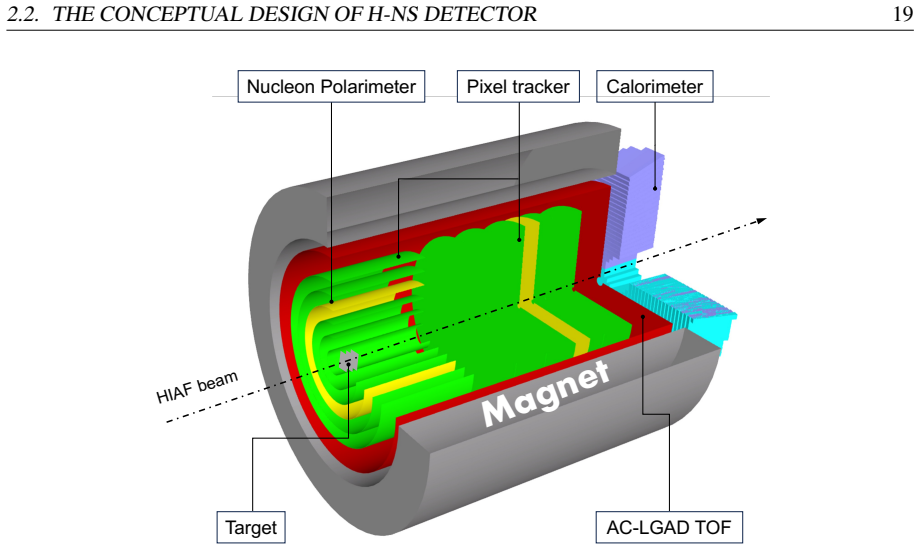
Specialized detectors in the Hyperon-Nucleon Spectrometer for high-precision reconstruction of final-state baryon polarizations.
If this is right
- A map of polarization versus collision energy from 3 to 32 GeV will test models of hyperon production.
- Simultaneous hyperon and proton spin measurements will constrain the spin structure of baryons.
- Data from pA and AA collisions will separate cold nuclear matter effects from hot medium effects on polarization.
- The measurements will provide input for planning the future Electron-ion Collider in China.
Where Pith is reading between the lines
- Strong energy dependence in the data could point to production mechanisms tied to chiral dynamics rather than final-state interactions.
- Systematic comparison across pp, pA, and AA systems may isolate whether the polarization originates in the initial state or the nuclear environment.
- The energy scan range could reveal thresholds where polarization behavior changes, guiding theoretical refinements.
Load-bearing premise
The specialized detectors will be capable of high-precision reconstruction of final-state baryon polarizations at the beam energies provided by HIAF.
What would settle it
If the reconstructed polarizations show no significant transverse component or no variation with beam energy across the scanned range, the experiment would fail to address the Lambda polarization puzzle as intended.
Figures











read the original abstract
Chirality lies at the heart of low-energy QCD, governing the symmetry structure that shapes hadron masses and strong interaction dynamics. Among the most compelling open questions tied to chiral dynamics and spontaneous chiral symmetry breaking is the longstanding $\Lambda$ polarization puzzle, in which $\Lambda$ hyperons produced in unpolarized hadronic collisions exhibit a surprisingly large transverse polarization that remains theoretically unexplained. This whitepaper presents the proposal for the Hyperon-Nucleon Spectrometer (H-NS) at the High-Intensity heavy-ion Accelerator Facility (HIAF). Leveraging the high energy and high intensity of HIAF's proton and heavy-ion beams, the H-NS experiment will perform systematic studies of hyperon polarization phenomena and their underlying mechanisms in proton-proton ($pp$), proton-nucleus ($pA$), and nucleus-nucleus ($AA$) collisions in the fixed target mode. A wide-range beam energy scan, including proton beams from 3 GeV up to 9.3 GeV (HIAF) and up to 32 GeV (upgraded HIAF), will be conducted to examine the dependence of polarization on collision energy. The spectrometer is designed with specialized detectors capable of high-precision reconstruction of final-state baryon polarizations. Among its many interesting and important measurements, H-NS will simultaneously measure hyperon and proton spin observables to explore the polarization mechanism in hadronic interactions and the spin structure of baryons. Furthermore, the use of $pA$ and $AA$ collisions will enable detailed investigations of cold and hot nuclear matter effects on spin polarization. Its physics program and detector development will significantly benefit the future Electron-ion Collider in China.
Editorial analysis
A structured set of objections, weighed in public.
Referee Report
Summary. The manuscript is a whitepaper proposing the Hyperon-Nucleon Spectrometer (H-NS) at the High-Intensity heavy-ion Accelerator Facility (HIAF). It outlines a physics program to study hyperon polarization phenomena, including the longstanding Lambda polarization puzzle, through systematic measurements in fixed-target pp, pA, and AA collisions over a beam-energy scan from 3–9.3 GeV (extendable to 32 GeV). The design emphasizes specialized detectors for high-precision reconstruction of final-state baryon polarizations and simultaneous extraction of hyperon and proton spin observables, with additional goals of probing nuclear-matter effects and benefiting future EIC programs.
Significance. If the detector performance claims hold, the proposed measurements could supply new data on polarization mechanisms across collision systems and energies, addressing an unresolved issue in low-energy QCD. The absence of any Monte Carlo studies, acceptance/efficiency curves, angular-resolution estimates, or dilution-factor calculations means the physics reach remains unquantified; the proposal therefore does not yet demonstrate that the stated precision is achievable at the relevant kinematics.
major comments (1)
- [Abstract] Abstract (and corresponding detector-description passages): the statement that the spectrometer is 'designed with specialized detectors capable of high-precision reconstruction of final-state baryon polarizations' is asserted without supporting quantitative evidence. No Monte Carlo results, acceptance/efficiency curves, angular-resolution estimates, or dilution-factor calculations are provided for the decay channels (e.g., Λ → pπ−) at the 3–9.3 GeV (or 32 GeV) kinematics. This directly undermines the central claim that H-NS will enable systematic high-precision studies of hyperon polarization.
Simulated Author's Rebuttal
We thank the referee for the careful and constructive review of our whitepaper. The comment on the need for quantitative support of detector performance is well taken, and we address it directly below.
read point-by-point responses
-
Referee: [Abstract] Abstract (and corresponding detector-description passages): the statement that the spectrometer is 'designed with specialized detectors capable of high-precision reconstruction of final-state baryon polarizations' is asserted without supporting quantitative evidence. No Monte Carlo results, acceptance/efficiency curves, angular-resolution estimates, or dilution-factor calculations are provided for the decay channels (e.g., Λ → pπ−) at the 3–9.3 GeV (or 32 GeV) kinematics. This directly undermines the central claim that H-NS will enable systematic high-precision studies of hyperon polarization.
Authors: We agree that the original manuscript lacks the requested quantitative Monte Carlo studies, acceptance/efficiency curves, angular-resolution estimates, and dilution-factor calculations. As a conceptual whitepaper, the initial version prioritized physics motivation and overall design over detailed performance simulations. However, we recognize that this omission weakens the central claim. In the revised manuscript we have added a dedicated subsection presenting preliminary GEANT4 Monte Carlo results for the Λ → pπ− channel (and related hyperon decays) across the 3–9.3 GeV beam-energy range. These include acceptance and efficiency curves, angular-resolution estimates at the relevant kinematics, and dilution-factor calculations that support the feasibility of high-precision polarization measurements. The new material directly substantiates the detector-performance assertions. revision: yes
Circularity Check
No circularity in forward-looking facility proposal
full rationale
The manuscript is a whitepaper proposing the H-NS spectrometer at HIAF. It states physics goals (systematic hyperon polarization studies in pp, pA, AA collisions) and asserts detector capabilities for high-precision baryon polarization reconstruction, but presents no derivations, equations, fitted parameters, or quantitative predictions. No load-bearing steps reduce by construction to inputs, self-citations, or ansatzes. Claims are prospective assertions about future measurements rather than self-referential results. This is the expected non-finding for a proposal document without internal mathematical chains.
Axiom & Free-Parameter Ledger
Forward citations
Cited by 1 Pith paper
-
Spin Femtoscopy: A Framework for Revealing Genuine Spin Correlations
Spin femtoscopy is proposed to separate genuine two-particle spin correlations from quantum statistics and final-state interaction effects via spin-sensitive correlation functions on Lambda pairs.
Reference graph
Works this paper leans on
-
[1]
Brodsky, and Guy F
Alexandre Deur, Stanley J. Brodsky, and Guy F. De T´eramond. The Spin Structure of the Nucleon. Rept. Prog. Phys., 82:076201, 2019
2019
-
[2]
TMD Handbook
Renaud Boussarie et al. TMD Handbook. 4 2023
2023
-
[3]
50 Years of Quantum Chromodynamics.Eur
Franz Gross et al. 50 Years of Quantum Chromodynamics.Eur . Phys. J. C, 83:1125, 2023
2023
-
[4]
LHC Machine.JINST, 3:S08001, 2008
Lyndon Evans and Philip Bryant. LHC Machine.JINST, 3:S08001, 2008
2008
-
[5]
B. B. Back et al. The PHOBOS perspective on discoveries at RHIC.Nucl. Phys. A, 757:28–101, 2005
2005
-
[6]
Arsene et al
I. Arsene et al. Quark gluon plasma and color glass condensate at RHIC? The Perspective from the BRAHMS experiment.Nucl. Phys. A, 757:1–27, 2005
2005
-
[7]
Experimental and theoretical challenges in the search for the quark gluon plasma: The STAR Collaboration’s critical assessment of the evidence from RHIC collisions
John Adams et al. Experimental and theoretical challenges in the search for the quark gluon plasma: The STAR Collaboration’s critical assessment of the evidence from RHIC collisions. Nucl. Phys. A, 757:102–183, 2005
2005
-
[8]
Adcox et al
K. Adcox et al. Formation of dense partonic matter in relativistic nucleus-nucleus collisions at RHIC: Experimental evaluation by the PHENIX collaboration.Nucl. Phys. A, 757:184–283, 2005
2005
-
[9]
Bourrely, Jacques Soffer, and E
C. Bourrely, Jacques Soffer, and E. Leader. Polarization Phenomena in Hadronic Reactions.Phys. Rept., 59:95–297, 1980
1980
-
[10]
Cambridge University Press, 7 2001
Elliot Leader.Spin in Particle Physics, volume 15. Cambridge University Press, 7 2001
2001
-
[11]
T. D. Lee and Chen-Ning Yang. General Partial Wave Analysis of the Decay of a Hyperon of Spin 1/2.Phys. Rev., 108:1645–1647, 1957
1957
-
[12]
Jacob and G
M. Jacob and G. C. Wick. On the General Theory of Collisions for Particles with Spin.Annals Phys., 7:404–428, 1959
1959
-
[13]
Spin Formalisms
Suh Urk Chung. Spin Formalisms. CERN-71-08, 1971
1971
-
[14]
Refined analysis ofΩ − ¯Ω+ polarization in electron- positron annihilation process.Phys
Zhe Zhang, Jiao Jiao Song, and Ya-jin Zhou. Refined analysis ofΩ − ¯Ω+ polarization in electron- positron annihilation process.Phys. Rev. D, 109(3):036005, 2024
2024
-
[15]
Po- larization analysis of two baryons with various spin combinations produced in electron-positron annihilation.Phys
Zhe Zhang, Rong-Gang Ping, Tianbo Liu, Jiao Jiao Song, Weihua Yang, and Ya-jin Zhou. Po- larization analysis of two baryons with various spin combinations produced in electron-positron annihilation.Phys. Rev. D, 110(3):034034, 2024. 48 BIBLIOGRAPHY
2024
-
[16]
Navas et al
S. Navas et al. Review of particle physics.Phys. Rev. D, 110(3):030001, 2024
2024
-
[17]
Bunce et al.Λ 0 Hyperon Polarization in Inclusive Production by 300-GeV Protons on Beryl- lium.Phys
G. Bunce et al.Λ 0 Hyperon Polarization in Inclusive Production by 300-GeV Protons on Beryl- lium.Phys. Rev. Lett., 36:1113–1116, 1976
1976
-
[18]
Heller et al
Kenneth J. Heller et al. Polarization ofΛ’s and ¯Λ’s Produced by 400-GeV Protons.Phys. Rev. Lett., 41:607, 1978. [Erratum: Phys.Rev.Lett. 45, 1043 (1980)]
1978
-
[19]
E. J. Ramberg et al. Polarization ofΛand ¯ΛProduced by 800 GeV Protons.Phys. Lett. B, 338:403–408, 1994
1994
-
[20]
A. Tkachev. A measurement of the transverse polarization ofΛ-hyperons produced in inelastic pN-reactions at 450-GeV proton energy.Nucl. Phys. B Proc. Suppl., 75:45–47, 1999
1999
-
[21]
Abt et al
I. Abt et al. Polarization ofΛand ¯Λin 920-GeV fixed-target proton-nucleus collisions.Phys. Lett. B, 638:415–421, 2006
2006
-
[22]
Measurement of the transverse polarization ofΛand ¯Λhyperons produced in proton-proton collisions at √s=7 TeV using the ATLAS detector.Phys
Georges Aad et al. Measurement of the transverse polarization ofΛand ¯Λhyperons produced in proton-proton collisions at √s=7 TeV using the ATLAS detector.Phys. Rev. D, 91(3):032004, 2015
2015
-
[23]
Aaij et al
R. Aaij et al. Transverse polarization measurement ofΛhyperons inpNecollisions at √sNN = 68.4 GeV with the LHCb detector.JHEP, 09:082, 2024
2024
-
[24]
Heller, O
Kenneth J. Heller, O. E. Overseth, G. Bunce, F. Dydak, and H. Taureg.Λ 0 Hyperon Polarization in Inclusive Production by 24-GeV Protons on Platinum.Phys. Lett. B, 68:480–482, 1977
1977
-
[25]
Erhan et al.Λ 0 Polarization in Proton Proton Interactions at √s=53-GeV and 62-GeV.Phys
S. Erhan et al.Λ 0 Polarization in Proton Proton Interactions at √s=53-GeV and 62-GeV.Phys. Lett. B, 82:301–304, 1979
1979
-
[26]
Abe et al
F. Abe et al. Polarization ofΛ 0 Hyperons in Inclusive Production by 12-GeV Protons on Tungsten. Phys. Rev. Lett., 50:1102–1105, 1983
1983
-
[27]
A Semiclassical Model for the Polariza- tion of Inclusively ProducedΛ 0-Particles at High-Energies.Phys
Bo Andersson, Gosta Gustafson, and Gunnar Ingelman. A Semiclassical Model for the Polariza- tion of Inclusively ProducedΛ 0-Particles at High-Energies.Phys. Lett. B, 85:417–420, 1979
1979
-
[28]
Panagiotou.Λ 0 Polarization in Hadron - Nucleon, Hadron - Nucleus and Nucleus- nucleus Interactions.Int
Apostolos D. Panagiotou.Λ 0 Polarization in Hadron - Nucleon, Hadron - Nucleus and Nucleus- nucleus Interactions.Int. J. Mod. Phys. A, 5:1197, 1990
1990
-
[29]
Barni, G
R. Barni, G. Preparata, and P. G. Ratcliffe. A Simple explanation of hyperon polarization at high pT .Phys. Lett. B, 296:251–255, 1992
1992
-
[30]
Tornqvist
Jacques Soffer and Nils A. Tornqvist. Origin of the polarization for inclusiveΛproduction inpp collisions.Phys. Rev. Lett., 68:907–910, 1992
1992
-
[31]
S. M. Troshin and N. E. Tyurin. Hyperon polarization in the constituent quark model.Phys. Rev. D, 55:1265–1272, 1997
1997
-
[32]
Zuo-tang Liang and C. Boros. Hyperon polarization and single spin left-right asymmetry in inclu- sive production processes at high-energies.Phys. Rev. Lett., 79:3608–3611, 1997
1997
-
[33]
J. Felix. On Theoretical studies ofΛ 0 polarization.Mod. Phys. Lett. A, 14:827–842, 1999. BIBLIOGRAPHY 49
1999
-
[34]
Globally polarized quark-gluon plasma in non-central A+A collisions.Phys
Zuo-Tang Liang and Xin-Nian Wang. Globally polarized quark-gluon plasma in non-central A+A collisions.Phys. Rev. Lett., 94:102301, 2005. [Erratum: Phys.Rev.Lett. 96, 039901 (2006)]
2005
-
[35]
Spin alignment of vector mesons in non-central A+A colli- sions.Phys
Zuo-Tang Liang and Xin-Nian Wang. Spin alignment of vector mesons in non-central A+A colli- sions.Phys. Lett. B, 629:20–26, 2005
2005
-
[36]
Global quark polarization in non-central A+A collisions.Phys
Jian-Hua Gao, Shou-Wan Chen, Wei-tian Deng, Zuo-Tang Liang, Qun Wang, and Xin-Nian Wang. Global quark polarization in non-central A+A collisions.Phys. Rev. C, 77:044902, 2008
2008
-
[37]
B. I. Abelev et al. Global polarization measurement in Au+Au collisions.Phys. Rev. C, 76:024915,
-
[38]
[Erratum: Phys.Rev.C 95, 039906 (2017)]
2017
-
[39]
Adamczyk et al
L. Adamczyk et al. GlobalΛhyperon polarization in nuclear collisions: evidence for the most vortical fluid.Nature, 548:62–65, 2017
2017
-
[40]
Global polarization ofΛhyperons in Au+Au collisions at √sNN =200 GeV
Jaroslav Adam et al. Global polarization ofΛhyperons in Au+Au collisions at √sNN =200 GeV. Phys. Rev. C, 98:014910, 2018
2018
-
[41]
M. S. Abdallah et al. GlobalΛ-hyperon polarization in Au+Au collisions at √sNN =3 GeV. Phys. Rev. C, 104(6):L061901, 2021
2021
-
[42]
M. I. Abdulhamid et al. Global polarization ofΛand ¯Λhyperons in Au+Au collisions at √sNN = 19.6 and 27 GeV.Phys. Rev. C, 108(1):014910, 2023
2023
-
[43]
Global polarization ofΛ ¯Λhyperons in Pb-Pb collisions at √sNN =2.76 and 5.02 TeV.Phys
Shreyasi Acharya et al. Global polarization ofΛ ¯Λhyperons in Pb-Pb collisions at √sNN =2.76 and 5.02 TeV.Phys. Rev. C, 101(4):044611, 2020. [Erratum: Phys.Rev.C 105, 029902 (2022)]
2020
-
[44]
Abou Yassine et al
R. Abou Yassine et al. Measurement of global polarization ofΛhyperons in few-GeV heavy-ion collisions.Phys. Lett. B, 835:137506, 2022
2022
-
[45]
P. J. Mulders and R. D. Tangerman. The Complete tree level result up to order 1/Q for polarized deep inelastic leptoproduction.Nucl. Phys. B, 461:197–237, 1996. [Erratum: Nucl.Phys.B 484, 538–540 (1997)]
1996
-
[46]
Jakob, and P
Daniel Boer, R. Jakob, and P. J. Mulders. Asymmetries in polarized hadron production ine +e− annihilation up to order 1/Q.Nucl. Phys. B, 504:345–380, 1997
1997
-
[47]
Transverse-spin and transverse- momentum effects in high-energy processes.Prog
Vincenzo Barone, Franco Bradamante, and Anna Martin. Transverse-spin and transverse- momentum effects in high-energy processes.Prog. Part. Nucl. Phys., 65:267–333, 2010
2010
-
[48]
Pitonyak, M
D. Pitonyak, M. Schlegel, and A. Metz. Polarized hadron pair production from electron-positron annihilation.Phys. Rev. D, 89(5):054032, 2014
2014
-
[49]
Leading and higher twist contri- butions in semi-inclusivee +e− annihilation at high energies.Phys
Shu-Yi Wei, Kai-bao Chen, Yu-kun Song, and Zuo-tang Liang. Leading and higher twist contri- butions in semi-inclusivee +e− annihilation at high energies.Phys. Rev. D, 91(3):034015, 2015
2015
-
[50]
Longitudinal and transverse polar- izations ofΛhyperon in unpolarized SIDIS and e+e- annihilation.Phys
Kai-bao Chen, Zuo-tang Liang, Yu-kun Song, and Shu-yi Wei. Longitudinal and transverse polar- izations ofΛhyperon in unpolarized SIDIS and e+e- annihilation.Phys. Rev. D, 105(3):034027, 2022
2022
-
[51]
Po- larized hyperon production in single-inclusive electron-positron annihilation at next-to-leading order.JHEP, 01:111, 2019
Leonard Gamberg, Zhong-Bo Kang, Daniel Pitonyak, Marc Schlegel, and Shinsuke Yoshida. Po- larized hyperon production in single-inclusive electron-positron annihilation at next-to-leading order.JHEP, 01:111, 2019. 50 BIBLIOGRAPHY
2019
-
[52]
TransverseΛ polarization ine +e− collisions.Phys
Leonard Gamberg, Zhong-Bo Kang, Ding Yu Shao, John Terry, and Fanyi Zhao. TransverseΛ polarization ine +e− collisions.Phys. Lett. B, 818:136371, 2021
2021
-
[53]
Hadronic structure functions in thee +e− → ¯ΛΛreaction.Phys
G ¨oran F¨aldt and Andrzej Kupsc. Hadronic structure functions in thee +e− → ¯ΛΛreaction.Phys. Lett. B, 772:16–20, 2017
2017
-
[54]
Polarization observables ine +e− annihilation to a baryon-antibaryon pair.Phys
Elisabetta Perotti, G ¨oran F¨aldt, Andrzej Kupsc, Stefan Leupold, and Jiao Jiao Song. Polarization observables ine +e− annihilation to a baryon-antibaryon pair.Phys. Rev. D, 99(5):056008, 2019
2019
-
[55]
Study ofCPviolation in hyperon decays at super-charm-tau factories with a polarized electron beam.Phys
Nora Salone, Patrik Adlarson, Varvara Batozskaya, Andrzej Kupsc, Stefan Leupold, and Jusak Tandean. Study ofCPviolation in hyperon decays at super-charm-tau factories with a polarized electron beam.Phys. Rev. D, 105(11):116022, 2022
2022
-
[56]
Production and decay of hyperons in a transversely polarized electron-positron collider.Phys
Xu Cao, Yu-Tie Liang, and Rong-Gang Ping. Production and decay of hyperons in a transversely polarized electron-positron collider.Phys. Rev. D, 110(1):014035, 2024
2024
-
[57]
Polarization analysis ine +e− →J/ψ→baryon-antibaryon pairs.Phys
Zhe Zhang, Tianbo Liu, Rong-Gang Ping, Jiao Jiao Song, and Weihua Yang. Polarization analysis ine +e− →J/ψ→baryon-antibaryon pairs.Phys. Rev. D, 112(9):096012, 2025
2025
-
[58]
Guan et al
Y . Guan et al. Observation of TransverseΛ/¯ΛHyperon Polarization ine +e− Annihilation at Belle. Phys. Rev. Lett., 122(4):042001, 2019
2019
-
[59]
Ablikim et al
M. Ablikim et al. Polarization and Entanglement in Baryon-Antibaryon Pair Production in Electron-Positron Annihilation.Nature Phys., 15:631–634, 2019
2019
-
[60]
Ablikim et al
M. Ablikim et al. Complete Measurement of theΛElectromagnetic Form Factors.Phys. Rev. Lett., 123(12):122003, 2019
2019
-
[61]
Measurement ofΛbaryon polarization ine +e− →Λ ¯Λat √s=3.773 GeV
Medina Ablikim et al. Measurement ofΛbaryon polarization ine +e− →Λ ¯Λat √s=3.773 GeV. Phys. Rev. D, 105(1):L011101, 2022
2022
-
[62]
Ablikim et al
M. Ablikim et al. Precise Measurements of Decay Parameters andCPAsymmetry with Entangled Λ− ¯ΛPairs.Phys. Rev. Lett., 129(13):131801, 2022
2022
-
[63]
Measurement ofΛtransverse polarization in e +e− collisions at √s= 3.68-3.71 GeV.JHEP, 10:081, 2023
Medina Ablikim et al. Measurement ofΛtransverse polarization in e +e− collisions at √s= 3.68-3.71 GeV.JHEP, 10:081, 2023. [Erratum: JHEP 12, 080 (2023)]
2023
-
[64]
Flaminio et al
V . Flaminio et al. Compilation of cross sections. III:pand ¯pinduced reactions. CERN-HERA- 79-03, 1979
1979
-
[65]
Balewski et al
J. Balewski et al. Threshold measurements at the internal experimental facility COSY-11.Nucl. Phys. A, 626:85C–92C, 1997
1997
-
[66]
J. T. Balewski et al. Total cross-section of the reactionpp→pK +Λclose to threshold.Phys. Lett. B, 420:211–216, 1998
1998
-
[67]
Sewerin et al
S. Sewerin et al. Comparison ofΛandΣ 0 threshold production in proton-proton collisions.Phys. Rev. Lett., 83:682–685, 1999
1999
-
[68]
Kowina et al
P. Kowina et al. Energy dependence of theΛ / Σ0 production cross-section ratio in p-p interactions. Eur . Phys. J. A, 22:293–299, 2004. BIBLIOGRAPHY 51
2004
-
[69]
Strangeness production in the reactionpp→K +Λpin the threshold region.Phys
R Bilger et al. Strangeness production in the reactionpp→K +Λpin the threshold region.Phys. Lett. B, 420:217–224, 1998
1998
-
[70]
Abdel-Samad et al
S. Abdel-Samad et al. Hyperon production in the channelpp→K +Λpnear the reaction threshold. Phys. Lett. B, 632:27–34, 2006
2006
-
[71]
Abd El-Samad et al
S. Abd El-Samad et al. Influence ofN ∗-resonances on hyperon production in the channelpp→ K+Λpat 2.95, 3.20 and 3.30 GeV/c beam momentum.Phys. Lett. B, 688:142–149, 2010
2010
-
[72]
Abdel-Bary et al
M. Abdel-Bary et al. Production ofΛandΣ 0 hyperons in proton-proton collisions.Eur . Phys. J. A, 46:27–44, 2010. [Erratum: Eur.Phys.J.A 46, 435–436 (2010)]
2010
-
[73]
Valdau et al
Yu. Valdau et al. Thepp→K +nΣ+ reaction near threshold.Phys. Lett. B, 652:245–249, 2007
2007
-
[74]
Valdau et al
Yu. Valdau et al. The energy dependence of thepp→K +nΣ+ reaction close to threshold.Phys. Rev. C, 81:045208, 2010
2010
-
[75]
Adamczewski-Musch et al
J. Adamczewski-Musch et al. InclusiveΛproduction in proton-proton collisions at 3.5 GeV.Phys. Rev. C, 95(1):015207, 2017
2017
-
[76]
J. C. Yang et al. High Intensity heavy ion Accelerator Facility (HIAF) in China.Nucl. Instrum. Meth. B, 317:263–265, 2013
2013
-
[77]
Status of the high-intensity heavy-ion accelerator facility in China.AAPPS Bull., 32(1):35, 2022
Xiaohong Zhou and Jiancheng Yang. Status of the high-intensity heavy-ion accelerator facility in China.AAPPS Bull., 32(1):35, 2022
2022
-
[78]
Perspectives for Hyperon and Hypernuclei Physics.Chin
Jin-Hui Chen, Li-Sheng Geng, Emiko Hiyama, Zhi-Wei Liu, and Josef Pochodzalla. Perspectives for Hyperon and Hypernuclei Physics.Chin. Phys. Lett., 42(10):100101, 2025
2025
-
[79]
Machleidt, K
R. Machleidt, K. Holinde, and C. Elster. The Bonn Meson Exchange Model for the Nucleon Nucleon Interaction.Phys. Rept., 149:1–89, 1987
1987
-
[80]
Holzenkamp, K
B. Holzenkamp, K. Holinde, and J. Speth. A Meson Exchange Model for the Hyperon Nucleon Interaction.Nucl. Phys. A, 500:485–528, 1989
1989
discussion (0)
Sign in with ORCID, Apple, or X to comment. Anyone can read and Pith papers without signing in.