Quasi-topological gravity for 4-dimensional Taub-NUT, near-horizon extreme Kerr, and swirling symmetries
Pith reviewed 2026-06-27 00:07 UTC · model grok-4.3
The pith
Unique theories with first-order equations exist for Taub-NUT, near-horizon extreme Kerr and swirling metrics at each curvature order
A machine-rendered reading of the paper's core claim, the machinery that carries it, and where it could break.
Core claim
For metrics with the symmetries of spherical, hyperbolic, planar Schwarzschild and Taub-NUT solutions, their double-Wick-rotated counterparts, the near-horizon extreme Kerr, the swirling universe, and the Eguchi-Hanson instanton, there exists a unique theory with first-order field equations at each order in curvature that depends only on the Riemann tensor, enabling closed-form solutions and regular black hole constructions from towers of corrections.
What carries the argument
The classification of Riemann-tensor-dependent Lagrangians under the principle of symmetric criticality for metrics with four Killing vectors and three-dimensional orbits, which isolates a unique first-order theory at every curvature order.
If this is right
- Closed-form solutions exist for spherical, hyperbolic, planar, Taub-NUT, B-metric, near-horizon extreme Kerr, swirling, and Eguchi-Hanson cases.
- Regular static black holes arise from infinite towers of high-energy curvature corrections.
- Field equations stay algebraic after trivial integration with the same integrability as general relativity.
- Only third-order equations can be analytic in the Riemann tensor for these symmetries.
Where Pith is reading between the lines
- The uniqueness result may supply a systematic route to build solvable effective theories that incorporate arbitrary orders of curvature corrections in other highly symmetric spacetimes.
- Infinite towers of corrections could produce non-perturbative resolutions of curvature singularities while preserving exact integrability.
- The same reduction technique might be applied to related integrable models in modified gravity that include additional matter fields.
- The existence of closed-form solutions for the swirling universe and Eguchi-Hanson cases opens the possibility of studying instanton or cosmological applications within the same framework.
Load-bearing premise
The theories depend only on the Riemann tensor and the listed symmetries permit consistent reductions via the principle of symmetric criticality with four Killing vectors and three-dimensional orbits.
What would settle it
An explicit construction of a second distinct analytic theory with first-order equations for the same family of metrics, or a direct computation showing that the proposed unique theory fails to remain first-order at some curvature order.
Figures

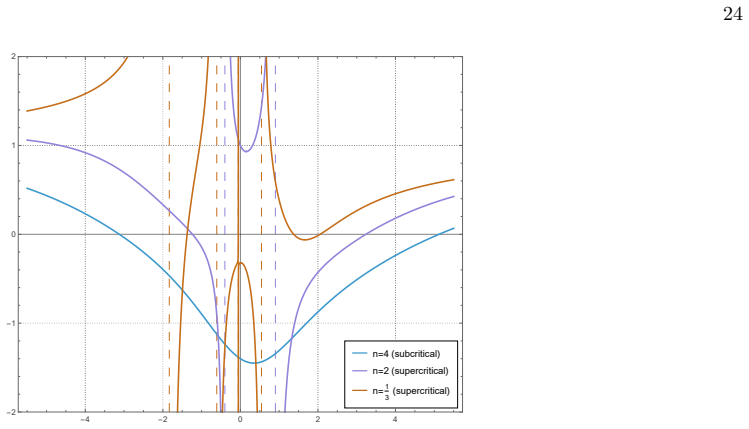
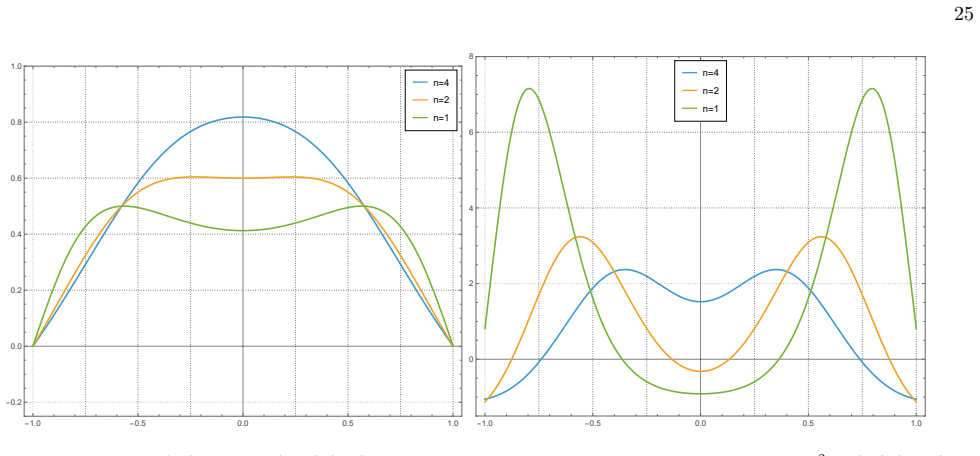
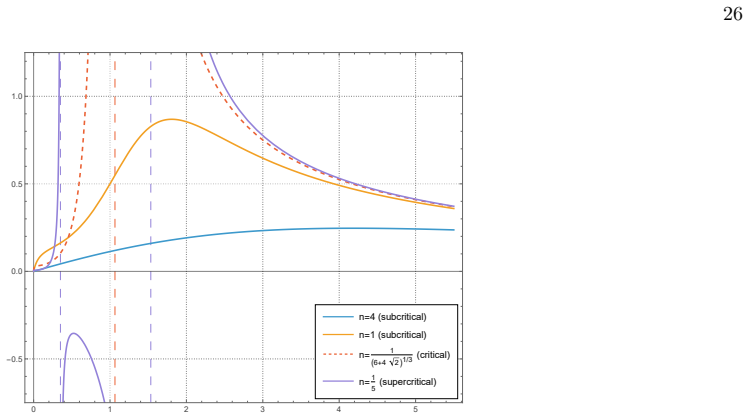
read the original abstract
We classify 4-dimensional gravitational theories with integrability properties analogous to quasi-topological gravity, but for metrics with the symmetries of spherical, hyperbolic, and planar Schwarzschild and Taub-NUT solutions, their double-Wick-rotated counterparts - the B-metrics, the near-horizon extreme Kerr, and the swirling universe - and the Eguchi-Hanson instanton. These are the symmetries that allow consistent reductions (principle of symmetric criticality) with 4 Killing vectors and 3-dimensional orbits. Considering theories depending only on the Riemann tensor, we show that, for these metrics, only those with third-order equations (second-order after trivial integration) can be analytic in the Riemann tensor. We show that there is a unique theory with first-order field equations (algebraic after trivial integration, with the same integrability as general relativity) at each order in curvature and construct regular static black holes from infinite towers of these high-energy corrections to general relativity. For these theories, we obtain closed-form solutions for all the symmetries listed above, which we analyze to ensure they have a clear physical interpretation.
Editorial analysis
A structured set of objections, weighed in public.
Referee Report
Summary. The manuscript classifies 4-dimensional Riemann-only gravitational theories that admit integrability properties analogous to quasi-topological gravity for metrics possessing the symmetries of spherical/hyperbolic/planar Schwarzschild, Taub-NUT, B-metrics, near-horizon extreme Kerr, swirling universes, and the Eguchi-Hanson instanton (i.e., 4 Killing vectors with 3-dimensional orbits, reduced via the principle of symmetric criticality). It shows that analyticity in the Riemann tensor is possible only for theories whose equations are third-order (second-order after trivial integration), identifies a unique theory with first-order field equations (algebraic after integration, preserving GR-like integrability) at each curvature order, and constructs regular static black holes from infinite towers of these corrections, yielding closed-form solutions for all listed symmetries that are analyzed for physical interpretation.
Significance. If the uniqueness result and constructions hold, the work systematically extends the quasi-topological program to a broader set of symmetries, supplying an explicit method to build infinite families of higher-curvature corrections that retain the same integrability as general relativity on these reduced spacetimes. The closed-form regular black-hole solutions constitute a concrete strength, permitting direct examination of horizons, thermodynamics, and asymptotic behavior without numerical integration. The classification under the stated symmetry assumptions provides a useful organizing principle for model-building in modified gravity.
minor comments (2)
- [Abstract] The abstract states that 'only those with third-order equations can be analytic in the Riemann tensor' and that 'there is a unique theory... at each order'; a one-sentence outline of the algebraic reduction procedure would improve accessibility without lengthening the abstract.
- The reduction via the principle of symmetric criticality is invoked for all listed symmetries; a brief remark confirming that the 4-Killing-vector, 3-orbit condition is satisfied uniformly (with a reference to the relevant Killing-vector algebra) would clarify the scope.
Simulated Author's Rebuttal
We thank the referee for the positive summary, significance assessment, and recommendation of minor revision. No specific major comments were raised in the report.
Circularity Check
No significant circularity detected
full rationale
The derivation classifies Riemann-only theories compatible with the listed 4-Killing-vector reductions (via symmetric criticality) and solves the resulting algebraic conditions order-by-order to obtain uniqueness of first-order (post-integration) equations at each curvature order. This uniqueness is obtained by direct enumeration of invariants satisfying the integrability and analyticity constraints imposed by the symmetries; it does not reduce to a fitted parameter, a self-definition, or a self-citation chain. Explicit closed-form black-hole solutions are then constructed by integrating the same algebraic equations on the symmetric ansätze, preserving the stated integrability property without tautological renaming or smuggling of ansätze. The argument is therefore self-contained against the external benchmarks of the symmetry reductions and the algebraic integrability requirement.
Axiom & Free-Parameter Ledger
axioms (2)
- domain assumption Theories depend only on the Riemann tensor
- domain assumption Symmetries allow consistent reductions with 4 Killing vectors and 3-dimensional orbits
Forward citations
Cited by 1 Pith paper
-
Null geodesic defocusing in dynamical black-hole-to-white-hole transitions
Dynamical black-hole-to-white-hole transitions require a violation of the null convergence condition for the trapped region to disappear and the anti-trapped region to form.
Reference graph
Works this paper leans on
-
[1]
The unboundedness of curvature invariants already appears form= 2ℓ/(3 √
+ϵ, withϵ >0; hence, the limiting curvature is satisfied in this restricted sense. The unboundedness of curvature invariants already appears form= 2ℓ/(3 √
-
[2]
at the root of the denomina- tor. If 0< m <2ℓ/(3 √ 6), then the above function diverges at the two positive rootsr i of the denominator, 0<2m < r 1 < r2 < √ 2ℓ,18 which correspond to curvature singularities and split the solution in three separate spacetimes. The partr∈(0, r 1) describes a solution with a regular centerr= 0 and a horizon atr= 2m, but sing...
-
[3]
Beyond the critical valuem <2ℓ/(3 √
-
[4]
The branch extending tor→ ∞corresponds to an asymptotically flat singular black hole with a single horizon
the solution describes three distinct spacetimes (depending on the range ofr) all of which are singular. The branch extending tor→ ∞corresponds to an asymptotically flat singular black hole with a single horizon. whose GR limit,ℓ→0, recovers the s./h./p. Schwarzschild–(A)dS black holes (2.7) (withn= 0). Introducing the effective cosmological constant Λeff...
-
[5]
+ 1 4(R2 0 −5R 2 1)(R2 +R 3)− R 0R2R3 =− R3 108 + 16R 3 Φ11 2 + 32Φ11 2(Ψ2 + ¯Ψ2)−4R(Ψ 2 2 + ¯Ψ2 2)−56(Ψ 2 3 + ¯Ψ2 3), Lodd (3) = 5 4 R2 0R1 − 7 4 R3 1 − 3 2 R0R1(R2 +R 3) +R 1R2R3 = 32iΦ11 2( ¯Ψ2 −Ψ 2) + 4iR(Ψ2 2 − ¯Ψ2
-
[6]
(C8) Each term of the reduced theories arises uniquely as the reduction of an independent invariant, except for the terms cubic in the Weyl tensor
+ 56i(Ψ2 3 − ¯Ψ2 3). (C8) Each term of the reduced theories arises uniquely as the reduction of an independent invariant, except for the terms cubic in the Weyl tensor. In this case, two independent parity-even invariants exist,C abcdCcdef Cef ab and CacbdCcedf Ceaf b, together with two independent parity-odd invariants, ˜CabcdCcdef Cef ab and ˜CacbdCcedf...
-
[7]
+ 16R 3 i 4Φ11 2(Ψ2 − ¯Ψ2)−7(Ψ 2 3 − ¯Ψ2 3) + 128iΦ11 2(Ψ2 2 − ¯Ψ2 2) −240i(Ψ 2 4 − ¯Ψ2 4). (C14) Unlike the previous cases, quartic and higher orders may exhibit another kind of ambiguity due to the growing number of independent invariants that reduce to equivalent expressions for the general TNT metric (2.2), especially those involving Weyl tensors. We ...
-
[8]
+ 8 3 R2 4iΦ11 2(Ψ2 − ¯Ψ2)−7i(Ψ 2 3 − ¯Ψ2 3) + 16R 8iΦ11 2(Ψ2 2 − ¯Ψ2 2)−15i(Ψ 2 4 − ¯Ψ2 4) + 512iΦ11 2(Ψ2 3 − ¯Ψ2 3)− 4992 5 i(Ψ2 5 − ¯Ψ2 5). (C17) We again construct only a single covariant representative for each theory, using curvature invariants where the Weyl tensors are contracted over antisymmetric pairs of indices only, as motivated by (B15). Thi...
-
[9]
J. Oliva and S. Ray, A new cubic theory of gravity in five dimensions: Black hole, Birkhoff’s theorem and C-function, Class. Quant. Grav.27, 225002 (2010), arXiv:1003.4773 [gr-qc]
Pith/arXiv arXiv 2010
-
[10]
R. C. Myers and B. Robinson, Black Holes in Quasi-topological Gravity, JHEP2010(8), 067, arXiv:1003.5357 [gr-qc]
-
[11]
M. H. Dehghani, A. Bazrafshan, R. B. Mann, M. R. Mehdizadeh, M. Ghanaatian, and M. H. Vahidinia, Black Holes in Quartic Quasitopological Gravity, Phys. Rev. D85, 104009 (2012), arXiv:1109.4708 [hep-th]
Pith/arXiv arXiv 2012
-
[12]
J. Oliva and S. Ray, Classification of Six Derivative Lagrangians of Gravity and Static Spherically Symmetric Solutions, Phys. Rev. D82, 124030 (2010), arXiv:1004.0737 [gr-qc]
Pith/arXiv arXiv 2010
-
[13]
A. Cisterna, L. Guajardo, M. Hassaine, and J. Oliva, Quintic quasi-topological gravity, JHEP2017(4), 066, arXiv:1702.04676 [hep-th]
-
[14]
R. A. Hennigar, D. Kubizˇ n´ ak, and R. B. Mann, Generalized quasitopological gravity, Phys. Rev. D95, 104042 (2017), arXiv:1703.01631 [hep-th]
Pith/arXiv arXiv 2017
- [15]
- [16]
- [17]
-
[18]
J. Moreno and A. J. Murcia, Classification of generalized quasitopological gravities, Phys. Rev. D108, 044016 (2023), arXiv:2304.08510 [gr-qc]
arXiv 2023
- [19]
-
[20]
H. Maeda, S. Willison, and S. Ray, Lovelock black holes with maximally symmetric horizons, Class. Quant. Grav.28, 165005 (2011), arXiv:1103.4184 [gr-qc]
Pith/arXiv arXiv 2011
- [21]
- [22]
- [23]
- [24]
- [25]
-
[26]
P. Bueno and P. A. Cano, Einsteinian cubic gravity, Phys. Rev. D94, 104005 (2016), arXiv:1607.06463 [hep-th]
Pith/arXiv arXiv 2016
-
[27]
Gao, Generalized modified gravity with the second order acceleration equation, Phys
C. Gao, Generalized modified gravity with the second order acceleration equation, Phys. Rev. D86, 103512 (2012), arXiv:1208.2790 [gr-qc]
Pith/arXiv arXiv 2012
-
[28]
S. Deser, O. Sarioglu, and B. Tekin, Spherically symmetric solutions of Einstein + non-polynomial gravities, Gen. Rel. Grav.40, 1 (2008), arXiv:0705.1669 [gr-qc]
Pith/arXiv arXiv 2008
-
[29]
A. Coll´ eaux and s. Zerbini, Modified Gravity Models Admitting Second Order Equations of Motion, Entropy17, 6643 (2015), arXiv:1508.06178 [gr-qc]
Pith/arXiv arXiv 2015
-
[30]
S. Chinaglia, A. Coll´ eaux, and S. Zerbini, A non-polynomial gravity formulation for Loop Quantum Cosmology bounce, Galaxies5, 51 (2017), arXiv:1708.08667 [gr-qc]
Pith/arXiv arXiv 2017
-
[31]
E. Bellini, R. Di Criscienzo, L. Sebastiani, and S. Zerbini, Black Hole entropy for two higher derivative theories of gravity, Entropy12, 2186 (2010), arXiv:1009.4816 [gr-qc]
Pith/arXiv arXiv 2010
-
[32]
A. Coll´ eaux, S. Chinaglia, and S. Zerbini, Nonpolynomial Lagrangian approach to regular black holes, Int. J. Mod. Phys. D27, 1830002 (2018), arXiv:1712.03730 [gr-qc]
Pith/arXiv arXiv 2018
-
[33]
Colleaux,Regular black hole and cosmological spacetimes in Non-Polynomial Gravity theories, Ph.D
A. Colleaux,Regular black hole and cosmological spacetimes in Non-Polynomial Gravity theories, Ph.D. thesis, Trento U. (2019)
2019
-
[34]
G. Kunstatter, H. Maeda, and T. Taves, Designer black holes from new 2D gravity (2015), arXiv:1509.04243 [gr-qc]
Pith/arXiv arXiv 2015
-
[35]
G. Kunstatter, H. Maeda, and T. Taves, New 2D dilaton gravity for nonsingular black holes, Class. Quant. Grav.33, 105005 (2016), arXiv:1509.06746 [gr-qc]
Pith/arXiv arXiv 2016
- [36]
-
[37]
Borissova, All 2Dgeneralised dilaton theories fromd≥4 gravities (2026), arXiv:2603.06786 [hep-th]
J. Borissova, All 2Dgeneralised dilaton theories fromd≥4 gravities (2026), arXiv:2603.06786 [hep-th]
Pith/arXiv arXiv 2026
-
[38]
V. P. Frolov, A. Koek, J. P. Soto, and A. Zelnikov, Regular black holes inspired by quasitopological gravity, Phys. Rev. D111, 044034 (2025), arXiv:2411.16050 [gr-qc]
arXiv 2025
- [39]
-
[40]
J. Borissova and R. Carballo-Rubio, Regular black holes from pure gravity in four dimensions (2026), arXiv:2602.16773 [gr-qc]
Pith/arXiv arXiv 2026
-
[41]
J. Borissova and J. Magueijo, Modified Friedmann equations and non-singular cosmologies ind= 4 non-polynomial 38 quasi-topological gravities (2026), arXiv:2603.17654 [gr-qc]
arXiv 2026
-
[42]
Lovelock, The uniqueness of the Einstein field equations in a four-dimensional space, Arch
D. Lovelock, The uniqueness of the Einstein field equations in a four-dimensional space, Arch. Ration. Mech. Anal.33, 54 (1969)
1969
-
[43]
M. Crisostomi, K. Noui, C. Charmousis, and D. Langlois, Beyond Lovelock gravity: Higher derivative metric theories, Phys. Rev. D97, 044034 (2018), arXiv:1710.04531 [hep-th]
Pith/arXiv arXiv 2018
-
[44]
P. Bueno, P. A. Cano, R. A. Hennigar, and R. B. Mann, NUTs and bolts beyond Lovelock, JHEP2018(10), 095, arXiv:1808.01671 [hep-th]
-
[45]
A. Coll´ eaux, I. Kol´ aˇ r, and T. M´ alek, Double Wick rotations between symmetries of Taub-NUT, near-horizon extreme Kerr, and swirling spacetimes, Phys. Rev. D112, 124040 (2025), arXiv:2509.22309 [gr-qc]
arXiv 2025
-
[46]
P. A. Cano and D. Pere˜ niguez, Extremal Rotating Black Holes in Einsteinian Cubic Gravity, Phys. Rev. D101, 044016 (2020), arXiv:1910.10721 [hep-th]
arXiv 2020
-
[47]
M. H. Dehghani and R. B. Mann, NUT-charged black holes in Gauss-Bonnet gravity, Phys. Rev. D72124006, arXiv:hep- th/0510083 [hep-th]
-
[48]
M. H. Dehghani and S. H. Hendi, Taub-NUT/bolt black holes in Gauss-Bonnet-Maxwell gravity, Phys. Rev. D73084021, arXiv:hep-th/0602069 [hep-th]
-
[49]
S. H. Hendi and M. H. Dehghani, Taub-NUT Black Holes in Third order Lovelock Gravity, Phys. Lett. B666116–120, arXiv:0802.1813 [hep-th]
- [50]
- [51]
-
[52]
A. H. Taub, Empty space-times admitting a three parameter group of motions, Annals Math.53, 472 (1951)
1951
-
[53]
Newman, L
E. Newman, L. Tamburino, and T. Unti, Empty space generalization of the Schwarzschild metric, J. Math. Phys.4, 915 (1963)
1963
-
[54]
J. B. Griffiths and J. Podolsk´ y,Exact Space-Times in Einstein’s General Relativity, Cambridge Monographs on Mathe- matical Physics (Cambridge University Press, Cambridge, 2009)
2009
-
[55]
J. M. Bardeen and G. T. Horowitz, The Extreme Kerr throat geometry: A Vacuum analog ofAdS 2 ×S 2, Phys. Rev. D 60, 104030 (1999), arXiv:hep-th/9905099
Pith/arXiv arXiv 1999
-
[56]
H. K. Kunduri, J. Lucietti, and H. S. Reall, Near-horizon symmetries of extremal black holes, Class. Quant. Grav.24, 4169 (2007), arXiv:0705.4214 [hep-th]
Pith/arXiv arXiv 2007
-
[57]
G. W. Gibbons, A. H. Mujtaba, and C. N. Pope, Ergoregions in Magnetised Black Hole Spacetimes, Class. Quant. Grav. 30, 125008 (2013), arXiv:1301.3927 [gr-qc]
Pith/arXiv arXiv 2013
-
[58]
M. Astorino, R. Martelli, and A. Vigan` o, Black holes in a swirling universe, Phys. Rev. D106, 064014 (2022), arXiv:2205.13548 [gr-qc]
arXiv 2022
-
[59]
Eguchi and A
T. Eguchi and A. J. Hanson, Asymptotically Flat Selfdual Solutions to Euclidean Gravity, Phys. Lett. B74, 249 (1978)
1978
-
[60]
Ehlers and W
J. Ehlers and W. Kundt, Exact solutions of the gravitational field equations, inGravitation: An Introduction to Current Research, edited by L. Witten (Wiley, 1962) pp. 49–101
1962
-
[61]
J. R. Gott, Tachyon singularity: A spacelike counterpart of the schwarzschild black hole, Il Nuovo Cimento B Series 11 22, 49–69 (1974)
1974
-
[62]
W. B. Bonnor, Static Magnetic Fields in General Relativity, Proc. Roy. Soc. Lond. A67, 225 (1954)
1954
-
[63]
M. A. Melvin, Pure magnetic and electric geons, Phys. Lett.8, 65 (1964)
1964
-
[64]
N. G¨ otzberger and A. Hell, Wick-connected theories and Lorentz violation, arXiv:2606.07243 [hep-th]
-
[65]
M. E. Fels and C. G. Torre, The Principle of symmetric criticality in general relativity, Class. Quant. Grav.19, 641 (2002), arXiv:gr-qc/0108033
Pith/arXiv arXiv 2002
-
[66]
G. Frausto, I. Kol´ aˇ r, T. M´ alek, and C. Torre, Symmetry reduction of gravitational Lagrangians, Phys. Rev. D111, 064062 (2025), arXiv:2410.11036 [gr-qc]
arXiv 2025
-
[67]
J. W. Hicks,Classification of Spacetimes with Symmetry, Ph.D. thesis, Utah State University (2016)
2016
-
[68]
A. Simpson and M. Visser, Black-bounce to traversable wormhole, JCAP2019(02), 042, arXiv:1812.07114 [gr-qc]
-
[69]
T. Antonelli and M. Sebastianutti, Singularity and differentiability at the origin of regular black holes (2025), arXiv:2509.15477 [gr-qc]
arXiv 2025
-
[70]
B. L. Giacchini, T. d. P. Netto, and L. Modesto, Action principle selection of regular black holes, Phys. Rev. D104, 084072 (2021), arXiv:2105.00300 [gr-qc]
arXiv 2021
-
[71]
V. P. Frolov, Notes on nonsingular models of black holes, Phys. Rev. D94, 104056 (2016), arXiv:1609.01758 [gr-qc]
Pith/arXiv arXiv 2016
-
[72]
O. Hruˇ ska and J. Podolsk´ y, InterpretingAandB-metrics with Λ as gravitational field of a tachyon in (anti-)de Sitter universe, Phys. Rev. D99, 084037 (2019), arXiv:1808.03508 [gr-qc]
Pith/arXiv arXiv 2019
-
[73]
H. K. Kunduri and J. Lucietti, Uniqueness of near-horizon geometries of rotating extremal AdS(4) black holes, Class. Quant. Grav.26, 055019 (2009), arXiv:0812.1576 [hep-th]
Pith/arXiv arXiv 2009
- [74]
-
[75]
Di Pinto,Charged and Rotating Black Holes in a Melvin-swirling Universe, Ph.D
A. Di Pinto,Charged and Rotating Black Holes in a Melvin-swirling Universe, Ph.D. thesis, Milan U. (2024), arXiv:2407.11270 [gr-qc]
arXiv 2024
-
[76]
Witten, Instability of the Kaluza-Klein Vacuum, Nucl
E. Witten, Instability of the Kaluza-Klein Vacuum, Nucl. Phys. B195, 481 (1982)
1982
-
[77]
O. Aharony, M. Fabinger, G. T. Horowitz, and E. Silverstein, Clean time dependent string backgrounds from bubble 39 baths, JHEP2002(07), 007, arXiv:hep-th/0204158
-
[78]
G. T. Horowitz and K. Maeda, Colliding Kaluza-Klein bubbles, Class. Quant. Grav.19, 5543 (2002), arXiv:hep- th/0207270
arXiv 2002
-
[79]
J. Podolsk´ y, O. Hruˇ ska, and J. B. Griffiths, Non-expanding Pleba´ nski–Demia´ nski space-times, Class. Quant. Grav.35, 165011 (2018), arXiv:1804.01519 [gr-qc]
arXiv 2018
-
[80]
D. Klemm, V. Moretti, and L. Vanzo, Rotating topological black holes, Phys. Rev. D57, 6127 (1998), [Erratum: Phys.Rev.D 60, 109902 (1999)], arXiv:gr-qc/9710123
Pith/arXiv arXiv 1998
discussion (0)
Sign in with ORCID, Apple, or X to comment. Anyone can read and Pith papers without signing in.