Tropical WKB asymptotics of NRS coordinates for opers in SU(2), N_f=4 theory
Pith reviewed 2026-06-26 23:04 UTC · model grok-4.3
The pith
In unimodular chambers the leading logarithms of NRS coordinates for SL(2) opers on the four-punctured sphere match the Seiberg-Witten periods of the N=2 SU(2) theory with four flavors, up to flavor shifts.
A machine-rendered reading of the paper's core claim, the machinery that carries it, and where it could break.
Core claim
Tropicalizing the exact WKB formulae and NRS relations yields a chamberwise integer affine linear system whose solutions give the leading logarithms of the NRS coordinates; when the system is unimodular and the cycles form a primitive symplectic pair, these logarithms agree with the Seiberg-Witten periods of the N=2 SU(2) N_f=4 theory up to flavor-period shifts.
What carries the argument
The chamberwise integer affine linear system obtained by tropicalizing the NRS relations together with the exact WKB connection formulae.
If this is right
- In the weak-coupling degeneration the NRS chart can be chosen compatibly with the plumbing limit so that the chamber remains unimodular and non-degenerate away from tropical walls.
- The leading asymptotics are recovered only up to flavor-period shifts rather than exactly.
- No global coordinate-independent recovery of the Seiberg-Witten periods is obtained; non-unimodular chambers are treated as chart limitations.
Where Pith is reading between the lines
- The same tropicalization procedure could be applied to other opers or higher-rank groups once suitable unimodular NRS charts are identified.
- The method provides a concrete bridge between exact WKB data on the four-punctured sphere and the geometry of the Seiberg-Witten curve in specific chambers.
- Extensions to theories with different numbers of flavors would require checking whether unimodular charts exist in the corresponding moduli spaces.
Load-bearing premise
The analysis is restricted to chambers in which the tropicalized NRS system is unimodular and the selected cycles form a primitive symplectic pair.
What would settle it
Direct computation of the solved leading logarithms from the tropical linear system in a chosen unimodular chamber, followed by numerical comparison to the Seiberg-Witten periods (shifted by flavor periods), would show mismatch if the claimed agreement fails.
Figures






read the original abstract
We study the semiclassical limit of SL_2-opers on the four-punctured sphere in Nekrasov-Rosly-Shatashvili Darboux coordinates. Using exact Wentzel-Kramers-Brillouin (WKB) connection formulae, we express the trace coordinates of the corresponding SL_2(C) character variety as finite Laurent sums of Voros exponentials. Tropicalizing these formulae and the NRS relations gives a chamberwise integer affine linear system for the leading logarithms of the NRS coordinates. In chambers where this system is unimodular and the selected cycles form a primitive symplectic pair, the leading asymptotics agree, up to flavor-period shifts, with Seiberg-Witten periods of the N=2 SU(2) theory with N_f=4 fundamental hypermultiplets. We verify this mechanism in a sample chamber and in the weak-coupling degeneration. No global coordinate-independent recovery theorem is claimed; non-unimodular or degenerate chambers are treated as limitations of the chosen NRS chart. In the weak-coupling degeneration, we show that the NRS chart can be chosen compatibly with the plumbing limit so that the resulting chamber is unimodular and non-degenerate away from tropical walls.
Editorial analysis
A structured set of objections, weighed in public.
Referee Report
Summary. The manuscript studies the semiclassical limit of SL_2-opers on the four-punctured sphere in Nekrasov-Rosly-Shatashvili (NRS) Darboux coordinates. Exact WKB connection formulae are used to express trace coordinates of the SL_2(C) character variety as finite Laurent sums of Voros exponentials. Tropicalization of these formulae together with the NRS relations produces a chamberwise integer affine linear system for the leading logarithms of the NRS coordinates. In chambers where this system is unimodular and the selected cycles form a primitive symplectic pair, the leading asymptotics agree, up to flavor-period shifts, with the Seiberg-Witten periods of the N=2 SU(2) theory with N_f=4 fundamental hypermultiplets. The mechanism is verified explicitly in a sample chamber and in the weak-coupling degeneration (with compatible plumbing); non-unimodular or degenerate chambers are treated as limitations of the chosen NRS chart, and no global coordinate-independent recovery theorem is claimed.
Significance. If the result holds, the work supplies a concrete, chamberwise link between tropicalized WKB asymptotics of NRS coordinates and Seiberg-Witten periods for this specific theory, with explicit verification supplied rather than a general theorem. The scoped nature of the claim (unimodular chambers with primitive symplectic pairs) and the compatible plumbing construction in the weak-coupling limit are strengths that make the contribution precise and falsifiable within its stated domain.
minor comments (1)
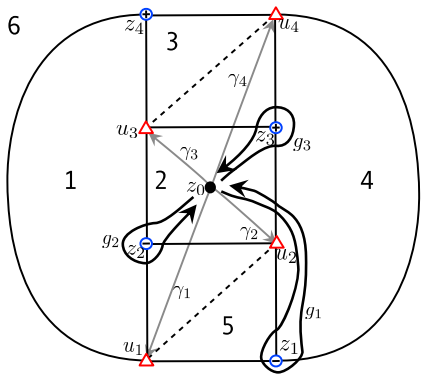
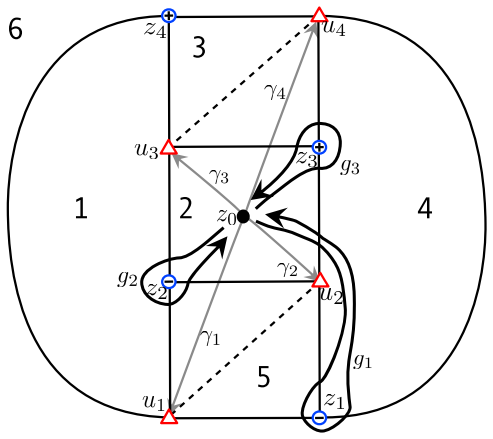
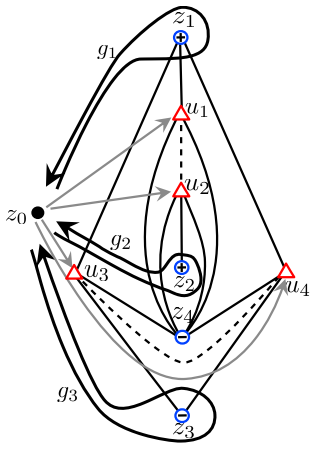
- The description of the sample chamber used for verification could include an explicit label or reference to the corresponding figure or equation set to improve traceability for readers.
Simulated Author's Rebuttal
We thank the referee for their positive summary of the manuscript and for recommending acceptance. There are no major comments requiring a point-by-point response.
Circularity Check
No significant circularity
full rationale
The derivation proceeds from exact WKB connection formulae to express trace coordinates as Laurent sums of Voros exponentials, then tropicalizes both those formulae and the NRS relations to obtain an integer affine linear system whose solutions supply the leading logarithms. Agreement with independently known Seiberg-Witten periods is stated only inside explicitly scoped chambers (unimodular system + primitive symplectic pair) and is presented as an output of that system rather than an input or fitted parameter. Non-unimodular chambers are treated as chart limitations, not asserted globally. No self-definitional equations, fitted-input predictions, or load-bearing self-citations appear; the central claim remains independent of its own fitted values and is externally falsifiable against the Seiberg-Witten periods.
Axiom & Free-Parameter Ledger
Reference graph
Works this paper leans on
-
[1]
Four-dimensional wall-crossing via three-dimensional field theory
Davide Gaiotto, Gregory W. Moore, and Andrew Neitzke. Four-dimensional wall-crossing via three-dimensional field theory.Commun. Math. Phys., 299(1):163–224, October 2010. ISSN 0010-3616, 1432-0916. doi: 10.1007/s00220-010-1071-2. URLhttp://arxiv.org/ abs/0807.4723. arXiv: 0807.4723
work page internal anchor Pith review Pith/arXiv arXiv doi:10.1007/s00220-010-1071-2 2010
-
[2]
Davide Gaiotto, Gregory W. Moore, and Andrew Neitzke. Wall-crossing, Hitchin Systems, and the WKB Approximation.arXiv:0907.3987 [hep-th], September 2011. URLhttp: //arxiv.org/abs/0907.3987. arXiv: 0907.3987
Pith/arXiv arXiv 2011
- [3]
-
[4]
Darboux coordinates, Yang-Yang functional, and gauge theory
Nikita Nekrasov, Alexey Rosly, and Samson Shatashvili. Darboux coordinates, Yang-Yang functional, and gauge theory.arXiv:1103.3919 [hep-th], October 2013. doi: 10.1016/j. nuclphysbps.2011.04.150. URLhttp://arxiv.org/abs/1103.3919. arXiv: 1103.3919
work page internal anchor Pith review Pith/arXiv arXiv doi:10.1016/j 2013
-
[5]
Monopole Condensation, And Confinement In N=2 Supersymmetric Yang-Mills Theory
N. Seiberg and E. Witten. Monopole Condensation, And Confinement In N=2 Super- symmetric Yang-Mills Theory.Nuclear Physics B, 426(1):19–52, September 1994. ISSN 26 05503213. doi: 10.1016/0550-3213(94)90124-4. URLhttp://arxiv.org/abs/hep-th/ 9407087. arXiv: hep-th/9407087
work page internal anchor Pith review Pith/arXiv arXiv doi:10.1016/0550-3213(94)90124-4 1994
-
[6]
Monopoles, Duality and Chiral Symmetry Breaking in N=2 Supersymmetric QCD
N. Seiberg and E. Witten. Monopoles, Duality and Chiral Symmetry Breaking in N=2 Supersymmetric QCD.Nuclear Physics B, 431(3):484–550, December 1994. ISSN 05503213. doi: 10.1016/0550-3213(94)90214-3. URLhttp://arxiv.org/abs/hep-th/ 9408099. arXiv: hep-th/9408099
work page internal anchor Pith review Pith/arXiv arXiv doi:10.1016/0550-3213(94)90214-3 1994
-
[7]
Daniel S. Freed. Special kahler manifolds.Communications in Mathematical Physics, 203 (1):31–52, May 1999. ISSN 1432-0916. doi: 10.1007/s002200050604. URLhttp://dx. doi.org/10.1007/s002200050604
-
[8]
N=2 dualities.J
Davide Gaiotto. N=2 dualities.J. High Energ. Phys., 2012(8):34, August 2012. ISSN 1029-
2012
-
[9]
doi: 10.1007/JHEP08(2012)034. URLhttp://arxiv.org/abs/0904.2715. arXiv: 0904.2715
work page internal anchor Pith review Pith/arXiv arXiv doi:10.1007/jhep08(2012)034 2012
-
[10]
N. J. Hitchin. The self-duality equations on a Riemann surface.Proc. London Math. Soc, page 55, 1987
1987
-
[11]
N. J. Hitchin. Stable bundles and integrable systems.Duke Mathematical Journal, 54(1): 91 – 114, 1987. doi: 10.1215/S0012-7094-87-05408-1. URLhttps://doi.org/10.1215/ S0012-7094-87-05408-1
-
[12]
Ron Donagi and Edward Witten. Supersymmetric yang-mills theory and integrable sys- tems.Nuclear Physics B, 460(2):299–334, February 1996. ISSN 0550-3213. doi: 10.1016/ 0550-3213(95)00609-5. URLhttp://dx.doi.org/10.1016/0550-3213(95)00609-5
-
[13]
Ron Y. Donagi. Seiberg-Witten integrable systems.arXiv:alg-geom/9705010, May 1997. URLhttp://arxiv.org/abs/alg-geom/9705010. arXiv: alg-geom/9705010
Pith/arXiv arXiv 1997
-
[14]
Kanehisa Takasaki. Spectral Curves and Whitham Equations in Isomonodromic Problems of Schlesinger Type.arXiv:solv-int/9704004, November 1997. URLhttp://arxiv.org/ abs/solv-int/9704004. arXiv: solv-int/9704004
Pith/arXiv arXiv 1997
-
[15]
Emil J. Martinec and Nicholas P. Warner. Integrable systems and supersymmetric gauge theory.Nuclear Physics B, 459(1-2):97–112, January 1996. ISSN 0550-3213. doi: 10.1016/ 0550-3213(95)00588-9. URLhttp://dx.doi.org/10.1016/0550-3213(95)00588-9
-
[16]
A. Gorsky, I. Krichever, A. Marshakov, A. Mironov, and A. Morozov. Integrability and seiberg-witten exact solution.Physics Letters B, 355(3-4):466–474, August 1995. ISSN 0370-2693. doi: 10.1016/0370-2693(95)00723-x. URLhttp://dx.doi.org/10.1016/ 0370-2693(95)00723-X
-
[17]
Eric D’Hoker and D.H. Phong. Calogero-moser systems in su(n) seiberg-witten the- ory.Nuclear Physics B, 513(1-2):405–444, March 1998. ISSN 0550-3213. doi: 10.1016/ s0550-3213(97)00763-3. URLhttp://dx.doi.org/10.1016/S0550-3213(97)00763-3
-
[18]
Solutions of four-dimensional field theories via m-theory.Nuclear Physics B, 500(1-3):3–42, 1997
Edward Witten. Solutions of four-dimensional field theories via m-theory.Nuclear Physics B, 500(1-3):3–42, 1997. ISSN 0550-3213. doi: 10.1016/s0550-3213(97)00416-1. URLhttp: //dx.doi.org/10.1016/S0550-3213(97)00416-1
-
[19]
Self-Dual Strings and N=2 Supersymmetric Field Theory
A. Klemm, W. Lerche, P. Mayr, C. Vafa, and N. Warner. Self-Dual Strings and N=2 Supersymmetric Field Theory.Nuclear Physics B, 477(3):746–764, October 1996. ISSN 05503213. doi: 10.1016/0550-3213(96)00353-7. URLhttp://arxiv.org/abs/hep-th/ 9604034. arXiv: hep-th/9604034. 27
work page internal anchor Pith review Pith/arXiv arXiv doi:10.1016/0550-3213(96)00353-7 1996
-
[20]
The Omega Deformation, Branes, Integrability, and Liouville Theory
Nikita Nekrasov and Edward Witten. The Omega Deformation, Branes, Integrability, and Liouville Theory.J. High Energ. Phys., 2010(9):92, September 2010. ISSN 1029-8479. doi: 10.1007/JHEP09(2010)092. URLhttp://arxiv.org/abs/1002.0888. arXiv: 1002.0888 version: 2
work page internal anchor Pith review Pith/arXiv arXiv doi:10.1007/jhep09(2010)092 2010
-
[21]
Opers.arXiv:math/0501398, January 2005
Alexander Beilinson and Vladimir Drinfeld. Opers.arXiv:math/0501398, January 2005. URLhttp://arxiv.org/abs/math/0501398. arXiv: math/0501398
Pith/arXiv arXiv 2005
-
[22]
Electric-magnetic duality and the geometric lang- lands program, 2007
Anton Kapustin and Edward Witten. Electric-magnetic duality and the geometric lang- lands program, 2007. URLhttps://arxiv.org/abs/hep-th/0604151
Pith/arXiv arXiv 2007
-
[23]
Opers, surface defects, and Yang-Yang functional
Saebyeok Jeong and Nikita Nekrasov. Opers, surface defects, and Yang-Yang functional. arXiv:1806.08270 [hep-th, physics:math-ph], September 2018. URLhttp://arxiv.org/ abs/1806.08270. arXiv: 1806.08270
arXiv 2018
-
[24]
V. V. Fock and A. A. Rosly. Poisson structure on moduli of flat connections on Riemann surfaces andr-matrix.arXiv:math/9802054, February 1998. URLhttp://arxiv.org/ abs/math/9802054. arXiv: math/9802054
arXiv 1998
-
[25]
A. Voros. The return of the quartic oscillator. The complex WKB method.Annales De L Institut Henri Poincare-physique Theorique, 39:211–338, 1983
1983
-
[26]
American Mathematical Society, 2005
Takahiro Kawai and Yoshitsugu Takei.Algebraic Analysis of Singular Perturbation Theory, volume 227 ofTranslations of Mathematical Monographs. American Mathematical Society, 2005
2005
-
[27]
Kohei Iwaki and Tomoki Nakanishi. Exact WKB analysis and cluster algebras.Journal of Physics A: Mathematical and Theoretical, 47(47):474009, 2014. doi: 10.1088/1751-8113/ 47/47/474009
-
[28]
Dylan G. L. Allegretti. Voros symbols as cluster coordinates.Journal of Topology, 12(4): 1031–1068, 2019. doi: 10.1112/topo.12106. 28
discussion (0)
Sign in with ORCID, Apple, or X to comment. Anyone can read and Pith papers without signing in.