mathcal{P},mathcal{T}-odd Faraday rotation on atoms and molecules in intra-cavity absorption spectroscopy as an alternative way to search for the mathcal{P},mathcal{T}-odd effects in nature
Pith reviewed 2026-05-24 14:55 UTC · model grok-4.3
The pith
P,T-odd Faraday rotation observed via cavity-enhanced polarimetry on atoms and molecules could improve the electron electric dipole moment limit by 6-7 orders of magnitude.
A machine-rendered reading of the paper's core claim, the machinery that carries it, and where it could break.
Core claim
The P,T-odd Faraday rotation on atoms and molecules in intra-cavity absorption spectroscopy serves as an alternative way to search for the P,T-odd effects in nature, with theoretical simulations showing that the present limit on the eEDM can be improved by 6-7 orders of magnitude through measurements on Tl and Pb atoms, PbF, YbF, ThO, and YbOH.
What carries the argument
The P,T-odd Faraday effect in an external electric field, which rotates the polarization plane of light due to P,T-odd interactions and is detected through cavity-enhanced polarimetry with a beam crossing the cavity.
If this is right
- The current experimental limit on the electron electric dipole moment can be improved by six to seven orders of magnitude.
- This improvement is projected for measurements on Tl and Pb atoms as well as the molecules PbF, YbF, ThO, and YbOH.
- The combination of cavity-enhanced polarimetry with a molecular or atomic beam enables the higher sensitivity compared to standard spin precession methods.
Where Pith is reading between the lines
- If the method works, it could be applied to additional atomic and molecular species beyond those simulated to expand the search for P,T-odd interactions.
- The optical detection approach might allow independent cross-checks against spin-precession results on the same systems.
- Success would imply that cavity-enhanced techniques could be adapted for other precision measurements of weak symmetry-violating effects in similar setups.
Load-bearing premise
The theoretical calculations of effective electric fields and the simulation of the cavity-beam experiment accurately forecast achievable sensitivity without major unaccounted systematic errors or experimental limitations in the polarimetric setup.
What would settle it
Performing the proposed cavity-enhanced polarimetric experiment on one of the listed species and finding that the achieved sensitivity falls short of the predicted 6-7 order improvement due to unaccounted noise or systematics would falsify the central claim.
Figures
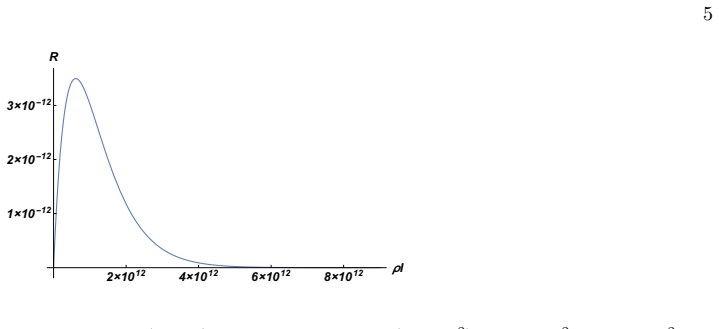
read the original abstract
Present limit on the electron electric dipole moment ($e$EDM) is based on the electron spin precession measurement. We propose an alternative approach - observation of the $\mathcal{P}$,$\mathcal{T}$-odd Faraday effect in an external electric field on atoms and molecules using cavity-enhanced polarimetric scheme in combination with molecular (atomic) beam crossing the cavity. Our calculations of the effective electric fields and theoretical simulation of the proposed experiment on Tl and Pb atoms, PbF, YbF, ThO, and YbOH show that the present limit on the $e$EDM can be improved by 6-7 orders of magnitude.
Editorial analysis
A structured set of objections, weighed in public.
Referee Report
Summary. The manuscript proposes an alternative approach to searches for P,T-odd effects (in particular the electron EDM) via observation of the P,T-odd Faraday rotation in an external electric field, implemented with a cavity-enhanced polarimetric scheme in which an atomic or molecular beam crosses the cavity. Calculations of effective electric fields together with a theoretical simulation of the experiment on Tl, Pb, PbF, YbF, ThO and YbOH are used to project that the present eEDM limit can be improved by 6-7 orders of magnitude.
Significance. If the projected sensitivity gain can be realized, the method would constitute a genuinely independent experimental channel for eEDM searches, complementary to the spin-precession technique that currently sets the limit. The work supplies concrete effective-field values and a simulation framework that could be used to guide future cavity-polarimetry experiments.
major comments (2)
- [theoretical simulation of the proposed experiment] The section describing the theoretical simulation of the cavity-beam experiment does not contain a full end-to-end error budget or Monte-Carlo propagation of realistic experimental imperfections (residual birefringence, laser intensity noise, beam velocity spread, cavity-mirror imperfections). Because the claimed 6-7-order improvement rests directly on the assumed minimum detectable rotation angle, the absence of this analysis is load-bearing for the central claim.
- [Abstract and simulation results] The abstract states the improvement factor but supplies no derivation details, error analysis, or discussion of systematics; the same limitation appears to extend to the main text, preventing an independent assessment of whether the projected sensitivity is robust.
minor comments (2)
- Notation for the P,T-odd Faraday angle and the effective electric field should be introduced once with explicit definitions before being used in the simulation section.
- A short table summarizing the effective fields, assumed beam parameters, and projected rotation sensitivities for each species would improve readability.
Simulated Author's Rebuttal
We thank the referee for the careful reading and constructive comments on our manuscript. We respond point-by-point to the major comments below.
read point-by-point responses
-
Referee: [theoretical simulation of the proposed experiment] The section describing the theoretical simulation of the cavity-beam experiment does not contain a full end-to-end error budget or Monte-Carlo propagation of realistic experimental imperfections (residual birefringence, laser intensity noise, beam velocity spread, cavity-mirror imperfections). Because the claimed 6-7-order improvement rests directly on the assumed minimum detectable rotation angle, the absence of this analysis is load-bearing for the central claim.
Authors: We agree that a full end-to-end error budget with Monte-Carlo propagation of imperfections would allow a more rigorous evaluation of the projected sensitivity. The present work is a theoretical proposal whose simulation assumes idealized conditions and adopts a minimum detectable rotation angle drawn from existing cavity-polarimetry literature. In the revised manuscript we have added an expanded discussion of the dominant potential systematics (including residual birefringence, intensity noise, and velocity spread) together with order-of-magnitude estimates of their impact. A complete Monte-Carlo treatment, however, lies outside the scope of this theoretical study. revision: partial
-
Referee: [Abstract and simulation results] The abstract states the improvement factor but supplies no derivation details, error analysis, or discussion of systematics; the same limitation appears to extend to the main text, preventing an independent assessment of whether the projected sensitivity is robust.
Authors: We have revised the abstract to state briefly that the improvement factor follows from the calculated effective fields and the assumed minimum detectable rotation angle, with a reference to the simulation section. The main text has been expanded with additional paragraphs that outline the key assumptions of the simulation and summarize the main classes of systematics that would need to be controlled experimentally. revision: yes
- Full end-to-end error budget or Monte-Carlo propagation of realistic experimental imperfections (residual birefringence, laser intensity noise, beam velocity spread, cavity-mirror imperfections)
Circularity Check
No significant circularity; proposal rests on independent calculations
full rationale
The paper is a forward-looking proposal for an intra-cavity polarimetric search for P,T-odd effects. Its central claims rest on explicit calculations of effective electric fields for Tl, Pb, PbF, YbF, ThO and YbOH together with a simulation of the cavity-beam geometry; these quantities are computed from first-principles molecular structure methods rather than being fitted to the target observable or renamed from prior results. No self-definitional loops, fitted-input predictions, or load-bearing self-citations appear in the derivation chain. The work therefore remains self-contained against external benchmarks.
Axiom & Free-Parameter Ledger
Reference graph
Works this paper leans on
-
[1]
Khriplovich, Parity Nonconservation in Atomic Phe nomena, Gordon and Breach, London, 1991
I.B. Khriplovich, Parity Nonconservation in Atomic Phe nomena, Gordon and Breach, London, 1991
work page 1991
- [2]
-
[3]
M.S. Safronova, D. Budker, D. DeMille, D.F.J. Kimball, A . Derevianko, C.W. Clark, Rev. Mod. Phys. 90, 025008 (2018)
work page 2018
- [4]
-
[5]
B.C. Regan, E.D. Commins, C.J. Schmidt and D. DeMille, Ph ys. Rev. Lett. 88, 071805 (2002)
work page 2002
-
[6]
J.J. Hudson, D.M. Kara, I.J. Smallman, B.E. Sauer, M. R. T arbutt and E. A. Hinds, Nature 473, 493 (2011)
work page 2011
-
[7]
W.B. Cairncross, D.N. Gresh, M. Grau, K.C. Cossel, T.S. R oussy, Y. Ni, Y. Zhou, J. Ye and E.A. Cornell, Phys.Rev.Lett. 119, 153001 (2017)
work page 2017
- [8]
- [9]
-
[10]
S.G. Porsev, M.S. Safronova and M.G. Kozlov, Phys.Rev. Lett. 108, 173001 (2012)
work page 2012
-
[11]
D.V. Chubukov, L.V. Skripnikov and L.N. Labzowsky, Phy s. Rev. A 97, 062512 (2018)
work page 2018
- [12]
- [13]
-
[14]
N.S. Mosyagin, M.G. Kozlov, and A.V. Titov, J.Phys. B: A t.Mol.Opt.Phys. 31, L763 (1998)
work page 1998
-
[15]
M. Abe, G. Gopakumar, M. Hada, B.P. Das, H. Tatewaki, and D. Mukherjee, Phys. Rev. A 90, 022501 (2014)
work page 2014
-
[16]
L.V. Skripnikov, A.N. Petrov, and A.V. Titov, J.Chem.P hys. 139, 221103 (2013)
work page 2013
- [17]
- [18]
- [19]
-
[20]
A.N. Petrov, N.S. Mosyagin, T.A. Isaev, and A.V. Titov, Phys.Rev. A 76, 030501(R) (2007)
work page 2007
- [21]
- [22]
-
[23]
A.N. Petrov, L.V. Skripnikov, A.V. Titov, and V.V. Flam baum, Phys.Rev. A 98, 042502 (2018)
work page 2018
- [24]
-
[25]
V.G. Gorshkov, L.N. Labzowsky and A.N. Moskalev, ZhETF 76, 414 (1979) [Sov. Phys. JETP 49, 209 (1979)]
work page 1979
-
[26]
M.G. Kozlov, and L.N. Labzowsky, J.Phys. B: At.Mol.Opt .Phys. 28, 1933 (1995)
work page 1933
-
[27]
A.A. Bondarevskaya, D.V. Chubukov, O.Yu. Andreev, E.A . Mistonova, L.N. Labzowsky, G. Plunien, D. Liesen, F. Bosch , J. Phys. B 48, 144007 (2015)
work page 2015
- [28]
- [29]
- [30]
-
[31]
N.B. Baranova, Yu.V. Bogdanov and B.Ya. Zel’dovich, Us p.Fiz.Nauk 123, 349 (1977) [Sov.Phys.Usp. 20, 1977, (1978)]
work page 1977
-
[32]
O.P. Sushkov,and V.V. Flambaum, ZhETF 75, 1208 (1978) [Sov. Phys. JETP 48, 608 (1978)]
work page 1978
- [33]
-
[34]
L. Bougas, G.E. Katsoprinakis, W. von Klitzing and T.P. Rakitzis, Phys. Rev. A 89, 052127 (2014)
work page 2014
-
[35]
V.M. Baev, T. Latz and P.E. Toschek, Appl. Phys. B 69, 171 (1999)
work page 1999
- [36]
- [37]
-
[38]
D.V. Chubukov, L.V. Skripnikov, L.N. Labzowsky, V.N. K utuzov, and S.D. Chekhovskoi, Phys.Rev. A 99, 052515 (2019)
work page 2019
-
[39]
D.V. Chubukov, L.V. Skripnikov, V.N. Kutuzov, S.D. Che khovskoi, and L.N. Labzowsky, Atoms, 7, 56; doi:10.3390/atoms7020056 (2019)
-
[40]
L.N. Labzovsky, Zh. Eksp. Teor. Fiz. 73, 1623 (1977) [Sov. Phys. JETP 46, 853 (1977)]
work page 1977
- [41]
-
[42]
Study of parity violation effects in polar heavy- atom molecule
A.V. Titov, N.S. Mosyagin, A.N. Petrov, T.A. Isaev and D . DeMille, “Study of parity violation effects in polar heavy- atom molecule”, In: Recent Advances in the Theory of Chemical and Physical Systems [”Progress in Theoretical Chemistry and Physics” series] v.15, chapt.2, pp. 253-284 (2006)
work page 2006
-
[43]
Skripnikov, J.Chem.Phys., 147, 021101 (2017)
L.V. Skripnikov, J.Chem.Phys., 147, 021101 (2017)
work page 2017
- [44]
- [45]
- [46]
-
[47]
A.S.P. Gomes, K.G. Dyall and L. Visscher, Theor. Chem. A cc. 127, 369 (2010)
work page 2010
- [48]
-
[49]
L.V. Skripnikov, A.D. Kudashov, A.N. Petrov, A.V. Tito v, Phys.Rev. A 90, 064501 (2014) 7
work page 2014
- [50]
- [51]
-
[52]
Laser cooling of YbF molecules for an improved measurement of the electron electric dipole moment
J.R. Almond, PhD Thesis “Laser cooling of YbF molecules for an improved measurement of the electron electric dipole moment”, Imperial College London (2017)
work page 2017
- [53]
-
[54]
Enhancement factor for the electric dipole moment of the electron in the BaOH and YbOH molecules
M. Denis, P.A.B. Haase, R.G.E. Timmermans, E. Eliav, N. R. Hutzler, A. Borschevsky, arXiv:1901.02265 [physics.at om-ph]
work page internal anchor Pith review Pith/arXiv arXiv 1901
-
[55]
Enhanced sensitivity of the electron electric dipole moment from YbOH: The role of theory
V.S. Prasannaa, N. Shitara, A. Sakurai, M. Abe, B.P. Das , arXiv:1902.09975 [physics.atom-ph]
work page internal anchor Pith review Pith/arXiv arXiv 1902
-
[56]
D.E. Maison, L.V. Skripnikov, V.V. Flambaum, arXiv:19 06.11487 [physics.atom-ph]
-
[57]
Measuring the electric dipole moment of the electron with YbF molecules
J.J. Hudson, PhD Thesis “Measuring the electric dipole moment of the electron with YbF molecules”, University of Su ssex (2001)
work page 2001
- [58]
- [59]
- [60]
-
[61]
Reference Data on Atoms, Mo lecules, and Ions
A.A. Radzig, B.M. Smirnov, “Reference Data on Atoms, Mo lecules, and Ions”, Springer (1985)
work page 1985
- [62]
discussion (0)
Sign in with ORCID, Apple, or X to comment. Anyone can read and Pith papers without signing in.