REVIEW 4 major objections 5 minor 42 references
Bed-Attached Vibration Sensor System: A Machine Learning Approach for Fall Detection in Nursing Homes
T0 review · 4 major / 5 minor · reviewed 2026-08-11 · deepseek-v4-flash
Pith's one-line read Bed-mounted sensor and two-stage AI separate falls from noise in lab tests
desk verdict Sensible system, honest engineering write-up, but the reported precision is inflated by threshold tuning on validation labels. read the letter →
The pith
A machine-rendered reading of the paper's core claim, the machinery that carries it, and where it could break.
The reading
What carries the argument
The load-bearing machinery is the two-stage classifier: a logistic-regression pre-filter that continuously watches five features (maximum, median, mean, and 25th and 75th quantiles) of a zero-mean, squared ten-second vibration window and only triggers the expensive stage on potential events; and a CNN applied to the short-time Fourier transform spectrogram of the triggered window, which learns spectro-temporal patterns that separate human falls from other impacts. The STFT is the bridge that turns a one-dimensional acceleration signal into a two-dimensional, image-like representation the CNN can classify. The sensor side is a capacitive MEMS accelerometer sampled at 1600 Hz on a Teensy 4.1 board, with sensors mounted at two points on the bed frame where test drops produced the strongest signals. The second stage is deliberately small, one convolutional layer with 240 filters, max pooling, and a sigmoid output, so that it runs only when the cheap pre-filter says an event is present.
What would settle it
Record a set of genuine, verified human falls with the same bed-attached sensor, for example supervised fall trials with actors or confirmed incident reports from the field test, and run the trained two-stage pipeline on those signals. If the CNN fails to separate these real falls from noise at the claimed precision, or if their spectrograms fall outside the range the dummy data and augmentation cover, the paper's central claim is falsified for the deployment setting.
Extended reading notes
Core claim
The central claim is that mechanical vibrations travelling through a care bed's frame carry enough information to distinguish a human fall from background noise and from other impacts, and that this distinction can be learned from spectrograms by a small convolutional network. The authors demonstrate the claim in two stages: a logistic regression model on five statistical features of each ten-second window filters out non-events, and for windows it flags, a short-time Fourier transform produces a spectrogram that a CNN classifies as a human fall or another event. The demonstration rests on more than 1000 controlled drops of a 75 kg dummy under eight room-and-floor configurations, about 20,000 negative windows drawn from long recordings, and a CNN tuned so that recall stays at 1.0 while precision is maximized. The paper reports that this design separates falls from noise in lab data, that duplication and modest amplitude scaling improve precision, and that the same sensors installed in a nursing home for six months recorded 29 real falls but could not provide verified labels for model validation.
Load-bearing premise
The system assumes that vibrations from one 75 kg PVC crash-test dummy, dropped from a fixed height in a controlled lab, stand in for falls by real nursing-home residents of different weights, postures, and movements.
Editorial extensions
If this is right
- If real falls resemble dummy falls in the vibration domain, the same two-stage pipeline could run on low-cost embedded hardware and raise an alarm without wearables or cameras, preserving privacy in bedrooms and bathrooms.
- Because the logistic pre-filter runs continuously and the CNN only on flagged windows, the compute load stays low enough for embedded deployment, which is part of the paper's design rationale.
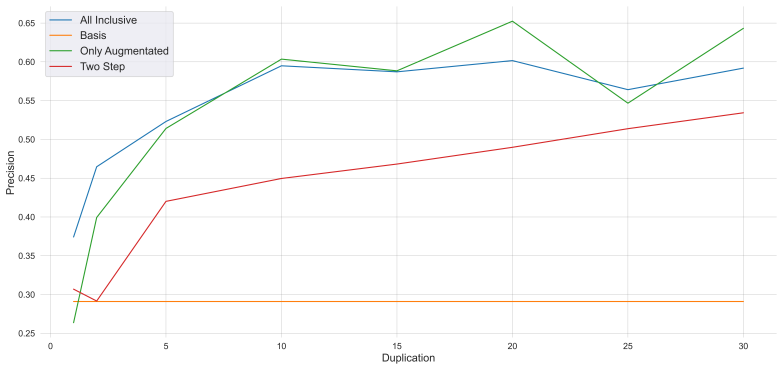
- Duplication and small amplitude scaling can raise precision while holding recall at 1.0, but the paper argues that more diverse dummy data, not more augmentation, is the binding constraint for generalization.
- The 29 real falls collected during six months in a nursing home give a concrete starting point for validation once reliable ground-truth labels can be obtained.
Reading between the lines
- I infer that real human falls will likely produce a wider range of vibration signatures than a uniformly dropped PVC dummy; a direct test would be to record verified falls from residents with different body masses and measure whether their spectrograms fall inside the augmented training distribution.
- Sensor position on the bed frame and the mechanical transfer path through mattress and frame are likely as important as model architecture, so deployment may require per-bed calibration or domain adaptation rather than a single global model.
- The ten-second window plus STFT and CNN inference places a lower bound on alarm latency; whether that latency meets the clinical goal of rapid response depends on the nursing workflow and is not modeled in the paper.
- Pairing the vibration channel with a second privacy-preserving sensor, such as a floor-vibration or passive infrared sensor, could supply the verified labels needed to validate and refine the model in real facilities.
Signed reviews
Editorial analysis
A structured set of objections, weighed in public.
Referee Report
Summary. The paper presents a bed-attached vibration-based fall detection system for nursing homes. The hardware comprises a Teensy 4.1 microcontroller and a MEMS accelerometer; the detection pipeline uses a logistic regression pre-filter on hand-crafted features, followed by short-time Fourier transform spectrograms and a convolutional neural network for final fall classification. Training data were collected in a laboratory using a 75 kg PVC crash-test dummy dropped from a defined height, together with various object-drop events, and augmentation was performed via duplication and amplitude scaling. The model was evaluated with stratified k-fold cross-validation, and a field deployment in a nursing home was described. The paper concludes that the two-stage approach can distinguish fall events from noise and shows potential for accurate and rapid fall detection.
Significance. If the reported performance held in real-world conditions, the system would be a valuable privacy-preserving, wearable-free fall detection solution for nursing homes. The paper has notable strengths: it documents the full development pipeline from sensor placement to model training, includes detailed hardware and data-acquisition specifications, and explicitly acknowledges many limitations, including limited data diversity and the lack of verifiable real-world validation. However, the quantitative evidence for the central claim is weakened by an evaluation protocol that tunes the classification threshold on validation/test labels to force perfect recall, and by the acknowledged similarity between training and test data originating from the same laboratory dummy. These issues make the reported precision values in-sample selections rather than unbiased estimates of out-of-sample performance.
major comments (4)
- [Sec. 3.6 and Sec. 5] The evaluation protocol is circular for the reported performance metrics. Section 3.6 states that during evaluation the threshold was dynamically adapted to achieve a Recall of 1.0 and then to maximize Precision, and Section 5 repeats that hyperparameter tuning optimized precision on the validation set while maintaining a recall value of 1. Because the decision threshold is chosen after seeing the validation/test labels, the perfect recall is true by construction and the accompanying precision is an in-sample, selected quantity. The precision values reported in Section 7.1 (e.g., 65.24% for duplication augmentation) are therefore not unbiased estimates of out-of-sample performance. The paper should report results with a fixed threshold chosen on the training set only, or present precision-recall curves and area-under-curve metrics across the full operating range.
- [Sec. 7.1 and Sec. 4.1.2] The laboratory train/test setup raises a direct generalization concern that the authors themselves acknowledge: Section 7.1 notes the 'significant similarity between test and training data' and that the dummy's uniform fall motion likely limits variance. Because both training and test folds come from the same 75 kg dummy, the same drop height, and the same laboratory protocol, the k-fold cross-validation results cannot support a claim that the model distinguishes falls from noise in a way that transfers to real nursing-home residents. The authors should either provide an external test set from different subjects/conditions or explicitly reframe the contribution as a demonstration of technical feasibility without quantitative performance claims.
- [Sec. 4.1.2 vs Sec. 8] The dataset size is described inconsistently. Section 4.1.2 states that the data set is based on 'more than 1000 fall events' and 'around 20,000 negative events', while Section 8 states that there are 'only 66 instances of dummy case events and a mere 22 recorded falls'. These numbers cannot both be correct as descriptions of the same dataset, and the contradiction affects the interpretation of all experimental results. The authors must clarify the exact number of positive and negative samples, the number of augmentation copies, and how the figures in Section 4.1.2 relate to the 66/22 counts in Section 8.
- [Sec. 7.2] The deployment experiment does not provide evidence for the central claim. The logistic regression identified 39 events and the CNN flagged one as a human fall, but the authors state that 'validating real falls is not feasible due to imprecise time data' and that 'we cannot verify the accuracy of these predictions.' With no ground-truth annotation for the single detected event, the deployment result is an anecdote, not a validation. The text should be revised so that the deployment section is clearly labeled as a feasibility demonstration without implying that it corroborates the laboratory performance figures.
minor comments (5)
- [Sec. 7.1] There is a typo in the phrase 'Experiments done with V AEs for date augmentation' — 'date' should be 'data'.
- [Table 1] The checkmarks in Table 1 are sparse and some criteria rows appear to have missing entries; the table would be clearer if each cell were explicitly marked with 'yes', 'no', or 'partial' rather than leaving cells blank.
- [Fig. 6] The caption and surrounding text describe the signal colors (blue, orange, red), but the figure appears to be in grayscale in the provided version; please ensure the figure is rendered in color or the description is adapted.
- [Sec. 3.5] The CNN description says 'ReLU (R(z)=max(0,z)) activation function, no padding, and strides set to one' immediately before mentioning a max-pooling layer and flatten layer; for reproducibility, also specify the number of filters per layer and the pooling size beyond the single example shown in Fig. 5.
- [References] Several references have inconsistent formatting (e.g., 'Vincenzo et al., 2017' is alphabetized under V but the author list appears to begin with 'C', and some entries contain duplicated journal abbreviations). A careful reference cleanup is needed.
Circularity Check
Lab recall=1.0 is enforced by threshold selection on the evaluation labels, making the headline precision an in-sample fitted quantity rather than an independent prediction.
-
fitted input called prediction
[Sec. 3.6 (Metrics), Sec. 5 (Model Definition and Tuning Results), Sec. 6.1 (Laboratory Experiments)]
"During evaluation, the threshold was dynamically adapted to achieve a Recall of 1.0 and then aimed to maximize Precision. ... The goal of the tuning process was to optimize precision on the validation dataset while maintaining a recall value of 1. This involves setting a classification threshold that ensures all relevant instances are captured (recall of 1) while maximizing the precision of the predictions."
The reported recall of 1.0 is not an out-of-sample prediction: the operating threshold is selected using the validation/test labels, so the requirement 'Recall = 1.0' is satisfied by construction on the evaluated data. The precision values (e.g., 65.24% in Sec. 7.1) are then the maximum precision attainable at that label-enforced operating point, not an unbiased estimate of performance on unseen falls. These numbers are the main quantitative evidence for the central claim that the system 'shows promising results in distinguishing fall events from noise' (Abstract) and that 'the two-step approach ... demonstrates effective discrimination between events and noise' (Sec. 8). The paper's own caveat that 'validating real falls is not feasible' (Sec.
full rationale
The machine-learning pipeline itself is not circular through self-citation: no load-bearing result is imported solely from the authors' prior work, and the logistic-regression-plus-CNN system is a genuine fitted model. However, the headline laboratory performance is partially circular in the evaluation protocol. Sec. 3.6 states that the threshold is dynamically adapted during evaluation to force Recall = 1.0, and Sec. 5 confirms that tuning optimized precision on the validation set while maintaining recall 1. This makes the recall figure true by construction and turns the reported precision into an in-sample, label-selected quantity rather than an unbiased predictor of real-world performance. The paper acknowledges the resulting fragility: Sec. 7.1 notes 'significant similarity between test and training data' and Sec. 7.2 concedes that 'validating real falls is not feasible due to imprecise time data and various environmental vibrations.' Thus the central claim that the system can 'distinguish fall events from noise' is supported only by an evaluation whose operating point is chosen from the labels it is supposed to predict. This is a partial circularity in the evidence, not an artifact of a self-citation chain, so the score is 6.
Assumptions & free parameters
free parameters (5)
- classification threshold =
adjusted to achieve recall = 1.0
- CNN hyperparameters =
240 filters, kernel width 145, learning rate 0.01, binary cross-entropy
- amplification factor range =
0.7 to 1.3
- duplication factor =
20 (best), up to 30 tested
- logistic regression features =
max, median, mean, 25th and 75th quantiles
assumptions (4)
- domain assumption Crash-test dummy falls are representative of real human falls
- domain assumption Bed-frame vibration contains sufficient discriminative information to distinguish falls from other events
- domain assumption Ten-second non-overlapping windows are an appropriate segmentation
- standard math Background mathematical results (STFT, CNN, logistic regression)
Cite this review
Pith. "Pith review of Bed-Attached Vibration Sensor System: A Machine Learning Approach for Fall Detection in Nursing Homes." pith.science (2026). https://pith.science/paper/43RUOGVW
@misc{pith2026241204950,
  author       = {Pith},
  title        = {Pith review of: Bed-Attached Vibration Sensor System: A Machine Learning Approach for Fall Detection in Nursing Homes},
  year         = {2026},
  howpublished = {\url{https://pith.science/paper/43RUOGVW}},
  note         = {Machine review of arXiv:2412.04950}
}
read the original abstract
The increasing shortage of nursing staff and the acute risk of falls in nursing homes pose significant challenges for the healthcare system. This study presents the development of an automated fall detection system integrated into care beds, aimed at enhancing patient safety without compromising privacy through wearables or video monitoring. Mechanical vibrations transmitted through the bed frame are processed using a short-time Fourier transform, enabling robust classification of distinct human fall patterns with a convolutional neural network. Challenges pertaining to the quantity and diversity of the data are addressed, proposing the generation of additional data with a specific emphasis on enhancing variation. While the model shows promising results in distinguishing fall events from noise using lab data, further testing in real-world environments is recommended for validation and improvement. Despite limited available data, the proposed system shows the potential for an accurate and rapid response to falls, mitigating health implications, and addressing the needs of an aging population. This case study was performed as part of the ZIM Project. Further research on sensors enhanced by artificial intelligence will be continued in the ShapeFuture Project.
Figures


Figures from the paper (7 more)




Reference graph
Works this paper leans on
-
[1]
author Alhimale, L. , author Zedan, H. , author Al-Bayatti, A. , year 2014 . title The Implementation of an Intelligent and Video -based Fall Detection System using a Neural Network . journal Applied Soft Computing volume 18 . :10.1016/j.asoc.2014.01.024
-
[2]
A GRU-based Mixture Density Network for Data-Driven Dynamic Stochastic Programming
author Alwan, M. , author Rajendran, P. , author Kell, S. , author Mack, D. , author Dalal, S. , author Wolfe, M. , author Felder, R. , year 2006 . title A Smart and Passive Floor - Vibration Based Fall Detector for Elderly . volume volume 1 . :10.1109/ICTTA.2006.1684511. note journal Abbreviation: Inf. Commun. Technol. Pages: 1007 Publication Title: Inf....
work page Pith review arXiv 2006
-
[3]
author Babatain, W. , author Bhattacharjee, S. , author Hussain, A.M. , author Hussain, M.M. , year 2021 . title Acceleration Sensors : Sensing Mechanisms , Emerging Fabrication Strategies , Materials , and Applications . journal ACS Applied Electronic Materials volume 3 , pages 504--531 . https://doi.org/10.1021/acsaelm.0c00746, :10.1021/acsaelm.0c00746....
-
[4]
editor Bartz, E. , editor Bartz-Beielstein, T. , editor Zaefferer, M. , editor Mersmann, O. (Eds.), year 2022 . title Hyperparameter Tuning for Machine and Deep Learning with R ---A Practical Guide . publisher Springer , address Singapore
work page 2022
-
[5]
editor Bartz-Beielstein, T. , editor Bartz, E. (Eds.), year 2023 . title Online Machine Learning - A Practical Guide with Examples in Python . Machine Learning: Foundations, Methodologies, and Applications, publisher Springer
work page 2023
-
[6]
author Becker, C. , author Blessing-Kapelke, U. , year 2011 . title [ Recommended guidelines for physical exercise to prevent falls in elderly people living at home] . journal Zeitschrift Fur Gerontologie Und Geriatrie volume 44 , pages 121--128 . :10.1007/s00391-011-0178-1
-
[7]
author Bengio, Y. , author Lecun, Y. , year 1997 . title Convolutional Networks for Images , Speech , and Time - Series
work page 1997
-
[8]
author Boehnke, U. , et al., year 2012 . title Verfahren und system zur sturzerkennung und weitergabe eines alarms . note Patent
work page 2012
Show all 42 references
-
[9]
, author Sengur, A
author Demir, F. , author Sengur, A. , author Bajaj, V. , year 2019 . title Convolutional neural networks based efficient approach for classification of lung diseases . journal Health Information Science and Systems volume 8 , pages 4 . https://www.ncbi.nlm.nih.gov/pmc/article...
2019 doi
-
[10]
, author Aski, B
author Foroughi, H. , author Aski, B. , author Pourreza, H. , year 2009 . title Intelligent video surveillance for monitoring fall detection of elderly in home environments . :10.1109/ICCITECHN.2008.4803020. note pages: 224
2009
-
[11]
, author Heuer, A
author Grunert, H. , author Heuer, A. , year 2016 . title Datenschutz im PArADISE . journal Datenbank-Spektrum volume 16 , pages 107--117 . http://link.springer.com/10.1007/s13222-016-0216-7, :10.1007/s13222-016-0216-7
2016 doi
-
[12]
, author Rahmah, F
author Hidayanti, F. , author Rahmah, F. , author Wiryawan, A. , year 2020 . title Design of Motorcycle Security System with Fingerprint Sensor using Arduino Uno Microcontroller . journal International Journal of Advanced Science and Technology volume 29 , pages 4374--4391 . h...
2020
-
[13]
, author Iliffe, S
author Jefferis, B.J. , author Iliffe, S. , author Kendrick, D. , author Kerse, N. , author Trost, S. , author Lennon, L.T. , author Ash, S. , author Sartini, C. , author Morris, R.W. , author Wannamethee, S.G. , author Whincup, P.H. , year 2014 . title How are falls and fear ...
2014 doi
-
[14]
, year 2021
author Jin, L. , year 2021 . title Applications and Prospects of Mems Sensors in Automotive . journal Journal of Physics: Conference Series volume 1884 , pages 012010 . https://dx.doi.org/10.1088/1742-6596/1884/1/012010, :10.1088/1742-6596/1884/1/012010. note publisher: IOP Publishing
2021 doi
-
[15]
title MEMS inertial sensors and their applications
author Kazusuke Maenaka , year 2008 . title MEMS inertial sensors and their applications . journal 2008 5th International Conference on Networked Sensing Systems , pages 71--73 http://ieeexplore.ieee.org/document/4610859/, :10.1109/INSS.2008.4610859. note conference Name: 2008...
2008
-
[16]
, year 2007
author Koblischke, A. , year 2007 . title Using rfid to prevent or detect falls, wandering, and bed egress and medication errors . note Patent
2007
-
[17]
, author Patel, D
author Kumar, J.S. , author Patel, D. , year 2014 . title A Survey on Internet of Things : Security and Privacy Issues . journal International Journal of Computer Applications volume 90 . :10.5120/15764-4454
2014 doi
-
[18]
, year 2013
author Lehmann, R. , year 2013 . title 3sigma- Rule for Outlier Detection from the Viewpoint of Geodetic Adjustment . journal Journal of Surveying Engineering volume 139 , pages 157--165 . :10.1061/(ASCE)SU.1943-5428.0000112
2013
-
[19]
, author Jamieson, K
author Li, L. , author Jamieson, K. , author DeSalvo, G. , author Rostamizadeh, A. , author Talwalkar, A. , year 2018 . title Hyperband: A Novel Bandit - Based Approach to Hyperparameter Optimization . http://arxiv.org/abs/1603.06560, :10.48550/arXiv.1603.06560. note arXiv:160...
-
[20]
, author Zigel, Y
author Litvak, D. , author Zigel, Y. , author Gannot, I. , year 2008 . title Fall detection of elderly through floor vibrations and sound . journal Annual International Conference of the IEEE Engineering in Medicine and Biology Society. IEEE Engineering in Medicine and Biology...
2008
-
[21]
, author Choubey, N
author Loharkar, P. , author Choubey, N. , year 2016 . title Vibration based elderly fall detection using artificial intelligence: An overview
2016
-
[22]
, author Wu, Y
author Lu, N. , author Wu, Y. , author Feng, L. , author Song, J. , year 2018 . title Deep Learning for Fall Detection : 3D - CNN Combined with LSTM on Video Kinematic Data . journal IEEE Journal of Biomedical and Health Informatics volume PP , pages 1--1 . :10.1109/JBHI.2018.2808281
2018
-
[23]
, author González, C
author Martínez, A. , author González, C. , author Jaramillo, A. , author Cárdenas, D. , author Von Chong, A. , year 2022 . title Low-cost, microcontroller-based phase shift measurement system for a wireless power transfer prototype . journal HardwareX volume 11 , pages e00311...
2022 doi
-
[24]
, year 2019
author McCullagh, P. , year 2019 . title Generalized Linear Models . edition 2 ed., publisher Routledge , address New York . :10.1201/9780203753736
2019 doi
-
[25]
, author Halford, M
author Montiel, J. , author Halford, M. , author Mastelini, S.M. , author Bolmier, G. , author Sourty, R. , author Vaysse, R. , author Zouitine, A. , author Gomes, H.M. , author Read, J. , author Abdessalem, T. , author Bifet, A. , year 2021 . title River: Machine learning for...
2021
-
[26]
, author Fang, L
author Niu, W. , author Fang, L. , author Xu, L. , author Li, X. , author Huo, R. , author Guo, D. , author Qi, Z. , year 2018 . title Summary of Research Status and Application of MEMS Accelerometers . journal Journal of Computer and Communications volume 06 , pages 215--221 ...
2018
- [27]
-
[28]
, author Singh, D
author Psychoula, I. , author Singh, D. , author Chen, L. , author Chen, F. , author Holzinger, A. , author Ning, H. , year 2018 . title Users' Privacy Concerns in IoT Based Applications . :10.1109/SmartWorld.2018.00317
2018
-
[29]
title RKI - Beiträge zur Gesundheitsberichterstattung des Bundes ( GBE ) - Das Unfallgeschehen bei Erwachsenen in Deutschland
author RKI , year 2024 . title RKI - Beiträge zur Gesundheitsberichterstattung des Bundes ( GBE ) - Das Unfallgeschehen bei Erwachsenen in Deutschland . https://www.rki.de/DE/Content/Gesundheitsmonitoring/gesundheitsberichterstattung/GBEDownloadsB/unfallbericht\_geda.html
2024
-
[30]
, year 2006
author Rubenstein, L.Z. , year 2006 . title Falls in older people: epidemiology, risk factors and strategies for prevention . journal Age and Ageing volume 35 Suppl 2 , pages ii37--ii41 . :10.1093/ageing/afl084
2006 doi
-
[31]
, author Djurović, I
author Sejdić, E. , author Djurović, I. , author Jiang, J. , year 2009 . title Time–frequency feature representation using energy concentration: An overview of recent advances . journal Digital Signal Processing volume 19 , pages 153--183 . https://www.sciencedirect.com/scienc...
2009 doi
-
[32]
, author Khoshgoftaar, T.M
author Shorten, C. , author Khoshgoftaar, T.M. , year 2019 . title A survey on Image Data Augmentation for Deep Learning . journal Journal of Big Data volume 6 , pages 60 . https://doi.org/10.1186/s40537-019-0197-0, :10.1186/s40537-019-0197-0
2019 doi
- [33]
-
[34]
, author Karina, N
author Sihombing, P. , author Karina, N. , author Tarigan, J. , author Syarif, M. , year 2018 . title Automated hydroponics nutrition plants systems using arduino uno microcontroller based on android . journal Journal of Physics: Conference Series volume 978 , pages 012014 . :...
2018 doi
-
[35]
, year 2015
author Sonnenmoser, M. , year 2015 . title Sturzangst: Nur interdisziplinär behandelbar . https://www.aerzteblatt.de/archiv/169185/Sturzangst-Nur-interdisziplinaer-behandelbar
2015
-
[36]
, author Speechley, M
author Tinetti, M.E. , author Speechley, M. , author Ginter, S.F. , year 1988 . title Risk factors for falls among elderly persons living in the community . journal The New England Journal of Medicine volume 319 , pages 1701--1707 . :10.1056/NEJM198812293192604
1988 doi
-
[37]
, author Kancharla, C.R
author Tjonck, K. , author Kancharla, C.R. , author Vankeirsbilck, J. , author Hallez, H. , author Boydens, J. , author Pang, B. , year 2021 . title Real- Time Activity Tracking using TinyML to Support Elderly Care . journal 2021 XXX International Scientific Conference Electro...
2021
-
[38]
, author Malekian, R
author Vallabh, P. , author Malekian, R. , year 2018 . title Fall detection monitoring systems: a comprehensive review . journal Journal of Ambient Intelligence and Humanized Computing volume 9 . :10.1007/s12652-017-0592-3
2018 doi
-
[39]
, author Greco, A
author Vincenzo, C. , author Greco, A. , author Saggese, A. , author Vento, M. , year 2017 . title A Smartphone - Based System for Detecting Falls Using Anomaly Detection . :10.1007/978-3-319-68548-9\_45. note pages: 499
2017 doi
-
[40]
, author Zonzini, F
author Zauli, M. , author Zonzini, F. , author Coppola, V. , author Dertimanis, V. , author Chatzi, E. , author Testoni, N. , author De Marchi, L. , year 2023 . title A Novel Smart Sensor Node with Embedded Signal Processing Functionalities Addressing Vibration – Based Monitor...
2023 doi
-
[41]
, author Mare, S
author Zeng, E. , author Mare, S. , author Roesner, F. , year 2017 . title End user security and privacy concerns with smart homes , in: booktitle thirteenth symposium on usable privacy and security ( SOUPS 2017) , pp. pages 65--80 . https://www.usenix.org/conference/soups2017...
2017
-
[42]
, author Litvak, D
author Zigel, Y. , author Litvak, D. , author Gannot, I. , year 2010 . title A Method for Automatic Fall Detection of Elderly People Using Floor Vibrations and Sound — Proof of Concept on Human Mimicking Doll Falls . journal Biomedical Engineering, IEEE Transactions on volume ...
2010
Reviewed August 11, 2026 · model on record in the stance chip above.
Discussion (0). Continue with ORCID to comment.